All images by Tey Liang Jin for Rice Media.
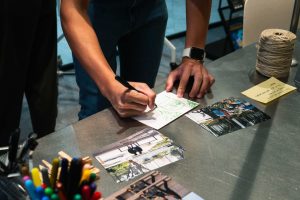
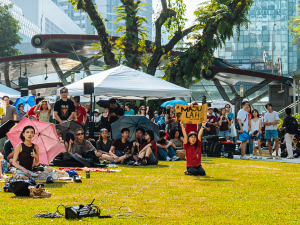
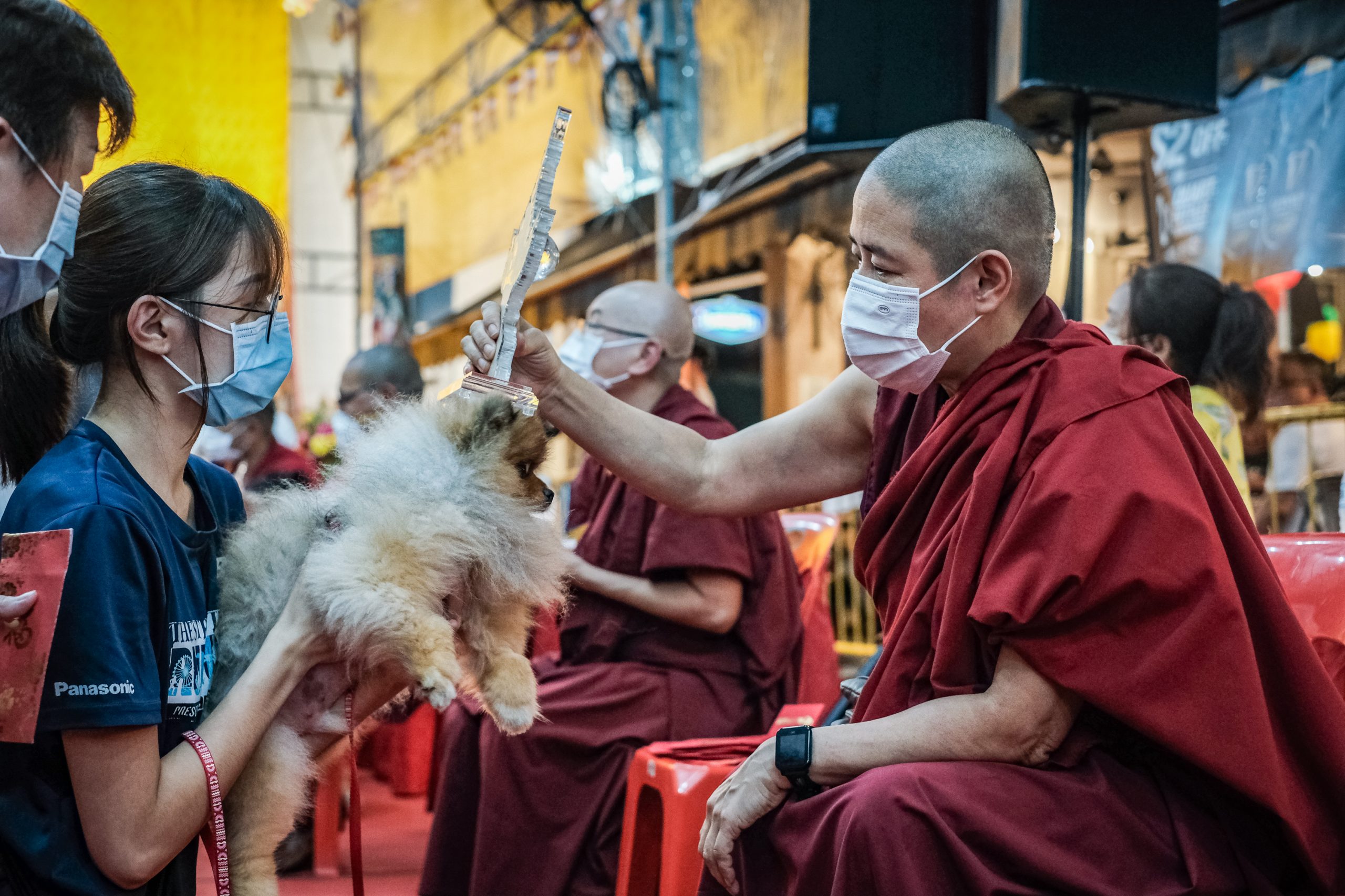
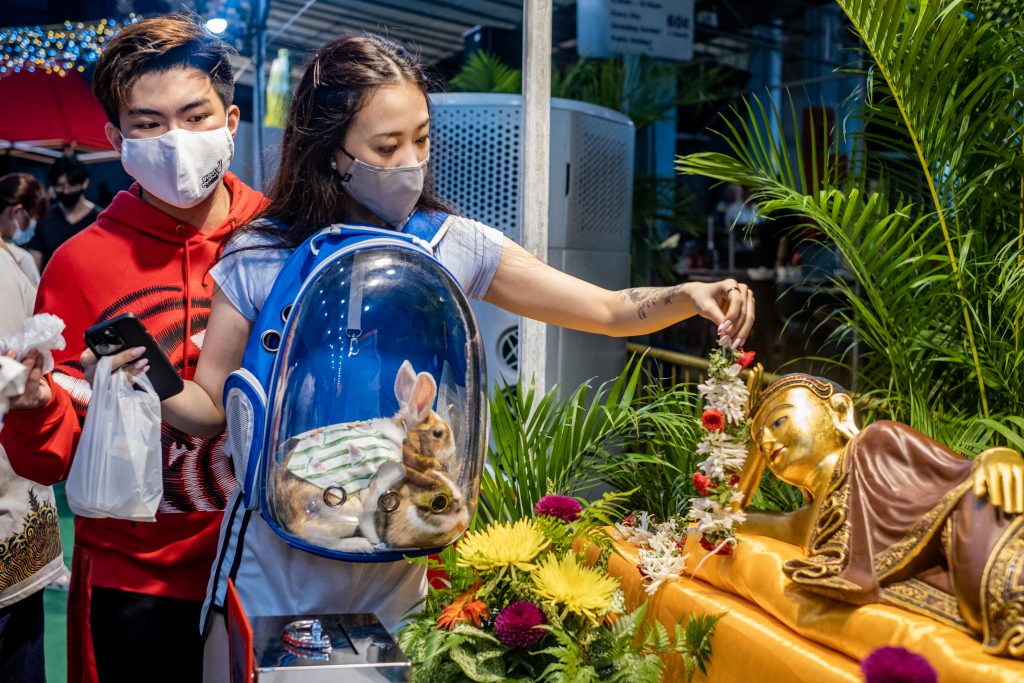
As rain poured throughout the eve of Vesak Day, hundreds of pet owners from across Singapore joined the long queues at the temple grounds of Thekchen Choling in Jalan Besar. For the first time, the temple held an animal blessing event for pet owners to come down for prayers, light offerings, and activities like paw painting.
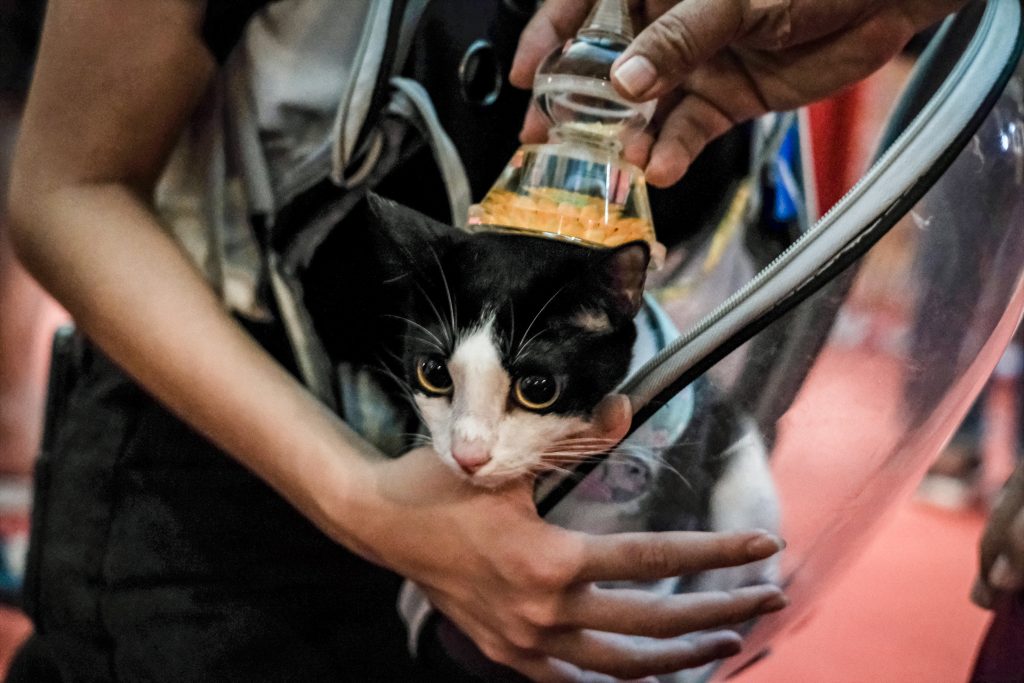
It’s a surreal fusion of holiness and charm—Venerables gently place the Buddha’s relic on the heads of both the pet owners and their pets as they leaned in together, waiting for the blessing to unfold.
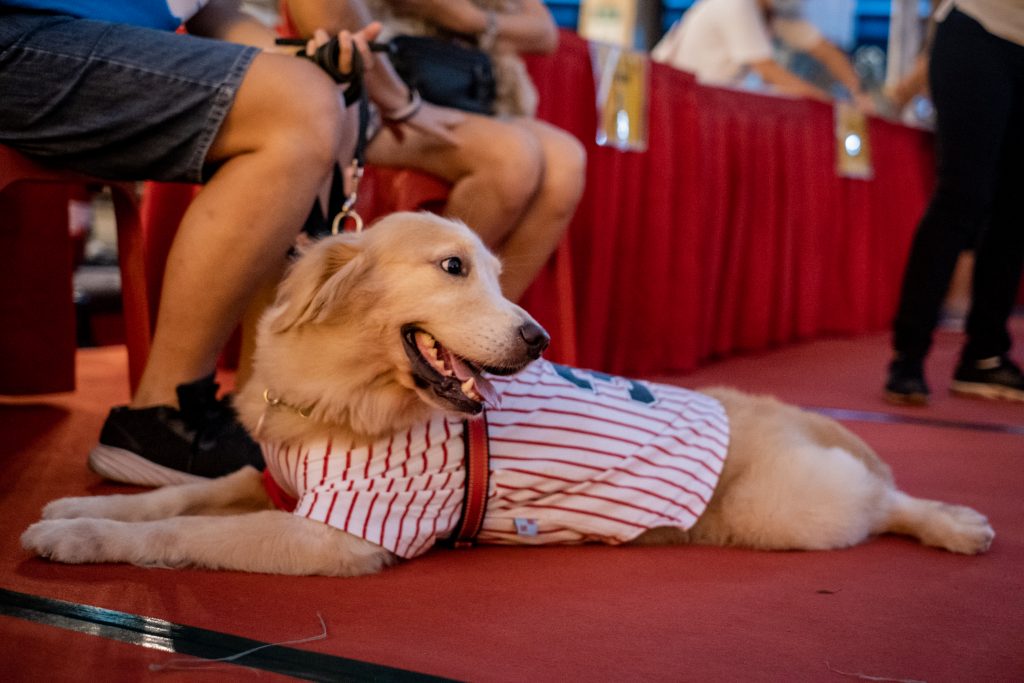
As pet owners engaged in simple acts of devotion by making flower and candle offerings to Buddha, their pets interacted with one another, excitedly wagging their tails and licking strangers’ hands.
The Custodians of Thekchen Choling
With roots in Tibetan Buddhism, Thekchen Choling was founded in 2001 by Singha Namdrol Rinpoche, a Singaporean lay Lama who is the temple’s Spiritual Director. Rinpoche is an honorific term in Tibetan that translates as “precious one.”
“We pray to plant a seed of enlightenment for the pet because we believe that even the pet will become a Buddha one day,” Rinpoche explains.
“If the seed was not planted before, then we plant now. If the seed was planted before, then we create the auspicious conditions such that the animal will no longer be an animal after the death of its current body—we plan for the auspicious rebirth.”
“What happens after the Buddha’s relic is placed on the pet’s head?” I ask.
Rinpoche smiles. “After the Buddha’s relic is placed on the head, the good karma of the animal is activated. This facilitates the process of the rebirth for the animal.”
For many families, it is tradition to buy animals with the sole intention of liberating them on Vesak Day. However, the temple believes that the practice of animal liberation is not sustainable in the long term.
Doing so may expose the released animals to natural predators or harm the ecosystem, resulting in ecological imbalance.
In Buddhist teachings, humans and animals are viewed as equal, sentient beings capable of experiencing feelings and sensations. It’s no surprise that many devout Buddhists refrain from eating meat and opt to go vegetarian instead.
Covid-19, in a way, played a part in today’s proceedings. Vincent Kessler, a temple volunteer for about a decade and the Vesak day organising committee chair, explains that the event was meant to honour the time people spent with their pets throughout the pandemic.
Scooby, the Cherished 8-year-old Mongrel
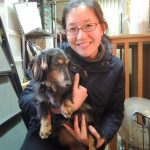
I was playing with Scooby’s siblings when he came up to me and leaned onto my legs. That was when I started talking to Mary and Thomas, a married couple in their mid-40s who came to the temple with their family of dogs.
As Scooby shivered in fear as the thunder grew louder above, Mary reassured him until he calmed down.
Scooby was adopted from a dog shelter, SOSD. He is a mongrel, also known as ‘Singapore Special’, and is commonly considered a stray to many aspiring pet owners. He was born with a deformity on his hind leg. In Mary’s words, he “hops around like a zombie, unable to bend it.”
Mary didn’t plan to adopt Scooby at first. But when she saw the looks of disgust he received, she felt compelled to help him and provide him with a loving home.
Mary pauses when I ask her why she wanted Scooby to receive a blessing.
“Bless him now so that he can have a better life,” she says softly.
Thomas, her husband, who is a Buddhist devotee, leans in to emphasise that “Scooby will not be an animal again in his next life.” The couple fervently hopes that he will reincarnate into anything but a dog born with a disability.
According to Buddhist principles, the concept of rebirth is crucial—the belief that when a living thing dies, it will be reborn as something else. Mary and Thomas pray that Scooby can get out of the Animal Realm in his next life.
Sherab, the Curious Mexican Dwarf Orange Crayfish
Caught by surprise to see a pet crayfish at the temple, I stopped by to see Sherab peeking curiously at me with his feelers moving as though he was saying hi.
Li Yin, who brought Sherab to the temple, is in her early 40s, works as a Business Development Manager and regularly volunteers at Thekchen Choling.
Sherab, meaning ‘wisdom’ in Tibetan, is a precious gift from her religious teacher’s son. Sherab has been a steadfast companion beside her work desk throughout the pandemic.
Li Yin explained how Buddhists believe it can be difficult for an animal to be reborn into a higher realm, “unless we pet owners bring them here to offer them a higher rebirth.”
“They cannot do it on their own, so we are here to help facilitate that process.”
Li Yin wants to bless Sherab on his behalf, helping him gain merit and create a cause for his return as a human being.
She confesses that Sherab had been a gift and that she was not initially ready to care for him. But after getting used to having him around every day, she felt a growing connection that compelled her to keep him.
“I think many people prefer furry pets because they can immediately respond to you,” Li Yin remarks.
“Of course, when compared to them, pets like crayfish are not as responsive. However, Sherab is unique because I can call him out when he’s hiding in nooks and crannies in the tank. Sometimes when I tap on the glass tank, he comes out and responds to me.”
Truffles, the Beloved Syrian Hamster
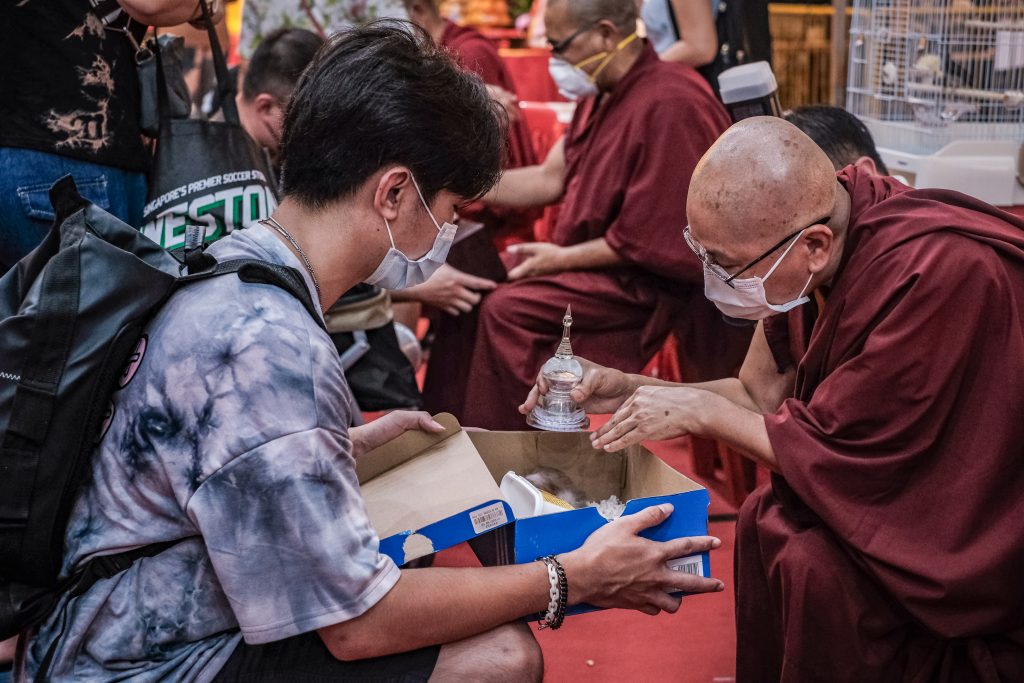
I saw Sean carry a blue Adidas shoebox around, only to discover that it was a makeshift litter box for his pet hamster, Truffles, who was tucked cosily inside. 24-year-old Sean is not a Buddhist, but he came to the temple with an open mind to pray for his pet’s good health.
Sean told me that he once had two hamsters: Truffles and her partner, Creamy, who passed away after escaping from their cage. Truffles had also escaped once and got stuck behind Sean’s fridge for a week; she survived thanks to the food reserves in her cheeks.
This nerve-racking incident has made Sean more mindful about creating more pet-safe places in his house. For instance, he sealed the sides of the refrigerator to prevent Truffles from being trapped there again.
Sean reflects on his relationship with Truffles over the last two years.
“I am so lucky that she’s still very active, and I want her to stay this way. She can be very passive during her estrus cycle. It’s a hamster kind of period, where instead of blood, they will release a discharge that is white in colour,” he explains.
“Truffles adds liveliness at home. With Creamy gone, I now treasure Truffles more than before. It’s like… at least I still have the other half with me.”
The Sanctity of Life on Vesak Day
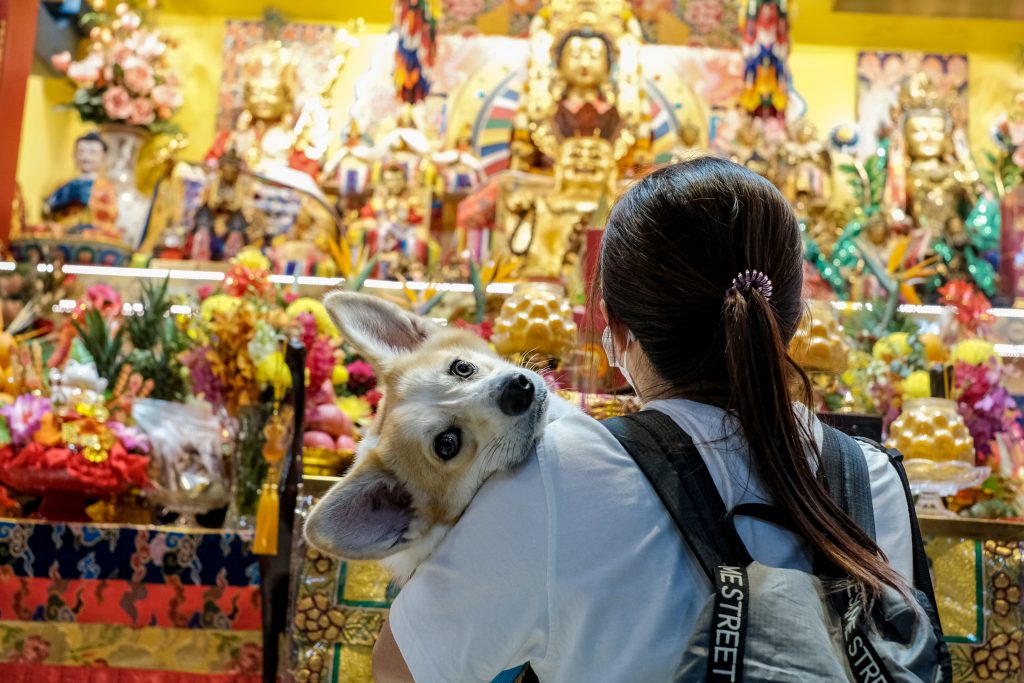
Contrary to the usual tranquil scene you would expect in a temple, Thekchen Choling buzzed with animal and human interactions. It was undoubtedly a sanctuary for pets, where they were able to meet and make new friends and spend meaningful time with their owners.
I am reminded of Singha Namdrol Rinpoche’s words to the many pet owners receiving his blessings today.
“You are your pet’s guru; you are your pet’s God. If you love your pets, you are responsible for their next life. So activate that potential, accumulate merit for the animal, love the animal, and teach them love and compassion.”