All images by Zachary Tang for RICE Media.
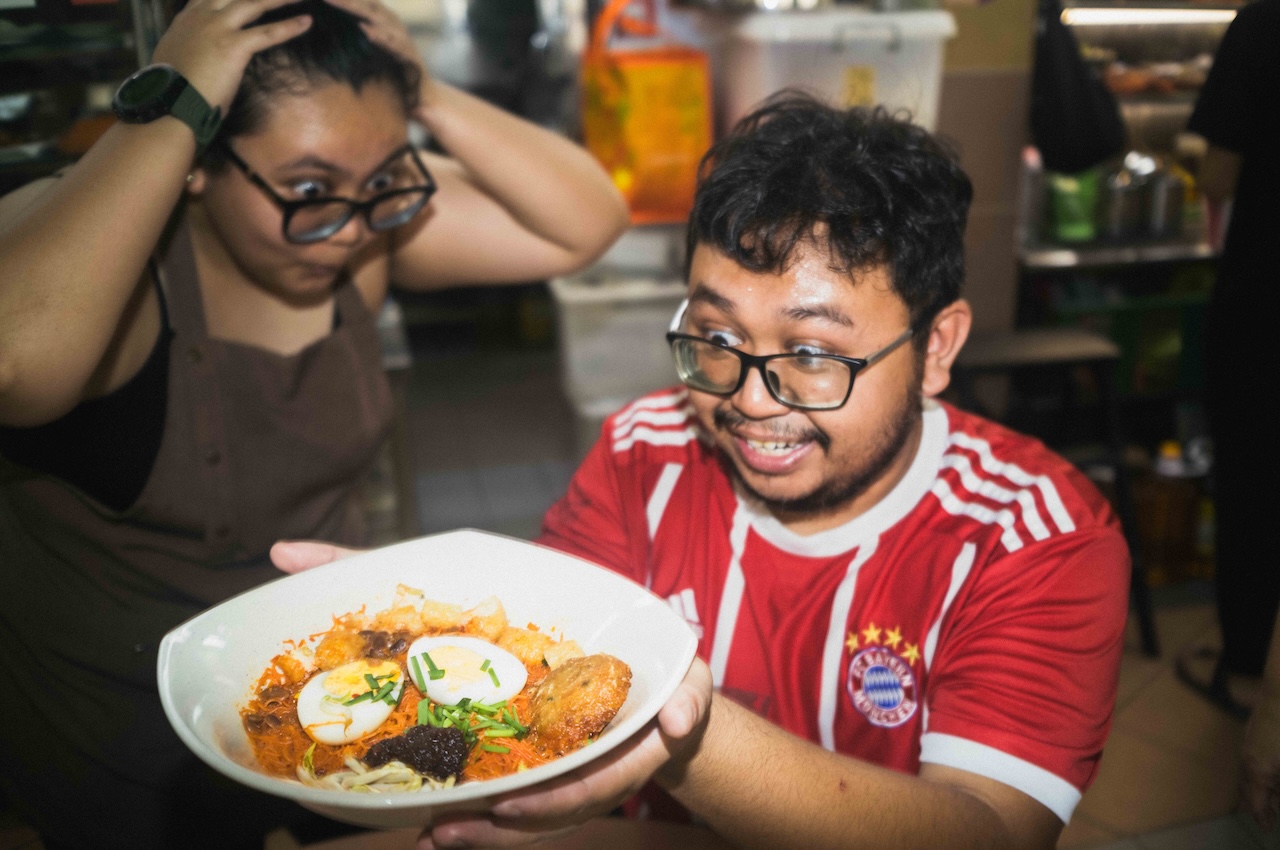
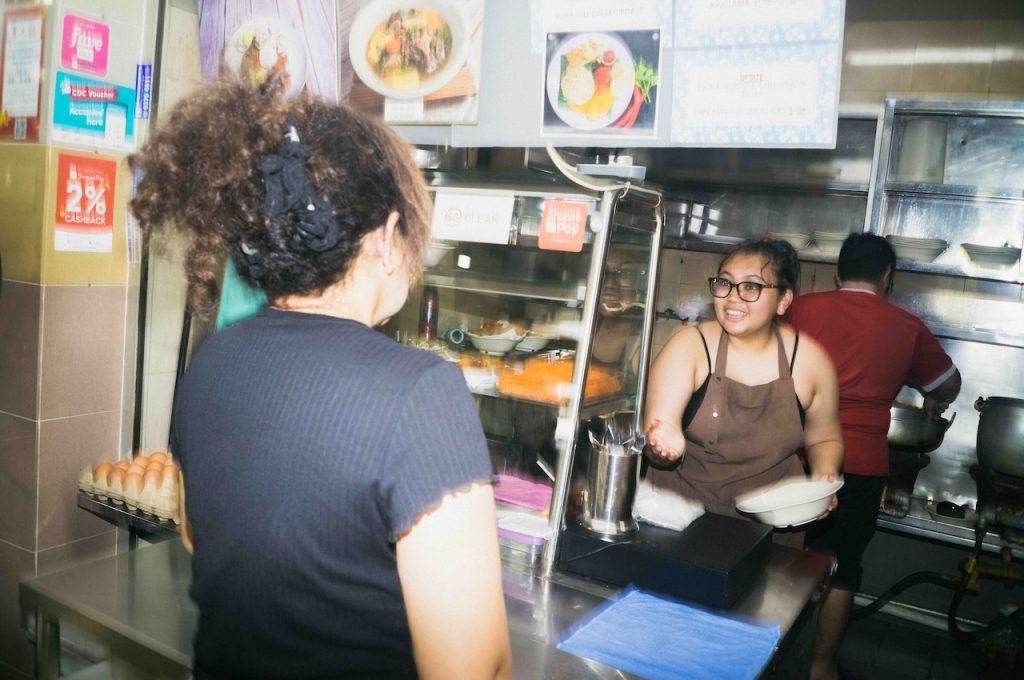
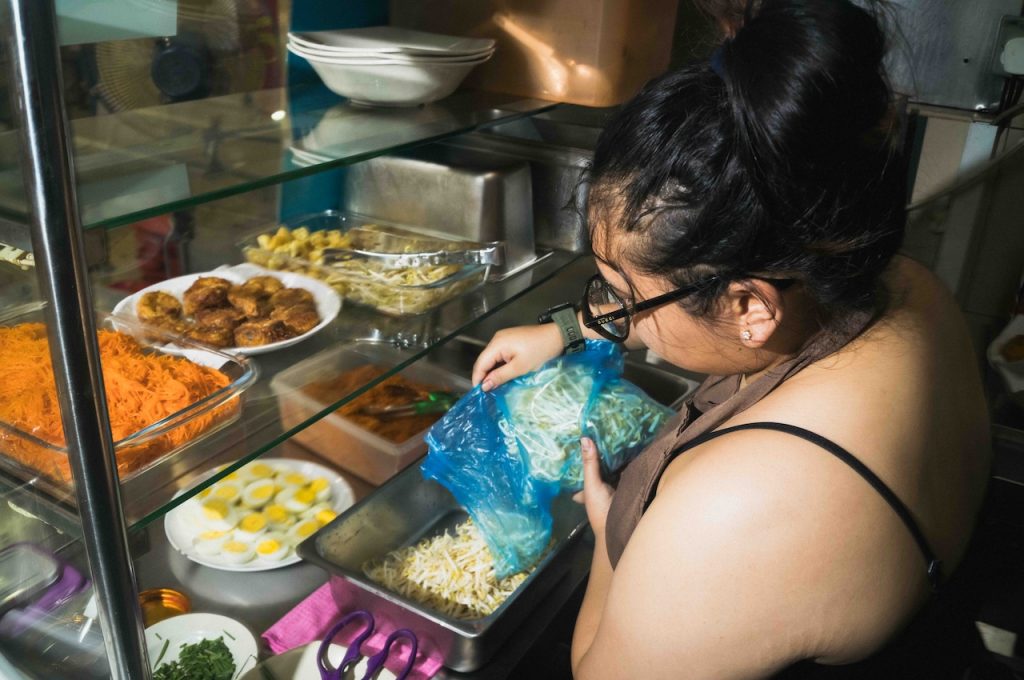
It’s 4 AM, still dark in the circular premises of Tampines Round Market & Food Centre. There’s light emanating from under the semi-closed shutters of Tok Ayah Delights Comfort Food, where Ayuni Fatin is mixing soup bases from scratch hours before her regulars come by for their hearty morning fix of mee rebus, mee siam, and soto ayam. The vegetables still need prepping, the fresh noodles are still on the way, and the chicken thighs need to be marinated.
By the time the first customer walks up to order, none of that will register. What’s immediately visible is her: a 26-year-old hawker slinging family recipes older than she is.
“Being a young hawker gets you stares,” says Ayuni, a former dental assistant who now co-owns Tok Ayah Delights with her mother.
“You’re cooking an iconic dish? That gets you even more stares. It’s almost as though you’re expected to mess up.”
Justin Lim, a fellow second-generation hawker and 36-year-old chef of Seng Kee Mushroom Minced Pork Noodles, recalls how elderly customers routinely tell him his broth lacks the rich, porky punch his father-in-law used to achieve. Since earlier this year, Justin has had to carry the mantle of Seng Kee’s legacy after its original helmsman retired due to health concerns and closed his Ang Mo Kio outlet.
Now running Seng Kee’s only outlet in Serangoon, Justin has made slight tweaks to his father-in-law’s lauded bak chor mee. Gone is tee poh, the sun-dried or smoked sole once blended into the pork broth.
He clarifies that he cut it at the tail end of the COVID era, when tee poh grew scarce and he didn’t want to compete with his father-in-law for what stock remained. With the Ang Mo Kio outlet now closed, Justin has brought it back—but as an add-on to the basic bowl.
“The reactions are mixed,” Justin offers. “Some older customers felt something was amiss. Others disregarded the difference, whereas some grew to be drawn to the broth flavour without the sole.”
Comparisons are inevitable when it comes to succeeding a celebrated vanguard recipe, Justin points out.
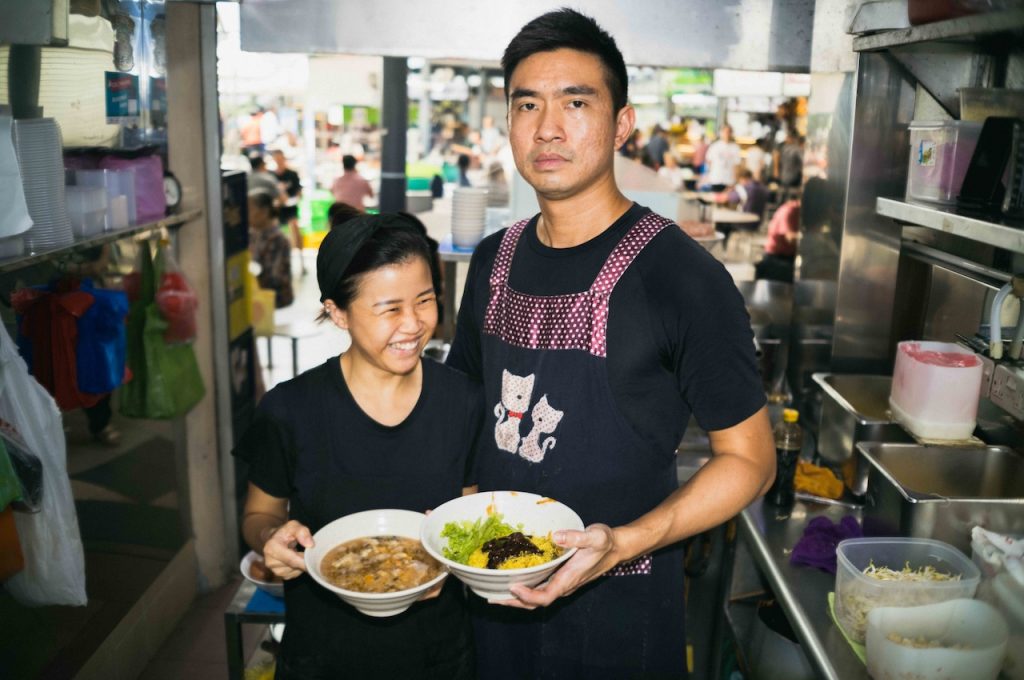
Justin Lim and Kai Lin, the owners of Seng Kee Mushroom Minced Meat Noodle at Serangoon Gardens Market & Food Centre
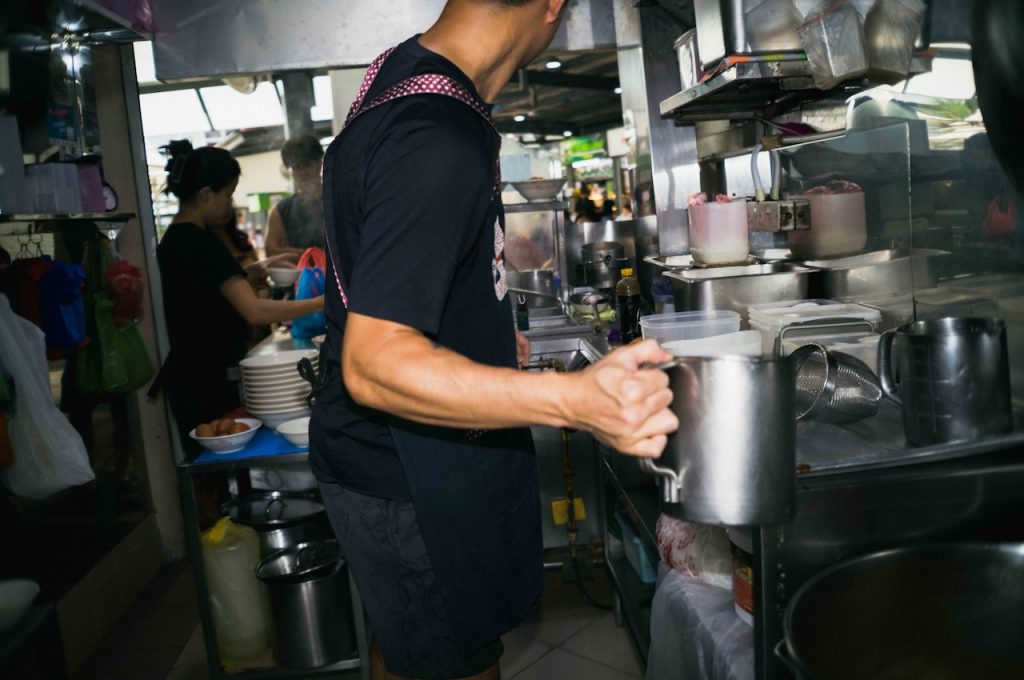
“Negative comments are unavoidable. Once they see a younger person cooking, comments like ‘Why so different?’ or ‘The standard has dropped’ come in. This is even though [nearly] everything was exactly the same as what my father-in-law was doing.”
It’s hard enough already to attract young Singaporeans to enter the hawker trade—and when they do, they’re cooking under a relentless public microscope, where every plate is treated like a national trial judged by citizens who demand tried-and-true perfection on a fast-food budget.
It’s a sharp reminder that while Singaporeans desperately want hawker culture to survive, that desire carries a preemptive verdict: that whoever takes up the mantle will never be as good as the hawkers who came before.
These days, young hawkers are managing more than steep rents and physical grind. Before their first service, they’ve already absorbed impostor syndrome—the suspicion that anyone this young is temperamentally unfit to keep the culture alive.
The Hawker as a Costume
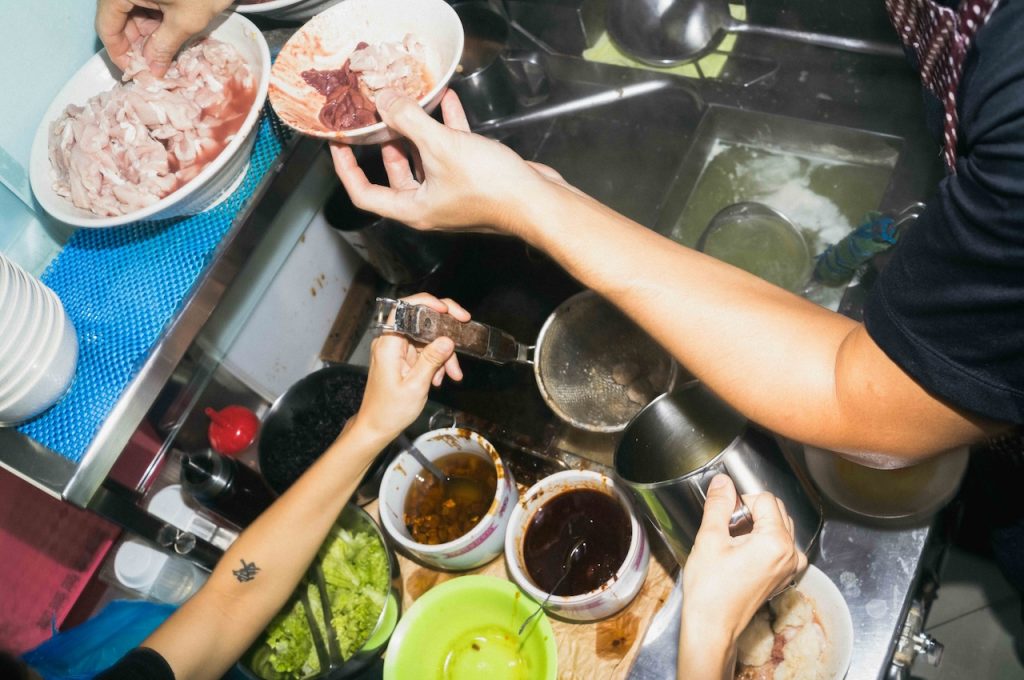
The public eye can be brutal in a country of opinionated foodies. Older patrons and nostalgic purists look at these young faces with immediate scepticism, throwing out criticisms that range from questioning their competence to demanding arbitrary menu changes. A slightly lighter shade of gravy in lor mee or mee rebus could be called a watered-down shortcut. Minor variations in noodle texture during a peak-hour lunch rush are weaponised as proof that younger cooks lack competence.
It’s a sore point for second-gen hawkers like Ayuni, who remains committed to authenticity while navigating the expectations of the elderly folks making up most of her inherited customer base. She cites her close relationship with her late grandmother as the cornerstone of her passion for heritage cooking.
“My grandmother gave her nod of approval to the food I made. It gave me motivation and persistence to try my hand at Malay heritage food.”
Today, Ayuni and her mother, Azizah Yusof, continue what her grandfather started in Tok Ayah Delights: doling out comforting Malay and Javanese classics. Every freshly ground batch of sambal and every arduously assembled batch of crunchy ayam penyet or mee siam gravy serves as a testament to her passion for keeping her culinary heritage alive.
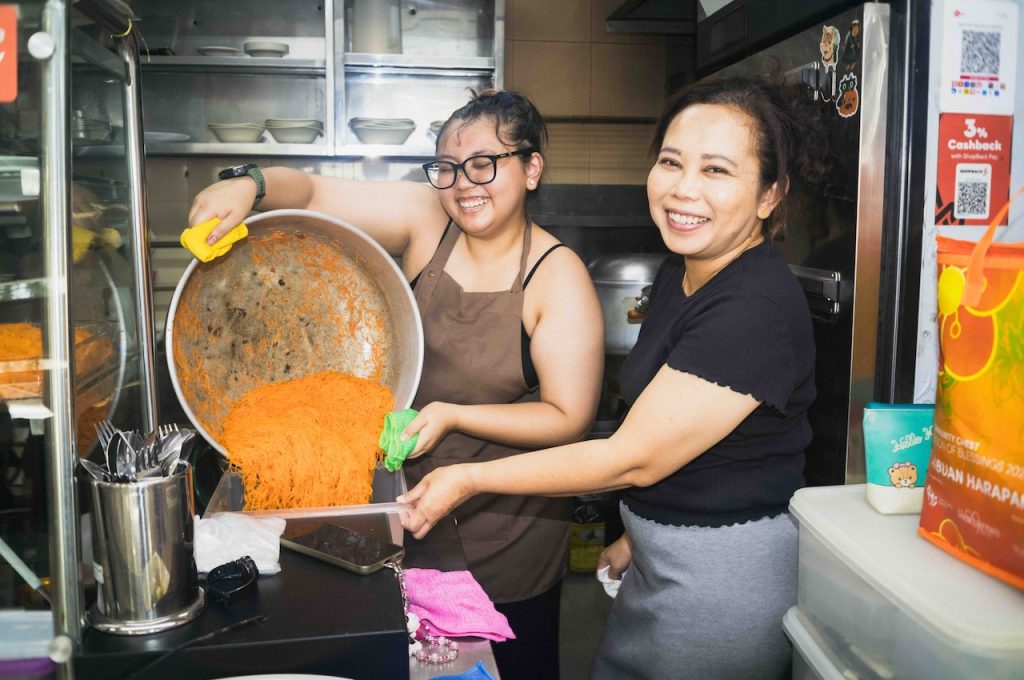
But because hawkers like her don’t fit the romanticised archetype of a weathered, grumpy uncle or auntie, they face a subtle erosion of professional authority.
“Customers do generally have a preconceived notion that since I’m young, I probably don’t know what I’m doing—or the food tastes different from when my mother is around,” Ayuni shares.
“People do ask sometimes whether I’m just helping out or I’m doing this in the interim while gunning for a job. It’s quite unfortunate that people don’t view young hawkers as competent or doing this as a part of their livelihood.”
Perpetual scepticism fosters an ambient impostor syndrome. At 35, Katong Mei Wei’s Soki Wu expanded his family’s legendary chicken rice from its original Katong Shopping Centre stall to outlets along Club Street and East Village. And yet, even as a second-generation owner who’s been helping out his parents at the stall since he was seven, doubt follows.
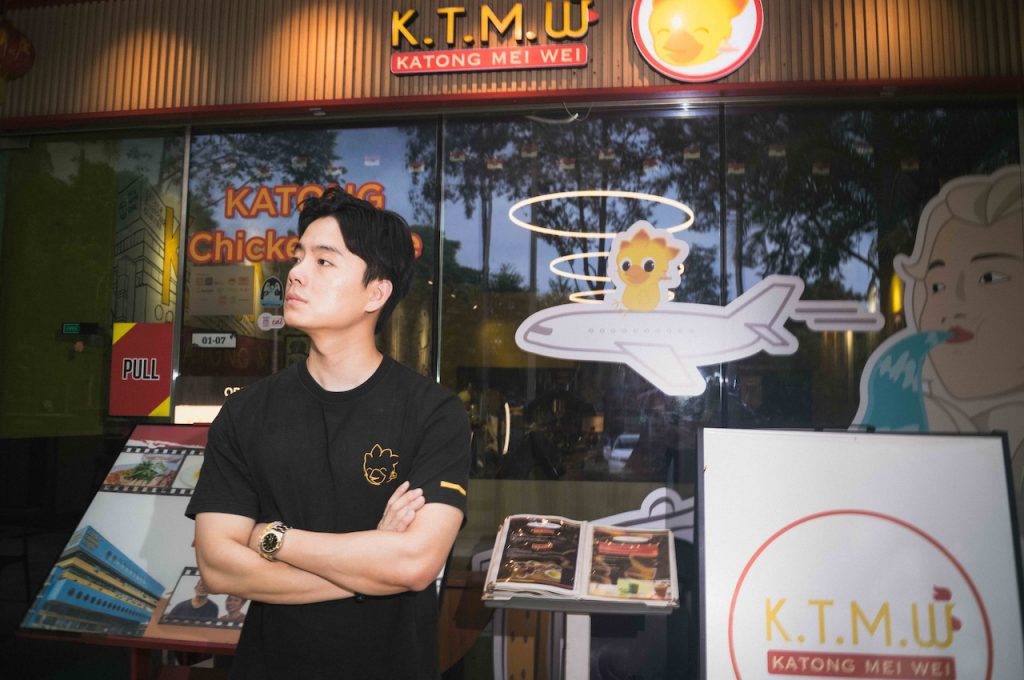
“Some of the elderly customers who have been regular patrons since my dad’s era tend to say my sauces or chicken isn’t as good as before… but I take it in stride.”
Since taking over the beloved brand in 2018, Soki has learned that dealing with constant criticism requires a thick skin. And as a millennial digital native, he catches it twice—online and at the stall.
“Everyone is entitled to comment or provide feedback on whatever they think is right or wrong. People can judge you no matter what you do. Some people out there are meant to pull you down. I have to be confident in what I’m putting out there for my customers.”
Even so, these offhand comments and casual critiques make young hawkers feel like they’re merely wearing a costume, performing a working-class identity to please a nostalgic crowd. All this, on top of inheriting the structural issues that push their predecessors out of the business.
The Trap of ‘Cheap and Good’
Singaporeans are deeply obsessed with ‘heritage preservation’ when it comes to food. Yet the moment a hawker adjusts their workflow to survive economically or raises prices by 50 cents to battle inflation, they get penalised.
“There is a deeply ingrained cultural expectation that hawker food must remain cheap,” explains Alan Chan, the head chef of multi-cultural Singaporean heritage restaurant Rempapa.
“People will happily spend $18 for a bowl of Japanese ramen without blinking because we associate that with ‘upmarket lifestyle’ and modern culinary techniques. But if a local hawker raises the price of a bowl of bak chor mee from $4.50 to $7.50—even with premium ingredients and hours of labour—there is immediate public pushback.”
That sense of entitlement pins young hawkers to prices that don’t work. Raise them, and the online pile-on comes fast. Ayuni points out the fundamental unfairness of this collective burden.
“Why should we be the only ones to shoulder the burden of the cost? There are people willing to pay upwards of $10 for a single dish.”
The structural financial traps go deeper than just the price of a bowl. There is a massive, unspoken disparity between the old guard who hold grandfathered stalls from the ’70s or ’80s, such as Sungei Road Laksa in Jalan Berseh and 545 Whampoa Prawn Noodles of Whampoa Food Centre—who pay nominal fees—and young independent operators forced into the cutthroat open-market bidding system where rents easily scale past $1,250 a month.
“The rent isn’t as cheap as it was in 1980,” Ayuni notes bluntly. “Town council charges have even gone up significantly, rivalling our rent. Let’s not get started on the gas, electricity and water charges.”
Because they run small, independent operations, these young cooks can’t bulk-buy ingredients as commercial central kitchens do, forcing them to pay retail premiums that further thin their margins.
Then there’s the sheer physical toll. A gruelling 12- to 16-hour workday of heavy lifting, extreme heat, and grease-splattered hands makes hiring any local help nearly impossible amid a severe manpower crunch.
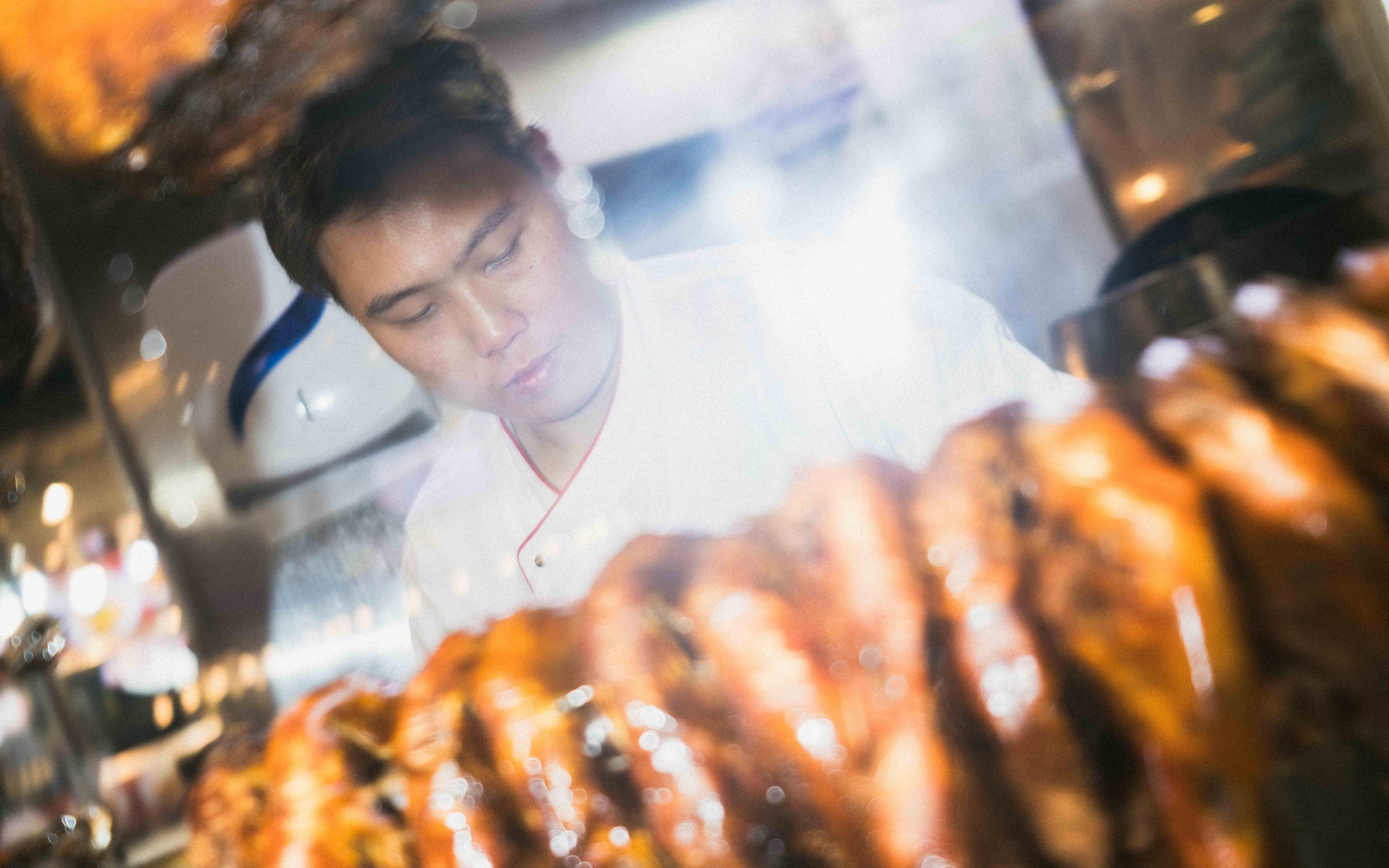
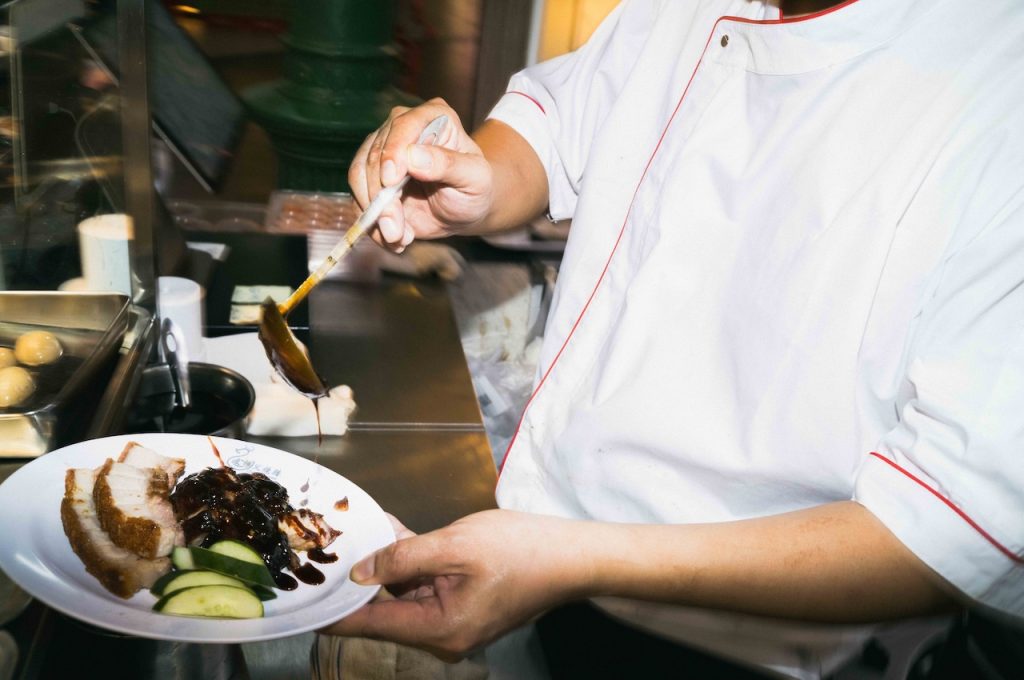
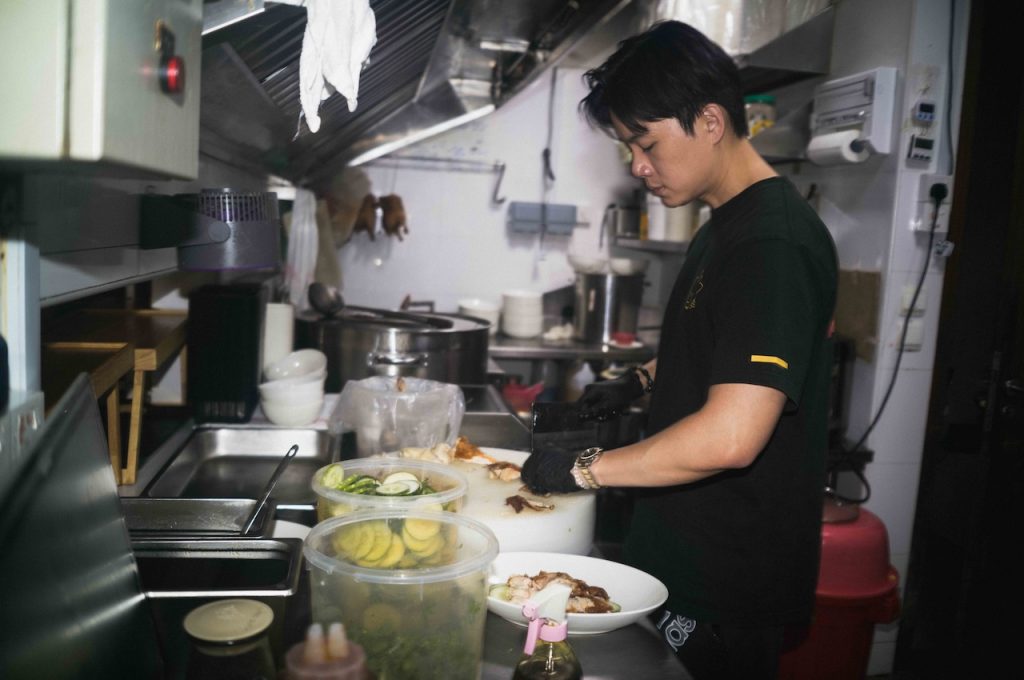
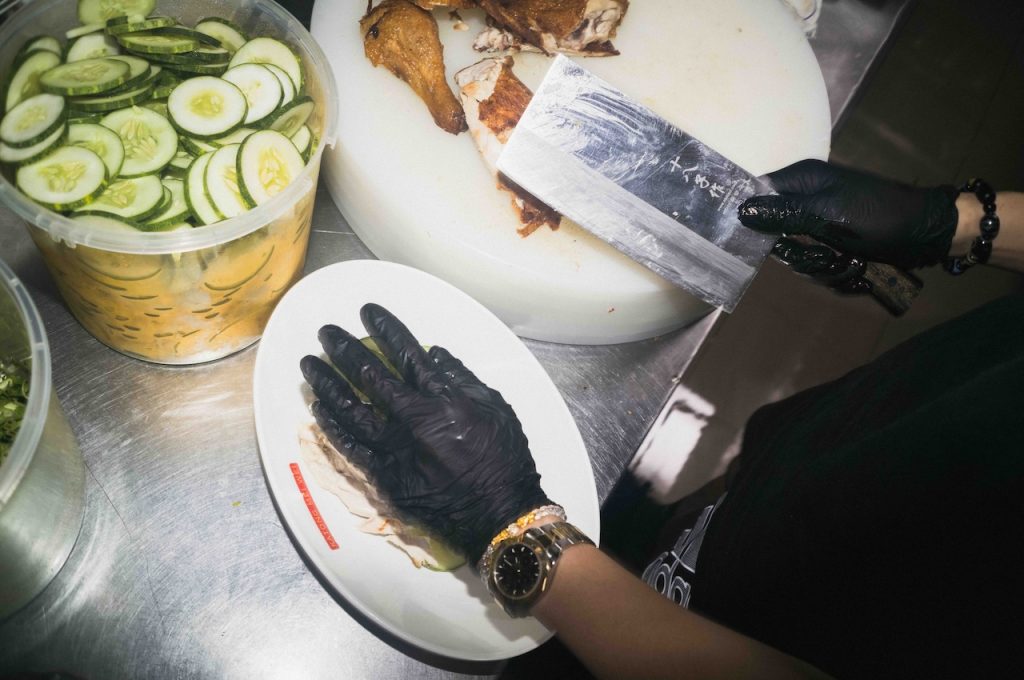
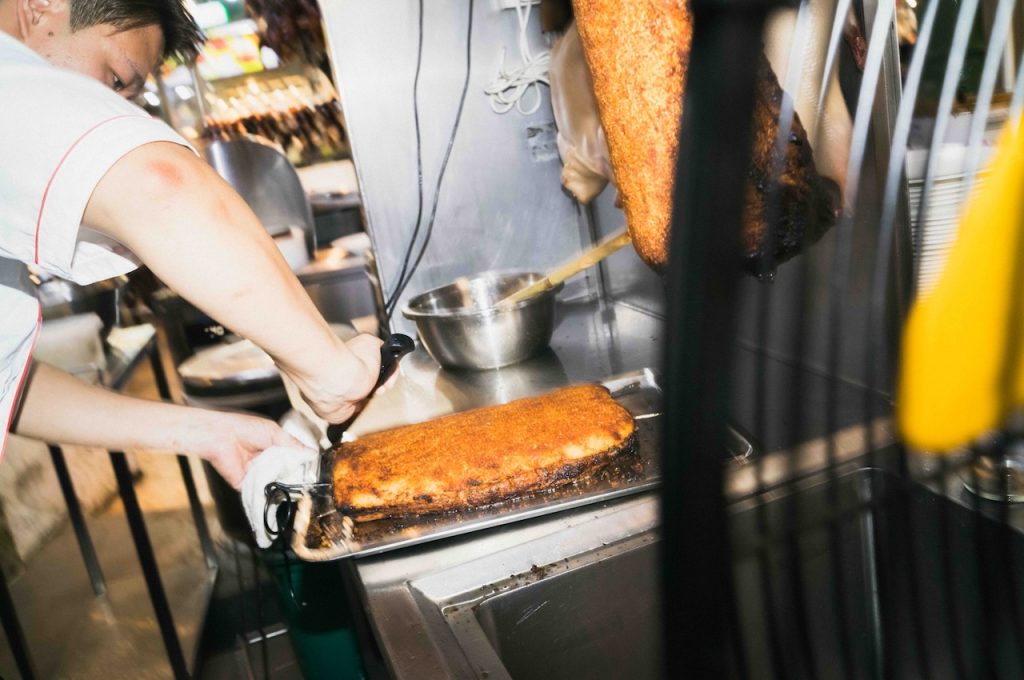
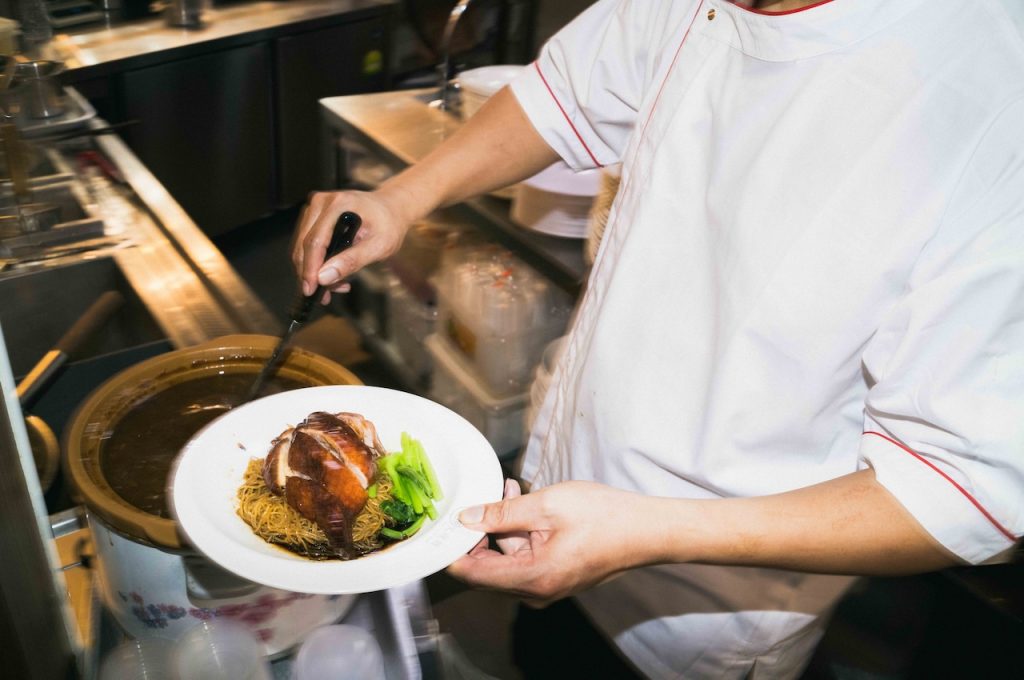
To survive this grind without completely burning out, some have had to rethink the rigid, labour-intensive workflows that traditionalists treat as sacred. Darren Lup, the 35-year-old owner of Chef Lup Roasted at Golden Mile Food Centre, has had to get creative by pulling from his 15 years of experience—including a stint as an executive chef at Hong Kong franchise Kam’s Roast.
“My Angelica Roast Duck and Crystal Char Siu have preparation techniques, marinades and unique flavours and style developed from my time as an apprentice in a roast meat restaurant in Kuala Lumpur,” Darren explains.
“The [traditional] method relies on air-drying or extended hanging in the kitchen. To meet time constraints and preferences, I use cold-air drying and precise overzoning, which ensure consistent airflow and perfectly crisp skin.”
Yet, modifying ancestral workflows to preserve one’s physical health is a tightrope walk. Even though the general public simply wants something that tastes good at the end of the day, heritage food advocate and Makansutra founder KF Seetoh notes that Singaporeans have an incredibly sharp nose for compromises.
“It’s the dedication and technique [hawkers] put into the dish, whether authentic or evolved. You can’t cheat; I can smell a fake story a mile away. Young or elderly hawkers alike are faced with fatal manpower issues and tight overheads and have to persevere and smile.”
Ironically, it’s the simultaneous demand for authenticity and affordability that’s putting the entire hawker ecosystem on life support, KF Seetoh warns.
“Public expectations [of hawker food] and government management of [hawker] culture—or lack of it—need to evolve for hawkers to survive. It’s a slow slide downhill we are facing.”
Performing the Vibe
To keep their heads above water, young hawkers are often forced to become ‘hawkerpreneurs’—acting as content creators, digital marketers, and logistics managers all at once. They are caught between two opposing forces: satisfying the old guard who demand time-frozen tradition, and appealing to a younger demographic that consumes food via social media algorithms.
“Old school vibes have to be there, especially if it’s to show off our Singaporean food delicacies,” Soki observes.
“However, times have changed. I have to ensure that I can attract new, younger crowds by keeping my social media updated and thinking of innovative, crazy ideas for publicity.”
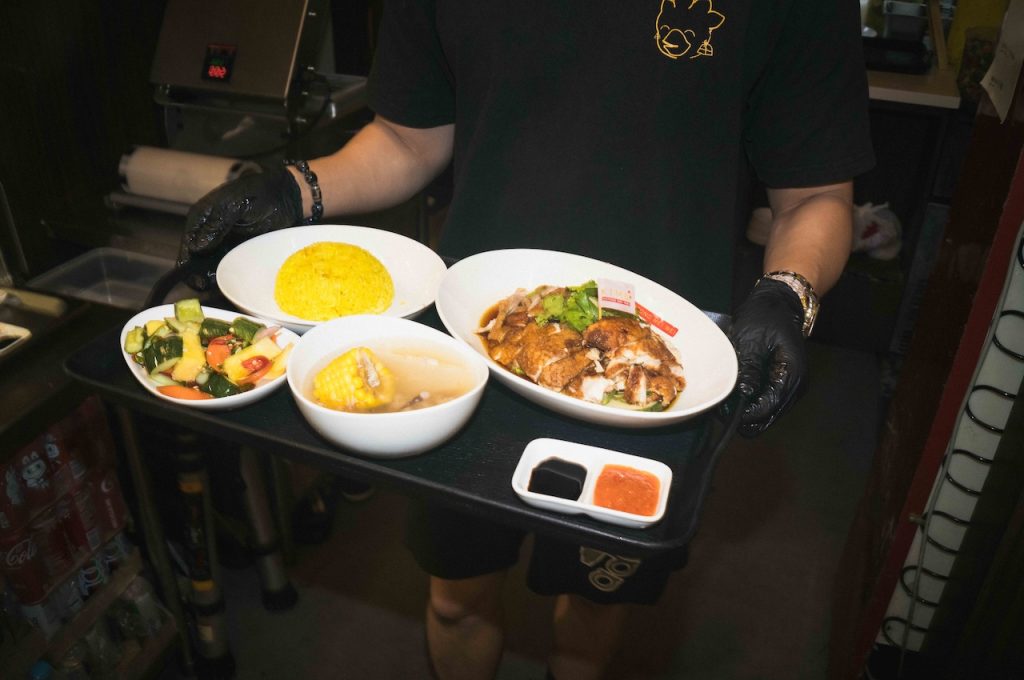
Yet, trying to educate an incredibly opinionated public on the realities of their craft is a tiring exercise. Ayuni recalls a customer who confidently declared her mee siam inauthentic because it lacked peanuts—unaware that the true heritage version relies on a fermented soya bean base.
As someone who’s had to navigate the intricacies of high-end cuisine and authentic Eurasian culinary heritage, Alan argues that we need to redefine where adaptation ends and betrayal begins.
“The turning point between adaptation and betrayal isn’t about the tools or the price tag—it comes down to culinary intention,” he says.
Shifting to combi ovens or vacuum sealers to save a hawker’s spine while preserving the emotional memory of a dish is intelligent adaptation. Butchering a recipe by boiling meat instead of slow-braising it just to widen profit margins is where it becomes a betrayal.
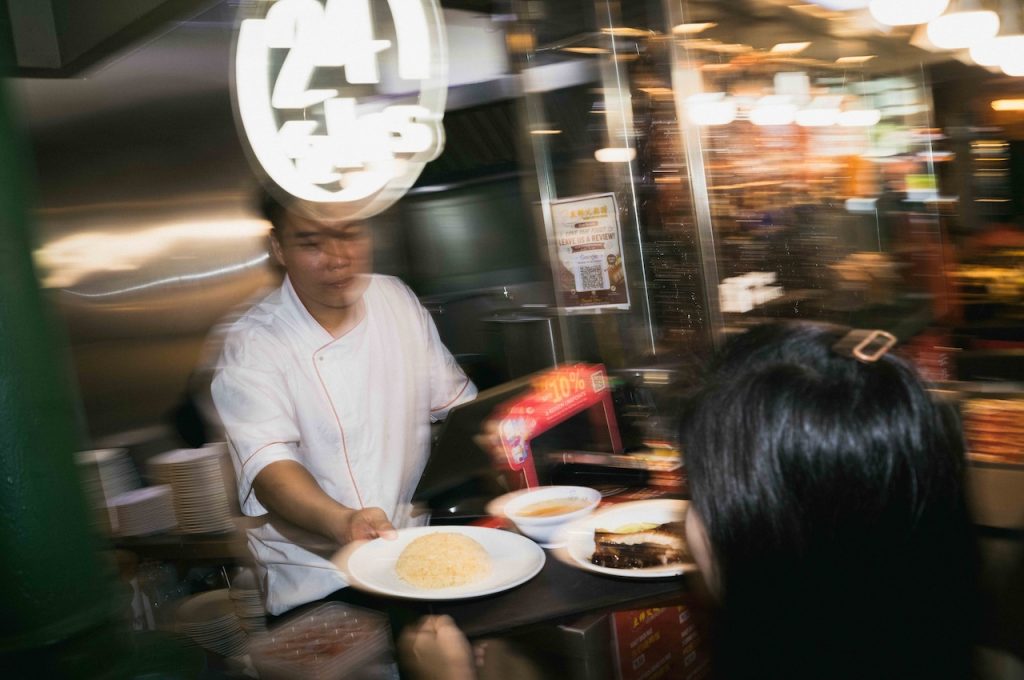
Nithiya Laila, a culinary anthropologist and private dining chef, points out that our rigid definition of ‘tradition’ is historically flawed anyway.
“Many of the hawker dishes we consider traditional in Singapore are themselves products of innovation, migration, and the historical mixing of cultures,” she notes.
“Holding too tightly to a nostalgic idea of tradition can prevent the natural, organic evolution of food. The goal shouldn’t be to turn hawker food into a museum exhibit.”
Ghosts Don’t Pay Rent
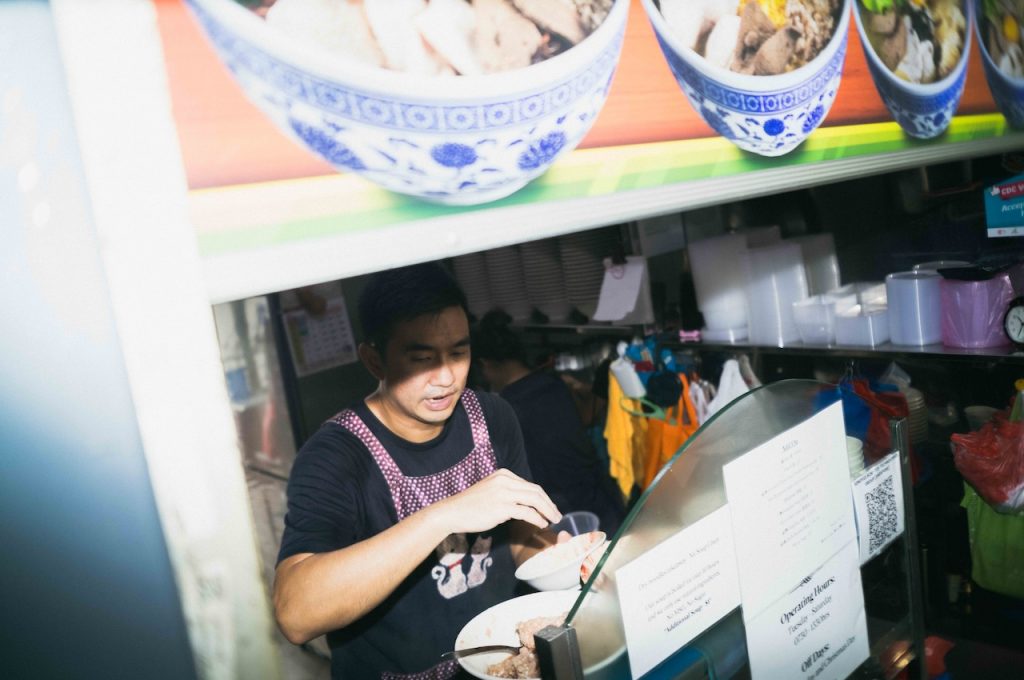
The national rhetoric surrounding the preservation of hawker culture is sweeping and deeply emotional. Perhaps overamplified by food bloggers and media personalities. But on the grease-stained floor of a hawker stall, the ghosts of the past don’t pay the rent.
A shift in cultural attitude matters, Nithiya says, but the economics need to change too—a policy-level rethink of how the trade is structured. Otherwise, the people who might have stayed won’t.
“We could apply a model where there is a general price that reflects the real cost of ingredients, labour, and utilities, allowing hawkers to maintain quality and earn a living wage, while subsidies are provided based on household income so that everyone still has access to affordable food.”
Young hawkers are already doing two jobs. They’re keeping a decades-old craft alive while building a business sturdy enough to survive into 2026 and beyond.
And when nobody’s offering to take either job off their hands, the least they’re owed is to be trusted that they belong in the hawker stalls that they run.