All images by Isaiah Chua for RICE Media.
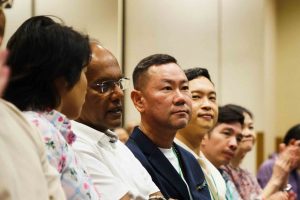
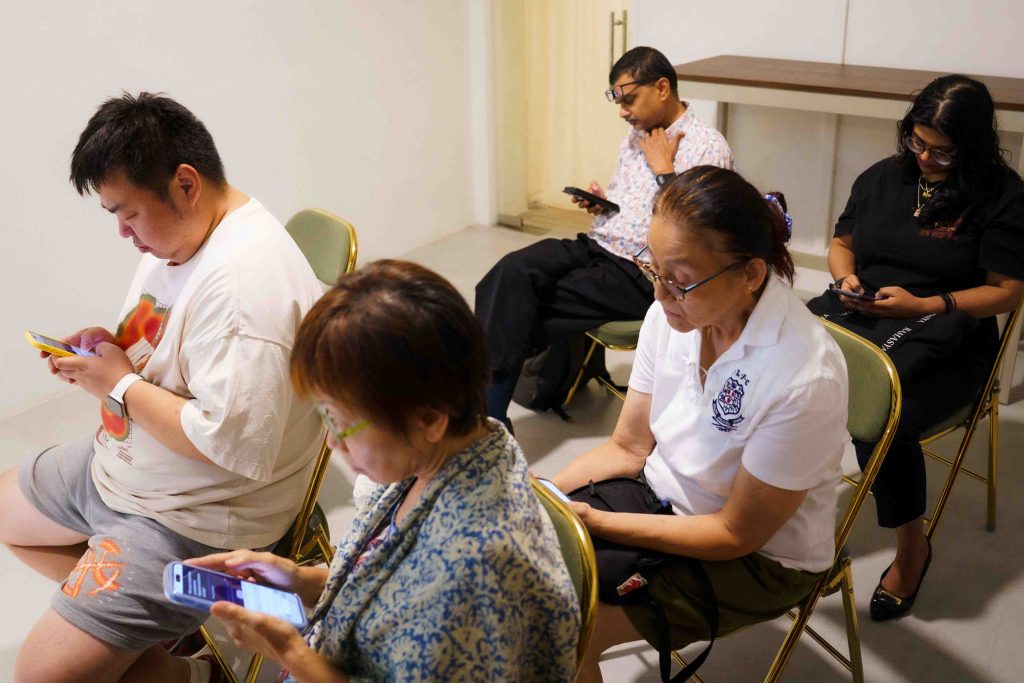
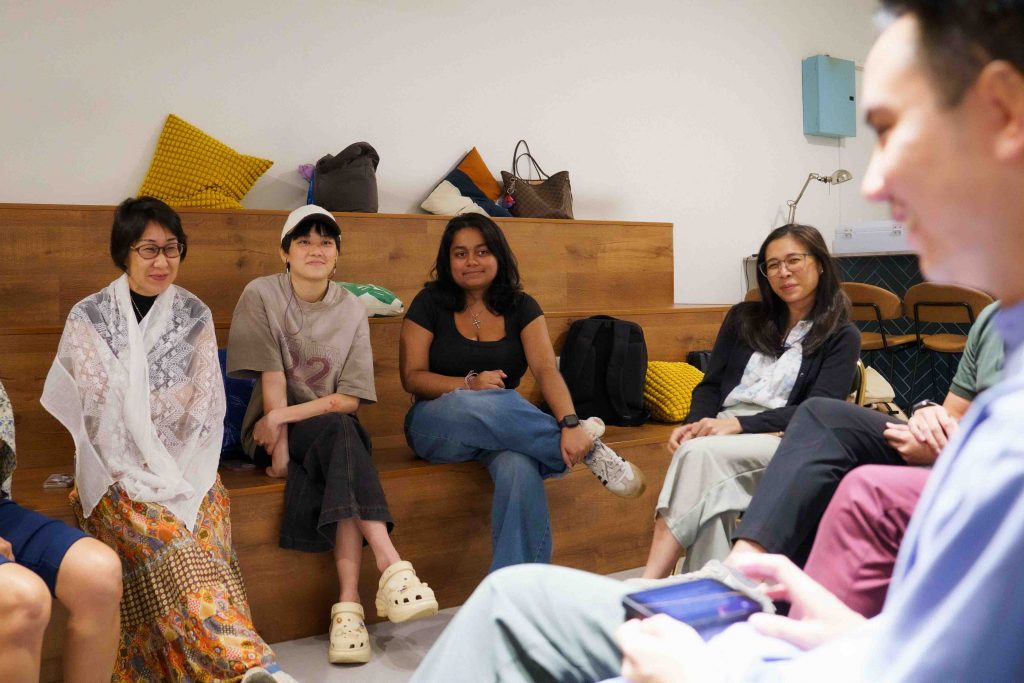
It’s a Thursday evening, three days after Racial Harmony Day, and I’m sitting among 20 other people at a community dialogue on race.
Like other community conversations organised by RICE, this event is meant to be about sparking candid conversations. But the energy in the room is still somewhat tentative.
For a warm-up activity, we’re asked to share a time when we experienced racial harmony.
“Racial Harmony Day celebrations,” someone offers.
“Sharing swear words of different languages together,” another participant says. This one gets a few scattered laughs.
But when prompted to share where they feel they can’t talk about race, the answers come fast: with family, with parents, with private-hire drivers, with the “majority race”.
What seems to go unsaid: we have an aversion to confrontation and uncomfortable conversations. We feel like we can’t talk to some people about race because we know we may not see eye to eye.
Why is it so hard to talk about race in Singapore, even when we’re taught to celebrate racial harmony? And what does it really mean to live in harmony when so many of us feel we can’t talk about race at all?
What Does Harmony Really Look Like?
In the spirit of the community dialogue, I won’t name who said what. But throughout the small group discussions, one idea keeps resurfacing: We’ve conflated harmony with avoidance.
Singapore prides itself on its racial harmony. Once a year, school children turn up to school in traditional costumes. Mosques, churches, and temples harmoniously co-exist on the same streets. Our MRT announcements come in four languages (and even a few dialects).
But this harmony seems fragile or performative when we consider the fact that many of us aren’t equipped to have nuanced conversations on race, either from fear of saying the wrong thing or never having had the space to practise.
Several participants say that these conversations were never modelled for them in school. Racial Harmony Day, for example, often amounts to little more than dressing up in cultural costumes.
There’s little room to probe, to sit with discomfort, or to challenge inherited assumptions. And so, most of us simply don’t know how to have these conversations.
One participant has a scathing view of the way Racial Harmony Day is celebrated in schools:
“I think it is pointless. It’s not even standardised. Schools with fewer resources play a video for the kids at assembly. In schools where the faculty gives a shit, they will do more like having diverse foods or having cultural performances.”
On Systemic Issues
Of course, systemic structures like Chinese-Malay-Indian-Others (CMIO) framework shape how we think and talk about race. In my breakout group, the conversation turned toward the framework, naturally, and how it’s arguably reductive and outdated.
I sense some genuine enthusiasm during the discussion. It feels like most of us have been thinking these things, but just haven’t had the place to discuss them openly and productively.

One participant, who is Sinhalese, shared that her identity card lists her race as Others because she doesn’t identify as Indian. Others pointed out how the ‘Indian’ category is often used as a catch-all for South Asians like Sikhs, Pakistanis, and Malayalis.
Sure, they’re just administrative categories. But they impact everything from housing allocation to which mother tongue you take in school. And sorting people into these narrow categories doesn’t exactly make meaningful representation easier.
The Importance of Ground-Up Conversation
Things like the CMIO framework are systemic. We can’t do much about them. But besides calls for top-down policy change, what can we, as individuals, do differently in our daily lives?
One participant reflects at the event’s closing: “We can’t possibly change the minds of everyone in Singapore. But it starts from our own small circles. You’ll then see a ripple effect from there.”
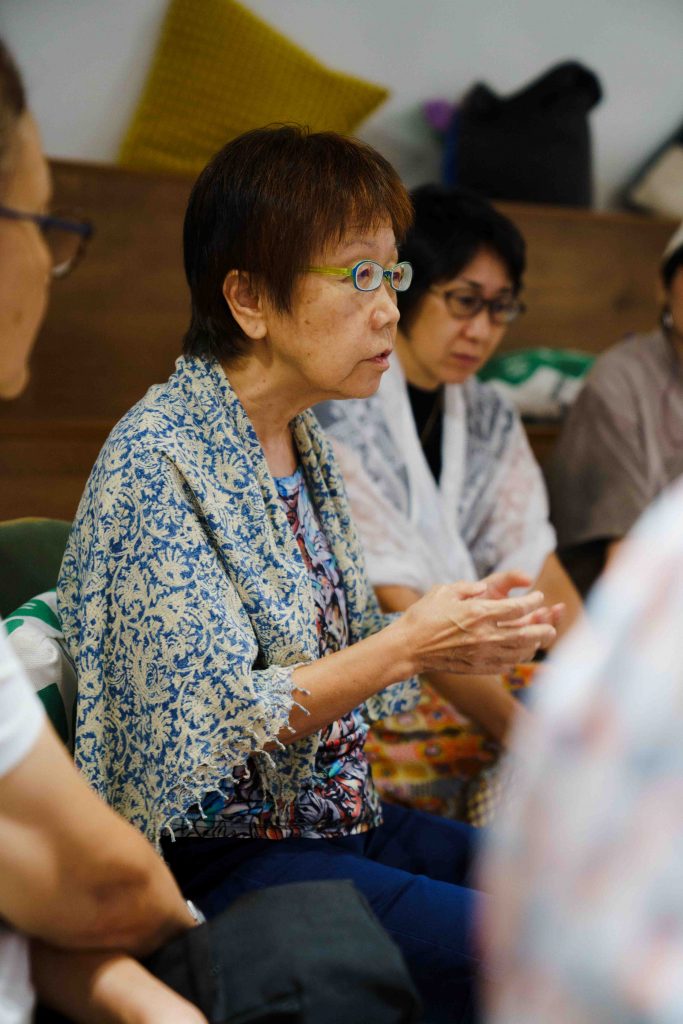
That sentiment stuck with me. When we begin to have open, constructive conversations, we’re better able to untangle some of our more complicated feelings about race, and about the things we often conflate with race.
For instance, what gets framed as a racial issue can sometimes be entangled with concerns over job security, class, or nationality. Consider the debates we often hear over the India-Singapore Comprehensive Economic Cooperation Agreement (CECA), for instance.
It’s easier to direct frustration at a racial group than to confront the deeper, more uncomfortable truths about economic inequality or globalisation. This scapegoating of race isn’t unique to Singapore, but our lack of discourse on it makes it harder to dissect.
Where Do We Go From Here?
The point of the evening wasn’t to generate solutions. It was simply to start a conversation, and to do it in a room that was open, honest, and maybe a little bit messy.
When we encounter views or behaviours we disagree with, our instinct is often to confront. To call someone out. To hold them accountable. But when it comes to race—where people already feel defensive or unsure—this approach can shut down dialogue before it even begins.
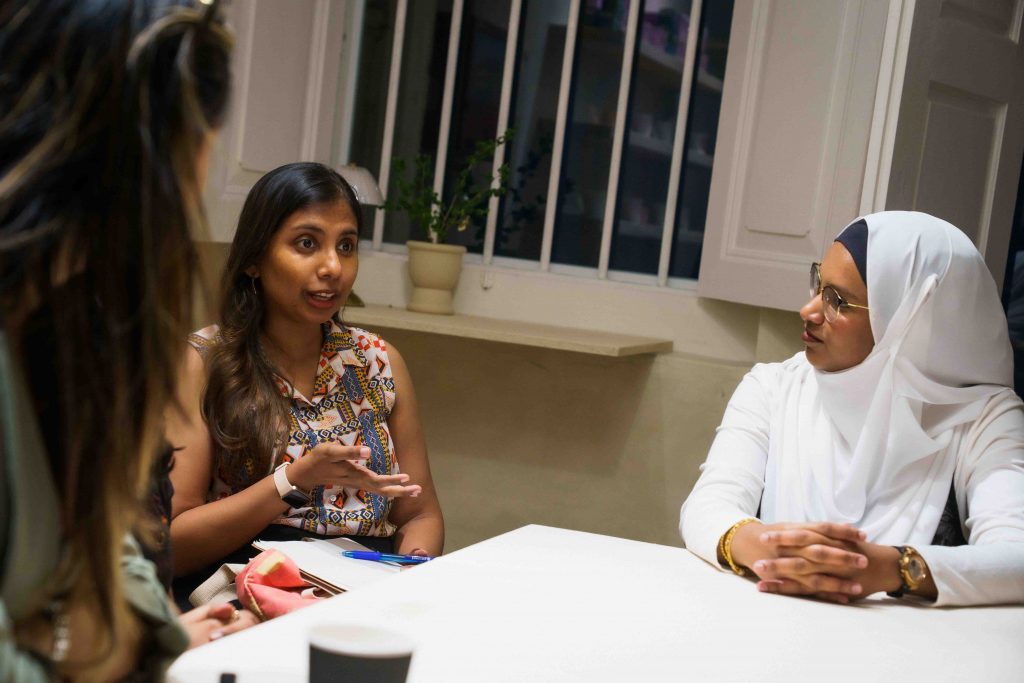
Especially when someone is acting out of genuine ignorance, not malice, confrontation might do more harm than good.
Instead of assuming ill intent, we might ask: “Where does that come from?” Not to excuse harm, but to understand its roots.
And in doing so, we offer people a path towards dialogue. Maybe that’s what real harmony looks like—being able to ask each other hard questions and believing that they’ll bring us closer instead of tearing our social fabric apart.