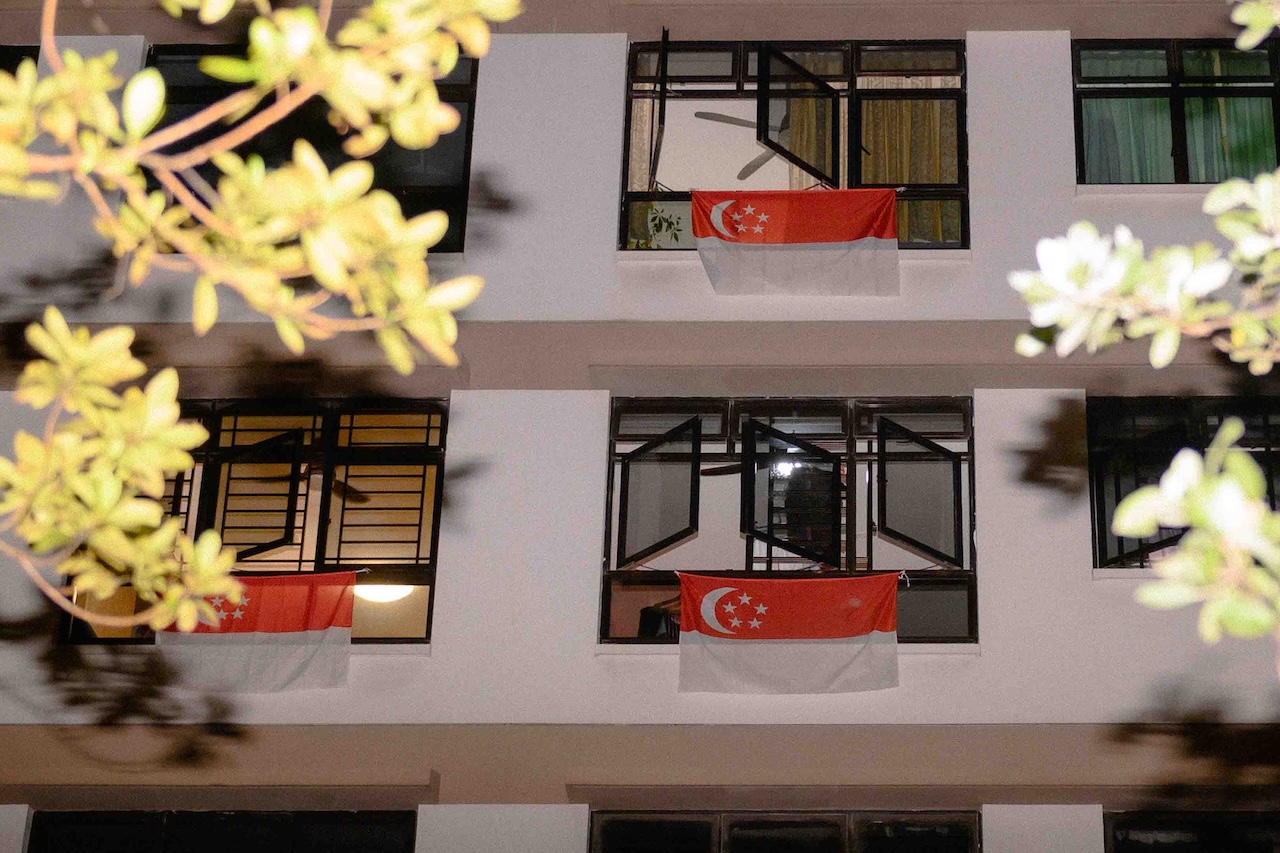
All images by Isaiah Chua for RICE Media.
I’m ashamed to admit that my family has gone decades without flying the Singapore flag. The only reason why we procured a flag this year is that it was free on Shopee.
When I brandished our household’s free flag for my mother to see, excited that we’d finally be able to partake in a National Day tradition, she was unexpectedly brusque.
“Hang for what?” she asked. She’s a woman of few words, but I got the sense that she felt it was performative.
She’s not the only one who feels that way, I suppose. In recent years, there has been anecdotal evidence of “a seemingly lacklustre interest in flying the national flag”, as one CNA op-ed puts it.
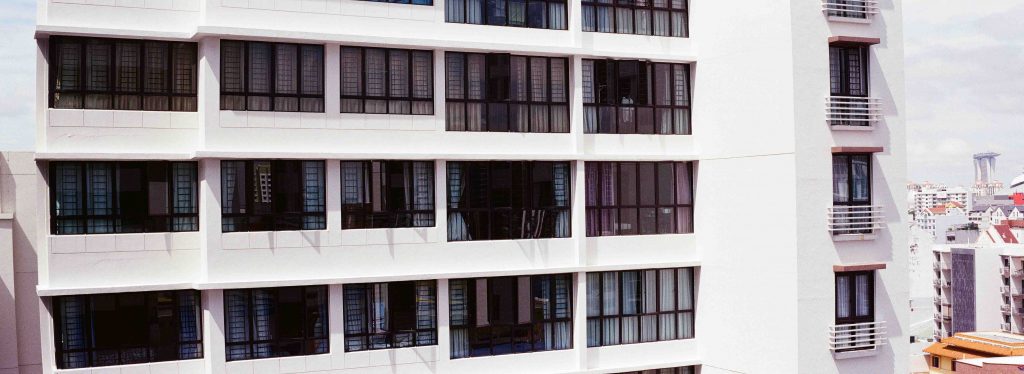
It’s a trend that’s hard to qualify. In some estates, patriotic citizens take it upon themselves to erect flags. In other cases, town councils put them up, whether you ask for it or not. It’s hard to tell who’s responsible for which flags.
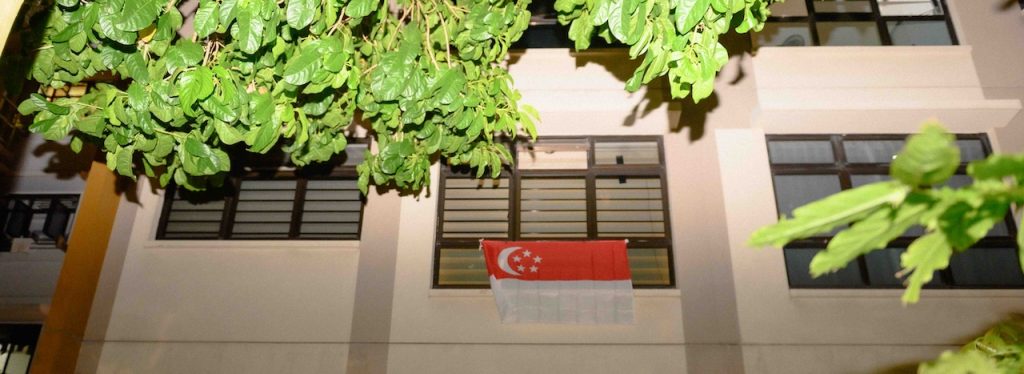
Apathy can be visible, though—when I look out the window at my neighbourhood in Bishan, barely any flags greet me.
We all still celebrate National Day with the customary pomp and circumstance: parades, fireworks, chilli crab everything. But for many Singaporeans, the most personal expression of national pride—hanging the flag—has become a deliberate choice.
Flying the flag is no longer a universal gesture, but I feel like that’s what makes the remaining ones more meaningful. And these are the people behind the flags that continue to fly.
The Right Way Up
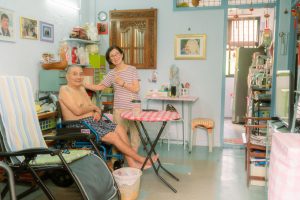
On a quiet weekday afternoon—the worst time ever to knock on doors for something like this—I meet an 80-year-old woman. She’s staring out the window of her corridor HDB unit in Bedok, so she notices me right away when I approach her door.
At first, she’s wary, but she softens up once she realises I just want to talk about the flag outside her home. It simply appeared one day, she tells me. A volunteer, a man who appeared to be in his seventies, helped her hang her flag this year, but she insists she would have done it herself.
She’s been flying the flag every year for decades, she says.
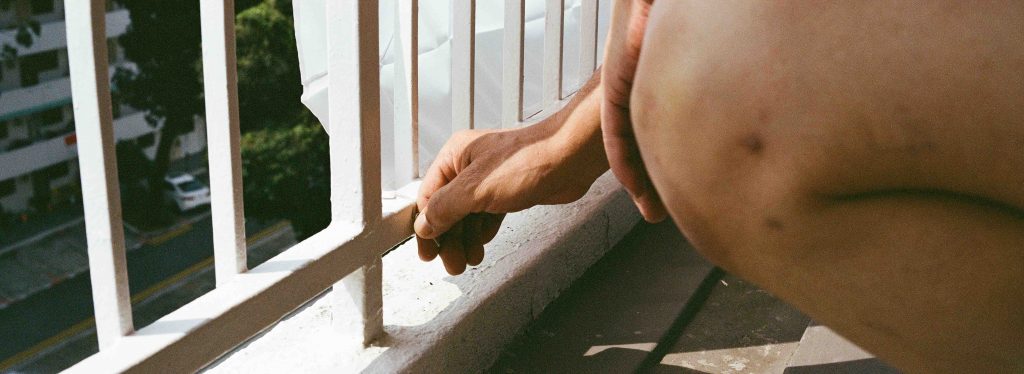
“It’s a form of respect for the country. It feels like celebrating Singapore’s birthday. Some people don’t bother. But maybe because I saw with my own eyes how the country grew, I feel a sense of pride.”
She stares off into the distance, recalling harder times. “Now, we have a good, stable country with good jobs. Look at how chaotic it is overseas. They’re talking about a third world war. Here, things are good.”
The flag flaps upside down, tugged by the wind. “Before you go,” she asks gently, “Can you help me turn it the right way up?”
Country Over Party
“It’s our country’s birthday—not the PAP’s (People’s Action Party) birthday.”
That’s one of the first things 65-year-old Mr Chua tells me. We’re standing outside his Jalan Kukoh flat, slightly yelling at each other so we can be heard over his dog’s barks.

Despite his personal disdain for the ruling party, the taxi driver still makes it a point to fly the Singapore flag each year.
“Why do I put up the flag? I’m Singaporean,” he offers matter-of-factly. “Some people think differently. They don’t put it up because they don’t like the government. But putting up the flag has nothing to do with the government.”
Money is tight for him. The night-shift driver grumbles about how booking apps have undercut his earnings. Still, when he saw the flag for sale at a supermarket a month ago, he quickly bought one.
He was determined to procure one this year, he explains. Last year, when the divorcee moved into his flat, he went out to buy himself a flag, only to find they were all sold out.
“Of course, I hope to see more people hang [the flag] up. But people have different ways of thinking. Their finances are also different. Buying a flag costs $4.90. I can use that money to buy a meal.”
For him, it’s a worthy sacrifice. Pride drips from his voice when he points out the extra ties he’s added to the bottom of the flag so it doesn’t flip upside down.
Chua was born in 1960, just after the cutoff for the Merdeka Generation benefits. “I served NS (national service) too, you know! But what do I get?”
He’s resigned, and more than a little bitter. And still, the flag flies.
Starting Young
A stone’s throw away from the ageing Jalan Kukoh estate is Pinnacle@Duxton, possibly the most well-known HDB project in Singapore. It is, after all, a public residential estate in the middle of the city.
Avyaneesh, a 21-year-old university student, tells me he was five when he first noticed the flags around him. “I asked my parents—how come we don’t put one up?”
His parents took his cue. They’ve flown the flag most years since.
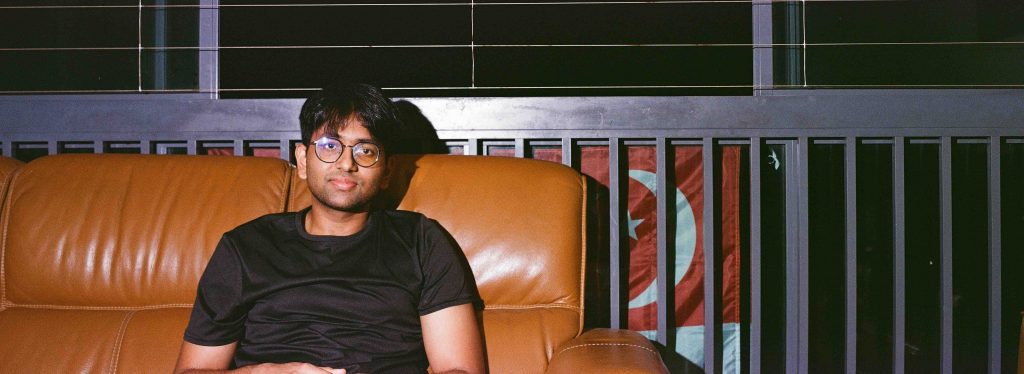
“Last year we forgot,” he admits. “But this year, when it came in our mailbox, we put it up immediately.”
“It’s around National Day—you feel like this country has come a very long way, and you want to appreciate it. It’s a small thing to do,” Avyaneesh explains.
Seeing others fly their flags also fills him with pride. “It shows that even though our society isn’t homogeneous, at least we have something in common.”
His parents are immigrants who’ve been here for over two decades. Flying the flag is also a gesture of gratitude for what the country has given him and his family, he affirms.
For Avyaneesh, patriotism doesn’t mean blind loyalty, though.
“I do love the country. But I also think it’s okay to point out its flaws. We are as strong as our mistakes, and our ability to learn from them.”
The Immigrants Who Never Left
Over in Jalan Kayu, Mdm Huang and Mr Sun, retired doctors from China, have lived in Singapore for about 16 years. They’re not citizens. They’re not even Permanent Residents. But they fly the flag every year.
“The first time we put it up was in 2015,” Huang tells me. “We had started staying here long-term.”
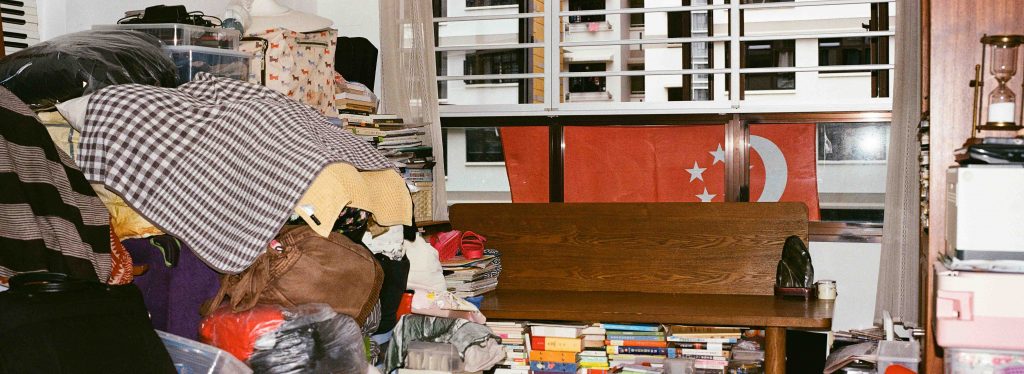
The kindly couple speaks about Singapore with unabashed affection. I learn that they haven’t been back to China in about eight or nine years.
“Even though I’m not Singaporean, I feel proud when National Day comes,” Huang says.
“The MPs come down weekly. If there’s an issue, it gets raised in Parliament. We see that the country is constantly adjusting its approach to things based on feedback. It’s really rare to find a country like this.”
Their flag is faded; its red a little less vibrant than the other flags around. But it’s carefully kept, cleaned before and after every use.
“It’s an important ritual,” Huang says. “Even though I’m not a citizen, I’ve lived here for many years. This is my second hometown.”
The couple, who make it a point to walk around their neighbourhood every National Day to soak in the atmosphere, tell me that they’ve indeed noticed fewer flags flying these days. But they’re optimistic, chalking it up to the fast pace of life here.
“Maybe the younger ones are too busy. I don’t think it means they don’t care. Maybe they don’t even look out the window,” the pair laughs.
And yet she remains hopeful.
“I still believe Singaporeans are united. I still believe that we all love this country. There’s nothing unlovable about this country.”
The Couple With the Open Door
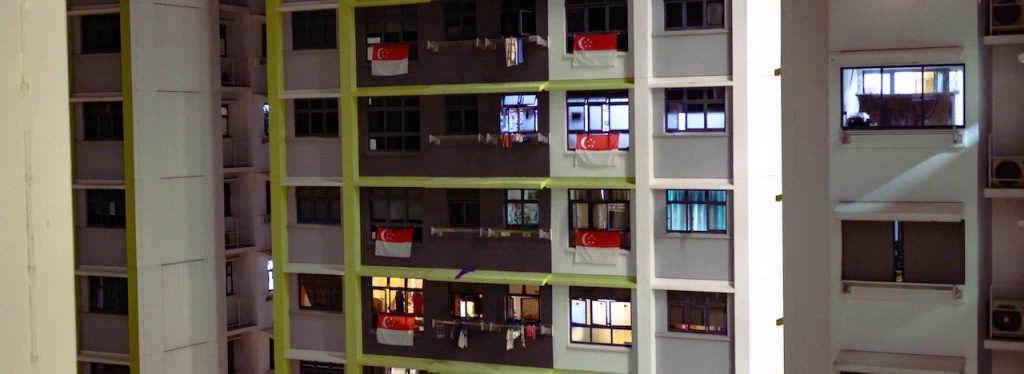
In another block nearby, David Joo and Mdm Kwek—both in their 70s—hung their flag early, in July. They had moved to this new estate from Bukit Batok three years ago, to be closer to their daughter.
“We only get to celebrate National Day once a year,” David says. “It’s a must.”
Kwek is more passionate. “Sometimes when I see people not putting it up, I get heated up!”
Their old estate, they recall, was full of flags. Here, not so much.
“That block opposite—14 storeys. Only one or two flags,” David sighs. “But it’s not good to criticise people or interfere with what they do.”
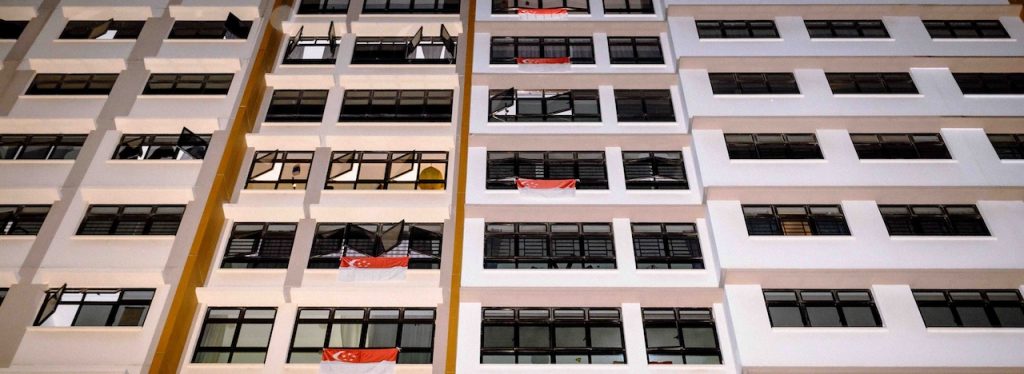
They do notice how things have changed.
“People rarely open their doors nowadays,” Kwek says. “But ours is always open.”
Still, the couple’s patriotism is firm and uncomplicated. Our conversation turns to Lee Kuan Yew, and their eyes light up. Having been born in the 1950s, they saw the nation go from third world to first with their own eyes. For them, the flag is a reminder of the strides the country has made.
“When I see how far we’ve come—our prosperity, our powerful passport—I’m proud,” David says. “And we still remember LKY on his birthday and death day every year. The 16th of September and 23rd of March.”
Of Flags and Patriotism
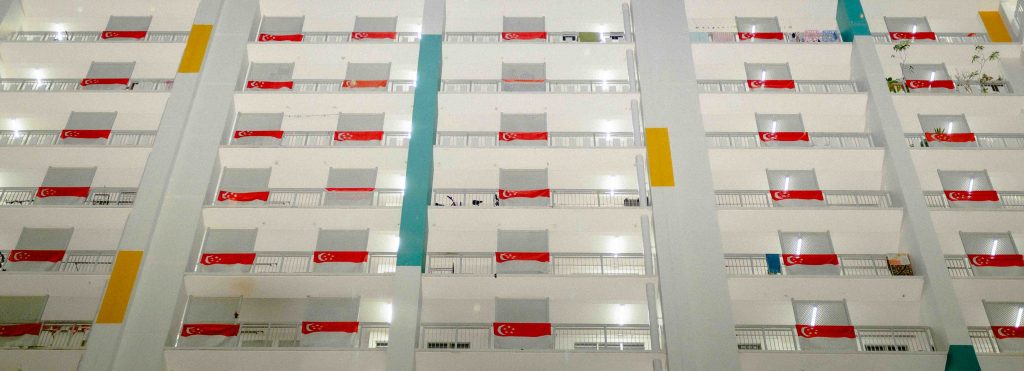
Admittedly, it’s easy to read too much—or too little—into the presence or absence of red and white. Some flags are hung by volunteers. Some are bought and tended to, strung with extra cords so they won’t flip. Some flutter in the wind, carelessly strung up in the wrong orientation. Others are left in drawers or forgotten entirely.
For the elderly couple who have watched the nation rise from mudflats and kampungs, the flag is a record of continuity. For the newcomers who hoist it each year with meticulous care, it is a kind of promise.
To fly the flag isn’t just to mark National Day, or to fulfil some checkbox to be a good citizen. And as tempting as it is to jump to conclusions about national spirit based on the number of flags flying around us each year, this simply isn’t something we can quantify.
Instead, maybe we should see flying the flag as a way of staking a claim to this country we call home, and—cheesy as it may sound—a way of telling our neighbours: I’m with you.