All images courtesy of Gerald Tan / Jeegly Media
“They were all sceptical, bro,” says Shahan Shawn with a wry smile. He’s referring to his friends who laughed when he pitched Singapore’s first-ever matcha dance party.
The doubt wasn’t misplaced. Even Shawn, a 24-year-old DJ who would go on to create a booze-free daytime rave called Exposure Therapy, once assumed he’d need to sneak out of his own party just to get a drink.
Some of his friends joked about smuggling alcohol inside. But the hardest person to convince wasn’t them. It was Shawn himself.
Since time immemorial, alcohol has served as nightlife’s unspoken pact and invisible safety net—a social lubricant that blurs self-consciousness and softens judgment. On the dance floor, it lets people loosen up without fear of scrutiny. Behind the decks, it gives DJs like Shawn the courage to face a roomful of expectant partygoers.
But what sets Shawn apart is a glimmer in his eye when he talks about his ideas. He chases ambitions relentlessly: an alcohol distribution business, an events company, and now, ironically, a nightlife experiment with no booze at all.
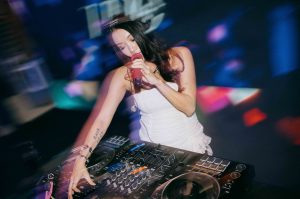
When the day finally came, he stepped behind the DJ console without any alcohol drowning his nerves. The lights dropped, the bass swelled—and Shawn found that he had nothing to worry about in the end.
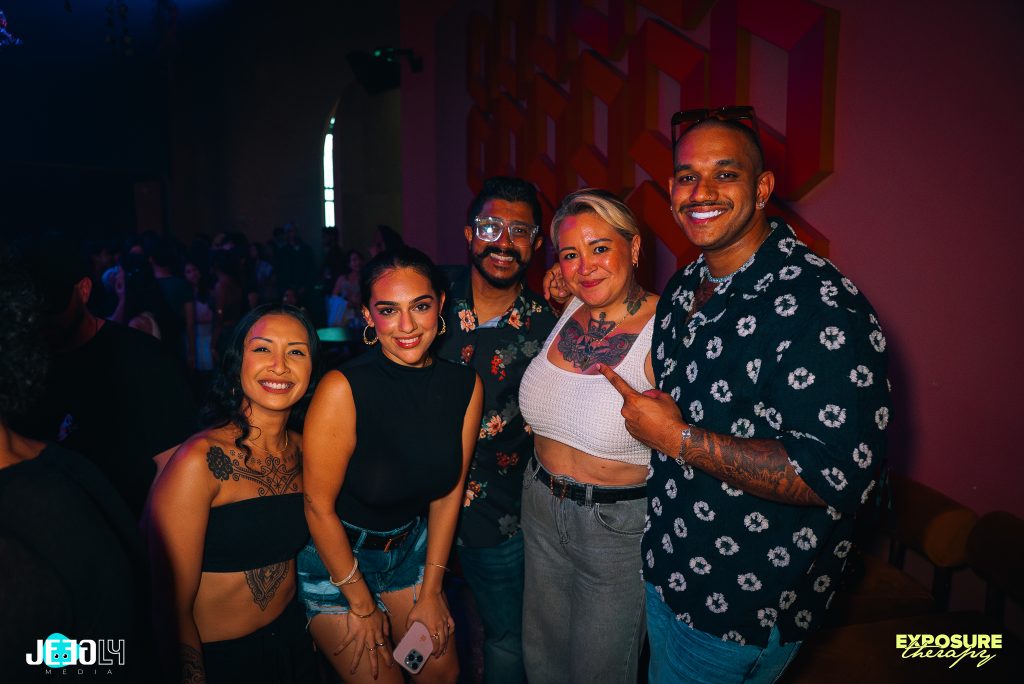
“For the first time in my two years of DJ-ing, I was completely sober,” he recalls. “And because of that, I could fully soak in the crowd’s energy.”
To his surprise, the sceptics surrendered. The heavy drinkers who had once sworn they’d never dance without being under the influence? They lost themselves in delirium, stone-cold sober.
When Shawn announced via the Exposure Therapy Instagram account that Singapore’s first green-tea-themed rave would be held on July 12th, 2025 at Rasa Space, all 350 tickets sold out within days.
Energised by the success, Shawn became a tireless evangelist of a once-outrageous proposal: that sobriety doesn’t have to mean sacrificing euphoria.
Straight-Edge Soiree
Once Exposure Therapy’s second edition was announced for August 15th, 2025, I signed up together with faceless Instagram celebrity @milotruckdreams.
“Looking for the place,” she texts me just after 4 PM on the day of the event. It’s her first time at Rasa Space, a new-ish nightclub at Tanjong Pagar designed by the same studio behind Berlin’s legendary Berghain.
Minutes later, another message pops up: “I’m just following the young girls”.
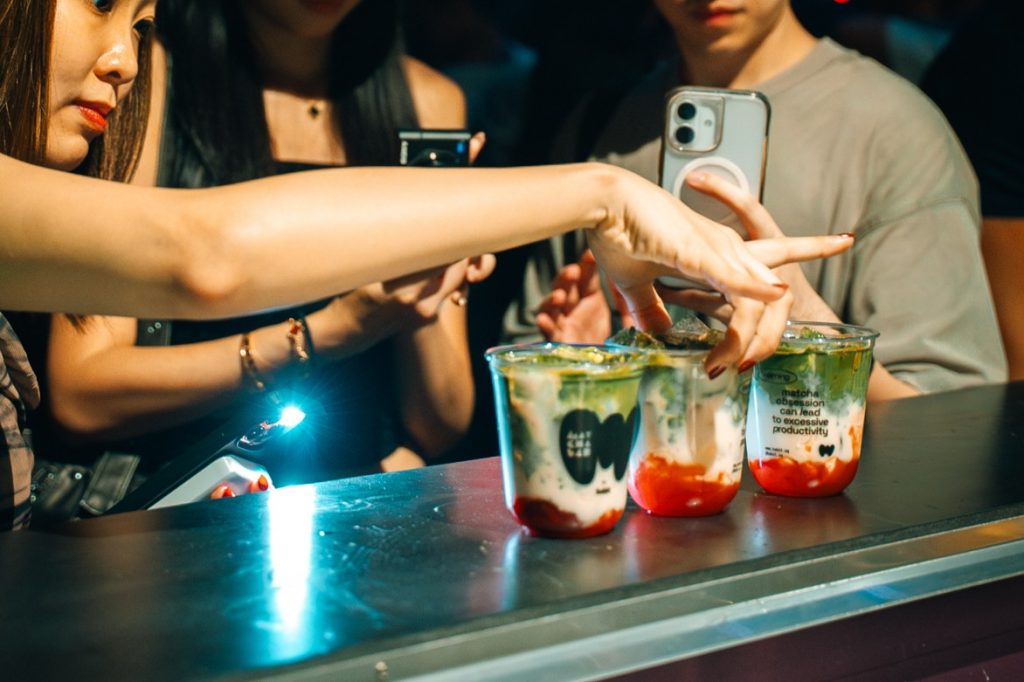
Inside, it’s a sea of twenty-somethings, matcha chalices held aloft, angling for the perfect Instagram shot.
No ‘performative males’ here, just plenty of performative photos.
As an unbilled DJ spins a soft warm-up set, we bump into Shawn, sporting a fresh fade. He introduces us to his co-founder Harpreet Gill.
“I don’t like partying late, so Shawn and I were just sitting in the car one day, talking about what we could create together. That’s how this came about,” she says.
Harpreet, 23, handles the marketing and organisation, freeing Shawn to focus on his craft. But without the social lubricant of alcohol, the vibe at first is undeniably awkward. Attendees clutch their cups and bags like shields, eyes darting anywhere but one another as they scan a half-filled dancefloor.
“It really shows the inhibitions of Singaporeans,” Milotruckdreams remarks.
That’s why Shawn closes the curtains of Rasa Space during his daytime soirées: so the self-consciousness doesn’t creep in from the street.
Unsure of what to do, and half-expecting a sudden banger to magically break the ice, Milotruckdreams and I drift toward the bar to redeem our drink coupons. The choices—strawberry matcha, coconut matcha, or a regular matcha latte—are good. Not exactly transformative, but nobody seems to mind.
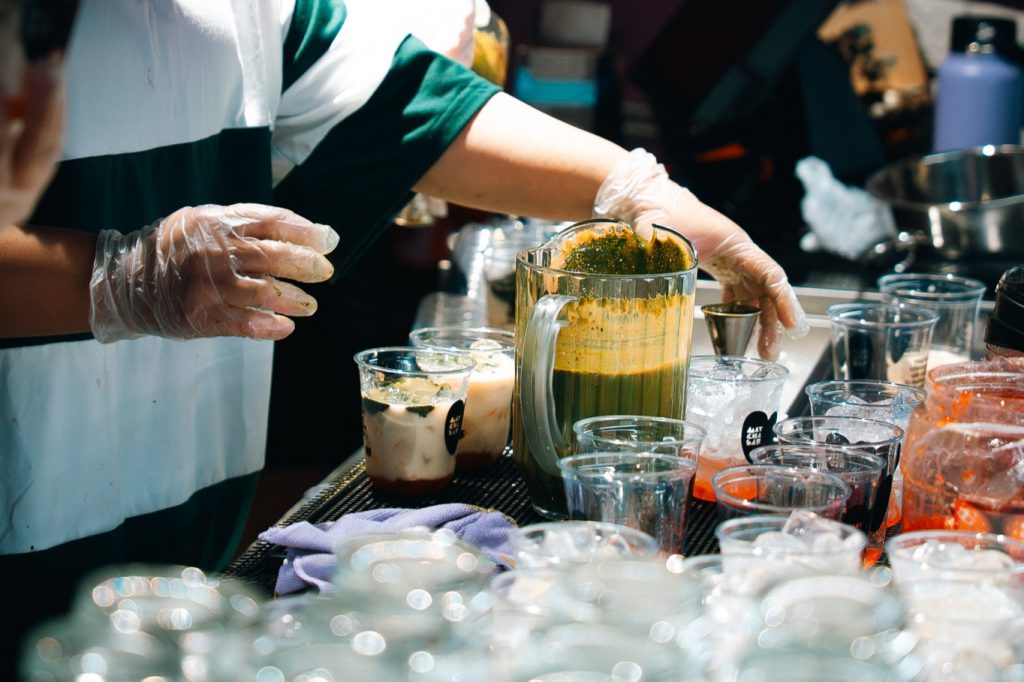
The queue itself feels like a microcosm of the experiment. What should one wear to a matcha rave, anyway?
Some arrive in coordinated Y2K fits, others in nightclub finery, and one girl—in spaghetti strap top, shorts, and flip-flops—looks like she wandered up straight from cramming in the café downstairs.
Sober, the room feels sharper, more exposed. With no beer goggles to blur the edges, every outfit and sideways glance lands a little harder. We are all hyper-aware of ourselves, precisely because no one got the dress code memo.
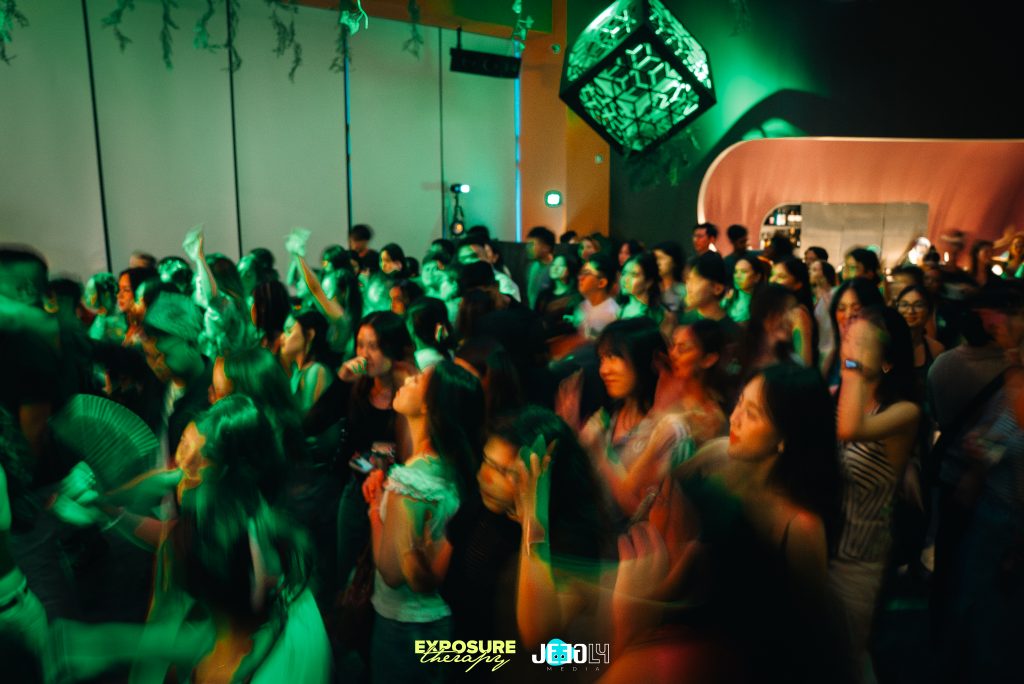
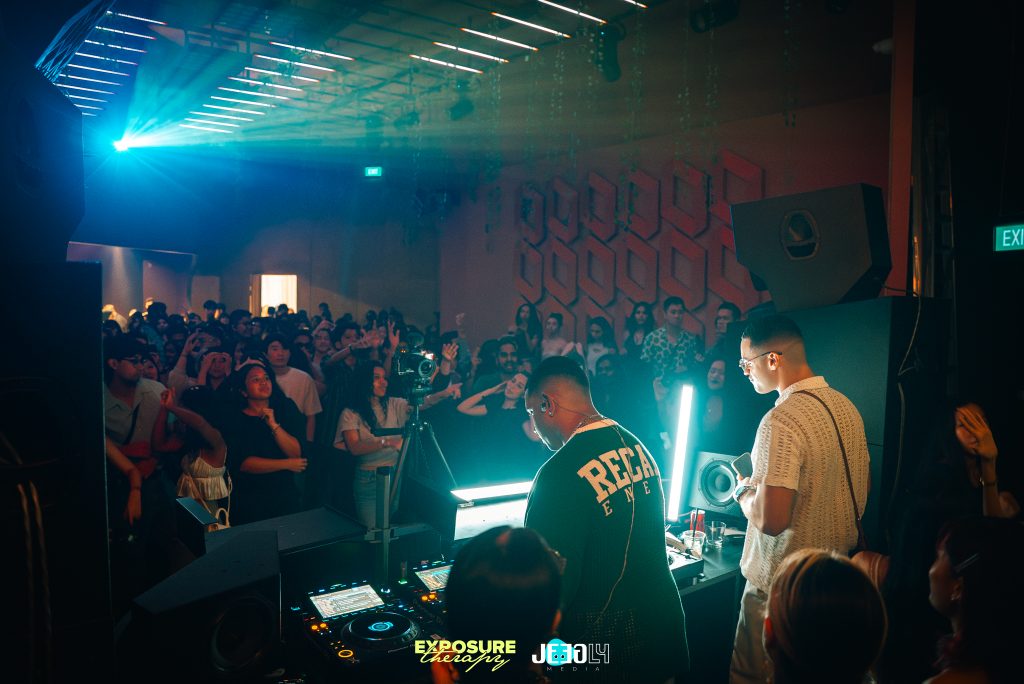
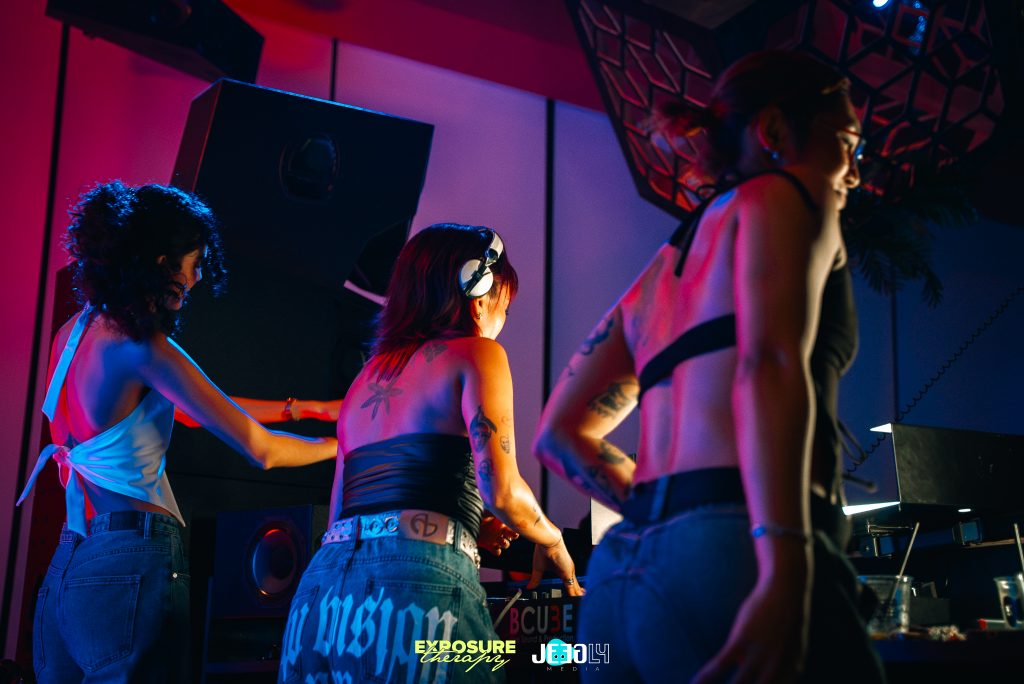
But then Shawn takes over the decks, and the self-consciousness dissolves from the dance floor. His crisp scratches and seamless transitions ignite cheers, and within minutes the crowd surges toward him, Boiler Room–style. The hesitation gradually vanishes, unspooling into a collective abandon.
The Psychology of a Dry Rave
Overheard: “This is like expat techno—the kind they play at Ce La Vi.”
Close enough. Balearic house, the Ibiza-born, sun-drenched cousin of Latin house, shares a similar BPM to Shawn’s favoured style.
For Shawn, DJ-ing is psychological warfare: raising tension to the brink before dropping it into release. Without alcohol, surprise becomes his most potent weapon. Experimental house at one moment, a Bad Bunny hit the next.
“I know that Bad Bunny song from my workout playlist,” Milotruckdreams laughs. She starts shimmying to the beat.
“Now my brain is telling me to exercise.”
The unpredictability keeps the room on edge.
Amid a legion of unbroken hairlines and taut skin, I spot a cluster of millennials—friends of friends—dancing like it’s the last day on earth.
As I join them for a quick hello, one of them embraces me in unconventional fashion—she grabs my cheeks with both hands, like how an inebriated person might.
“We love Latin house!” she shrieks.
They give me a few minutes of their time of day before getting back to busting a move. But after dancing up a storm, the motley crew duck out abruptly before 6 PM.
“See you—we’re heading for dinner!”
And that’s exactly what Shawn and Harpreet had in mind: a party that exhilarates without stealing the rest of your evening.
Meanwhile, Shawn is still cooking on the decks. Sweat pearling on his temples as he stacks frequencies and time signatures into a cocktail of sound.
When he drops David Guetta’s ‘Let’s Go’, the crowd yells in unison: “Who the fuck is Jared?” And just like that, everyone’s high—on tea.
Perhaps that’s the elegance of a dry rave: without booze, every beat, shift, and cheer is sharper. You feel it all.
Amid the crackling energy, a quiet voice, conditioned by two decades of binge drinking, slips into my mind uninvited: This is great, but you know what would make it better?
Yup, old habits die hard. But for a generation that never lived through Zouk’s prime Flaming Lambo heydays at Jiak Kim, the chance to reinvent nightlife feels long overdue.
Making Partying Great Again
For me, the recipe for a good party has always been simple: the right people first, the entertainment second, and the drinks—well, those are just habit.
Gen Z, though, seems to be the first generation willing to change their approach. Before they even change out of their pyjamas, they’re weighing up how much partying will cost them in terms of finances, health and hangovers.
“The cost of partying is nothing like it used to be,” says Shawn, whose tickets cost $20 each, matcha included. The last time I paid under $25 to enter a nightclub was in 2011.
For many of his Gen Z peers, that price point is crucial. A new survey commissioned by Ally Bank reported that more than 40 percent of them have skipped social events just to save money. Covid kept them indoors, inflation kept them there, and now they’re pickier about where their dollars go.
Shawn isn’t the only one who’s dared to throw a sober rave. Beans&Beats, for instance, swaps alcohol for caffeine, turning coffee into the party’s main fuel.
And it doesn’t stop there. Singapore has seen a surge in events branding themselves as “daytime raves,” ranging from spin classes to cold plunges. (Which naturally raises the question: Why is everything a rave now? That debate can wait.)
For now, organisers are chasing the trend because young partygoers have caught on to a simple truth—you can chase a euphoric high without trashing your body.
“Priced affordably and held during the day, daytime parties allow people from all walks of life to have fun and enjoy curated music, while not affecting their sleep patterns,” Aden Low, co-founder of Beans&Beats, tells me.
And he’s spot on. By 10 PM at a nightclub, I’m usually fighting yawns and bargaining with my alarm clock the next morning. Daytime raving doesn’t just feel novel, it feels like the saner way to party for a generation that wants more sleep.
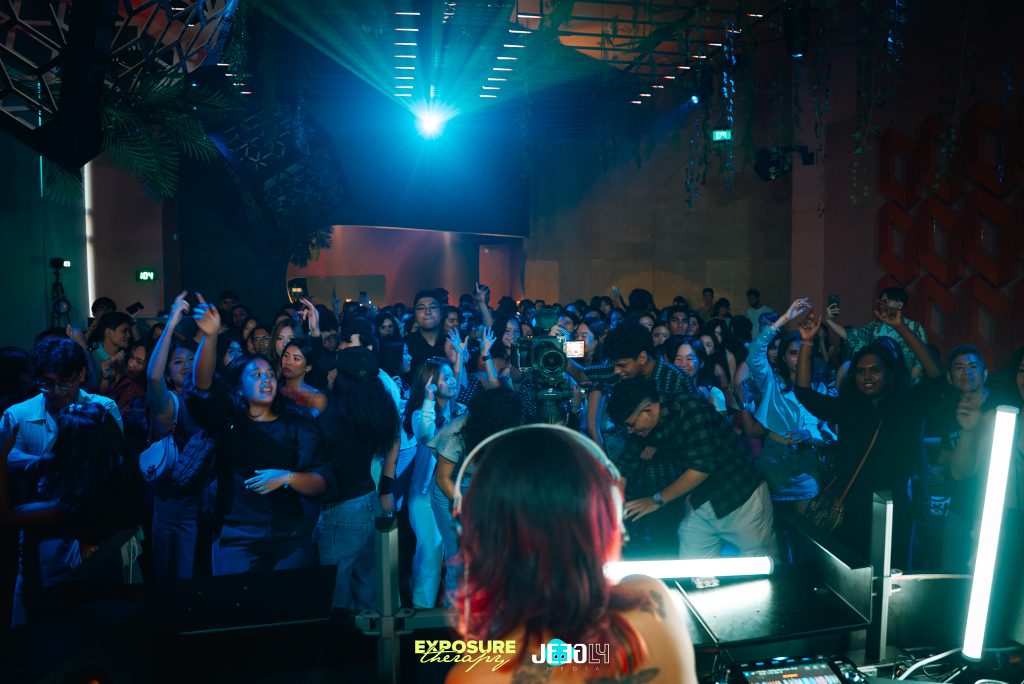
“A lot of Gen Zers haven’t really partied at all—they only know music through Spotify,” Shawn says. That inexperience with traditional nightlife collides with another generational shift: they’re just drinking less.
A new Keurig Dr Pepper report found that only 39 percent of Gen Z name alcohol as their go-to social drink, compared to nearly 60 percent of Gen X.
In nearby Australia, one in five 18–24-year-olds reported giving up alcohol entirely for at least six months.
“People my age are more conscious about binge drinking. They want to be efficient with their time,” Shawn explains. And at Exposure Therapy, that efficiency borders on comical: hair unrumpled, faces fresh, lungs at full tilt.
“My older guests love that they’re not hungover,” he adds.
In a way, he’s revived the Tea Dances of yore—daytime socials for local youth in the ’60s—except with house beats and matcha shots. It’s a win-win: non-drinkers feel included, and venues like Rasa Space can monetise unused daytime slots.
A Rave as Wellness Pitch
“Too safe already,” Milotruckdreams quips, slipping her bag over her shoulder as she heads off to a dinner appointment.
In London, she attended ‘breakfast raves’ that leaned into cereal shots and granola bars. We laugh about how today’s party could have gone harder on the gimmick: a “Temple of Matcha,” where devotees dance among green tea-themed decorations, or Shawn dressed as the “Matcha Macha” (“Macha” is Tamil slang for buddy).
Still, the proof is in the aftermath. From dinner, Milotruckdreams texts me: “Now I feel like going dancing LOOOL.”
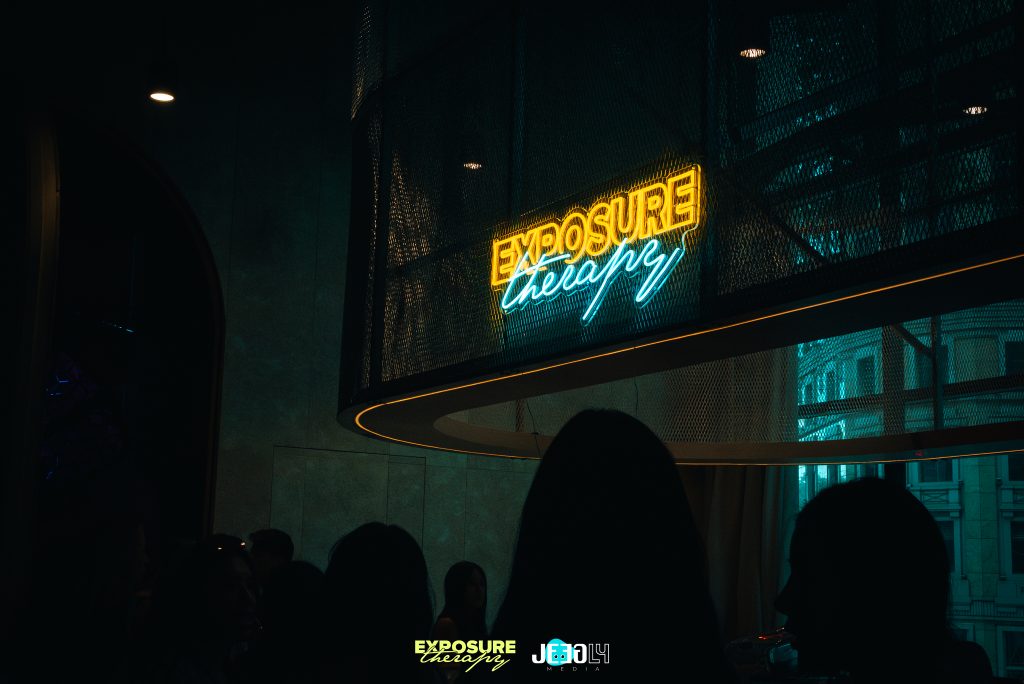
At closing time, Shawn is exhausted but still buzzing from the party. He climbs down a ladder after struggling to unhook a neon Exposure Therapy sign.
“We named it that because I want it to be a movement of openness, about discovering new things,” he explains. Besides curating new DJ sets, he’s been busy working with an array of organisations to introduce wellness activities through future events.
And next month, Exposure Therapy will take over a beach club for the first time—the Tipsy Unicorn will be going sober on September 20.
He’s champing at the bit to tell me more, but alas, says that he must remain tight-lipped until these plans are firmed up.
“I’ve so much in store,” he bubbles, before excusing himself: “Now I need to go spin at Adventure Cove, bro.”
“Adventure Cove, as in the water park? Can you snorkel at that party?” I ask.
“I’m not sure, but you can go down the slides,” he grins.
Shawn is a dreamer, but one with follow-through. While the fun we’re familiar with is often tethered to alcohol-fuelled drama and blurry morning afters, his stubborn belief in sober euphoria feels almost radical.
After all, Singapore has no shortage of nights where the drink comes first and the music second. What Shawn demonstrates is that the reverse can be just as intoxicating—one that leaves you with memories you don’t need to piece back together on the group chat the morning after.
The foam moustache from a matcha latte fades quickly, but the reminder lingers: Joy doesn’t need an inebriating crutch.