
Top image: Zachary Tang / RICE file photo
Earlier this week, over 100 migrant workers from KPA Engineering and SK Industries turned up at the Ministry of Manpower (MOM) Services Centre in Bendemeer. They were out of options after the wages they were owed went unpaid for months. Even the external caterers who fed them at Tuas View Dormitory stopped coming because they, too, hadn’t received payment.
By the next morning, the number of affected workers had climbed to over 400. The common thread: Indian national and Singapore permanent resident Ramu Palani Velu, the business director linked to seven other firms providing air-con, plumbing, and building services. Uncontactable and believed to have fled the country, the migrant workers employed by his companies were left in the lurch without salaries.
The National Trades Union Congress (NTUC) and the Migrant Workers’ Centre (MWC) had to clean up his mess. Assistance was quickly mobilised in the form of food, transport, shelter, cash, and vouchers for the affected workers. Member of Parliament and NTUC head Ng Chee Meng dropped by Tuas View Dormitory to reassure the workers that they were working with MOM to recover their salaries.
Thanks to the publicity, everyday Singaporeans stepped in with donations (over S$27,000 as of writing), while over 80 companies expressed interest in offering job placements for the workers. It seems to be a happy ending for all, but the question remains: will the workers ever receive the full amount of what they were owed? And if it were just a handful of migrant workers, rather than the dramatically large volume of 400, how would the issues concerning their welfare have been handled?
Transient Workers Count Too (TWC2) and Humanitarian Organisation for Migration Economics (HOME) have been asking that question in different variations for years. Both organisations have been doing direct casework with migrant workers since they were formed—and plenty of these cases aren’t making front-page news.
We asked both organisations the questions left unasked from this week’s news coverage.

Workers from KPA Engineering contacted TWC2 a week before June 22 and were told to file a Tripartite Alliance for Dispute Management (TADM) claim. The workers still ended up en masse in Bendemeer. What does that gap tell you about the system’s early-warning mechanisms?
TWC2: That there is no early-warning mechanism, basically.
Logically, any company that has a salary claim lodged against it for non-payment, especially over multiple months, ought to be investigated. But no such checks take place, as far as we know. And even if MOM’s investigators were to request to interview other workers at the company, there’s still a chance the truth would not come to light because the employer is likely to threaten the other workers into keeping quiet.
The workers will comply, for fear of losing even more than what they have already lost.
Walk us through what actually happens to a migrant worker’s salary claim when the company behind it may be insolvent. What are the realistic outcomes?
HOME: When a migrant worker files a salary claim, the worker and the employer go through mediation at TADM. If the matter cannot be resolved there, it may proceed to the Employment Claims Tribunal (ECT).
However, workers face a number of challenges. The first challenge is evidence. Workers may have to reconstruct months of work records, salary payments, deductions, overtime and messages, often without access to payslips or employment records. Sometimes, workers even have to contend with falsified evidence from employers, who coerce them into signing blank salary slips or other documents (such as employment contracts) and then produce these records during mediation or ECT proceedings.
The second challenge is enforcement. Even if a worker obtains an order stating that wages are owed, that order still has to be enforced. If the company has no assets, has ceased operations, or the directors cannot be reached, the worker may still be unable to recover what he is owed. The process becomes much harder when the company has shut down.
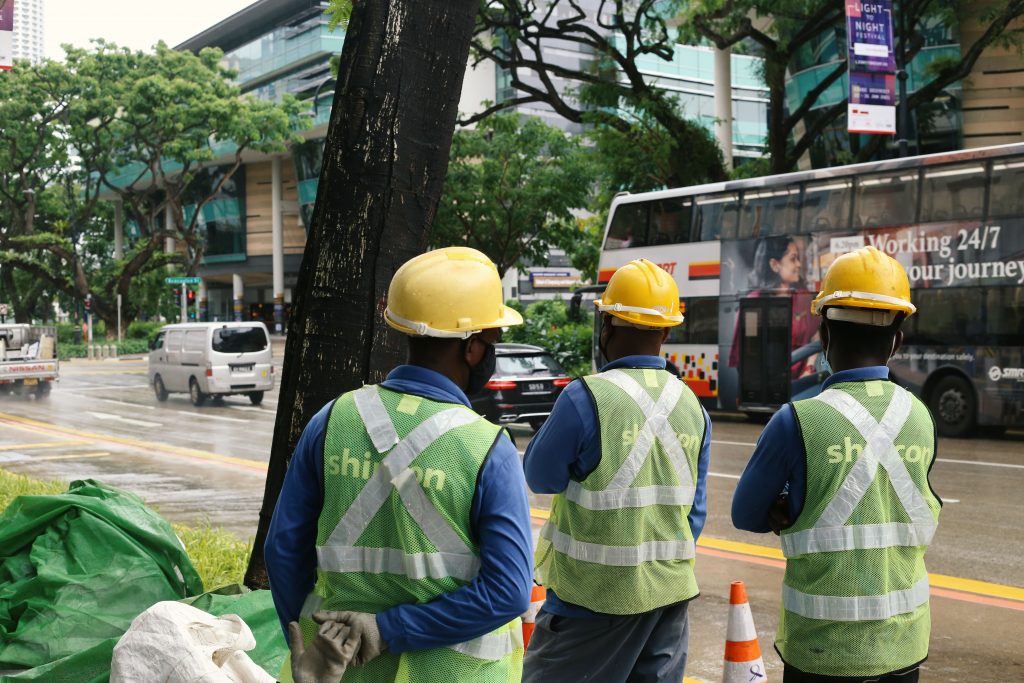
TWC2: Workers who are desperate and under pressure will often accept anything rather than nothing. Because the alternative might be to just wait for months on end, with no income, and no certainty that they will ultimately receive what they are fully owed.
For companies that have gone insolvent, wages are not the top priority for the appointed liquidators. Those owed a salary might only receive some money after the other debtors are paid off.
It has been discussed recently that civil court orders are difficult to enforce. The options available to the migrant worker are the same as anyone else under such circumstances: basically hiring debt collectors or initiating a Writ of Seizure and Sale (if the employer or company even has any assets to be seized).
All of this costs money, which the worker doesn’t have.
HOME: This is an issue that HOME sees often—workers who are, in fact, owed wages struggle to receive them. Wage recovery involves not just proving that money is owed but also whether the employer can be compelled to pay. In the best cases, workers recover some or all of what they are owed (but this is rare). In most cases, they may receive only partial payment or nothing at all.
That is why HOME is advocating for a statutory wage protection fund or mandatory wage protection insurance. Workers should not be left holding an empty order after months of labour. If wages have been earned, there must be a practical way to ensure they are paid.
Apart from this, there has to be stronger enforcement against errant employers who refuse to comply with salary orders: employers with such records should be barred from hiring migrant workers or setting up new companies in the future. This will prevent a pattern of behaviour where select individuals set up business entities that repeatedly exploit workers.
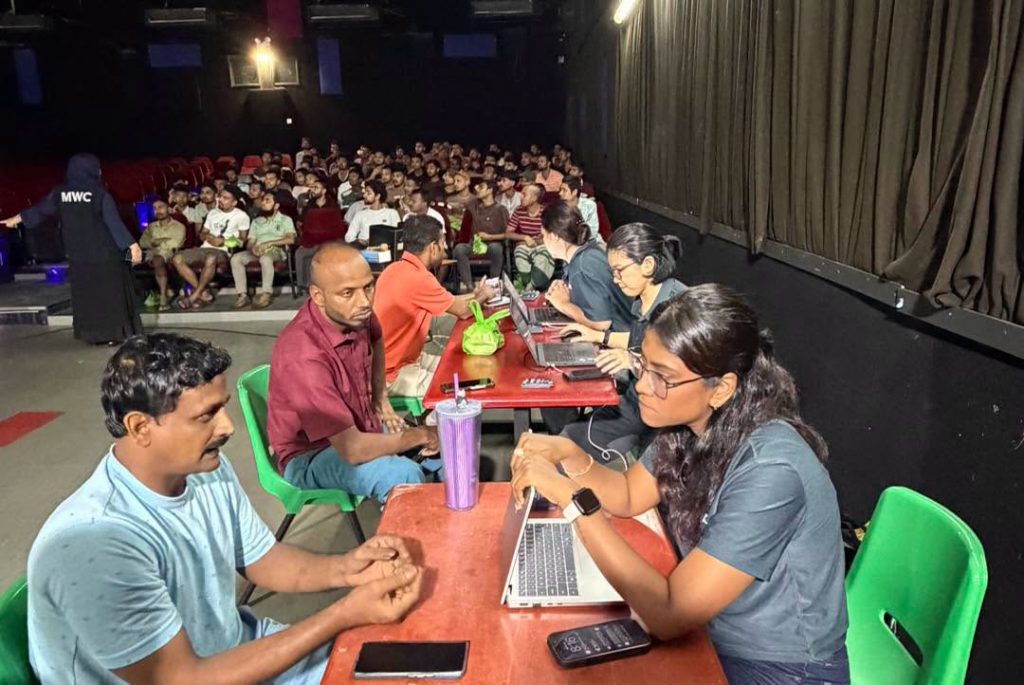
Employers have the power to cancel a work permit and repatriate a worker at any time. How much does that one fact shape everything else: the reluctance to report early, the willingness to wait through months of missed wages, the consideration before reaching out to the authorities and organisations?
HOME: It shapes almost everything. This and the fact that almost all migrant workers arrive severely indebted from recruitment fees paid to obtain the job: Bangladeshi and Indian migrant workers can pay up to S$10,000 to S$15,000 as first-time work permit holders.
For indebted migrant workers, the employer controls their jobs, housing, work pass status, and ability to remain in Singapore. The power imbalance is stark. When salaries are delayed, workers are not simply deciding whether to complain. They are calculating whether they might lose their job, be sent home, be blacklisted, and be left unable to repay recruitment debts.
This is why workers may wait through weeks or even months of missed wages. Employers may tell them that payment is coming soon. Workers may hope the situation improves. They may worry that reporting the employer will immediately end their employment and their chance of earning back what they lost. Resigning is also a risky option, as there is no guarantee of alternative employment, given that employer consent is required to switch jobs.
The lack of labour mobility is central to this fear. If workers could change employers more freely when wages are unpaid, they would have greater bargaining power and more confidence to report abuse early. But when the work pass system ties workers so tightly to one employer, reporting becomes a high-stakes decision.
We should therefore be careful not to ask why workers waited so long. A better question is: why does our system make early reporting feel so dangerous?
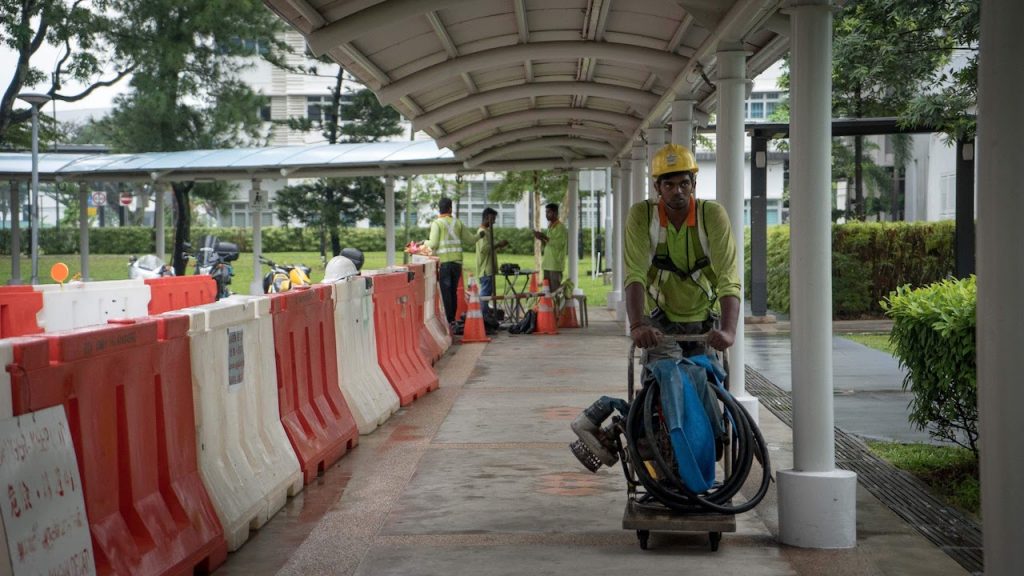
TWC2: The first thing you should know is that our low-wage migrant workers encounter issues with their salary far more commonly than people probably realise.
Last year, our hotline registered over 2,500 enquiries on salary issues. Around half of that—just over 1,000—were officially registered for our assistance. Many workers choose not to lodge a claim.
The first reason would be that workers need to consider their sunk costs: the recruitment fees they paid to get the job here. It can go as much as S$20,000 or even more for first-time workers.
Because it is a lot of money for a job that probably doesn’t pay very well, the workers tend to look forward to the end of their two-year contract. That’s when, under MOM regulations, they get to find new employment and transfer to a new job without seeking the consent of their current employer.
That’s why workers are devastated when their permits get cut anytime in between, for it means they are forced to leave their jobs and return home before they have even recouped what they’ve paid to come here. They might also have taken loans to pay for the recruitment fees, which still have to be serviced even if they have lost their jobs.
I wish to relate this story that happened recently. A first-time worker from Bangladesh was deceived into taking on a fake Employment Pass job in Singapore, with a promised salary of $12,000. But when he arrived, he was sent to work in a coffee shop and told he would be paid only $1,000. His father was the one who sold their land to help pay for the $20,000 in agent fees.
When he informed his father, the father asked him not to go to the authorities, and even threatened to do something to his wife and young son if he did. So we really cannot imagine all the different pressures that a migrant worker might face in these circumstances.
For workers from Myanmar, there is added complexity these days. Due to the civil war back home, they cannot afford to be sent back, for they will otherwise be forcibly drafted into the military and likely die on the frontlines of the civil war. So they will do everything in their power to avoid that, even if it means suffering long hours, poor conditions, and unpaid wages.
Realistically, what can immediate assistance, such as the assistance from NTUC and MWC, provide in the short term, and what are its limits?
TWC2: The limit, whether it is tapping on the security bond or even MWC’s migrant worker assistance fund, is that the amount given to them is usually not what they are fully owed.
HOME: Immediate assistance is important. It can help workers with food, temporary financial relief, housing, transport, basic necessities, translation support, and guidance on where to go next. In a crisis, these forms of support matter. They help provide immediate relief for workers who may have gone for weeks or months without pay.
But emergency assistance is not wage recovery. A supermarket voucher or a cash grant can help someone for a short time, but it does not repay months of unpaid salary.

This is the gap civil society often sees. NGOs and community groups can provide casework support, interpretation, food, shelter, accompaniment, and emotional support. But we need stronger structural protections to ensure workers can recover wages owed to them.
The workers are not asking for charity. They are asking for wages they have already earned. That distinction is important.
Our systemic solution to such situations should not be to provide short-term relief through payouts and handouts. There must be robust enforcement and State-led protection mechanisms to ensure workers are paid what they are owed, in the event of non-compliance or when wage recovery becomes impossible.
The response from MWC and NTUC this week has been visible and swift. But is this level and speed of mobilisation the norm?
HOME: No, this level and speed of mobilisation is exceptional. Large, visible cases often trigger faster mobilisation because the scale of the problem is immediately clear. When hundreds of workers show up at a government office, it becomes difficult to ignore. Agencies, unions, NGOs and the public can see the crisis unfolding in real time.
But many cases do not look like this. Workers usually approach individually or in small groups. The wage recovery process, particularly when cases progress to the ECT, can be lengthy, with no guarantee that the full sums will be recovered.
Those cases don’t make the headlines, but they are no less serious. These cases do not generate public urgency but equally reflect the systemic gaps that become apparent when large groups of workers seek assistance all at once.
This is why we need systems that effectively prevent such violations and protect workers when they occur, not only when a case becomes large or public enough. Salary arrears should trigger early and effective intervention.

What would a strong earlier intervention look like in cases like these?
TWC2: We are proposing several things.
First, all workers should be paid compulsorily via bank transfers, not cash. At the moment, it is only compulsory for work permit holders who stay in the dormitories. Bank transfers provide for an audit trail, which is useful when salary slips are lacking.
Second: a Wage Protection System similar to what’s implemented in the United Arab Emirates. In this system, the employer has to deposit their money into a bank or appointed agent, which will then transfer the salaries to workers’ bank accounts. This is akin to an early-warning system, because the bank or appointed agent will immediately know if an employer defaults on payment.
Third, a salary insurance scheme. We already have compulsory insurance for Workplace Injury Compensation, so why not cover salary as well? Such an insurance scheme should have safeguards against abuse, such as a maximum payout limit. It should also not be a reason for debtor employers to get off scot-free. A new law imposing criminal penalties for deliberately failing to pay up would still be needed. And the insurer should be able to seek reimbursement from the employer. Any employer or director of a company with a bad record may find it hard to obtain insurance cover in the future. The premium he or she faces can act as a scalable deterrent.
HOME: A strong early intervention would begin the moment salaries are late, not months later, when workers are already desperate and feel they have run out of options.
First, repeated late payment should trigger scrutiny. If salaries are unpaid beyond one salary cycle, especially for work permit holders, there should be a mechanism for early checks. Employers should be required to explain the delay, provide payroll records, and show how they intend to settle outstanding wages.
Better enforcement is also required to give workers the means to seek redress for unpaid salaries. For example, employers who are found to not provide itemised payslips and employment records as required by the law must be tasked to remedy the situation swiftly, or face additional penalties.
Second, workers must be able to report safely. This means protection against premature repatriation, clear assurance that they can remain in Singapore while their claims are resolved, and the opportunity to change employers. The ability to change employers freely, with clear notice periods, is paramount in empowering workers to report abuses.
Third, Singapore needs a statutory wage protection fund or mandatory wage protection insurance. In simple terms, this would mean that when an employer shuts down, becomes insolvent, or abandons workers, there is a dedicated mechanism to pay workers first. The fund or insurer can then recover the money later from the employer, directors, related companies, or the liquidation process.
For earlier intervention to be possible, we need to stop treating salary non-payment as a private dispute that workers must individually pursue after the damage is done. It should be treated as a warning sign of labour exploitation and business failure, requiring prompt state intervention.

What’s the one thing you wish Singaporeans understood that the coverage so far hasn’t captured?
TWC2: The issue at hand is very simple: there is a contractual agreement under which an employer pays for the services of their workers. Regardless of nationality or employment status, this is the fundamental premise that allows our society to function.
If we all agree that it should be enforced fairly across our entire workforce, then it would just be a matter of instituting safeguards and deterrence measures to ensure no one in Singapore ever gets away with wage theft, no matter where the employers or employees are from or how high or low the salaries are.
HOME: We wish Singaporeans understood how much risk (and debt) workers shoulder to remain compliant with exploitative working conditions, including periods of unpaid wages.
By the time workers seek redress for unpaid wages, they have already incurred hefty recruitment fees and continued to work long hours in the hope that their salaries would eventually be paid. They would spend months waiting, borrowing money, skipping meals, and trying to decide whether to report and risk losing everything or remain silent. The headline captures the moment of crisis, but not the long period of anxiety leading up to it.
These workers are not asking for sympathy as a favour. They are asking for what they are owed. Their labour has already been given to Singapore. The question is whether our systems are strong enough to make sure that work is honoured with payment, protection and dignity.
Acts of charity may be necessary to ensure the workers’ basic needs are met immediately, but must not be a distraction. Justice demands that their rightful salaries be paid.