This story was brought to you in collaboration with AIA Singapore.
All images by Yee Jia Ying for RICE Media.
It’s hard to believe that just two years ago, almost no one in Singapore had heard of pickleball.
Sure, the sport is literally as old as Singapore (it was invented in 1965), but it’s only in the last couple of years that intrepid pickleball players have taken over heartland badminton and basketball courts around the country for their games.
ELLE Singapore has dubbed it “2025’s most trendy sport”. And if you need more evidence that sport has gone mainstream, look no further than Grab’s limited-edition Hello Kitty pickleball sets.
For decades, the game has been a mainstay in retirement communities around the world—it’s easy on the joints and offers ample opportunity for chatting. But somehow, it’s become the hottest thing among young adults these days.
And at the centre of this growing lifestyle movement in Singapore are two Gen Z pickleball players who just wanted to help their mothers exercise.
From Family Hobby to National Phenomenon
Performance Pickleball co-founders 28-year-old Jeremy Soh and his fiancée, 24-year-old Jeovanne Poernomo, run Singapore’s first indoor pickleball facility, where they also run pickleball lessons.
Jeovanne and Jeremy might be familiar faces on the local pickleball scene now, but they actually started out as national tennis players and coaches. They only stumbled upon pickleball while looking for a sport they could play with their mums.
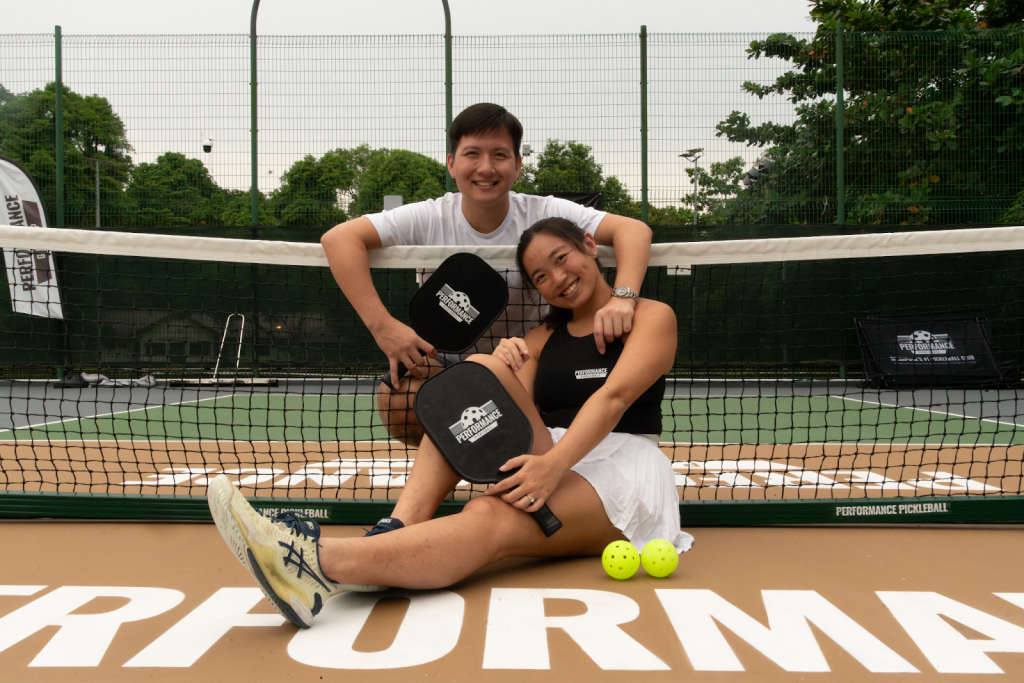
“We wanted to introduce a new sport to our family,” Jeremy tells me. “Something we could all play together.”
When they first discovered pickleball, they were instantly intrigued. But there was one problem—there just weren’t many tournaments in Singapore. It wasn’t until they joined a competition in China that they saw how big and vibrant the sport could be. That trip convinced them it was worth pursuing seriously.
Jeovanne recalls meeting people from all over the world at the tournament, even crossing paths with some friends from her competitive tennis days.
“The takeaway for us was the fact that pickleball had changed the lives of many, many people who were at the tournament,” Jeremy adds.
“Some people told us that post-COVID, pickleball actually helped them regain their social life. We also met people who started exercising again after 20 years.”
Even before the tournament was over, Jeovanne knew they wanted to keep playing pickleball.
“This sport has made such a positive impact on so many people’s lives. We were very inspired to bring the energy we felt from China—with all the people from all around the world—back to Singapore.”
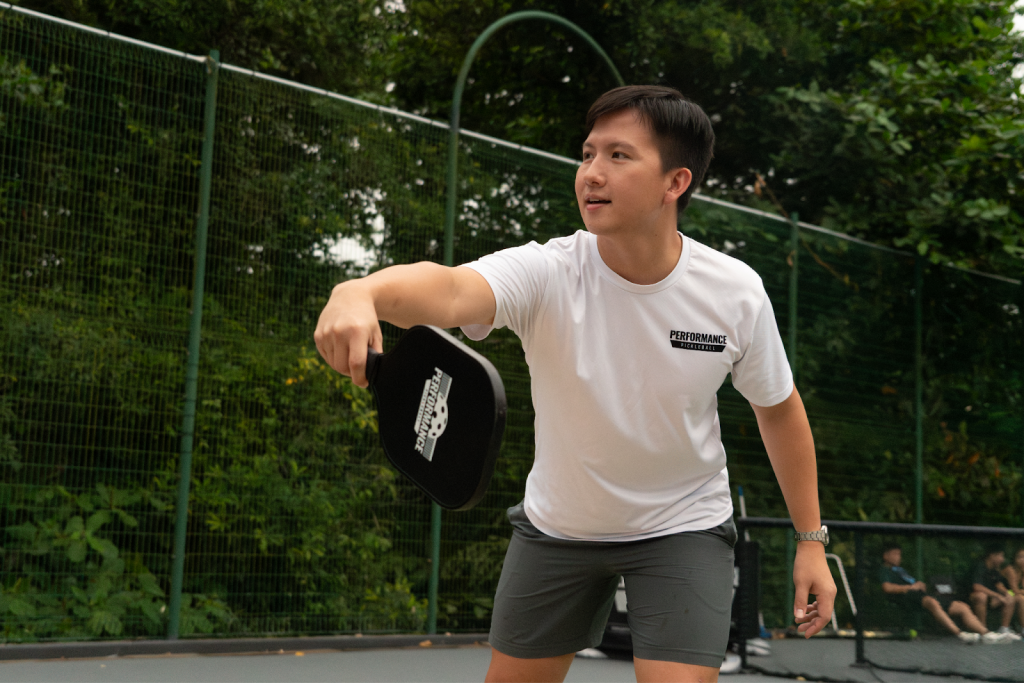
They returned to Singapore eager to play the sport more regularly, but quickly identified a market gap. There were no dedicated pickleball facilities. If you wanted to play a game, you’d have to book a badminton, tennis, or even basketball court.
And so they built a pickleball haven themselves. In July 2024, they opened Performance Pickleball, Singapore’s first dedicated pickleball club, at Northshore Drive. A year later, they opened a beach club-style facility at Cranwell Road, complete with a lounge, drinks, and music.
It might seem like a huge leap from picking up a new hobby to turning it into a business, but it’s all par for the course for Jeovanne. She confesses that she’s always been a hustler. At the age of 15, while most of her peers were worrying about exams, she was already coaching tennis for up to 40 hours a week.
“I was like this little kid teaching adults,” she laughs.
Over the years, she dabbled in all sorts of ventures, from preserved flowers to personalised gifts, and even importing snacks.
At one point, she was juggling a full-time corporate sales job, a full-time tennis coaching job, and several side hustles—all while still in school.
“It was a lot,” she admits. “But through that, I realised I liked being my own boss. I just couldn’t see myself in a corporate environment forever.”
When the idea for her pickleball business came along, it felt like a natural next step; she and Jeremy were already thriving in the tennis coaching scene. Jeovanne says she believed in the pickleball movement so much that she stepped away from her other side hustles to go all in.
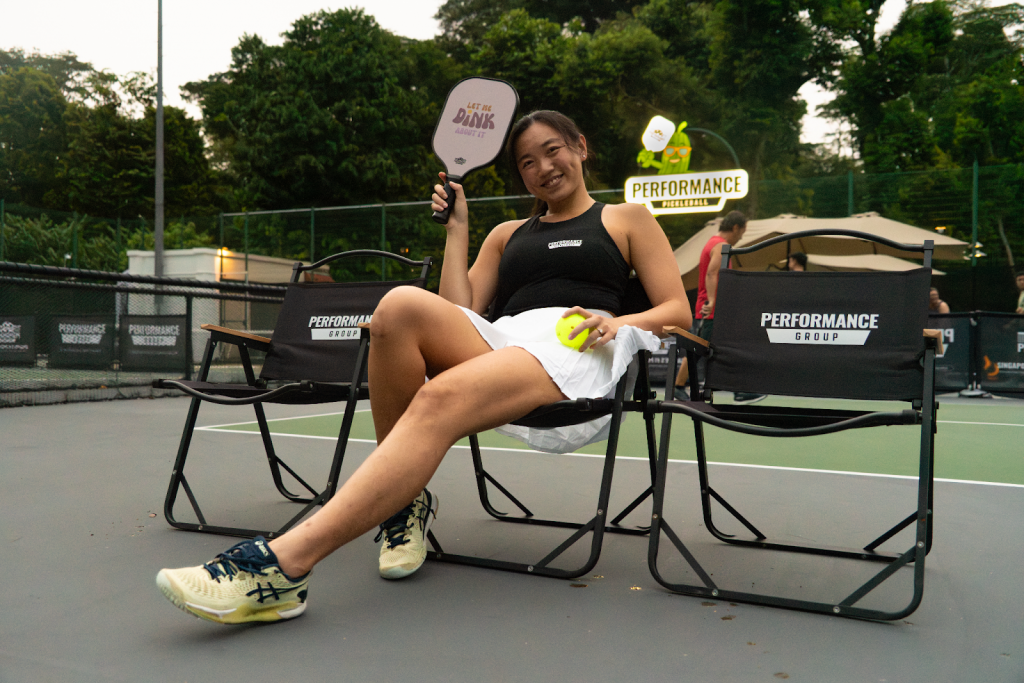
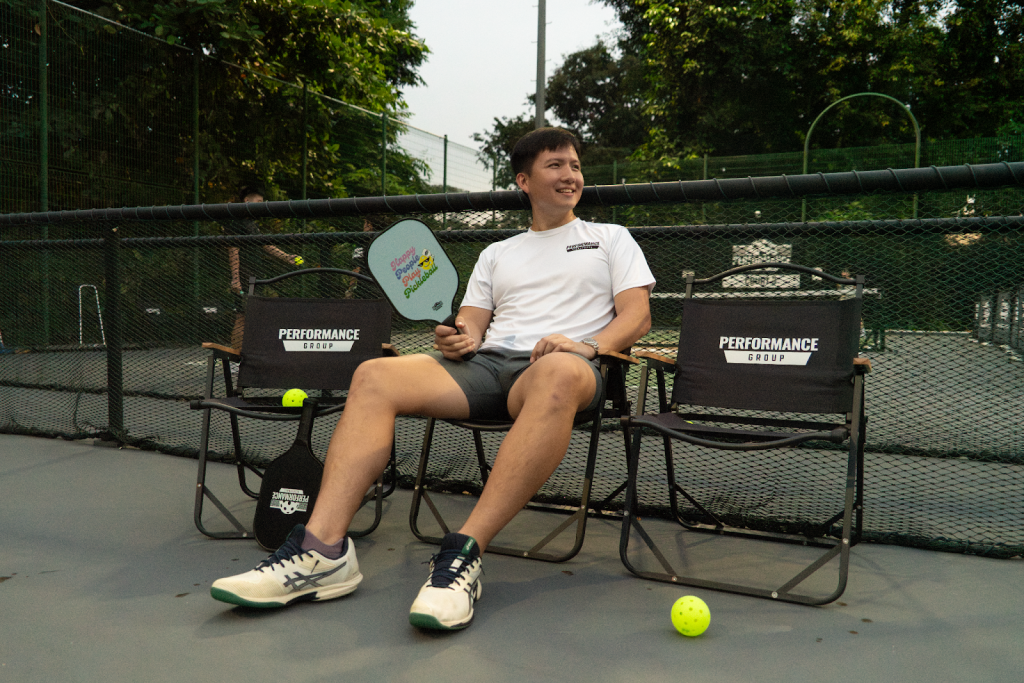
While she declines to share exact numbers, Jeovanne says Performance Pickleball is entirely “self-funded”.
“I’ve been hustling since I was 15, so naturally I’d saved up some money. Both of us invested everything we could into starting this business.”
In the beginning, people would still come up to them asking, “What’s pickleball?” Jeremy laughs. But things moved fast—before long, their community grew to more than 30,000 members.
It’s safe to say Performance Pickleball helped pioneer the sport’s rapid rise in Singapore. Since they came onto the scene, Jeremy says, not only have more people picked up the game, but many have also gone on to start their own pickleball-related businesses. He estimates there are now around 50 to 60 private courts across the island.
Come One, Come All
Part of the sport’s appeal lies in its disarming simplicity. Played on an area that’s a quarter the size of a tennis court, pickleball involves using a paddle to lob a plastic ball at your opponent—sort of like tennis, but with a gentler learning curve.
In many sports, differences in skill levels can make it hard for everyone to play together. But pickleball is different, Jeremy explains—it’s easy for beginners and pros to share the same court. At their courts, he and Jeovanne have seen grandparents work up a sweat with their grandchildren and first-timers hold their own against seasoned athletes.

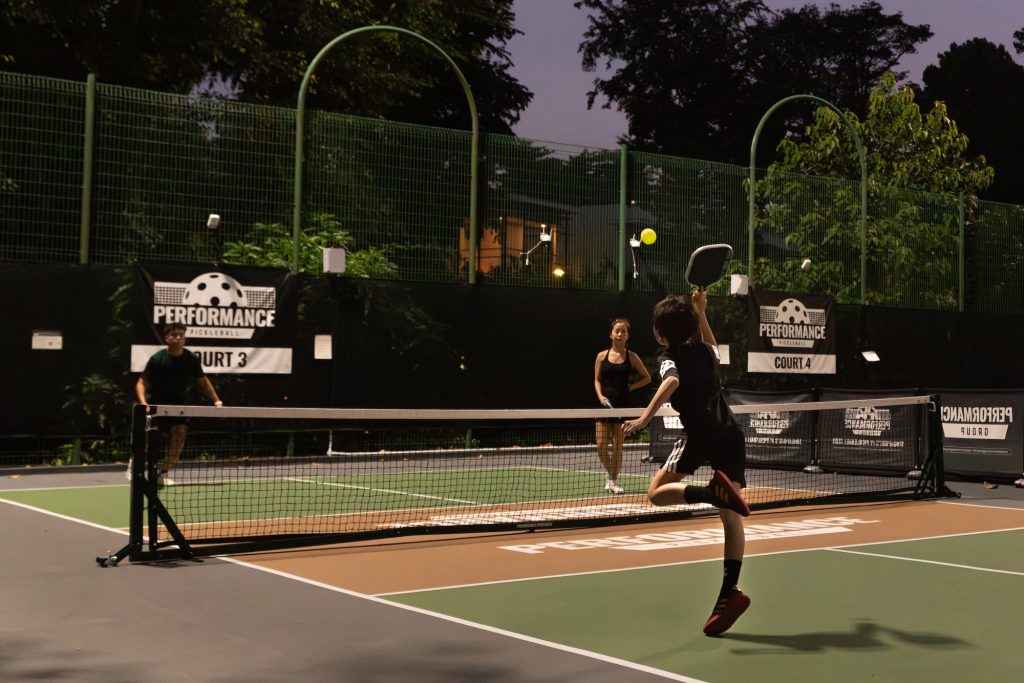
When it comes to pickleball picking up among Singapore’s Gen Z crowd, Jeovanne tells me that it’s no coincidence. She and Jeremy made a concerted effort to attract them to the sport.
“We kind of became the ambassadors for it,” she says. “We were among the first movers [to set up an indoor pickleball court], and we were just so passionate about showing that it could be fun, fast-paced, and cool.”
The playful clips they consistently put on their socials have probably also played a part, she says.
“We’ve been so active online that I’m sure at some point, people scrolling have come across one of our videos. And hopefully—even if it’s just a little—their perception changed. This is a cool sport!”
There’s no doubt that social media has probably helped fan the flames of the pickleball craze. I admit, my own interest in the sport was piqued when a clip of Taylor Swift brandishing a pickleball bat made it into one of her YouTube Shorts last year.
But Jeremy insists that pickleball’s staying power comes from what happens offline.
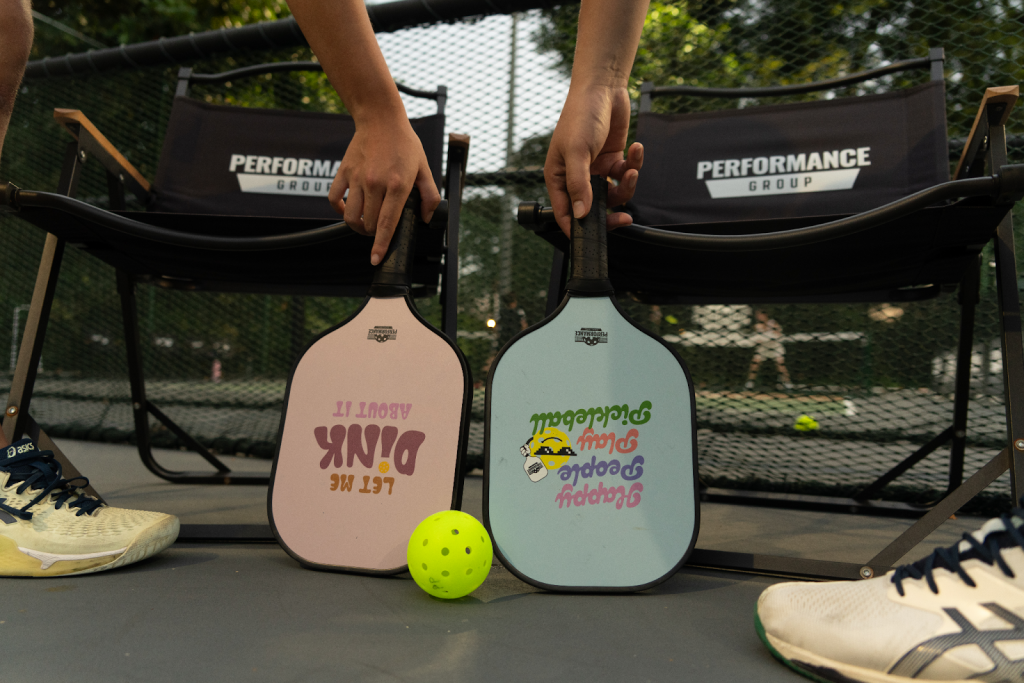
“Pickleball is fun, but you can play pickleball anywhere,” he says. “At Performance Pickleball, it’s about creating an environment where you feel like you belong.”
On the club’s courts in Punggol and Changi, friendships have blossomed. “We see a lot of people rekindling old friendships,” he adds. “Some of them come every day after work. It becomes part of their routine.”
Some members even network between games. “It’s not as formal as golf,” he says, laughing.
“You don’t need five hours to close a deal. You have more opportunities to talk in between games.”
A Lifestyle, Not Just a Sport
For many enthusiasts, pickleball is less about athleticism and more about, well, vibes.
The club’s demographics speak volumes. Most players are in their 30s and 40s, not retirees. Senior citizens tend to frequent ActiveSG courts, while Performance Pickleball attracts young professionals, couples, and friends looking for an easygoing yet physically engaging way to unwind after work.
In an age when fitness culture often revolves around fads—Hyrox, spin classes, and reformer pilates come to mind—the sport’s stickiness is remarkable. Maybe the trend simply hasn’t waned yet. But Jeremy and Jeovanne tell me emphatically that they think the pickleball movement is here to stay.
According to the pair, it’s not just about burning calories or working up a sweat. At its core, pickleball’s appeal lies in its community. And it’s this social aspect that has convinced once sedentary young people to pick up a paddle and hit the courts.
“There are people who don’t have any sports background coming to us,” Jeremy says.
“They want to learn, take lessons, and really get better because they finally feel like they’ve found a sport they can relate to.”
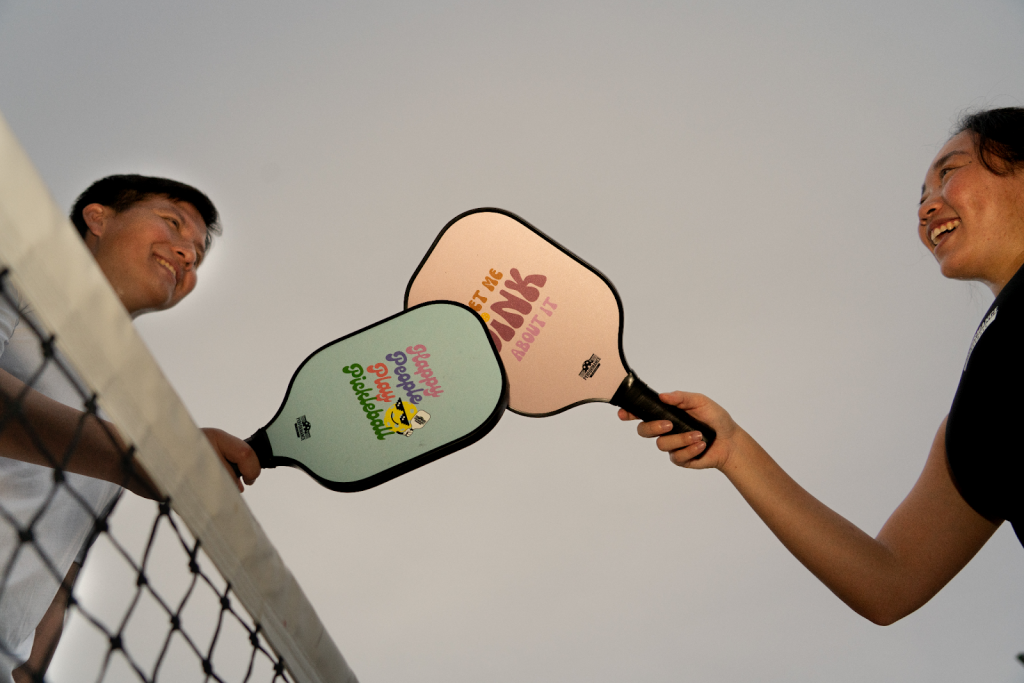
And people are really buying into the pickleball lifestyle.
Jeovanne says that Performance Pickleball’s T-shirts are “actually super popular”. They’ve also been selling pickleball paddles with cheeky sayings; my personal favourite is the one that says “happy people play pickleball”.
“Generally, as the interest goes up, these things naturally fall into place as well. People want to get the prettiest paddle. Or they want to get the newest paddle used by the top pros.”
Beyond the Fad
Still, for all its social appeal, pickleball has a serious side that Jeremy and Jeovanne want to cultivate as well.
“Besides beginners, we’re seeing people who used to be very athletic pick it up. Maybe they stopped because they had kids, or life got in the way,” he remarks. “Pickleball has become a way for them to get back into sports.”
Competitive circuits are emerging at both the local and regional levels. Playmade—yes, the bubble tea brand—has been organising local pickleball tournaments. The Singapore Pickleball Association also funds multiple local tournaments.
Despite pickleball’s reputation as an easy, breezy retiree’s sport, Jeremy says it’s like any sport: easy to pick up, but hard to excel at.
“There’s a very competitive side to pickleball,” Jeremy says. “To get very, very good, you need both physical and mental training.”
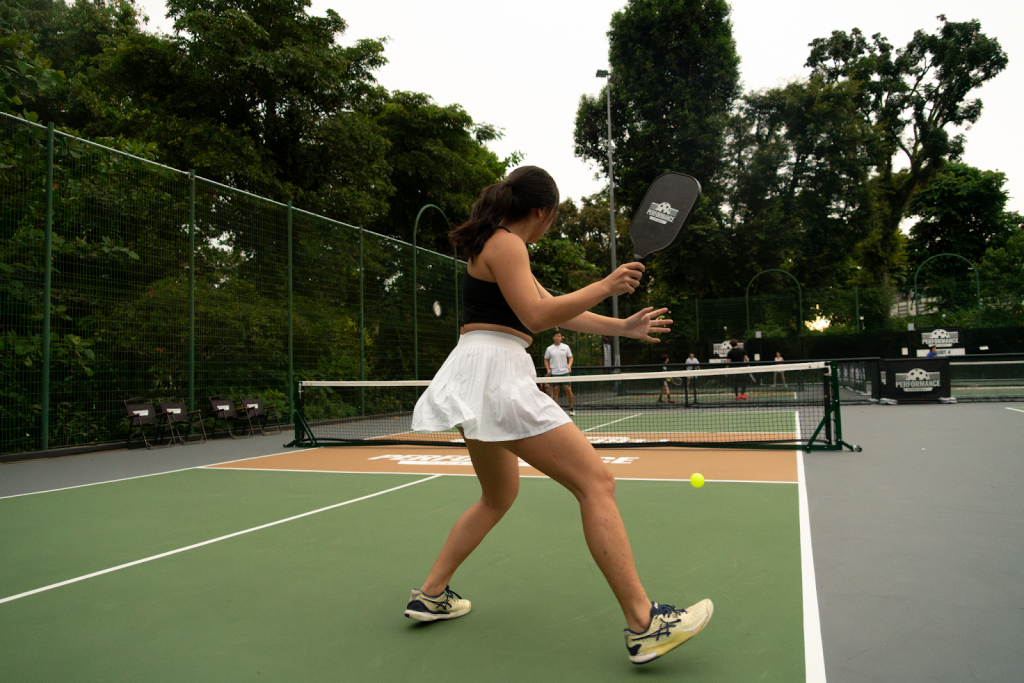
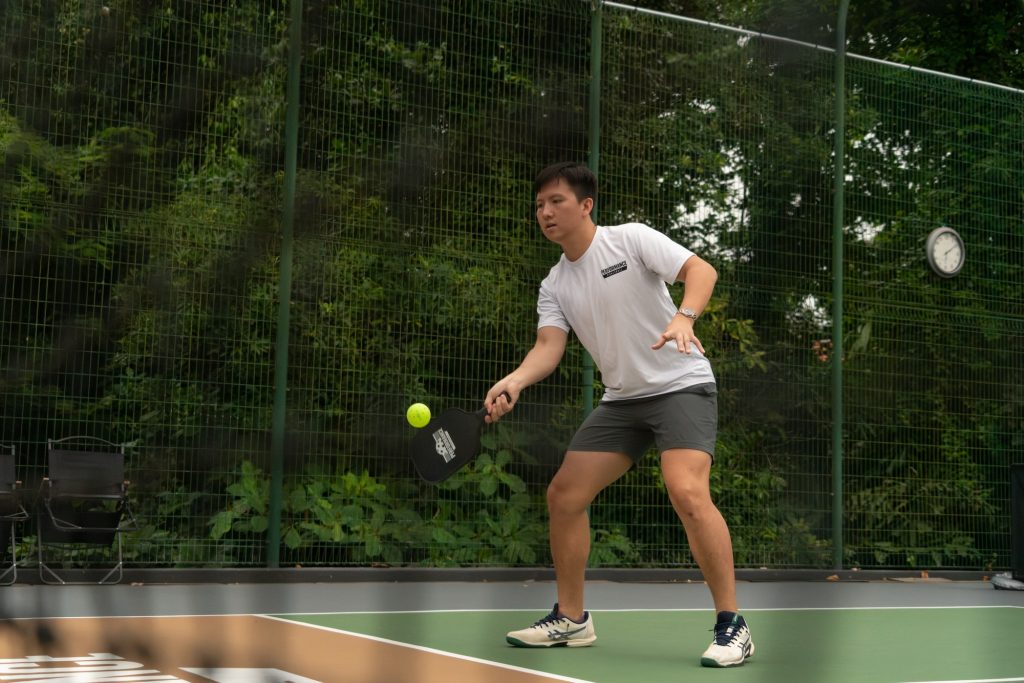
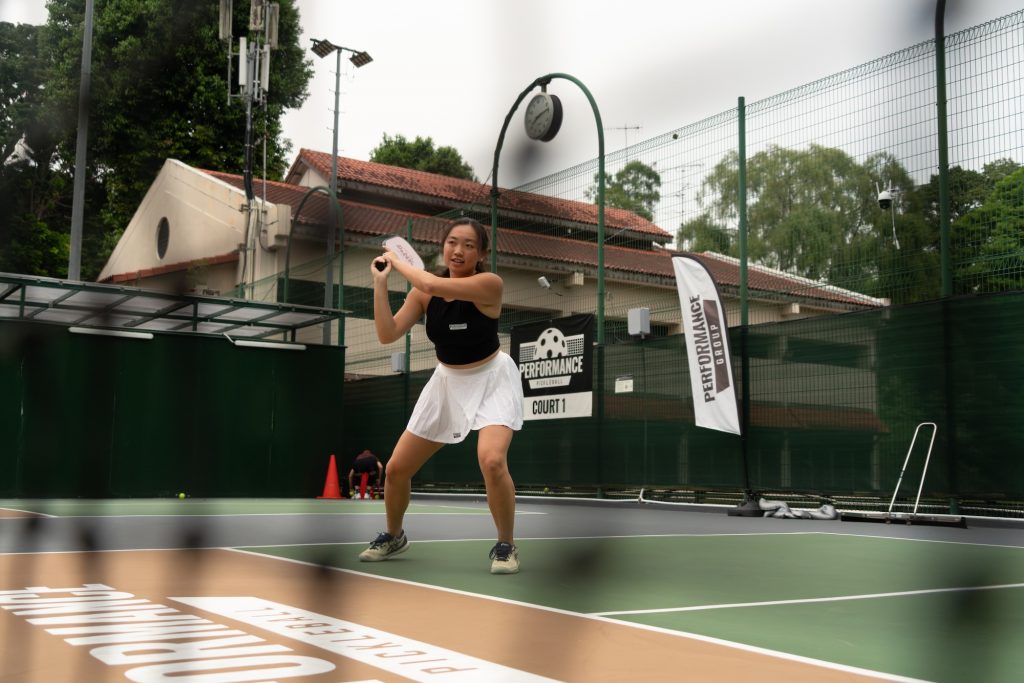
To prevent injury, good technique and proper rest are key, he emphasises. The sport is so addictive that he’s seen players hit the courts for hours each day. But overdoing it—even for something as low-impact as pickleball—can lead to ankle and knee injuries.
“Even non-athletes [playing every day] should start treating their bodies like athletes because you’re playing almost as often as one. At the end of the day, pickleball is a great sport because you can play it for a long time—you can play till you’re 80. But the caveat is that you need to make sure that your body is taken care of up to that point.”
That advice hits hard when you see the numbers. CNA reports several local clinics seeing the number of patients with pickleball-related injuries double as the sport’s popularity surges.
It makes sense: the sport attracts plenty of first-timers who may not have led active lifestyles before. “When he or she starts to play pickleball, the deconditioned joints and muscles will be subject to increased load, and hence they can become more prone to injuries,” a physiotherapist told CNA.
It’s a reminder that getting active is only half the equation—staying safe matters just as much. It’s great that more Singaporeans are getting up and moving, but that new energy also comes with new risks. Which is why thinking about protection isn’t about paranoia; it’s about keeping the momentum going.
That’s why protection matters as much as performance. AIA’s #GenFit Personal Accident (PA) plan fits neatly into this new mindset: staying active and social, but responsibly. Beyond standard coverage like accidental medical reimbursements, #GenFit PA covers the ‘everyday’ accidents that come with an active lifestyle—like the phone that cracks mid-game or the gym membership that goes unused during recovery*.
For Gen Z, it’s easier to say “yes” to an active lifestyle—pickleball included—without worrying about the what-ifs.
The Long Game
Besides the thrill of competition—something every sport offers anyway—Jeremy seems to have tapped into why pickleball really hooks people.
It fits neatly into the rhythm of Singapore life. The courts are small, the paddles are light, and it’s easy to pick up after office hours. It works for the retiree craving a quick sweat in the morning or for the millennial who hasn’t worked out since PE classes. It’s a game you can keep playing with friends and family at any age, whether it’s in an HDB badminton court or at a dedicated facility opened by Jeremy and Jeovanne.
On Performance Pickleball’s courts, players dart around, working up a sweat as the sun sets.
Jeovanne watches and muses, “For me, this is my work life. For other people, it’s a time for them to forget about their work, just de-stress, have a great time.”