This piece is brought to you by Healthcare Scholarships.
All images by Benjamin Tan for RICE Media.
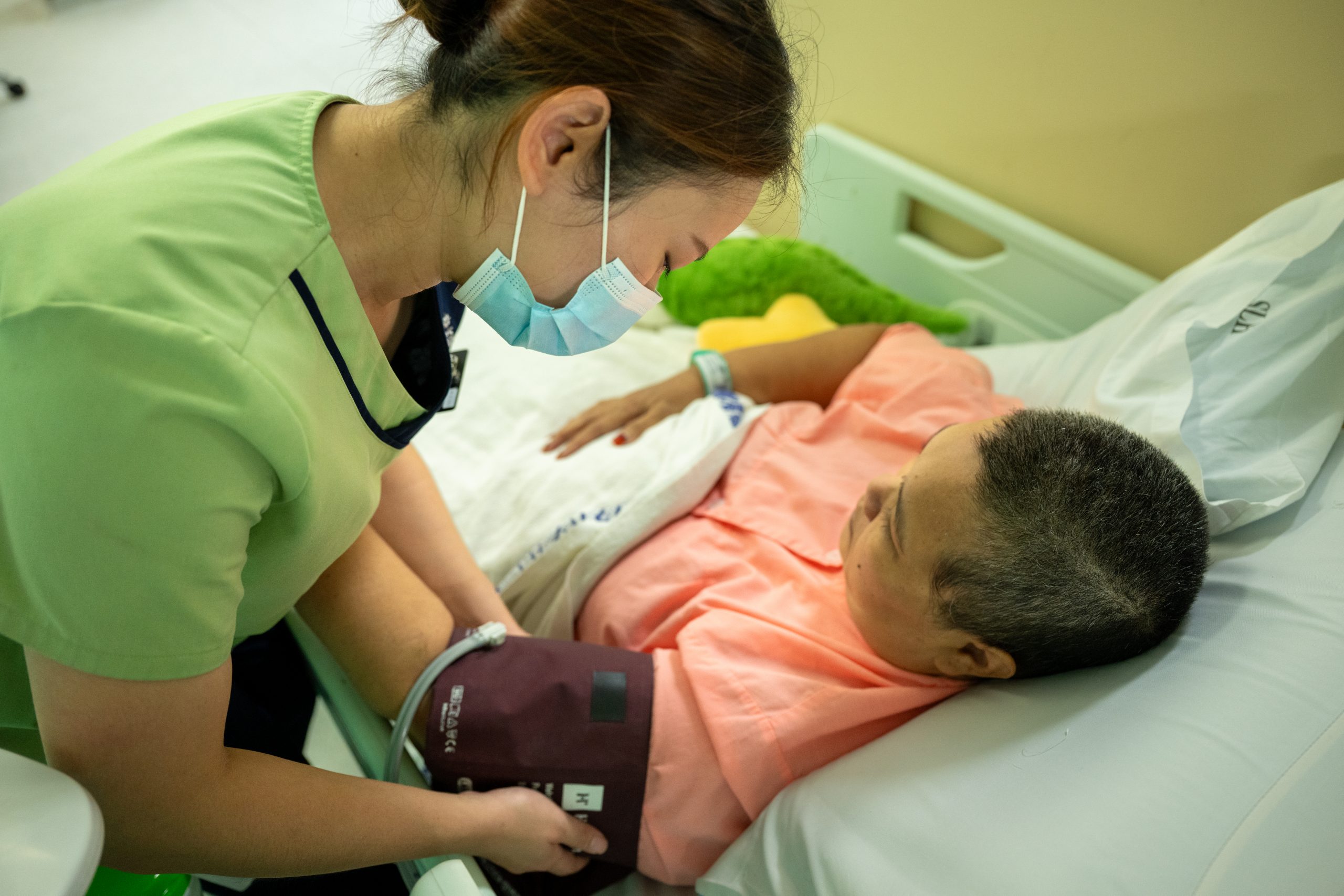
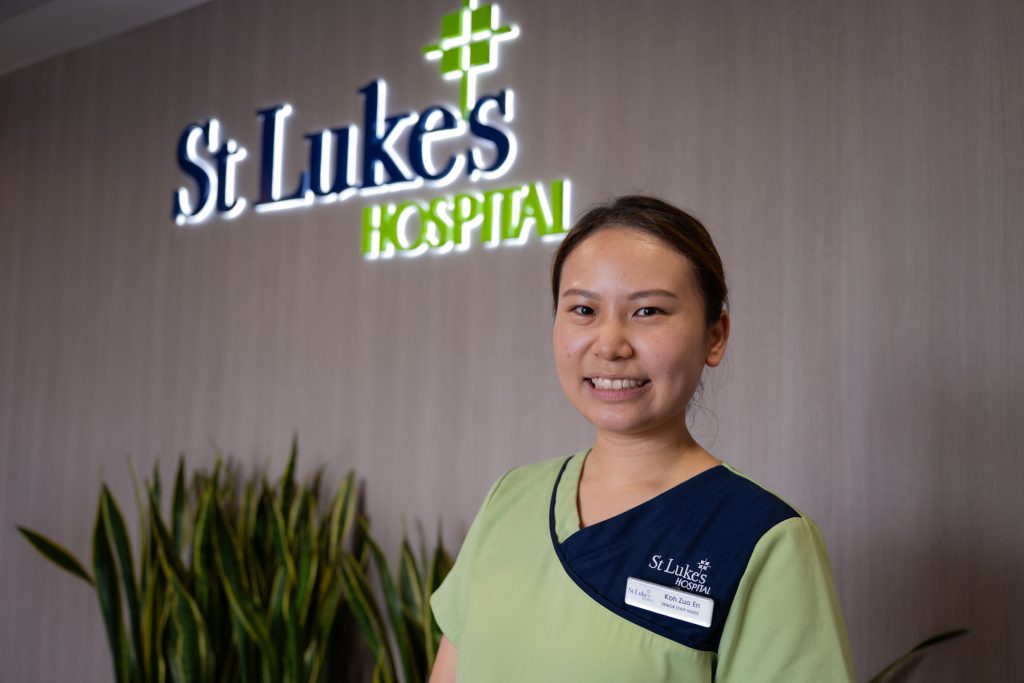
When a patient’s stroke diagnosis lands, Joan Koh is often the first to witness the panic in their family.
Amid the frantic questions and distress in their voices, her first instinct as a community nurse is straightforward: to bring calm. Apart from having to hold space for fear, sadness, and anger, the 28-year-old has to guide both patients and their family members through the chaos.
It’s that extra bit of empathy that sees the roles of community nurses like her go beyond medical needs. At St Luke’s Hospital, where she tends to multiple patients with physically incapacitating conditions, recovery rarely comes easy.
Her gentle resolve matters in times of intense emotional turmoil. When speech and mobility slip away—even for patients as young as their twenties—Joan’s tact makes all the difference.
Some patients can only spell their needs, letter by letter. Others would rather endure soiled clothes than ask for help. But she makes it a point to check in on them, tidying them up before pride eclipses comfort.
In Joan’s field, every sliver of independence regained among patients is celebrated. And when physical recovery isn’t possible, emotional healing and the reclamation of dignity become little miracles worth fighting for.
A Call to Kindness
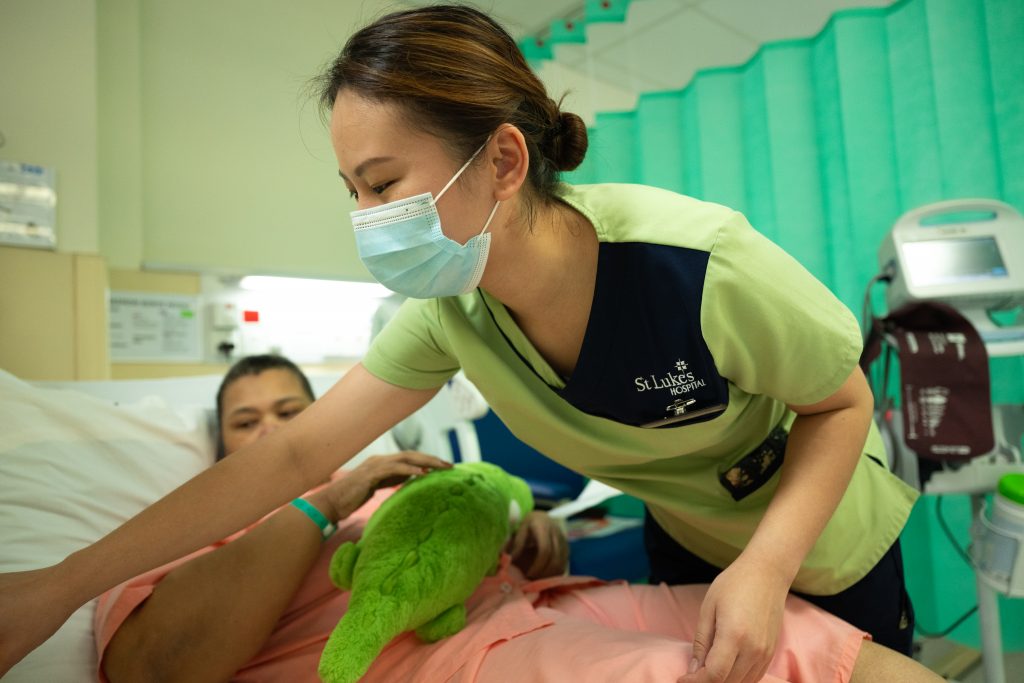
With this goal in mind, Joan nurses the wounds and spirits of her patients with the same tenderness she showed yesterday and the day before. A naturally cheerful disposition helps—she admits with a laugh that her friends describe her as “funny” and sometimes “too noisy.”
That same warmth carries over into her work, providing patients and their families with a sense of positivity. It’s a habit she subconsciously honed during her teenage years.
Joan’s road to nursing started in a hospital ward—not as a nurse, but as a caregiver. At 18, fresh out of junior college, she found herself tending to her elderly grandmother, whose colon cancer and chemotherapy left her frail and in need of a stoma site for passing waste.
She learned how to clean and maintain her grandmother’s stoma site through caregiver training conducted by the nurses. The stoma pouch, which collects a patient’s bodily waste, has to be unsealed with care to prevent spillage.
The scent hits quickly, and Joan had to learn to breathe through it without a flinch. She would clean the site with soft, deliberate strokes, mindful of its rawness, before securing a fresh pouch.
It could have been a bleak and disillusioning period for anyone entering young adulthood, but it was a formative experience for Joan. Amid the process, something inside her clicked.
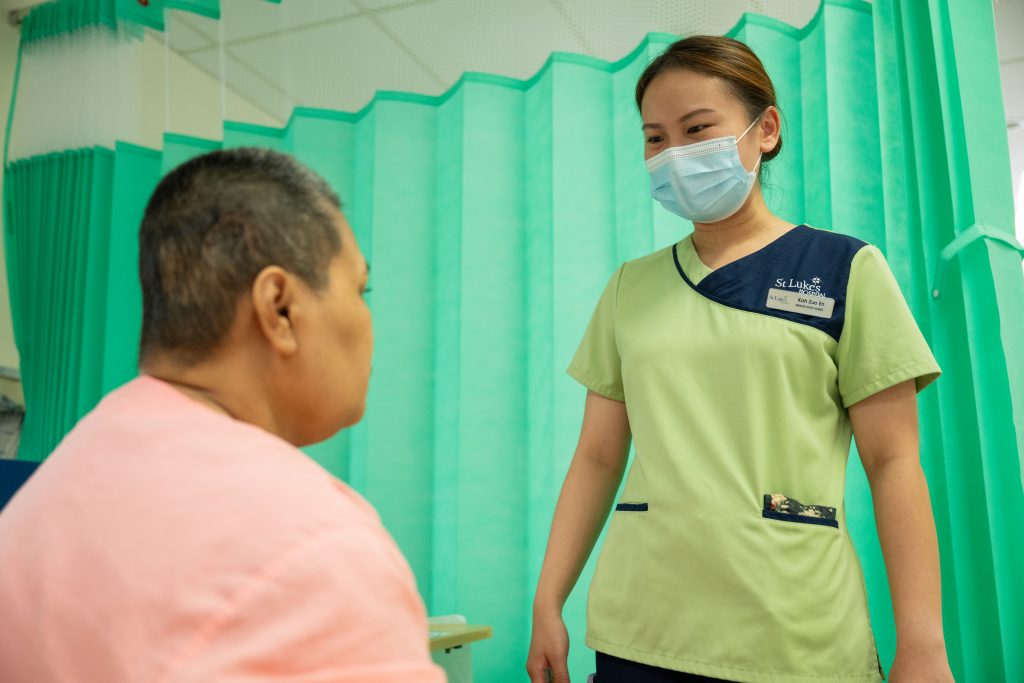
“It made me want to become a community nurse, to walk with patients and their families through times of need,” she recalls.
That early exposure to hands-on compassion shaped her eventual approach in healthcare, guiding her toward a career where empathy and genuine human connection are as essential as clinical skills.
Not long after, Joan applied to study nursing at the National University of Singapore (NUS), receiving a Community Nursing Scholarship from MOH Holdings (MOHH) in partnership with the Agency for Integrated Care (AIC).
Armed with new skills and the empathy forged from caring for her grandmother, Joan found her calling in community care, helping others navigate what she once lived through.
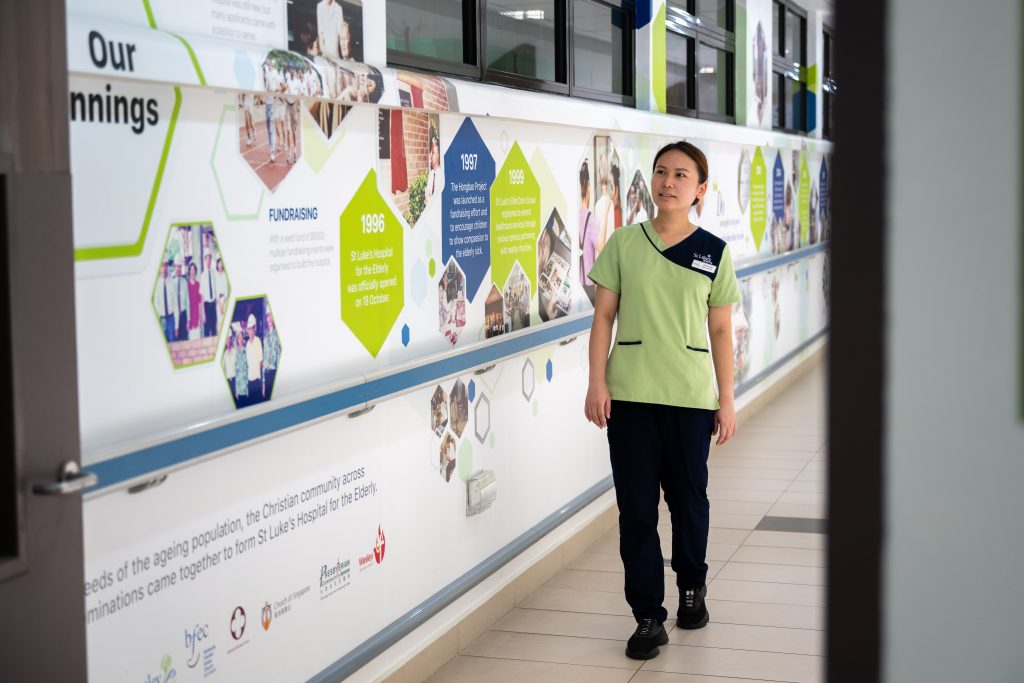
Those lessons stayed with her. In time, she realised that what patients remember most isn’t just the medical treatment received; it’s how they’re spoken to.
“Too often, people react before listening. Listen first, then put yourself in the other person’s shoes,” she advises. “Your tone, the way you convey a message, makes all the difference when you are trying to soothe someone or gain their trust.”
Even as she pursued her nursing degree, Joan never stopped tending to her grandmother—cleaning, accompanying, watching over her until her passing in 2019.
Today, that love has simply widened its circle. Every patient she encounters receives the same devotion and hope she once poured into a life she cherished most.
Being Open Encourages Healing
Singapore will become a “super-aged society” by 2026, with approximately one in four citizens aged 65 or older by 2030. Behind these statistics are nurses like Joan, whose everyday work ensures that Singapore’s ageing population is cared for.
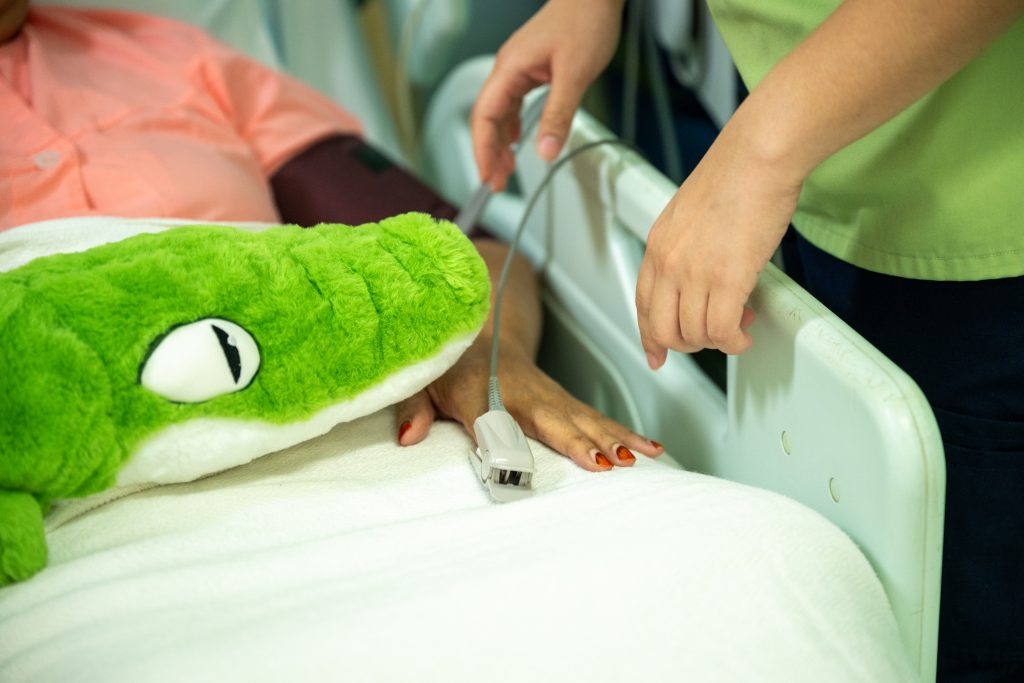
Four years into the job, she has become a ray of light for her patients, brightening their days as she administers medication, changes wound dressings, and prepares them for discharge care.
Beyond the bedside, she and her team also guide families through the long road of recovery, coaching families to communicate with their loved ones and recognise when something isn’t right.
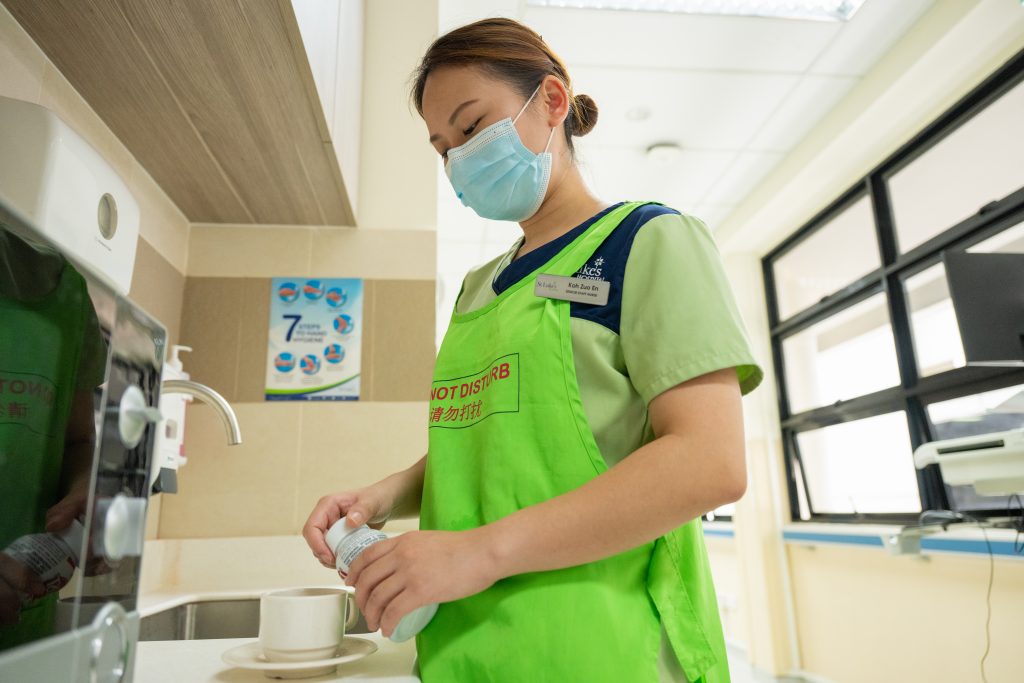
Some days bring their own set of challenges, reminding Joan just how much patience and understanding are intrinsic in her work. She recalls a senior in his sixties whose life changed dramatically after a stroke.
Once independent, he found it difficult to ask for assistance with everyday tasks, such as using the restroom.
“He was too embarrassed to ask for help,” she says.
Joan would encourage him to press the call bell for assistance, frequently check in on him, and offer to help him position himself on the pot at regular intervals.
Each time she rolled up her sleeves, she would chip away at his walls with words of gentle assurance.
Then one morning, before any accidents could happen, he finally pressed the call button. His subdued voice asked for her.
In that moment, she knew she had won something rarer than gratitude: trust. Only then could the work of recovery truly start. After several weeks of physiotherapy, he managed to wheel himself to the toilet. When her patients’ fear and frustration are quelled, she sees their focus shift to the positives. The first time he replied in full sentences, Joan was reminded of why she had chosen this path.
“I look forward to these little wins—and patients having their family beside them makes all the difference.”
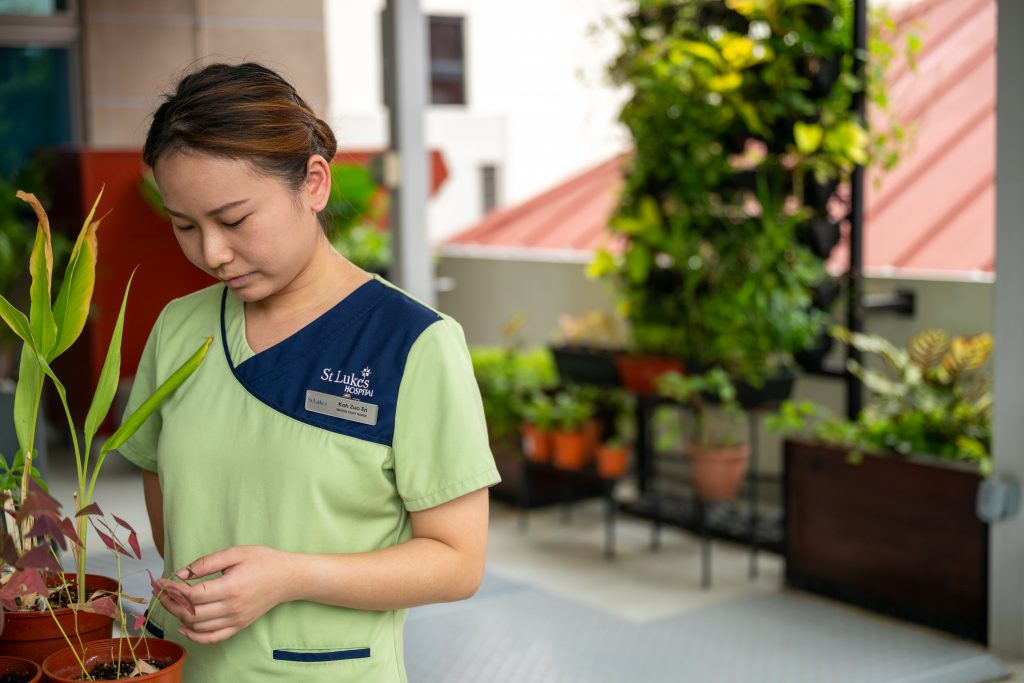
The Good Fight
This is the emotional tightrope she walks: tending to people at their most vulnerable, celebrating their small victories, and sitting with them in their darkest days.
“Rehabilitation sessions are where we see the most progress. Simple words of encouragement like, ‘Wah, you can walk better now!’ make patients happy and provide some motivational boost.”
When a stroke patient can only manage a slurred word, Joan turns to facial cues, watching closely for signs of need or discomfort.
“And when I finally understand what they’re trying to say, their whole face lights up,” she says.
Sometimes a speech therapist is needed to help them communicate by pointing to objects, choosing picture cards, or blinking through an alphabet chart. On other days, no amount of encouragement can stir the body.
“Some struggle with the loss of their independence when simple tasks like standing or feeding themselves suddenly become impossible,” she says.
“This can lead to feelings of hopelessness—and a fear of burdening their families.”
When appetite fades to nothing, eyes glaze over with quiet surrender, and families grieve in slow motion, hearts break behind stoic faces.
Even as hope slips away, Joan’s commitment does not: “I journey with them. We go through the process together.”
After all, community nurses aren’t mere caregivers or healthcare professionals. They’re human presences that patients and families often lean on.
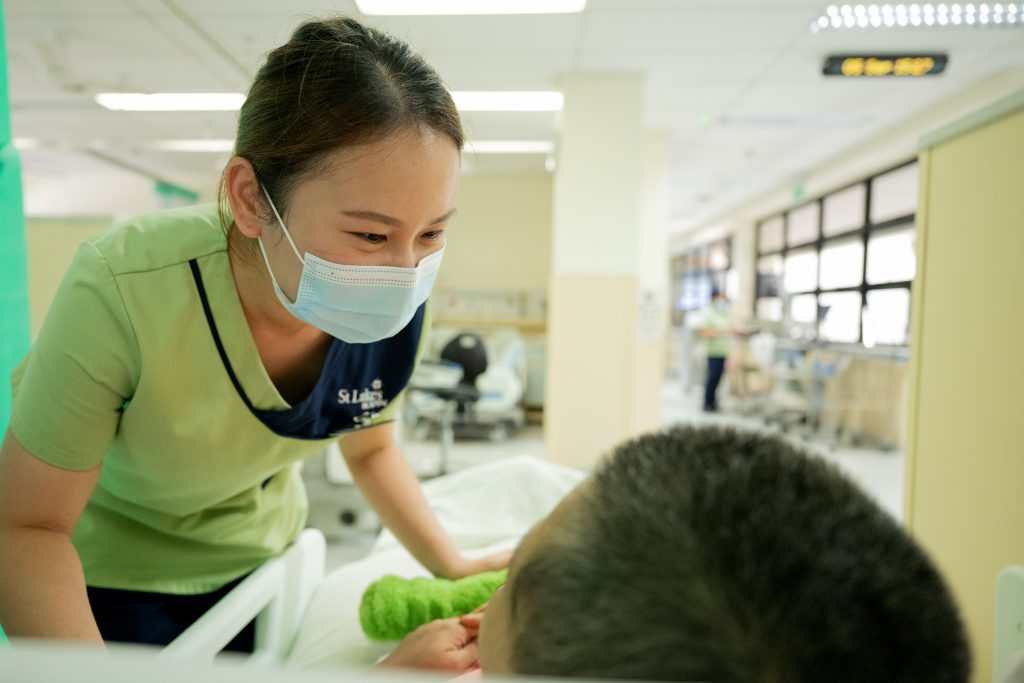
“I understand that life-changing events can be incredibly stressful, and under that pressure, even small things can set people off.”
The demands of this hands-on role have also underscored the vital importance of peer support.
“It’s so important to stand up for each other, handle these moments tactfully, and not carry the emotional weight home. Checking in on one another makes a huge difference.”
Bolstered by her teammates’ support, Joan starts each day with purpose, ready to turn challenging moments into opportunities for healing and reassurance. Much of that purpose comes from working closely with patients’ families, guiding them through the uncertainties that follow a hospital stay.
“It’s meaningful when families cope well after a medical ordeal,” she says. “If patients can walk again, that’s even better.”
But even if they don’t, Joan helps them find peace with their new normal.
Certainly, the pinnacle of a nurse’s work isn’t found in changing drips or taking vitals. For Joan, it’s the simple act of being there, helping patients and their families in any way she can.
“I’m happiest when patients recover enough to return home. Seeing their excitement about going back to their loved ones is extremely rewarding.”
Lighting The Darkness
Regaining what’s lost isn’t always possible. Mobility, speech, or even a sense of normalcy can take months or never fully return.
Still, Joan helps patients stand taller in spirit, even when their bodies cannot.
Tomorrow, when she returns to her ward, some patients will summon what little strength they have to greet her. Perhaps with a finger raised, a blink, or a tiny murmur.
And Joan will meet them with her warmest smile, knowing that even the smallest gestures are proof of the fighting spirit still within them.