Top image: SG Daily / YouTube
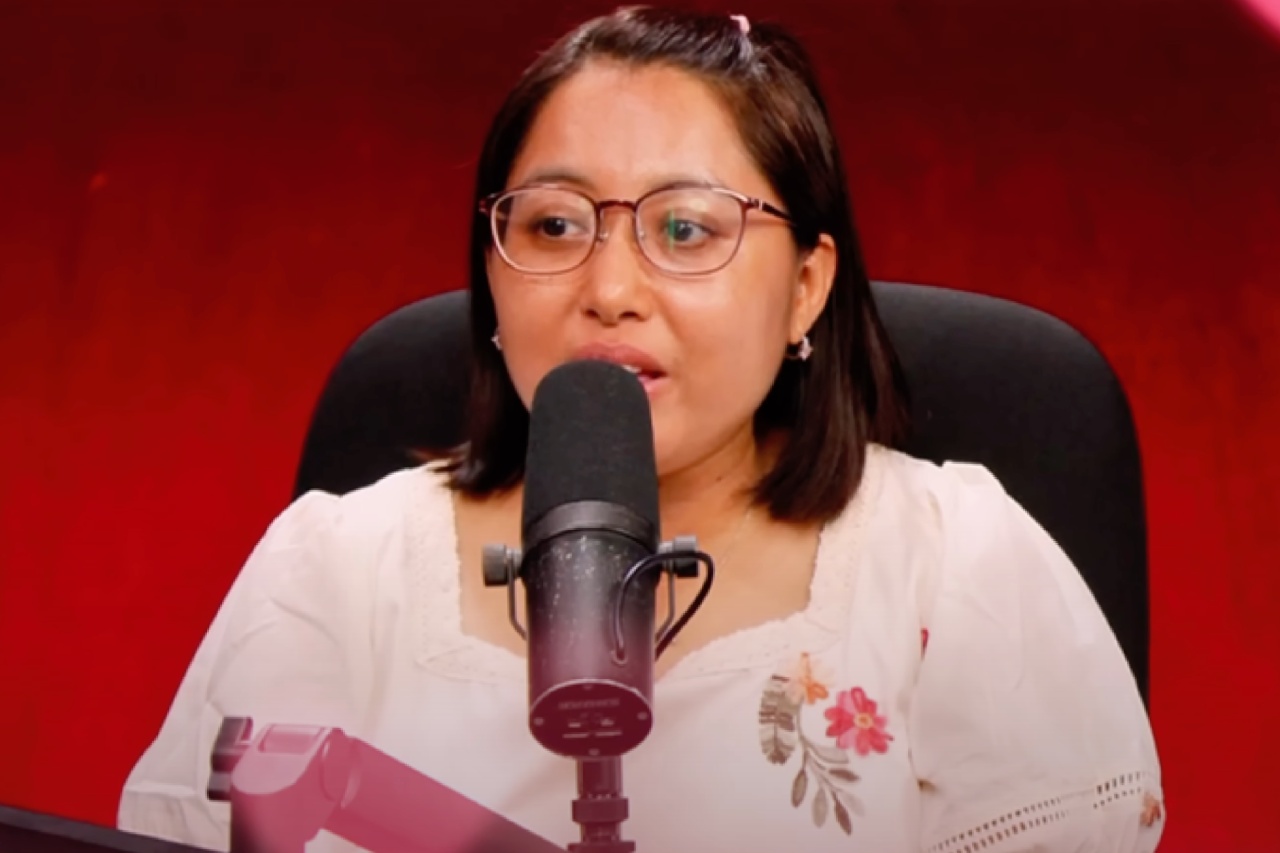
As I write this now, Tan Wan Chen is live-streaming on TikTok. Better known by her sobriquet Zhen Zhen, the 37-year-old is in her pyjamas, eating something that resembles curry rice. It’s a Friday afternoon; a good chunk of Singapore’s population is still stuck in the office.
474 other people are tuning in, and I’m one of them.
Yellow notifications pop up over the live chat, indicating that viewers are buying random products from her TikTok storefront: freeze-dried fruits, cup noodles, candy, necklaces, dresses.
Zhen Zhen seems subdued today, a far cry from her usual brash, unapologetic self. At least, different from the version of Zhen Zhen that I’ve seen in all those viral clips of her: That infamous plastic bag rant, her admiring her own hair, and her demonstrating to her followers what running is.
I find out from the comments that she’s apparently lost her job. I’m equal parts grateful for the information and mystified that internet strangers are keeping up with Zhen Zhen’s life in the same way that people watch serial dramas.
But I suppose that’s what happens when real life becomes internet entertainment fodder.
In the last few months, Zhen Zhen has emerged on Singapore TikTok as an internet celebrity of sorts. She livestreams daily, showing us her raw, unfiltered life: rants about her aloof husband, moments where she gets frustrated with her kids, and even her chatlogs with men who aren’t her husband.
All at once, the bespectacled mum of two is polarising, magnetic, and impossible to ignore.
It’s hard to pin down just how many TikTok followers she has because she’s hopped from one handle to another. On her newest account, @miko48650, she’s already amassed over 17,000 of them.
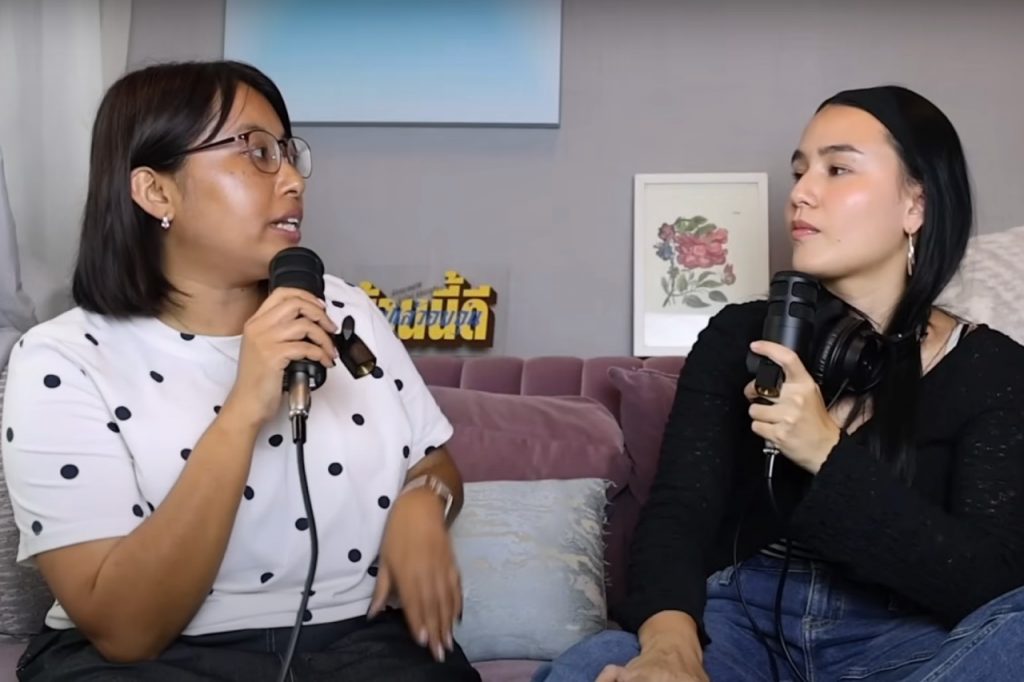
But perhaps the greater testament to her viral fame is the fact that even the mainstream media is getting on the Zhen Zhen bandwagon. She’s been interviewed by the magazine Her World, which branded her a “cultural icon”. Mediacorp’s YES933 radio station has also been making TikToks with Zhen Zhen. And, naturally, she’s also been on a podcast blitz.
Personally, I still don’t know how to feel about her. She’s entertaining for sure. But beyond the hilarity of the viral soundbites, watching her air her deeply personal family business for all to see feels wrong.
But perhaps the question isn’t whether Zhen Zhen is good or bad. The question is: Why can’t we look away?
The Changing Rules of Internet Fame
Zhen Zhen’s rise to internet fame can be confounding to some—influencers are a dime a dozen here, but she doesn’t really fit the mould. She’s neither skinny nor dolled up. And she’s certainly not brand safe.
“She’s all over my feed. And I kind of stay and watch, even though I feel like I shouldn’t be watching,” Christel Goh, a public relations practitioner, opines on TikTok. “I kind of feel like she is an unlikely influencer, but she’s also gotten such a huge following.”
But maybe it’s the fact that she isn’t like other influencers that makes her so watchable.
Singapore was one of the first countries in the region to see a rise in influencer culture in the mid-2000s, says Dr Crystal Abidin, a digital anthropologist and ethnographer of vernacular internet cultures. Platforms like Livejournal, Xanga, and Blogspot gave us our first celebrity bloggers (for example, Xiaxue) who would become influencers.
But this early rise meant that the influencer bubble in Singapore really peaked around the early 2010s.
“For the likes of Zhen Zhen to occur on our feeds and to attract us as a content creator, this tells us that this is a bit of a pushback on the picture-perfect, luxury-seeking, beautiful, young, slim, middle-class influencer,” Dr Crystal offers.
I also get the sense from Dr Liew Kai Khiun, a scholar in the field of transnational media and cultural studies, that Zhen Zhen’s popularity is a matter of right time, right place—or rather, right platform.
“She’s an internet sensation that you will not get on YouTube, Instagram or even Facebook, and definitely not on Twitter (now X) 10 years ago.”
TikTok’s appeal lies in its spontaneity and informality. The nature of the intimacy it provides for vulnerability, he explains.
“The digital world is probably in some ways more accessible and sometimes more comforting than the real world. You feel that you can speak more easily than to your immediate family or your friends.”
In that sense, it’s easy to see why someone like Zhen Zhen, who started her livestreams not intending to go viral, but simply to be less alone, would be drawn to TikTok. It’s also easy to imagine how her realness attracted an audience.
Singlish Realness
Oversharing aside, part of what makes Zhen Zhen so watchable is also how she talks: Loud, slightly grating, and deeply Singaporean. (Ironically, she’s from Malaysia.)
“She’s not performing Singlish,” Dr Liew says. “She’s not being ironic or putting on a show. She speaks that way because that’s how she speaks. There’s no distinction between public and private.”
Her way of speaking and ranting resonates with Singaporeans in a way that our own media has not, Dr Liew adds.
“Nobody speaks like Channel 8,” laughs Dr Liew.
“And therefore your TV dramas come across as contrived… That’s always my beef with why our TV programmes cannot be popular, why nobody watches Channel 8—because nobody talks like that.”
In the past, we’ve seen individuals who speak in a deeply Singaporean manner get shamed. Dr Liew brings up Riz Low, a beauty pageant contestant who was mocked for describing a bikini as “boomz”.
Our media and society have popularised the idea that you need to be proficient in code-switching and fluent in standard English. You have to speak in a certain way or risk being branded as unsophisticated.
In that way, Zhen Zhen’s disregard of these traditional expectations of status, sophistication, and femininity in Singaporean media almost feels like an act of subversion.
Dr Liew and Dr Crystal both point to the S-hook lady, who went viral in 2018 for her Singlish-laden Facebook livestreams where she hawked clothes, as one example of how unabashed Singlish can charm the internet audience.
“We have to remember that the TikTok era is also one where memes have taken an aural turn,” Dr Crystal adds.
“And so with the Singaporean accent that is so endearing, so suitable and wonderfully contemplative, but also conducive for whining and complaining—this is where we thrive.”
What’s Real and What’s Not?
With a polarising figure like Zhen Zhen, it can often be hard to parse the nature of the attention she’s receiving online. Are people who participate in her livestreams and the media outlets that feature her necessarily endorsing her as a person, problematic parts and all? Are we signalling our approval of the way she treats her family—the way she yells at her daughter, for example?
Dr Crystal, who wrote the book Internet Celebrity: Understanding Fame Online, says it’s not as straightforward as it seems. Sometimes, audience engagement can be both sincere and ironic, she says.
As someone who’s researched lolcow figures extensively, she’s well acquainted with Singaporean social media fixtures like Kurt Tay and Steven Lim. She points to Steven Lim’s socials, where floods of comments wish him well on his dating endeavours. (Back in 2017, Steven’s efforts at fame were met with a lot more derision from the public.)
“If you’re a foreigner looking at the comments and his responses, it would feel like he’s got an army of supporters who are encouraging him, seemingly sincerely.”
Yet, for someone familiar with the vernacular of forumspeak (think Hardwarezone, Sammyboy, or even the Singapore subreddit), you’ll realise that some commenters are merely playing up the persona of being the good follower, she explains.
“And I’m not discounting that some of this might be genuine sentiment. I’m also not discounting that for a lot of people, this is mockery, and they may genuinely feel that characters like Steven Lim and Zhen Zhen are not self-aware.”
Similarly, when we watch YES933 DJs run in a circle around Zhen Zhen in a silly TikTok, are they endorsing her? Or are they exploiting her? It’s hard to say.
But there’s also something in between genuine support and mockery.
“People are aware that this is a very specific genre of internet celebrity, and to be in the know and to participate either with the internet celebrity or among other commentators, you need to know the speak,” Dr Crystal observes. “And I’m also seeing that coming through in Zhen Zhen’s comments—there is a standard template for how you respond to her.”
When I ask Dr Crystal if this subtle mockery has the potential to cause harm, her reaction is immediate.
“Oh, 100 percent.”
These subtle comments can actually be a form of cyberbullying, she says, and are an example of grey areas and shifting boundaries of what constitutes internet hate.
“So they might seem like we are in the joke, or they might seem that we’re just giving genuine feedback. But they can actually be very harmful to the self-esteem of internet icons or celebrities.”
Already, Zhen Zhen has taken to blocking people on her livestream. I saw one comment which read: “I commented ‘LOL’ and she blocked me.”
The Price of being Real
Zhen Zhen didn’t ask to be famous. But for better or for worse, she’s become a bit of a household name.
I still don’t know if I like her. But I do know that it’s not easy to be in her position right now. Virality truncates the runway to celebrity. And as Dr Crystal explains, it removes a lot of the decision-making power.
It’s easy to judge her for putting her life online. But at the end of the day, it’s the audience that’s consuming her content and making her famous. Unfortunately, there’s a real risk that she’ll soon find that connection isn’t the same as attention, and that attention can be fleeting.
Dr Liew muses: “I hope she’s prepared for it, because it all goes away after a while. When the next interesting character comes, your world will be rather quiet.”
What’s real? What’s performance? Only Zhen Zhen knows for sure. And maybe only her viewers know whether they’re cheering her on, or playing a part in the slow spectacle of her undoing.