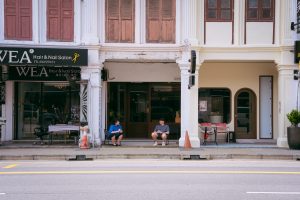
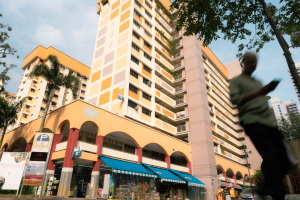
Top image: The Projector
The Projector is dead. Long live The Projector.
Anyone who’s ever squeezed into those rickety theatre seats at Golden Mile Tower, haram teh in hand, knows the space was unlike anywhere else in Singapore.
It was a refuge for creative misfits and Letterboxd nerds, for anyone who preferred things unpolished and imperfect. Wes Anderson devotees sat alongside Marvel junkies, documentary diehards, and Lynchian aficianados.
You could catch a drag show, join a fundraiser, speak in a panel discussion, get tossed around in a mosh pit, and then end the night drinking on the rooftop carpark. ‘Alternative’ wasn’t branding—it was baked in the bones of the place. Even the toilets, plastered floor to ceiling with movie posters, reminded you where you were.
So, yes, it stings. When something like this dies, it feels like part of Singapore’s creative lungs collapse. No wonder there’s now a petition floating around, demanding government intervention to declare The Projector a ‘cultural infrastructure asset’ and keep it alive.
But before we rally behind the idea of state rescue, let’s ask: Does The Projector actually need a government bailout? Or is that the very thing that would kill what we love about it in the first place?
The State as Saviour (and Sanitiser)
The hard truth is that The Projector closed due to financial difficulties. Pocket Cinema, the company behind The Projector, owes more than S$1.2 million to creditors, including its members.
Its founder, Karen Tan, noted that the combination of “rising costs, changing audience habits, and the worst consumer market conditions in a decade” left them no choice but closure.
Rent hikes, cost-of-living pressures, the rough economy—take your pick. Cathay Cineplexes managed to survive World War II, but even they’re struggling these days.
Back to the petition, which calls for the authorities to consider a “rescue package through grants, low-interest loans, or strategic support measures”. It’ll be “an investment in Singapore’s cultural identity, creative economy, and social cohesion”.
But what does the government really owe a private business in debt, much less a space that doesn’t exactly align with mainstream ‘nation-building’ narratives? Not exactly a compelling case for the government to swoop in for a rescue op.
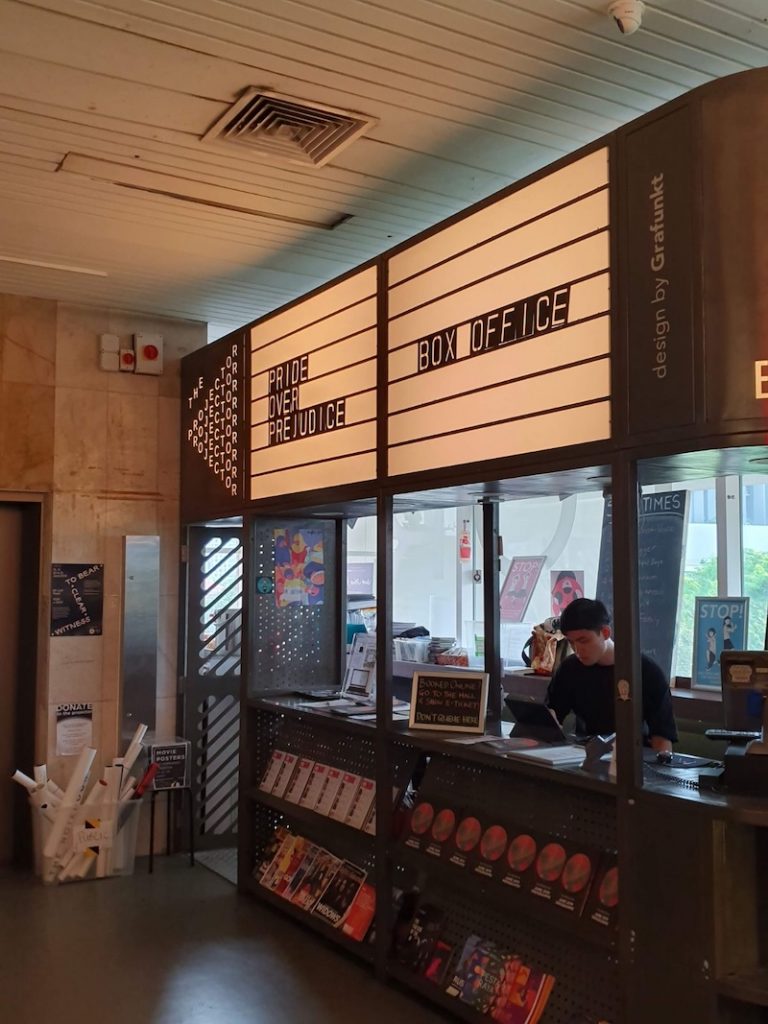
And even if they did step in, at what cost? State support doesn’t come free. Sanitised programming? Posters scrubbed clean of anything remotely risqué? No more screening movies like No Other Land, 1987: Untracing The Conspiracy or Hougang: The Documentary?
The very spirit that made The Projector what it was—the edge, the rebelliousness—might not survive a round of state sterilisation.
It’s an extreme scenario, but would we really want The Projector to morph into a People’s Association cinema, complete with approved films that have gone through rounds of sensitivity checks?
If what made The Projector special was its DIY independence, then inviting the government to save the day risks turning it into just another arts venue with a safe sheen.
(That being said… the alternative can’t be absolute abandonment. Local creatives and arts organisations do find ways to balance subsidies with artistic edge, even if imperfectly.)
Technically, yes—The Projector could survive with ‘strategic support measures’. But what comes after might not be the same entity we knew and loved.
Did We Do Enough?
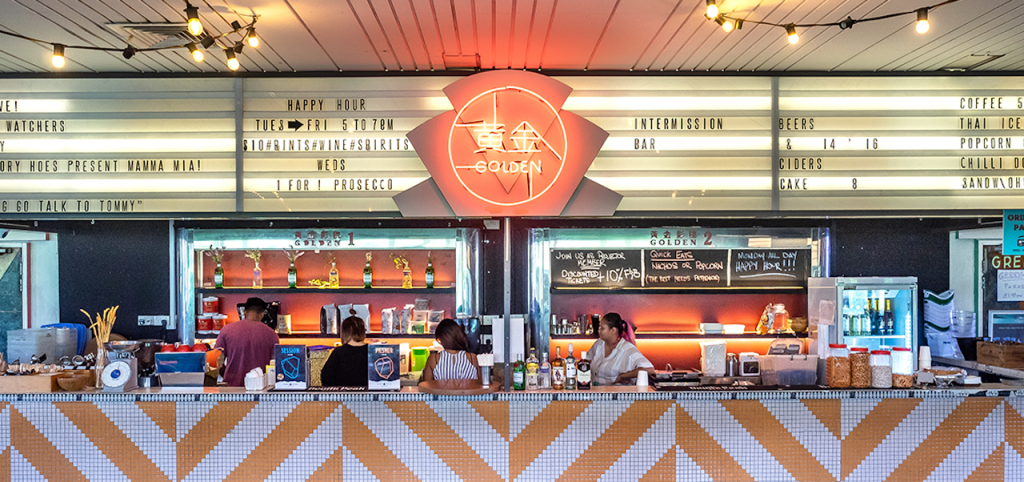
It’s valid to mourn now that The Projector’s gone, but I can’t help but think if we—as a community—could have done more when it was around.
“Even the most adventurous, arthouse, punk-rock business is still a business,” wrote former RICE writer, Sophie Chew, in her 2020 piece on The Projector. “Its survival rests on that age-old question: Are you willing to pay for the things you love?”
It’s a knee-jerk reaction to wax lyrical about its indie spirit now, to cry foul about the death of Singapore’s creative culture. But how many of us were Projector fan club members? When was the last time we patronised its halls, bought its merch, showed up for its curated festivals, or made sure to purchase plenty of food and drinks from The Intermission Bar?
I’m saying this because Singapore has a habit of romanticising things after it’s gone. Thambi Magazine Stand, Flor Patisserie, Wala Wala. We love the idea of these places—but putting down money, rearranging our schedules, and showing up regularly? Perhaps less so for the masses.
Admittedly, this critique only goes so far. In a squeezed economy, everyone’s spending power is limited, and support has its limits. Even if every casual fan had become a diehard patron, The Projector’s permanence might still have been impossible. Indie ventures here don’t fail just because of apathy—they fail because our system makes risk and risqué punishing, especially for those in the arts and entertainment biz.
A space like The Projector had a cult following and still struggled because passion can’t outmatch the economy. It’s a pity, because The Projector was born out of the idea that Singapore’s cinemas can offer better experiences. A community believed in the dream enough to crowdfund over $70,000.
The fact that they survived Covid is proof that community support alone will not be enough to overcome the odds already stacked against The Projector from the beginning and the even greater challenges it faced in the last few years. Such is the tale for nearly every independent, creative venture in Singapore.
The Business of Culture
The petition frames The Projector as a public good, and rightly so.
The Projector was never just about watching films that the big chains won’t bring in. It was about creating a home for communities that don’t fit into the mainstream, a space that could spark tough conversations that might not sit well with the powers that be.
These spaces give local creatives and artists a platform in a city that lacks them. They start conversations and advance discourse. They help us to progress as a society.
But these things rarely survive for long in a system that demands profit as proof of worth. Relying on private citizens to fund the arts entirely also means that, naturally, when the economy takes a dip, places like The Projector (and even regular cinemas) die first.
That’s where the government does have a role—not to bankroll every arts space into monotonous existence, but to create conditions where survival in the creative industry doesn’t require constant bleeding. Not everything should live or die at the altar of market logic.
The people behind The Projector created a space that offered plenty of intangible cultural value for over a decade. Perhaps different business decisions could’ve softened the blow, but P&Ls are unforgiving. And it’s heartbreaking that all they have to show for it now is a mountain of debt.
When only profitable things survive, then only the privileged few get to play. And that leaves Singapore with a creative scene that’s homogenous, risk-averse, and honestly, boring as hell.
And, Scene
The Projector is gone, and Singapore is poorer for it. Not everyone will feel the loss—many outside the local arts and culture echo chamber barely knew it existed. Others are gloating in Facebook comment threads, cheering the death of a “woke” space. It’s a small-minded victory lap that says plenty about how narrow our country’s cultural appetite still is.
We might need to consider that The Projector’s end is not just about The Projector. When we refuse to pay more for hawker food, when we don’t want to read local literature, or support local businesses—all of this shapes what we value and what continues to exist (or not) in Singapore.
It becomes an existential question for us as consumers. Do we just want good bang for buck, or choose to invest in things that contribute to the Singapore we want to live in?
The real work now begins. First, at the individual level: if we don’t want to keep seeing the artists, places, publications, companies, and communities we love vanish, put our money where our fandom is. Pay, attend, support, before the obituary is written. That SG Culture Pass money is coming soon, anyway. Just whack only.
At the systemic level, profit can’t be the only metric of value. A city’s soul isn’t built on what sells; it’s built on what we choose to keep alive. But survival demands a collective ecosystem where creatives can thrive on their own terms—something petitions, rent control, and grants alone can’t fix.
The government doesn’t owe anyone a bailout. But it does owe Singapore an environment where independent creative ventures like The Projector aren’t destined to fail, no matter how hard they try.
That’s different from writing blank cheques; it’s about intentional policies, long-term planning, mindset shifts, and adequate breathing space for creative ventures to exist without being crushed by rent and market logic.
The Projector’s death is a tragedy. But the greater one would be if we treated it as nothing more than the end of a quirky indie cinema where we tossed plastic spoons at the screen while Tommy Wiseau gave the performance of his life.
What’s really at stake is whether Singapore can keep the reels turning for those who want to be creative (and a little unruly) without the script getting frequent rewrites.
(PS: The Golden Mile Tower space is up for rent already. Now, if only we could gather enough people to chip in for the $33,000 monthly rent…)