All images by Zachary Tang for RICE Media unless otherwise stated. Equipment supported by Leica Store Singapore.
“Table 9, 里面六号,” I chant under my breath. Table 9, inside, Table 6. Teetering at the threshold separating the kitchen from the dining area of Sin Hoi Sai Eating House, I count in twos from Table 3, scanning the row to locate my first target.
It’s the third day of my part-time stint as a server at the zi char restaurant. It’s also the second day of Chinese New Year. Reunion dinner service is in full swing.
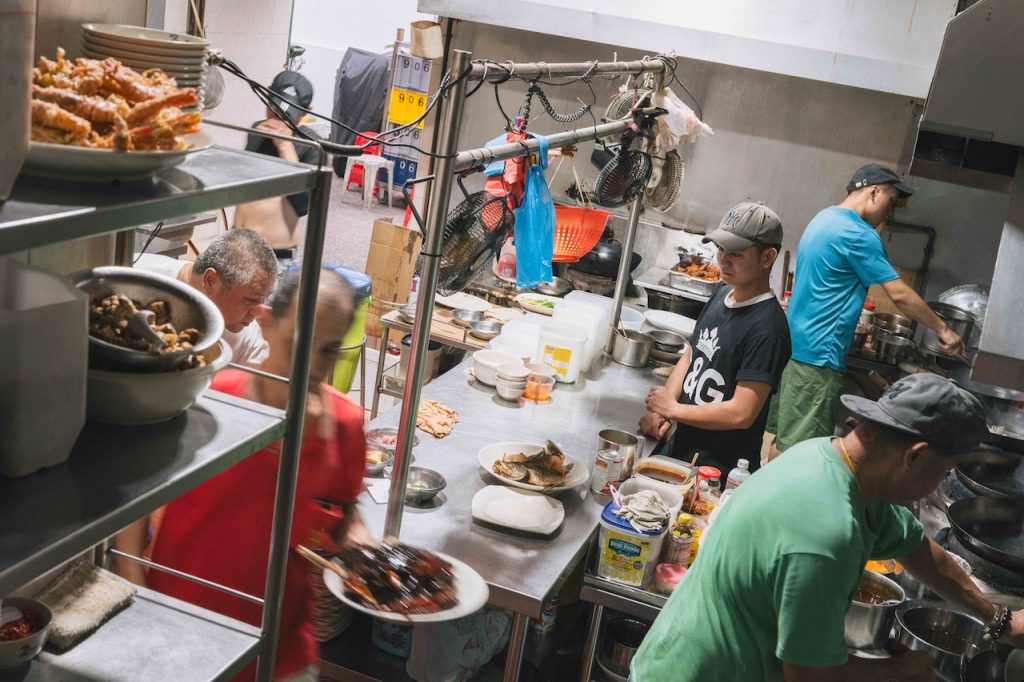
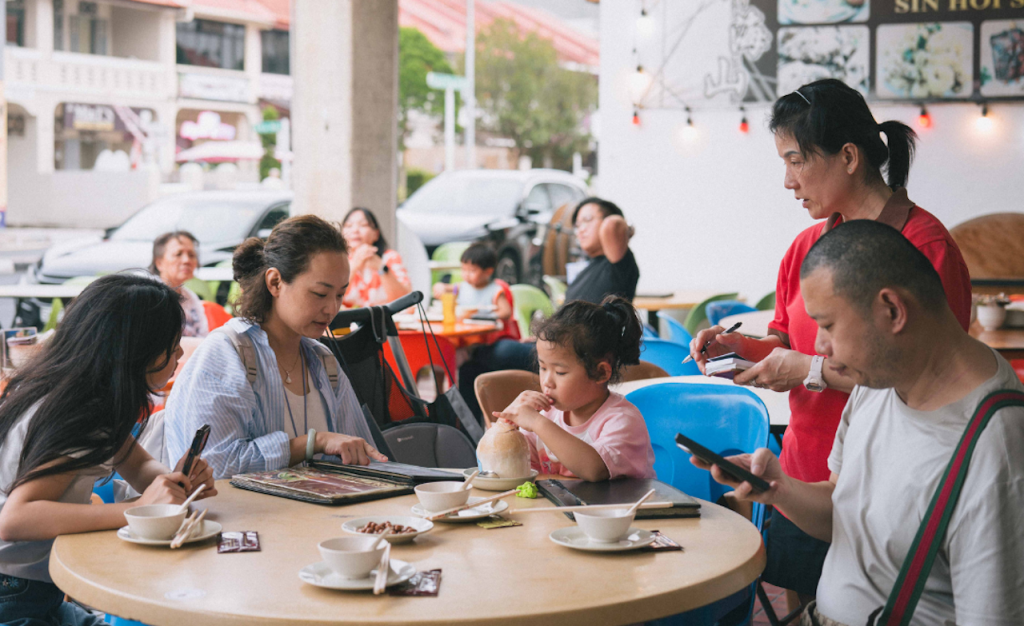
I try to ignore the hotplate tofu burning my fingers through its wooden platter. I remind myself to cut up the red wine pork rib once I set the plate down. I dive into the pulsing mass of diners crowding the aisles, shouting “后面烧!”. Hot, behind.
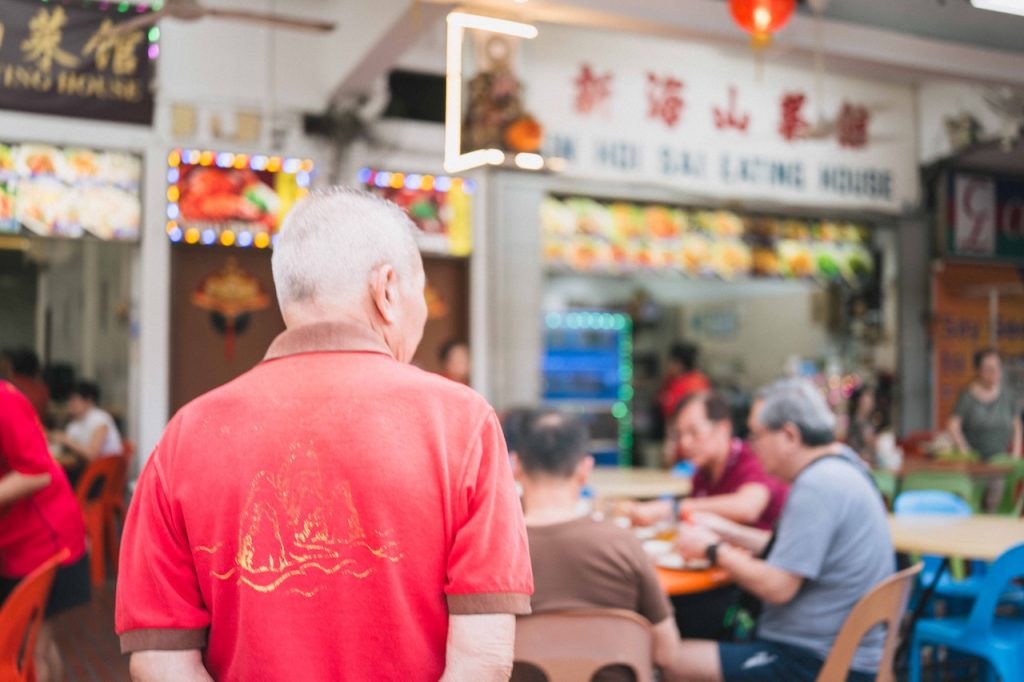
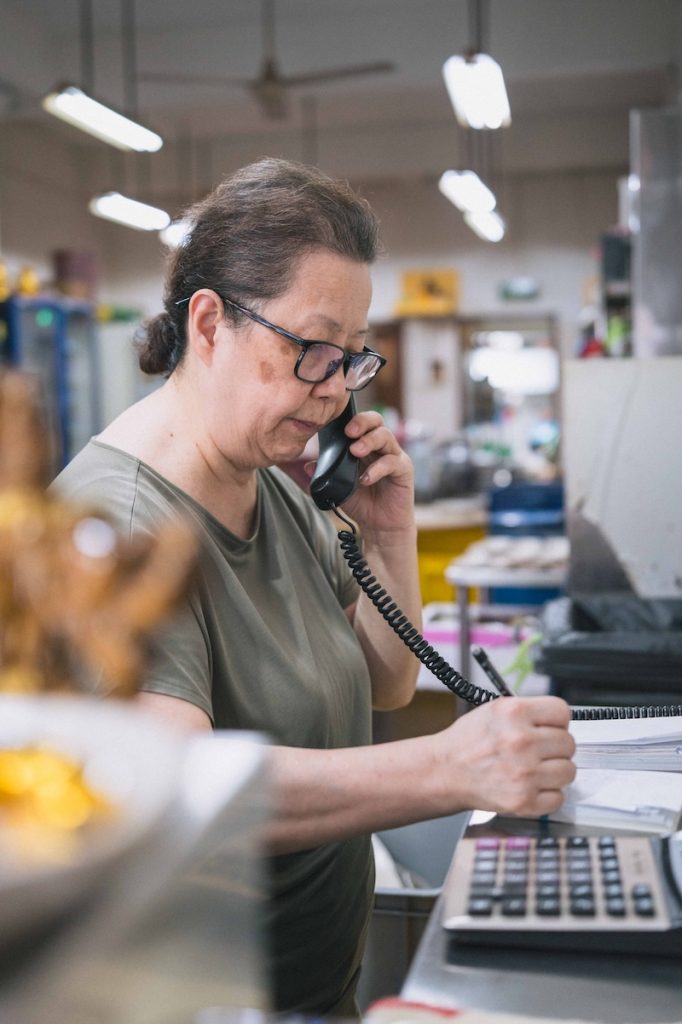
The other servers are deftly winding their way through the dinner crowd. A stout older lady makes her way around the bustling shopfront. Paper pad in hand, 69-year-old Yap Sor Khim surveys her restaurant over the rims of her glasses, every inch the lady boss in charge.
Mr Seow, Auntie Khim’s 80-year-old husband, lingers closer to the tables lined next to East Coast Road, soliciting passers-by as they eye the massive signboards above the shopfront.
Two figures, however, are noticeably stationary among the commotion.
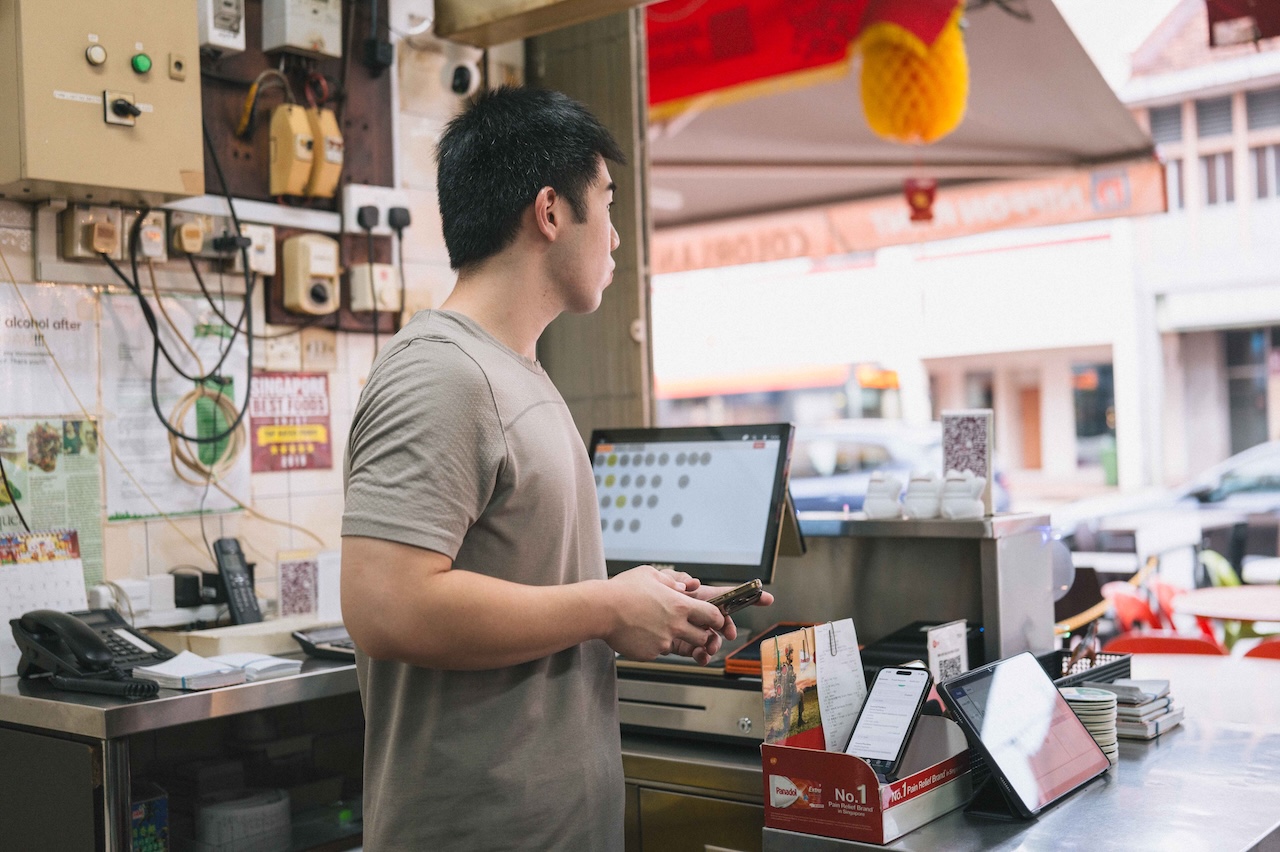
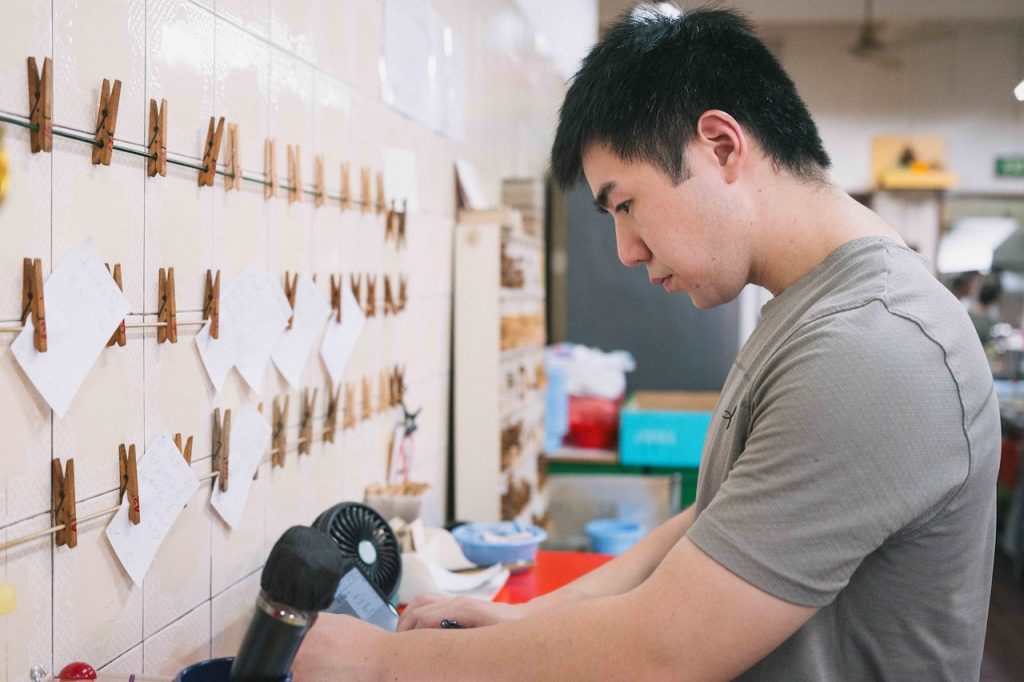
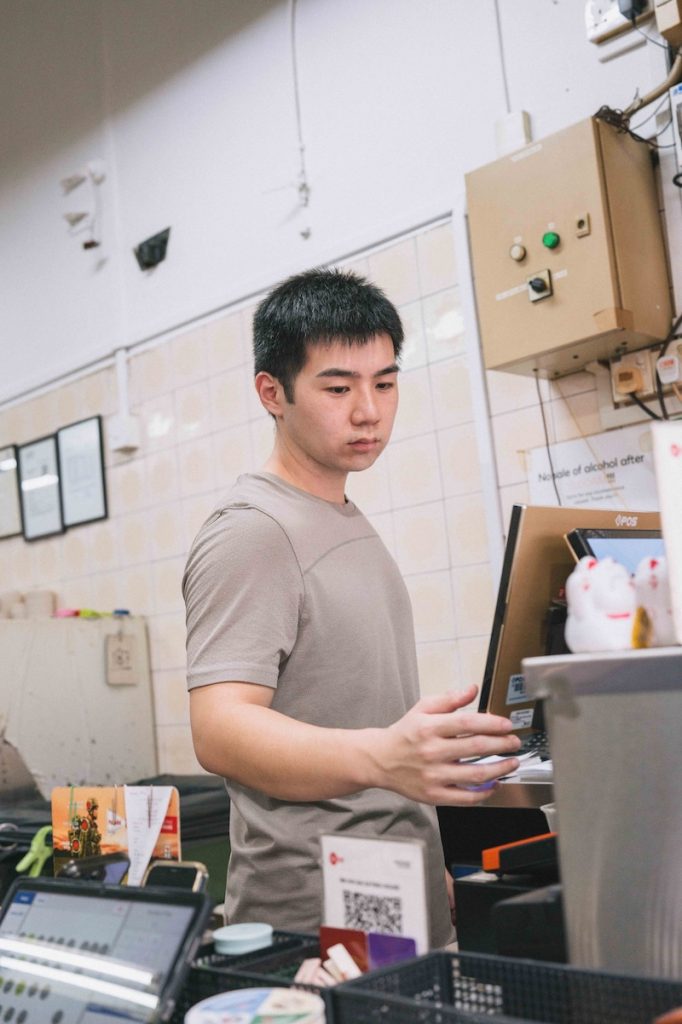
Behind the stacked tanks of live tiger prawns and marble goby fish, Coen Seow—the 29-year-old son of the bosses—holds court in front of a Point-of-Sale (POS) tablet. His girlfriend, Pei Qin, mans a terminal at the cashier counter opposite him. The couple are stationed where they are to key in orders from handwritten chits and total them for customers settling their bills.
My shift ends, and I collapse at home a few hours later. I find pockets of trapped blood under the third toenails of both feet. My right hip is throbbing away, and I hold a hot compress pack against it until I finally drift off to sleep.
It was only day three for me. But the elderly owners of Sin Hoi Sai have braved this relentless grind every single day for the last 44 years.
It is, in other words, getting unsustainable for them to continue carrying the full weight of running a legendary zi char institution.
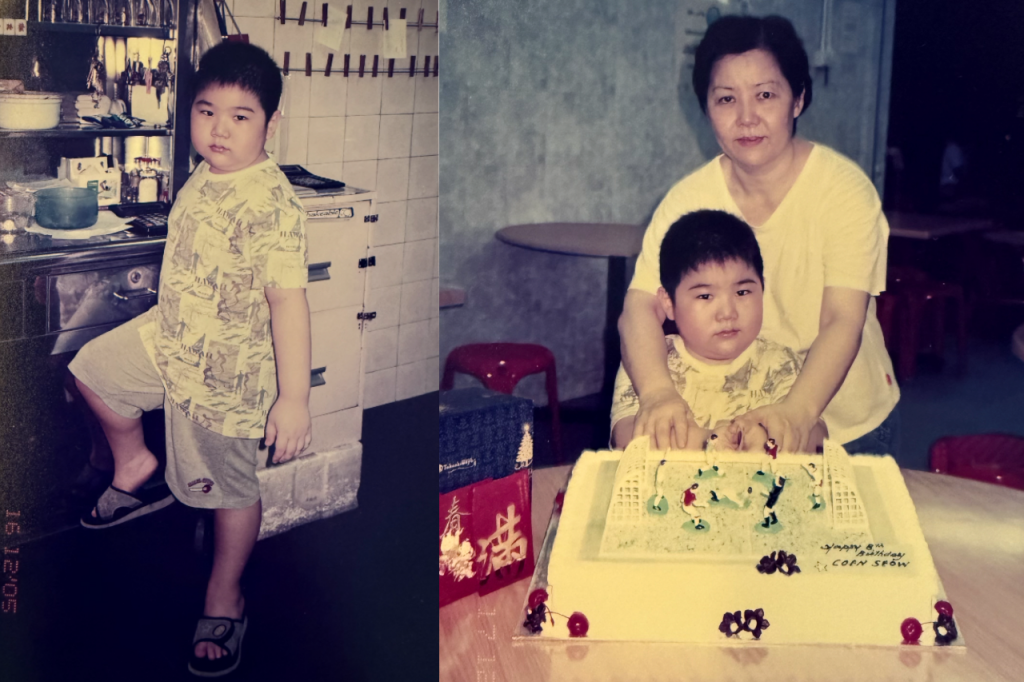
Coen, an only child, will be inheriting the legacy of his family’s restaurant. To uphold it, he knows the way they work has to evolve—and it’s his parents he’s thinking about, not himself.
All in the Family
Sin Hoi Sai was founded in Tiong Bahru in 1980 by Auntie Khim, her husband, her sister, and her brother-in-law. Business at the Tiong Bahru outlet did so well that they decided to open another outlet on East Coast Road two years later. The two outlets are now separate entities, with Auntie Khim running the East Coast outlet.
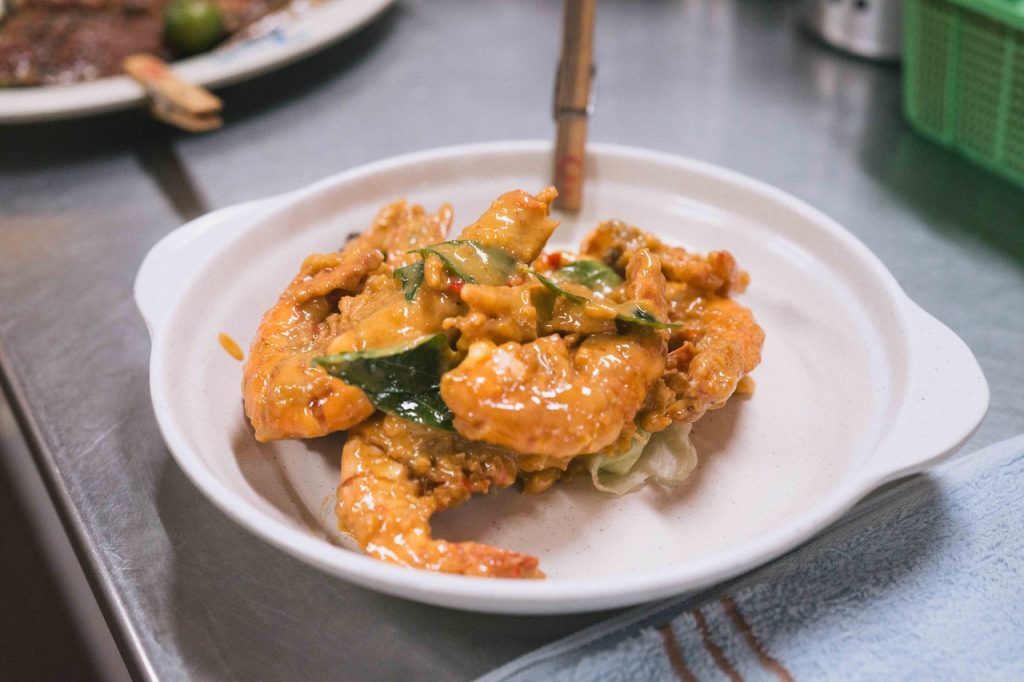
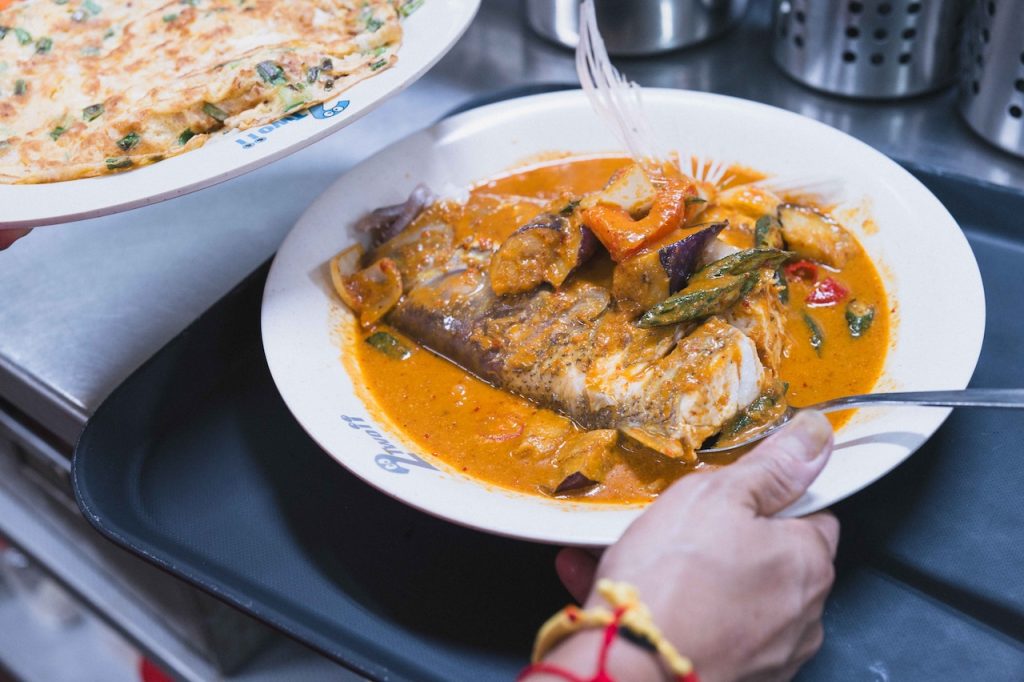
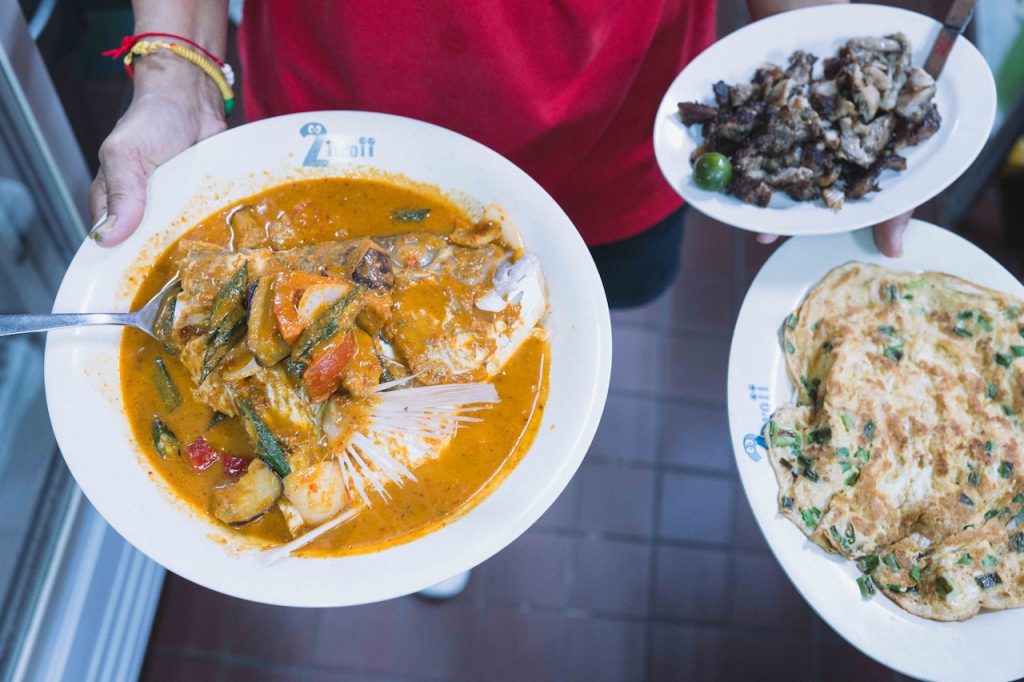
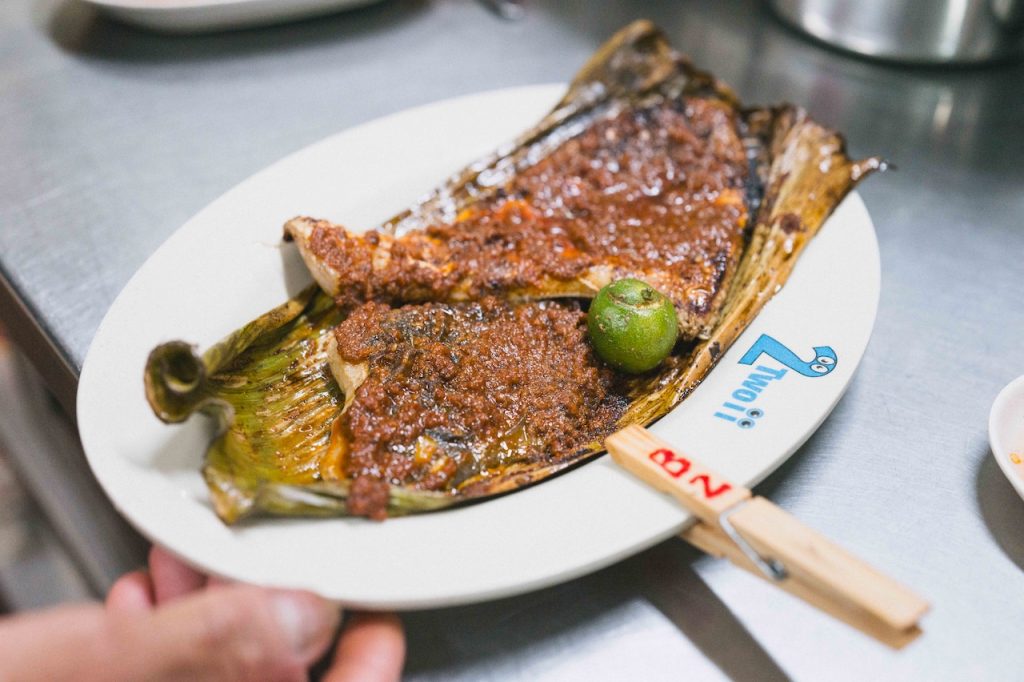
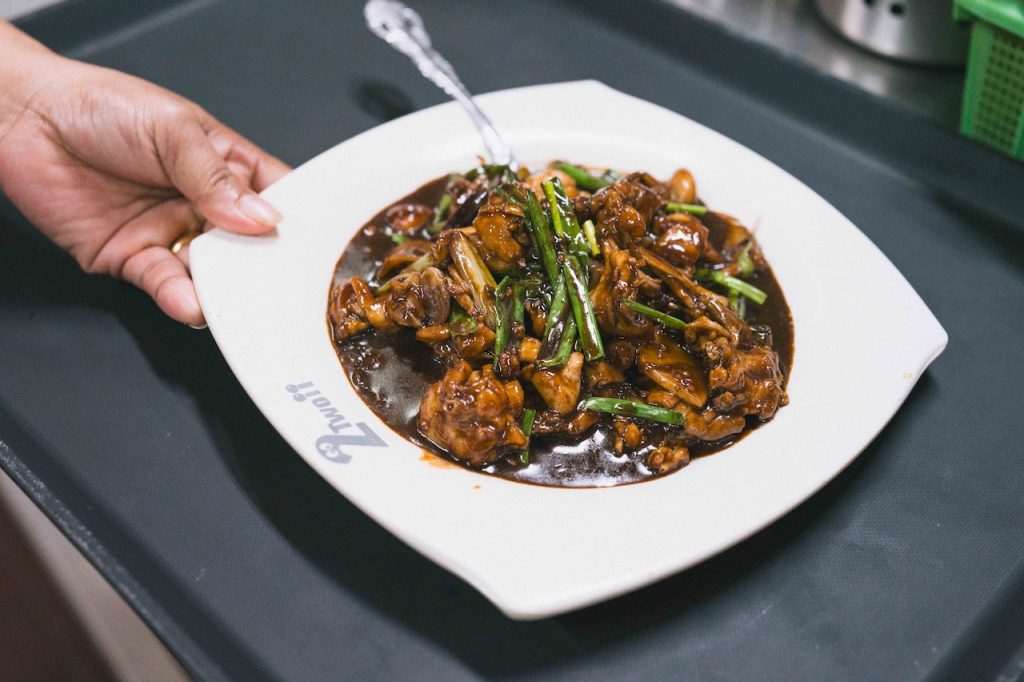
Specialising in Hokkien- and Cantonese-influenced zi char fare, Sin Hoi Sai Eating House’s expansive menu comprises over 200 dishes, including their signature pig trotter bee hoon, red wine pork ribs, and salted egg prawns. On a weekday night, the restaurant turns over up to 100 tables, and up to 300 on weekends.
Being a mainstay in Katong for four decades has won the restaurant loyal customers. During a shift on a Friday night, I hear a sudden ripple of jabbering breaking out amongst the longtime servers: “母老虎来了”. Tigress is coming.
I’m surprised to see the servers usher in a family of six Caucasians led by 60-year-old Bruce Loggie, a Liverpool native who’s been a loyal patron since 1995.
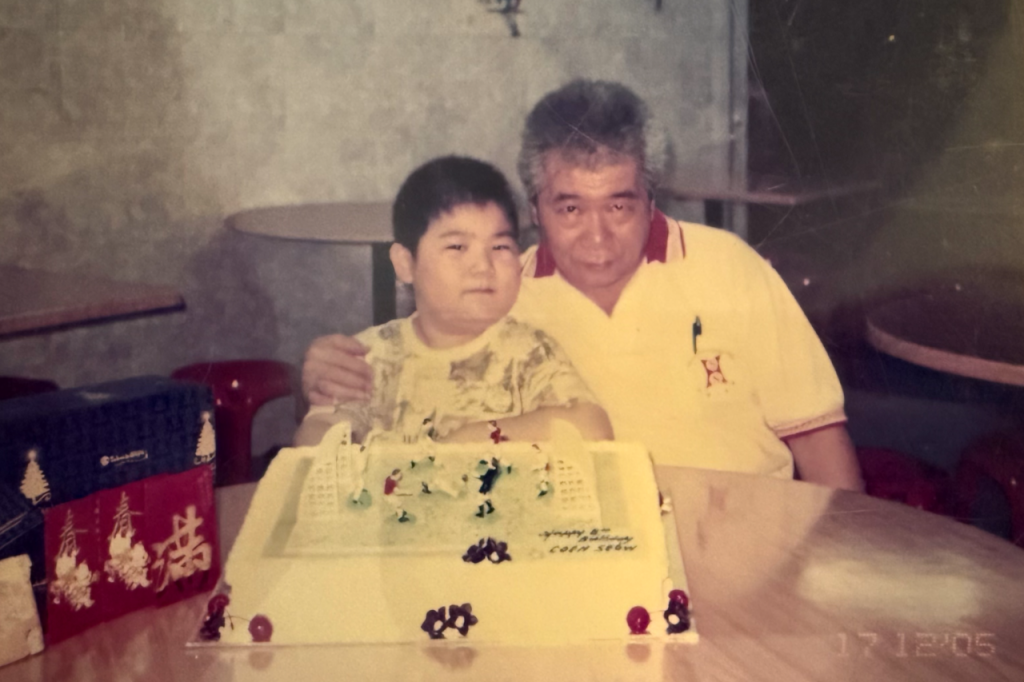
“I’ve been coming here since before Coen was born. I’ve watched him grow up over the years.”
As for the nickname? It started as a joke between Bruce’s love for Tiger Beer and his wife’s efforts to keep his drinking in check. Mrs Loggie became the ‘Tigress’, but over three decades, the name simply became synonymous with the whole family.
For Auntie Khim, seeing returning customers like Bruce gives her the greatest satisfaction throughout her decades running the restaurant. Her enduring connection with regulars makes her an indispensable pillar to Sin Hoi Sai. Customers seek her out to chat and take their orders, which she gladly obliges.
“Whether they’re expats or tourists,” she says in Mandarin, “they always come back to see me”.
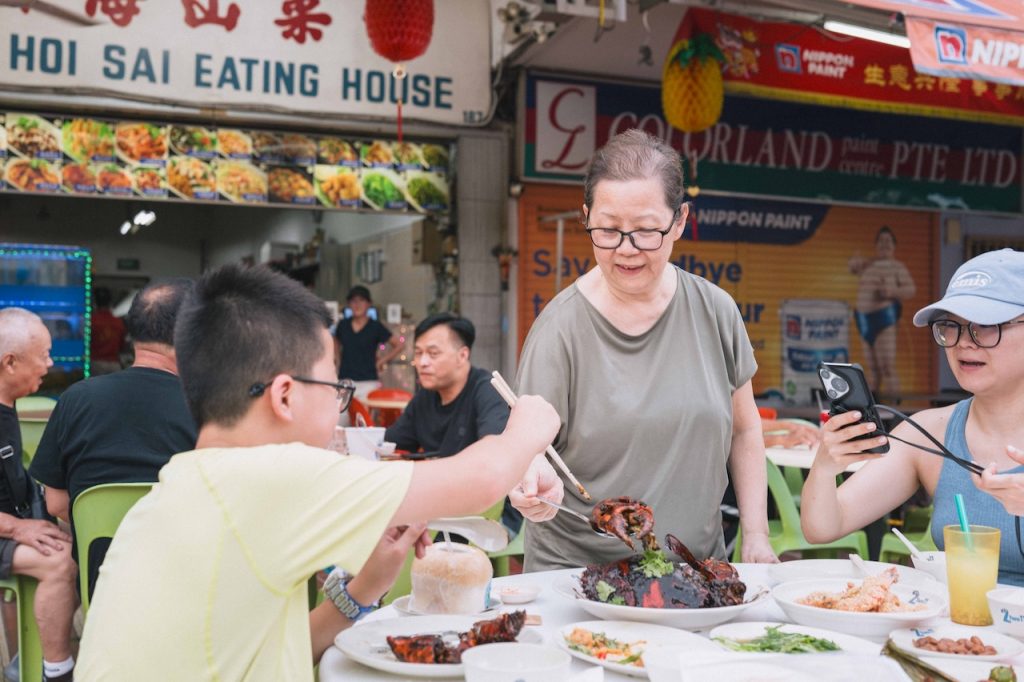
The emphasis on connecting with people has naturally passed down to Coen. “All along, we’ve believed that human interaction and customer relationships are everything.”
A true-blue family restaurant, three generations of Coen’s family have worked at Sin Hoi Sai Eating House over the last 44 years.
Coen’s maternal uncle, Ah Seng, serves as the restaurant’s head chef. Coen’s aunt, Ah Bee, works as a server. Coen’s 92-year-old grandmother used to prepare the homemade drinks until a gallbladder attack in April put her on indefinite rest.
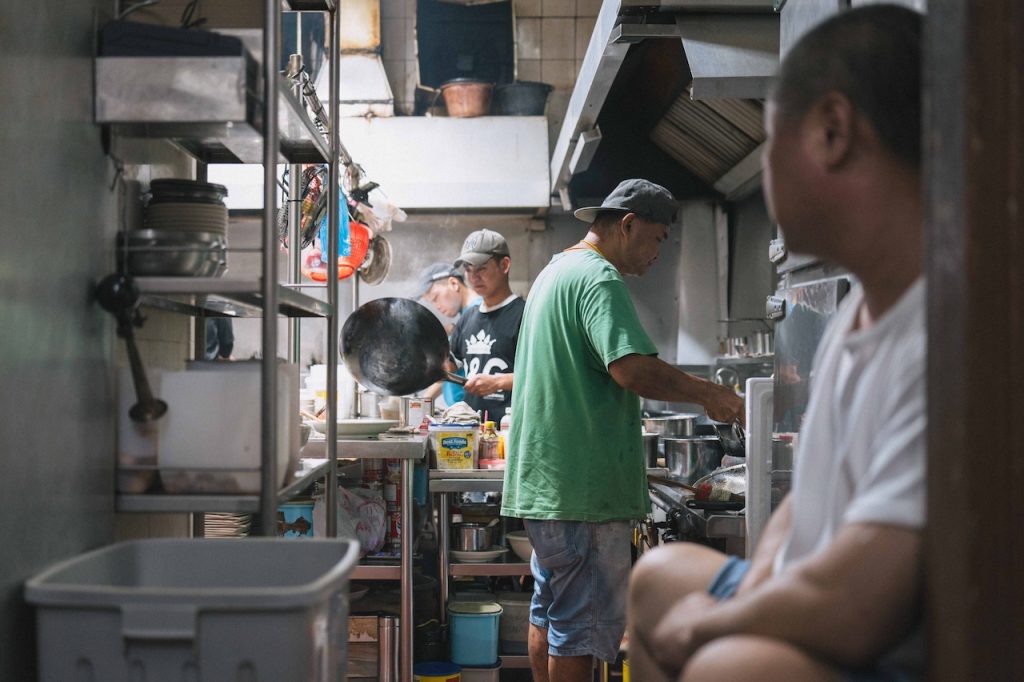
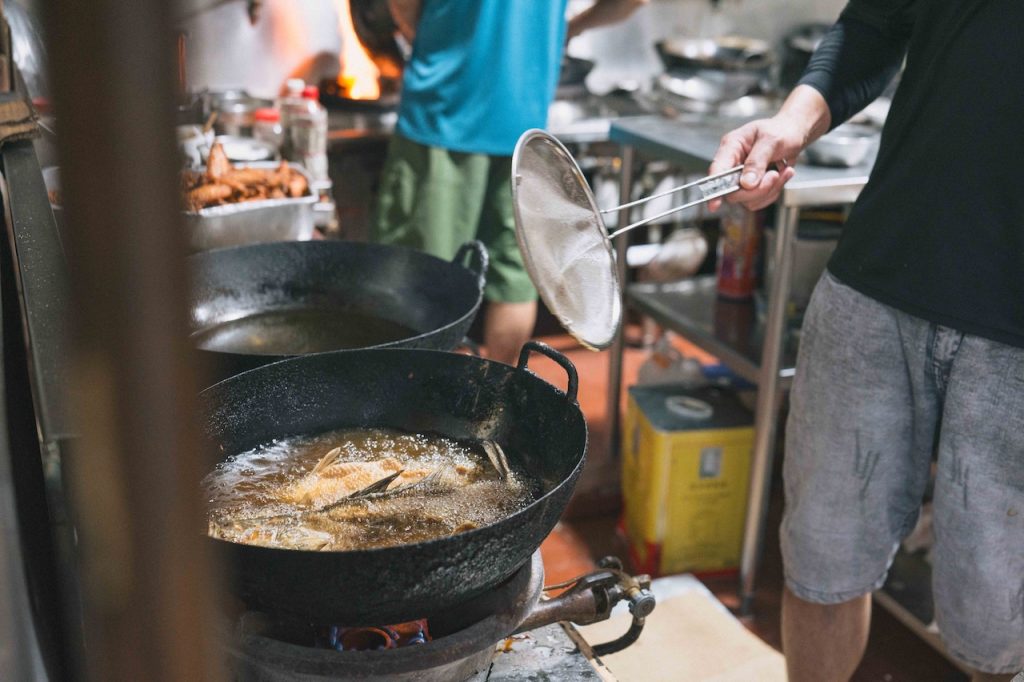
Coen came on board full-time in 2020. Running the front of house, he handles everything from serving and cashiering to ensuring the smooth flow of daily operations. After quitting her corporate job in 2025, Pei Qin found herself with time to help out, chipping in during the busy weekends and public holidays.
Despite being the only child, Coen says he has never been pressured by his parents to take over the restaurant—his desire to do so was completely his own.
“I’ve always been interested in starting a business,” he says. Even at Temasek Polytechnic, his chosen course of study was business. Before joining full-time, however, Coen was never fully aware of the challenges his parents faced running their restaurant.
“As a student, I only helped out for a few hours each time, so I didn’t see the hard side of running the business.”
The Cost of Building a Legacy
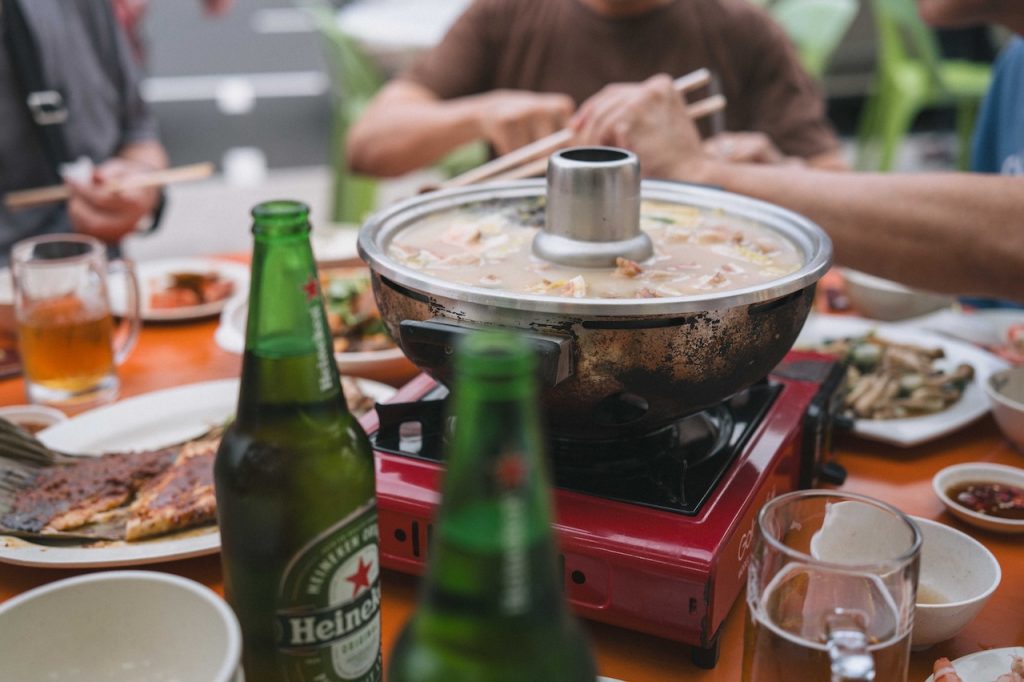
Apart from one day reserved for major spring cleaning, Sin Hoi Sai Eating House is open every single day of the year.
Operating from 4 PM to 3 AM, the restaurant has built a reputation as a reliable supper spot in the east. Celebrities like Hong Kong rapper Jackson Wang and Korean indie band Hyukoh have come by to have their bellies filled after midnight. Locals know that Sin Hoi Sai will always be open to serve comforting zi char when they get peckish before or after a night out.
While it is well known that the restaurant is open year-round, the reality of its gruelling operations is perhaps less apparent.
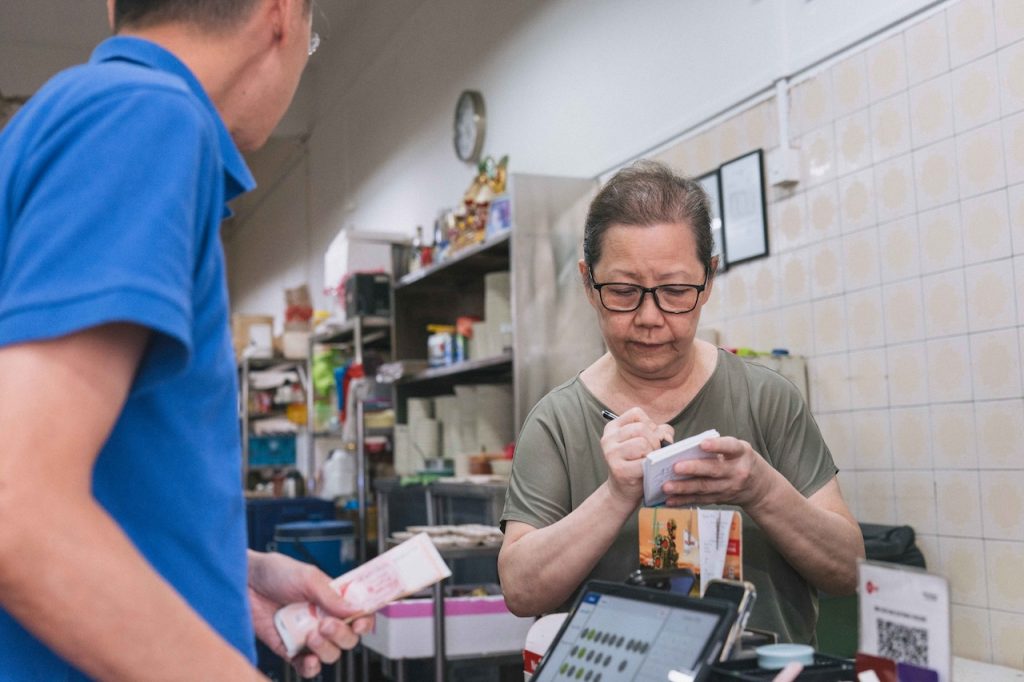
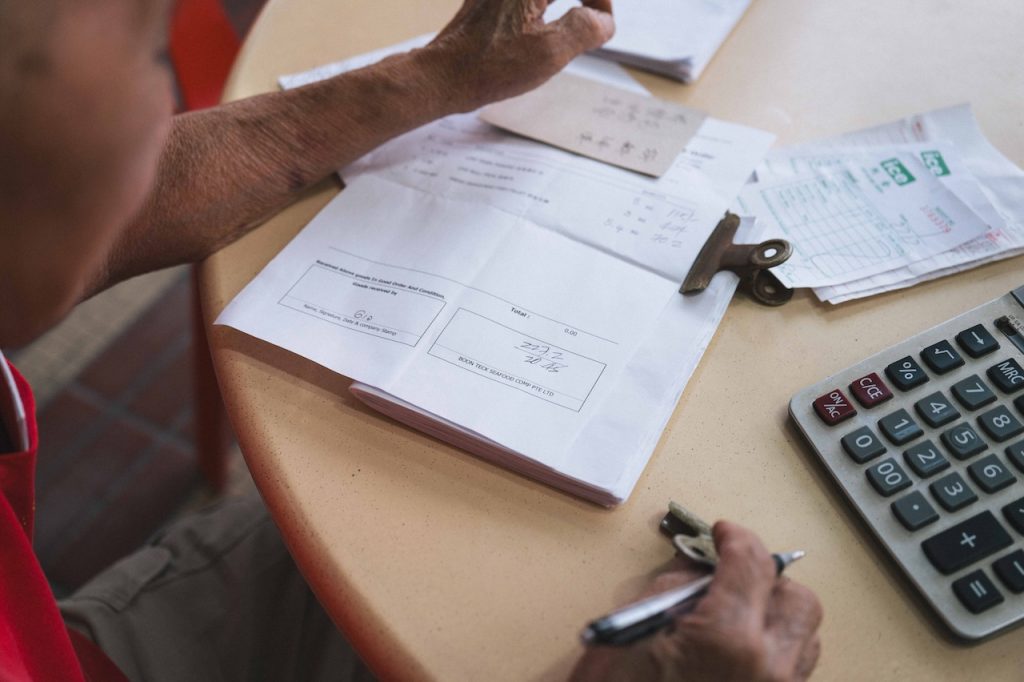
After the restaurant shutters at 3 AM, Auntie Khim’s work continues for another six hours. During this time, orders that were handwritten on chits are logged onto official invoices. These invoices are mandated by IRAS for official record-keeping.
She will do this until 10 AM, when she finally goes to bed. Beyond her joint aches from decades of pacing the restaurant floor, Coen thinks this nightly routine has had an unforeseen physical side effect: “I think manually recording all the invoices after work has contributed to her developing a hunched back.”
Besides working together daily, the family doesn’t have many opportunities to spend meaningful quality time together. After all, most of their time is spent working at the restaurant.
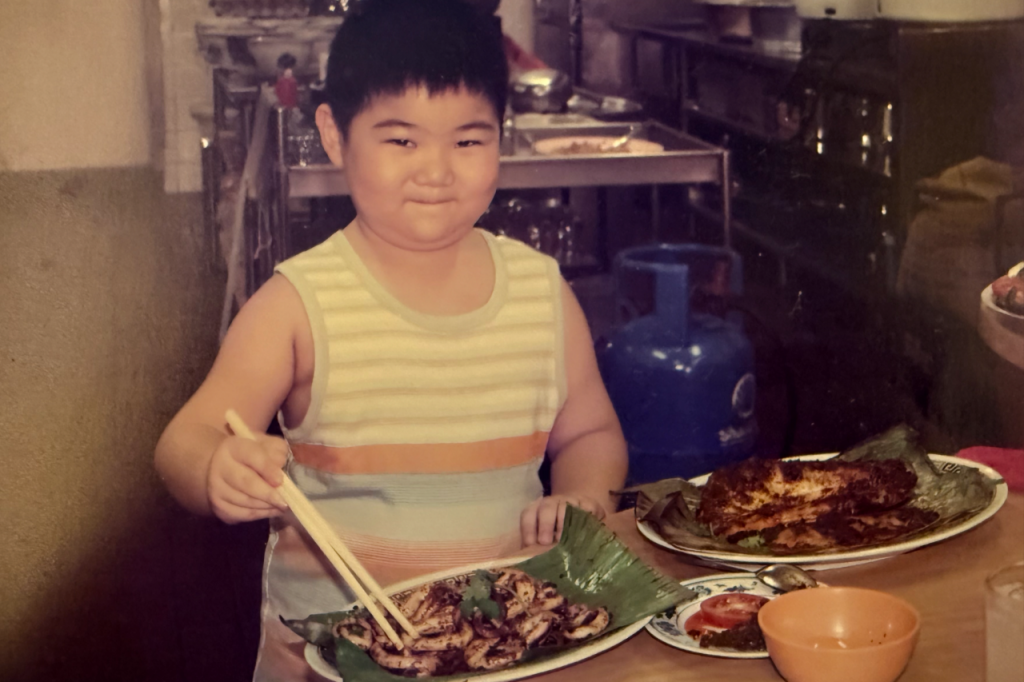
While the restaurant stays open for other families’ reunion dinners during Chinese New Year, it is the Seows’ custom to set aside their own. Coen’s family have rarely taken a holiday together. They’ve also missed family events, such as relatives’ weddings.
As Coen sees it, this is the only way of life his parents know. In their late 60s and 80s, respectively, his parents belong to an older generation than his peers’.
“My parents come from a time where survival was of the utmost importance,” he says. “The idea of resting or having fun with family and friends is a luxury to them.”
But recent events have transformed some of these perceived luxuries into necessities. Mr Seow, whose main duties lie in backend work like supplies ordering and payroll, suffered a series of fainting spells late last year that deeply alarmed the family.
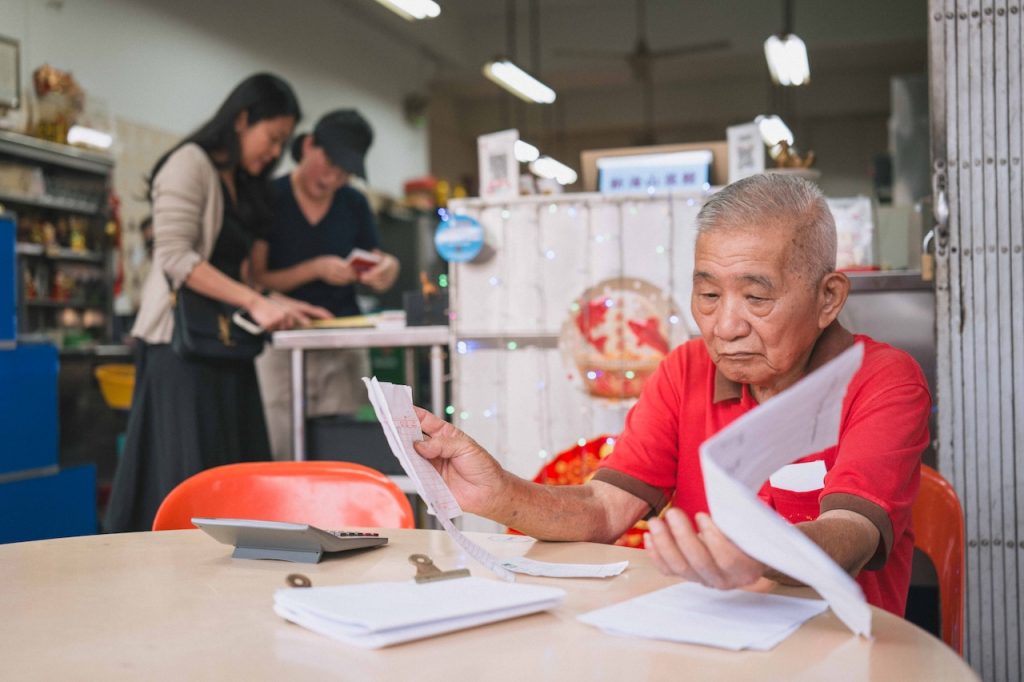
“He would faint anywhere, in the middle of the stairs or while climbing the ladder,” Coen remembers. Doctors diagnosed him with bradycardia, a condition where the heart rate slows abnormally. Four months later, Coen’s Ah Ma became hospitalised from a gallbladder attack.
This period marked a critical turning point for Coen.
“I felt it was necessary to change. They shouldn’t be working as hard anymore, especially at their age.”
Generational Clash of Values
Change has been on Coen’s mind for years. His incentive to take over the business, besides his own drive, is to allow his parents to retire if they wanted to.
For example, he had wanted to install a modern POS system to streamline sales recordkeeping, but exhausting shifts and entrenched habits kept him from following through.
As Pei Qin became more involved, she, too, began to notice areas for improvement. She began by reviving Sin Hoi Sai Eating House’s social media accounts. Other ideas to spruce up the restaurant would spring to mind, such as discarding old items like yellowed baby high chairs.
She makes it clear that her role is simply to back Coen’s push for change. “His work is both mentally and physically taxing, so I understand that he doesn’t have the bandwidth to think so much.”
It was Pei Qin who also advised him to make the changes sooner rather than later. “One day if your mum falls sick, staying up to do the invoices will fall on you. Are you sure you want to carry on doing this?” she recalls telling him.
In a way, her warning was uncannily prescient in light of the family’s eventual health scares. For Coen, his father and grandmother’s successive medical crises jolted him into motion.
The POS system was finally installed this past February, right before Chinese New Year. It trimmed Auntie Khim’s after-hours record-keeping from five hours to just 30 minutes.
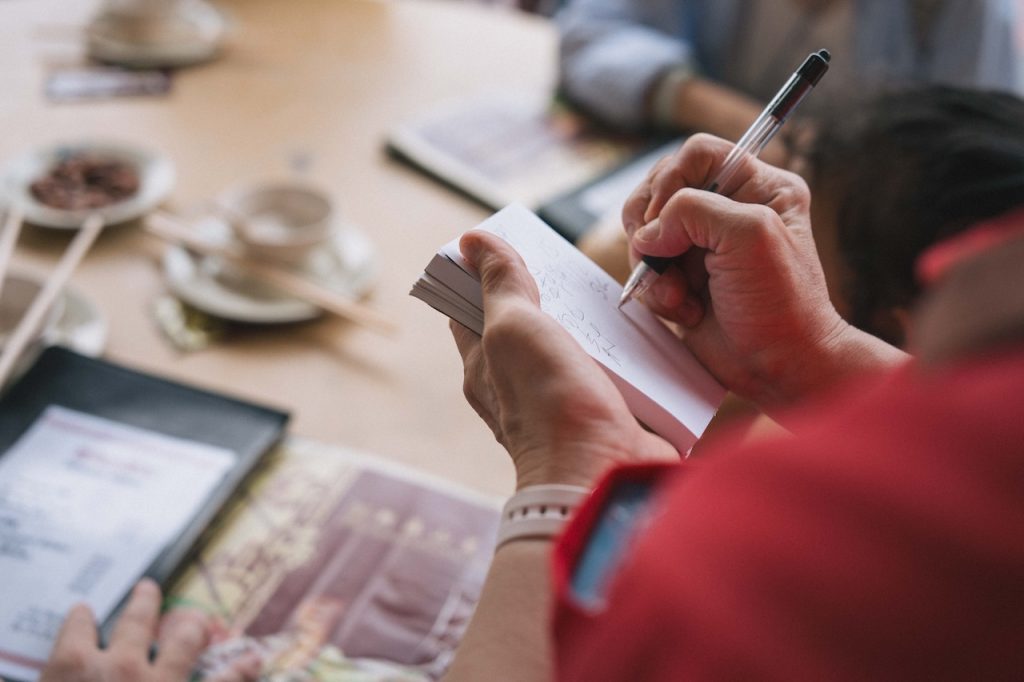
But the digital transition is still a work in progress—tech-savviness is a real roadblock amongst the servers, most of whom have been familiar with the old system for years. At Sin Hoi Sai, food orders are written in Chinese for the kitchen staff.
This is why Coen has found himself glued behind the POS monitor lately. He is the only person who can read the Chinese orders and key them in digitally to generate the invoice for diners.
“We’re slowly teaching the staff to key in orders directly into the POS tablet, but it takes time,” he notes.
While adopting the POS system was met with broad consensus, bringing up the idea of regular rest was far more contentious.
At first, Coen’s parents skirted around the topic entirely. It wasn’t until after Chinese New Year that they finally agreed—with a slight compromise.
“They came back saying, ‘If you want a break every week, we cannot agree to it. But twice a month, maybe we can try that out’.”
Yet even with the verbal agreement in place, his parents seemed hesitant to keep their end of the bargain. “Whenever I would suggest a date for the day off, they didn’t seem happy,” Coen elaborates.
Acknowledging that Auntie Khim is still the showrunner of Sin Hoi Sai, Coen also wanted to broach his proposals in a deferential way that would gently plant a seed in their head.
Still, the anxieties from the family’s medical scares and tensions flaring from the systemic changes took a toll on Coen: “A lot of people have asked me how come I lost weight.”
While the stress has been undeniable, Coen does not begrudge his parents’ hesitations. “I know they are afraid that customers will be unhappy that we are closed, because we are known for being open every day of the year.”
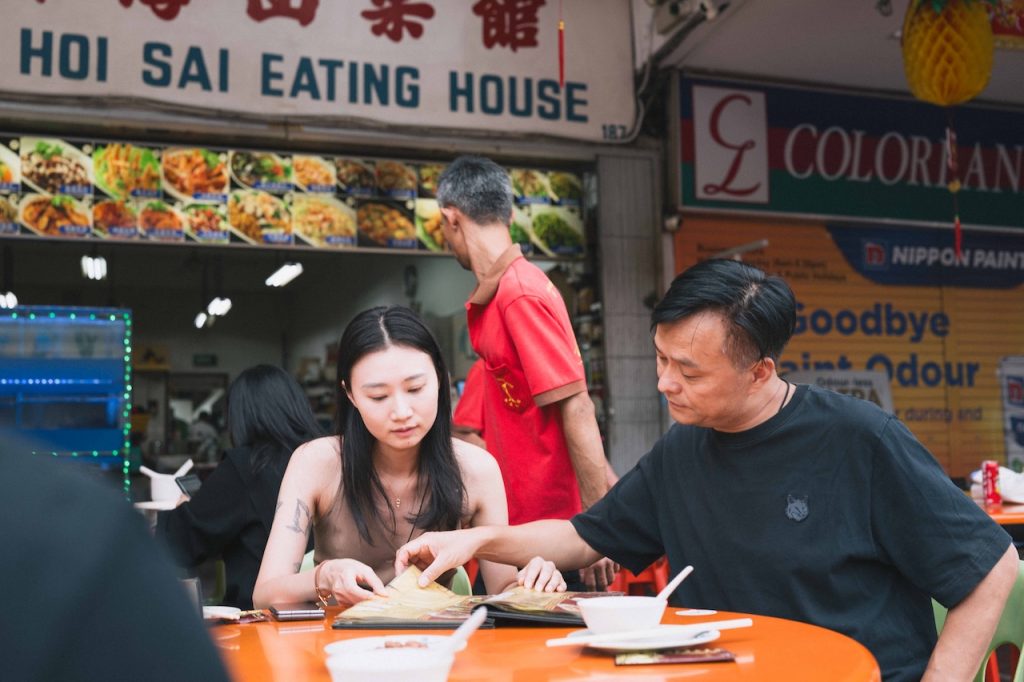
Fortunately, his parents have been warming up to the fortnightly breaks, especially his mother. “That day she asked me something very cute: ‘Where shall we go and eat the next off day?’–which, coming from my mum, is very rare,” Coen says.
Pei Qin shares that outings were intentionally planned to create meaningful family time. “We would bring them out to eat. We also brought them to Gardens by the Bay for their first time.”
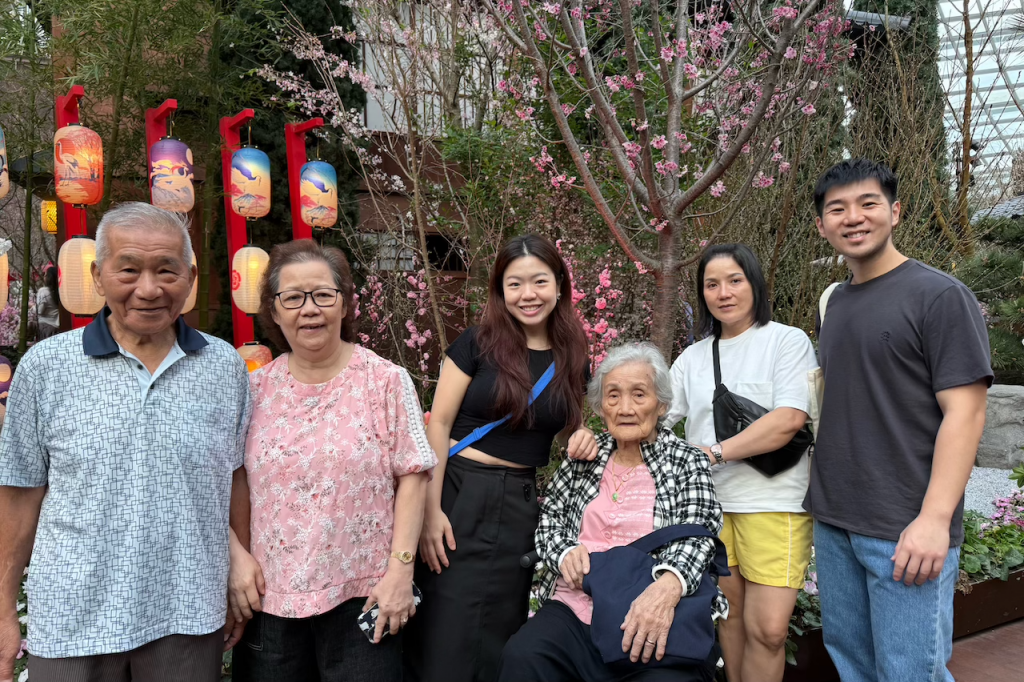
At first, conversations would drift back to restaurant matters. But after a few outings, they’ve noticed that Coen’s parents are slowly enjoying their days off. “They like to 回想往事—reminisce about their past memories,” Pei Qin says.
If there are no outings planned, Auntie Khim and Mr Seow will go for nearby walks around Joo Chiat. Auntie Khim, in particular, has developed a penchant for massages.
“It depends on the day, but I might either go for a walk or go to the TCM clinic for acupuncture or tui na massage,” she tells me, smiling.
A Time for Rest
More changes are on the horizon at Sin Hoi Sai. For decades, the restaurant has been absorbing GST and cost increases on behalf of customers. However, cumulative cost pressures have made continuing these practices unsustainable.
Ingredient costs have increased across the board—they’ve even doubled in some cases. “The Marmite yeast extract we use for our Marmite chicken is out of stock in Singapore,” shares Coen. “We’ve had to buy from Malaysian suppliers, which has doubled the price of one jar.”
It was a decision they were reluctant to make, but the menus will soon be updated so that prices reflect GST and rising ingredient costs.
When asked how they think customers will respond, Coen expects regulars will be most perceptive, given their familiarity with the menu. But he hopes they will understand the need for price increases, namely the inclusion of GST.
Coen credits Pei Qin’s support as vital in facilitating the recent transformations. “If she wasn’t here, I don’t think anything would have changed.”
For Pei Qin, her active support for the changes is a vote for the life she wants to create with Coen—one centred on balance.
POS systems and regular days off may be standard practices for modern businesses today. But from the standpoint of a heritage business that has operated without these for almost half a century, the changes over the last six months are nothing less than momentous shake-ups.
Coen and Pei Qin intend to keep up this momentum of change, albeit at a more measured pace. He has a clear end goal: a business that can run self-sufficiently, without his constant supervision.
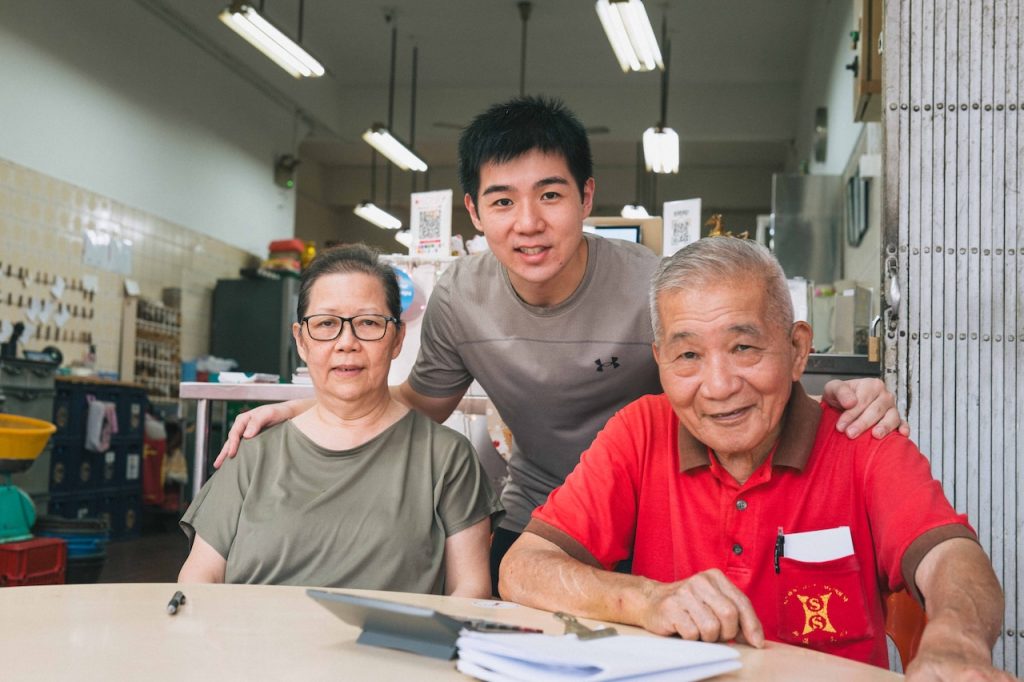
The legacy of a 44-year-old heritage business rests squarely on the shoulders of an only son. I ask Coen if he ever feels burdened by it all.
No, he simply answers.
He accepts his role as sole successor, as well as the responsibilities that come along with it. But it does not mean that he is immune to the stresses that come with it. Coen Seow will be inheriting his parents’ 44-year-old Katong restaurant, Sin Hoi Sai Eating House.
Nonetheless, his steadfast devotion to his family business is impressive–astonishing, even. In this respect, he is his parents’ son.