Top image courtesy of the author
Ten years of madrasah education. And yet here I am at 4:40 in the morning, trying to get out of praying.
Granted, the qiyamullail night prayers are optional. But I’m volunteering as a supervisor at an overnight camp at my former madrasah. If supervising means lying on the chemistry lab floor with a hoodie pulled over my head, trying to block the fluorescent lights from piercing my eyes, I’m doing my job.
Around me, the students under my charge start walking to the school hall for prayers. They’re teenage boys, still in their awkward secondary school phase. I’d been taught how to pray long before most of them were born.
“Nak pergi ke tak?” I ask my friend lying next to me. Do you want to go or not?
Growing up, that question wouldn’t have even crossed my mind. As a madrasah student, prayer had its place in the school timetable. It’s as ordinary a part of the day as Mathematics, Arabic lessons, and recess. When it was time to pray, everybody got up and went.
That changed when I graduated and entered polytechnic. I still keep my five daily prayers, but I got used to postponing them. “Later” is what I’d tell my Muslim friends when they ask if I’m joining them.
A wonderfully elastic word, later. Perhaps after the next lesson. Perhaps once I’m home, when there’s no rush, and I can finally give prayer the attention it deserves. I find that there’s always something else to finish first.
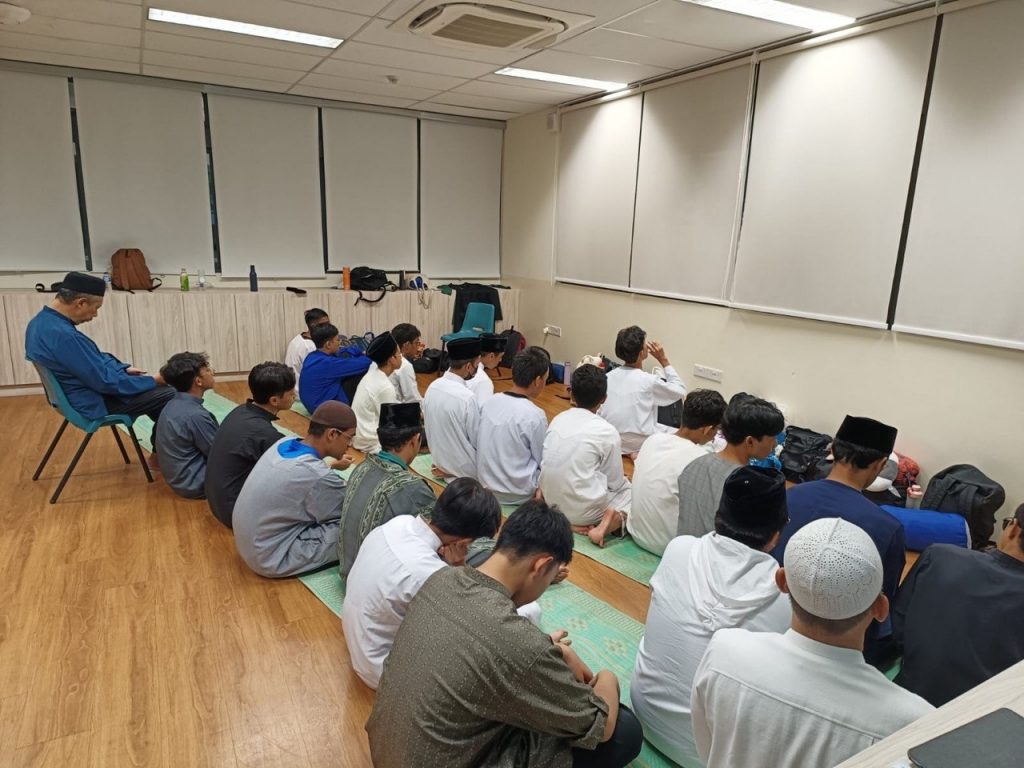
Some versions of myself are easier to put on the page. The boy who led Qur’an recitations at school, perhaps, rather than the one bargaining with himself over whether to get up and pray.
Ten years could cohere in retrospect; I could tidy up my memories and paint a wholesome picture of the madrasah-to-secular world experience.
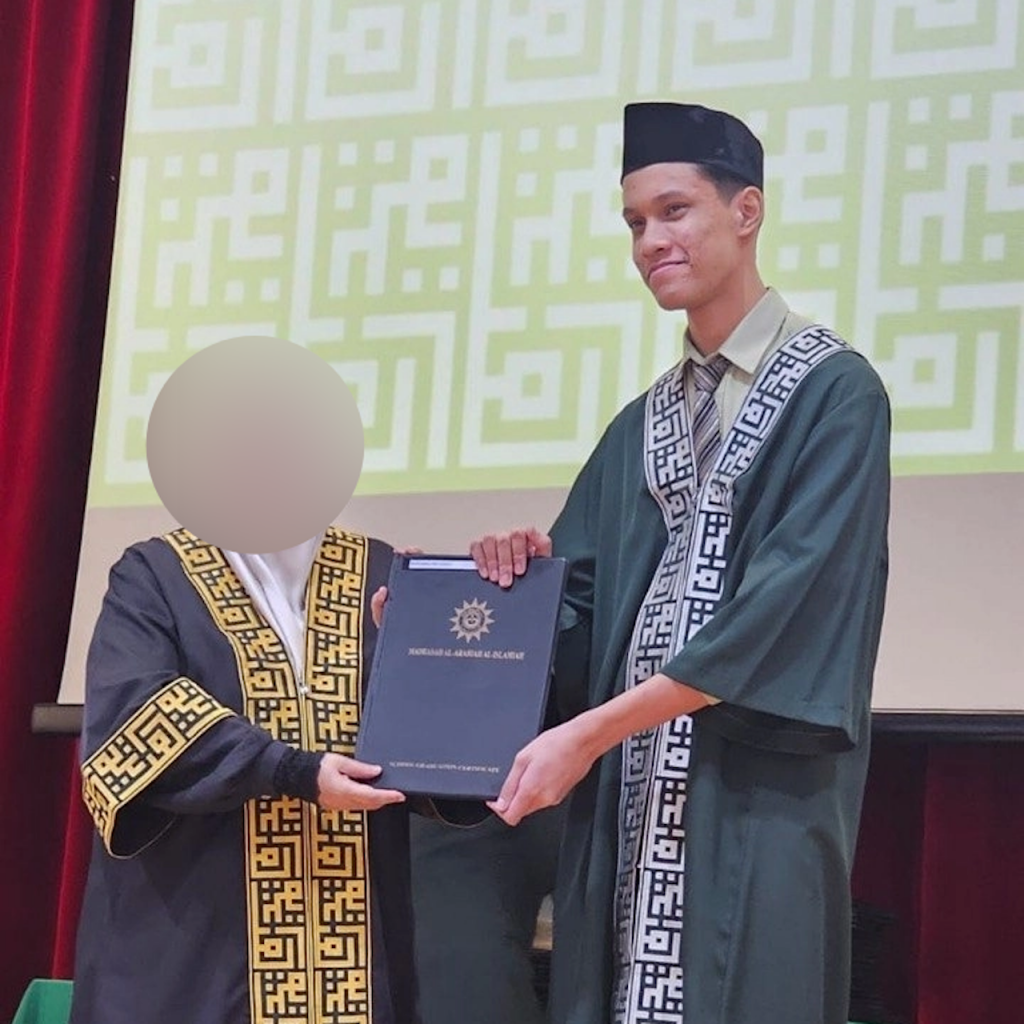
When I pitched this story to my editor, I wanted to show the public a fuller texture of madrasah students beyond the visible outline. Most Singaporeans already know the shape: the songkok and the hijab that are part of our uniforms.
But what happens to our relationship with faith after madrasah, when we come into our own in a Singapore that implicitly asks us to shed it to thrive?
The Rules We Learn to Bend
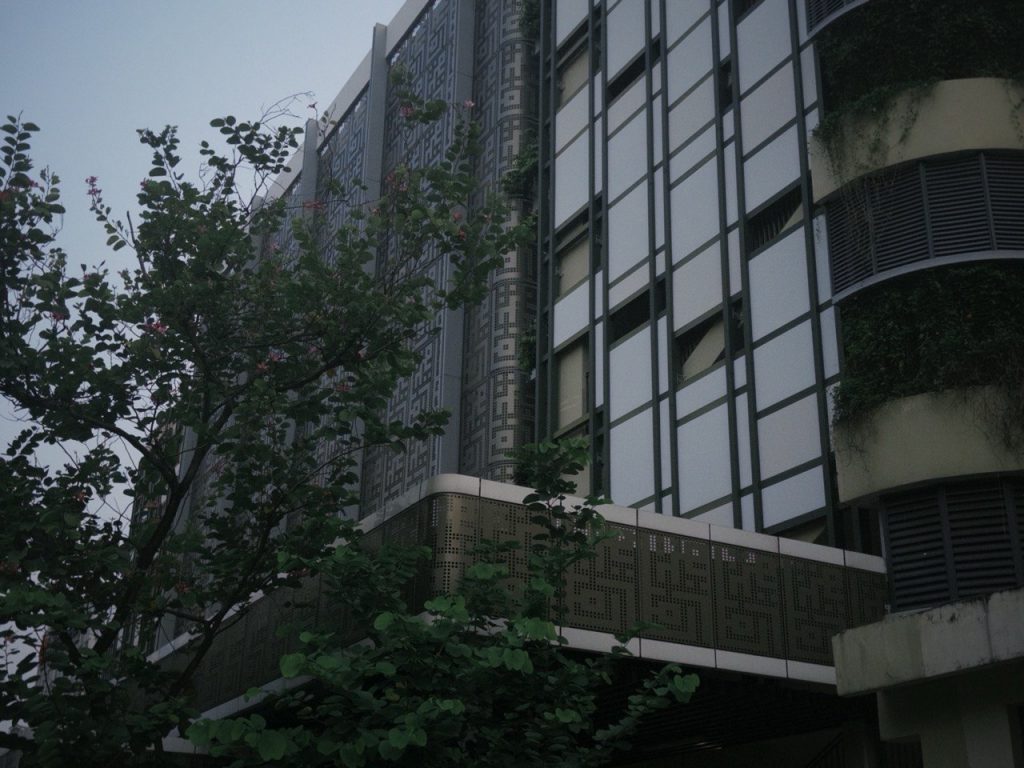
My former school is one of Singapore’s six full-time madrasahs. Alongside English, Mathematics and Science, we also studied Arabic, Qur’an, and Dirasat Deeniyyah (structured Islamic studies). I’d spent six years at a primary-school madrasah before spending four here.
I came back because I missed my alma mater and wanted to see what its students were up to. The juniors called me abang, which felt new. I took this to mean I was an adult now—I turn 18 this year, which is close enough.
I’d once been in their shoes—one of the boys being told where to sit, when to pray, and (quite often), when to stop talking. Now, students I barely knew were addressing me as an older brother.
By Secondary Four, I was studying for the O-Levels while writing what my school generously called a Dirasat Deeniyyah dissertation. Some classmates found it easier to just rely on ChatGPT to apply Islamic knowledge to contemporary social and community issues.
Neither curriculum seemed interested in the other. Qur’an oral assessments continued alongside national exams, because being 16 and terrified of the O-Levels wasn’t quite enough.
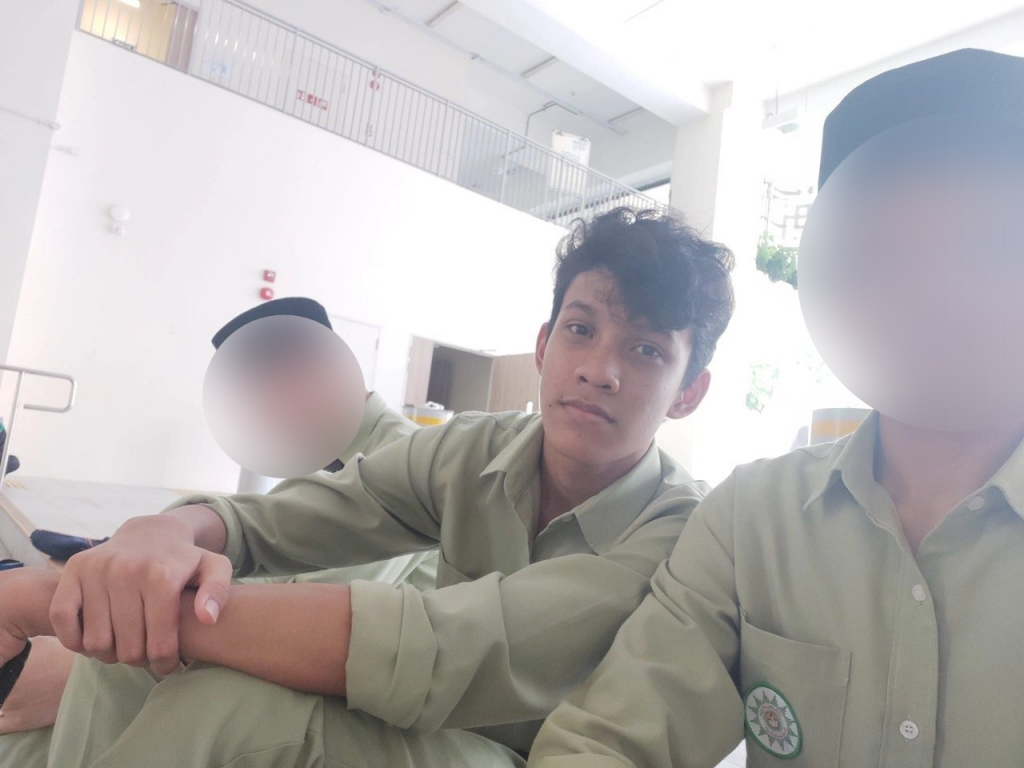
Amid all this, some friends and I found time to remove a toilet cubicle door from its hinges out of pure mischief and chaos. Religious school or not, boys will be boys.
Congregational prayers—salat al-jama’ah—are a constant. Performing the daily ritual prayers together as a group is taught to be 27 times more rewarding than praying alone at home.
But sometimes I skipped the congregation altogether to pray on my own. Why wait for everyone when I could pray by myself, whenever I wanted?
I was still walking around in my pale green uniform and black songkok, though. I could dodge the congregation, but wearing it made me feel I should at least practise what I’d spent years being taught.
My friend Jas*, 28, shares the same experience, even as someone who attended a different madrasah years before me. She’d wait for the salat al-jama’ah crowd to clear before making her ablutions and praying after school.
“In terms of following the structures, it still felt very like I was just doing what I had to do to show an image that was expected of me, rather than actually practising my faith,” she tells me.
“I was still practising my faith—but I was also rule-breaking in weird ways.”
When Prayer Falls Off the Timetable
Her reflection on rule-breaking comes to mind as I think about how lines get easier to cross without structures that used to keep us in check.
In polytechnic, classmates brought a bottle of Somersby cider to class and poured it into another bottle to drink discreetly. I wondered what it tasted like: Would I taste the alcohol beneath the apple flavour, or only know it was there because I’d been told?
I was curious. Tempted, even. I can’t say I felt particularly guilty about either. Nobody offered me a sip and, to be fair, I didn’t ask.
The freedom outside madrasah was exciting, even if crossing lines I’d grown up with sometimes left me guilty afterwards. Seeing other Muslims my age cross them made it way easier. They’re Muslim too, I’d think. They seemed fine—God hadn’t struck anyone down.
After seeing it often enough, though, it became easier to shrug off. But I knew what I’d been taught; I knew the values I believe in. Faith was mine to preserve, even as my peers grew disconnected from religion.
Madrasah prepared Kim* for life outside it—we attended madrasah together since we were seven—but it took longer to adjust to the diversity of his junior college classmates, whose beliefs ranged from religious to atheist to freethinking.
On Fridays, Muslim students get excused for our weekly communal prayers at the mosque. Some of Kim’s friends spent the longer break eating and hanging out at a nearby mall instead. He went to the mosque.
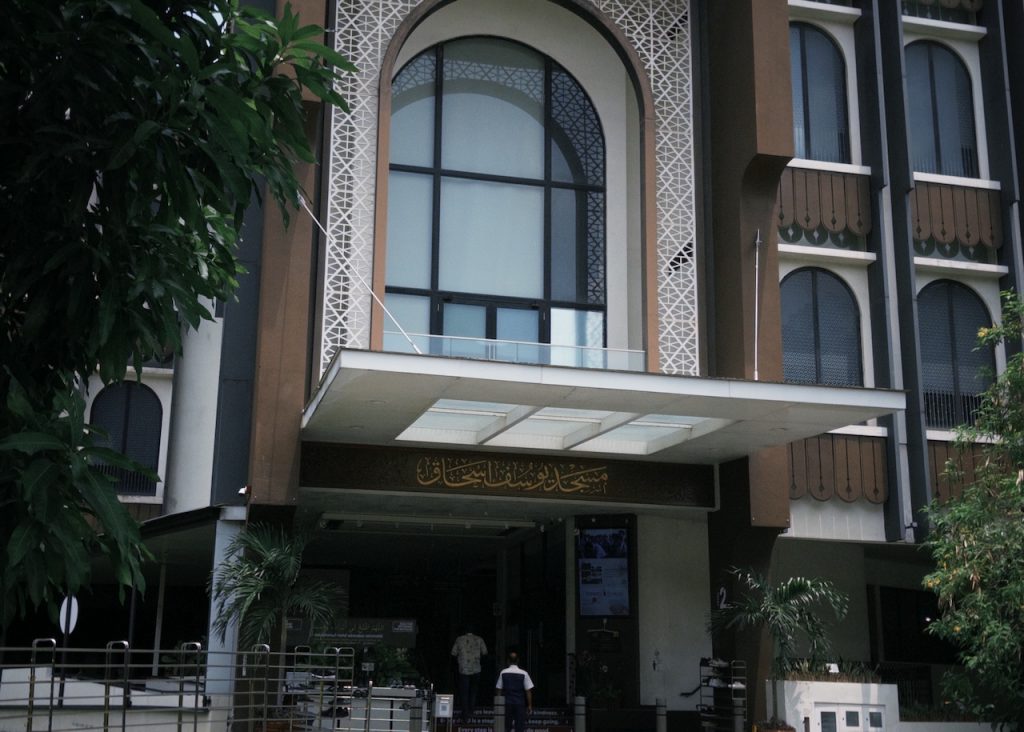
“It was up to my own discretion to seek more religious knowledge, having to manage my own prayer times in between classes,” he remarks.
“Being exposed to more situations that conflicted with my religious values really made me reflect more on the role that Islam played for me.”
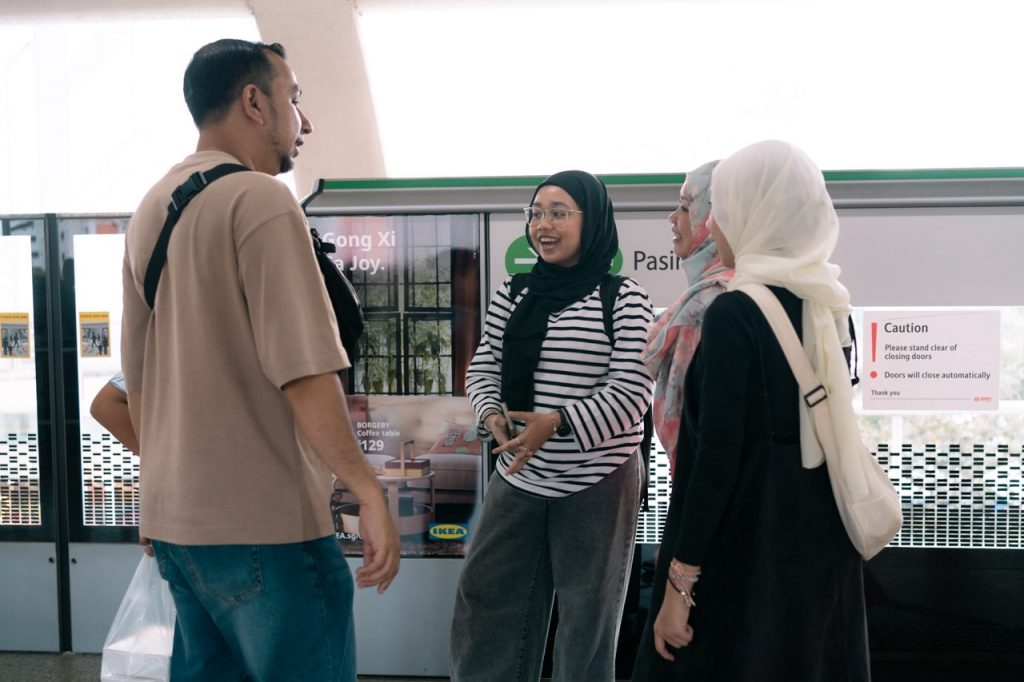
Jas had a more mundane problem after graduation—there was simply no longer a prayer time pencilled into her timetable.
“I definitely realised how privileged I was to have that segregated time to solat,” she says. “Now, it’s up to you to say, ‘Okay, I need to find this slot in between my two lectures to go and find a staircase and solat’.”
Everyone Has an Idea of What a Muslim Looks Like
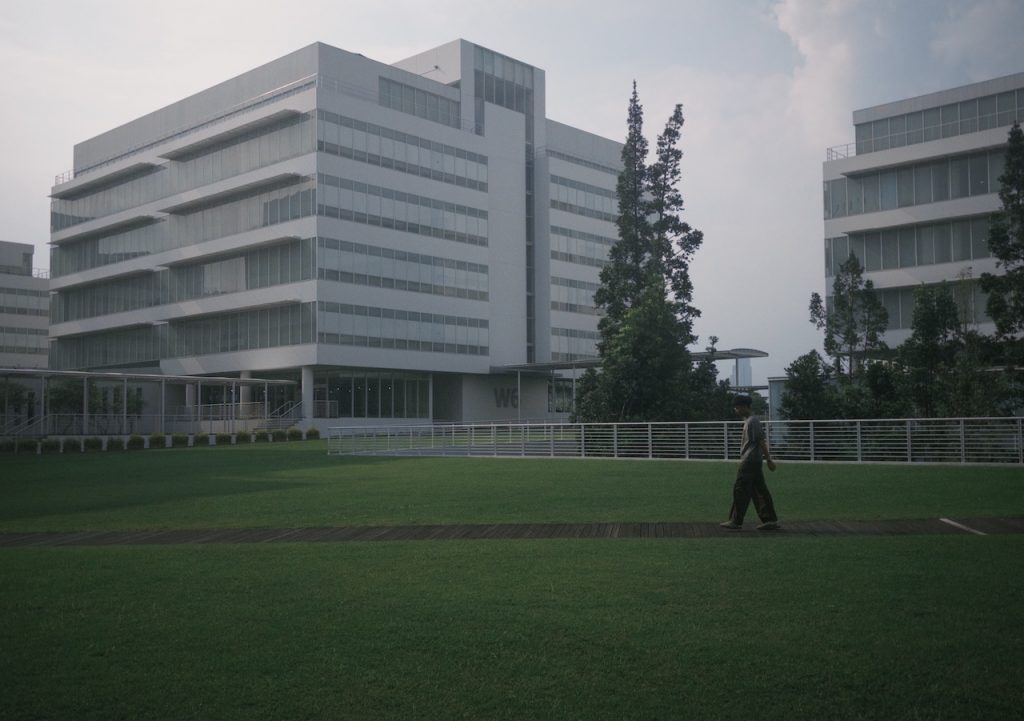
Transferring from Singapore Polytechnic to Republic Polytechnic earlier this year meant making first introductions all over again. A decade of madrasah education was the part of me I didn’t know when to mention.
Mostly, I didn’t. I worried my classmates would hear “madrasah” and imagine someone more devout than me, then notice all the ways I failed to match that picture. This imaginary version of myself irked me—he seemed to have none of my bad habits.
I was quiet around new people anyway. Only when I got more comfortable did I start talking, joking, and swearing more freely. By the time information about my madrasah years surfaced, classmates already had weeks of my non-madrasah self to contend with. Nobody seemed scandalised when I mentioned it.
Jas hadn’t grown up in a madrasah bubble; her cousins from mainstream schools were practically siblings. What was new was explaining to people why she wore the hijab when another Muslim didn’t, or why she prayed when someone else didn’t. As a former madrasah student, people saw her as the one to clarify the doctrines of her faith.
She remembers the frustration. At one point, she wanted to retort: “Then why do you go to church or temple, but other people never?”
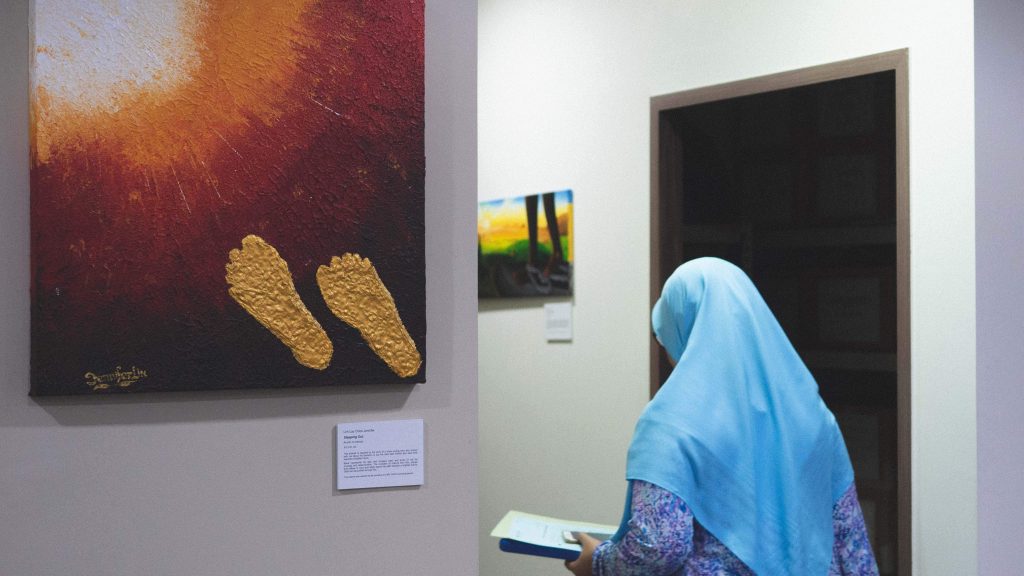
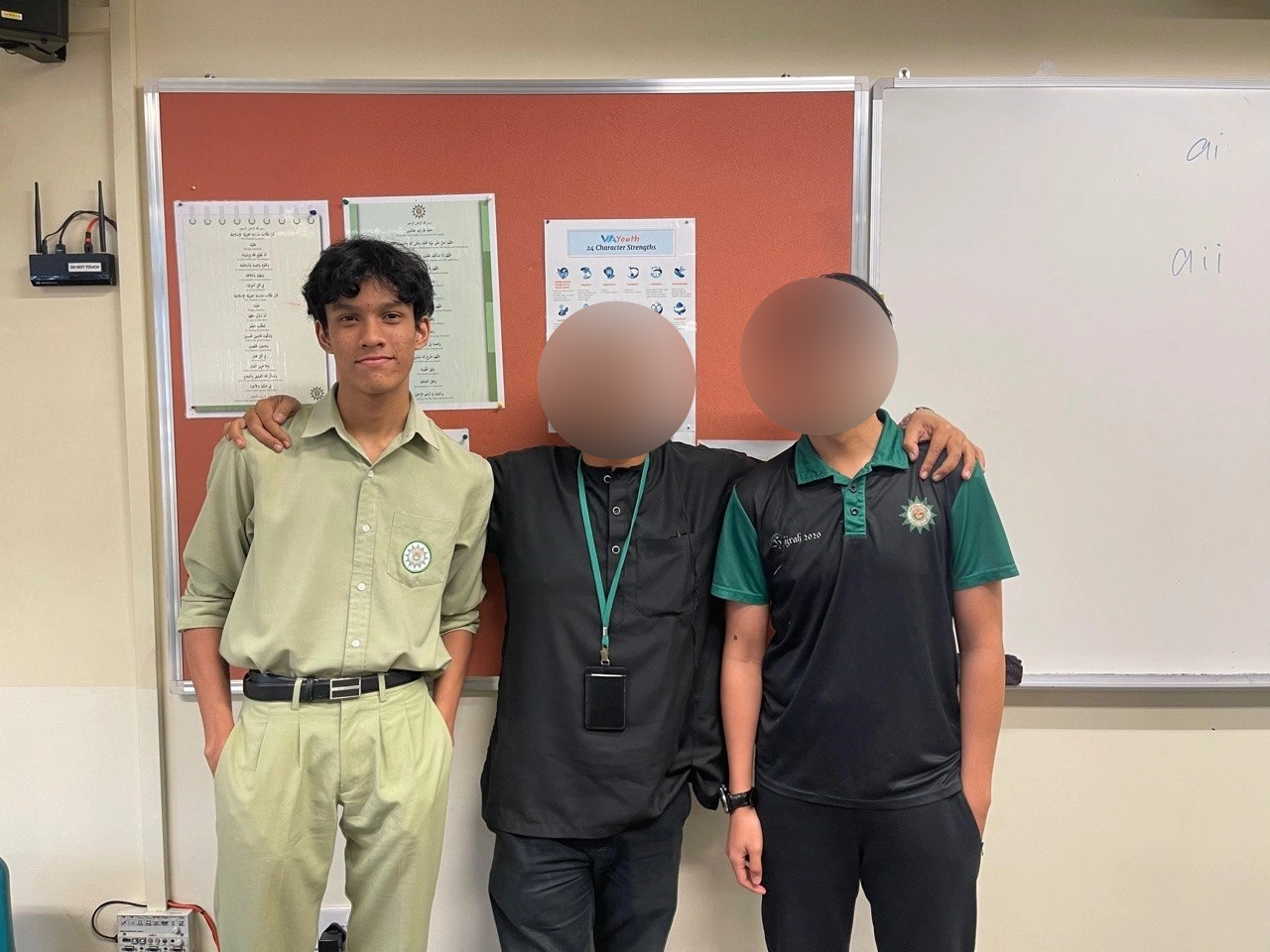
It’s a familiar feeling—we know what it’s like to be noticed as madrasah students out in public. Our uniform gave us little choice: a pale green shirt, a school badge stitched over the chest, matching trousers, and a compulsory black songkok. Any teenager walking outside the school gates in that uniform didn’t need to tell anyone where they were from.
“We were not only representing the school; we were also representing our community. And to a larger extent, the religion itself,” Kim recalls.
Nobody looking at me now would know I’d once worn that uniform. Still, I avoided saying “madrasah” out loud—as if the word might button me back into it.
I’d been so preoccupied with what other people might make of those ten years that it took me a while to notice how much of the calculation was mostly in my head.
What Faith Requires
“There’s no fashion in Islam.”
Jas heard this often from her mother when she was growing up. Heels and trousers were out. For much of her youth, she wore mostly Punjabi suits and baju kurung. Even the hijab had limits—bawal-style headscarves or slip-ons were fine, but not the shawls she’d wanted for years.
Nonetheless, she started wearing them after turning 20.
“It was, and is, a continuous fight to slowly push her boundaries while still maintaining what I believe to be religiously required of me,” Jas explains.
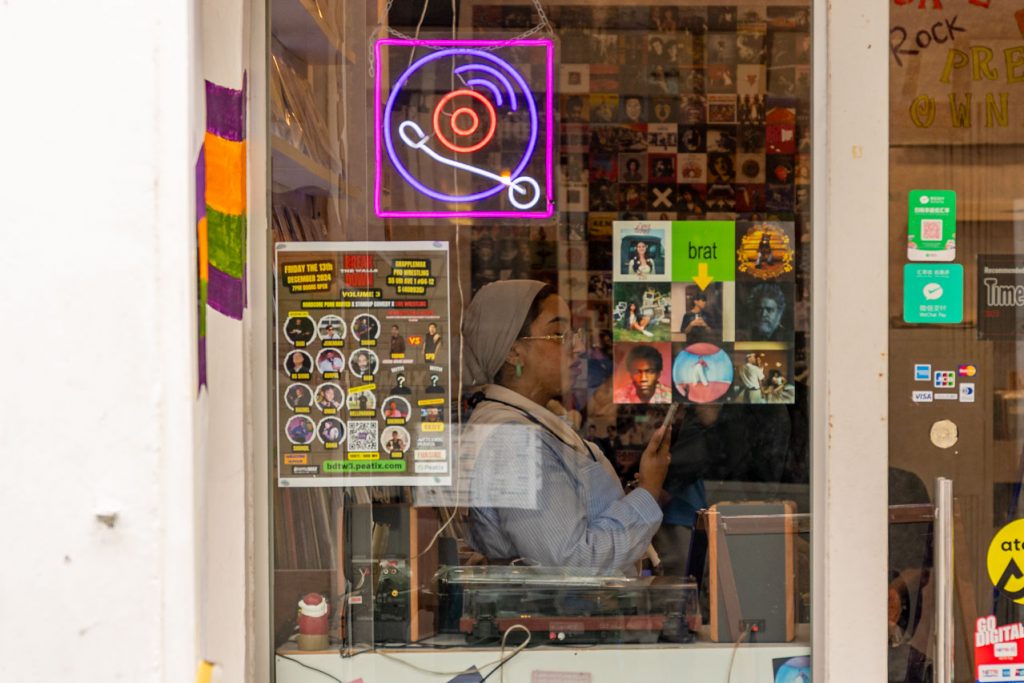
Growing up, Jas believed that disobeying her parents would anger God. At home, her mother repeated a simple mantra: “Don’t think, just do.”
I chuckle when she tells me this. If only it were that easy.
“How much are we doing that is still okay in the eyes of the faith, although it might not seem okay in terms of how we were brought up?”
Jas used to bristle at the phrase “let go and let God”. Why leave something difficult untouched when she could still do something about it? Only when she’d reached the limits of what she could change did she return to the phrase.
“Instead of a door I’m being pushed through, it’s a door that is open for me to walk into now.”
She laughs. “Though I struggle to crawl towards that door sometimes.”
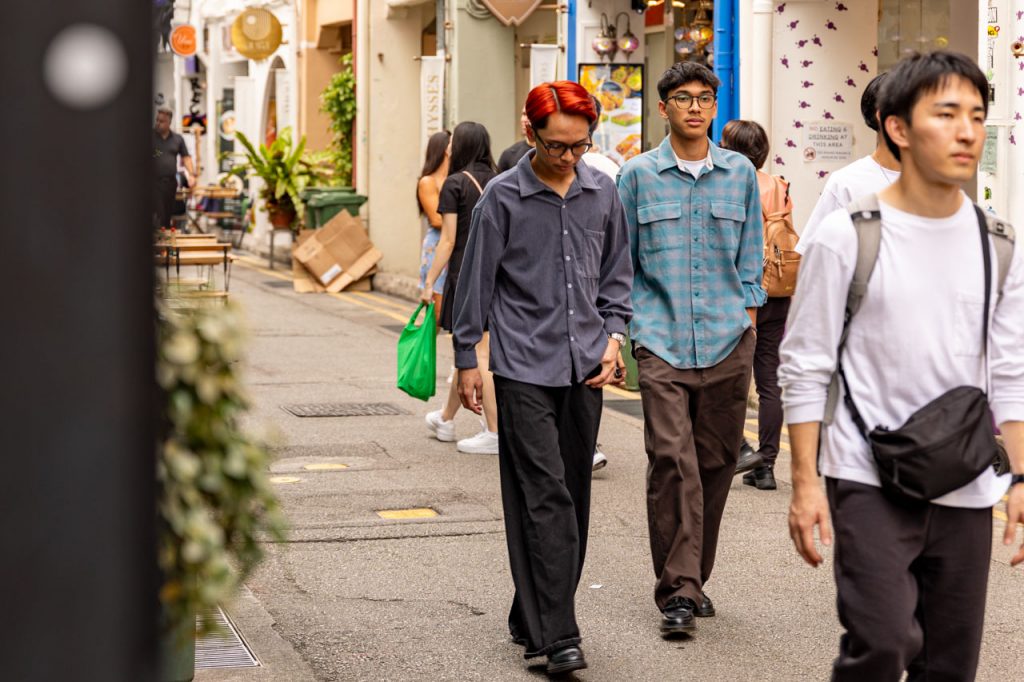
Kim brought me back to another word we’d both grown up with: ikhlas, sincerity in what one does. In JC, though, volunteering came with something to count—Values in Action (VIA) hours.
“Outside of madrasah, everything is just so incentivised that I sometimes struggle to be sincere in my work. When I’m volunteering, I’d get so caught up in tracking my VIA hours for my portfolio that I just end up becoming disingenuous.”
He remembers madrasah as comparatively lepak. In JC, classmates collected leadership positions, activities, and portfolios alongside their grades. In madrasah, the race for achievement felt narrower.
Among the boys, we cared more about our academic grades than our religious ones. Being good at Qur’an recitation or Arabic could earn you opportunities—leading morning recitations or delivering Arabic speeches on stage—but nobody was competing to be the most religious. You could excel in Qur’an or Dirasat Deeniyyah and still spend the day messing around. Like ripping a toilet cubicle door from its hinges.
Nobody was keeping count of my hours volunteering at my alma mater. I wanted to be here.
But first, there was the matter of getting off the chemistry lab floor.
Between Choice and Obligation
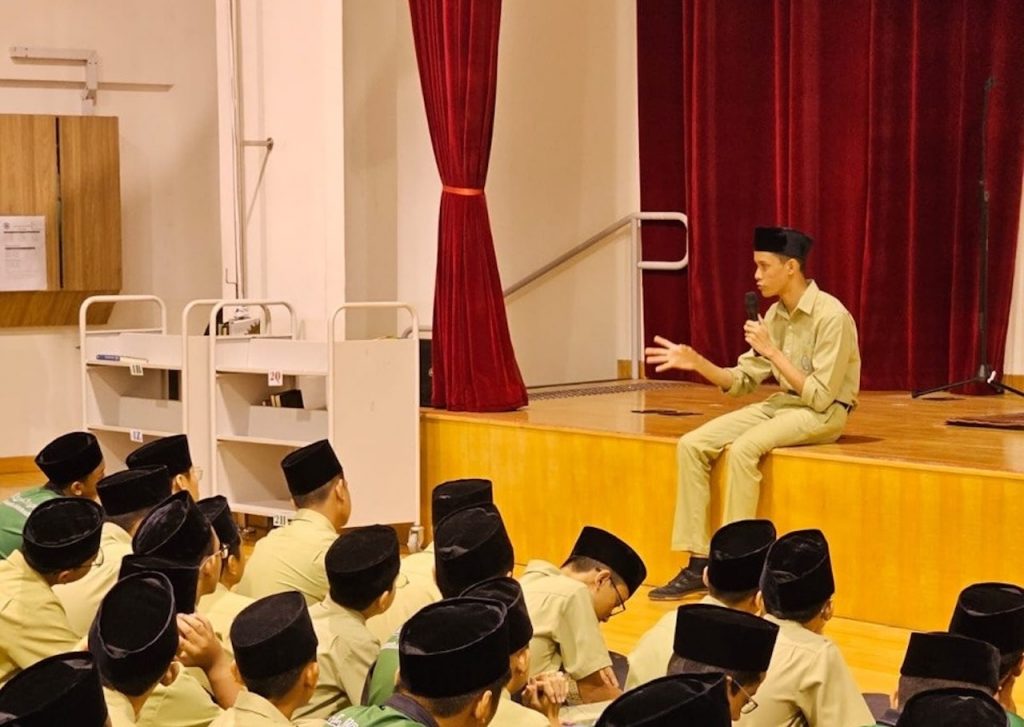
I did get up.
By the time Qiyamullail started, I was standing with the juniors, following movements I’d known for years. Standing, bowing, forehead to the floor, up again. My body knew what to do.
Some of the boys beside me were the same ones I’d told to shut up and sleep hours earlier. We stood shoulder to shoulder, united in prayer.
By daylight, traces of our overnight school camp faded from sight. Bags disappeared from the labs; everyone gathered for a photo, then dispersed.
I said goodbye to former teachers and to students who still called me abang—a title I hadn’t really grown into. Soon, they’ll graduate too, and decide how much this experience will shape their post-madrasah future in Singapore.
Some will end up furthering their religious studies at universities abroad and probably return home to teach at madrasahs. Some might shed parts of their spiritual selves to ease their way in a secular world.
Others, like me, will still be figuring out how much room to make for faith when nobody’s making room for it.
At polytechnic, prayer still had to fit between lessons. My Muslim friends sometimes asked whether I was joining them.
Sometimes I did. Sometimes I told them, “later”.