After the Vote is a RICE Media series where Singaporeans from all walks of life share their hopes for Singapore—the changes they envision, the values they want to uphold, and the future they want to help shape.
We take a step back to explore the bigger picture: What kind of Singapore are we building beyond GE2025? Through these conversations, we uncover the aspirations and concerns shaping the nation in the next five years and beyond.
The views in ‘After the Vote’ are those of the interviewees and based on their experiences; they do not reflect the publication’s stance.
Top image: Shian Bang
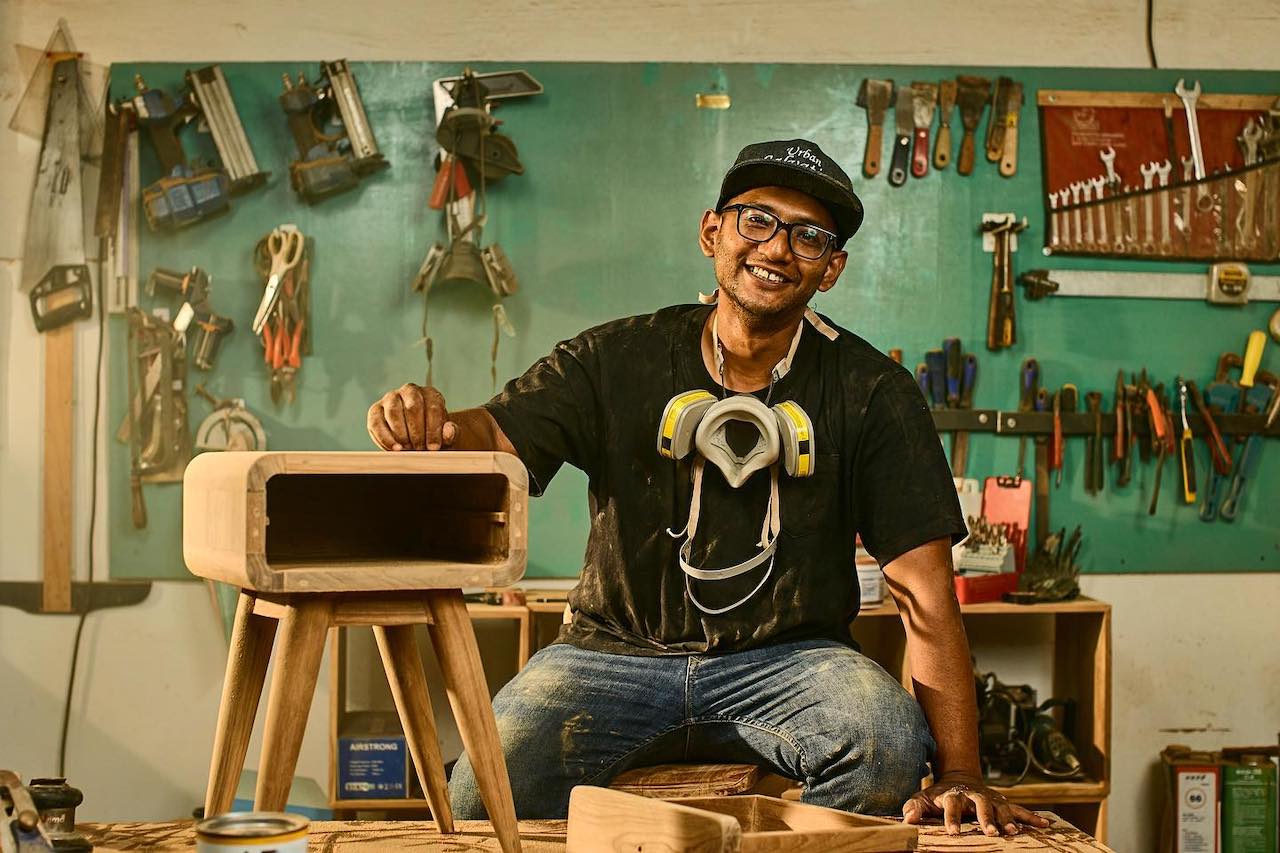
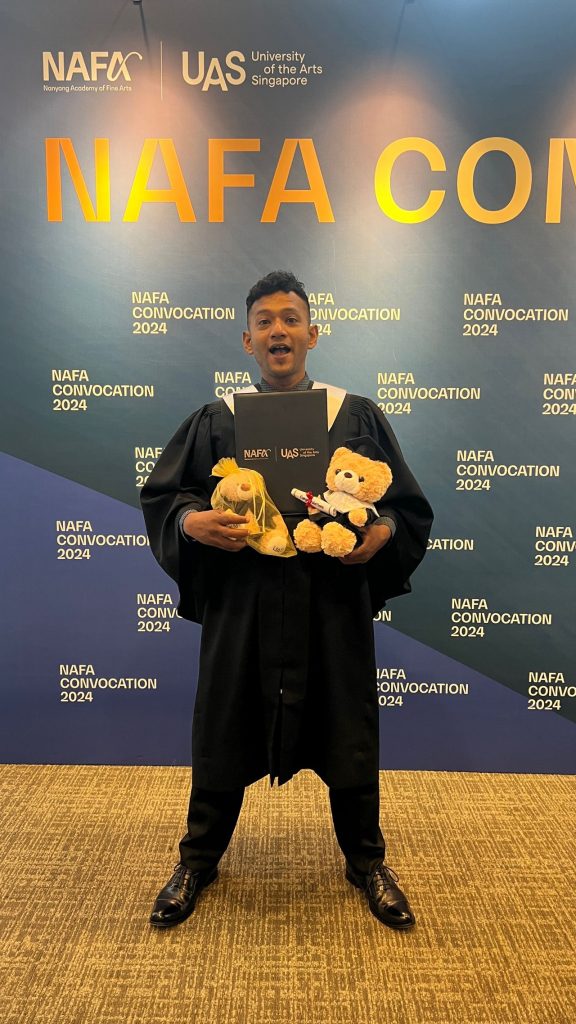
Ahmad Habshee is no stranger to the hustle. At 10 years old, he sold drinks on the street. At 14, he worked at McDonald’s. At 16, he worked a full-time job while studying. And today, the 36-year-old runs Urban Salvation, a boutique furniture store.
Interestingly, it was spite that set him on the path of entrepreneurship. Ahmad admits that he’d decided to start his own business to prove a point to people who pissed him off.
Over a decade ago, Ahmad was the operations manager at a furniture store, having worked his way up in two years. He’d asked for a raise, but his bosses shut him down because Ahmad, a secondary school dropout, lacked the academic qualifications. So he left, deciding to strike out on his own.
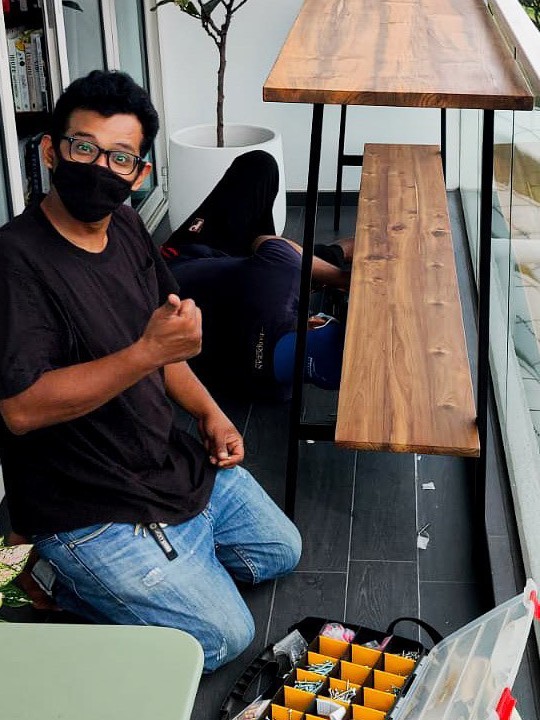
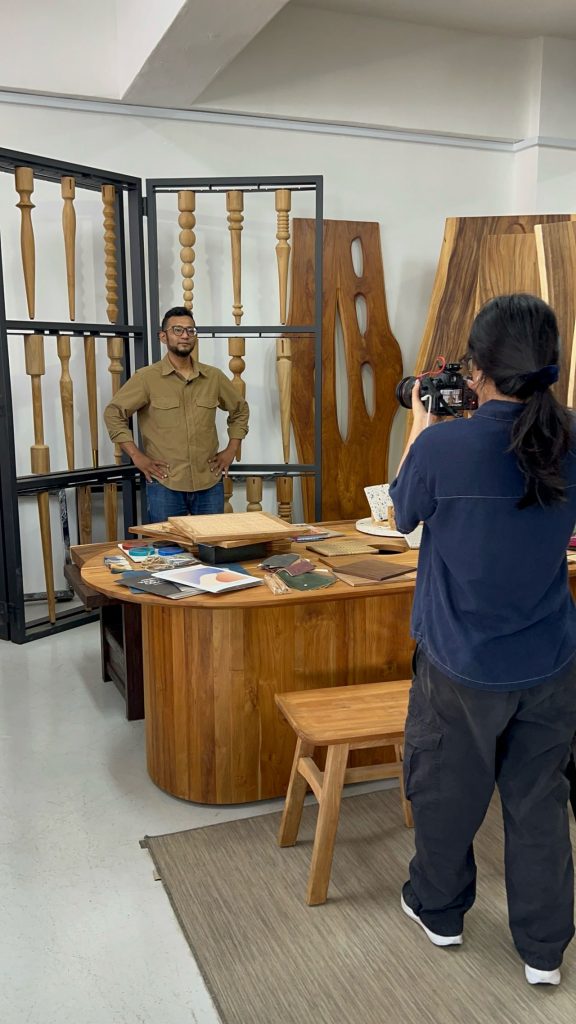
And Ahmad’s done well for himself. He found his niche—crafting custom designs with locally sourced or salvaged wood, and restoring antique furniture. In 2023, Ahmad was featured in the National Day Parade. A year later, the Design Singapore Council included him in its People of Design campaign, spotlighting his contributions in the local field of sustainable furniture-making.
But recognition doesn’t pay the rent. Ahmad recently had to downsize his Tampines showroom to a single unit to cut costs.
“I genuinely want to live the Singaporean dream,” he tells RICE. “But tell me—do people actually buy my furniture?”
RICE is taking a longer-term view towards the Singapore we’re collectively building. And Ahmad has plenty to say about building a society where local craftsmen aren’t overshadowed by Taobao deals.
What is one change you hope to see in Singapore by 2030 that would make life meaningfully better for people like you?
By 2030, I want to see Singapore genuinely value its small companies.
Look at me. Most of the time, people like us are just used as photo ops for sustainability campaigns. We don’t get paid to appear in all this media coverage.
Consider Govindharaj Muthiah, the man who crafted the chair for the late Pope Francis during his visit to Singapore last year. Did any Singaporeans give support to his small business? He’s told me he’s now giving up his business. Let that sink in.
Right now, high rent crushes small businesses like mine month after month. Stop handing out token grants that most of us can’t even access. Stop pretending small businesses are just a decorative side dish to the economy.
None of the schemes feels concrete for skilled trades like ours. Most of what’s available seems made for white-collar SMEs or digital businesses—not people working with our hands.
You want to know what’s even more frustrating? The moment a grant is available, the price of machines or tools magically triples. It’s not support, it’s markup masked as help. And we’re the little guys who still end up paying the real cost.
If the government genuinely wants to support tradespeople—including carpenters, welders, electricians, and plumbers—then talk to us. Sit in our workshops. Understand how we survive.
If we truly want life to be meaningfully better, start protecting our people’s future.
Our forefathers built this nation with their bare hands, heart and soul, led by great leaders who understood hardship and progress. A nation of workers, handy with their hands, believing in the same dream.
Look at us now: Retired and veteran workers are waiting for handouts. Of our current workforce, so many can’t even hold a drill, let alone do simple repairs. This is not progress. This is erosion.
My mother, a strong and patriotic woman, always tried to motivate me. She would say: “Last time, times were hard, but we pushed through.”
And I’d answer: “Yes, times were hard, but there were opportunities. Now times are hard… and opportunities are disappearing.”
If we don’t fix this by 2030, then all the headlines, the speeches, the glossy reports, the flamboyant social media noise—they mean nothing.
Start protecting the builders, the dreamers, the small companies who still believe in this country… before we give up too.
How can Singapore better value its small companies and craftsmen?
Name me three Singaporean electricians, plumbers, masons, tilers, welders, or woodworkers aged 20 to 40. You probably can’t. It’s not because they don’t exist, but because they’ve been made invisible in a society that glorifies white-collar success and sidelines the dignity of skilled labour.
Now take a closer look at the blue-collar trade businesses that still survive today. How many of their children want to take over? Almost none.
It’s not because they’re ungrateful. But because they’ve grown up watching their parents struggle: Long hours, unstable income, and little social recognition. They’ve been told, directly or indirectly, that these are ‘dirty jobs’ and not real careers. So they chase degrees, office jobs, and ‘status’, even if it means losing touch with something deeply human—the pride of making, fixing, building.
We’re not just losing trades. We’re losing generational wisdom. We’re losing our ability to be self-reliant as a nation. And if we don’t act with educational reform and cultural rethinking, then in 20 years, when you need a pipe fixed or a timber beam restored, you’ll be calling someone from overseas, because we made these skills obsolete among locals.
It’s not too late to change that. But only if we stop simply talking about valuing trades, and start building a society where these roles are honoured, protected, and passed on with pride.
What’s a challenge Singapore must overcome in the next six years to stay a place where people want to live and thrive?
We built a city that moves fast but forgets what lasts. Every year, more heritage trades die. More workshops close.
Heritage trades in Singapore are dying not because they’re irrelevant, but because we’ve stopped making space for them physically, culturally, and economically. Today, it’s easier to find a child who wants to be a social media influencer than one who wants to become a carpenter, a potter, or a plumber.
The rise of fast fame and digital clout has displaced the dignity of skilled work. Our role models are now measured by followers, not by the value they create with their hands.
We’ve created a culture that celebrates innovation, yet often overlooks the fact that innovation was once built through hardship, utilising tools, patience, and craftsmanship.
Yes, sometimes online platforms like Taobao offer cheaper prices. But we don’t realise we are walking on a dangerous edge. There are repercussions of buying everything from Taobao.
Economically, we are becoming fragile because when everything is outsourced, we lose resilience. The next time supply chains break, or jobs disappear, who will help us rebuild?
If the local tradespeople die out, who will know how to wire a home? Build a cabinet? Fix a stove?
There are social repercussions as well. The question we need to ask isn’t just “How much?” but “At what cost?”
Every time we reward the cheapest price without questioning the ‘how’, we feed a system that quietly devalues people, skill, and the planet. It’s the ‘cheap cheap good good’ culture. The ‘buy and throw’ mindset. And if we continue down this road, we’ll have a nation full of consumers but no creators.
And yes, you can buy cheap, but there are environmental repercussions too. A cheap item shipped halfway around the world comes with a massive carbon footprint. It encourages consumption, not responsibility. True sustainability means buying less and buying local, and valuing things enough to repair them.
But that mindset only works if we support the people who know how to build and repair in the first place.
What small shift—policy or mindset—could make a big difference in the daily lives of your community?
If there’s one shift that could truly change everything, it’s this: People must stop treating skilled work like a sideshow, and start treating us like a backbone.
There’s a quiet stigma in Singapore; once a craftsman becomes known, people assume we’ve become expensive, or ‘commercial’.
What most don’t see is the years of struggle behind us. The grit it takes to survive. The rent we can barely afford. The materials we pay for upfront. The mistakes we learned from. The hours nobody counted. The family time we gave up to build something with integrity.
We’re not expensive because we’re famous. Small businesses like ours aren’t backed by huge investors. We grow inch by inch, client by client. And when people question our worth, it hurts— not because we want applause, but because we’ve poured our lives into this.
We don’t need to be made heroes. But at the very least, value us as part of this nation’s fabric.
Singapore moves fast. What’s one thing we need to slow down for?
We need to slow down and value depth over dopamine, craft over clout, substance over surface.
We need to remember that a nation is not just its GDP or its skyline. It is its people, its dignity, its soul.
And here is the truth: A country that cannot build, repair, and make with its own hands will one day forget its own soul. A nation cannot outsource its soul.
Let me remind all of us: The strongest among us is the one who serves others. The best among us is the one who benefits others.
I’ve lived my life trying to build with my hands, to teach, to restore, to leave things better than I found them. And I’ll keep doing it quietly, even if it feels like the world doesn’t notice.
What’s one thing about Singapore you’d want to protect for the future?
If I could protect one thing, it would be our soul—whatever’s left of it—and whatever we’re still building together.
And when I say soul, I don’t just mean preserving hawker centres or shophouses as postcard images. Those are important, but they’re only part of the story.
What I mean is the quiet, living heart of this country: the makers in their small workshops, the artists who keep creating even when no one notices, the teachers who give their best every day, the unseen builders who don’t seek recognition but keep showing up anyway.
I’ve spent years with people like that, and I count myself as one of them. We are not perfect. We are not always loud or polished. But we are trying, every day, to add something real to this country we call home.
If we stop protecting that—if we let rent, policy, or indifference push these people out—then we will lose more than just businesses or trades. We will lose a part of who we are.
A city can always build new malls or launch new campaigns, but a nation’s soul is far harder to rebuild once it’s gone.
In 2030, what kind of Singapore would you be proud to call home?
I am still searching. Ask me in 2030.