Natalie Tan, 27, is a Sociology graduate who lets Singapore’s social dynamics live in her head rent-free.
In this RICE Community Voices piece, she questions the decline of casual hangouts and sees the possibility of bringing them back.
Top image: Xue Qi Ow Yeong / RICE file photo
One particular question from my close friends scares me. “What are you doing today? Wanna hang?”
I almost feel anxious. The discomfort stems, I think, from checking my schedule, weighing the case for having or not having plans, having to turn down a nice gesture, or proceeding to agree.
When people bring up ‘hang out’ these days, there’s a sense of regimentalness to it. Where can we go? What can we do? I love my friends, but frankly, it’s tiring to end up meeting at cafes and catching up over yet another iced latte. Sure, we could always do something else, but we seem to have forgotten how to have spontaneous, agenda-less hangs.
Friendships in Singapore weren’t always this way in our playbook of after-school mall hangs and lazy afternoons at friends’ houses. The older we get, the more we’re cognisant that spontaneity always comes at a cost.
It’s almost like casual hangs are a relic—and we’re now trying to buy back the time.
To Do Friendship Is To Consume
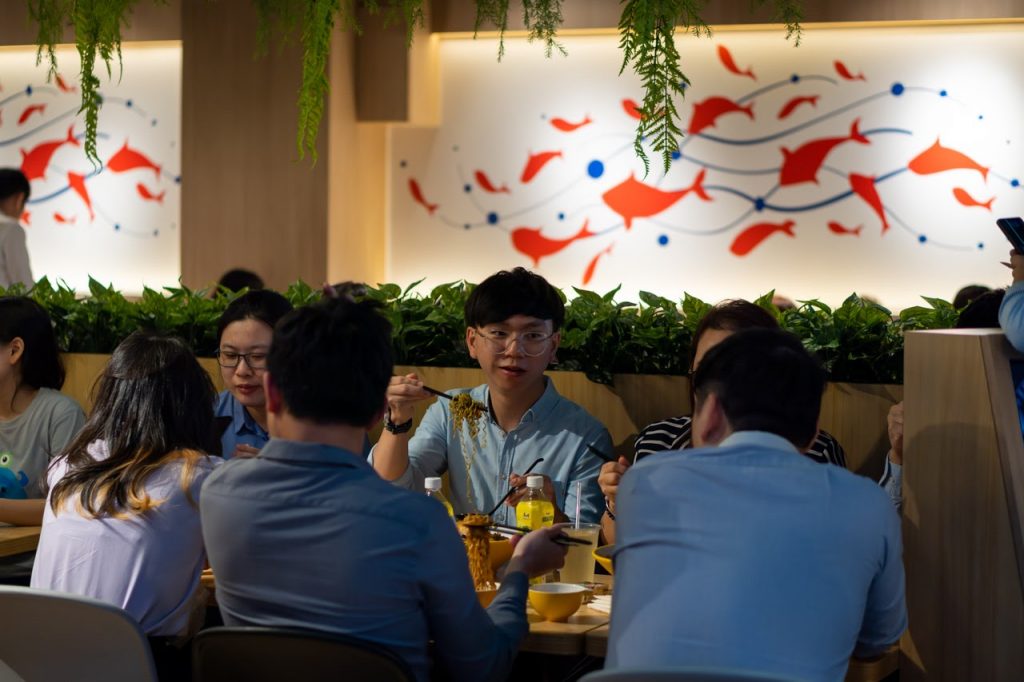
Growing up at the tip of the East-West line, I hung out in my holy trinity of shopping centres: Tampines Mall, Eastpoint Mall, and Bedok Mall.
Spaces were free for sitting and group gatherings; laughter ensued over McDonald’s fries and sugary cups of Sweet Talk. This is a shared memory among many of us in our twenties today, when malls felt more welcoming as informal hangout spaces.
Today—because of different life priorities and shifting retail landscapes—the same malls we used to hang out at feel like just shops and kiosks where we grab quick bites and run errands before moving on with our day.
This can be attributed to the fact that physical spaces were less intentionally designed in the past, according to Professor George Wong, Assistant Professor of Sociology (Education) at Singapore Management University.
“In the early 2000s and before, there were fewer concerns about how spaces should be designed and programmed. The layout of malls typically revolved around anchor tenants, with corridors, seating areas and common spaces becoming natural meeting points.”
This resulted in the Centrepoint Kids phenomenon in the 1980s. Youths often crowded in Orchard Road malls as they offered air-conditioning, McDonald’s outlets, and places to gather with friends.
Today, these spaces are specifically for consumption, structured around optimal consumer activity. To occupy a space often implies an implicit expectation to buy, eat, or participate in an activity. It influences the way we meet our friends—revolving around planned activities rather than simply spending time together.
Indeed, there are government-planned spaces for social interaction such as libraries, parks, and community centres, where activities are frequent and rife. But it’s just not the same as sitting in circles with your friends at the open-air SkyGarden at NEX.
There’s a reason why these constructed social spaces can feel as though they lack soul. These initiatives are usually to support broader social and economic agendas to boost urban vibrancy and diversity. Casual, unstructured socialising is simply a by-product.
“In a sense, people consume in order to do friendship, and the destination and activity become the main goal,” said Prof Wong.
Seeking Out Spaces To Feel Like Home
With less free time, social media and messaging apps have become a crutch for us to maintain connections with our friends by viewing their updates or chatting with them online, contributing to a more passive form of connection.
As our close friendships fade, we find ourselves sustaining a wider range of acquaintances and friends. Coined as ‘The Strength of Weak Ties‘ by sociologist Mark Granovetter, these connections align with our practical needs alongside work, family, and other commitments, resulting in fewer deep friendships that offer intimacy and emotional support.
Without common spaces and opportunities like school to facilitate bonding, maintaining strong ties requires deliberate effort.
Many of us are feeling fatigued from ‘admin catch-ups’, where we meet over meals and share updates on our lives—updates that alternate between our careers and relationships. This gives rise to the next thing on our list: finding third spaces.
Referred to as places outside the home and workplace where people gather, socialise, and build community, Singapore has seen its fair share in recent years, from pop-up activities like friendship and dating mixers such as Footnotes Club, beansandbeats, to community-builders like Our Playces. Then there are the urban meccas of arts, recreation, and lifestyle: 195 Pearl’s Hill Terrace and New Bahru.
However, in my process of seeking out third spaces, I realise that it generates anxiety and a need to find an activity and group that I belong to instantly. It’s like we want to have a community on demand, a place where others immediately know your name.
I spoke about this to Gena, the founder of Our Playces, a community-building organisation that turns underutilised public spaces into third places. She shares a similar sentiment in the struggle to develop an emotional bond to third spaces.
“This sense of belonging cannot be engineered overnight. I’ve been going back to the same pottery studio for years because I really like my mentor, and the bond I share with him, the studio, and the art itself, grows as I keep coming back.”
Gena argues that third spaces emerge over time rather than by design.
“They become default gathering spots over time when friends develop a genuine attachment to the space and community. My friends and I like to hang out at Naga House after our runs because it’s convenient, and we really just like one another and the space,” she says.
‘I couldn’t find somewhere I liked, so I started my own lor.’
Our conversation revealed that while informal invitations are becoming even more important, they are not always part of Singapore’s social culture.
Back in February this year, I attended one of the intimate writing circles at Casual Poets Library and poured my heart out to three strangers, who did the same. Yet our connection didn’t go deep.
Perhaps it’s a me problem. In hindsight, I could have asked them for their social media handles and invited them to the plenty of arts and writing events out there. But I didn’t, because it felt unnatural somehow. I went for a run with an established run club as well, but didn’t join their invitation for dinner or return often enough to start making close friends.
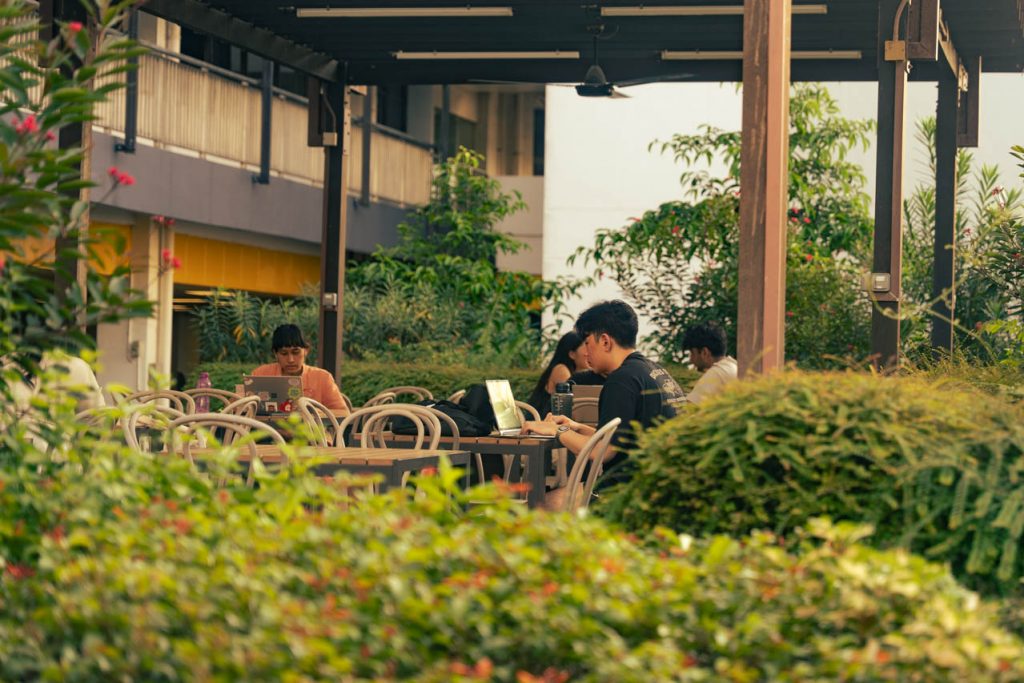
Spontaneous hangouts require a willingness to leave room for the unplanned. This can be difficult when we pencil in every single thing on our calendars—and when we assume others are too busy to join.
Hearing what Gena shared, I found myself telling her about the run club I’d started. It was created because I like to run, and I have close friends who do too. So what better opportunity is there to hang out than to run together and have dinner afterwards?
Looking back, fitting into a new group wasn’t what I wanted. But I was also exhausted from repeatedly planning catch-ups that follow the same timeline and format; from seeking a sense of belonging through activities that never quite offered it.
Somehow, creating a space of my own became the thing that gave others permission to linger in it too.
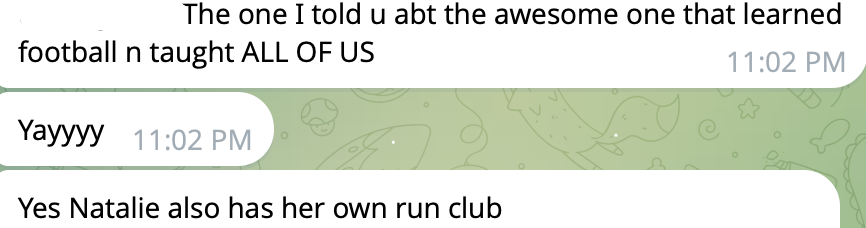
My run club introduction was met with instant zeal and support from Gena, who told me about her close friend who runs a recreational football group for people who want to learn about the sport but have no experience. I asked her for the link to the Telegram group.
It Doesn’t Matter Where The Hang Is Anymore
I’d like to think that we’re trying to buy back a sense of the old days, for a taste of what it’s like to simply hang out, without worrying about the speed of change. Where friendship felt easy and less deliberate.
And it’s not just me who feels this way. Young adults on TikTok concur, with the rise of videos showing friends accompanying one another to errands like eye exams, dental appointments, grocery shopping, and more. It doesn’t matter where the hangout is anymore, as long as we get to meet our friends.
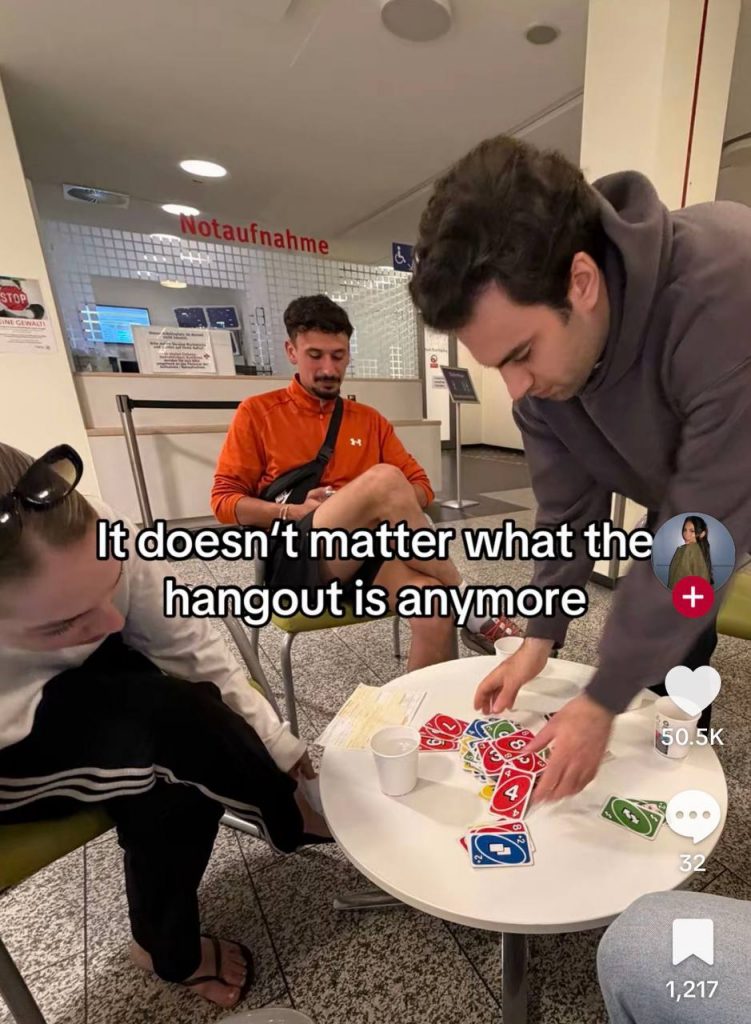
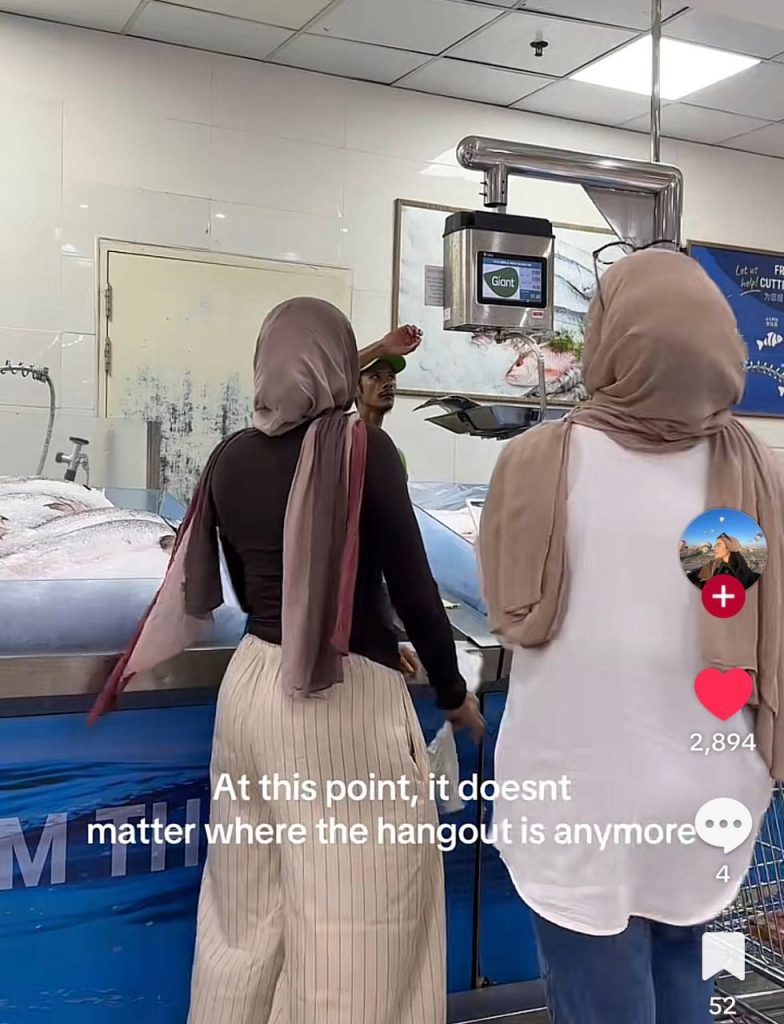
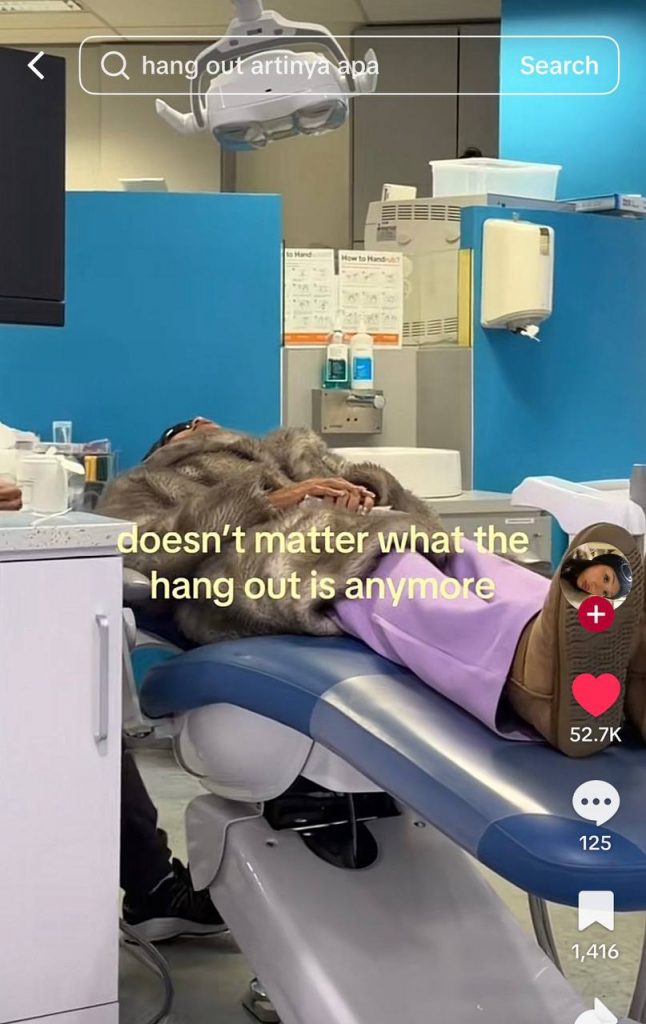
Images: TikTok screengrabs via @nicok3acola, @raihanahmzln, @laneella
These days, when a friend asks if I have plans, I still instinctively check my calendar. But I’m trying to answer differently.
Sometimes that means going for a run or tagging along while a friend runs errands. Sometimes it means doing absolutely nothing in particular.
Maybe the point is to become the kind of friend who leaves enough room for an ordinary Tuesday, for a friend.