This story is part of RICE Media’s Storytellers initiative, a mentorship programme for budding content creators to learn about the art of creative non-fiction. This piece is a product of a partnership between RICE Media and Singapore Management University (SMU) for its Professional Writing module.
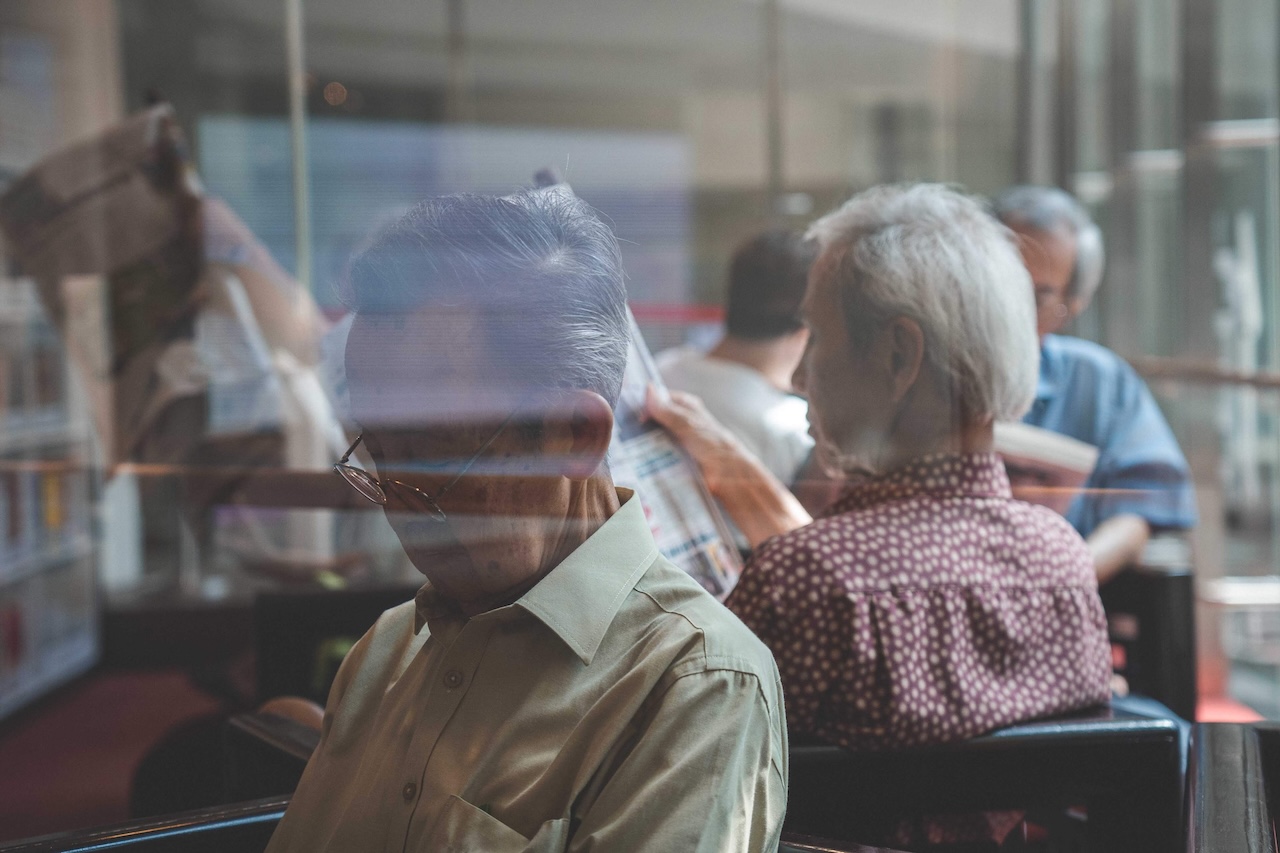
Top image: Zachary Tang / RICE file photo
Dead before death.
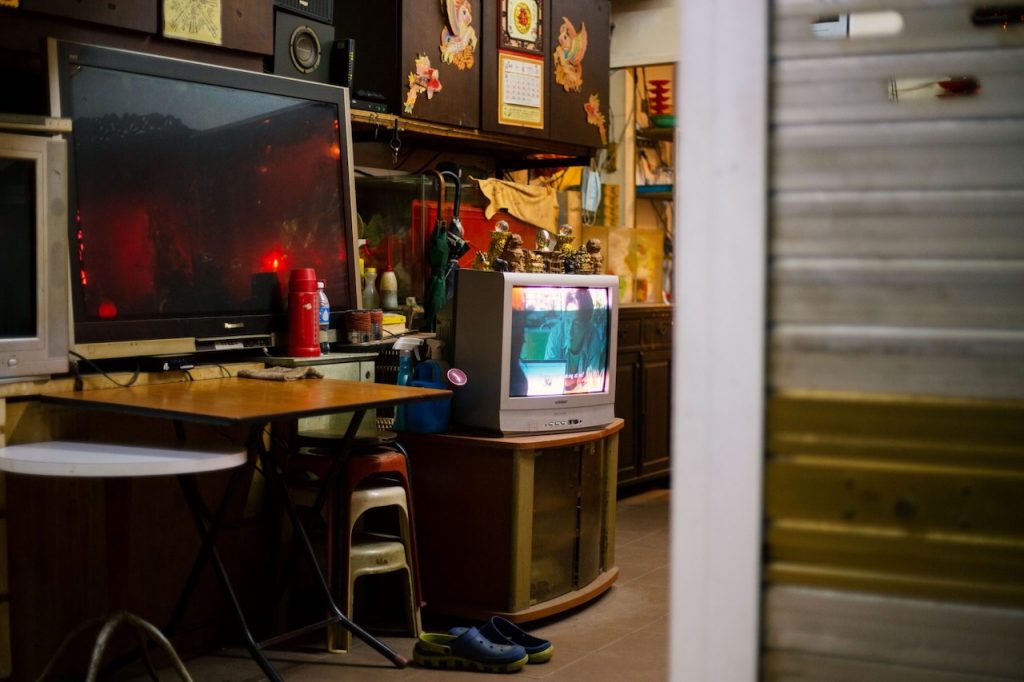
Touch wood, but those three words came to mind as I stared at my grandmother’s unmoving figure on the sofa. She’s frozen in place, her eyes reflecting the images dancing across the television screen.
The vibrant lives of the fictional characters unfolding onscreen starkly contrast with her stillness. If not for the occasional blink or the slow rise and fall of her chest, it would have been difficult to tell if she still drew breath.
My grandmother eventually stirs.
“Boy,” she calls out to me.
Few words had been said apart from the pleasantries we exchanged upon arriving at her house for my family’s weekly visit.
She continued in Mandarin, “Pass me the remote.”
My heart sank, and I passed it to her. I knew she had eaten her lunch before I arrived, and she knew I had yet to finish my studies. That was the extent of our weekly conversations, and it has been this way for years. The rest of the time had been spent watching television together without so much as a passing remark.
I feel a trace of indignation from her as I sit beside her wizened frame on the sofa. Previous attempts to maintain a conversation with her fizzled out after a few sentences, her attention drawn back to the rectangular box flickering her face with flashes of colour.
After 91 years of living, is this all she’s willing to dedicate the rest of her life to?
“Ah Ma,” I ask.
“Do you like watching television?”
Mostly Choiceless
“I can’t see.”
That was my grandmother’s response after several attempts to garner her attention.
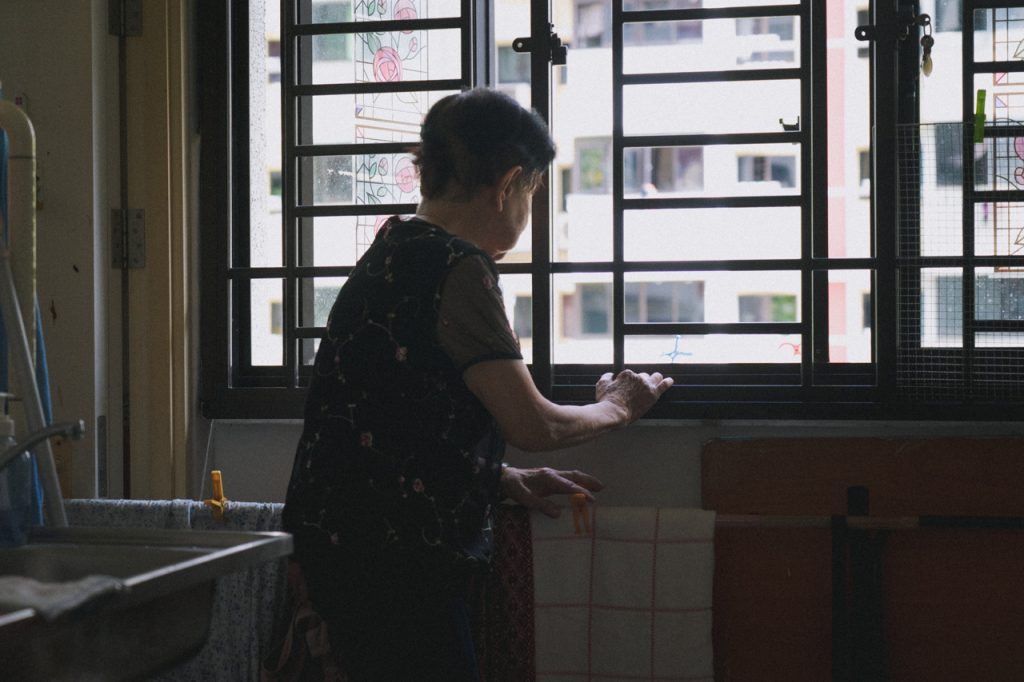
Her response catches me off guard. Her eyesight has deteriorated drastically in recent years, cataracts causing functional blindness in one eye. Her doctors had advised against operating on it to restore her sight, the risks far outweighing the benefits at her age. Her hearing wasn’t too great either; I needed to repeat myself several times before she could catch my words.
What joy does she receive from watching television with her sight and hearing impaired? Blurry movements on the screen, coupled with muffled sounds seems like a futile exercise.
“I cannot do anything else,” she laments. “My leg hurts a lot.”
Her leg ailments prevent her from taking her usual walks downstairs; she used to frequent various bakeries to buy her favourite snacks, like kuih bahulu and steamed kuih lapis.
“Eat. Television. Sleep. Those are the only things I do every day. Most of the time I’m awake, I lie down or watch television.”
Ageing has taken its toll on her after over nine decades of walking this Earth. Plagued by numerous health issues and declining energy levels, my grandmother’s limited mobility eliminates most of the activities she can do by herself.
Regardless of whether she truly enjoys watching television, the white noise it provides is enough to quell the solitary boredom.
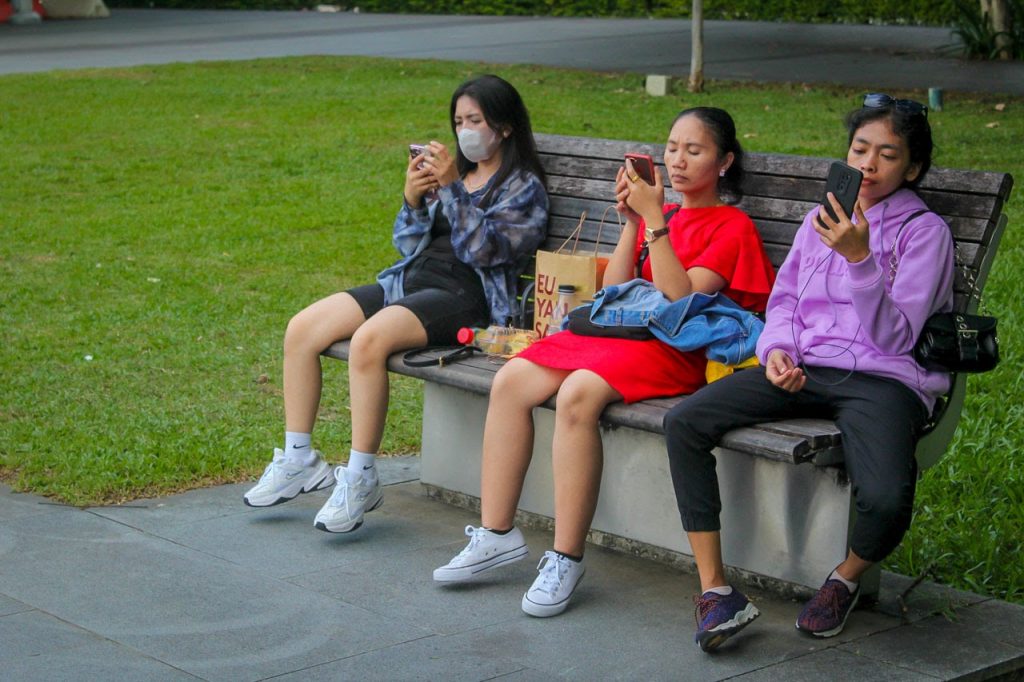
She is not alone in using technology like this either. Beyond watching television, digital media consumption has skyrocketed among Singapore’s elderly. Loneliness and ample free time drive these growing numbers, with technology serving as a substitute for companionship and a way to pass the day.
For the elderly, like my grandmother, who are robbed of the opportunity to do what they used to, perhaps it is a blessing that they can seek solace in the company of the television.
This excessive usage of technology is not without consequences, however. Immersion in a world beyond the physical means neglecting everything else left behind. And for their loved ones, this absence may feel like their elders have metaphorically departed prior to actual death.
Work, Television, and Nothing
Mdm Poh*, 92, provides another reason that may contribute to television being the preferred activity of our senior population. Unlike my grandmother, who dedicated her life to managing the household, Mdm Poh worked as a cleaner until she was in her eighties.
“I never liked watching television,” Mdm Poh recalls. “Work ends late, and I was too tired to find activities to do. I just watched television while doing chores before sleeping.”
“On my off days, I went to the market and did more chores. There was no time for anything else,” she added.
Although she expressed dislike for television, she mentioned there was little else she would rather do.
“Watching television just became a habit. When I stopped working, I had no idea what else to do. I had no interest in physical activities.”

It is easy to understand how Mdm Poh has lapsed into habitual television bingeing. She had lost her work routine, the most significant part of her life. It’s only natural to lean on what was still familiar to her: the screen that accompanied her at the end of the day. This is a common predicament faced by retirees experiencing shrinking social circles and heightening boredom.
Despite having the enervated body of a nonagenarian, Mdm Poh is open to the idea of returning to the workforce.
“There is money to be earned, why would I not work?” she says, despite possessing sizable savings and the support of family members. According to her nephew, Ricky*, with whom she stays, Mdm Poh was adamant about remaining independent even as she entered her twilight years.
Singapore continues to raise the age limits for retirement and re-employment, with rising cost of living instilling a stronger desire among workers to work and accumulate sufficient savings to see them through their later years. Another portion of Singaporeans work simply to keep themselves occupied, afraid of feeling lost and restless upon leaving the familiar environment of the workforce.
Mdm Poh is a member of this demographic. Her retirement was not one made on her own volition, but a decision enforced by the cruel passage of time.
“Working is good,” Mdm Poh adds. “It kept me active and prevented me from overthinking.”
While she found meaning in her decades of labour, her retirement revealed a hole where other hobbies or passions should have been.
With a growing number of Singaporean seniors feeling this sense of purposelessness, it raises new conversations about retirement plans beyond their financial aspects.
Singapore’s work culture has been brought into question. Tying one’s value and life’s purpose into work has become the norm for Singaporeans, with the unceasing pursuit of financial success directing their lives.
I may not be near retirement age, but as someone about to embark on a lifelong journey in the workforce, this issue affects me all the same. It raises questions about the motivation behind decades of slog.
Surely, after all the decades of work, this can’t be what lies at the end of the road.
Spectator Mode
On the opposite side of the spectrum are those willing to embrace retirement. Unlike Mdm Poh, who has a strong attachment to her work, these other elderly people see life as a series of quests, with the game of life completed once their goals and aspirations have been achieved.
Yet they share the same fundamental lack of purpose, which has been filled by the allure of screens in their golden years.
Ray*, 23, shares how his grandfather has relegated himself to the back seat, satisfied with spectating at the lives of others. It’s a struggle to get his grandfather to leave the house, Ray says: the man fills his days by watching videos on his phone and taking naps in between. Yet Ray and his sister are reason enough to step outside—his grandfather came to Ray’s dance concert and filmed it on his phone.
“But when it comes to himself, it sometimes feels like he has given up,” the Nanyang Technological University undergraduate remarks.
“It makes me sad to see it. Just the other day, he was shoving food into his mouth slowly while looking at his phone. He wasn’t even holding his spoon properly, and he kept dropping the food onto the table.”
We restrict the screen times of children, as it poses a threat to their growth and development. But what about the elderly?
“My grandfather says he is happy and satisfied, having so many healthy children and grandchildren. He believes that being able to live comfortably is a blessing, and he isn’t wrong.”
“I just don’t know how to persuade him to live differently.”
A Shrinking World
I ask my grandmother if she keeps in contact with any old friends, especially a neighbour she was close to for decades. She shakes her head.
“I don’t call her anymore. We just stopped calling each other one day.”
I can confirm that this neighbour is very much alive, and their calls did not stop due to a sudden demise. They simply did not require each other’s attention anymore.
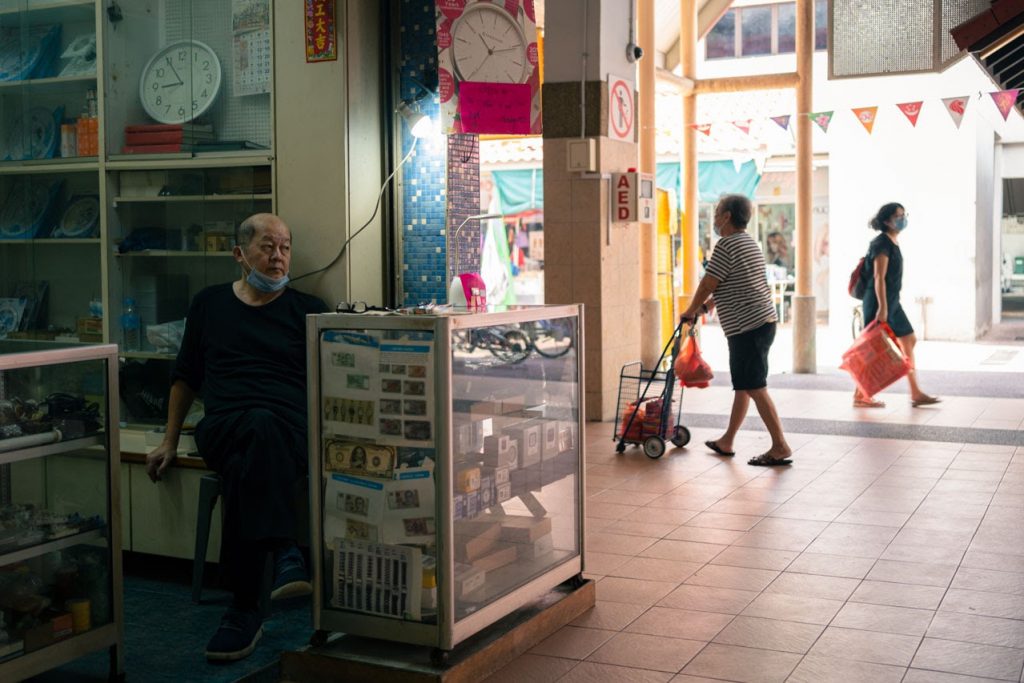
With technology taking over the lives of the elderly, their world begins to shrink. Another world filled with entertainment is available at the press of a button, a conveniently passive activity preferred over engaging with others. There is no need for them to leave their houses in search of people to talk to; no urge to fill their homes with chatter from a phone.
“Is it not enough to know that other people are well?”
That statement by my grandmother sums up the state of our relationship.
This conversation is the most I’ve gotten out of her in recent years. It only occurred because I diverged from our usual surface-level greetings and check-ins, instead bombarding her with a series of questions I feared might be too existential.
As I grow older and realise I should make more of an effort to make memories with my grandparents, the looming wall of ‘television death’ is a regular obstacle.
Interactions go both ways. When one party comes knocking, and the other refuses to answer—their spirits drawn into a fictitious world generated by lights behind a screen—true connection becomes a tremendous task.
“I don’t know what to say anymore,” my grandmother admits. “I only talk to the helper daily, but the conversations are all very practical.”
The shrinking world is also a self-perpetuating cycle. Usage of the television and screens promotes social isolation, which in turn makes stepping out into the world much harder than before. The feelings of loneliness that result from isolation further drives the usage of technology as a means of escape.
The same applies to the sedentary aspect of television, which negatively impacts health. A lack of physical activity caused by years of sitting around is compounded by the impact of ageing. The resulting muscle deterioration and health issues render movement all the more difficult.
These elements combine to trap the elderly in a state of ‘television death’. Where all that’s left is an empty shell, repeating the same activities for days on end.
Imminent TV Death
I worry that the issue of ‘television death’ will be exacerbated as the years pass. Just watching my father, 53, gives me a glimpse of the future.
For as long as I can remember, his evenings away from work were all spent in front of the television screen, watching Friends for the umpteenth time. Although he has since moved on to The Rookie and The Good Doctor, the TV remains his post-work stress relief.
The appeal of the media is undeniable. Rooting for your favourite characters on screen, scrolling through funny clips on social media. Appreciating the finer details of an actor’s performance or the vibrant art styles of anime. These are all some of the most entertaining aspects of modern life, none of which are inherently negative.
There is nothing wrong with pouring yourself a glass of wine and sitting down on the sofa to recuperate after hours of toiling away, as my father does. But is there enough motivation for Singaporeans to actively pursue other passions and interests—interests needed to spark the thought of what to do when you finally escape society’s relentless tempo?
When I asked my father about his retirement plans, he gave me that look.
The look single people give when their relatives ask when they are going to get a partner. Or the look your friend studying computer science gives when you ask them if they have found a job. The look of bringing up a topic they didn’t like to think about.
“I don’t know. I’m not going to retire anytime soon,” my father replies. “Maybe I’ll open a laundromat. Or maybe I’ll buy a pass for one of those lifetime cruises.”
And there it was—the same old issue that plagues the elderly. Post-retirement plans relegated to the darkest recesses of their minds, a topic avoided until it’s time to face it head-on.
I’m not confident that my generation will be much different.
I’m sure many of us are guilty of returning home after a long day of work, only to watch Netflix or scroll around endlessly on social media. In this era of technology and mass media, it is far too easy to slip into a life of work, screens and sleep.
Navigating past the fatigue and distractions that lie in our path to cultivate hobbies, maintain friendships and seek purpose is a daunting task. But it is one we must consider embracing early.
I don’t fault the television for hogging all my grandmother’s attention. I’m actually grateful that she has something to do in my family’s absence.
But while we still hold life’s remote with steady hands and view the world through clear eyes, our plot points are still being written. Even when our children and grandchildren leave to carve out their own paths, it doesn’t mean we should just sit back and twiddle our thumbs, waiting for our death scene to appear before the credits roll.
Because we don’t die when our bodies fail. We die when we stop trying to live.