This story is part of RICE Media’s Storytellers initiative, a mentorship programme for budding content creators to learn about the art of creative non-fiction. This piece is a product of a partnership between RICE Media and Singapore Management University (SMU) for its Professional Writing module.
Top image: Zachary Tang / RICE file photo
It’s a strange feeling when someone decides who you are before you’ve uttered a single word.
This happened to me in an elevator.
I had been minding my own business when two Singaporean aunties walked in, so I held the lift door open for them. They gave me a glance and said thanks, pausing for a second before continuing their conversation in Mandarin.
I don’t recall exactly what they said. Except that it was something along the lines of: “She doesn’t look local”. Something about “Ang Mohs.”
I understood every word.
As they exited at the next floor, something came over me–and I replied wryly in Mandarin: “Actually, I understand. I’m local.”
The silence that followed was deafening, almost amusing. I don’t think I’ll ever forget the look on their faces in that moment.
I’m not sure what prompted me to respond. It would have been so much easier to put on a poker face and act like I didn’t know any better.
Perhaps it was because situations like these weren’t new to me. Growing up, I often found myself stuck in these painfully awkward encounters. Being mistaken as a tourist, an exchange student, or simply someone who didn’t quite fit in.
And perhaps that’s just my reality. Growing up with a British father and a Chinese mother in Singapore means being seen in ways that don’t quite match who you are.
It means existing in an in-between space, never quite enough to belong to either side. And surprisingly, never quite enough to belong to the Eurasian identity I’ve been assigned.
Pigeonholed
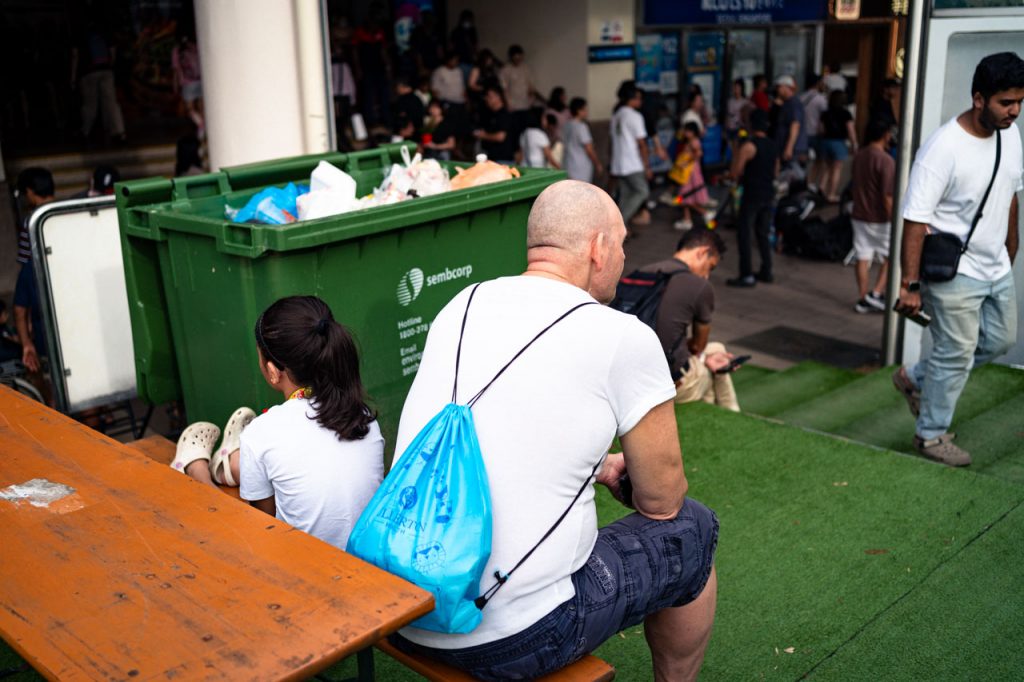
Singapore often prides itself on being multicultural. While people have their own definitions of multiculturalism, the CMIO (Chinese, Malay, Indian, Others) framework instilled in locals from their early schooling days has led us to unconsciously categorise people into these distinct boxes. ‘Others’ often refer to Eurasians, though that definition has been expanding thanks to changing demographics from increasing immigration.
Effective as it may be for the government to manage racial policies, what happens when you don’t fully fit into any of these boxes?
For people in mixed marriages, getting “pigeonholed” into old frameworks may not do their identity justice. I don’t blame those aunties in the lift when they grew up in a time when these neat categories often subsume the comprehension of subtleties within a pre-defined race.
Me? I have an IC that classifies me as ‘Eurasian’. My other first-generation Eurasian friends have ‘Chinese’ or even ‘Caucasian’ on their ICs.
All this to say that there is simply no concrete way to define someone of mixed heritage. I, for one, grew up in two worlds that didn’t always overlap.
Sunday evenings normally meant roast dinners prepared by my father—complete with Yorkshire pudding, roast potatoes, and brussels sprouts smothered in gravy.
If that didn’t sound English enough, we’d have the leftovers the next day with Marmite to go along with.
None of my friends at school could fathom how I could possibly stand the bitter taste of Marmite. To me, though, it was comforting. Something that reminded me of my roots (or at least half of it).
Between Two Worlds
Life outside of home couldn’t look any more different.
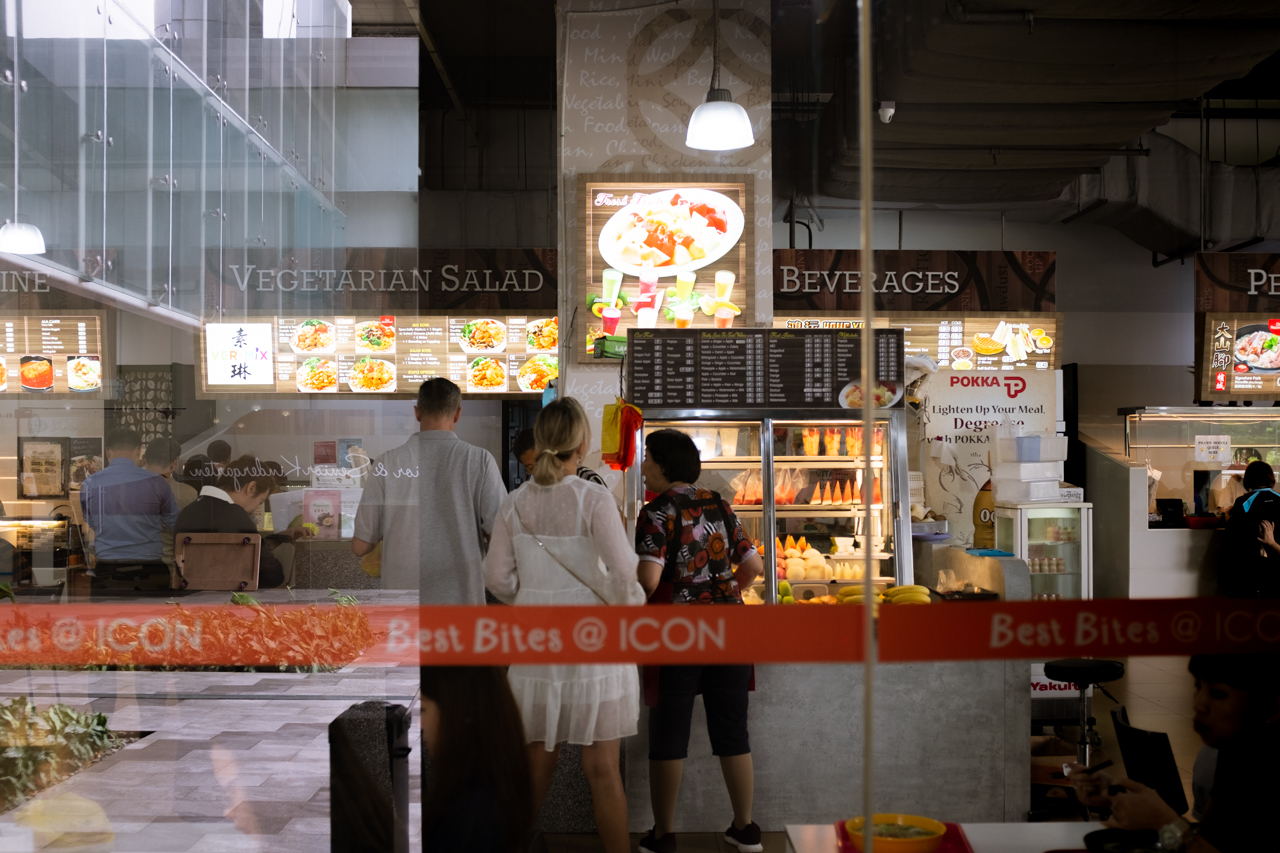
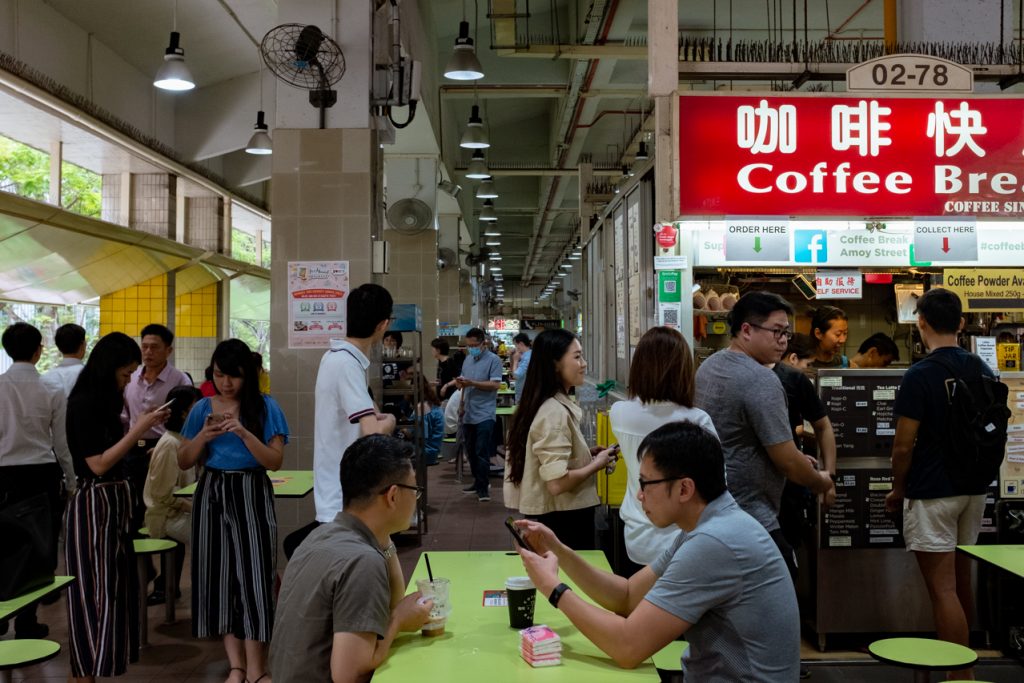
I frequented hawker centres and would queue up for my favourite bowl of fishball noodles every weekend. I’d order cai fan in Mandarin and engage in small talk with the stall owner who’d become familiar with me. I felt as local as they came.
I attended local Chinese SAP (Special Assistance Plan) schools for six years. I took Higher Chinese for eight. I sat in classrooms where Mandarin wasn’t just a language subject, but a cultural medium. Unsurprisingly, I was one of the only non-Chinese students in the cohort.
While I was doing what every other student was doing, the reality was that it wasn’t that simple.
I distinctly remember attending a Chinese calligraphy class in secondary school, and the instructor was going around to check on our progress, speaking to each student in Mandarin. When he got to my table, he switched to English and asked if I was able to keep up.
It was as if the big Chinese characters I had written on my calligraphy sheet never existed.
Same uniform, same writing, same classroom. Yet, a different assumption—and a completely different set of biases experienced by people like me, who pass off as Caucasian.
It is often said in passing that Eurasians are more ‘attractive’ because of how exotic we look. Whether or not this is true is quite subjective. A study by Gillian Rhodes, a psychologist at the University of Western Australia, found that ‘hapa’ (Hawaiian for ‘half-white’) faces are typically perceived to be more beautiful.
In some ways, this meant that my mixed heritage was often viewed positively, with simply looking ‘different’ seen as a unique trait admired by others. The attraction to exoticism—partially attributed to racism—is largely experienced by anyone of mixed race, including those who aren’t White-passing.
Being of fairer complexion, I was largely assumed to be an expat kid, i.e. rich, pampered, and reliant on daddy’s money. Assumed to be here temporarily, just biding time before heading home to something better. None of it was true.
I’ve lost count of just how many times I’ve been asked to speak in a British accent for the amusement of others. When new acquaintances discover I have a local accent, they’d be dumbfounded. “You understand Singlish ah?!”
Admittedly, these gripes might sound trivial. But there is something strange about being expected to prove a part of yourself on demand, no matter which world you enter. In essence, you’re not Asian enough in one space, and not Western enough in another.
So, you learn to adjust.
Who Can Be Eurasian?
Viktor Loh is a fellow Eurasian who grew up in Singapore—his father is Malaysian Chinese and his mother Russian. He, too, had been born and raised in the Singaporean system and went abroad to study in the United States after completing his National Service obligations.
“I’ve always felt like I’m not quite Russian. And not quite Chinese either.”
Having attended local schools throughout his life, Viktor mused that his ‘whiteness’ had always “felt immediately apparent”. He’d also been known around the cohort as “that Russian kid”.
I ask him if he was treated differently because of his appearance.
“Oh yeah, definitely.”
On the one hand, people would automatically assume he is a good writer and speaker without having interacted with him before. Exoticism led to him having a higher level of perceived attractiveness, which meant people expressing romantic interest in him solely because—well, he was different.
In Singapore, that perceived difference landed him in situations where he felt like a “circus animal” of sorts. People would come up to him and ask him to say something in Russian, almost as if it were a performance for their mere entertainment.
Eventually, Viktor found his community in the Russian Orthodox Church in Singapore. He would go on Sundays with his mother, where the Russian-centric religious practices would bring him a greater sense of belonging.
This connection broadened beyond the church and into his home. He was especially fond of the Russian dishes prepared by his mother, particularly borscht—a hearty soup featuring red beetroots, cabbage, potatoes, carrots, and meat stock.
Viktor has thoughts about being officially classified as ‘Eurasian’ in Singapore.
“I don’t think that I like the term ‘Eurasian’ actually… I feel like it has so many different meanings. In Singapore, the Kristang people are the OG Eurasians,” he ponders.
“And I cannot pretend to appropriate Kristang culture”.
The Eurasian Question
Based on estimates, there are fewer than a hundred fluent Kristang speakers left in Singapore. The Kristang people primarily came from marriages between Portuguese men (mostly traders and sailors) and the local Malay women from the Straits of Malacca back in the 1600s.
The Kristang have their own set of cultural beliefs and traditions, ranging from food to the arts. They are also the backbone of the Eurasian Association’s heritage gallery in Singapore.
Upon visiting the Eurasian Heritage Gallery (EHG), visitors are greeted with a vibrant display of historical fact boards and monuments showcasing various traditions.
Two years ago, I volunteered with them as a docent. My job was to educate members of the public on my ‘Eurasian heritage’. But was it really mine, though?
I hadn’t tried any of the dishes I’d educate the public who came for the tours. Neither had I ever danced the Branyo, the traditional dance I’d played a tutorial video on for them to learn.
At one point, I began wondering if I was a hypocrite. Or maybe even a phoney.
This then begs the question of what exactly makes someone Eurasian in Singapore.
According to Dr Myrna Braga-Blake, a stalwart of the Eurasian Association, a Eurasian can be simply defined as “a person born of union between a European and an Asian” and the subsequent offspring of that first ‘mixed-blood’”.
But after my stint as a docent, I wasn’t so sure.
Identity Crisis
I met up for a chat with Tejas Hirah, whom I had met a couple of years back at the Eurasian Association. He’s a Eurasian who grew up in Singapore with an Indian-Chinese father and a Eurasian mother. He currently works as a freelance actor, host, and drama educator, and owns a talent agency.
According to Tejas, his mother’s surname, ‘Dragon’, could be traced back to the year 1818 when the first ‘Dragon’ came to Penang, likely from Eastern Europe.
Tejas’ maternal background had a large Eurasian influence, making him someone of a very, very mixed heritage.
“Being Eurasian felt kind of confusing growing up. In school, my mother tongue was Malay, which was kind of weird. I remember my teacher commenting that I was able to do well despite having a whiter skin tone than my other classmates. It made me feel kind of alienated”.
Upon hearing this, I reminded Tejas of something he had said to me two years ago. That being, that he used to be prejudiced against first-generation Eurasians like me.
Back then, he felt that being Eurasian wasn’t just about having European and Asian blood. It was about heritage.
He spoke of traditional dishes like Curry Debal and Sugee Cake, about the kebaya, about the Portuguese settlers and Malaccans that had shaped the roots of Eurasian culture all the way back in the 17th century.
I clearly had no ties to those things. And if I’d met Tejas when he was younger, he’d be the first to remind me of it.
“My ex-girlfriend was a first-generation Eurasian. I used to tell her things like: ‘No, you’re not Eurasian. You’d have to be descended from multiple generations of Eurasians to be one’. Because she was basically just a product of an interracial marriage”.
Tejas has since changed his views.
After working at the Eurasian Association, Tejas began to realise that the anti-first-generation sentiments he harboured were the very same views held by some older Eurasians in the community. It made him reevaluate the grounds of this bias and wonder about its obsolescence today.
“Having these thoughts only limits our already-small community even more.”
I ask about his thoughts on the Kristang-centric EHG.
“I guess the EHG doesn’t represent all of us. If I were to reconstruct the gallery, I’d add a section for first-generation Eurasians like you,” he offers.
“You know, we can acknowledge the past, but we can’t keep holding on so tightly. The definition has changed too much now.”
Never Enough
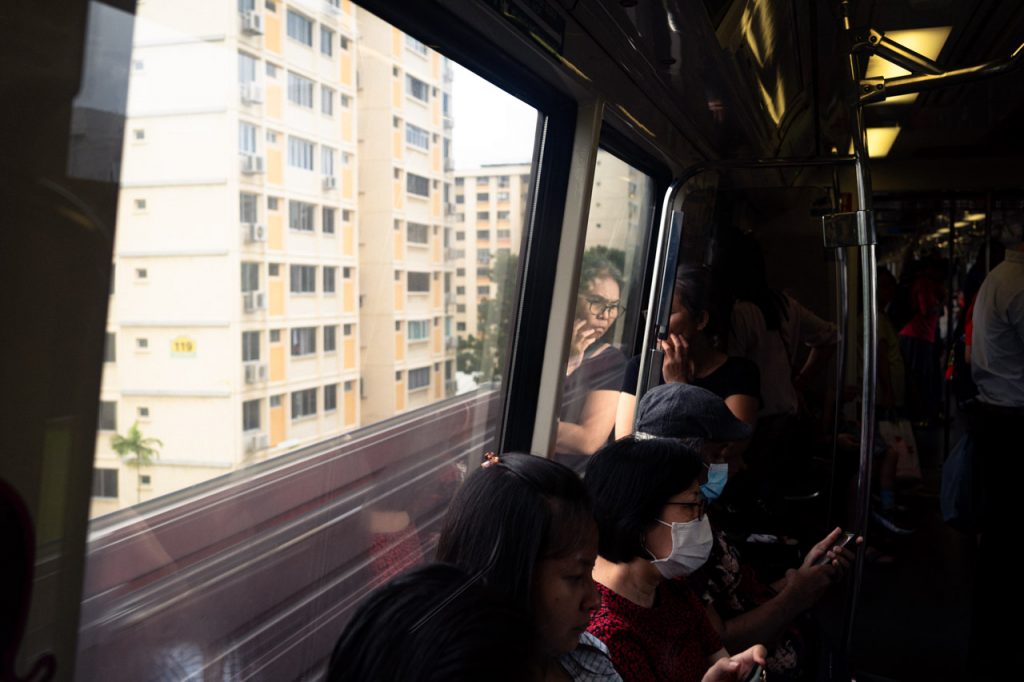
Perhaps belonging can’t be measured by how well you speak a language or how deeply you know a culture. And it certainly isn’t determined by what box they checked on your IC.
For the longest time, I thought being Eurasian meant that I had to justify my place in the community—and somehow reconcile the parts of my mixed heritage that didn’t fit cleanly into either side. That the burden of proof was on me.
But the Eurasian experience today does not look like what it did in the 1600s, nor is it congruent with all who go by that label.
Even as I write this, I know there’ll be people who say I’m not Eurasian enough to discuss this subject.
To them, I’d say: an identity born from the blurring of lines was never meant to have hard edges. The in-between isn’t a flaw in my belonging—it’s what belonging looks like for us.
To be “never enough” of one thing is to be more than one thing can hold.
I still think back to that moment in the lift sometimes, about that satisfaction I felt after speaking up. I spoke up because it wasn’t so much about proving I belonged; I spoke up because I already did.