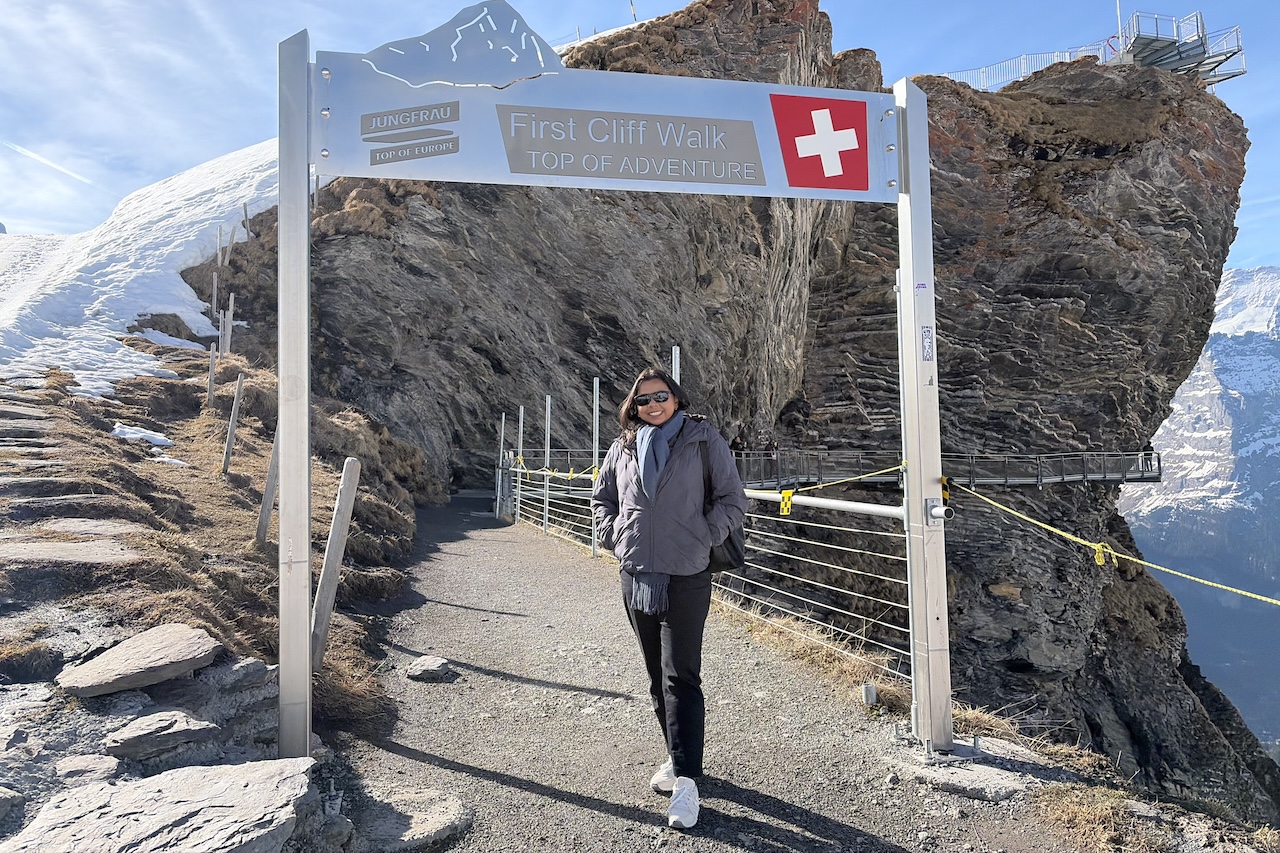
Shameni Rajah, 40, is a territory manager in the energy industry, overseeing sales and operations across a network of petrol stations.
In this RICE Community Voices piece, she reflects on why it took her four decades to unlearn the habit of being agreeable.
Top image courtesy of the author.
Back in July, some of my friends asked if we could meet up.
Usually, I would have replied “Okay, sure” within minutes, even if I didn’t mean it. This time, I wrote back: “It’ll be quite packed for me. Maybe you guys plan first; I’ll see if I can join.”
They tried proposing other dates. When would I be free?
“Not sure when exactly,” I replied. “It’s very hard to say when I’m free.”
And then I left it at that.
I’ve known these friends for over 20 years. I met them while in school, and we used to meet once every quarter. Until July, I don’t think I’d ever turned them down. Even “not sure when” wasn’t a proper no. It was a polite fade-out.
Anyone else might not think this a momentous thing. But I’m a 40-year-old Indian Singaporean woman, and I’ve spent most of my life agreeing to things—at home and at work—so that I’d never be the difficult one. I believed being a good person meant being accommodating and always dependable. Maintain harmony, give and take.
These are hardly bad values, and many of them shaped the person I am today. But I got so good at people-pleasing that it took me two decades to notice which relationships I was only enduring.
It took me even longer to ask myself the obvious question: Why did it feel so hard to say no in the first place?

Learning Not to Say No
A few of them reached out later to ask if everything was okay. I told them I was busy with work. Nobody would argue with “busy with work”.
I don’t know why it took me so long to distance myself from them. Most of the time, during our catch-ups, the conversation was about work. I listened, I understood, I let them rant. Every now and then, something they said came off as condescending or carried a note of doubt.
When I tried to share something exciting, like a trip I had just come back from, it was never met with excitement. Whatever I shared—my adventures, my ups and downs—got the bare minimum in return.
I would drive home feeling neither energised nor satisfied, wondering whether they truly understood who I was.
On one of those drives, it finally hit me: It had always been like this. For them, nothing has changed. But I’ve changed.

And yet, I kept going back. I feared confrontation. I feared they would wonder why I was being so aloof, why I was withdrawing from the group.
When you have known your friends for decades, you assume this is it. This is your friend group.
But over the years, it dawned on me that they did not really know who I was. They never cared about my life as much as I thought they would, and they knew very little about me. Whenever I opened up, they judged me, failed to understand, or didn’t want to listen.
Still, I kept saying yes. Like every other Singaporean, I was conflict-avoidant. Saying no meant explaining myself—and explaining why is how you get perceived as the difficult one.
Some of it started at home. Growing up, if I questioned certain behaviours, I was seen as the problematic one.
“Why are you being so difficult?”
“Can you stop asking stupid questions?”
“This has always been like that.”
Over time, the lesson sank in. Questioning things made you ‘difficult’. Keeping quiet kept the peace.

Unconventional Paths, Conventional Habits
For a long time, I prioritised other people’s happiness over my own. I behaved exactly how my parents wanted, how my friends wanted, and how society wanted. But I was not happy.
On paper, I should have been the last person to struggle with this.
I started working full-time at 18, on an offshore island where almost everyone around me was far more senior than I was. After that came the zigzag: back to school, out again, part-time, full-time, paying my own way the whole time.
Being an ethnic minority, there were moments when I felt I had to work extra hard just to prove I was capable of doing my job, when someone of a different race might only have needed to do half of what I was doing.

So I became more agreeable. I said yes to every project that came my way—partly to look capable, mostly so nobody would have a reason to let me go.
Paying my own way from 18, however, taught me one useful thing: some decisions could be mine alone, as long as I was footing the bill. Solo travel was one of them.
The first trip was to Kuala Lumpur, in my early twenties. Barely abroad, I know. But it was the first place I’d been where nobody knew me well enough to be disappointed in me.
The moment I knew I could live my way came in Langkawi. I stayed in a hostel, in a mixed room with five other travellers, and discovered I actually liked meeting new people and living away from everything familiar.
Then I rented a car, and some other backpackers tagged along, and we had fun. That’s when it hit me: Hey, I can do things on my own. I am safe, happy, and liberated.
Langkawi became my stepping stone. Then Hong Kong. Then Europe, where I backpacked for almost a month. Two years ago, I drove alone through Scotland and Ireland, countries I had never set foot in.
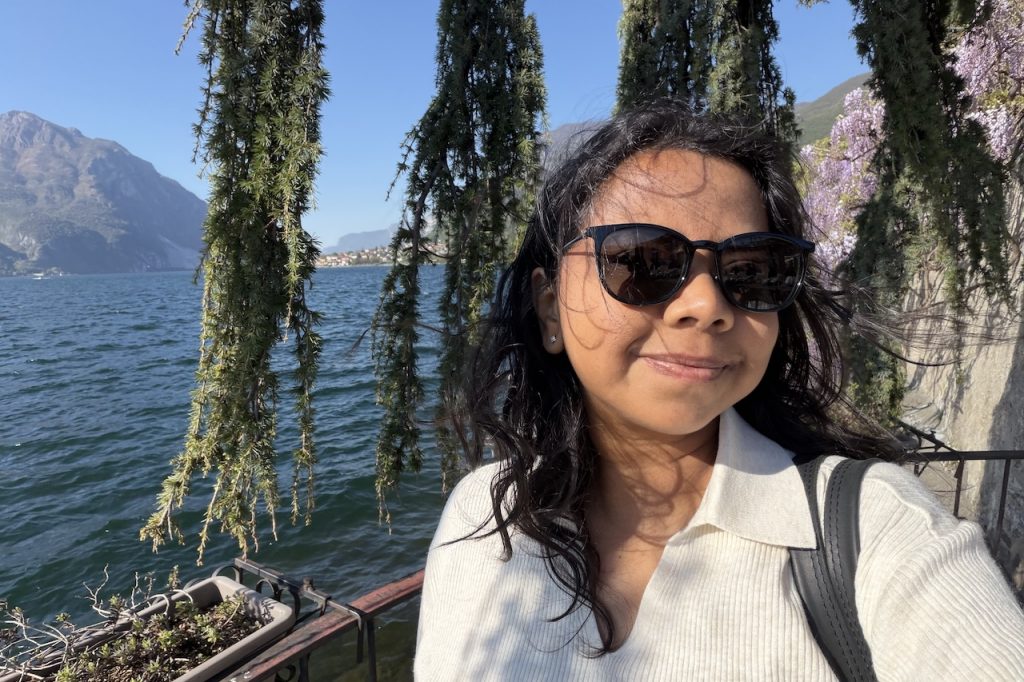
It’s been 15 years since I discovered my love for solo travelling, and I keep going further and further and further.
Travelling alone taught me to be independent, to rely on myself for everything. Every decision, every choice, was mine, and so was the responsibility. With no one to fall back on, I learnt to think on my feet.
I can’t remember my first no on the road, but I do remember refusing to accept one. In Berlin, the train I was supposed to take to Nuremberg simply never came. When I went to the counter to ask where it was, the woman shushed me off. So I hopped on another train heading where I needed to go, holding a ticket for the one that never arrived. If I had accepted her no, I would have been stuck at that station.
But then I realised: saying no to strangers was a lot easier than saying no at home. There was no history and nothing to lose. I could just be myself.
What Choosing Myself Didn’t Cost
It took over two decades of slowly pushing my own boundaries before I could start drawing my own.
So why did it take until 40? Partly because I had finally lived through enough. Therapy showed me how much of what I believed had been conditioned into me. I’d spent years in a cocoon of compliance, not knowing I had free will to choose what made me happy all along.
There is a difference between acceptance and endurance. Acceptance says: I know who you are, imperfections included, and I still value this relationship. Endurance says: this keeps making me unhappy, but I’m afraid of what happens if I stop putting up with it.
Does everyone get to say no? I don’t think so. It’s harder for some women than others, after years of being told how a woman should be and how she should behave. For me, being a woman—and a minority in Singapore—added another layer of complexity. At work, saying no felt like a risk I couldn’t afford.

When you have your own thoughts and your own life (and your own money), you have the privilege of saying no. Nobody’s survival depends on my yes. But not every woman can say that.
When I asked a woman I know, also in her 40s, whether saying no gets easier with age, she wasn’t so sure.
“Even in my 40s, saying ‘no’ remains a challenge,” Sarasvathy Gobinath, 41, tells me. “What has changed compared to when I was younger is my level of self-awareness and my understanding of why I choose to say no.”
To her, it is a skill you actively learn, not something that arrives with age.
“Many of us grew up in a society where conformity was expected. We were conditioned to agree, accommodate and sometimes comply without questioning. Over time, this becomes an ingrained habit.”

Overriding Impulses
“It is not about how often you say ‘no’, but how intentionally you say it,” she tells me.
I think back to the time when I finally had the mettle to turn my friends down, back in July. The intent was there—but my delivery needed work.
Two of them have reached out since, just once. I still haven’t told them the real reason. One suggested we stay in touch.
“Sure, and please take care of yourself.” And then I left it as it is.
It’s a small ‘no’, and I know it. Most women I know are sitting on a bigger one—usually involving family.
For some, it’s ageing parents, and being the daughter who remembers every appointment and gets every call.
For others, it’s a marriage they now wish they had thought harder about.
For many, it’s simply years of being known as the dependable one. Because the person who has always said yes to things becomes the easiest person to ask again.
I’m 40, and I’ve only just learnt to turn down a meet-up. I still feel guilty before I say no. I just say it anyway now.