

Photography & Illustrations by Shruti Balaji unless otherwise stated.
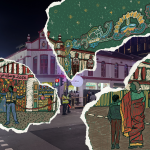
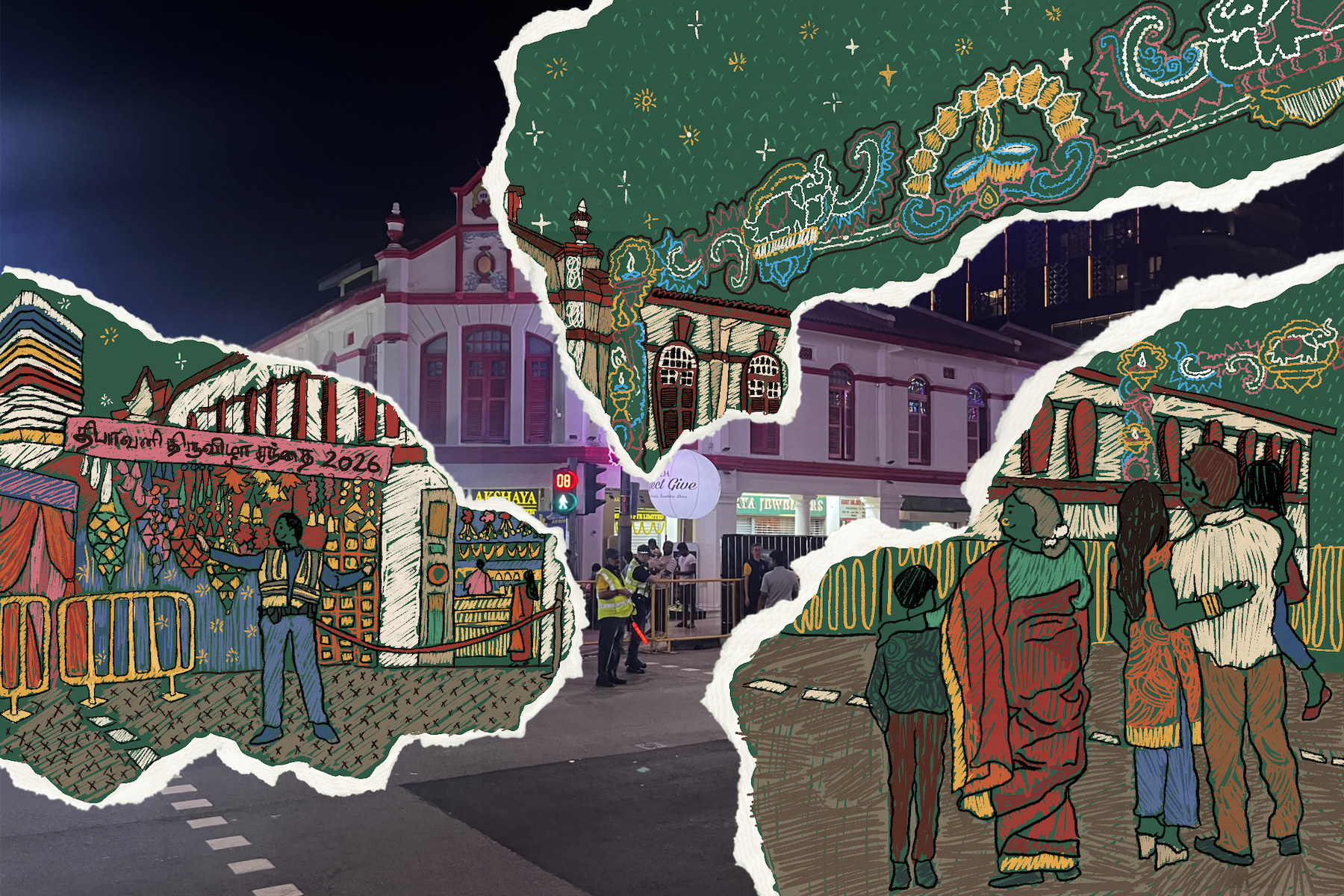
Deepavali lights shine brightest in Little India. Elsewhere, it’s largely plastic pumpkins and early Christmas trees. In a speculative design project, urban sketcher Shruti Balaji draws the Festival of Lights into spaces far beyond one ethnic enclave.
As the end of October rolls around in Singapore, how likely are you to see fake cobwebs and Christmas baubles rather than diyas (lamps) on display?
This hasn’t gone unnoticed. Some Gen Z creators, like Shannon Kreissl, have started asking out loud why. Hindus, Sikhs, Jains, and some Buddhists across the island observe Deepavali, yet its biggest public light-up stays inside the boundaries of one ethnic district.
That district is younger than most people think. The Little India we know today exists largely because the Singapore Tourist Promotion Board (now the Singapore Tourism Board) set out in the 1980s to rebrand the city with ethnic enclaves (Kampong Gelam, Chinatown, Little India), each with its own distinct character. But the Raffles’ Town Plan never designated Serangoon as an Indian quarter.
The Little India of today is famous for its swathe of Indian textile stores. However, the record books state that the most famously documented Indian textile shop in Singapore was opened at Cross Street, i.e., modern-day Raffles Place.
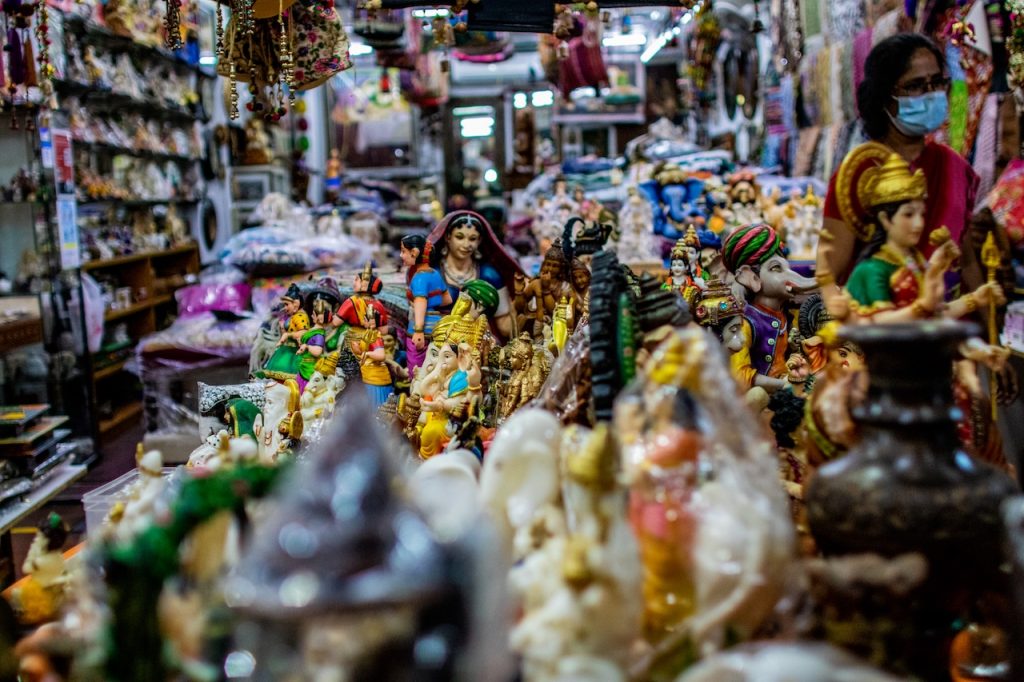
Others might consider Little India the place where the first Hindu places of worship were consecrated, as the area hosts multiple historic temples. But then again, the centuries-old Sri Mariamman Kovil lies in the heart of Chinatown. The temple’s primary benefactor was none other than the pioneering Singaporean Tamil social entrepreneur who owned that textile shop: Naraina Pillai.
When the roots of Singapore’s Indian pioneers stretch far beyond an ethnic enclave, I can’t help but wonder what the annual Deepavali festivities could look like beyond the confines of Little India.
I’m a design student, so I couldn’t help myself. I drew where else the lights could go.
Bugis Street Back Alleys
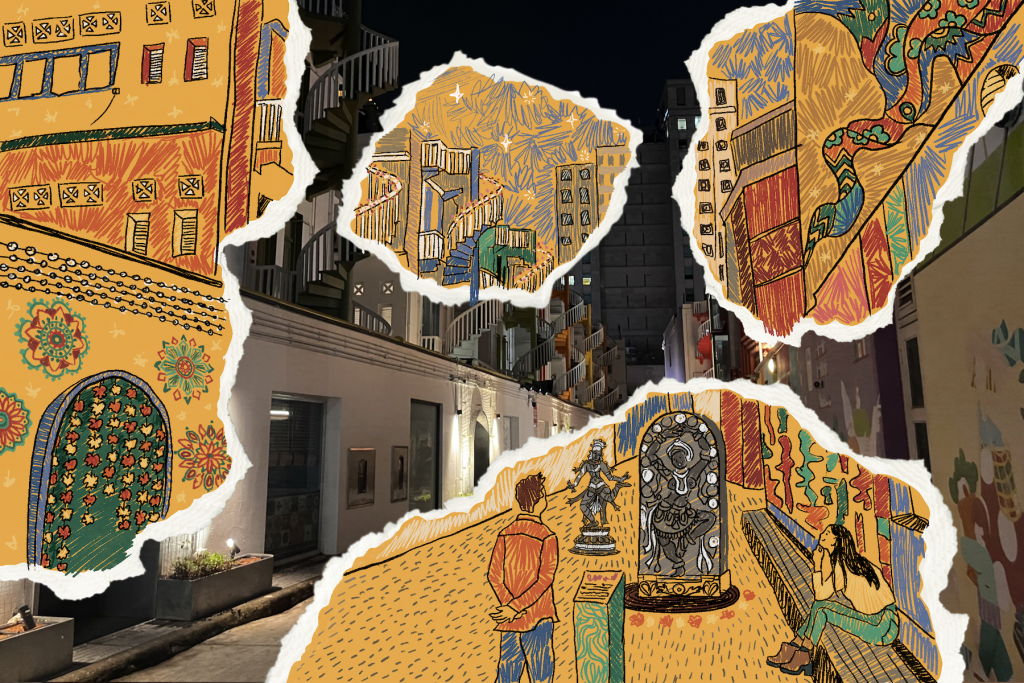
I’m taking a shortcut from the National Library to Rochor as I hear the familiar strains of ‘Enchanted’ by Taylor Swift coming from a back alleyway. I’m surprised to see the lane strung with fairy lights as a crowd sings along to a band of teenagers on a makeshift stage.
The flea market is packed with Y2K fashion, trinket stores, photo booths, and the kind of things that are guaranteed to go viral on TikTok. There’s a certain sincerity among the artsy hipster Gen Zs who swarm the stores for their next indie find, taking the time to greet each vendor by name and carefully perusing their handmade goods.
Few passersby would know that the street on the other side of the wall, Malabar Street, was once a business quarter for South Indian merchants, money changers, and textile traders. Named after the immigrants who came to Singapore from the Malabar Coast of India, it’s now one of the air-conditioned indoor streets of Bugis Junction.
The alley is part of the Bras Basah Bugis arts district and has hosted thrift markets like Resurrack, as well as a recent Singapore Night Festival takeover. People come here to stumble onto things, which is why it’s the right place to stumble onto history. A Deepavali light-up of local sculpture, made in the spirit of the Indian craftsmen and traders who once worked these blocks, would catch people the same way the colourful staircases and murals do.
Dhoby Ghaut
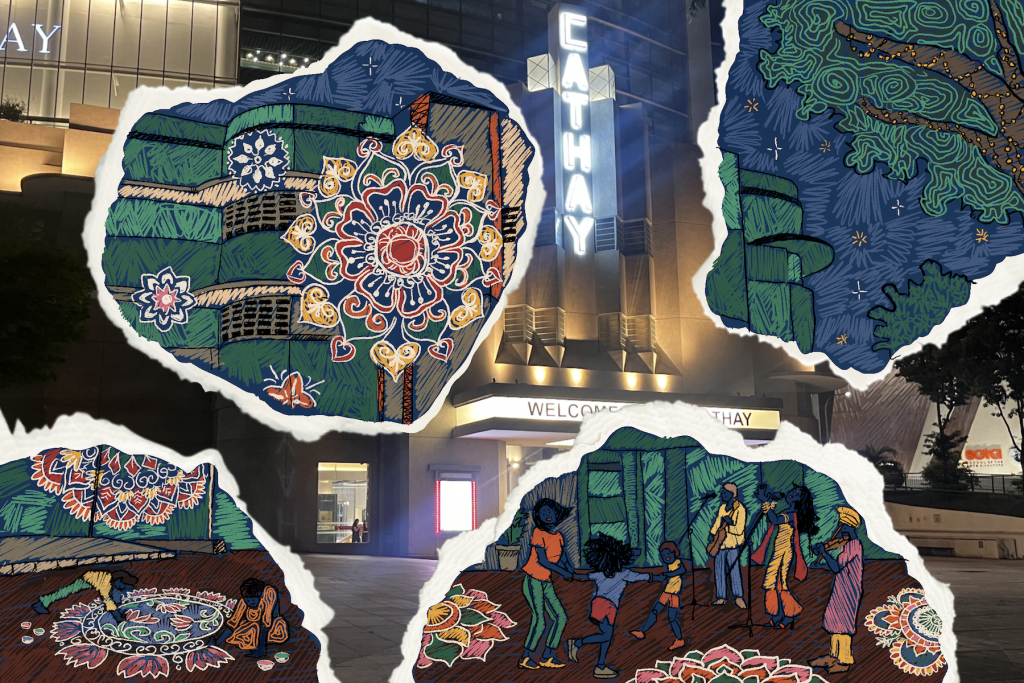
Dhoby Ghaut has been a central part of our journeys in the Orchard shopping district, but how often have we thought about what the name actually means?
In the early 1800s, Indian dhobies, or washermen, scrubbed laundry in a freshwater stream that ran through the area—Sungei Bras Basah now runs underground as part of the Stamford Canal. Orchard Road became Orchard Road on top of it.
The washermen are long gone, but the name stayed. And so did the open space outside The Cathay after its revamp.
The Singapore Night Festival already ran a projection mapping contest on Cathay’s facade. I’m imagining the building hosting a literal light show for Deepavali. Fill the air with Tamil or Hindi singalongs; let the artsy kids from SOTA, NAFA, and Lasalle try their hand at rangoli in the open space out front.
Smith Street
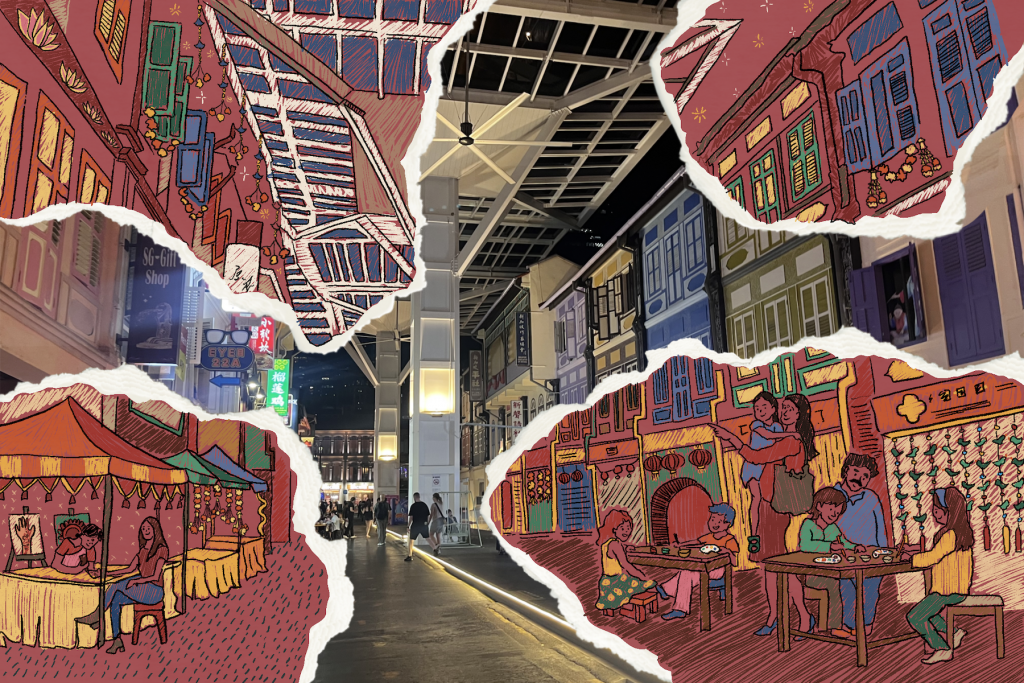
Historically, Smith Street is known for many things: the birthplace of Cantonese opera in Singapore and a former red-light district. These days, the area has been cleaned up for maximum tourist appeal, though some stubborn holdouts of homegrown culture remain.
It’s also a stone’s throw from the 200-year-old Sri Mariamman Temple, which already holds a grand Deepavali celebration every year.
As such, I think Smith Street could easily host a small Deepavali bazaar, or at least a cultural showcase. It already hosts seasonal events like the Qixi Festival, and its newly restored shopfronts would look good strung with marigold garlands, with pop-ups for henna and lamp painting underneath. It’s family-friendly, and the seating areas can be rearranged to make room for kids’ activities.
It would need to be done with care, but the Indian connection in Chinatown already exists: the South Bridge Road area has a storied history with the pioneering Indian community.
Joo Chiat
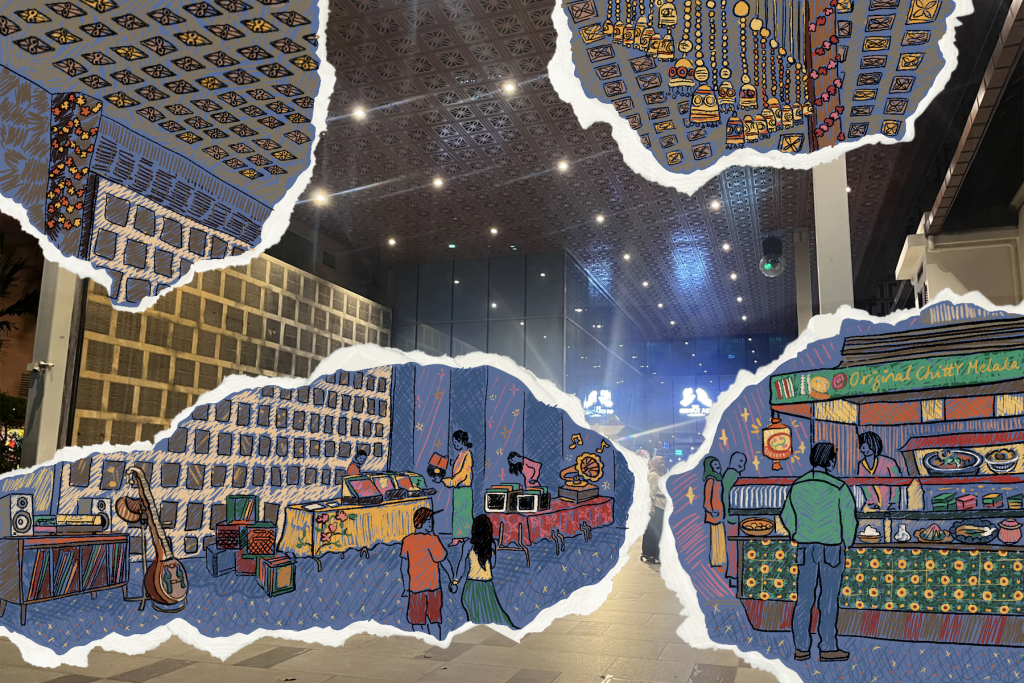
The East Coast has always been one of Singapore’s most mixed neighbourhoods. Peranakan Chinese, Chindians and the Chitty Melaka all have deep roots in Katong and Joo Chiat—you can taste that history in the food.
Deepavali is a good excuse to trace those links, starting with the Indian hand in what we now call Peranakan cooking. The Chitty Melaka are descended from South Indian traders who married into Malay and Chinese families in 15th-century Melaka. They cook ayam buah keluak like their Nonya neighbours, but they grind their own curry powder from coriander, cumin, fennel and fenugreek. In 2023, the National Heritage Board and the Peranakan Indian (Chitty Melaka) Association collected about 100 recipes from 10 matriarchs into a cookbook.
A Chitty Melaka tasting—or a wider multicultural food fair—would suit a Deepavali celebration in Katong. Katong Square previously drew crowds to its vintage flea markets, where stalls sell old watches, jewellery and crates of vinyl. That crowd would be a ready audience for Singapore’s Indian music archive.
Pandit M Ramalingam came to Singapore from Madurai in 1937 and founded the Sri Ram Orchestra, the country’s first Indian classical ensemble. He also scored ‘The Butterfly Lovers’ as a cross-cultural production by playing Chinese melodies on Indian classical instruments. A listening corner built around hybrid work like his would fit right in beside the record crates.
Chulia Street
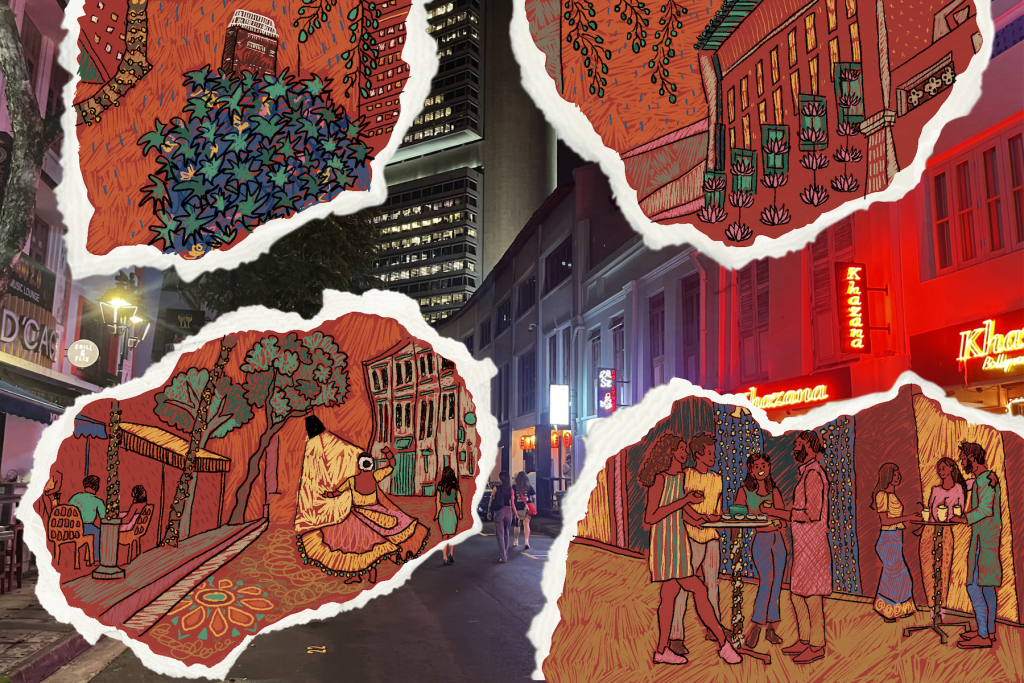
Every few months, someone writes another obituary for Singapore’s nightlife scene. Deepavali is a good excuse to throw a party loud enough to prove them wrong, and Circular Road already has the setup. Singapore River One (SRO) now closes the road to traffic on Friday and Saturday evenings and on the eves of public holidays. Bars in the area can also apply to stay open until 4 AM on Thursday and Friday nights. That started as a pilot in August 2025 and became a standing rule this August.
SRO has done a street party here before. For years, its St. Patrick’s Day festival filled Boat Quay and Circular Road with Guinness drinkers. The same treatment could work for Deepavali, with Indian pubs (RIP Bollywood Dhoom) as hosts. With proper crowd control, a youth-friendly block party would send a new crowd into the late-opening pub grub joints down the lane.
The history backs this up. Neighbouring Chulia Street was an original Indian enclave, where Chettiar moneylenders and Indian shopkeepers did business for decades. A Deepavali party would bring a community back to the river it once traded on.
Lights & Music
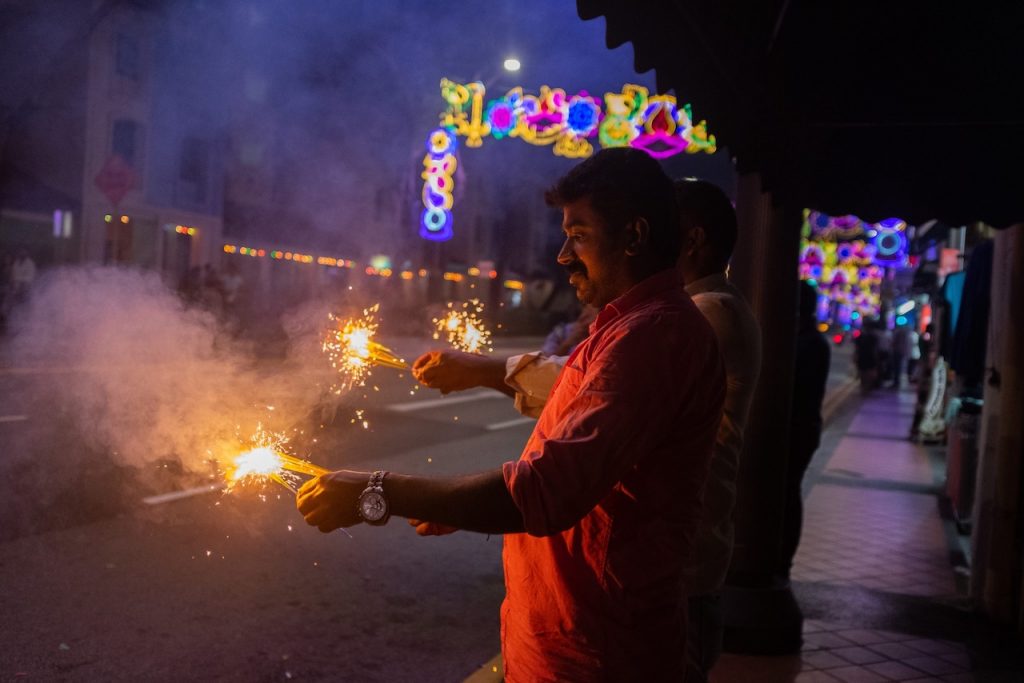
I’m aware that Deepavali celebrations aren’t without controversy, especially of late. Earlier this week, photos of litter left in parks after the celebrations started circulating again. Last year, four cleaners in Punggol spent about three hours sweeping burnt sparklers and rainbow confetti off a single playground.
I agree, this was irresponsible—a lot of the complaints were valid. There’s even an irony in it: families spend the days before Deepavali cleaning their homes, then leave an unholy mess downstairs. But when the criticism tips into racist generalisations and xenophobia, it’s worth remembering that civic irresponsibility turns up at any cultural commemoration, Deepavali or not.
The philosophical principle of Hanlon’s razor asks us not to assume malice when it could be explained by unawareness instead. Having open and respectful conversations can bring light to the lack of islandwide decor and perhaps change things for the better by improving islandwide celebrations.
Singapore, to me, is one of the most beautifully planned cities in the world. But I believe we should hold the things we love to the highest standard.
If we hold some truths to be self-evident, it’s that all festivals are created equal. Me, I’d just like to see the entire city—not just Little India—shine a little brighter during the Festival of Lights.