‘After the Vote‘ is a RICE Media series where Singaporeans from all walks of life share their hopes for Singapore—the changes they envision, the values they want to uphold, and the future they want to help shape.
After GE2025, we take a step back from the political theatrics to explore the bigger picture: What kind of Singapore are we building beyond this election? Through these conversations, we uncover the aspirations and concerns shaping the nation in the next five years and beyond.
The views in ‘After the Vote’ are those of the interviewees and based on their experiences; they do not reflect the publication’s stance.
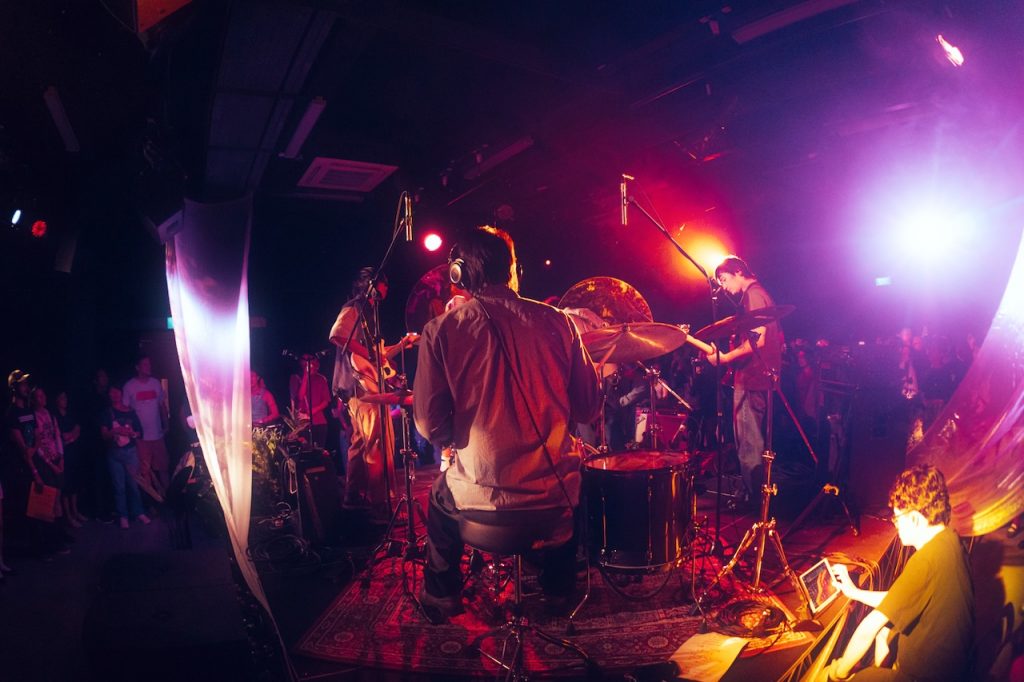
Top image: Png Eng Ngee
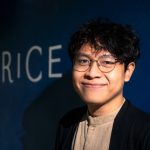
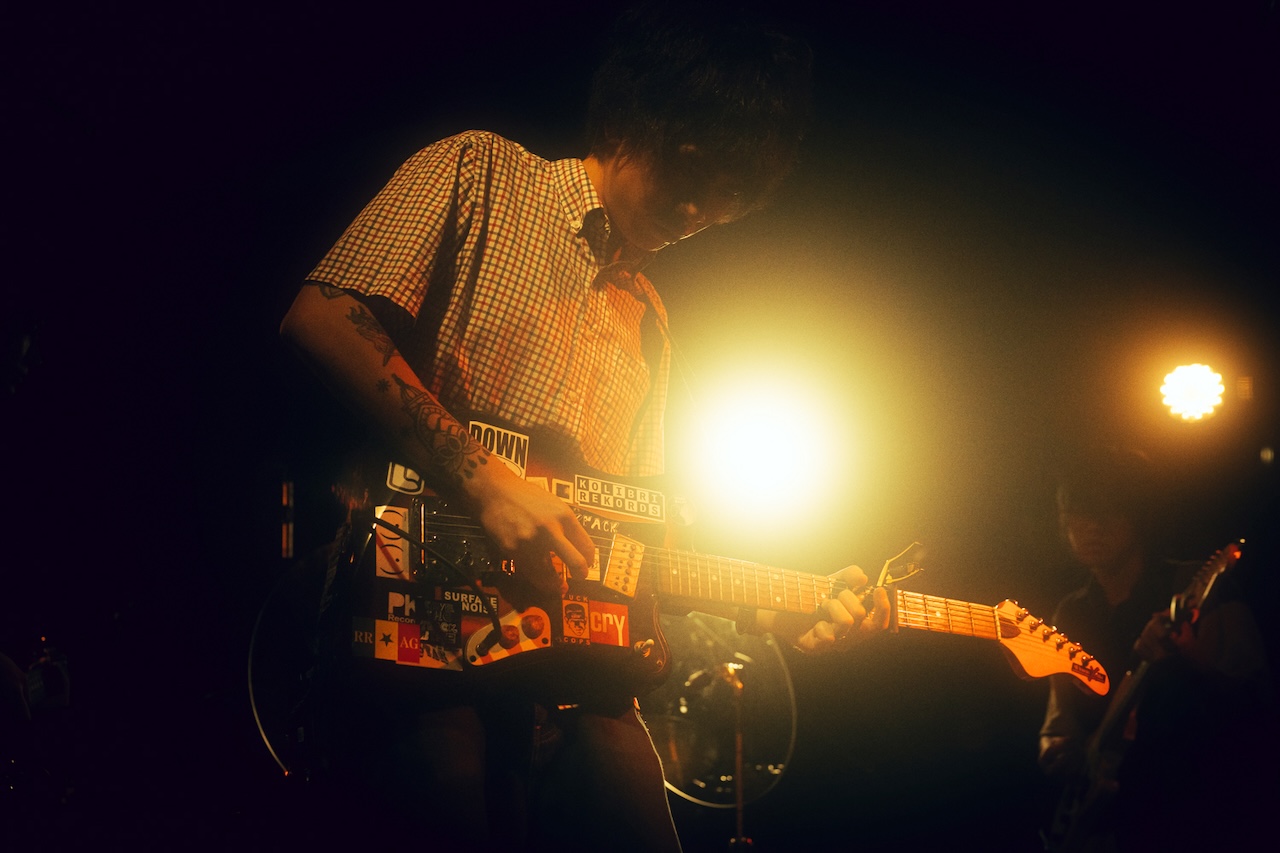
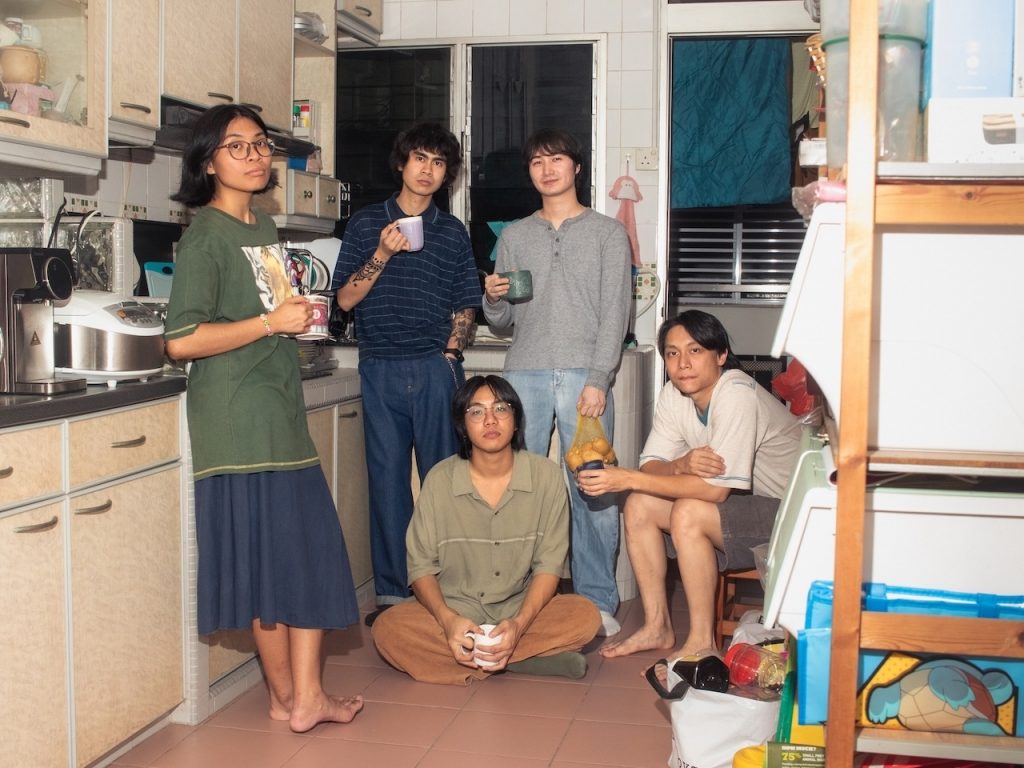
By day, 27-year-old Daniel Borces works at an audio production house, churning out music for commercials. By night (and most weekends), he’s a solo musician, plays in the emo-pop band Carpet Golf, and is best known as a founding member of five-piece indie-pop outfit Subsonic Eye.
Subsonic Eye’s sound is instantly recognisable—lush atmospherics fueled by jangly guitars, catchy hooks, and a bittersweet warmth that makes even their most upbeat tracks feel hued with melancholy.
Earlier this year, the band released Singapore Dreaming, their fifth album and a nod to the 2006 film of the same name—a wry slice of Singaporean life about the pursuit (and disillusionment) of the supposed dream. Like the film, the album unfolds as a layered, wistful tribute to a country in flux: equal parts tender and biting, textured like the unhurried calm of a long bus ride home.
That the album dropped in Singapore’s 60th year of independence feels deliberate. Subsonic Eye have never been a flag-waving band, but this is as close as it gets: an honest reflection of home, released at a time when the nation is deep in self-congratulation and self-interrogation alike.
Making it to a fifth album is a milestone for any independent Singaporean outfit, even so for one signed to American label Topshelf Records and having toured across countries as far as Japan and the US. The wins are hard-earned, especially in an ecosystem that often leaves local indie musicians stranded between passion projects and the cold calculus of commercial viability.
RICE is taking a longer-term view of the Singapore we’re building together. And Daniel has thoughts about what it would take for music to be more than a side hustle in Singapore—where a career in making songs isn’t just probable, but sustainable.
What is one change you hope to see in Singapore by 2030 that would make life meaningfully better for you and your community?
I believe that greater flexibility in Urban Redevelopment Authority (URA) zoning laws would enable the emergence of more affordable and diverse music venues in non-entertainment zones. This would give DIY bands and organisers more opportunities to host their own shows, which helps scenes grow from the ground up.
Currently, I feel like we lack affordable small or mid-sized venues. While there are venues available, many feel too expensive, too commercial, or come with too much red tape.
Plenty of mid-sized venues we’ve played at overseas operate as a normal bar/cafe in the daytime/weekdays (that is still entwined with the culture). Or it’s a space that was just converted to become a ‘venue’ for that specific show, along with it being in an area where the rent is cheap.
For the DIY shows in these countries, there’s no need to apply for any kind of license or worry about the police barging in. It’d be nice to have that kind of peace of mind—the only focus would be to run a good show rather than being anxious about all the stuff outside it. It’s organic and it feels real.
In Singapore, booking venues through the usual ‘proper’ way at the ‘proper’ zones is quite a big upfront investment, with a whole bunch of licenses to apply for and documents to provide. So, it can be tempting to secretly host it somewhere it’s not meant to be, limiting the crowd to avoid chaos—much cheaper and faster, but with the obvious risk of fines, etc.
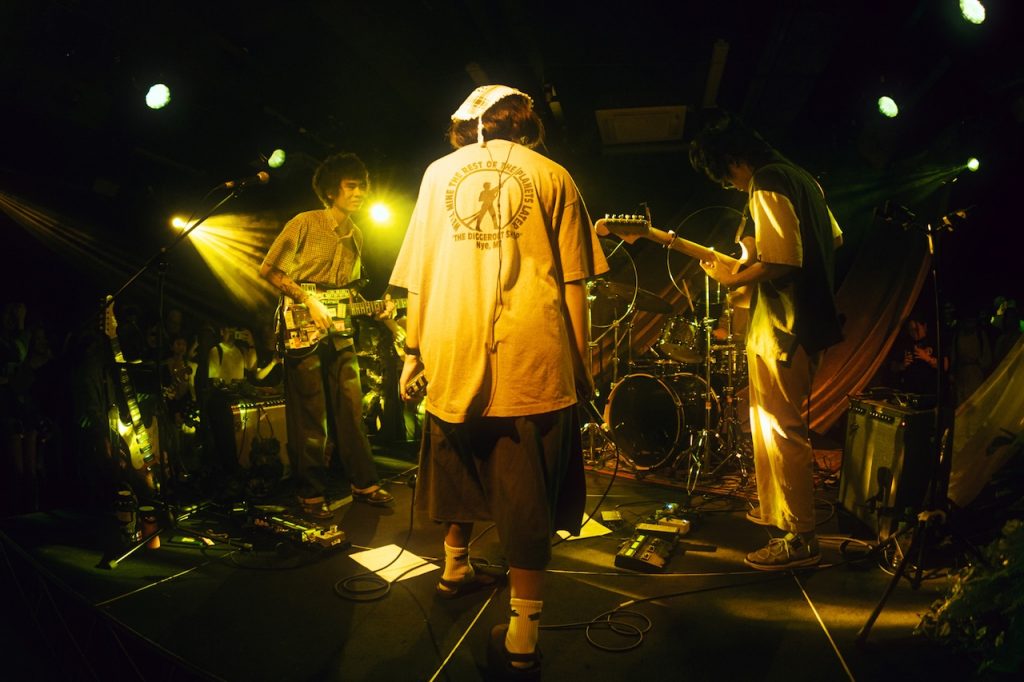
We’ve attended a lot of such shows before when we were much younger. We got away with it, but the whole process is just damn stressful because you’d be worried about the noise, people around complaining, and then the authorities showing up.
Now that I’ve been in this for a couple of years, I understand the point of all the administrative work and doing things properly for general safety reasons—but I still recognise the importance of under-the-table shows. There’s a real organic energy to them that’s tough to replicate, and it’s also a lot more doable for younger organisers and bands who wanna get into it.
I can definitely say that Subsonic Eye wouldn’t be the band we are today if it weren’t for all those secret DIY shows we played when we just started out.
What’s a challenge Singapore must overcome in the next six years to stay a place where people like you want to live and thrive?
One challenge is shifting how we culturally value creative endeavours—not just as entertainment or economic output, but as something essential to our social and emotional well-being. It shouldn’t just be seen as a way to promote shitty products and campaigns or something to fill up time on the weekends.
I definitely don’t know how to ‘solve’ this challenge because it’s a bigger issue of everything being expensive, and the work culture is crazy. So, of course, we have to resort to working on promoting shitty products and shitty campaigns to pay bills and buy food.
Then, because of all the work that goes into that, there’s often not a lot of time left to pursue personal creative work—and I feel like shit, and end up buying those shitty products and falling for those shitty campaigns myself in an effort to feel better.
In terms of doing music, it’s never gonna be as easy as our counterparts in countries with a way bigger domestic market. To be a full-time musician here (for your own band, not playing at bars, etc.) means you’ve got to tour a lot, since most of the money comes from playing shows and selling merchandise. But the upfront costs alone—flights, car rentals, visa fees, and so on—already put you at a financial loss from the start.
Negativity aside, I do feel the shift happening within the circle I’m in. More people are listening to local music. Local shows with all-local bands often attract a good crowd, with plenty of people purchasing merchandise. Just yesterday, I went to Blush’s album launch show. It was a Wednesday night, and the turnout was still great.
Some musicians in Singapore have found ways to make it work financially without needing a corporate day job, which is awesome. Many bands are touring overseas and making connections. I think it’s generally a good time for the local music scene right now if you ask me.
What small shift—policy or mindset—could make a big difference in the daily lives of your community?
I think the ‘Right To Disconnect’ would do a lot of good for people’s mental health and open up more time for creative pursuits and leisure. Jobs are supposed to fund your life, not the other way around.
I’ve personally felt it myself, with my general creative output being lower when I’m in a full-time job because it’s difficult to have enough mental energy at the end of the day to create. At that point, I would rather just sit around and watch YouTube Shorts to recover for the next day.
It’s definitely a personal issue, but when I find I don’t have time for the things I want, I end up buying related stuff to compensate and convince myself I’m still making progress.
I can’t help that it’s midnight and I’m doomscrolling Carousell looking for vintage musical equipment (that I won’t have time to use) because I didn’t have time to do the things I want to do today. Then I have to sleep soon so I can wake up early and force myself to take a shit so I can leave home on time. But at the same time, I’m grateful I have a roof over my head, food to eat, places to be, and friends to see.
Maybe I’m a fool and I’ve fallen for the trap, and this is exactly how the Overlords want to reign over us. I feel like a cow being milked for money, attention, and time.
Obviously, the best-case scenario if I were God would be a shorter work week and higher salaries for everyone, achieved by cutting the pay of CEOs and corporate overlords to trickle down to us underlings.
Singapore moves fast. What’s one thing we need to slow down for?
Slowing down to process. I’m definitely guilty of rushing for the next thing, and often I can’t relax because I feel like I have to keep the cogs moving. Not sure if it’s just my personal neurosis or if I’m a product of the environment.
This doesn’t leave much room for personal reflection or for the mind to wander and get bored—which, according to a YouTube thumbnail I saw (I didn’t have time to watch the video), is actually a good catalyst for creativity.
On the other hand, I do wonder if this is why Subsonic Eye is on our fifth album now—there’s this constant urge in me to just do do do do do.
I should make more time for people, nature, and maybe have a meal without feeling the need to watch TV, so I can savour every particle of taste. I need to spend less time on Reddit and Carousell in the toilet so I can get back to living life away from the screen and having real interactions with the physical environment around me.
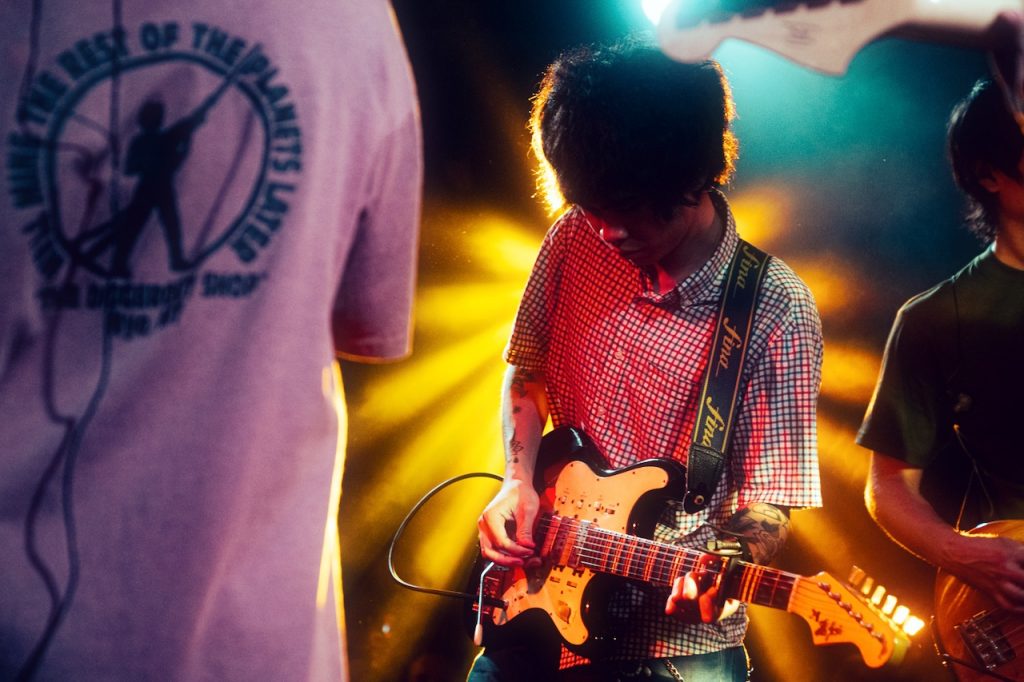
Personally, I find it a real effort to stop and just listen to music, read a book, or analyse a good photograph without being on the move or in transit. I began to treat art as something to help pass the time on the train or bus on the way to the next place, without truly appreciating it with the respect it deserved.
It’s ironic because as a musician myself, I wouldn’t want our music to be just a background thing. I’m still working on it, but it requires a conscious effort to carve out time specifically for art.
It makes me wonder what I’m actually trying to get done at the end of the day, after the rush of everything. What am I living for? Why am I here? Do I treat the people in my life with love? Am I giving proper attention to things? Am I taking in the moment? When was the last time I noticed myself breathing through my nostrils?
What’s one thing about Singapore you’d want to protect for the future?
The National Arts Council (NAC) grant system is something I’d want to see protected. It’s not perfect, but it’s made a real difference for a lot of us working in music—helping us record, tour, or develop new projects.
For Subsonic Eye, we used the NAC grants to fund our first two US tours, which we definitely would not have been able to afford without them. It has opened up numerous opportunities and laid a solid foundation for subsequent tours, enabling us to utilise earnings from those to tide us over to the next projects and tours.
As someone who’s seen how hard it can be to sustain creative work, having that kind of support from the state is something I really value. Not everywhere has it, and we’re lucky to have such opportunities.
In 2030, what kind of Singapore would you be proud to call home?
I’d be proud to live in a Singapore that gives a little more breathing room, where not everything is maximised or overly planned, where there’s time and space for leisure, and the people are not overworked.
People we’ve met from playing overseas often ask about what the music scene is like here, and how we get around and tour. From those conversations, it does make me feel a sense of pride that even though we’re such a small country with a lot of restrictions, we all still find a way to grow through the cracks and make things happen.
Even with the lack of venues, there’s still plenty of shows happening. There’s also a lot more variety in the bands putting out releases and going on tour. Given the trajectory we are on, I’m feeling good about things.