
Top image: Stephanie Lee / RICE File Photo
Nathan Koh, 26, tells me about a ridiculous LinkedIn listing he saw recently: an ‘entry-level’ role requiring three years of experience. And here’s the kicker: The employer didn’t count internships as “work experience”.
For young people like me and Nathan, preparing to enter the workforce feels like running in place. You’re told to collect internships, build portfolios, and excel in school, yet even after doing everything right, you’re still stuck at the starting line.
The job market is demanding more from young people, yet the rewards have not kept up. Working hours are longer. A university degree no longer sets you apart. And the bar for entry continues to rise—skills that are often not taught in school are required to get in the door.
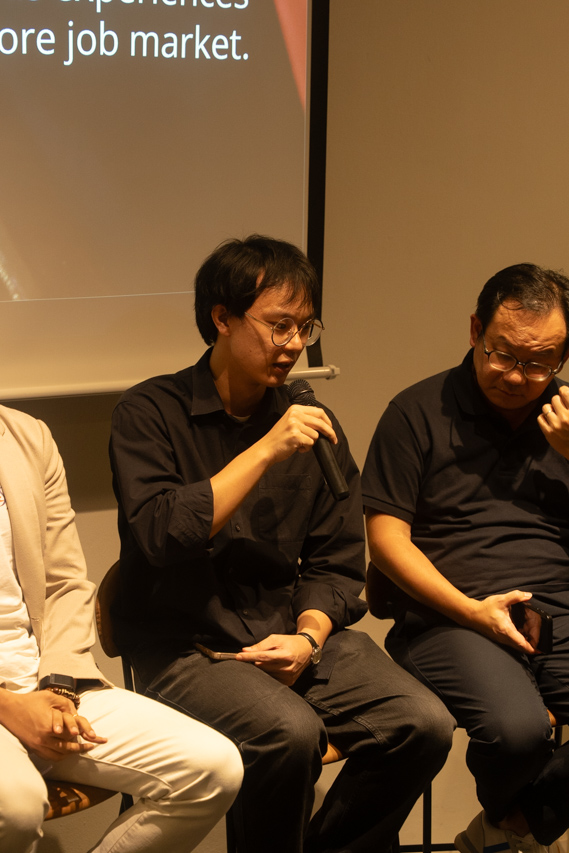
Nathan, a Nanyang Academy of Fine Arts(NAFA) graduate who previously interned at RICE, knows this intimately. At the recent ‘Future of Work and Social Contracts’ panel, co-hosted by RICE Media and Deloitte, Nathan spoke candidly about his job-hunting struggles.
Despite having multiple internships, passion projects, and a robust portfolio—on top of graduating with honours—he is still undertaking an internship after his graduation.
His story isn’t unusual. More graduates are opting for temporary or part-time work. According to a Straits Times survey, the percentage of unemployed fresh graduates went up from 10.4 percent in 2023 to 12.9 percent in 2024. 6 percent of fresh graduates in 2024 engaged in part-time or temporary work, up from 4 percent in 2023.
What has broken is not youth resilience, but the social contract that once bound schools, employers, and governments together in supporting the next generation of workers.
The Fracturing Employer-Employee Relationship
In the past, the promise was simple: work hard, stay loyal, and you’ll be rewarded with job security and a stable future. But that social contract has eroded. What has emerged instead is a more transactional, short-term approach to work for both employers and employees.
For example, panellist Wen Hao Dong, a school dropout turned successful entrepreneur, shared that his personal mantra is “hire fast, fire fast”.
“We test them out on the first day, and most of the time, we will know if the guy is right or wrong. We can never succeed in the interview. That’s the sad truth,” he says bluntly. “We have shareholders to report to. In the end, it is still a business.”
Wen Hao certainly isn’t wrong to have high expectations of his new hires. Time is money, after all. But it also hints at a larger issue at hand.
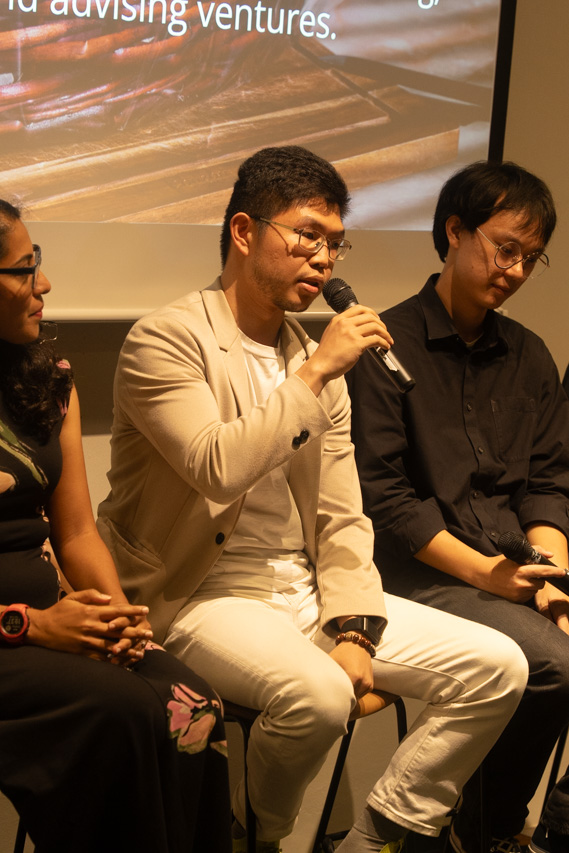
In the past, simply joining a company came with the expectation of training, mentorship, and time to grow into a role. Today, that has flipped. Many companies expect young hires to arrive fully work-ready, shifting the burden of skill-building onto individuals instead of embedding training into their organisational structure.
It was not uncommon for older folks to stay at a job for more than 20 years. These days, it is laudable if a person stays at their job for more than 2 years. Job-hopping has become the new norm—not because employees are disloyal or “lazy,” but because loyalty itself has become a dated concept.
In today’s economy, workers have learned to look out for themselves more. Gone is the mentality of treating your company like family and sticking with it throughout your career. Switching jobs is now a tactic for negotiating better pay.
But in a system that increasingly treats employees as expendable, it’s no surprise that Gen Z is beginning to mirror this same attitude toward employers. When companies stop investing in their workers, it’s no surprise that workers stop investing in companies.

When asked during the panel how young workers should deal with the demanding expectations of work, Ives Tay, a leading WSG consultant, suggests that perhaps we need to revisit the past.
Internship Burnout
The urgency for a change in the script is something I feel keenly when I look at the burnt-out youths around me.
Young people these days are stacking as many internships as possible. Some are even taking on part-time internships during semester time, just to pad their resume and enhance their employability.
It is not that young workers lack grit; the rise of ‘internmaxxers’ disproves this. However, stacking internships is a rational but ultimately destructive response to a system that offers little support or guidance.
In the absence of clear pathways to employment, many Gen Zs try to realise their potential through sheer effort alone. It’s no wonder so many are burning out before they’ve even entered the workforce. As a final-year uni student, I know countless internship stackers who are already exhausted.

Seah, a student at the National University of Singapore (NUS) who prefers to be identified by his last name, is one such case. Coming from a modest family, Seah says he feels like he has no room for failure. In an effort to pad his resume, he is now juggling a full-time course load, an internship, and multiple leadership roles in school clubs.
“I am very lonely and I do recognise that stems from my own decisions,” he candidly confesses. “I don’t regret sacrificing my social life, but my heart aches having to prioritise studying over friends”
As a final-year student myself, the job hunt ahead feels less like a milestone and more like a battlefield. It is impossible to see your peers succeed on LinkedIn without feeling a sense of envy and inadequacy. The summer holidays aren’t even seen as a time for rest anymore—if you’re not interning, you’re falling behind.
Where Responsibility Lies
The truth is, no amount of personal effort can fix a system designed to demand more than one person can reasonably give. Burnout and anxiety aren’t signs of weakness. They’re symptoms of a system that puts the burden of employability entirely on the individual, while offering little institutional or structural support in return.
As Ives pointed out, rekindling that spirit of cooperation is essential if we are to navigate the complex challenges of today’s workforce and economy.
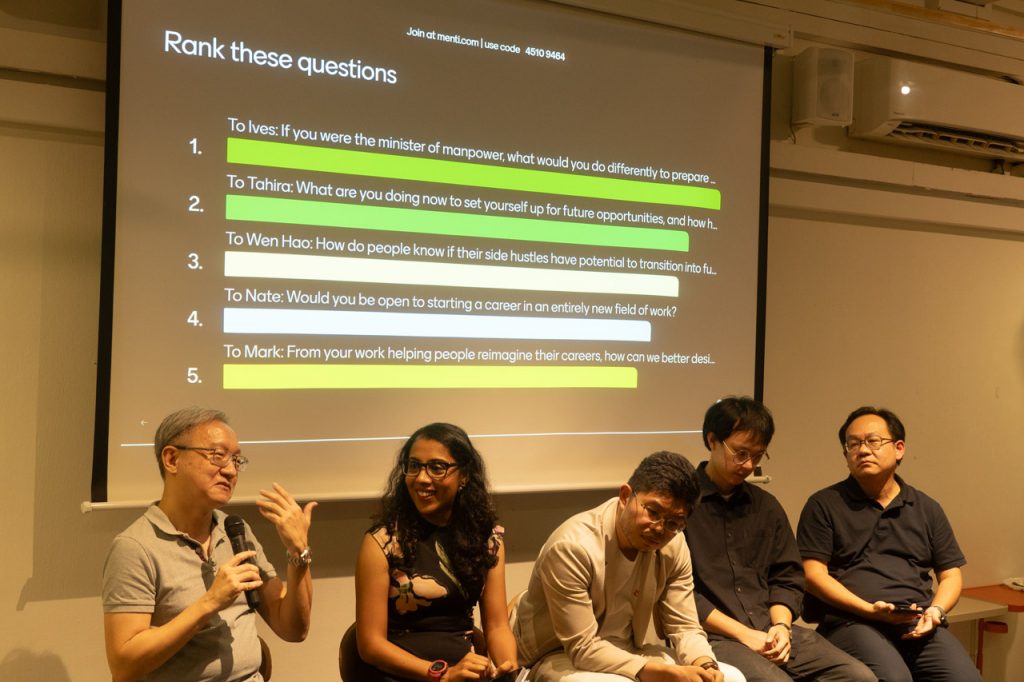
He explained that in the past, a collaborative approach was adopted among governments, employees, and employers.
“There was a real partnership. It was a win-win-win type of situation. Now? It’s push, push, push!”
The responsibility then falls on the employee to keep up with employers’ demands, and to upskill their way into employability. For example, under the Jobseeker Support Scheme, those struggling with unemployment have to earn points through completing tasks like attending career coaching. They’ll only receive payouts once they’ve accumulated enough points.
Once again, the narrative is still all about what the individual is doing to change their situation. Are they applying to enough jobs? Are they attending enough courses? Are their skills up to date?
“I think that needs to change because that is not going to work. Individuals are not that powerful; employers and governments are actually more powerful,” Ives says.
Instead of just placing the burden of honing one’s skills on job seekers’ shoulders, are we also asking how companies can support them? Are we also calling out employment practices, such as overworking employees to the point of exhaustion? Or the growing shift towards companies offering more contract positions instead of permanent work?
Now, realistically, systemic reform isn’t something we can control. But on an individual level, perhaps it starts with shifting our own mindsets. We need to acknowledge that some of the pressure we place on ourselves isn’t productive. And as for my fellow university students, let’s consider that ‘internmaxxing’ might not be the solution. It only reinforces the exhausting cycle we’ve created for ourselves.
It’s time to stop trying so hard to win over employers—some of whom have said that more internships aren’t necessarily better. What’s stopping us from creating our own opportunities? The employment market is often likened to a game of musical chairs. It can sometimes feel like there are fewer and fewer chairs. Why not bring our own chair?
Rewriting the Script
After a lively panel discussion, I can say for sure that no one agrees on a singular vision for the future of work. Everyone has their own ideas, priorities, and beliefs about where we should be headed.
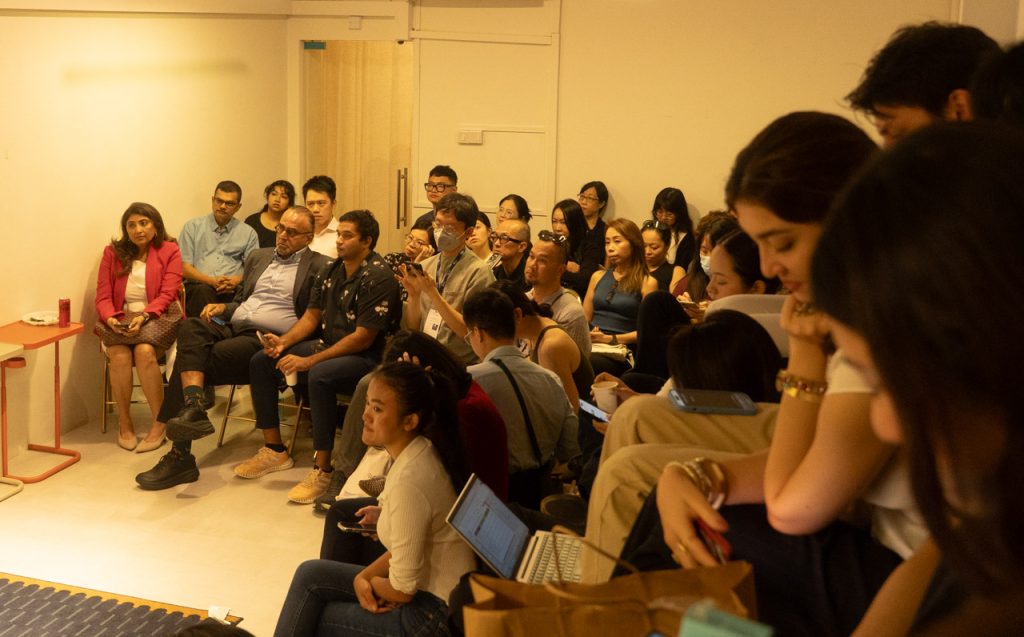
The landscape of work is shifting, and Gen Zs have it tough. The rules that governed work no longer apply in the same way, yet the systems meant to support us have not kept up.
Many people entering the workforce are doing so with a deep sense of uncertainty. And it’s not just about finding a job; it’s about making sense of a system that feels increasingly detached from human needs.
So where does that leave us?
Gen Z has been told to be resilient, adaptable, and entrepreneurial. And we have been. But resilience is not a cure for a broken system.
If we truly want a workforce that thrives instead of burning out before it even begins, we need to reimagine the obligations we owe to one another. Employers must see young workers as long-term assets. Policymakers must acknowledge that adaptation cannot be left solely to individuals. Schools must prepare students not just for grades, but for meaningful work.
But this also means recognising that work is built on a social contract, not the shoulders of individuals.