All photos by Jein Eriza and Lynn Wen Wen for RICE Media
Suresh Vanaz is not in the right headspace.
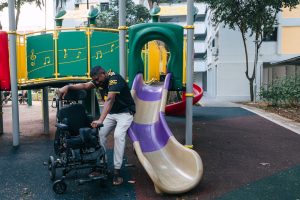
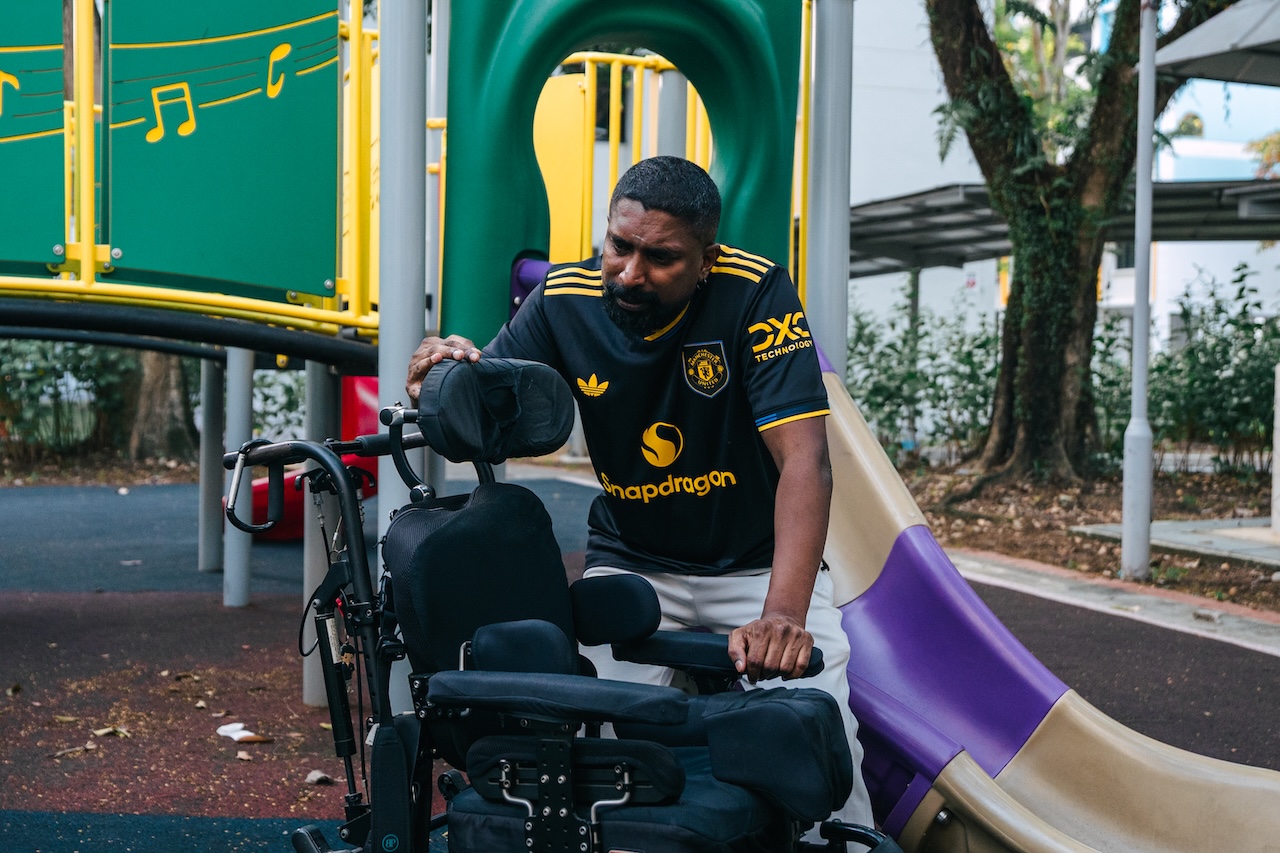
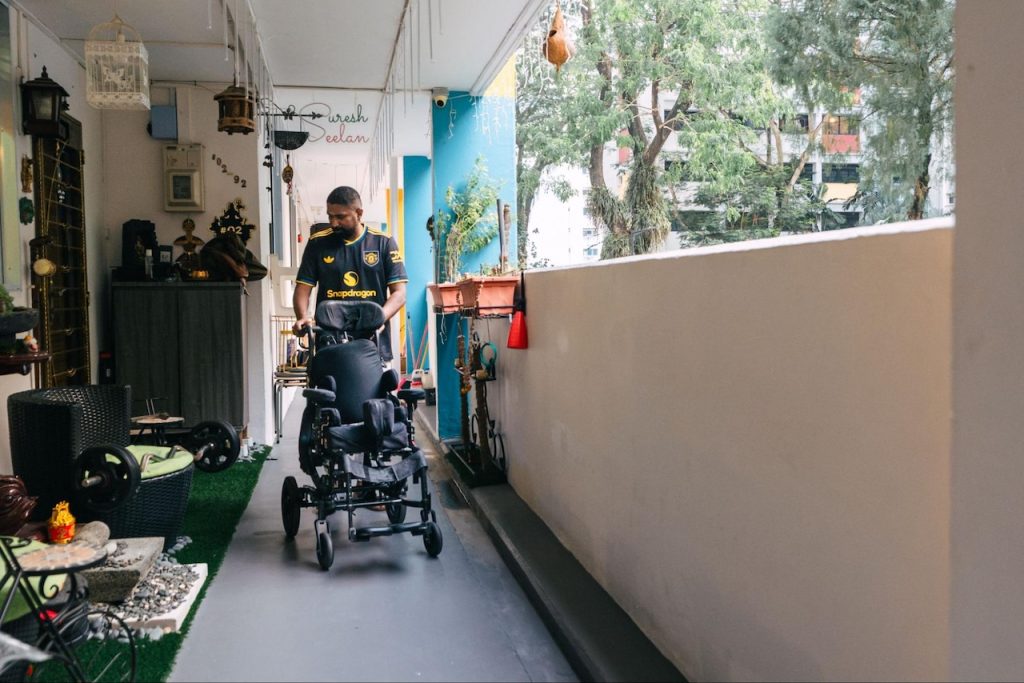
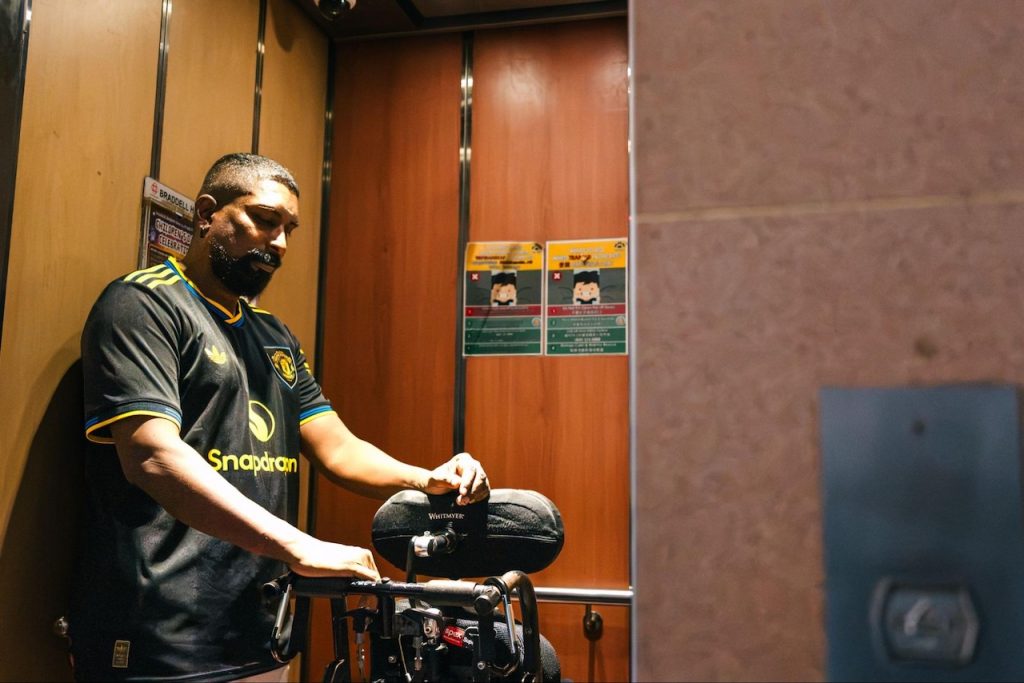
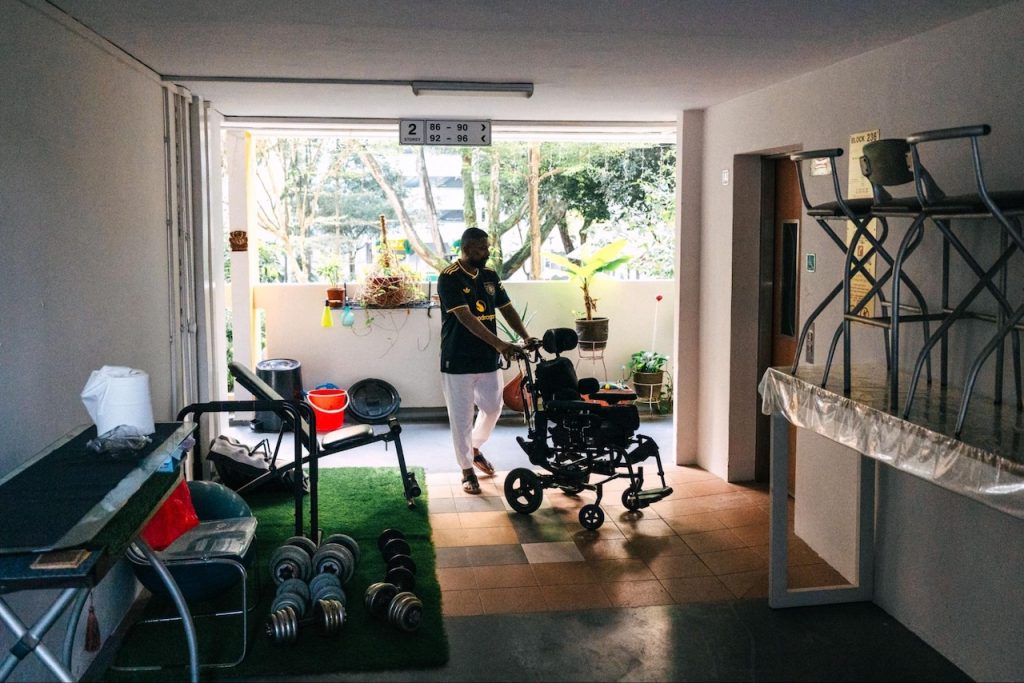
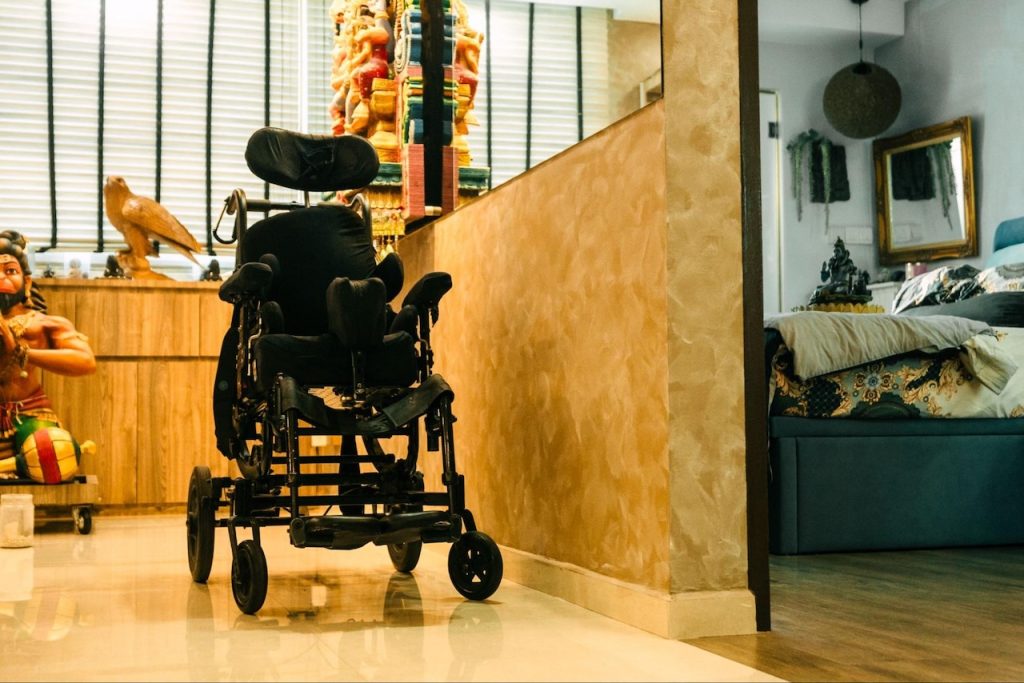
It’s been weeks since his younger brother, Gunaseelan, passed away at home, wrapped in his arms. And yet, Suresh still takes his brother’s customised wheelchair down from their flat in Serangoon every morning—the same way he’s done for decades. One lap of the estate takes about half an hour: past the community garden, once round the playground, and back.
The 47-year-old still communicates with his brother, speaking out loud to his empty seat. Do you want something from the vending machine? Look at the birds!
Once, an elderly woman walking past looked at the empty seat, then at Suresh. “Siao, ah you?” she exclaimed, oblivious to his hurt.
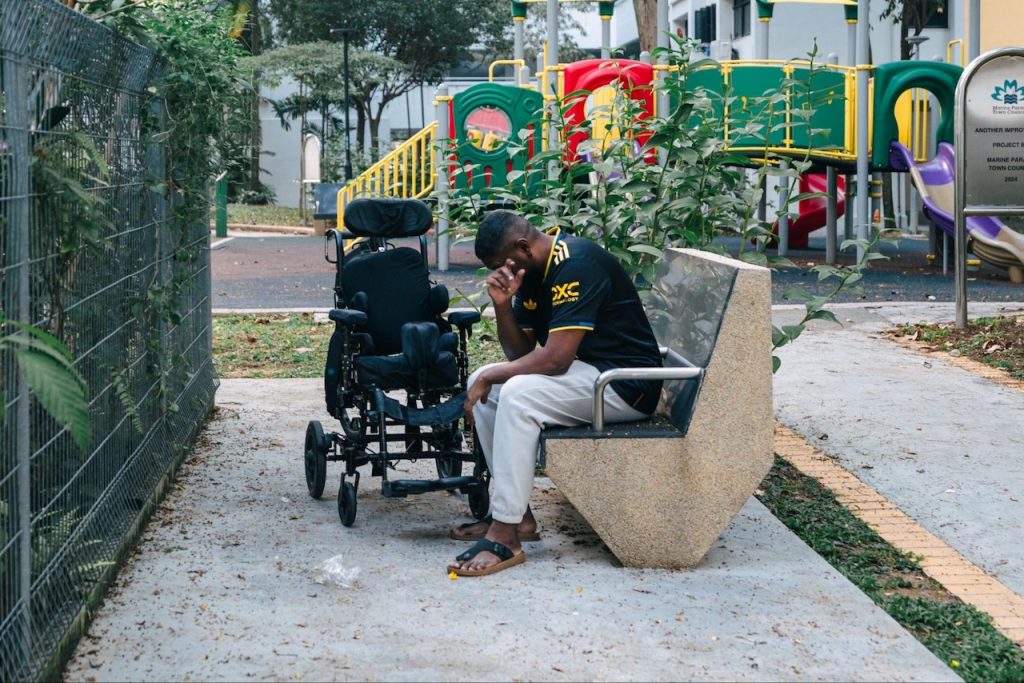
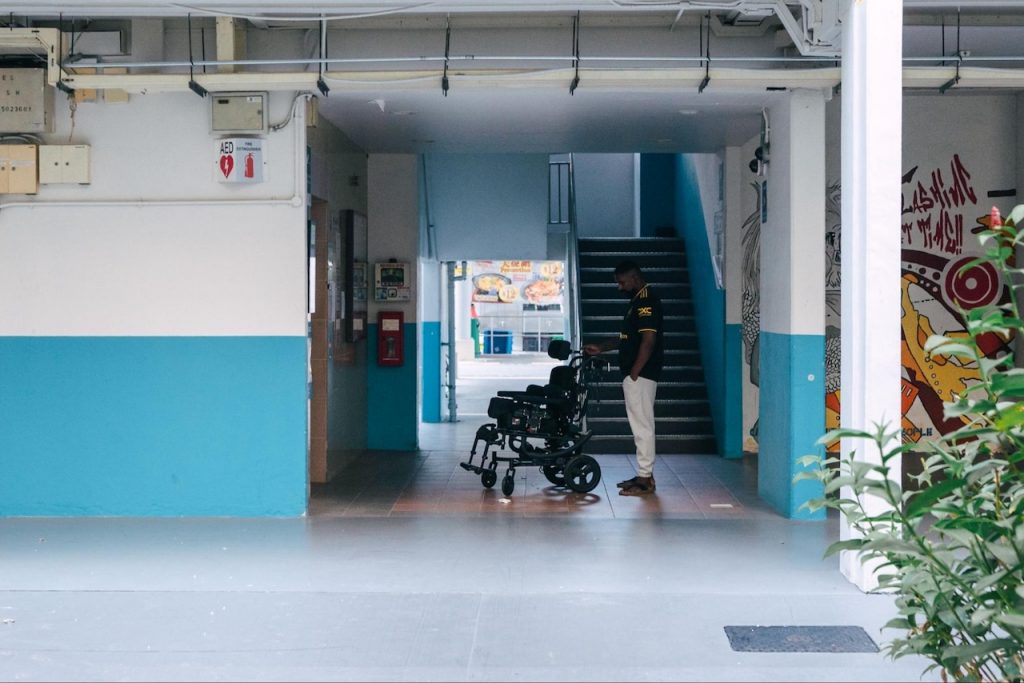
Seelan, 42, died on 29 August 2026. Sitting his older brother down a month into his grief, two days before his birthday, with multiple cameras and a full production crew isn’t something I take lightly. Before we start, I tell Suresh that if he’s uncomfortable with any of our questions, we can skip it. At any time, we can pack up and leave if he wants some space.
Suresh doesn’t hesitate at all; he wants us here. I realise later that he needs us to be here.
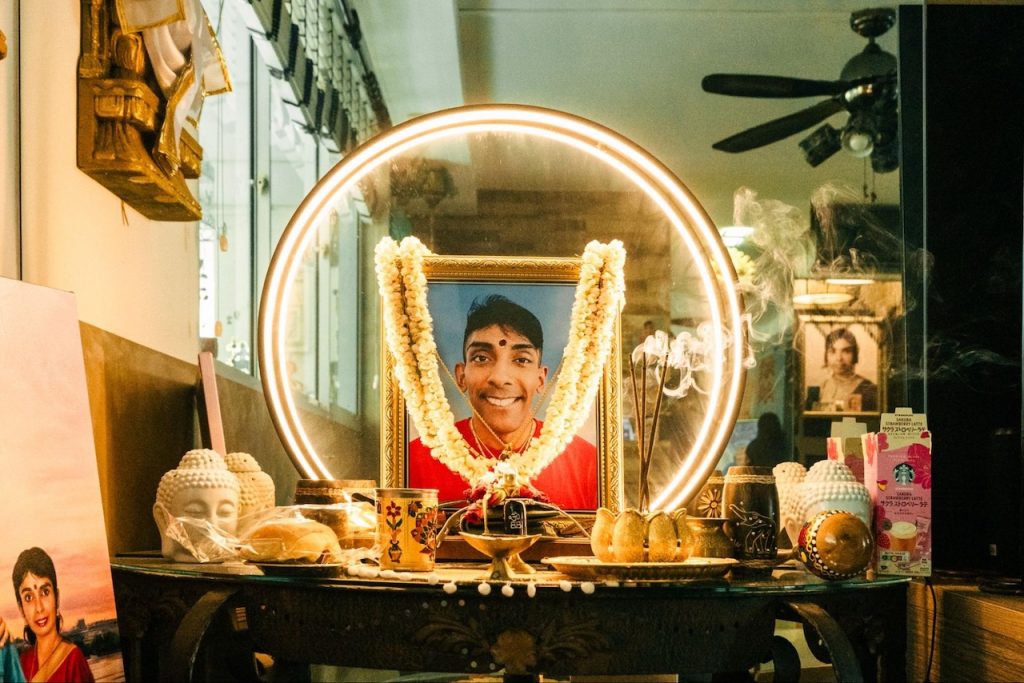
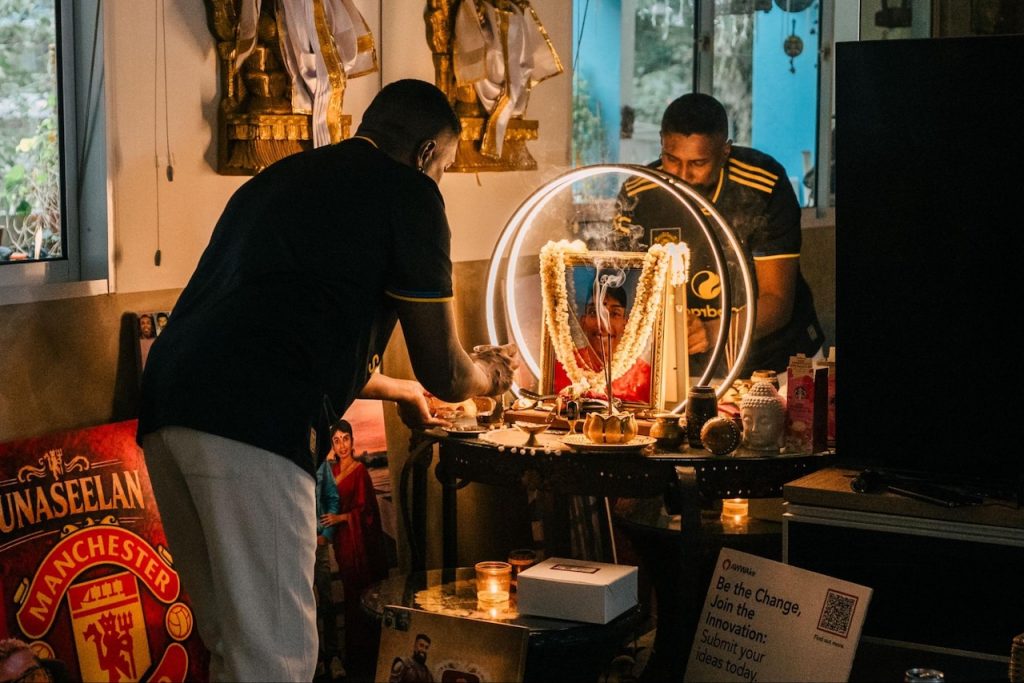
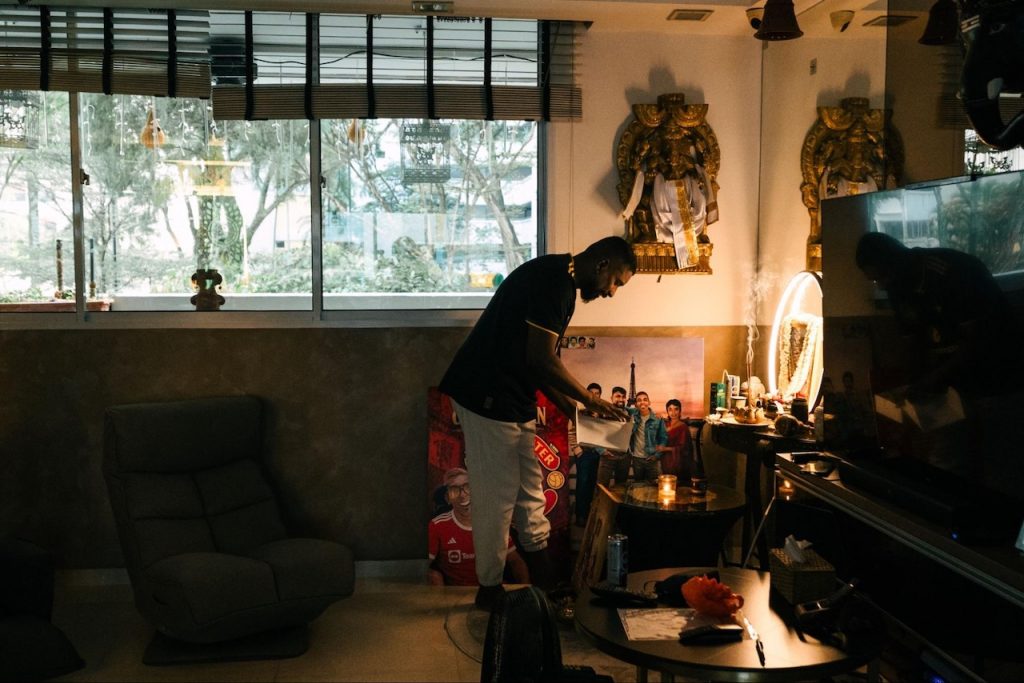
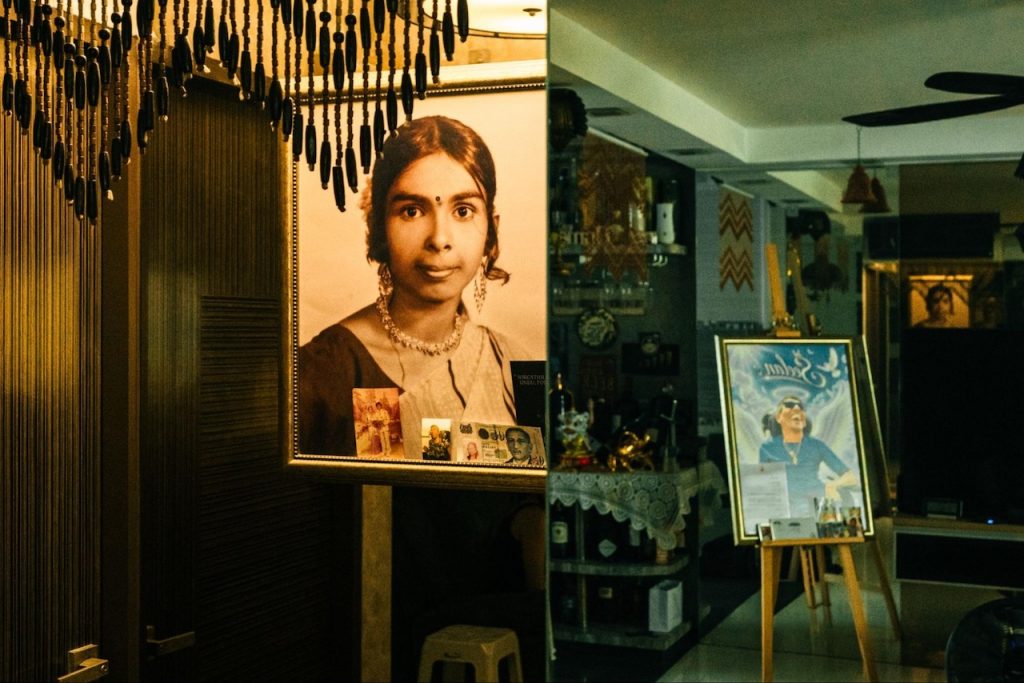
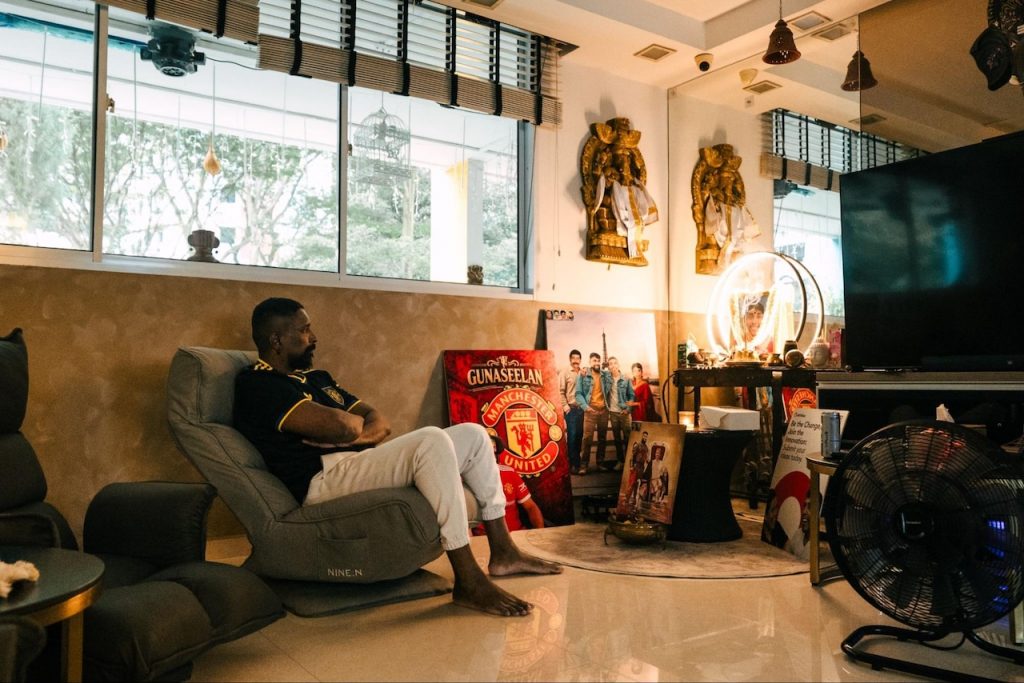
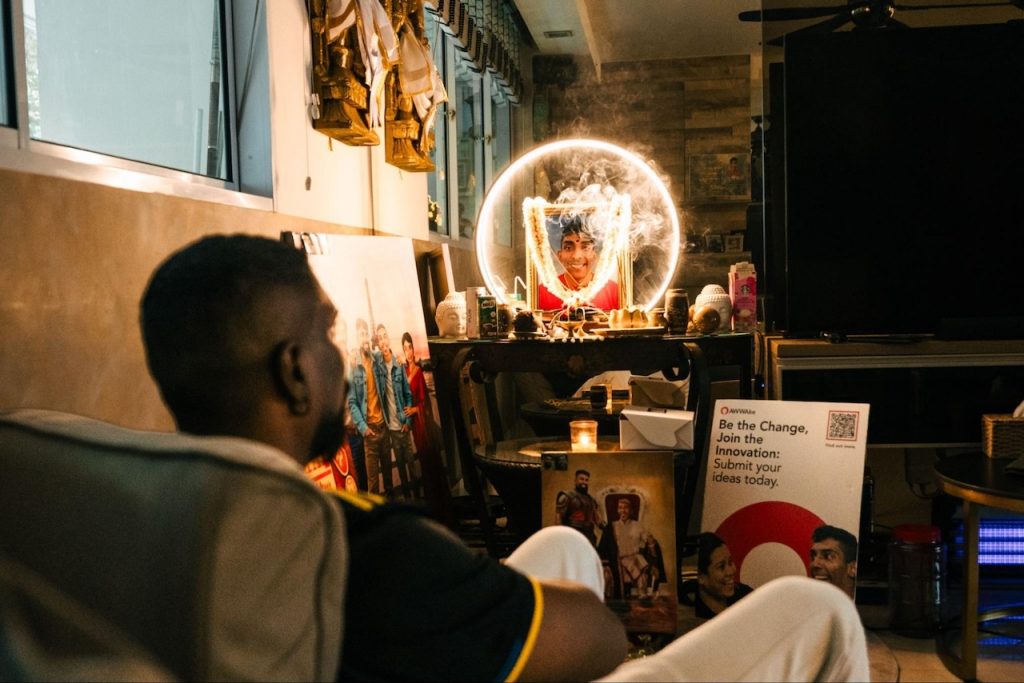
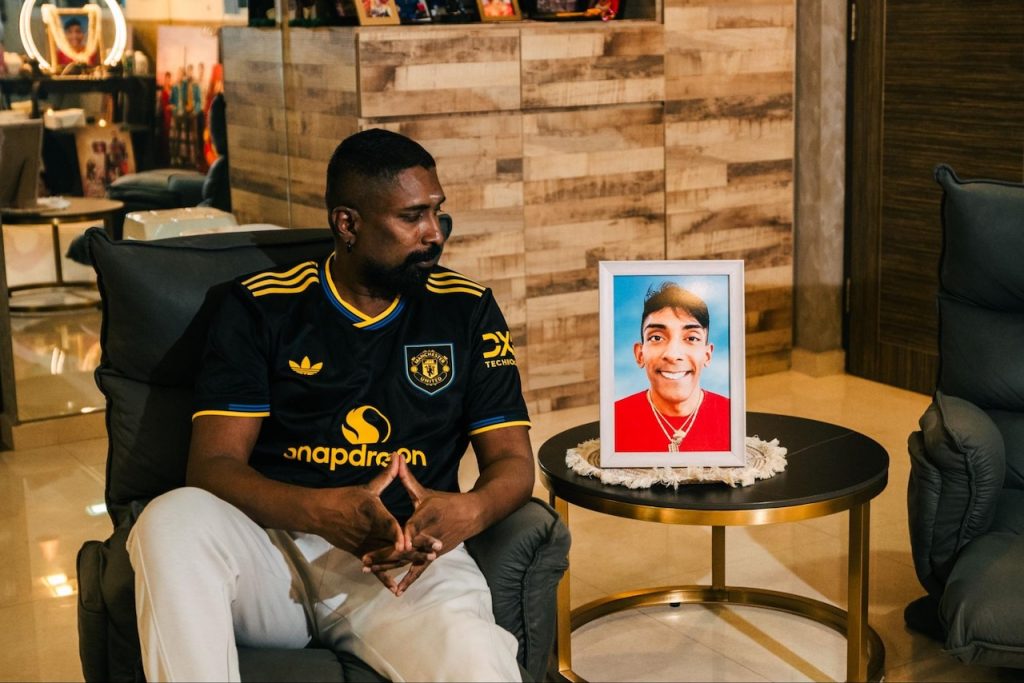
“Feel free to film anything you want,” he says, walking me through what he’s been doing since: pushing Seelan’s wheelchair around, talking to it, smelling it, smelling his bed. An altar sits in his living room, with a ring light around a portrait of his late brother, like a halo. Smouldering incense sticks protrude from a flower-shaped stand, lightly filling the air with scent and smoke.
We brought muffins for Suresh, and the first thing he does is take one out as an offering to Seelan. “Some food for you,” Suresh says quietly.
RICE first met Suresh and Seelan in March 2025. Seelan had been diagnosed with cerebral palsy when he was three, and needed help with almost everything. As a sole caregiver for decades, Suresh came with a wishlist for Singapore post-GE2025: mainly more empathy and support for people in his shoes. He was frustrated, but he also still believed someone might listen.
There is no anger in the Suresh we meet today, only immense uncertainty. The man Singapore knew as the devoted brother and selfless caregiver now can’t say what he’ll do tomorrow.
“To be very honest, I’m… blank,” he says.
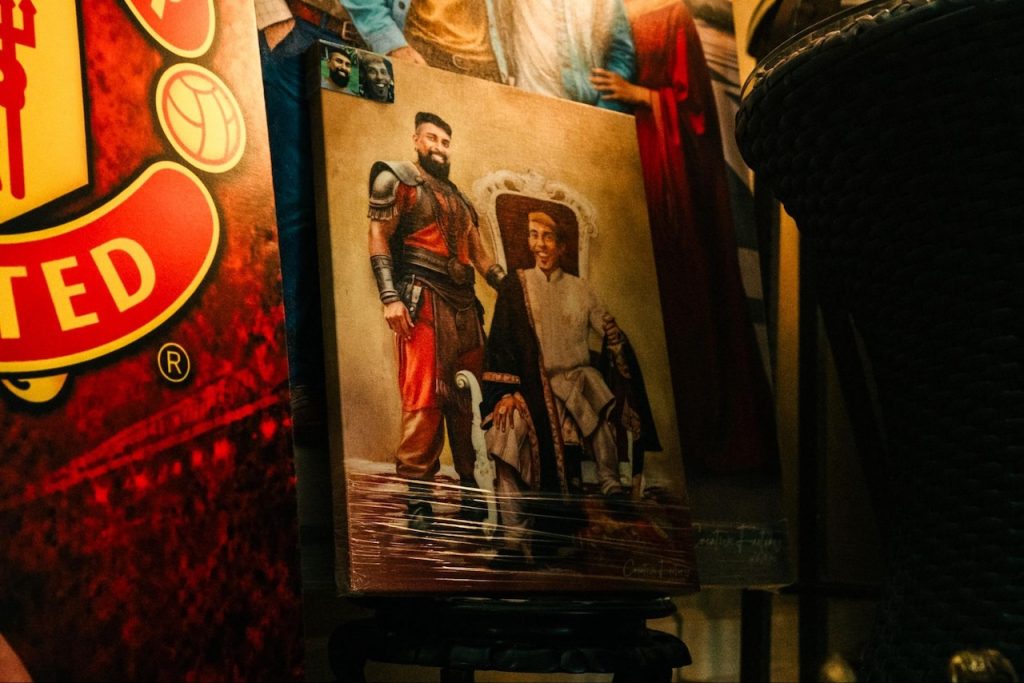
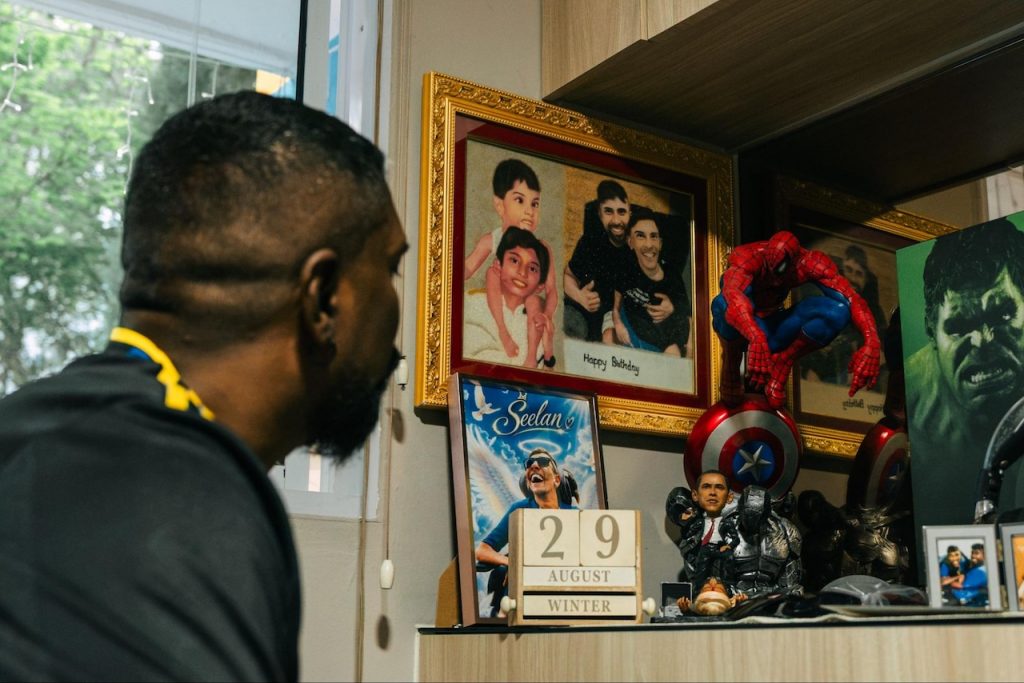
In every interview (ours included) Suresh keeps reaching for the same image: he’s the warrior dedicated to serving Seelan, his king. Beside the living room altar is that literal image—a painting of Suresh in warrior regalia standing next to Seelan on a throne.
But what does a warrior do once the king crosses the veil?
What’s left of a caregiver with no one to care for?
‘I’ve taken your duty‘
Interviewing Suresh is an interesting process. His experience as an emcee and actor shows—he’s a natural, confident talker who can articulate everything on his mind. He’s done interviews so often that he asks how long our video will run and how long the TikTok cutdown will take.
He’s not afraid to show utter vulnerability on camera. He’s also built like a bouncer. Outside his flat sits a gym of sorts: a bench with weights scattered round it. The rest of his training was Seelan, nearly 70kg, lifted in and out of bed and wheelchairs every single day.
The job started early. Seelan was three and a half when their mother told Suresh his brother had cerebral palsy. By nine, Suresh was washing dishes at a coffee shop before heading to school just to earn some extra money for his brother.
After school, he’d rush home to carry Seelan to AWWA School. He manages a slight smile, recalling a comment someone once left online about him: about how Suresh’s commitment “shamed a lot of parents”.
His parents had split in the ’80s; Suresh won’t say much about why. He does mention three things about his father: that he was a “nice man”, that he was a boxer, and that he failed the family. Suresh can’t remember him carrying Seelan even once.
Near the end of his life, Suresh says his father came around to express regret.
“That’s too late, right?” Suresh told him. “I’ve taken your duty.”
In 2009, at her deathbed, their mother asked what would become of Seelan.
“I said, ‘Don’t worry. You die now. I will take care, and I will take care of him better than you.'” She passed on minutes later.
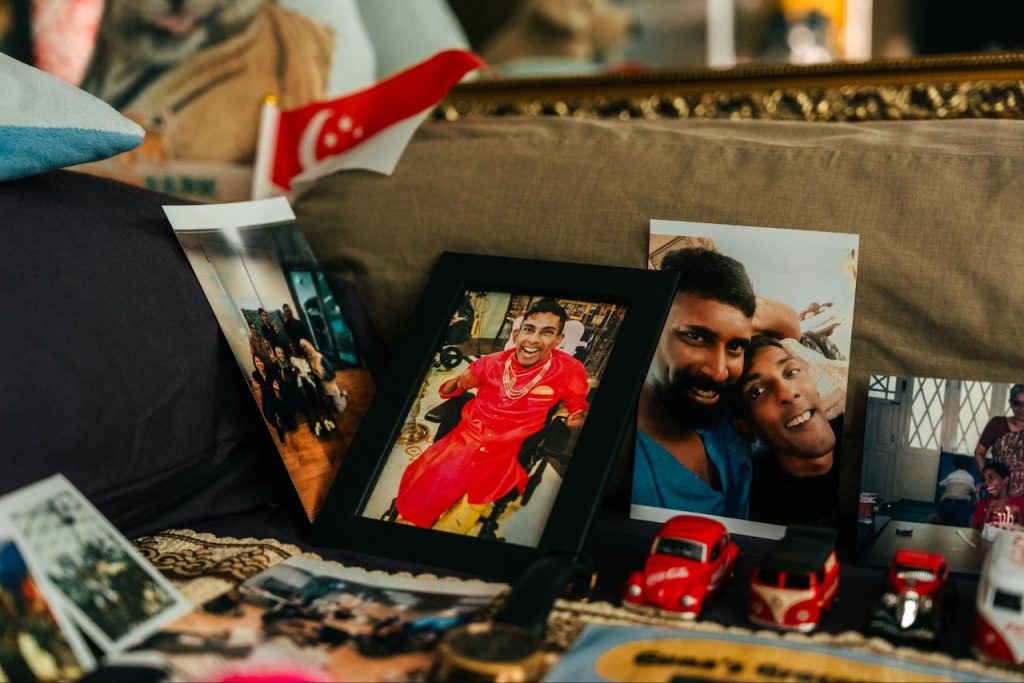
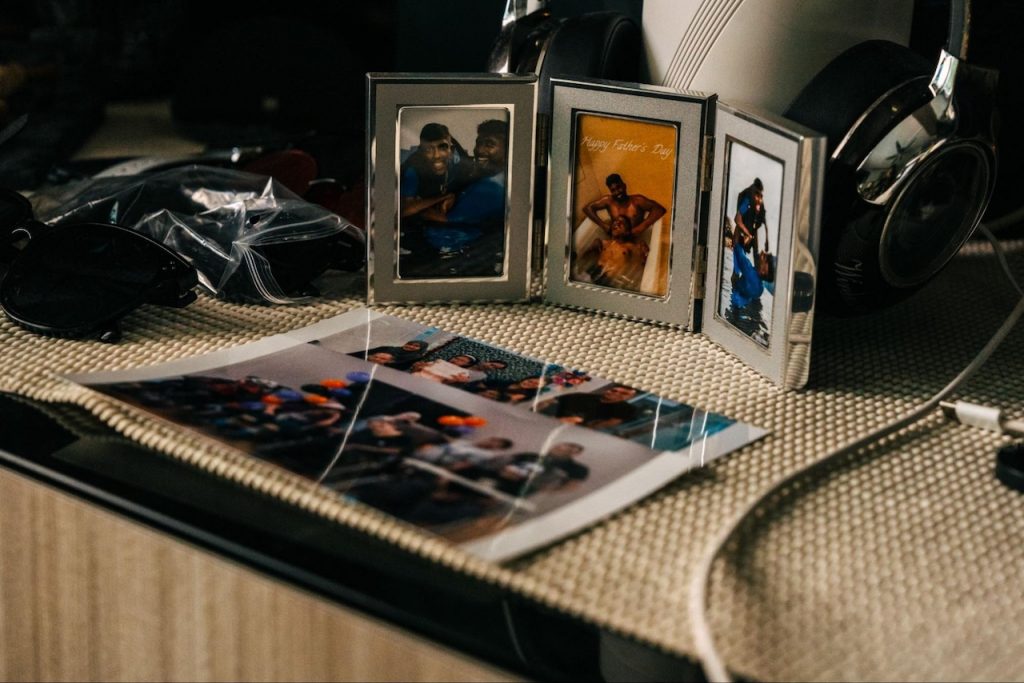
He took that duty seriously from boyhood. As a kid at a playground in Kallang Bahru, another boy once called Seelan “cacat” (“handicapped” in Malay). Suresh came down the slide and punched him hard. Suresh’s parents gave him a beating for it, but as far as he was concerned, he’d done his job.
“I was protecting my brother,” he tells me. “It started there.”
The flashes of protective anger never really left. Most of Singapore met Suresh in December 2024, through a viral clip of a physical commotion at VivoCity. He says a man muttered a racial slur after Suresh bumped into him while backing out of a lift with Seelan’s wheelchair.
“I literally snapped,” he says. What eventually stopped him was Seelan. “The boy started crying. The second he cried, I just turned away.”
That version of Suresh is mostly missing today. He breaks down in front of the crew more than once, but he collects himself quickly. He knows he has to put on a brave face; there’re people around.
“Now I’m not crying because I’m talking to you. But the second you step out of the house, right? I’ll cry.”
Suresh, Untethered
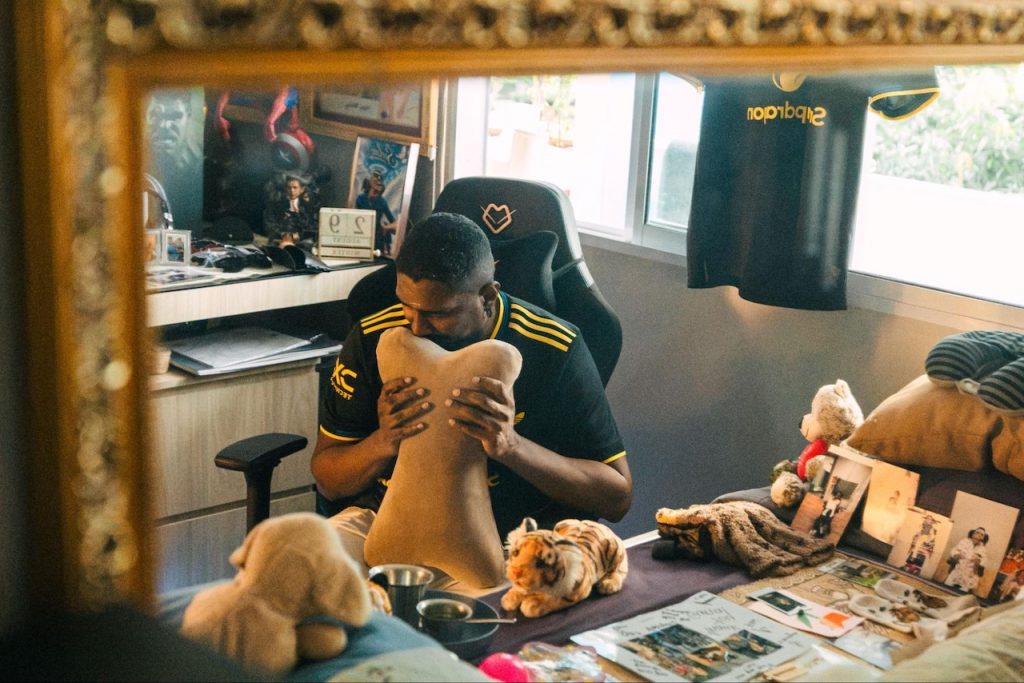
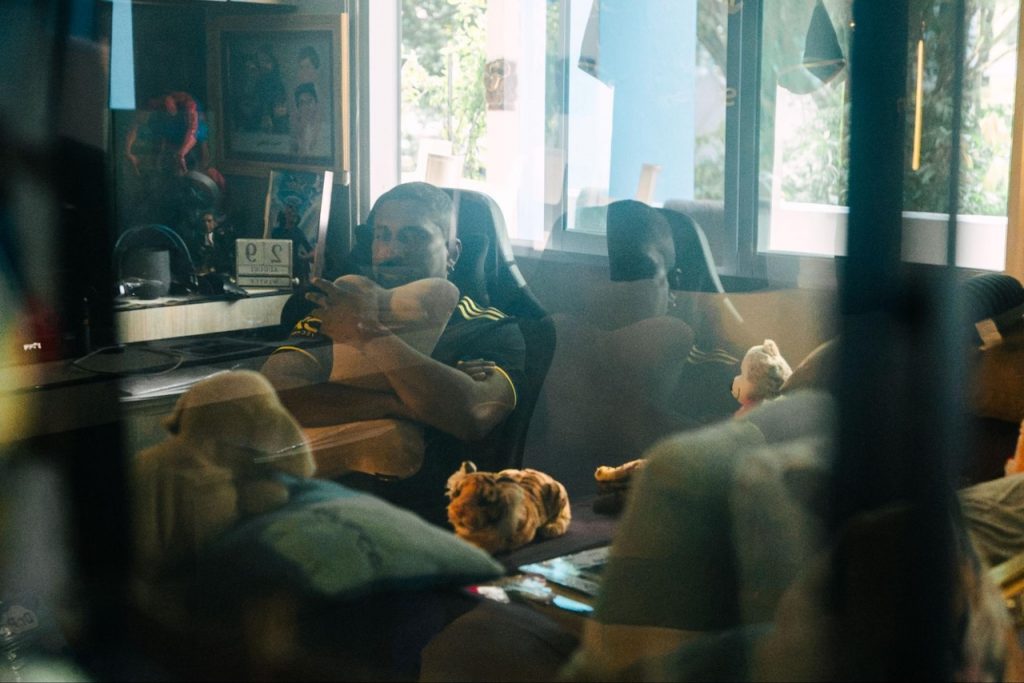
Suresh has barely stopped crying since his brother’s passing. It starts daily at 5 AM, the hour his body still keeps from years of getting up to feed and shower his brother. Then he sits beside the hospital bed in Seelan’s room and talks to him through the tears.
He’s dressed the bed with Seelan’s things: a heap of stuffed tigers and a tiger-print pillow— “Tiger” was his nickname. A Manchester United jersey hangs off the bed rail. On the desk, a block calendar is stuck on 29 August.
This is the room where Seelan died in his arms.
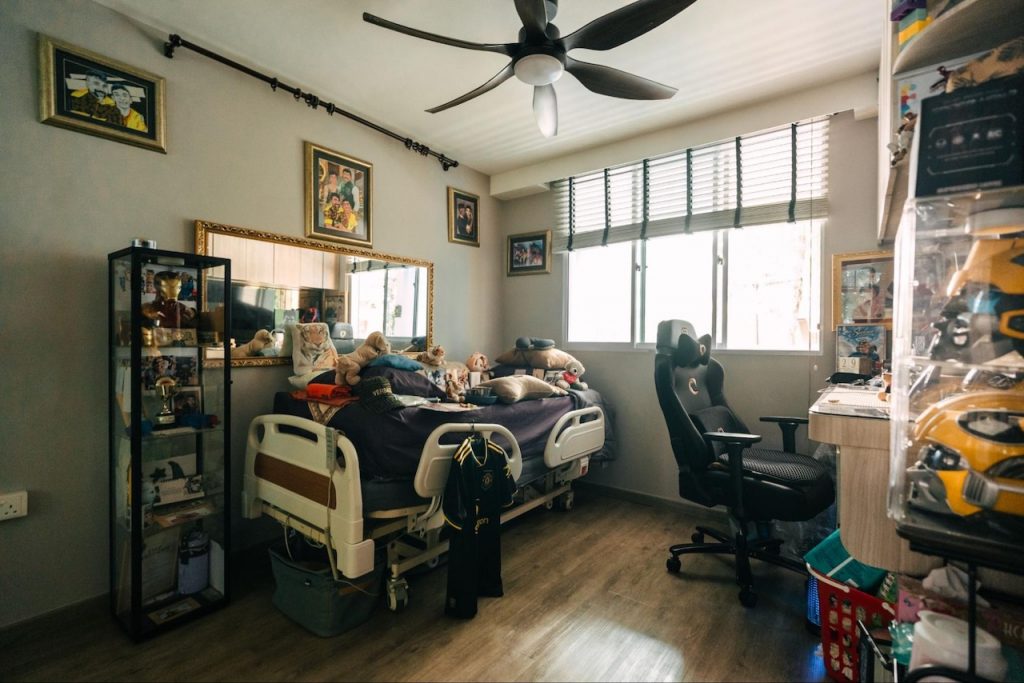
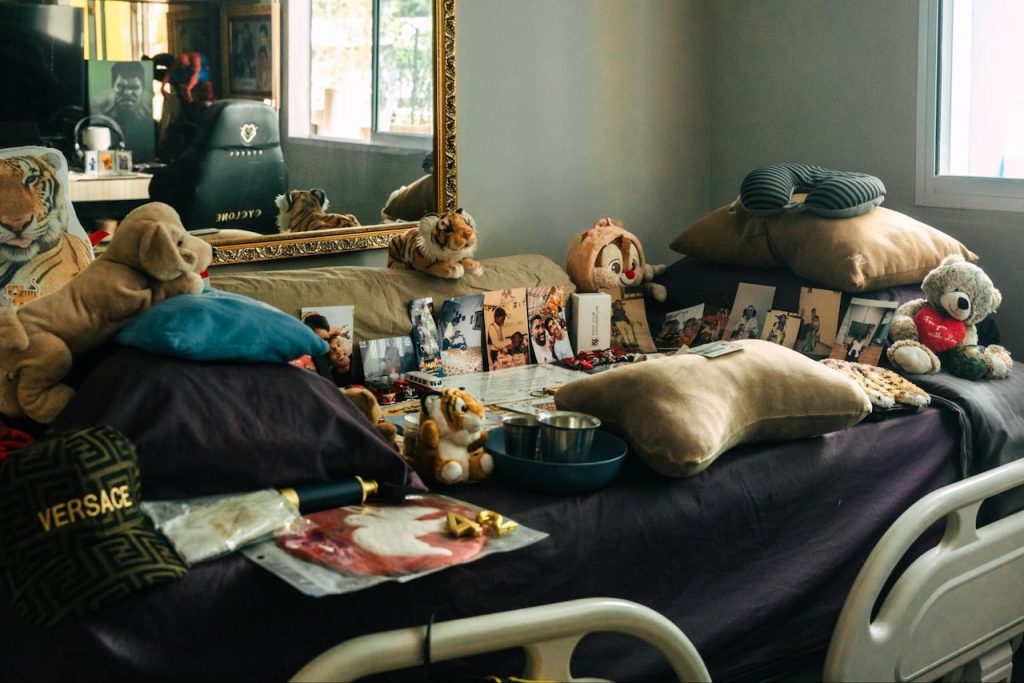
On 29 August, Seelan woke up with a slight fever. Around five in the evening, he had a seizure. He’d already had two that month, and the doctor had said that was normal. This one ended differently: Seelan went calm.
Suresh took his brother to the toilet, showered him, and—for reasons he still can’t explain—shaved him clean. “I don’t know what made me do that.”
Back in the bedroom, Seelan’s breathing changed. Suresh lifted him onto his lap and held him against his chest. At about 6:35 PM, he let out his last breath.
In those first moments, Suresh says, he wanted to go with him. He offers this openly, unprompted.
What stopped him was the thought of his brother’s funeral. So he talked himself down.
“There’s nobody going to do the funeral properly or send him off like a king. The only person who can do it is me.”
The four-day wake in Serangoon was open to anyone; Suresh puts the crowd at more than 10,000. Most were strangers, some of whom flew in from Australia. President Tharman sent a letter, conveying his condolences.
Suresh is proud of it all, and honest about part of that pride. The people who used to look down on them came too, he says. “They felt guilty in a way. They felt embarrassed in a way.”
Weeks later, he dreamt that a doctor told him he had stage-four cancer and two weeks to live.
“I was so happy in the dream—because I’ll be reaching him soon.”
‘Get Over It, Lah’
Suresh doesn’t like it when people tell him to move on. It’s the only time in the hours we spend together that anything other than sadness takes over.
I try to bring up the people who tell him to get over it, and he finishes my question. “If that irritates me? Yeah. It does annoy me to the extent to the maximum.”
He recites some of the messages back. “Hey, Suresh, get over it, lah. You have a life lah. Go and find a girlfriend. Go and find a job lah.”
Friends suggest a staycation, which to him, would be “cheating”. For Suresh, what stings is what the advice implies.
“The second you say move on and all that, it just makes me feel like I should immediately forget my brother. Why should I forget my brother?”
The annoyance turns back into courtesy. He knows they say it “out of sympathy”, he says, or “maybe love”.
The advice assumes there’s a Suresh apart from Seelan, waiting to be picked back up. After decades in close proximity, the brothers built an identity something closer to one person.
“I’m exactly a carbon copy of him, or he’s a carbon copy of me,” Suresh explains. “We are just twins with different bodies, or two bodies, one soul. My brother’s dream was my dream.”
He can’t bring himself to let go—letting go would mean finding out who’s left. Plainly, I ask him who Suresh Vanaz, the individual, is. He can’t give a proper answer.
“I forgot how to dress up because what he likes, I just follow. I forgot how to smile for myself because when I make him laugh, that’s where my laughter comes out,” he remarks.
“I can’t even imagine what my favourite food is. I can’t even remember because everything was all about him. Do I have a favourite drink? I don’t have; it’s everything about him.”
Suresh had other plans once—he wanted to play football professionally. In another life, he’d have a wife and two boys, one named after his brother and the other after his mother.
A few times, that life came close. But Suresh made his terms clear to every past partner: his brother is a part of the package. Some agreed at first, then asked a few months in whether it was time to put Seelan in a home. One relationship got as far as buying a flat together. It didn’t work out.
Ask if he resents any of it, and he says no. Another reason he stayed single was that Seelan “always gets upset whenever I’m close to somebody”. So Suresh promised him he’d never marry, and that they’d stick together for life.
“I kept my promise, but he didn’t. He lied to me. He left early,” he says, tearing up. Then, quietly, while looking at Seelan’s portrait: “Sorry.”
Does the promise still hold? “I want to keep his promise, or my promise to him,” he says. “I might date. I’m not very sure.”
For years, he also didn’t cry, because whenever he did, Seelan cried too. Now, nothing holds it back. Suresh freely admits that he can’t sleep or eat properly anymore.
“I feel like something is going wrong with me.” But he also knows the worst hasn’t arrived yet.
“It hasn’t kicked in yet. I know one day it will.”
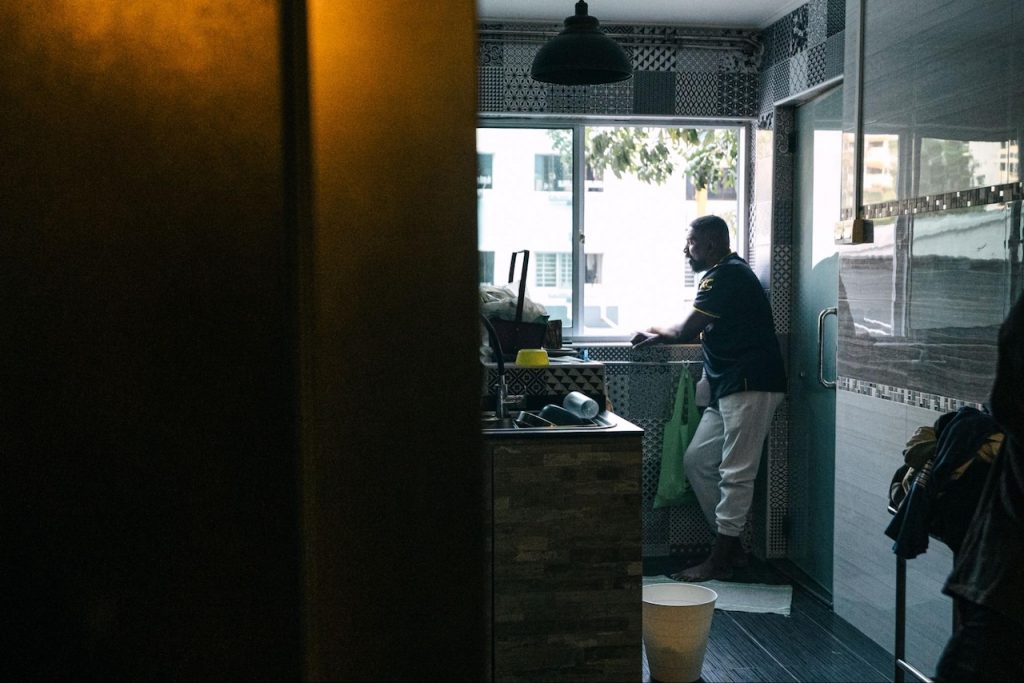
The Caregiver Who Needs Care Now
Many of our past stories on caregiving have circled one question, and Singapore’s ageing population will only make it louder: Who cares for the caregivers?
In 1992, researchers Marilyn Skaff and Leonard Pearlin described a phenomenon they called role engulfment: the job slowly swallows the person doing it, until the caregiver feels their own self has faded. The most vulnerable had few roles outside caregiving and few people around them.
Far less has been written about what happens once the job ends, and what that does to a former caregiver’s sense of self.
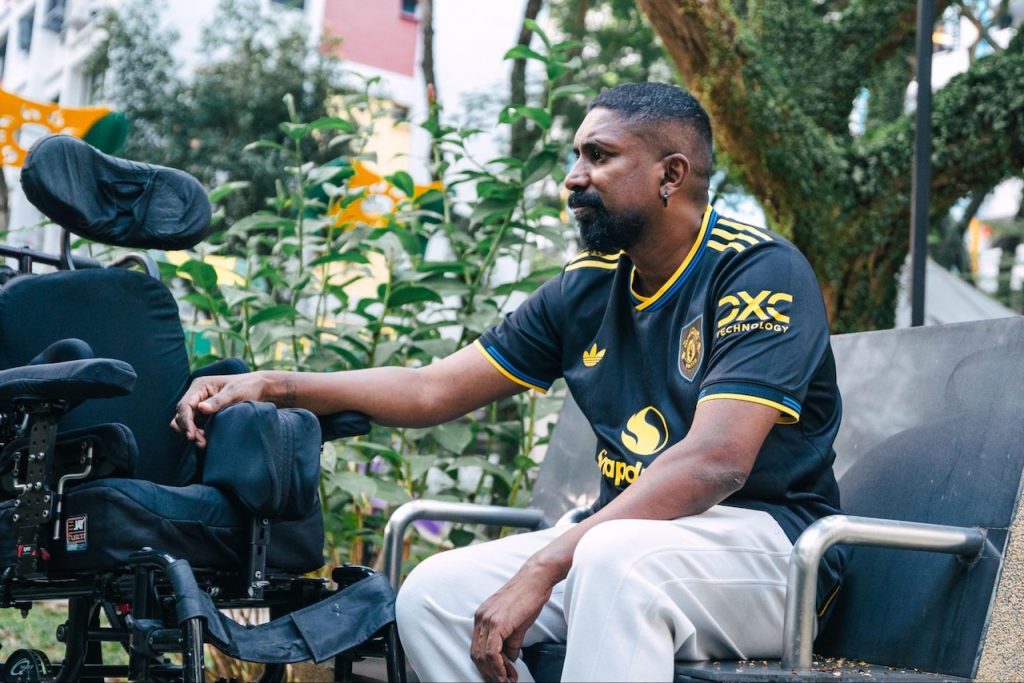
For four decades, nearly all of Suresh’s care went to Seelan. Now, he has to slowly learn how to redirect the care to himself.
It starts with a long-delayed fix for his knees. He tore both ligaments last December and put off surgery for most of a year to keep caring for his brother. In the weeks following our interview, Suresh underwent ACL reconstruction on both legs. Recovery and rehabilitation will take months away from work.
His financial situation is tough, but over $19,000 has been raised to cover his bills as of writing. But truly, it was the downtime that he was most afraid of—physically incapacitated at home, with no one to speak to.
“It’s going to take me about three months of recovery,” he says, eyes fixed on the floor. “And here I am going to be all alone. I don’t know what to do, how to do, or go about.”
The man in front of us is hard to square with the image he’s projected for years. He prides himself on being a warrior. Soon his own body will need looking after, and the two things that held him up are gone: the duty, and the only person in the world who could read him.
“Do you think you’ll ever seek help one day?” I try asking.
“I don’t need help. I just need friends to talk to.”
In the days since RICE published our video, Suresh’s social media posts have said the same thing in different ways: he’s not in the right headspace. “I have been struggling with depression and deep grief. I am reaching out to the public, asking for your understanding, kindness, and support to help me move forward.”
Most of the support Singapore offers caregivers is pegged to the person they care for. When that person passes on, the help usually goes with them. It happens right when the caregiver is most alone.
Public attention runs on a short clock—stories like this one get shared, then forgotten within the week. Suresh wants his brotherly ballad to last longer than that. He wants to tell it in talks or to anyone who’ll have him.
For 42 years, Seelan relied on him. Now Suresh, on two rebuilt knees, is the one who needs someone to rely on.
As we pack up our gear, he offers us a drink for the third time. “If you guys want a drink, I can just open a bottle for you.”
It’s the closest Suresh comes to asking us to stay with him.