Top image: RICE Media
Every few years, the spotlight swings back to the Malay-Muslim community as if the country has forgotten that we’ve already had this conversation. Again, we find our identity and loyalty examined on national television and in Parliament.
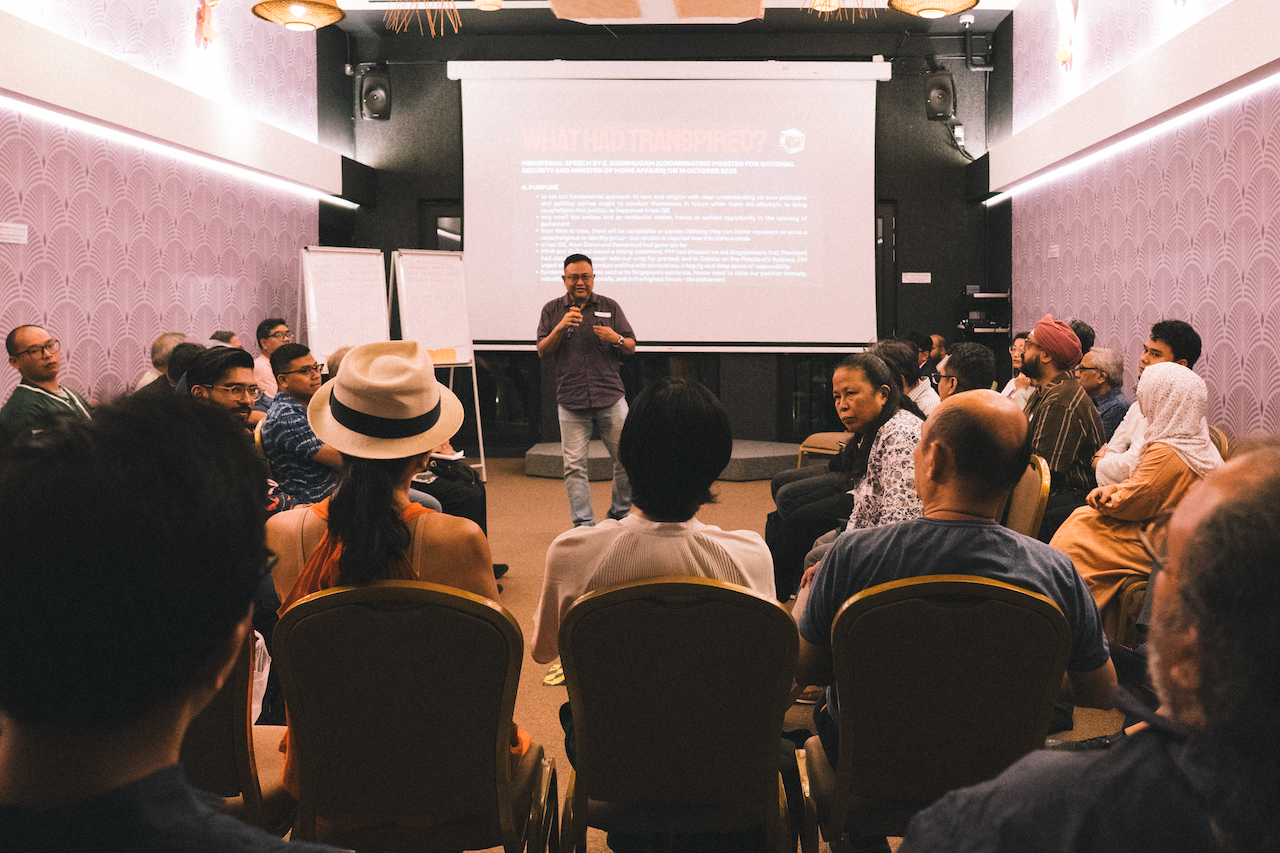
When Coordinating Minister for National Security K Shanmugam brought up identity politics in Parliament, invoking Noor Deros and the Workers’ Party (WP) during the GE2025 hustings, it was framed as a warning: A righteous call to keep race and religion out of political scheming.
The effect felt familiar. Sure, the big-picture conversation was about political ethics, campaign conduct, and the fear of civic division. But watching the hour-long speech unfold as someone from a minority community who’s long had to think carefully about belonging, it was hard not to feel like it was really about us again—a cautionary tale of what could go wrong if Singapore ever lets identity politics take root.
The same feeling settles in each time this happens: a resigned acceptance that our identities as minorities will be the ones put on display when the nation needs reminding of its fragility.
Penat. That’s the only word I can find for it in the past few weeks. I can’t speak for everyone else, but personally, there’s an existential exhaustion from being reminded that Malay-Muslim Singaporeans have to keep proving that we care about this country as much as anyone else.
A New National Crisis
It’s worth noting that Minister Shanmugam later clarified he wasn’t singling out the Malay-Muslim community.
This was after Member of Parliament Zhulkarnain Abdul Rahim observed: “I can’t help but notice that some may interpret his statement as suggesting that a particular group of community—in this case, the Malay-Muslim community—should bear some responsibility for allowing such sentiments to take root in the first place.”
In response, the minister said the opposite was true: that the Malay-Muslim population had, in fact, held firm against attempts to stir racial and religious emotions. We were victims of these tactics, not agents of them.
And then identity politics became a whole thing.
In the weeks following Minister Shanmugam’s speech, several government figures reinforced the warning against identity politics. Minister Chee Hong Tat echoed the message at a conference. Senior Minister Lee Hsien Loong says we “must never mix race and religion with politics”.
When Singapore Democratic Party chief Dr Chee Soon Juan accused the PAP of dividing society along racial and religious lines, Senior Minister of State Murali Pillai rebutted, saying the party’s policies ensure racial equality while citing the West’s struggles with identity politics. In Parliament yesterday, Leader of the House Indranee Rajah raised the issue again, pressing WP leader Pritam Singh to clarify Noor Deros’ meeting with his party.
Each time it’s mentioned, I hear a muted suggestion that the Malay-Muslim community—or any minority community, really—is especially fragile. And with that, something else gets chipped away: the trust that we are rational, grounded citizens capable of standing firm against fringe influences on our own. Every repetition of the warning carries an unintended message of wariness.
None of this is to say that identity politics can’t be a national threat. No one’s saying that we shouldn’t guard against its dangers. We know the damage it’s already doing abroad, and we understand why leaders want to nip it in the bud. There are probably patterns and signals the government sees—data, sentiment, shifts in online conversations—that ordinary citizens don’t.
But to suddenly elevate identity politics as Singapore’s next big fault line, shouldn’t we first define what it actually is?
Where is the Line?
Before we can even renounce identity politics, we’re still trying to figure out what it really means in a Singapore where identity has always been policy. Race has long been baked into our public housing policies, our political representation, and our very Constitution.
So when we’re told to guard against identity politics, what exactly are we guarding against? And who gets to decide where identity ends and politics begin?
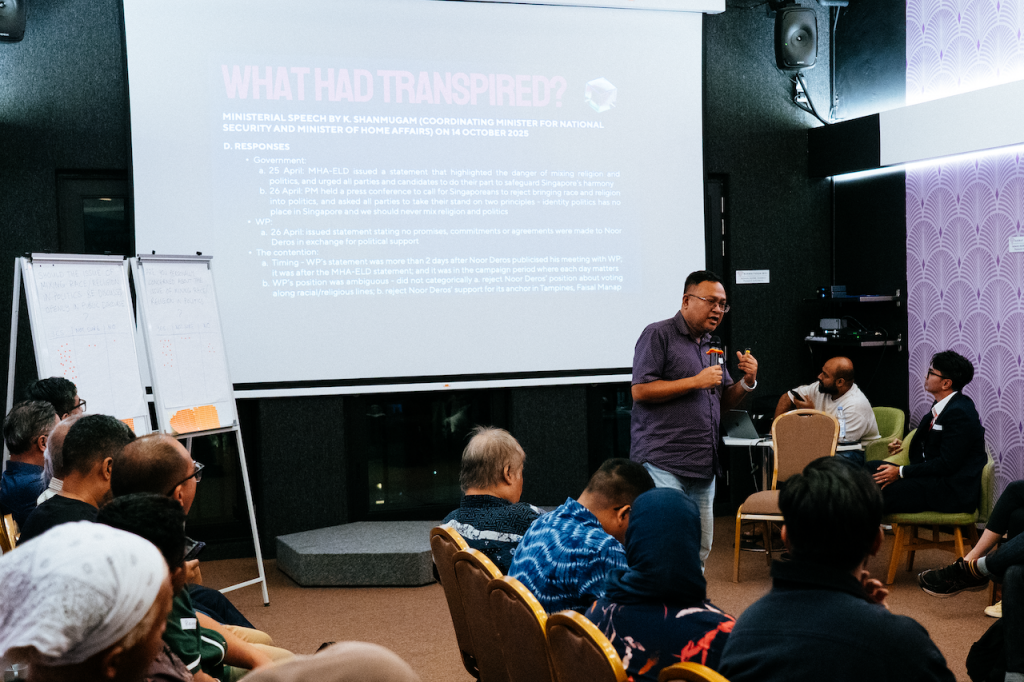
That apprehension ran through two separate dialogues held in response to Minister Shanmugam’s speech.
The first one brought together high-profile Malay-Muslim thought leaders and executives from key community organisations and boards for a private focus group discussion. The goal? Move past partisan lines to reflect on a broader picture of multicultural solidarity and the ethics of public discourse when faith and politics collide.
But even before attendees could dive into the ethics, the discussion stalled over what exactly Singapore defines as identity politics.
“How do you define the problem with all this lack of clarity, right?” raised one figure.
“At its core, identity politics is really about representation—it’s saying, ‘I want someone who will stand up for me’. The red line, to me, is when it turns into, ‘Vote for someone who looks or thinks like you, because only they can stand up for you.’ That idea—that a Chinese MP can’t stand up for Malay-Muslims, or an Indian MP can’t—feels small-minded. When we start looking only to our own community to push our interests, that’s when it becomes destructive.”
It’s this undefined, subjective line that creates a sense of unease. One participant noted that, given how the issue has been communicated publicly, Singapore still hasn’t clarified what constitutes hostility—or where the boundary lies between political representation and identity politics.
Without that clarity, anyone who’d want to speak up on minority issues could start wondering: Is this identity politics? Am I crossing a line? Now’s the time, the participant said, to demand clearer definitions and ask where the bad boundaries lie.
Another speaker voiced a different worry: the risk of the Malay-Muslim community being made use of to score political points. Raising the issue in Parliament (“Did any of us feel like Noor Deros episode was a big problem?” someone asks) felt like political theatre instead of genuine care for the community, they opined.
“I’m wary of that,” the speaker said, “of being used by the PAP, SDP, or WP alike. So how do we frame this conversation on identity politics in a way that’s explicit and fair? Where exactly is that red line we keep talking about?”
Beneath that question lies the unspoken sense that the Malay-Muslim community is still expected to prove that it can think rationally and resist identity-baiting tactics. Everyone in the room agreed that figures like Noor Deros are fringe, and that any attempts at destabilising our multicultural harmony should be firmly rejected, if it hasn’t been made clear enough in the past.
But the fact that this had to be a closed-door dialogue speaks for itself. Even established Malay-Muslim voices hesitate to speak too openly on the record when anything they say might be branded as identity politics.
Everyone measures their words, but for minorities, the cost of being misread feels heavier. When people protested the ban on wearing the hijab in certain occupations (which was eventually revised), did that count as identity politics?
When we don’t know where the line is, we often keep silent. That’s the fatigue—the kind that comes from being conditioned not to rock the boat, and in knowing that speaking up about minority issues can be read as provocation.
Do Singaporeans Actually Care?
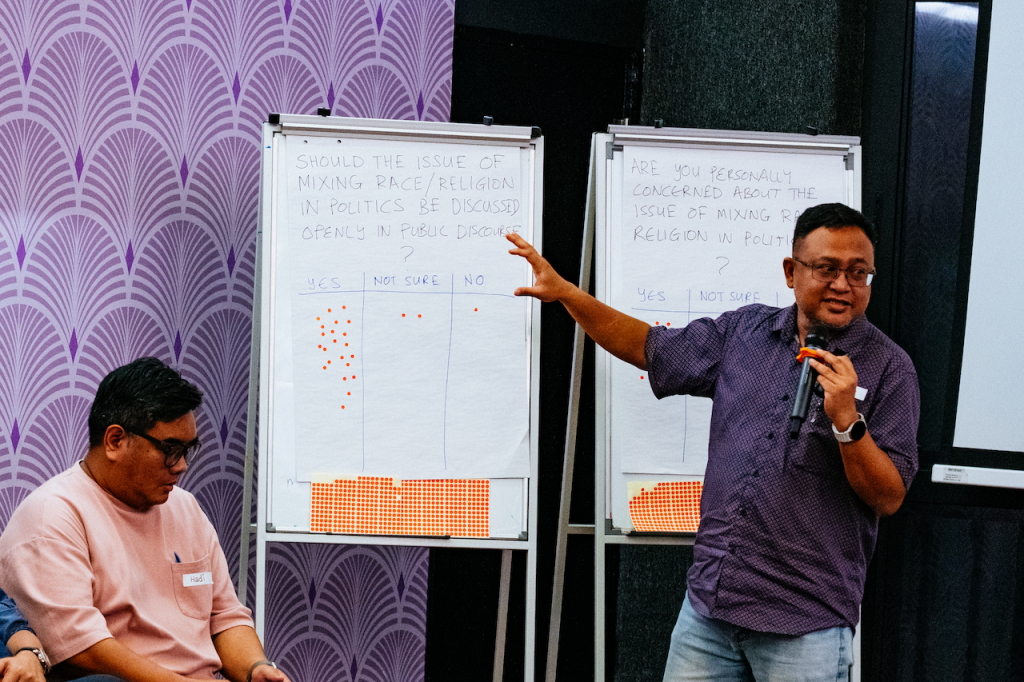
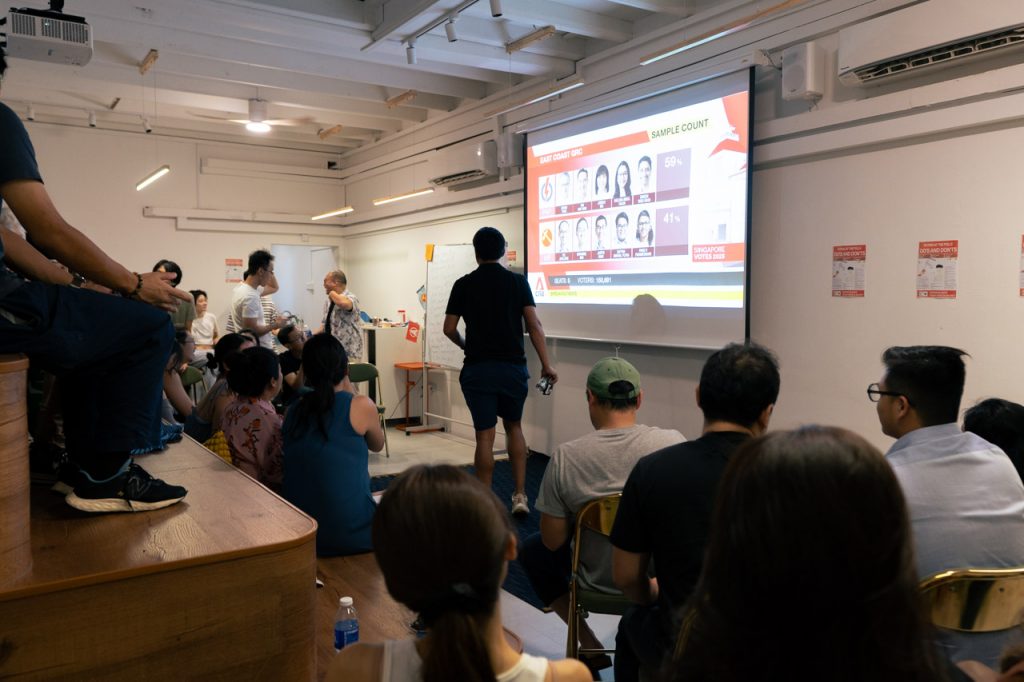
The sense of weariness spilt over into another closed-door event organised by Dialogue Centre and RICE Media—this time bringing together community and interfaith leaders, academics, social activists, and representatives from various racial, religious, and grassroots organisations. The event was held to surface a variety of perspectives on race and religion in politics and to find common ground to identify where the lines are.
Across the room, there was a shared discomfort about how the national conversation around identity politics was being framed.
Some questioned the consistency with how such issues are handled. When certain policies are enacted or defended in the name of equality, is it the government speaking or the political party? And if identity politics is generally defined as political activity organised around shared characteristics like race, religion, gender, or orientation to advance a group’s interests, then aren’t some of our own structures—like the GRC system or Reserved Presidency—forms of it too?
Others expressed a deeper frustration about identity. As one speaker puts it, “Our best interest—despite being Malay, despite being Muslim—has always been Singapore. So why must we keep having to prove it?”
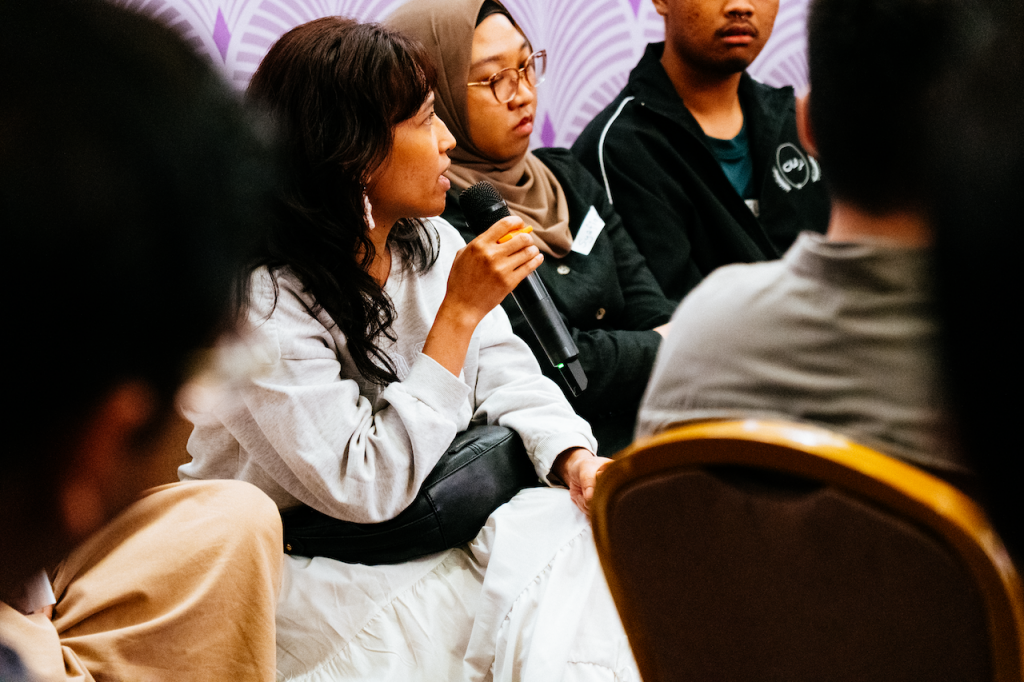
Another added that the ethnic harmony Singapore has built since our independence is “nothing short of remarkable and worth protecting at all costs,” especially when some of our much older regional neighbours have yet to achieve the same. Yet, several cautioned that preserving harmony shouldn’t mean silencing discomfort.
Even across a variety of backgrounds, ethnicities and beliefs, there was self-awareness about representation. “We’re not a monolith,” one participant said. “It’s problematic when we’re all bundled together as if our concerns are the same.”
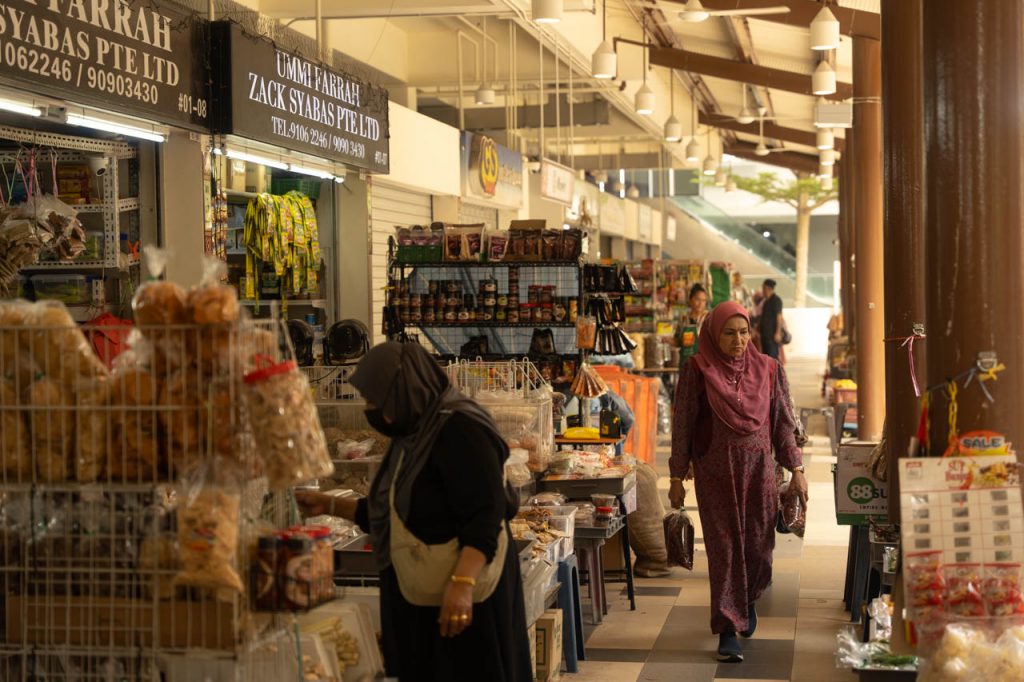
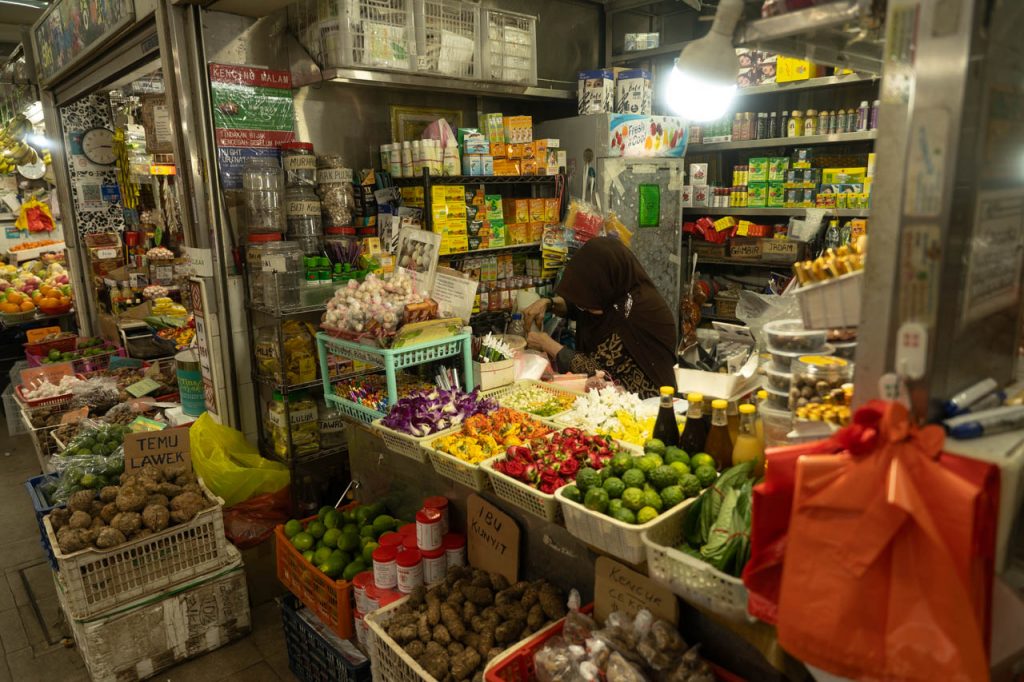
Some questioned whether the term identity politics even resonated beyond political and academic circles. “Who really cares about [identity politics]?” someone asked. “Does the nasi padang makcik care?”
And yet the exhaustive burden of proving one’s belonging never quite goes away. It was clear that the anxiety wasn’t just about Malay-Muslim identity.
An Indian participant spoke up: “Every day on the Grab ride, I have to prove to the driver that I’m Singaporean.”
The Fatigue of Representation
So what to make of all this? Not to sound blithe, but penat has set in again. In revisiting these conversations, I’m reminded of every old ache of inadequacy that comes with being a minority Singaporean, and not just because of the past few weeks’ talk about identity politics.
None of these feelings are new; none of the sentiments expressed during those two dialogues are surprising. They’re just rarely spoken aloud lest we get branded as shit-stirrers or woke snowflakes.
Being in the spotlight again feels tiring because it acts like an examination of what we do and what we say. Even if the clarifications insist that Malay-Muslims aren’t being singled out, even if we swear that we aren’t easy victims for race-baiting, the psychological weight lingers.
Many in the community have learned that we risk being labelled divisive should we speak about race or religion—both of which are inherently political. We’ve learned to keep our concerns within private conversations, activist Instagram accounts, and, yes, closed-door dialogues.
And even after we’ve walked away from these civil exchanges of perspectives, there’s the nagging sense that our ideas go no further than the door. It might be light-years before these insights make any tangible difference.
But maybe that’s the point. Despite the existential exhaustion, we need to keep showing up anyway. To turn penat into peduli. Tiredness into care.
It’s easy to throw in the towel and let others dictate what we should feel about ourselves. It’s harder—but necessary—to train that muscle of staying in the room and having the tough, sensitive dialogues about our differences to find the overlaps that hold us together. Having the energy to care is tiring, sure, but it’s also how we remember that solidarity takes hard work.
Plus, our conversations on identity politics here can’t stop at race and religion. To fixate only on those two is to ignore the deeper inequalities that breed resentment in the modern age: inequalities of class, opportunity, gender, and belonging that cut across every community.
The irony, of course, is that everyone already agrees on the base premise: race and religion should never be weaponised for political gain. But when that message is repeated often enough, it begins to do something else: it teaches us to second-guess what’s acceptable to say and to fear crossing an invisible red line.
And when you’ve had to do that long enough, of course lah penat.