
All images by Zachary Tang for RICE Media unless otherwise stated. Equipment support by Leica Store Singapore.
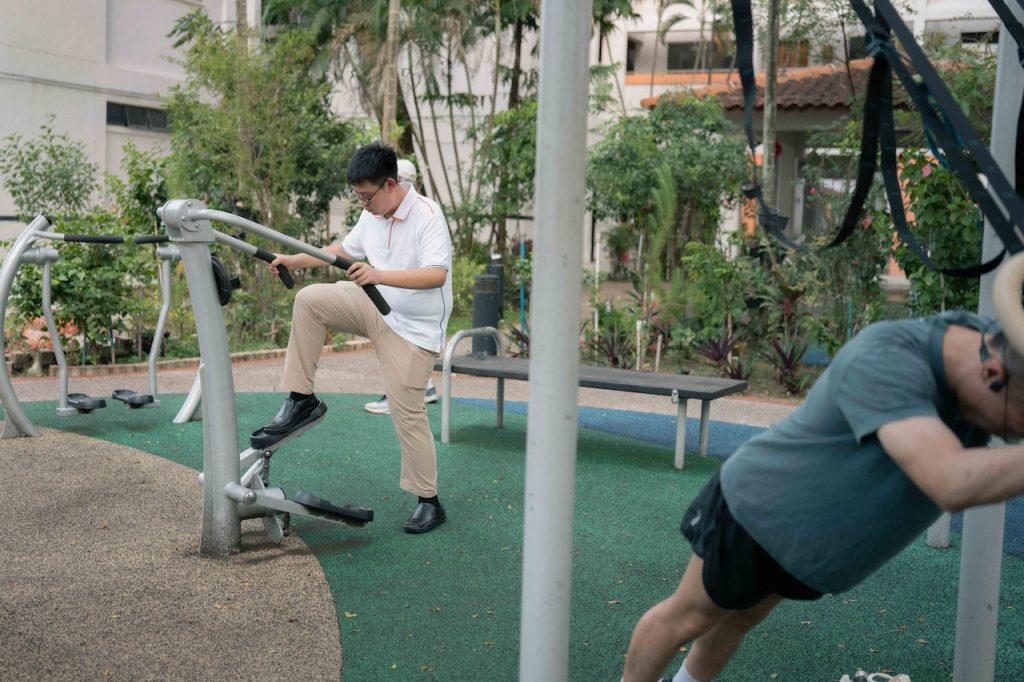
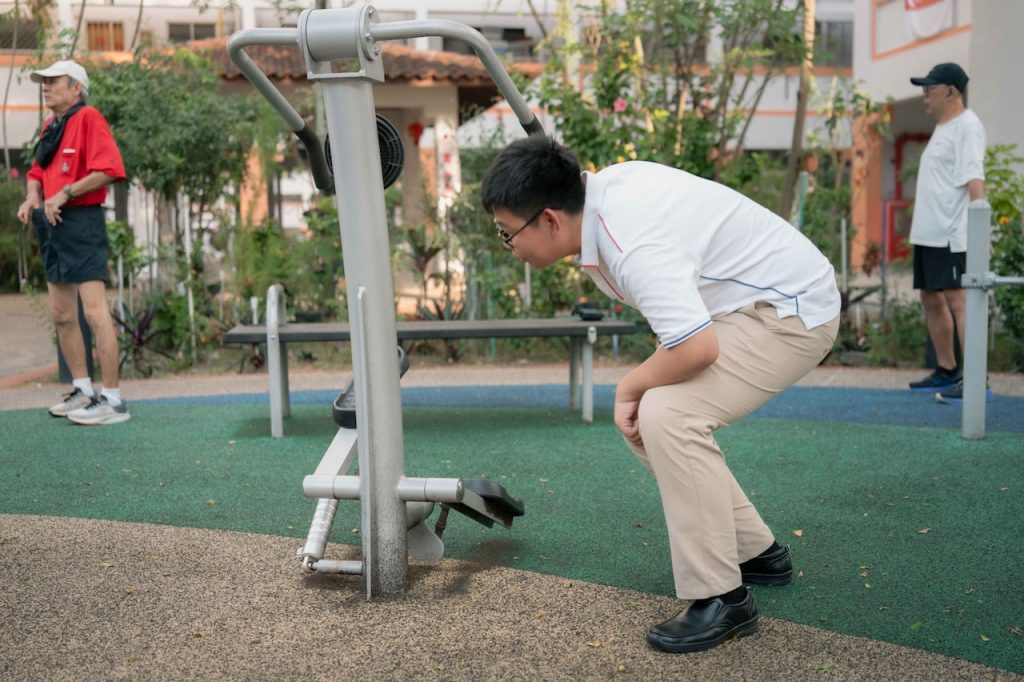
As I try to step onto a community fitness corner’s elliptical machine, Jovan Tang stops me. “You’re wearing a dress—let me do it,” he says decidedly. Just a few hours ago, a senior Whampoa resident had told him this particular exercise equipment at the foot of this MacNair HDB block had a rickety hinge.
I step aside, and Jovan enthusiastically hops on the machine and pedals. His movements are rigid. It’s clear that being on this machine is out of his comfort zone, but he’s doing it anyway.
It’s also clear that the mechanism is indeed janky—the left pedal produces a loud clang every time Jovan pushes it down. He steps off and records a voice memo on his phone before taking photos of the elliptical machine and its surrounding area. He needs those pictures if he wants to summon repairs from the Whampoa Town Council.
Jovan is not a People’s Association (PA) employee, nor is he a grassroots leader. He is simply a 16-year-old Singaporean who genuinely loves serving the community.
It’s surreal to watch Jovan patrolling his neighbourhood, checking on infrastructure and amenities people have personally complained to him about. It’s like watching a teenager satirising what a Member of Parliament (MP) would do—except that there isn’t a single iota of irony.
To put it plainly, Jovan has dubbed himself the ‘middleman’ between residents and MPs, focusing on surfacing residential concerns to Town Councils or in Meet-the-People Sessions (MPS). He says he’s been appointed to jaga the small zone around his neighbourhood, but insists that he strives to help anyone, regardless of where they stay.
His enthusiasm is exactly what pushed him to local social media fame in 2025.
Despite his public social media presence, his personal WhatsApp broadcast channel, and his devotion to serving his community, Singaporeans still don’t know much about who Jovan really is. Or rather, we can’t really fathom his true personality behind all the national unity bluster.
What I can fathom in front of me is an awkwardly tall (maybe 177cm?) teenager who’s not just an active member in the PA Youth Network, but also a thoughtful kid who just wants to solve his residents’ problems.
I can’t help but think: if this is really who he is, why are Singaporeans so uncomfortable with his unfiltered genuineness? Why do we try to dismiss his efforts by calling him autistic or a larper?
Why can’t we accept his passion at face value?
The Whampoa Wonderkid
I catch a glimpse of his iPhone screen: the font size is massive. He grips his phone tightly with his left hand and uses his right index finger to type—all while holding his phone about 5cm from his face.
He’d asked me prior to meeting what he should wear. It didn’t seem to matter much, so I told him to dress in what makes him comfortable. As it turns out, that meant rocking a PA volunteer polo tee, waxy black dress shoes, and khaki trousers.
It’s hard to believe he’s turning 17 in a couple of months.
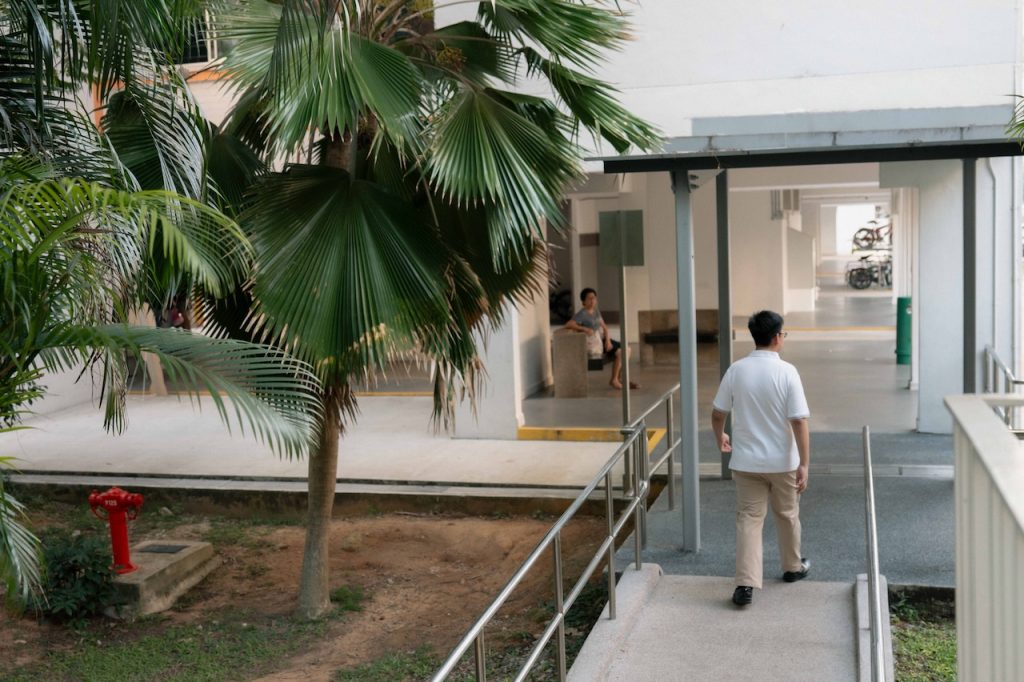
We head towards Boon Keng MRT station; he oversaw some amenity improvements there, and was excited to point them out to me.
As we walk, he points out other places that used to cause grievances for the residents.
“In the past, the running trail was 凹凸不平 (uneven and bumpy),” he notes.
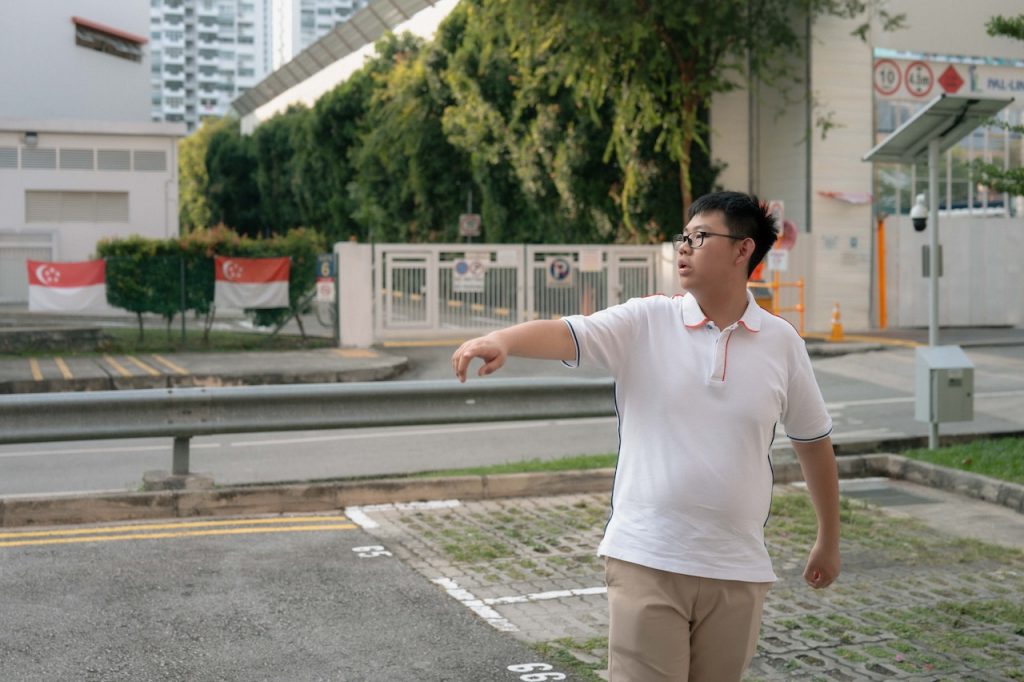
I ask if he ever ran on the track to confirm its bumpiness.
He slaps his tummy hard; his polo shirt ripples. “Obviously not,” he quips.
For some residential feedback he receives, he doesn’t need to personally empathise before raising it to the Town Council. It’s practical—he verifies a complaint, floats it up to the authorities, they send down inspectors and workers to fix it. Rinse and repeat.
Along our walk, people sporadically wave to Jovan or strike up conversation, flashing him warm smiles. He’s a familiar face here—well-established as an active Whampoa resident. This neighbourhood is his main turf.

“Hi Jovan!” exclaims a mother walking by with her son. The boy scampers over to Jovan in his matching pyjama set, and the teen bends down to the boy’s eyeline. They seem to be familiar. I feel like I’m intruding, so I step aside as they catch up.
Concerned members of the community engage Jovan in one of two ways. His inbox is open to the public, which is where he gets much of his residential concerns. Then there’s face-to-face engagement, which just comes with constantly making rounds in his neighbourhood, being personable, and hosting his own meet-and-greets.

I suspect he might even have an edge over some grassroots volunteers—many of whom are typically working adults and retirees. His interactions are generous—he gives his undivided attention to anyone who’s got feedback. We see him sit next to people more than thrice his age and hear them out without interrupting.
Far removed from the responsibilities of adulthood like work or family, Jovan has more time for intentional exchanges. He has more time to take action and see things through.
The Importance of Being Earnest
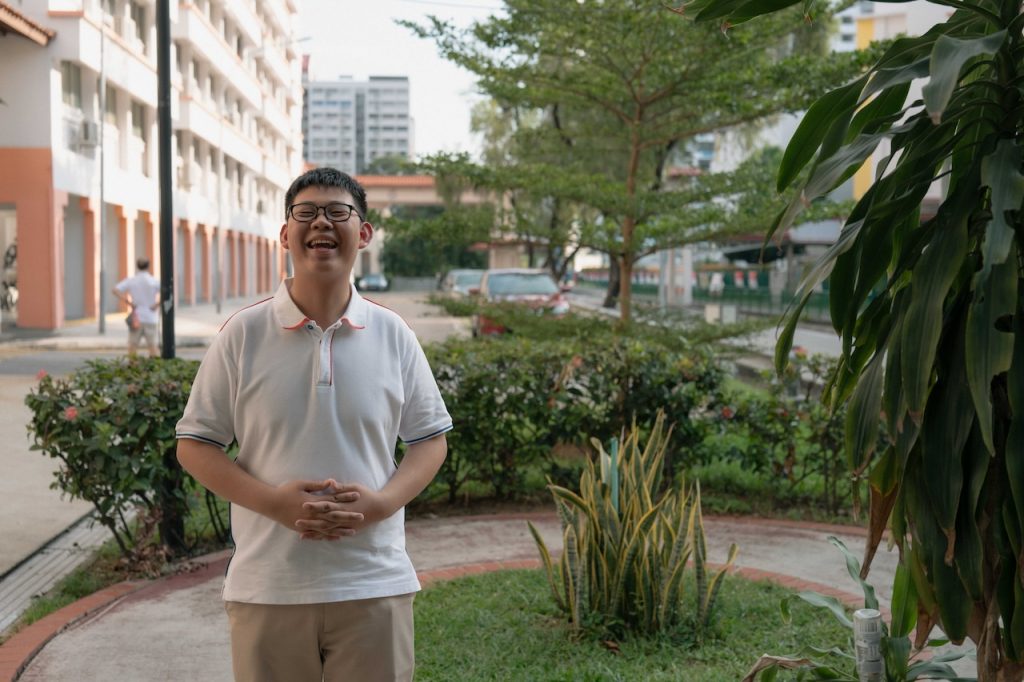
I finally feel like I’m talking to a teenager when Jovan interacts with his mum.
He pleads “Eh, stop!” and fidgets in his seat when Mrs Tang tries to share certain memories of her son with me. It’s endearing to see that under that no-nonsense, serving-the-people-always character he embodies, he’s still just a boy who’s embarrassed by his mother’s tales.
And if there’s anyone who can trace the seeds of Jovan’s current bearing, it’d be his mum.
“During his Primary 1 orientation, I told him, ‘Eh, that is your principal.’ Then he went forward, shook his hand, and introduced himself!” Mrs Tang recalls.
“I felt a bit paiseh.”

While that explains his extrovert nature—and his deference to authority—how did the relentless passion to help people come about? Mrs Tang recalls her son’s early exposure to community service when she and her husband brought him along on their volunteering trips.
“When he was Primary 2 or 3, we brought him to the old folks’ home. He went up to the person in charge and said, ‘Can you give me 15 minutes? Let me share some words with the elderly, and also perform two songs!’ I thought, ‘Ah, why is he so daring?’”
She recounts another time in Malaysia, when the family volunteered to help out Rohingya refugees escaping persecution in Myanmar. Jovan stepped up and helped conduct English lessons for the displaced children there.
Still, she doesn’t want to take any credit for Jovan’s deep involvement in community service today. Jovan is turning beet red at this point, but his mother goes on to narrate how he used to pass out pieces of paper to family members and relatives during National Day and make them write down some wishes for Singapore. He’d then string them up and hang them around the house as decoration.
“I mean, I don’t know, lah. It’s like natural [for him],” she remarks.
“I can feel the love he has for the country. I also feel proud of him.”
Memes, Mockery, Maturity
In 2026, being a teenage boy in Singapore means there’s a pretty good chance you’re fiending for some Prime and Takis or achieving peak physical form. My own brother is around Jovan’s age, and he spends his free time noodling on his guitar or hitting the gym.
A normal day for young Jovan, however, involves People’s Association Youth Network meetings or volunteering for MPS.
An easy yet lazy inference about Jovan would be that he has no friends. I’d think that too if he didn’t constantly post about everything—including the meet-ups with his buddies.

I ask if he doesn’t hang out with his friends because he doesn’t see value in it. He takes a beat before responding.
“I see the value in hanging out with friends, but because I have other responsibilities on my shoulders, I can’t. It feels irresponsible to me.”
At this point, I’m in disbelief.
“How about hobbies? Skateboarding? Scooter?”
“No, I don’t do sports. I did football and basketball last time, but no…” he trails off.
I don’t prod further. Perhaps he’s finding it hard to trust people and make friends, given the negativity he’s had to face online.

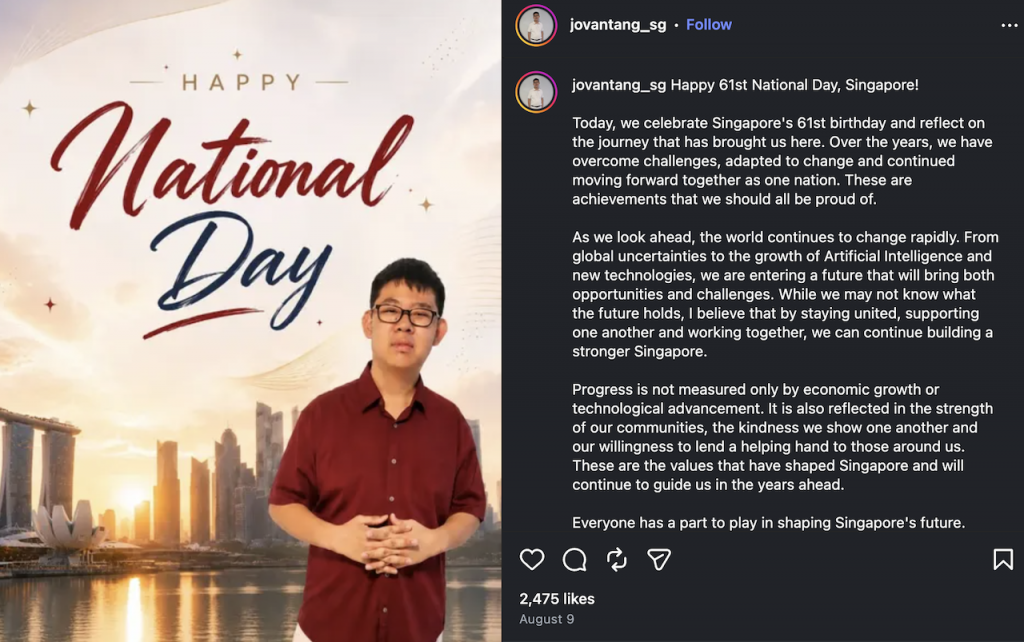
Jovan’s social media posts started gaining traction in late 2025. Instagram Reels and posts where he bears the idiosyncrasies of a politician go especially viral—think major gesticulating and using neighbourhood structures as backdrops.
A lot of it looks like a teenager cosplaying as an MP.
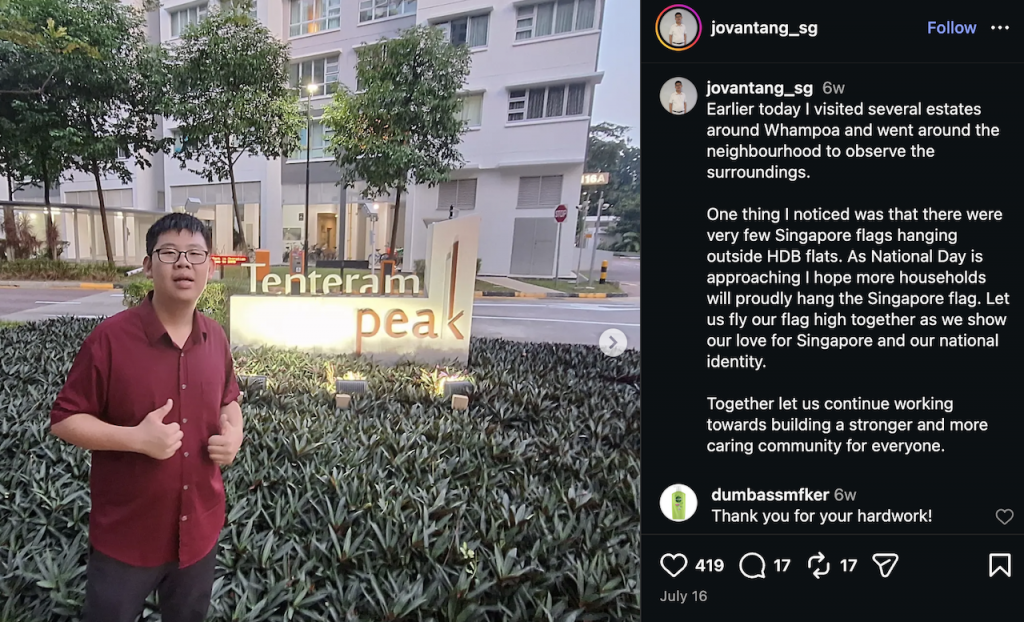
At this point, Jovan has received the premium trolling package: several r/SingaporeRaw threads, AI pictures, TikTok edits. He’s seen all of it. Mrs Tang hasn’t, but her friends and colleagues have brought it up to her before.
“Have you ever felt the need to shield your son from it all?” I ask.
“I’ve told Jovan if it feels like it’s too much for him, he can let me know,” says Mrs Tang. “Maybe we need some legal action. But if he’s still able to handle it, then okay.”
Jovan is entirely cognisant of what people say about him online. He just chooses not to engage.

“I’ve seen a lot of bad comments, like ‘Aiyo, autistic’. People even took my picture and drew on my face. Confirm will feel very hurt one lah.”
For a brief moment, his eyes glaze over, and I see a pained adolescent boy who has borne the brunt of cheap shots from people who can’t make sense of his commitment.
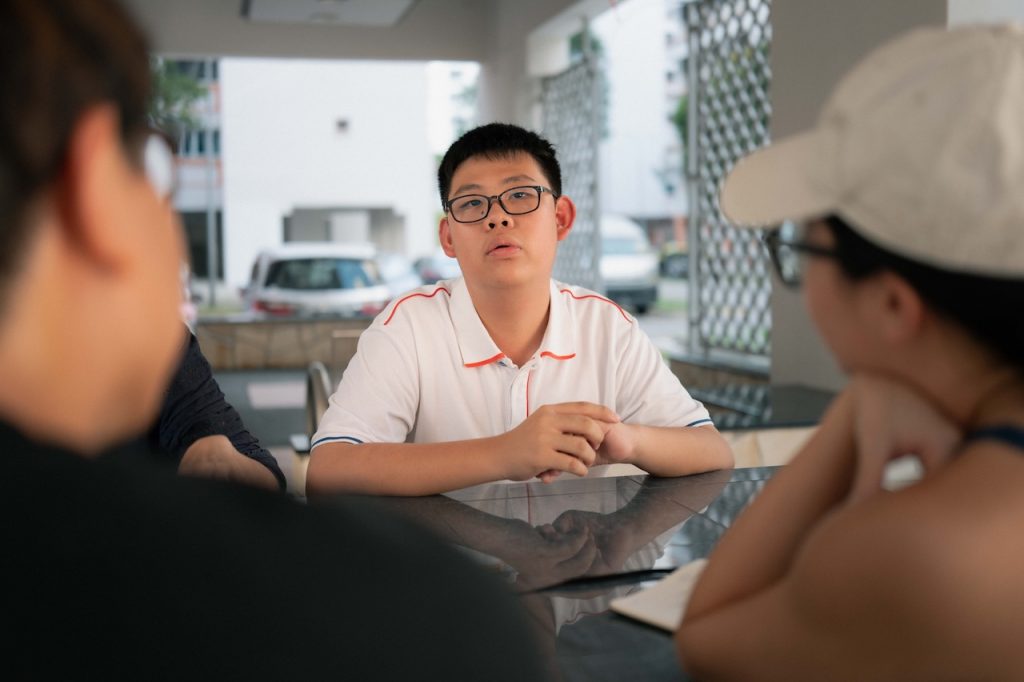
His forlorn expression only lasts for a moment before he snaps back into his polished, neutral self.
“But… I’d like to thank those people who encouraged and supported me through all these times. Even when people troll me. They give me a chance to show them that I can and I will [serve].”
While internet trolls are loud and unforgiving, he’s slowly growing a pool of consistent supporters. A scroll through his Instagram account suggests that among his followers, many are just as sincere as he is.
I realised that his current reputation has evolved beyond attracting trolls and haters the first time I spoke to him over Google Meet. My 17-year-old brother, who I usually find hard to impress, messaged me after eavesdropping on our call.
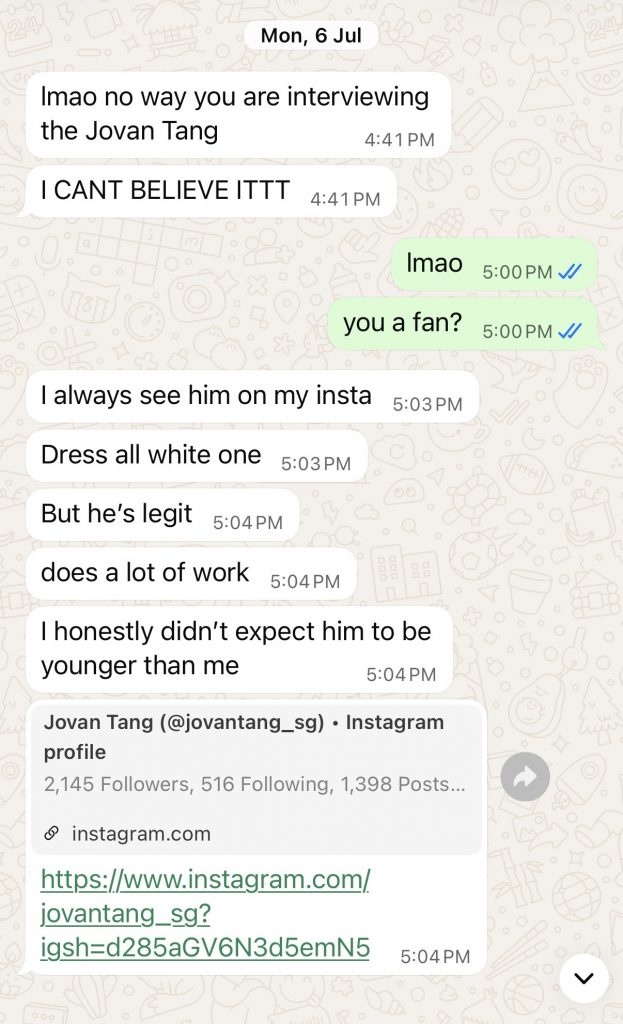
It might be because in reality, there’s nothing self-aggrandising about him. His public persona both online and offline is humble and earnest, which may throw people off in a world where nonchalance and irony make you look cool.
“I continued serving, and when people saw action, they eventually trusted me. So I thought, ‘Why must I get affected by these [hate] comments?’”

At one point, he stops at a lift lobby. “Residents shared that there’s an animal faeces smell in the lift. I need to go check,” he says as the doors open.
He steps inside and sniffs around. No such smell. Entirely unglamorous and absolutely trivial—but he doesn’t mind the tediousness.
‘You Say Sorry, You Will Not Die’
In his Instagram bio, he lists ‘public feedback, residential concerns’. Residents often approach him or go to the MPS thinking that they can bypass procedures, and it acts as a shortcut. Jovan is quick to caution that he is no miracle worker.
“All the procedures, all the processes, we still must follow. It’s not possible for me to shoot a concern all the way to the ministry and see immediate changes,” he laments.
It raises questions about whether someone as young as he is should be directly exposed to the inner workings of municipal bureaucracy and the frustrations of older adults—especially when he’s positioned as the middleman between residents and politicians. It’s a lot to put on a teenager’s shoulders.

It’s not as if the older grassroots volunteers haven’t tried. Jovan says they keep telling him to focus on school, but I get the impression nothing can stop him from grassroots work. Not even the harsh realities of the job.
“A resident from Bukit Batok scolded me on the phone for 15 minutes once. I couldn’t say anything; I can only say sorry.”
His golden rule for dealing with angry residents is this: “You say sorry, you will not die… When you say sorry, people tend to calm down.”
As a volunteer and grassroots member with the People’s Action Party (PAP), he’s under a microscope for all his actions, especially because of his political association. Still, he commits himself to serving Singaporeans indiscriminately.

“Even if they’re from a Workers’ Party constituency, I will listen and help to address their issues.”
When I ask about his admiration for the ruling party, he doesn’t skirt the topic. He will always stay loyal to the PAP: “I’ve lived in this constituency since I was young, and I know a lot of PAP MPs.”
Admittedly, he feels held to an unfair standard where small, normal mistakes draw magnified criticisms. It’s the only time I’ve seen him express the toll the job has taken on him.
“We are all humans; we all make mistakes… cannot be just because I’m operating as a PAP grassroots member, I am perfect.”
“And I cannot do things that everyone will support, or everyone will benefit from. There will definitely be people who are unhappy. I need to learn to bear that.”
The Little Things

His mum’s hope for Jovan sums it up best. She doesn’t care about ambitious titles; she just wants him to keep doing meaningful work, make a small difference wherever he can, and stay happy.
I ask Jovan if becoming an MP is in the cards for him.
“Currently, no.” He puts it simply that between his studies and his community efforts, becoming an MP would take up too much of his time.
I ask him what exactly he’s studying. Jovan lets out a long ‘uhhh’ and seems physically strained as he says he’s open to pursuing a job in hospitality or insurance, or even learning Traditional Chinese Medicine. He doesn’t seem interested in thinking about school.
It’s a complete juxtaposition from when he talks about community work. Jovan lights up when we reach one of the exits of Boon Keng MRT station, stopping at a curb that residents would typically cross towards the cluster of HDB flats.
He pulls out his phone and shows me an old photo of the sharp curb we’re standing on. In the image is a yellow caution strip on the ground that had faded over time. For a mature estate with elderly folk aplenty, that’s big-time trouble, Jovan says.

I compare the before-and-after. Without the recently repainted yellow strip I see now, I could see myself tripping off the edge. It’s a relatively minor issue I wouldn’t have considered, but Jovan does. He’s the one who got it done.
I’ll be honest, I was a Jovan Tang sceptic too. But when he wears his heart so proudly on his whiter-than-white sleeve, proudly showing me what the little things he’s doing to help his community, there’s really very little to remain doubtful about.
For young Jovan, the accrued impact of his community engagements and his advocacy is worth more than the judgement of faceless cynics and critics.
“Although this is a very small thing, it actually means a lot,” he shares gleefully about the bright yellow strip he’s responsible for.
“We take every feedback seriously, and we’ll do our best to look into it.”