Top image: Zachary Tang / RICE File Photo
For anyone who grew up within Singapore’s education system, recess was never just about eating. It was a cherished pocket of freedom between the grind of classes. And at the heart of these intermissions were the canteen vendors who manned our favourite stalls.
These canteen vendors ‘raised’ us in their own unique way. They taught us how to count our coins, reminded us to mind our manners, and sometimes slipped food to a child who needed it. They’ve long shaped students’ social and emotional development, even in the absence of any formal recognition. But that role is increasingly fragile.
Recently, Mee Toh School canteen vendor Rayner Tan (better known as @veg.eng on TikTok) found himself in hot water. A video of Rayner correcting a student who tossed a $2 note onto the counter went viral, and a parent filed a complaint against him. Rayner later took the clip down.
Soon after, the 27-year-old announced the closure of his canteen stall selling vegetarian food, much to his followers’ dismay. While he cites the “unsustainable income” as his main trigger to leave in a now-deleted social media post, he also briefly touched on the aftermath of the viral video, saying: “It’s been a difficult time dealing with the school, authorities and parents.”
This is the awkward middle-ground vendors occupy. They keep children happy, fed, and orderly. But when trouble arises, they’re often left to fend for themselves.
Indeed, vendors often have to balance parents’ expectations, schools’ policies, and Health Promotion Board (HPB) stipulations, all while keeping food prices low for students.
Rayner’s incident also comes at a time when the role of canteen vendors is already under threat. Amid a shortage of people willing to run school stalls, the Ministry of Education (MOE) announced that starting in 2026, 13 primary and secondary schools will adopt a central kitchen model. Traditional canteen stalls are set to be replaced by automated food lockers, where kids collect and pay for food with their EZ-link cards. Soon, the familiar—albeit slightly chaotic—ritual of jostling to buy food during recess might be obsolete.
All this raises a larger question: Do schools and parents still value the canteen vendor as a formative part of growing up?
The Role of a Canteen Vendor
Years after graduation, many of us still remember the canteen vendors who have helped us along the way. In fact, it seems like nearly everyone around me has a fond memory to share.
Ilyas Sholihyn, RICE’s editor-in-chief, tells me: “I remember when I somehow lost my allowance in primary school. I was crying hard, but the drinks store auntie noticed and gave me a bun.”
Darren Satria, a fellow RICE intern, also vividly remembers the time the nasi padang auntie at his primary school gave him free chicken because he didn’t have enough money on that day.
At Opera Estate Primary School (OEPS), canteen vendor Haindah Bte Abdulla has been keeping this heartwarming tradition alive.
Haindah has been operating her nasi padang stall since 2019. She tells me that the opportunity came serendipitously. A friend was looking for someone to take over his mother’s canteen stall; Haindah wanted a change of pace after her mother passed away.
Haindah reveals that she had spent the better part of five years caring for her ill mother. In the wake of her mother’s death, she felt a void in her life. “I had nothing to do then,” she says. “I was running a home-based business, but when the canteen opportunity came, I thought, ‘Why not give it a try?’”
Slowly, without meaning to, she’s become a nurturing figure to the students at OEPS.
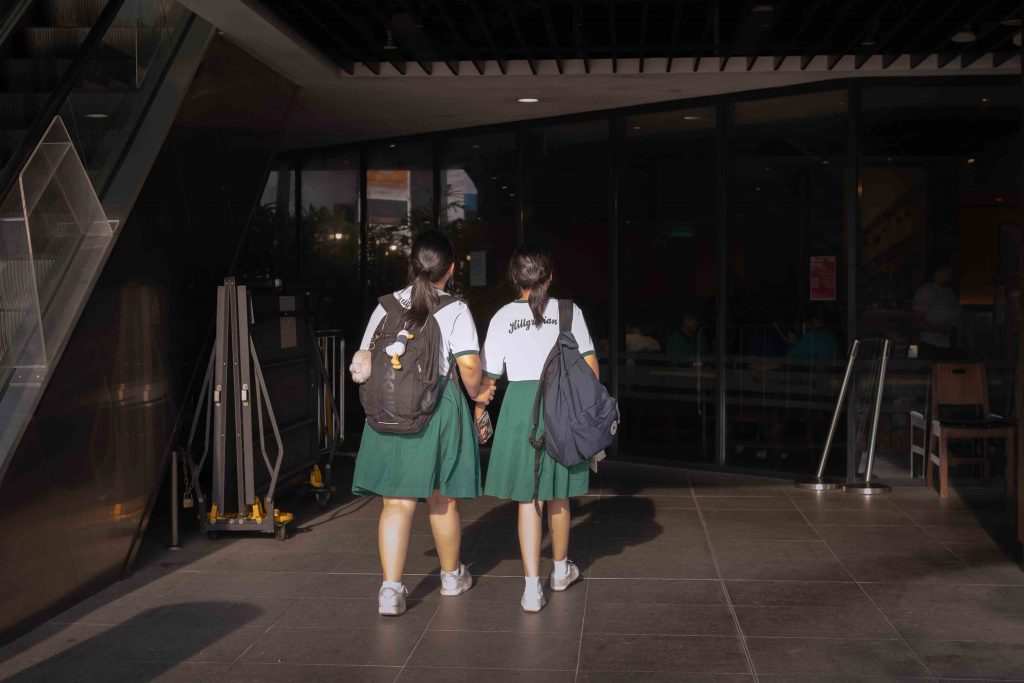
“Apart from their teachers and discipline masters, we’re the only other adults they really talk to. Here, they learn how to buy food and interact politely.”
Her stall is also a gathering spot for shared laughter and curiosity. “Sometimes I listen to ghost stories on YouTube while cooking,” she laughs. “The kids will crowd around me. They’ll say, ‘Auntie, we know that podcaster too!’”
Aside from the daily dose of camaraderie, she also dishes out life lessons. According to Haindah, the incident that sparked Rayner’s viral video is actually pretty common.
“Some students do have the habit of throwing coins at us,” she says. “I don’t scold them; I teach them. I tell them no one should throw money at anyone. Some say, ‘But my mummy and daddy do that.’ I say, ‘That’s not something good for you to follow.’ Eventually, they stop doing it. It’s nice to see the change.”
Such is the intangible value of a canteen vendor. It isn’t part of their job requirements, but many still take it upon themselves to look out for kids, swooping in to tackle everything from bratty behaviour to empty stomachs.
The Hidden Struggles
Canteen vendors give generously—patience, attention, and even the occasional free meal—but the reality is that they don’t take home much.
Haindah and Rayner both say they earn between $1,600 and $1,900 each month after utilities and ingredients.
“It definitely doesn’t pay me well, but I stay for the comfort of the children and my colleagues,” says Haindah. “Luckily, my husband works full-time, so I don’t have to worry much. His job allows me to do this.”
For Haindah, the short operating hours—vendors typically knock off in the afternoon—allow her to spend more time with her son, who has special needs.
The short operating hours and flexibility are also why many retirees choose to become canteen vendors. But these same factors make this an unsustainable career choice for a young adult like Rayner. Even if he wants to extend his opening hours, his customers typically peter out after school is let out for the day.
Rayner readily admits that canteen hawking is not something he sees himself doing long-term: “If it were financially viable, I’d love to stay.”
To help supplement his finances, he runs Corner Pane, a quaint cafe, out of his HDB flat window.
While Rayner has left the canteen scene behind for now, he hopes to stay in the F&B trade. His ultimate goal is to open his own F&B outlet one day—somewhere with more creative freedom and less red tape.
Rayner shares that though rent is cheap—about $5 for primary schools, and around $15 for secondary schools—other costs add up.
Beyond paying for rent and utilities, vendors must also deal with rising ingredient costs, especially since they’re required to use Healthier Choice products.
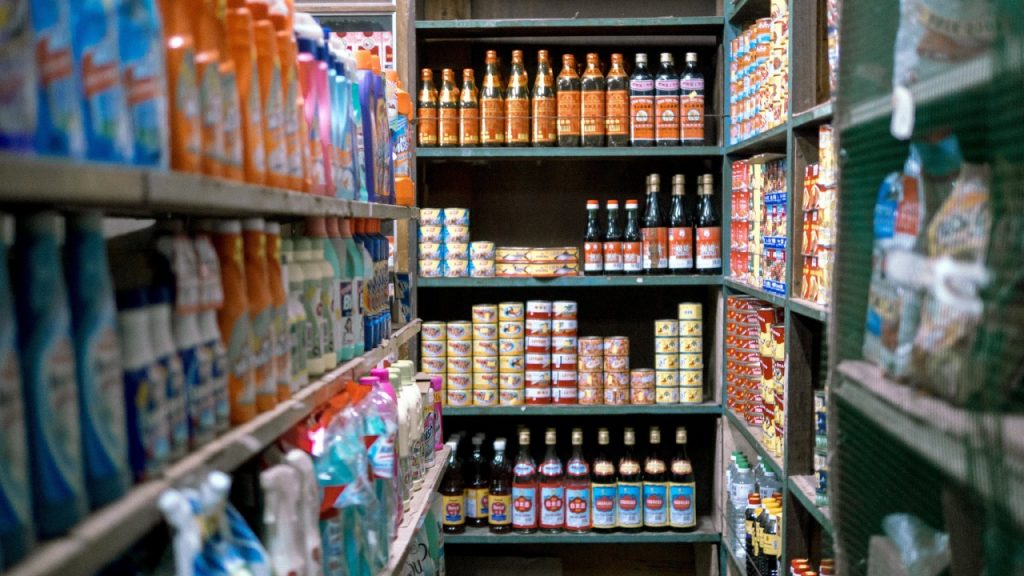
“Healthier Choice ingredients are about 10 to 20 percent more expensive on average,” Rayner says. “For example, regular frozen corn is about $2.80 while the Healthier Choice version is $3.50.”
Prices aside, vendors also sometimes encounter limitations when it comes to their menu. Under the Healthy Meals in Schools Programme (HMSP), vendors’ dishes have to adhere to a list of health guidelines.
Each meal needs at least two servings of wholegrains, 50g of vegetables, and 50g of lean protein—all of which must be fresh or have the Healthier Choice symbol. Deep-frying is not allowed. Sauces must be limited to a portion of two dessert spoons.
Haindah admits that it is not easy to work within the food guidelines. In one instance, she had to sell chicken drumsticks without the skin, which made the dish “look miserable”.
Arvind Thevaraju, 40, a Western food stall vendor from Saint Joseph’s Institution, also questions the efficacy of these guidelines.
“The restrictions implemented in schools will only make one crave for the unhealthy choices after school,” he asserts. “For older students who are given the freedom to spend time outside after school. They can choose fast food and other unhealthy options, which are readily accessible.”
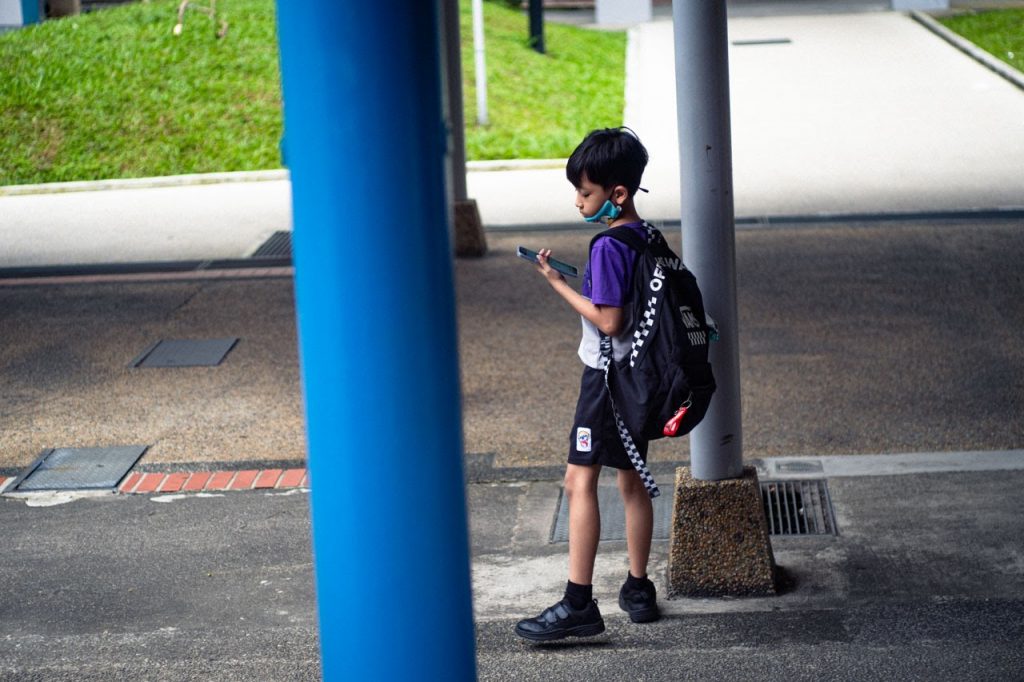
While HPB provides a list of bulk-buy suppliers for vendors, most individual canteen vendors simply do not go through enough ingredients for bulk-buying to be a viable option, says Rayner.
A better approach, he says, could be group-buy initiatives consolidated by the school, which would help lower ingredient and manpower costs.
He also hopes that subsidies for Healthier Choice ingredients and utility costs can become a reality. After all, vendors are currently shouldering the burden of maintaining low food prices for students, all while dealing with more restrictions than regular F&B operators.
The Lessons We’ll Lose
With the new central kitchen system, all these struggles may become a thing of the past—but at what cost?
In schools that are under the central kitchen system, parents must first place their kids’ orders online at least two days in advance. Food will be cooked off-site, delivered to the schools, and slotted into lockers before recess. To access their pre-ordered meals, students simply need to tap their EZ-Link card on the lockers.

While food lockers are replacing vendors in some schools, Haindah says she’s not afraid of losing her job. “We are lucky that my school isn’t affected,” she explains. “Out of the eight stalls available, five are taken, so my operations manager said I don’t have to worry.”
Haindah is more concerned with the repercussions the central kitchen system may have on children who are underprivileged or simply forgetful.
“If a child doesn’t have enough money, a machine can’t give them free food,” she says. “Machines just take your money and give you food. No interaction, no kindness!”
Angeline, 36, the mother of a four-year-old and a Primary 1 student at Mee Toh School, agrees that this picture of the future seems bleak.
“Canteen vendors create a sense of belonging in that school, which can make a child feel supported and comfortable in the environment,” she says.
Angeline, who only wants to be identified by her first name, says the canteen environment has actually made a tangible impact on her seven-year-old daughter.
“Even though she didn’t tell me anything, I can see the difference. Before she started Primary 1, she was really shy and didn’t have the confidence to buy her food. But when she started ordering her own food from the canteen vendors, she became brave and more confident.”
She adds, “Now, when we go out, she will even order my food and drink for me!”
The thought that her younger son might not have the same kind of learning experience when he grows older makes her heart sink, she tells me.
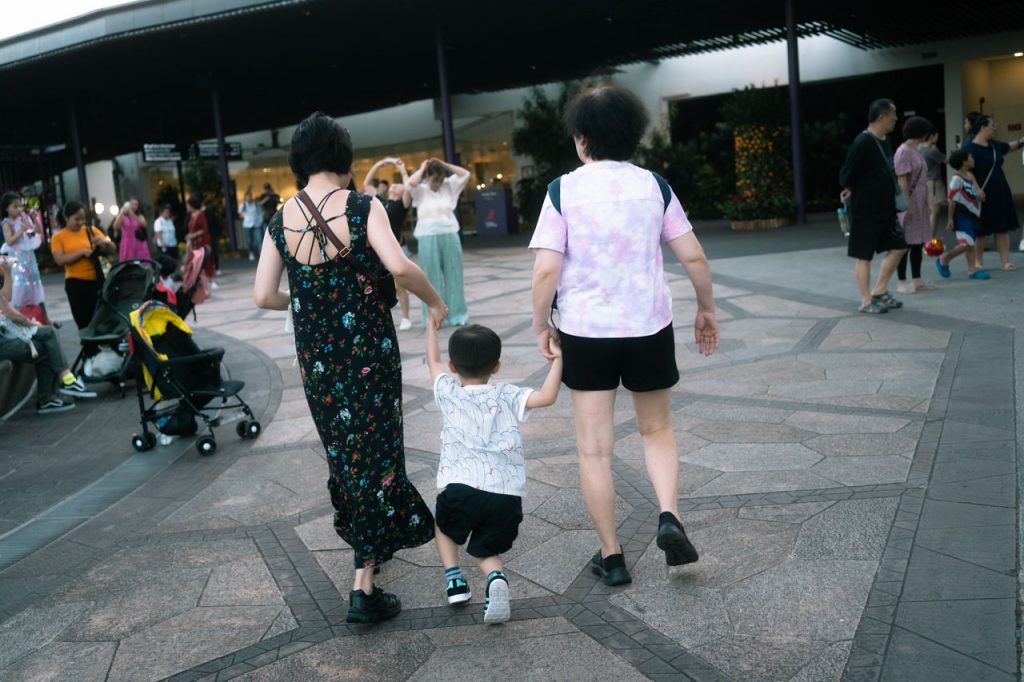
Sure, canteens aren’t the only avenues for kids to build their confidence and social skills. For example, they can practice ordering food outside of school. But are we doing kids a disservice by depriving them of this regular opportunity to build independence? Is losing the classic school canteen experience—a rite of passage for kids of different socioeconomic classes—worth it? Or should we be trying a bit harder to support canteen vendors?
In Singapore, we often default to the streamlined, efficient path. I can understand how central kitchens might seem like the obvious answer to our government when it’s faced with dwindling canteen vendor numbers. I think, however, that preserving the human touch that canteen vendors offer is worth the effort.
As a kid who grew up with social anxiety, buying food from the school canteen was one way in which I learnt to confront my fears. My family wasn’t well off, so we rarely ate out. I remember buying my first bowl of noodles in school, seeing the warm smiles of the canteen vendors, and realising that there was nothing to be scared of.
Looking back, it was also at the school canteen that I learnt how to stand on my own two feet. I learnt how to resolve conflict through confronting queue-cutters. I learnt time management and decision-making through strategising how I would spend my recess. With only 30 minutes, I had to choose between the long queues at popular stalls and the short queues at the less desirable options.
Of course, implementing food lockers would eliminate these small inconveniences. But in streamlining everything, we lose the lessons that are embedded in the inconveniences and frictions of everyday life.
Keeping the Canteen Alive
Children need unstructured spaces to experiment and grow. But such spaces are disappearing, replaced by enrichment classes, stricter routines, and now—possibly—prepackaged recess.
The canteen has always doubled as an informal classroom, where kids learned kindness, patience, and choice over plates of bee hoon and bowls of mee siam. If we lose vendors, we lose that culture.
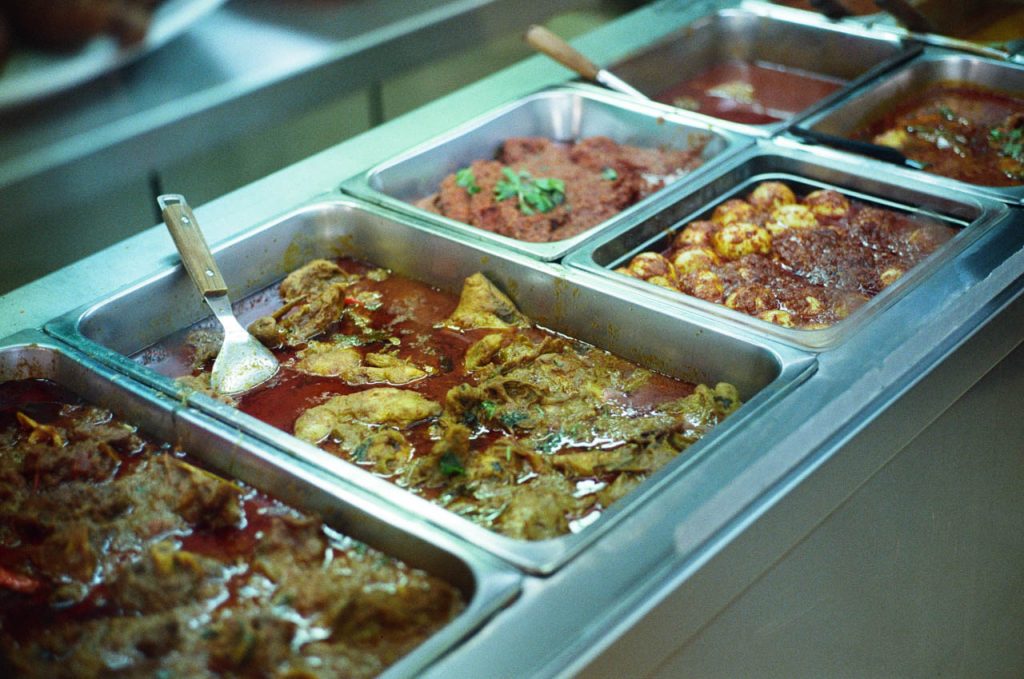
In response to MP Hany Soh’s recent Parliamentary question on the central kitchen arrangement, Minister of Education Desmond Lee said that MOE would be monitoring operational efficiency, food quality, cost-effectiveness, and student satisfaction before deciding whether or not to extend the model to other schools.
But what about the intangible factors that aren’t easily captured in these key performance indicators? For example, the spontaneity of trying a new stall at recess? Or the joy when a canteen vendor remembers your regular order? Or the bond you build with the canteen uncles and aunties?
Instead of jumping to outsourcing the work of canteen vendors to corporations, why aren’t we preserving canteen culture and ramping up support for small businesses?
It might be difficult, but surely it’s a problem worth tackling. I shudder to think of a future where there’s no room for the messy, human work of nurturing children.