All images by Andre Frois for RICE Media unless otherwise stated
The nightlife industry hates pre-gamers like me.
Pre-gaming—drinking before you arrive at a restaurant or bar—is a habit I inherited from my thrifty mum, who refused to buy drinks when dining out. Her solution was always the same: “We’ll get something cheaper from the supermarket after”.
We never went to the supermarket after.
In Singapore, I am far from alone. There is an entire demographic of drinkers who shave dollars off their bar tabs by getting lightly (or not so lightly) buzzed outside a 7-Eleven or Cheers beforehand. In recent years, that demographic has been supercharged by a simple yet devastatingly efficient Japanese invention: Suntory’s Strong Zero.
Born in Japan but now spreading far beyond Asia, its global popularity raises an uncomfortable question: When we instinctively reach for stronger, cheaper drinks, is it simply a matter of taste or an admission that the times themselves have grown harder to swallow?
With multiple industries plagued by retrenchment and an economy inflating faster than the hyperbole in your résumé, nights out have become exercises in fiscal creativity. In this climate, a cold, fruity can of hard seltzer that delivers a 9% Alcohol by Volume (ABV) hit for under $10 is a sound plan.
After all, if you fail to plan, you plan to burn a hole in your pocket.
As the pace of drinking picks up over the holiday season and the nights blur together, potent ready-to-drink (RTD) highballs will be a constant chemical comfort we’ll still recognise through our year-end party goggles and the many social functions to come.
Instant Cocktail, Instant Gratification
Once a niche novelty, RTDs have become one of the fastest-growing segments of the global alcohol market, consistently outpacing beer, wine, and spirits.
Convenience store chains—long dominated by lagers and screw-cap wines—have quietly formed the frontline of this shift.
I still remember my first RTD purchase at 18. It was a bottle of ‘8.4’, uncreatively named after its alcohol content. They’re not great, but those neon bottles of booze stubbornly remain in convenience-store chillers to this day. The only real alternative at the time was Bacardi Breezer, hovering at 4–5% ABV. Naturally, I chose the option that respected my budget and tolerance.
Back then, those were your choices: boring beers, wretched wine, or resignation. Until Strong Zero changed everything.
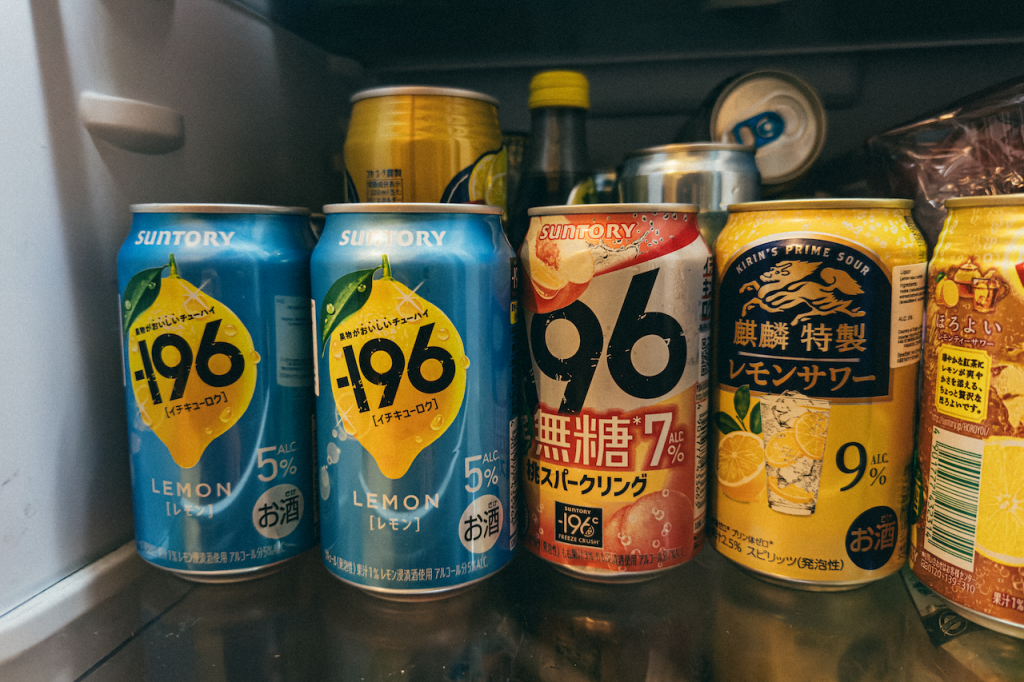
Introduced by Suntory around 2009, Strong Zero is a chūhai—a shōchū highball—engineered with ruthless precision. Under Japan’s liquor tax system, low-alcohol sparkling drinks are taxed more favourably if they stay below 10% ABV. Suntory stopped at 9%: strong enough to get the job done, low enough to remain cheap and widely accessible.

This obsession with optimisation runs deeper than alcohol content alone. In the original Strong Zero, Suntory retains the drink’s punchy natural flavours by flash-freezing whole fruit to –196°C before pulverising it. The process is so central to the brand’s identity that ‘–196’ now wraps around the can itself.
The result was a potent alcoholic drink that tasted like fruit soda.
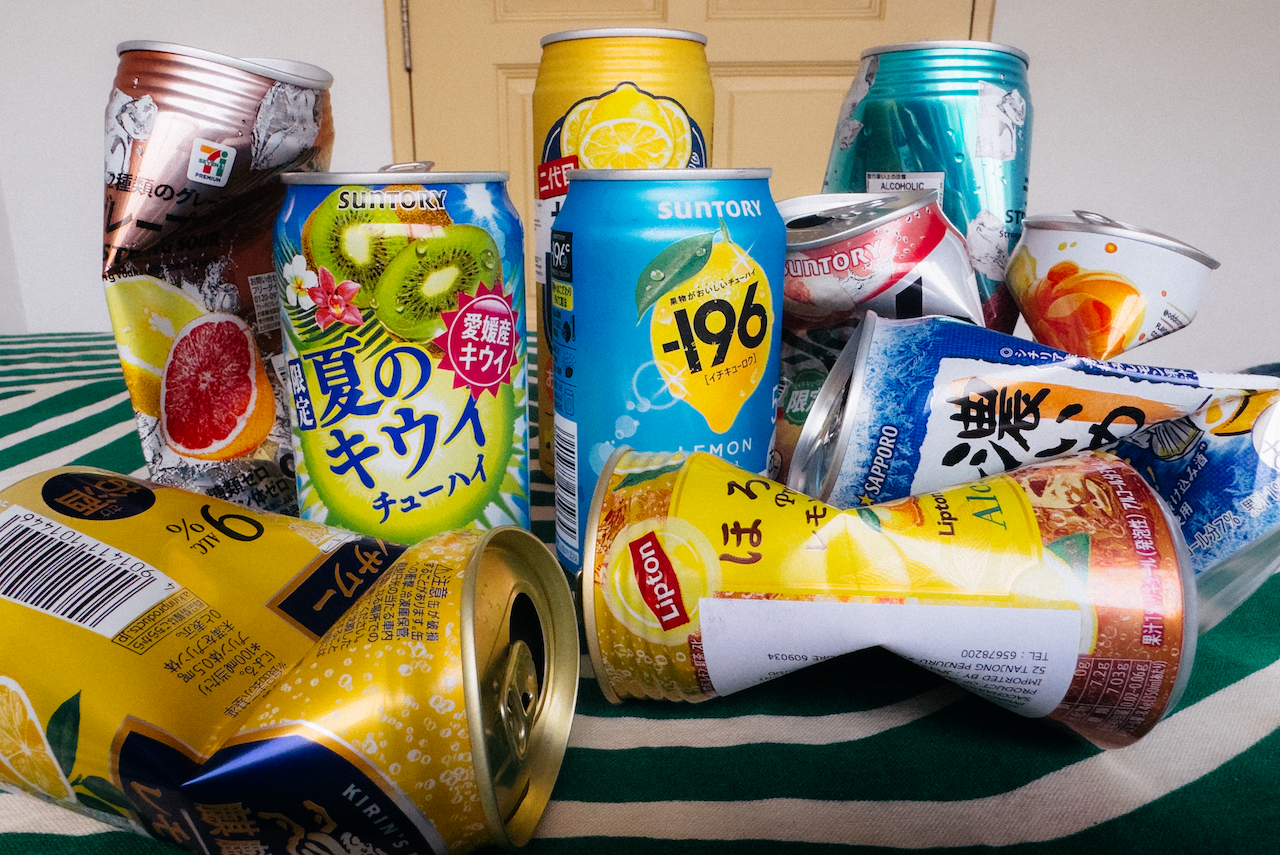
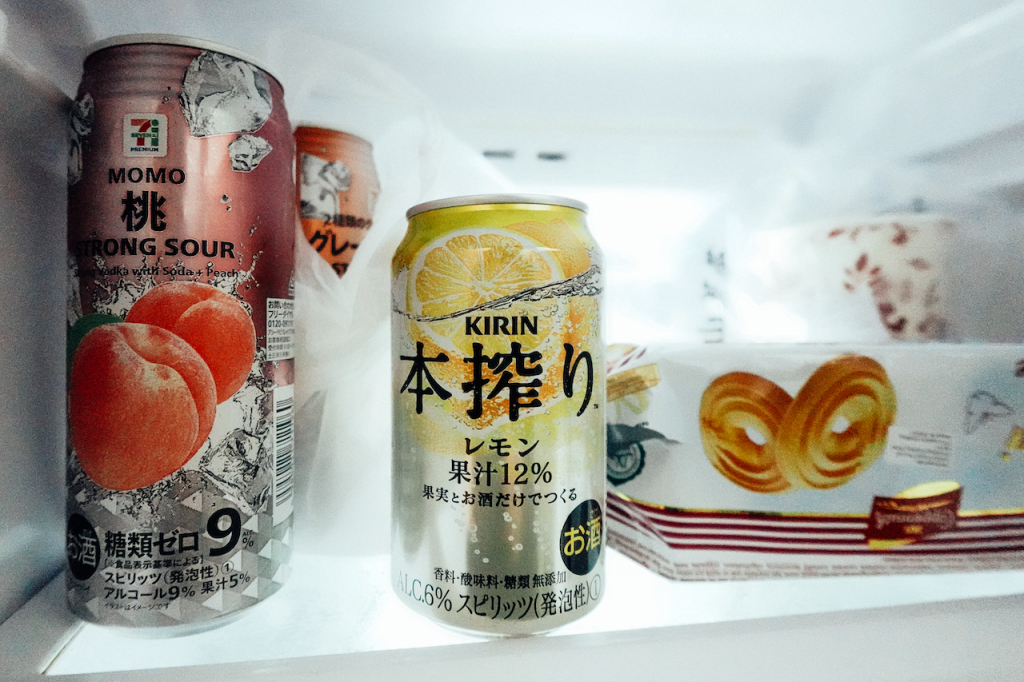
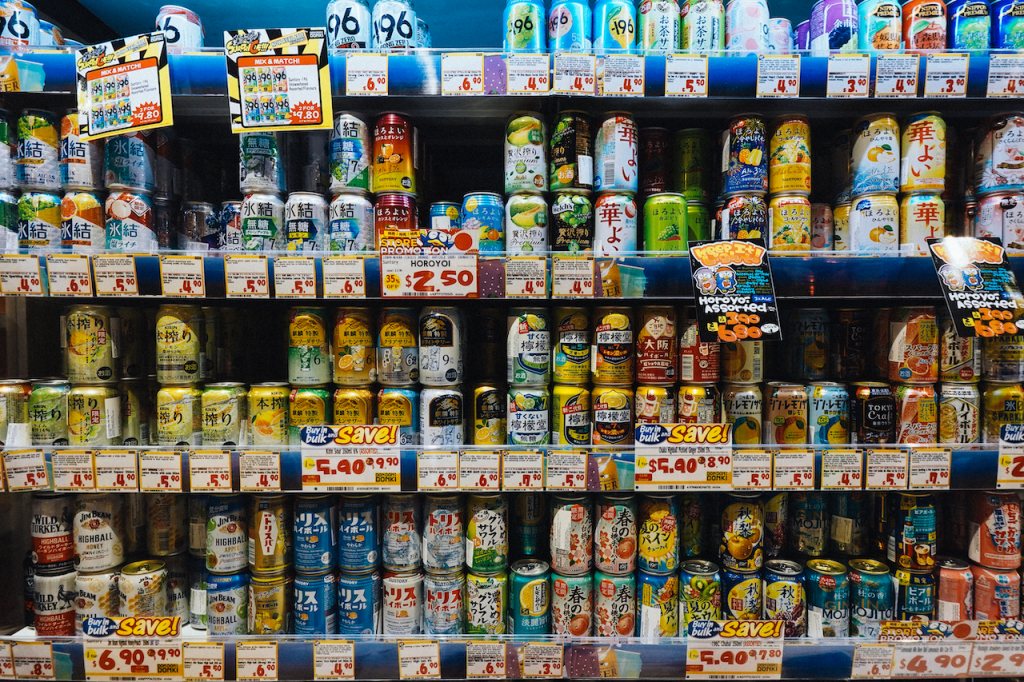
Today, walk into any Singapore convenience store, and you’re confronted with a wall of options: Strong Sour (7-Eleven’s in-house answer), competitor products by Kirin, and an expanding universe of chūhai made with citrus, grape, peach, and unspecified fruit.
Don Don Donki’s alcohol aisle is a wall of cans engineered to overwhelm. In Singapore, we solve the problem by calling them all ‘Strong Zero’, regardless of the brands behind them.
Even legacy spirits brands have taken note. Jack Daniel’s now comes in cans premixed with Coca-Cola. Absolut and Sprite made their marriage official last month.
Consumers had spoken. They were bored with indistinguishable ales and nasty wines.
They wanted flavour, fizz, and—most of all—function for the function.

Function for the Function
This wasn’t just a market trend—it was something I kept seeing on the ground.
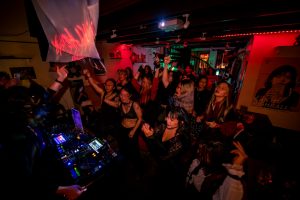
While interviewing young concertgoers at venues like Phil Studio, or goths lingering outside last August’s GOth National Day party, there was almost always a Strong Zero or Strong Sour lurking somewhere in the vicinity.
From the corner of my eye, I’d spot the same background actor time and again—leaning against a curb, half-finished by a drain, or clutched like a comfort blanket.
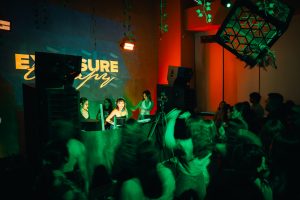
Even at events nominally committed to sobriety—like ‘sober raves’ such as Exposure Therapy—the ghost of RTD culture lingered in the form of empty cans littered nearby. Asia’s answer to White Claw had become the connective tissue across scenes that otherwise shared little.
Was this driven by Japanophilia, konbini romanticism, or simply the cold logic of economics?
All three make Singapore uniquely primed for Strong Zero culture.
“Canned cocktails are a quick and easy way to get ready for a good night,” agrees local drummer Niki Koh, whose band Forests even has an album titled Spending Eternity in a Japanese Convenience Store.
A veteran musician who has been performing at shows locally and internationally for over a decade, he’s witnessed Singapore’s pre-gig ritual evolve “from Amsterdam Maximator and Anchor Strong at 7-Eleven, to Strong Zero.”
“Strong Zero arrived around the time when $10 beer jugs at dive bars like Cuscaden disappeared.”
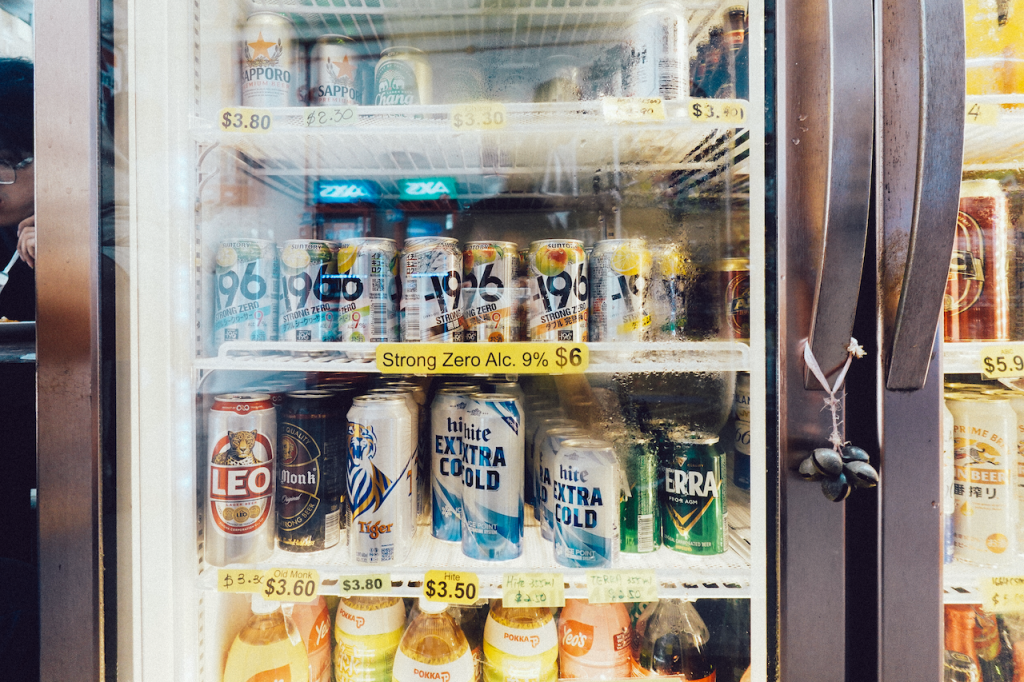
As rising rent and inflation pushed up beverage prices across the island’s traditional nightlife venues, RTDs filled a widening gap—just as consumers were also drifting away from high-carbohydrate drinks like beer.
“I guess it might be a good thing that people are counting their calories,” Niki shrugs.
Undergraduate concertgoer Karina Soetama echoes that sentiment.
“I’m too young to tell if Strong Zero has changed drinking culture,” she says, “but in my time in youth circles, Strong Zero—more specifically (7-Eleven’s) Strong Sour—is extremely popular. It’s conveniently canned, comes in nice flavours, and is more palatable than strong beers or neat liquors.”
There’s been talk about younger generations being more sober-curious, but Karina disagrees.
“People talk about how Gen Z aren’t drinking as much, but I haven’t really seen that kind of abstinence, personally. Many of my peers still drink, but simply can’t afford bar prices.”
While inflation has made even casual indulgences a budgeting consideration, an uncertain job market has also led older millennials to spend cautiously while seeking relief.
With pubs charging around $12–$18 per pint and prices in cocktail bars starting at $26, two 9% RTD tall boys for $15—especially with Friday-night 7-Eleven discounts—becomes an unassailable value proposition.
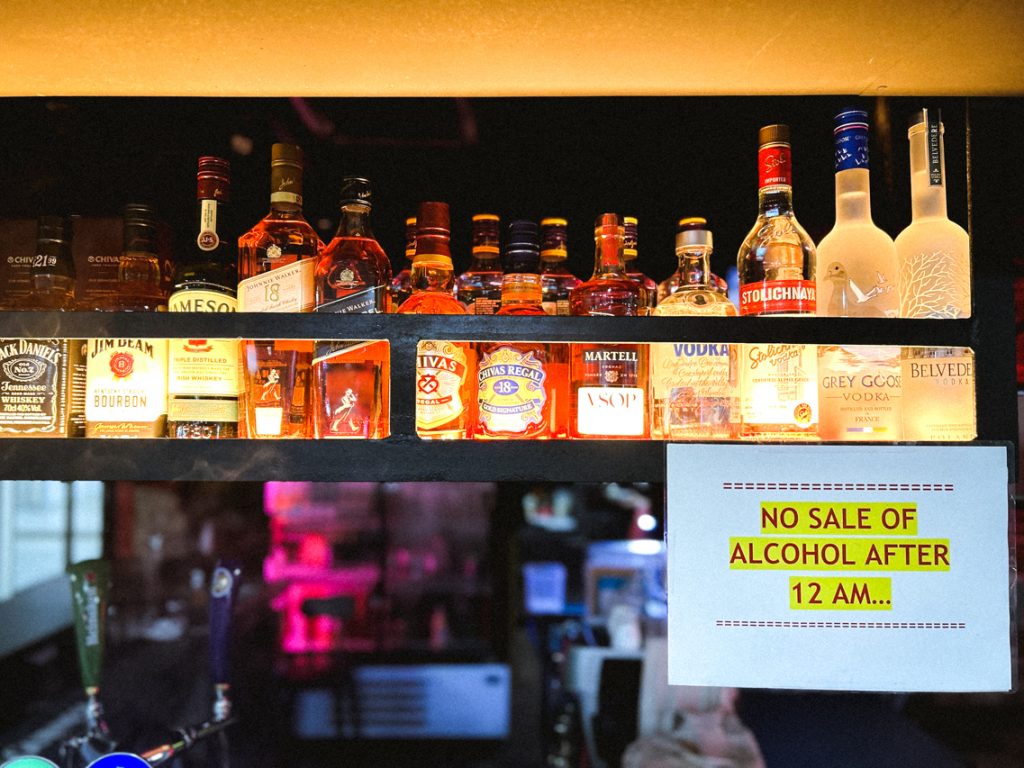
Add to that the Liquor Control Act introduced in 2015, which restricts alcohol purchases after 10:30 pm, and the logic becomes even clearer. Two slim cans that pass for fruit soda slip easily into a bag, get you buzzed quicker than beer, and draw far fewer stares than showing up with hard liquor.
Black Out
“There was a serendipitous change during Covid that allowed RTDs like Strong Zero to really take off,” observes veteran bartender Peter Chua, co-founder of Tanjong Pagar cocktail bar Night Hawk.
The shift, he says, wasn’t just about taste—it was about behaviour. Singaporeans simply started going out less after the semi-lockdown, and when they did, they wanted certainty. And it came in the form of predictable prices, predictable intoxication, and minimal friction.
“Some consumers want bang for their buck, along with the convenience of having something ready to go,” Peter explains.
“Lockdown really changed the local drinking psyche. Strong Zero filled a demand for affordable, approachable drinks that still pack a punch.”
RTDs, of course, aren’t new. Peter recalls earlier iterations such as Hooch and Bacardi Breezer—but those never quite landed as strongly (excuse the pun) as Strong Zero has. The difference, he suggests, is timing.
“People used to make going out an event—something you dressed up for and were willing to spend on,” he says. “Now, with the looming recession and rising costs, many just don’t have the same disposable income. They want quick, easy value.”
What’s emerged, in Peter’s view, is a clearer bifurcation of the drinking public.
For him, the rise of RTDs has distinguished two types of drinkers: “Those who go out for an experience—and those who just want to get wasted.”
For the fortunate few still able to paint our expensive city red, that experiential appeal remains irreplaceable. Russell Cardoza, General Manager of Clarke Quay’s The Cocktail Office, insists that no can—however efficient—can replicate what a good bar offers.
“Nothing replaces the experience of stepping into a space with warm hospitality, well-crafted cocktails, and great music,” he says.
Yet even Russell concedes that RTDs have seeped into nightlife culture in several ways. Their low-calorie, sugar-free positioning hasn’t just resonated with customers—it’s found an audience behind the bar, too.
“RTDs are popular post-shift drinks among my team,” he admits. “Especially after long, busy nights.”
In that sense, RTDs aren’t a competitor to bars—they turn the lights on. They reveal who still has the luxury to linger, and who now drinks with one eye on the clock, their bank balance, and tomorrow’s responsibilities.
Chemical Comfort
If the conveniently canned chūhai had its own version of Spotify Wrapped, I’d be able to reminisce about the times it’s been there for me, through life’s peaks and troughs, adding a bit of sparkle to life when I needed it most.
They’re companions to celebrating the end of long, exacting workdays together with me, and have been my confidante after too many visits to Mandai Crematorium.
Strong Zero and Strong Sour have helped me quieten my internal monologue, dull unwanted memories, and wash down emotions that refused to go down any other way.
To be clear: I am not arguing that alcohol is a healthy coping mechanism. Alcoholism is no way to live.
But I also won’t deny this: when an unshakable sadness settled in from walking with too many loved ones along their final journeys, the unjudging, convenient comfort of Strong Zero was always available. And cheap.
I’m doing better now—thank you for your concern—but I can’t help but wonder what a product like this is doing to Singapore’s nightlife and to us. When release becomes this accessible and maximised, what changes?
“For me, Strong Zero equals immediate deletion of memory,” says Rory Barker, a self-professed heavy drinker who has been performing in rock bands since the 1990s. He’s noticed a steady increase in RTD cans scattered around concert venues and along the streets of Boat Quay, one of Singapore’s last surviving nightlife districts.
“If I were younger, I’d probably be drinking it too,” he admits. “But one can of Strong Zero puts me under the table.”
In a high-stress, efficiency-obsessed city, many drinkers praise RTDs for “getting the job done” immediately. Yet it’s unsettling that the actual concoction doing the job remains so opaque.
If I had access to a mass spectrometer or chromatography machine, I’d be tempted to test popular RTDs just to see what hides behind the vague phrase “additives and fruit flavourings”.
Already flagged by some medical research, these synthetic flavour enhancers make RTDs effortless to consume—so effortless that by the time restraint fails, the damage is already done.
In Japan, addiction experts found that its casually palatable, easy-to-drink nature led many to cross the invisible line into dependence. When drinking becomes this frictionless, it stops feeling like an intentional decision and starts behaving like a casual habit.
And beyond our collective health, it’s hard not to suspect that society is paying the proverbial piper in other quieter ways.
Escapes, Optimised
As nightlife drifts away from the promise of liberation and towards a sharper awareness of constraint, canned cocktails help make escape compact—neat enough to slot between existential exhaustion and the anxiety of tomorrow.
If market forces have indeed primed RTDs to dethrone the Singapore Sling as our national drink, it is worth asking why Singapore has yet to suffer its own Shibuya Meltdown.
Tokyo’s infamous alcohol-induced wipeouts—so unsavoury they recently pushed major brewers like Asahi Group Holdings and Sapporo Holdings to pull back on high-ABV canned drinks—have yet to be a common enough occurrence here to rile the authorities into a frenzy.
If the Japanese are known for losing themselves spectacularly, Singaporeans seem determined to remain in control—even when unravelling. Perhaps that is why our streets are spared collapse, but not fatigue.
So the question isn’t whether we’re addicted to Strong Zero, but what we’re really hooked on when it fits so neatly into the lives we’re living. When proper rest feels out of reach, escape can only be grab-and-go.