Photography by Marisse Caine.
When I first interviewed for a role here at RICE, one of the first concerns my now-manager expressed was: “We’re not sure if you’ll be able to write about local issues.”
I had grown up here, but I am, after all, a white boy with an American accent. Nothing about me said ‘local journalist’. We quickly moved on to discussing other topics, but in that moment I thought of only one thing: what does it mean to be Singaporean?
Is it race? Language? The school you went to? The experiences you had growing up?
How would I quantify the ‘Singaporeanness’ in me? I almost wished there was a checklist I could fill out and present in these situations, to spare both parties from having to ask awkward questions or give explanations—even though I’ve grown far too accustomed to the latter.
But there isn’t. And this may be because the discourse around national identity has stagnated for decades.
Close your eyes and picture a group of Singaporeans. What do you see?
Let me guess. A predominantly Chinese group, with a couple of Indian and Malay faces.
Statistically speaking, this would be generally reflective of the local demographic, and in line with the CMIO (Chinese, Malay, Indian, Other) model the government uses, which has its roots in the 1800s.
Deemed separate but equal, the four racial categories are still used today in various policies related to housing and education, among others. But it is worth asking if this model will stand the test of time, as there are indications that the Singaporeans are increasingly struggling to identify themselves with these confines.
Currently, the ‘Others’ category is the fastest growing ethnic category among Singapore citizens. Our Chinese, Malay, and Indian communities are also diversifying due to increasing openness to interractial marriages.
In 2017, 22.1% of marriages were between a bride and groom of different ethnicities, compared to 16.4% in 2007 and 7.6% in 1990. In 2015, more than a third of citizen marriages involved transnational couples, meaning that at least one spouse was not Singaporean.
Despite growing in number, individuals who fall between or outside of CMI boundaries are still minorities in this country, meaning they often grow up having their ‘Singaporeanness’ questioned.
“You’re Singaporean? You don’t look like it. Where are you really from?”
“If you’re mixed, why does it say Malay on your IC? You should put ‘Other’.”
“How can you be Singaporean with that accent?”
These are just some of the questions non-majority Singaporeans get on a daily basis—if they are even given the opportunity to share their story.
“Sometimes, we don’t even get questions because there’s not even a dialogue there,” said Necia, a 27-year-old Black-Indian Singaporean.
Individuals like Necia have grown up having their local identity interrogated or dismissed because of their appearance. But as citizens, their experiences as Singaporeans are as real as everyone else’s, and in their own way, they have found a way to define ‘local pride’ by seeking comfort in commonalities outside of racial boundaries.
After all, ‘Singaporean’ is not a race. It’s an identity.
Here are the stories of nine others, as told in their own words.
Noelle, 22, Chinese-Black

Singapore is so obsessed with categorising everything. So when you don’t fit into any box, people will pick the one that they are most familiar with. People cannot see I’m Chinese, so they’ll immediately say, “Oh, you’re Malay for sure”—just because I’m brown.
But my friends describe me as one of the most foreign-looking Singaporeans. They say I’m a minah and ah lian mixed into one because sometimes I just burst out singing a Malay song I really love. They’ll be like, “Wah, you damn minah. I cannot take it.”
I’m labelled as Chinese on my IC. I am ok with that because I identify with Chinese people—I grew up in a Chinese family, and I speak basic Mandarin. But I also relate to mixed race and Malay people, which is why I don’t feel like I can be put in a single category.
The CMIO lines may work for some, but it makes me feel like I don’t fit anywhere. I’m not traditionally Chinese, and I don’t know much about black culture. I speak a bit of Malay and have a lot of Malay friends, but I also don’t fit in that community. So sometimes I don’t know where to go.
It makes more sense to just say I’m Singaporean. I don’t understand why we need our race on our IC. If we want to be a multi-racial country, then there’s no point in categorising people. There are so many shades, accents, and cultures of ‘Singaporean’ that we need to learn to accept.
Ysa, 25, Filipino
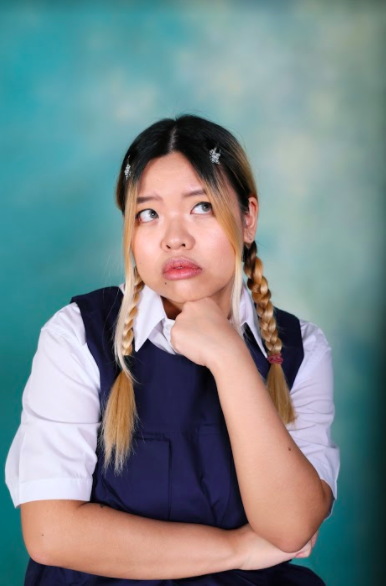
I remember when I became a Singapore citizen, my dad said: “They’re still going to see you as Filipino.”
That happened. I was in secondary school, and no one saw me as Singaporean. Not just the other students, but also the teachers. I was cleaning up the classroom one day, and the teacher called me a ‘Filipino maid’ as a joke. He was trying to be funny, but it wasn’t.
At that age, I also became more aware of how people looked, and I noticed the standard of beauty. All the boys would like girls who were skinny, fair, and had long black hair. That led me to have a few disorder issues.
I was experimenting with getting into music and television, but I remember thinking, “I don’t know if I can make it because I don’t see people that look like me on TV.” I would go to auditions for roles, and I was told I wouldn’t appeal to the mass audiences here.
To this day, people categorise me as Pinoy. But I grew up here, so I tell them I’m actually one of them. “But you don’t sound Singaporean,” they say. It’s easier now that I can code-switch to Singlish, but that shouldn’t have to be the case. It’s like I always have to prove myself.
I used to not feel Singaporean enough, nor Filipino enough. I was confused. But eventually I came to terms with the fact I grew up in a unique way and I am proud of that. But it’s time we started widening the discussion.
‘Racial harmony’ is a big slogan in Singapore. But when they push the racial harmony agenda, is it beneficial to everyone? Does that reach out to all races? The conversation isn’t changing when it needs to be.
Feroz, 33, Malay-Kiwi
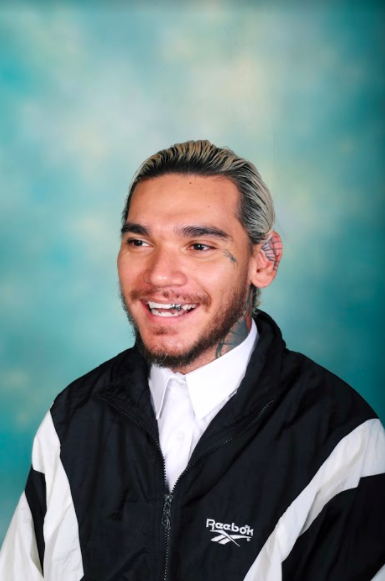
I was very young when the famous punk band Bad Religion released their album The Grey Race. In it, they address how everybody is going to be mixed race in the far future, and it really resonated with me because my dad’s from New Zealand and my mum’s Malay.
I’ve also written a song about it with my band. One of the lyrics was, “If home is where the heart is, then I’m heartless.” It’s a very extreme way to put it. But at the time growing up, that was how I felt.
When I’m here, I don’t fit in with the Malay crowd because of how I look. So I moved to New Zealand, thinking I would be accepted there, but on the contrary, I was ostracised for being Asian. It has always been an internal battle.
It’s better now, but as a young kid, it was so confusing. I was the only mixed kid in my whole school. My classmates would call me ‘mat salleh chelup’, which means white dude dipped in Malay—especially before football games, so I wouldn’t get picked for a team.
That often made me overcompensate and try to be overtly Malay. I would knee-jerk into Malay extracurricular activities and get involved in Malay wedding bands. That only exacerbated the problem, as it would put me in situations where I was even more vulnerable.
Being mixed is good in a lot of ways, but it has hurt my ability to be confident in my own skin at times. I have learned that you’re always going to meet people who are going to make you feel different and try to get you.
Cheyenne, 30, Chinese-Indian
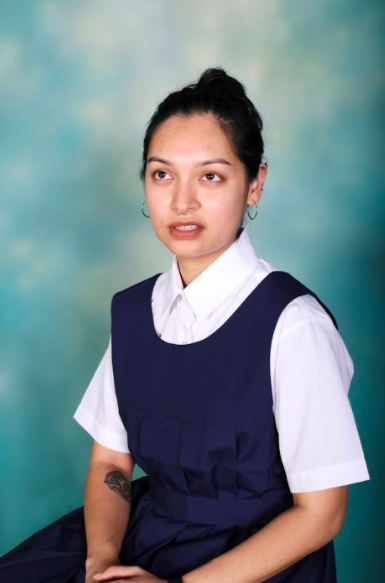
A lecturer once asked me what my cultural identity was, and I couldn’t answer. All I wanted to write down was ‘human being’. I’m not particularly tied to my Chinese or Indian side. Neither side is very traditional, and my family has always pushed for us to be our own individuals.
I had a few awkward moments when I joined the workforce. At my last company, there were only three non-Chinese people. We all got on quite well, but there were some microaggressions. I would hear them use questionable words to refer to Indian people. They would say it so seamlessly around me because I don’t look that Indian. But I do call them out.
I’ve never felt the need to choose a side. I think if you choose to identify specifically with one race, there are a lot of expectations placed on you. For example, I celebrate Chinese New Year, and I love ang baos, but I don’t necessarily conform to many other aspects of being Chinese-Singaporean.
The way Singaporeans identify with the CMI races is still quite strong, even if it’s slowly changing. I would like to say that being Singaporean is not tied to race, but it still is. Look at every drawing or photo of ‘Singaporeans’—it’s one Chinese dude, one Malay, one Indian. If there’s a place for one more person, then it’s a pan-Asian or White-Chinese mix.
There’s rarely room for anything else. We haven’t given ourselves space to envision what anything outside of CMIO looks like.
Ella, 31, Indian-Malay
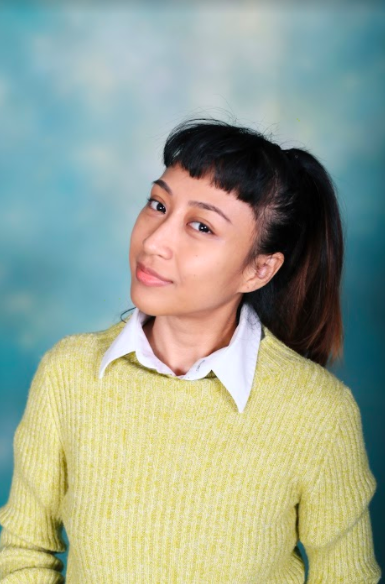
I’ve encountered multiple issues with the way Singaporeans are made to define races. Specifically, I’ve struggled to identify with Malay culture when I have to explain to people why I don’t look stereotypically Malay. I have Indian heritage—which I don’t have any affinity with—but as soon as you bring up that you’re mixed, then your Malay experience is discounted.
The Malay race in Singapore is made up of so many mixed ethnicities that are not properly represented historically. My dad’s grandmother is Betawi from the Cocos Islands. His maternal grandparents are Banjar, and from Southern Thailand. Both of my mother’s parents are Javanese.
The diversity within our community is immense, yet I feel like that’s rarely considered when we discuss our identity. The ‘Malay’ category erases these nuances, and the CMIO model has given a one-size-fits-all definition of a Malay person. For example, being Malay and Muslim are considered to come hand in hand here.
These categories have conditioned us to think about how we’re different all the time—which is unhealthy. For a country that wants to believe in meritocracy, it’s counterproductive to be reminded of what sets us apart. I also think the CMIO model is a product of colonisation, and the way the West tries to make sense of who we are.
Removing the CMIO model wouldn’t remove or erase cultural identities; it would let them flourish. Everyone should still be allowed to label themselves, but when it comes to fostering a sense of nationality, there should be no walls. Officially, we should all be seen as Singaporean regardless of how we acquired that identity.
Necia, 27, Indian-Black
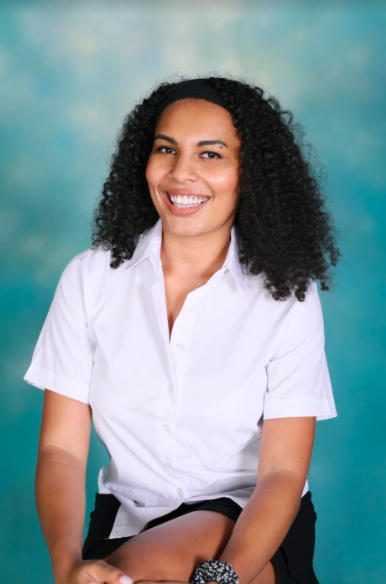
I look black and I sound American, so when I tell people I’m Singaporean, I usually get someone saying something along the lines of: “But you look black. So how are you Singaporean?”
Sometimes I don’t even get questions because there’s not even a dialogue to be had there. To some people’s eyes, I simply can’t be Singaporean because of how I look and speak.
When I am in a taxi, drivers always ask me where I am from. I say Singapore, and they say, “No, you are negro.” These are usually older uncles, so they’re not saying it to be rude or divisive. It’s a descriptive word for them, and that’s how they were raised to call black people back in the day. But it is symptomatic of how Singaporeans have been trained to have a narrow mindset of what constitutes being Singaporean.
With my friends, things are different. They see the Western side of me, but they also know I’m really Asian—I love my Asian food and I am strongly tied to my Asian values. I also feel that blacks and Asians have the same principles when it comes to raising children, their household, respect and authority. So in my family, it was always easy for my parents to be on the same page.
My IC says that I’m American. It’s comical to me that Singapore says it’s a melting pot, yet they can’t even get my race right on my ID. Yes, I am half American, but it isn’t who I am. I was born in this country, grew up here, went to local school—so how am I considered ‘American’ after everything? I am Singaporean first.
Kat, 25, German-Indonesian

To this day, I have found it hard to fully identify as Singaporean. I still don’t feel like I can because I stick out like a sore thumb the moment I walk into any hawker centre. Everyone will look at me like I’m not supposed to be there. Especially if I’m in the heartlands, even though I grew up in Choa Chu Kang.
I always get asked where I am from, but I’m tired of telling people. Especially because over the years, I have seen little change in terms of acceptance, making it less exciting for me to tell them my life story.
At work, they always describe me as ‘ang moh’. I guess that’s predominantly because of my accent or the way I dress. I can switch to Singlish, I just don’t use it at work—but I don’t see why that should matter.
When I’m out socialising, I usually say I’m half Malay because it’s easier when interacting with most Singaporeans, even though I’m actually Indonesian. Indonesian is seen as an ‘other’ while Malay is seen as one of us. That misperception exists because, in Singapore, we are unaware of the cultural differences within the Malay community. I myself used to think it was all the same when I was a child. My grandparents on my mum’s side are from Java, but I didn’t find out until I was about 13, because I assumed we were just Malay.
In general, I would say that integration is one of the biggest challenges of being an ‘other’. For example, when my younger sister had to start elementary, no school would take her because the ‘others’ quota was full—even though she had gotten into kindergarten without an issue.
Eventually, she had to be enrolled on a private school because there was no alternative. But going to an international school means having a harder time integrating with the local community, so for that reason, I believe the CMIO model isn’t always fostering the inclusiveness we want.
Delance, 26, Indian-Black
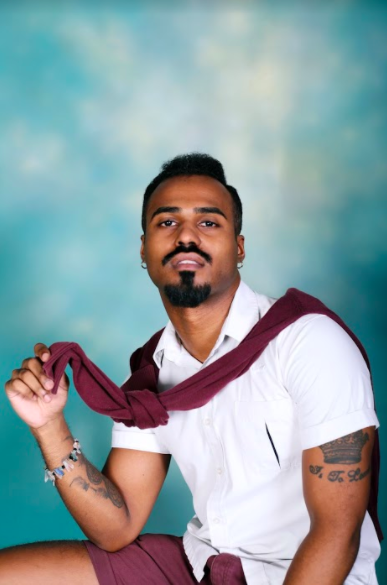
My family left Singapore when I was a kid, and we came back when I was 12. I never noticed my skin colour until I moved back here because suddenly, I was ‘the black kid’ in school.
I had a teacher come to me during a test and start pushing pens in my head. I asked him what he was doing, and he said: “Focus on your exam, I’m trying to see how many pencils I can stuff in your hair.” I guess he was just trying to be funny, but all these experiences only make you feel more othered. I was always the outsider looking in.
Then, back in 2010, it was time to get my IC. So my family goes into the ICA, we make our ICs, and my mum flips out. They put my race as negro.
Maybe if it happened in the ’90s, I could understand that people still didn’t understand the term. But this was 2010, and they put that word on an official government document. We ended up speaking to the supervisor, and they changed it. There was a dropdown list of races I could choose from. Black or African-American were not there, so I had to go with American—even if American isn’t a race.
I believe there is a false pretence of racial harmony and a very narrow perception of ‘Singaporeanness’, because when I try to speak about these experiences, they get brushed off as being ‘foreign issues’ that don’t matter in Singapore.
That way of thinking is stopping us from making progress. If I’m telling you that it is frustrating to have to prove my identity to you when this place is home, then it’s valid. At the end of the day, I’m still a citizen like you, and my value as a Singaporean is just as important as that of an individual from the majority race.
Russell, 33, Chinese-Peranakan
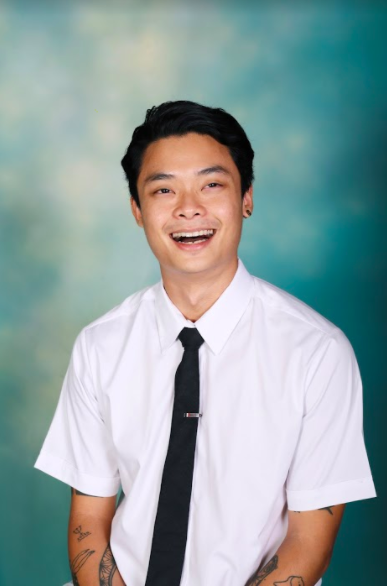
I’m considered ‘Chinese-Singaporean’, but I believe our definition of that term is outdated. I am always asked if I’m Filipino or if I’m from Thailand. When I tell people I’m Chinese, they ask why I’m so dark. Then I have to explain that I have a Peranakan background.
Culturally, I wouldn’t say I’m traditionally Chinese either. I can’t speak Chinese because I grew up in an English-speaking home. My mum’s second language is Malay because of the Peranakan culture she grew up in. The only Chinese tradition we celebrate is Chinese New Year. So when I’m with friends who have more traditional Chinese backgrounds, they make fun of me for not being able to speak the language, and they say, “But you’re not really Chinese.”
I have also found it hard to define my values. I tend to have more liberal views, but I always get told I have those because I lived abroad—even if only for two years. I’ll be speaking to someone, and I’ll say, “Oh, I studied in Hong Kong for two years”. To that, they always say, “Oh no wonder, now it makes sense”—as if to say my views can’t be Singaporean. But I take no offence.
I have Chinese, Malay, and Peranakan in me, so I am a very Singaporean blend. But people look for comfort in the categories—if you’re Chinese, you need to be the typical Chinese. If you’re Malay, you have to be the typical Malay.
I don’t think that there is a problem with categorising your race, but people need to understand that these races aren’t boundaries of how you should be or act. Just because I have Chinese on my IC shouldn’t mean I need to be a certain way. The current social construct of past generations is very divided, but our generation is really starting to move beyond those lines.
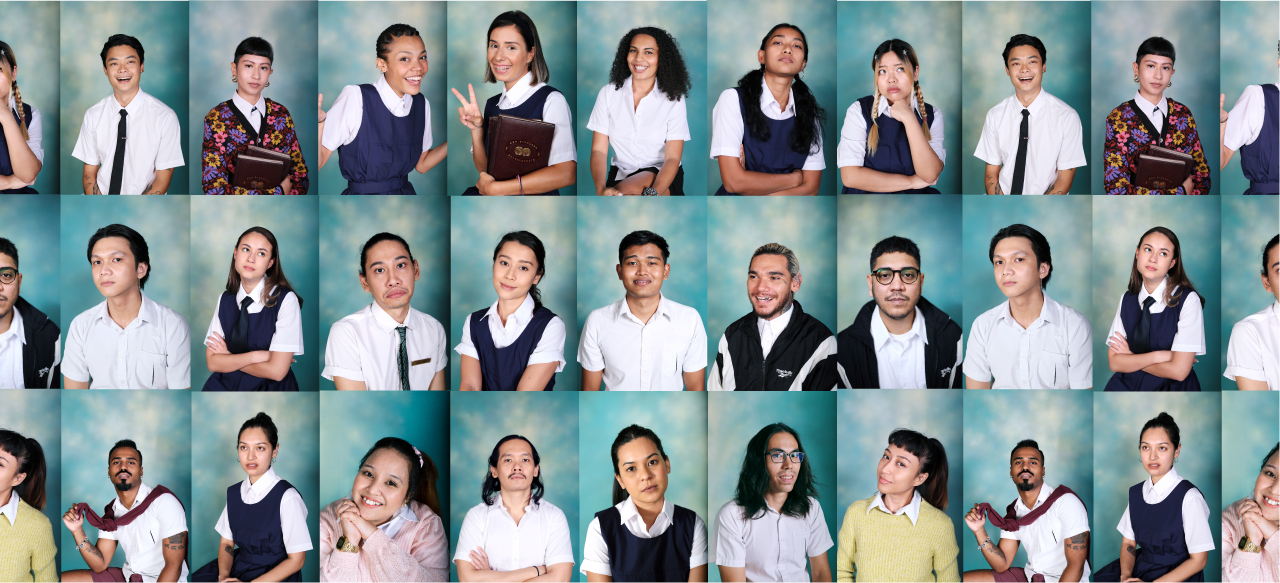
Since independence, Singapore’s national identity has grown around notions of Singaporean-Chinese, Singaporean-Malay and Singaporean-Indian. But what these nine individuals share is a sense of belonging that exists both inside and outside of those boundaries.
Watching them gather across the day we photographed their profiles was like witnessing a possible, future Singapore. A sense of community filled the air, even if most of us didn’t know each other. No one asked questions to determine how ‘Singaporean’ anyone was. No one tried to evaluate the lived experiences of anyone else. Bonds were built, rooted simply in shared memories of places and circumstances, or in the food and pastimes we love.
What does this mean for the future of Singapore?
We can choose to obsess over binaries like ‘other’ versus ‘us’, or ‘foreign’ versus ‘local.’ We can choose to pick apart our differences and examine what sets us apart from one another.
Or, we can choose to embrace the diversity that makes us special. Everyone who has ever called Singapore home has shared a history different to their neighbours, and that has built a vibrant society that thrives today. In these unprecedented times, let’s choose to break down the walls that threaten to divide us.
What does it mean to be Singaporean? Tell us at community@ricemedia.co.