
All images by Zachary Tang for RICE Media
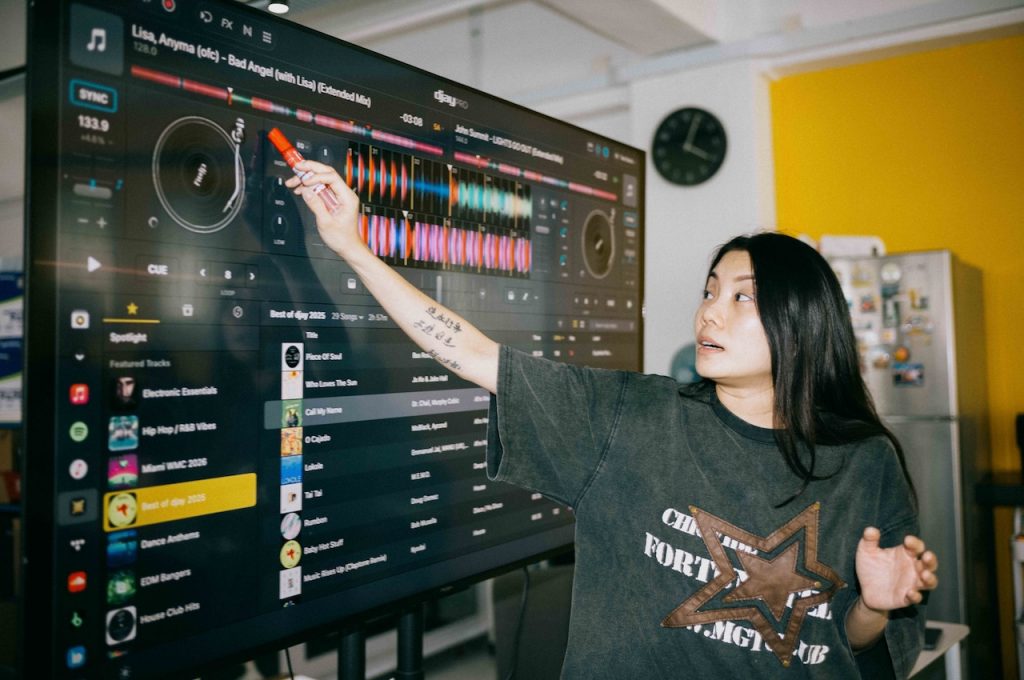
In the middle of an industrial office in Redhill, a room full of aspiring disc jockeys pays undivided attention to a waifish woman in an oversized t-shirt as she divulges tips distilled from 16 years of helming the decks.
Electro-mandopop thumps softly in the bright, reverby room. Kate Yong—or rather, the musician known as Tinc—guides a grey-haired man’s hands across the jog wheels and faders of a small, beginner-friendly DJ controller. Nearby, a teenage student who’s practically vibrating with questions waits eagerly to catch her eye.
Tinc has seen all kinds of students since she started conducting DJ workshops in 2014. Some are young and ambitious—“people who can still afford to dream,” as she puts it.
These past few years, however, she’s been seeing a new calibre of students: older, wearier. Most times, they’re just looking for a brief musical distraction from the demands of work and family. One of her students, a university lecturer in his 50s, simply wanted to learn something new again.
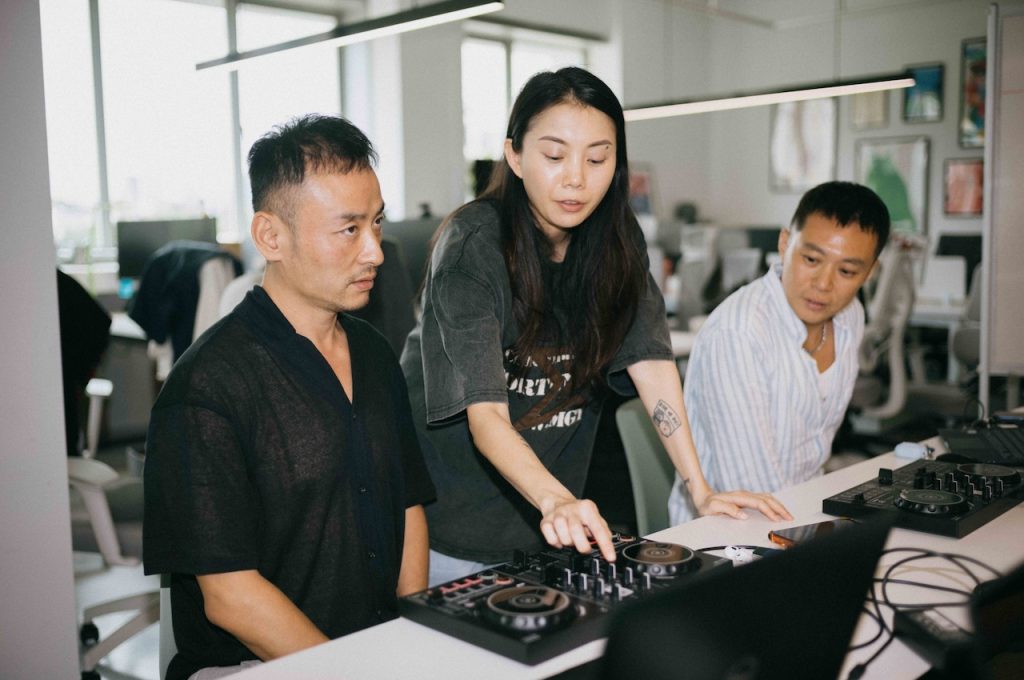
Others arrive with something far more dramatic in tow. They’re parents and breadwinners who quit their corporate jobs on impulse, suddenly setting their sights on a career in music.
It’s a volatile decision that tends to invite immediate concern—if not outright disapproval—from loved ones. Yet Tinc refuses to join the chorus of naysayers. Instead, she meets them with empathy.
“Some students are very brave to quit their jobs. But that’s also a reflection of how sick they are of their lives,” she offers.
“They feel like they have nothing left to lose. And in music, they see hope.”
She sees herself in them, in a way. It’s exactly what she once was: someone who desperately needed to believe that music could hold her.

The Business of Beats
In Hollywood, there’s a term called the ‘working actor’—the hundreds of thousands of people who aren’t household names but aren’t really struggling either. They just get steady jobs without a lot of fanfare, making a decent living doing what they love.
Tinc is the DJ equivalent of that. She’s not a global or regional superstar, but she’s no cautionary tale. Tinc is just someone who figured out how to make a business out of beats—someone who channelled a very Singaporean hustle mindset into a very un-Singaporean aspiration.
The work ethic she puts into sustaining a career as a professional DJ shows up in her portfolio. It includes regional gigs, bookings for corporate shindigs, being the official DJ of National Day Parade 2022, and over 101,000 followers on her Instagram account.

It would be easy to credit her online following to the fact that she is a conventionally attractive female DJ, but that would be entirely dismissive of her grind—plus the fact that discerning clubbers now place far more emphasis on technical craft than looks.
Tinc, however, is under no illusion that being photogenic is part of her bread and butter, just as much as her musicality is.
“Make sure I look chio,” Tinc says half-seriously to our photographer as his camera shutter snaps.
This self-awareness plays a part in her self-marketing. On her social accounts, she curates well-produced photos and clips from her various shows—all of which push forth the vibe that it’s a party everywhere she goes. The persona is, in part, a vehicle to sell the Tinc ecosystem of merch (including Tinc-themed light sticks that go for $34 per pack of four), workshops, mentorship programmes, and studio rentals in Ubi.
All this to say: Tinc is not naive about what it takes to last. A DJ career in Singapore is fragile— the merch, the workshops, the studio rentals are load-bearing walls she strains to keep upright every single day. The workshops she leads take up several weekends a month. Nonetheless, she remains patient and dedicated, even when she can manage only a few winks of sleep after a late-night gig before running a workshop the next morning.
Despite her punishing schedule, she fiercely guards her fixed days off to spend with her son. Tinc became a single mother six years ago, and though she constantly juggles motherhood and a relentless music career, the fan letters and heartfelt compliments make the hustle worthwhile.
Above all, she is driven by the knowledge that she is actively democratising a notoriously insular industry.
Jiak Kim Dreams
In the late noughties, a 19-year-old Kate Yong took a taxi from her home in Tampines to her very first clubbing experience. That night left an impression on her far deeper than it did on the average teenager.
Standing transfixed in the main hall of the old Zouk on Jiak Kim Street, she watched a sea of revellers move in perfect, visceral unison at the command of hip-hop turntablist DJ Eclipse. In that hyper-charged room, Tinc realised that DJing was the only thing she wanted to do with her life.
She saved up to buy a first-generation Pioneer digital console that cost about $1,000, funnelling whatever little money she had left into vinyl records. She began routinely turning down social invitations from friends, driven by a solitary, haunting thought: “Somewhere in the world, someone else is working even harder to become a better DJ.”
As formalised DJ classes did not exist back then, Tinc resorted to cold-messaging veterans via email, Twitter, and Facebook, pleading for answers to her technical questions. Growing a thick skin was a necessity, but the rejections still stung. While kindly old hands like DJ Eclipse generously shared their savoir-faire, many others scoffed. Record companies shunned her.
“People feel inspired when they attend festivals,” she says. “But they don’t realise that behind every successful DJ are hours of daily practice and years of grinding.”
She would know. She has hauled her own heavy equipment to low-paying gigs and stayed behind to clean the venues after the lights went up.
Once the strobes dim and the smoke dissipates, she warns her students, the romance of DJing quickly wears remarkably thin. The industry itself is an unforgiving ecosystem.
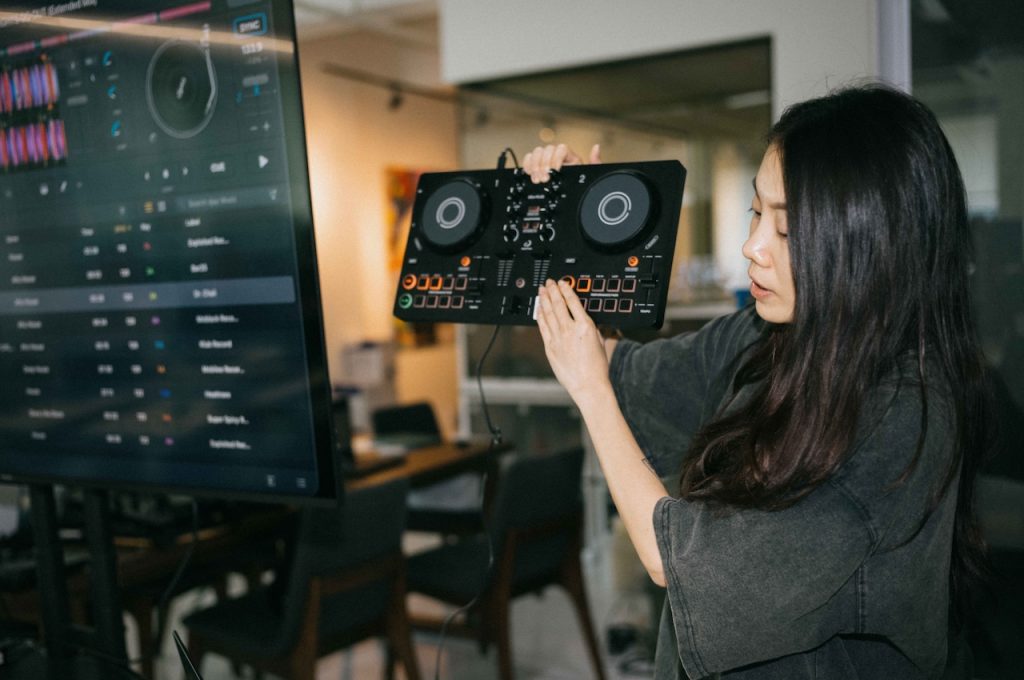
“It’s loud, chaotic, and hyper-stimulating,” she says. “Some people just can’t take it.”
Then there is the Sisyphean struggle of carving out an artistic career in Singapore. Between soaring living costs, dwindling nightlife venues, and a culture that often treats music as a dispensable hobby rather than a respectable craft, passion alone rarely pays the rent.
Beyond financial precarity lie the industry’s psychological vices: addiction, excess, and ego. The most insidious trap, Tinc suggests, is the illusion of fame.
“Fame isn’t always an indicator of talent.”
She has watched students become intoxicated not just by alcohol, but by applause—mistaking a packed dance floor for personal success, rather than the simple byproduct of a venue’s effective marketing team. It is an easy illusion to fall for, and an incredibly painful one to unlearn. Today, as the barriers to entry drop and Gen Z’s nightlife habits shift, the competition is steeper than ever.

Beyond teaching the technical craft, Tinc views her role through a deeply human lens. She acts as a grounded voice of reason for students of all ages and backgrounds as they attempt to rediscover meaning.
“I don’t stop my students from dreaming,” Tinc says.
After all, she is one of the few who held on long enough to find her own lane in the local nightlife scene. The music she spins and creates—EDM-flavoured Mandopop—isn’t exactly the type that’d get her behind the decks at Headquarters or at parties like Ice Cream Sundays.
She’s not gunning for that. Her crowd lies elsewhere in the mainstream, and it’s a crowd that keeps showing up.
Finding The Frequency

“I hope people remember me and the difference my music made,” she remarks backstage, at a private corporate gig held in the middle of Seletar.
What she means isn’t just her DJ sets. Alongside her gigging career, Tinc has been writing and recording her own music—pop songs in English and Mandarin, sung in her own voice, released with proper music videos on her YouTube channel.
The view counts sit in the tens of thousands. For someone most people encounter first through the decks, it’s an easy side of her to miss.
When she receives messages from strangers who found solace in her tracks, or meets fans who have flown across the region just to watch her set, her lowest lows feel like water off a duck’s back.
“When I was starting out, my dream was simply to perform on the international stage. So the work never felt like a sacrifice—it felt like a given.”
That clarity carried her through intense personal struggles, including a paralysing bout of impostor syndrome. The Covid era, in particular, was tough—she had to undergo a short stint working in a hotel to sustain herself.
“I didn’t even know what impostor syndrome was until a psychologist explained it to me,” she admits. “After the Covid lockdowns, when I hadn’t performed in a long time, I started wondering if I was still relevant.”
The sudden self-doubt pushed her to overcompensate, eventually leading to severe burnout. But setbacks, she has learned, have a way of refining one’s intent. Her deep-seated desire to perform drives her to sing her lungs out during her sets. Distinguishing her performances from standard club sets, she croons live into a microphone while her turntables spin.


Tonight, her audience starts out starched and stiff. But slowly, under the influence of her energy, they begin shimmying to the beats, pulling out their phones to record her.
The sheer exhaustion finally catches up with Tinc as she walks back to her dressing room after her final track.
“How do you keep your makeup from running in these hot venues?” I ask.
My question goes unanswered—perhaps it is a closely guarded trade secret, or perhaps Tinc is simply coming down from the massive adrenaline rush of the performance.
A fan soon approaches, excitedly brandishing an old photograph they took together years ago. Before long, Tinc is pulled in several directions by an adoring crowd. She still finds herself caught off guard by her own impact.
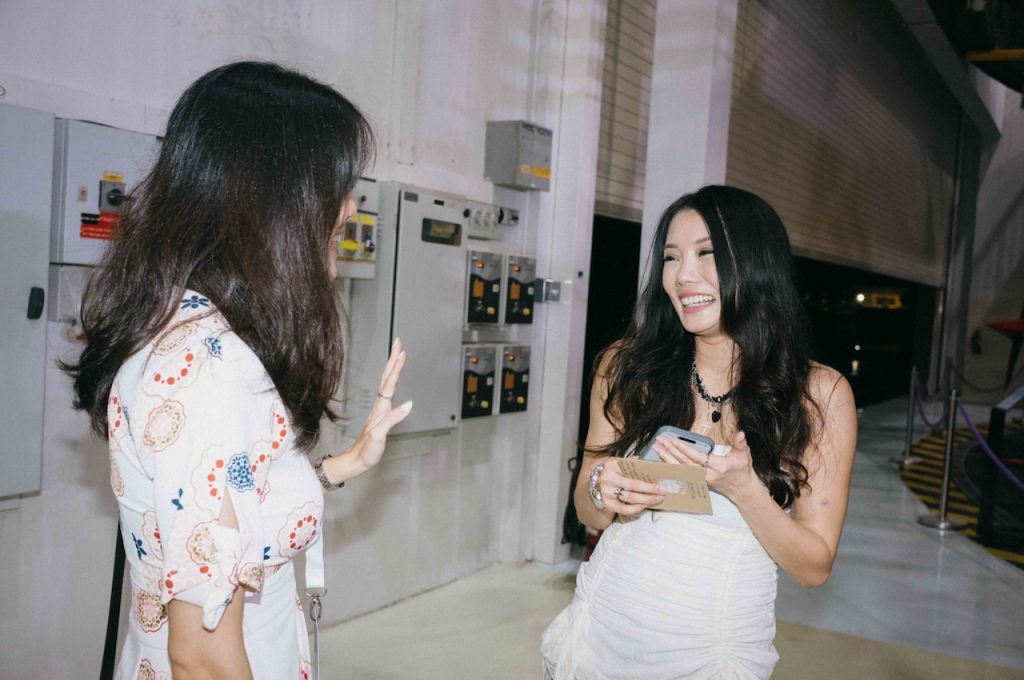
“Sometimes, I still can’t believe people actually buy tickets to watch me,” she says, laughing softly. “So if I died tomorrow, I’d have no regrets.”
Tempo Transitions
Bright and early the next morning, Tinc has traded her vibrant stage blush and eyeshadow for nude makeup, a sombre black t-shirt, and unassuming jeans. A pair of Shin Ramyun socks peek out from her sneakers.
“I never get enough sleep,” she replies when asked if she’s well-rested.

Yet, as she commands her students’ attention back in the classroom, she exudes no less energy than when she presides over the stage. The same attentiveness she brings to a packed dancefloor— reading the room, reading the people in it—she brings here.
The students quitting their corporate jobs aren’t just doing so to chase a passion; they’re dismantling a version of themselves who followed the Singaporean script. That’s why Tinc’s empathy matters, and why her existence as a working artist matters: she’s proof that choosing to pivot can lead somewhere.
Singapore doesn’t make it easy to be a working artist, not with a culture that still expects you to have a proper job to fall back on. What it does reward, eventually, is knowing how to be useful in more ways than one.
Tinc didn’t make it look easy. But her story makes an argument that the dream doesn’t have to arrive the way you imagined it. What she made it look like was possible. And that, for the people in this room, turns out to be enough.