Julian Wong was a co-founder and the first writer and editor at RICE Media. He currently runs Lian Advisory, a strategic advisory practice helping businesses scale through credibility, cultural influence, and organisational coherence with clients across healthcare, finance, media, and social impact.
In this RICE Community Voices piece, Julian looks back on what the publication meant to him and what he hopes its audience—and Singaporeans at large—will continue to yearn for.
Top image: Shiva Bharathi Gupta / RICE file photo
For the last two months, I’ve had countless conversations with friends, family, and professional acquaintances about RICE Media. People were curious—what led to something that caught so many by surprise?
Mostly, they’ve wanted to know: How does it feel to let go of your baby?
I suppose it’s a fair question. I started RICE back in 2016 with my co-founder Mark, wrote almost all of RICE’s early pieces (including the first one that went viral), grew the team, left, returned, and finally left again in March this year. This time, for good.
But how do you compress a 10-year journey into a single conversation?
In 2016, the year we started RICE, I was fresh out of university, armed with nothing more than my bachelor’s degree in English literature. I was also slightly burnt out, having spent the previous four years mostly skipping classes to work as a barista, tuition teacher, and freelance writer.
I want to say that RICE started simply because I looked at my reality versus the reality the mainstream media sought to shape and sanitise about life in Singapore. I saw a gap, and I sought to fill that gap.
This did happen. But it wasn’t that simple, either.
Few people start companies or become entrepreneurs because they think it will make them rich. For both Mark and I, we couldn’t help ourselves. We had always been outsiders. In each of our own ways, we had never fit into any script about what a Singaporean should do or who they should be.
So we started a digital magazine. And as RICE’s first writer, I wrote from a deep yearning—for stories that I knew existed but were not immediately accessible.
Stories about people living at the margins, people trying fiercely to carve out lives they could own and be proud of, stories that captured concepts and philosophies (both personal and academic) about how life could be… more.
More fulfilling. More equitable. More fun. More compassionate. More alive.
Surely, I thought, there must be beauty in this country.
This quickly became our cultural signature. Remember, this was 2016. There were maybe a handful of niche publications floating around, occasionally covering the kinds of topics we did.
But it was RICE that normalised the coverage of ‘taboo’ topics like race, gender, LGBTQ issues, religion, and socio-economic inequality, amongst others. We paid serious attention to subcultures and underground communities, and we took risks with investigative reporting and political commentary.
We did it this way because we believed these were stories worth telling. That, yes, there was beauty to be found, if only we cared enough to look.
Over the years, many people have called RICE controversial. It is a characterisation I have never understood. After all, it was not as though we covered stories that were untrue.
RICE has always simply endeavoured, in my view, to reflect what already exists in Singapore.
It Will Always Be 2016
Looking back at 25-year-old me, I know that RICE was my attempt to give voice to many of my frustrations about how my life felt at the time. I was nursing a gnawing sense of displacement and disconnection; an angst about how being Singaporean felt like it meant being cynical and transactional, like everything could be reduced to a policy trade-off.
This was not who I wanted to be, and as both a writer and entrepreneur, I brought to our work a vision for what we believed could be different. We brought a hunger and passion that I now look back on and sometimes wonder: how did I even keep going like that?
We serviced the work with our own peculiar concoction of innocence, inexperience, and mental health challenges that helped us pull the business through some tough moments, but it also came at great personal cost.
And it has been 10 years. In the same month that I decided to exit RICE Media, I turned 35. In Singaporean terms, this means I am now legally able to purchase an HDB flat as a single person.
In adult terms, it also means that life looks very different now. I am a different person now.
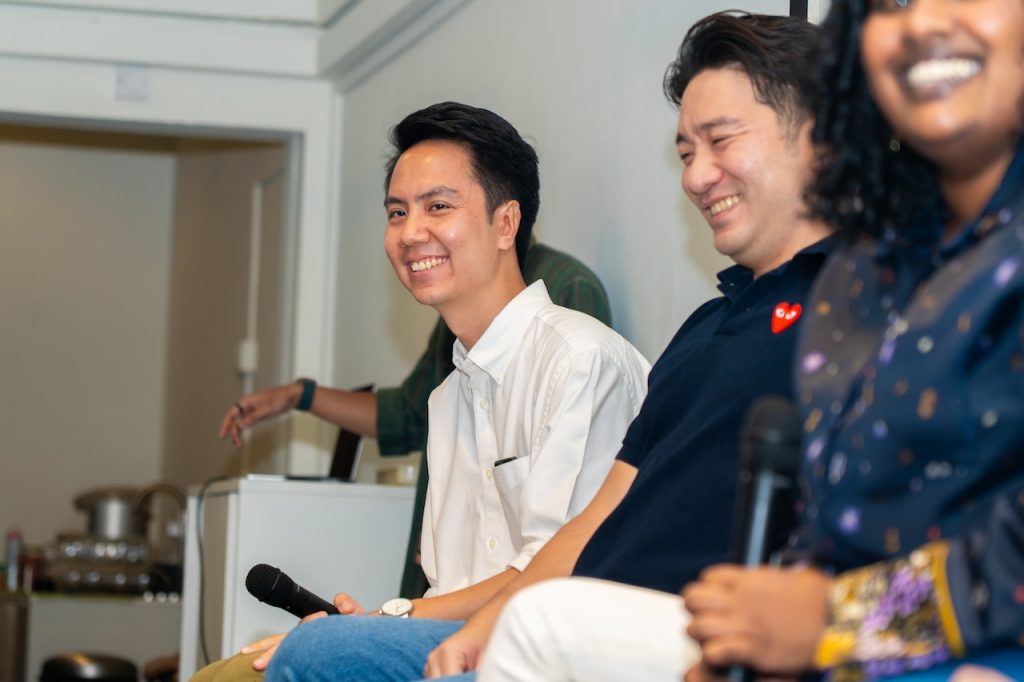
For both Mark and I, what began as a dream to tell stories had also slowly become a constraint—for both our personal identities and the kind of lives we wanted to build. Sometimes, wisdom is knowing when to let go.
I would be lying if I said there aren’t days when I wish it were still 2016. The temptation is to think: it was so much better then. People still wanted to read; they cared about long-form writing. We didn’t live in a world optimised for algorithms and doom-scrolling.
But this is what I’ve realised. I’ve realised that it will always be 2016.
By this, I mean that there is no expiry date on dreaming. Things are always changing, and there will always be something worth fighting for.
The Yearning
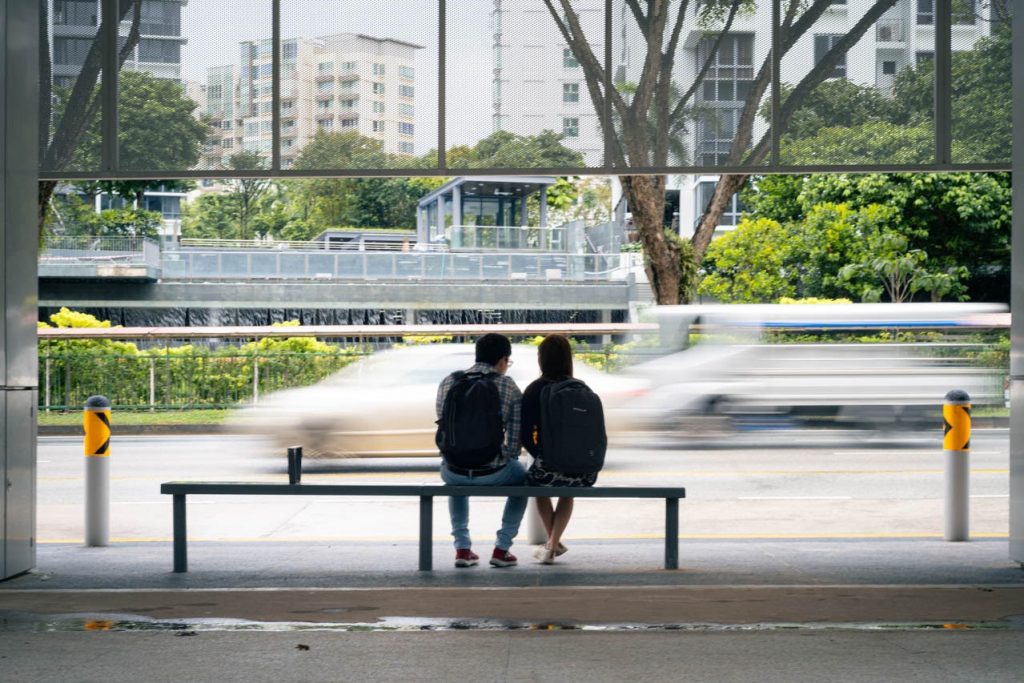
It has been said to death that Singaporean society is deeply nostalgic. Because of the pace of transformation this country has experienced, we have lost so much, from physical infrastructure and cultural ecosystems to values and ways of being.
We are a culture that is always grieving. And these days it can seem as though we are not just grieving what has been lost but also what we know we will eventually lose.
While I do agree that, as a culture, we are deeply nostalgic, my suspicion is that it is not the past we are yearning for.
Rather, it is for a future in which we can see ourselves. It is for a story in which we decide what happens in our lives, with space to exhale and consider what we really want, rather than feeling at the mercy of global events, national policies, or even some abstract, deeply ingrained belief that it is better to play it safe.
As Singaporeans, so much of our yearning is about our search for connection, rootedness, and belonging. It’s about a desire for simpler things that runs headlong into how we actually organise our lives through credential-chasing, property accumulation, or even busyness masquerading as social currency (and so it goes).
I am not an academic. But to me, this is what this nostalgia, this grief, is really pointing to. It is what many of us continue to search for.
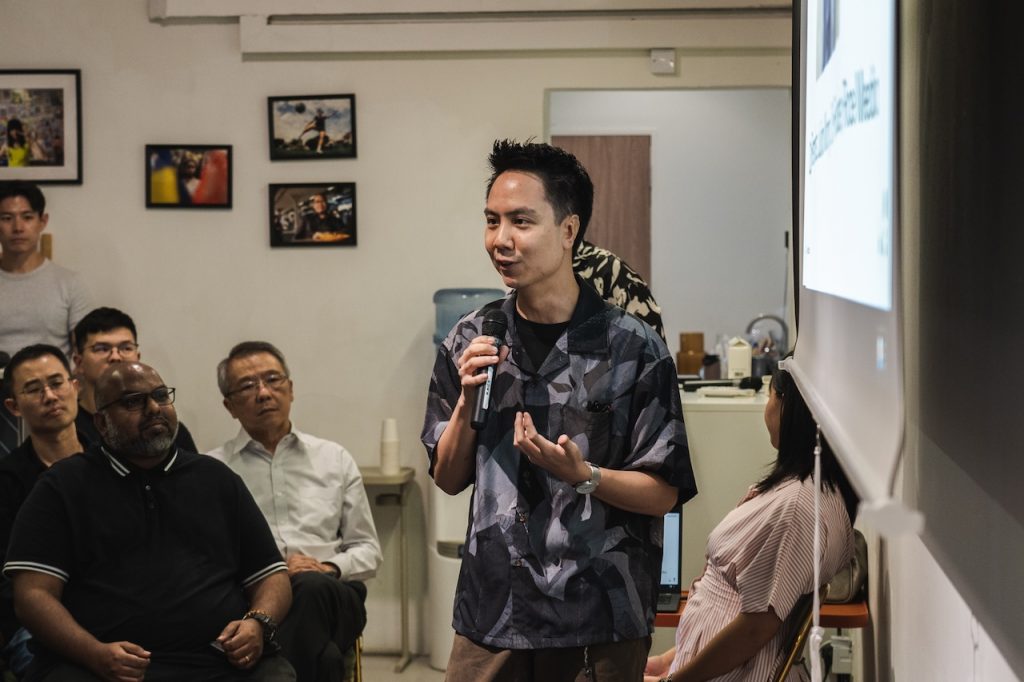
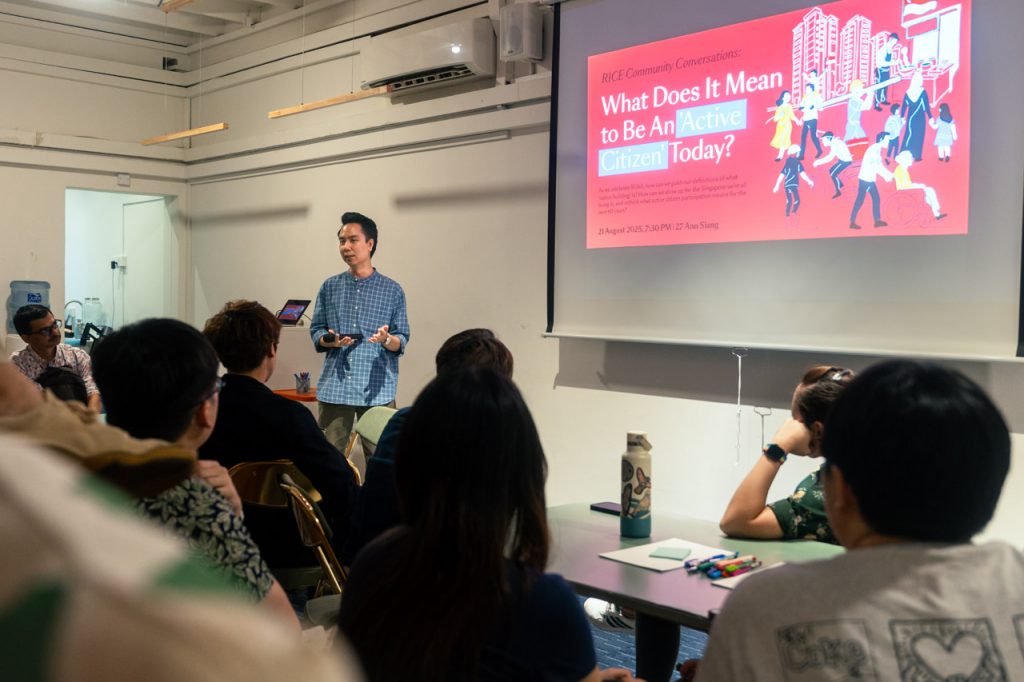
Last year, as RICE doubled down on community building and in-person events, I met and spoke with so many I’ve now come to recognise as quintessential RICE readers: Singaporeans who are in touch with how challenging things are but have not lost hope. Who continue not just to yearn, but also to act.
The quintessential RICE reader understands that change doesn’t need to be big to be radical—that it also happens through small, consistent, everyday transformations.
I ran a series of focus groups last September, interviewing these people to understand the texture of their everyday lives. What were their aspirations? What was going well? Where were they feeling challenged? What continued to give them hope?
What struck me about these conversations was that, yes, on the surface, many of the concerns were material in nature. Cost of living, job prospects, lack of third spaces, having little to no energy, and so on.
But really, they were about the texture of living in Singapore: that sense of connection to place, society, community, and heritage that gives life purpose.
One participant, when sharing about purchasing their HDB flat, said, “The day I got my keys, I felt relief and panic at the same time. Like I just signed away my next 25 years”.
Another said, “We’ve grown up so efficiently we don’t know how to need people”.
But in those same conversations, people also said things like, “I left tech. I don’t make sales now. I just make”. They also said, “Creativity is freedom, I’m now learning it’s about being brave enough to say what I think”.
People talked about the micro, often invisible ways in which they were slowly, mindfully, courageously constructing lives that they felt in control of—lives they did not need to explain to anyone else or to compare to anyone else’s.
It was a reminder that where there is despair, there is also hope. The yearning never goes away, and neither does our pursuit to meet and soothe that yearning.
The Permission to Be Different
What I’ve missed most about being in RICE is the view this platform has given me into the lives of Singaporeans who are giving themselves permission to be different. To want different things, to have different standards for living a good life; to fight, resolutely, incrementally, for crafting a life lived with intention.
It was also a reminder that these stories existed even before RICE started telling them. And they will continue to exist regardless.
In the early years of RICE, there were days when—between chasing deadlines, closing clients, agonising over public comments on our work, and managing HR issues—I would wonder what it was all for.
Perhaps, I thought, I would one day wake up to a world where the work was finally ‘done’, and we were finally ‘there’. Where the angry teenager in me could look at Singapore and think, “This is finally the world I want to live in, where I finally feel like I belong”.
Since then, I’ve learnt two things.
One: There are many ways to get where you want to go. For me, RICE was just one way to do it. And at some point, the joy of pursuing stories became operational overload from trying to make a business work.
Two: It is, in fact, not even about ‘getting there’. It’s not about finding answers to the questions I have—like, “What does it truly mean to have a Singaporean identity I can connect with and be proud of?”—but about continuing to ask them.
One of the unassailable national narratives we have become so familiar with is that Singapore and Singaporeans must stay competitive. What tends to get left out of the conversation: What are we competing for?
As I move on from RICE, my hope is simple. My hope is that we, in our own individual Singaporean ways, will compete for a life that is ours. A life in which we feel safe, empowered, connected, dignified, creative, expansive, restful, and content. Not a life lived by proxy, where we want the things that seem to make other people happy, or things that appear to promise a ‘good’ life.
For the last 10 years, RICE has been a mirror to Singapore. It has reflected the reality that Singaporeans are so much more than what we give ourselves credit for. It is my hope that this will continue and that these stories will continue to be told.
I wish nothing but the best to the new team. I’m super excited to see what Ilyas, the current editor, will bring to RICE’s vision, and I’ve had great conversations with the leadership at Hustle SG. Right now, I don’t think there is a better team suited to taking RICE into its next chapter.
May we never stop yearning.