
All images by Darren Satria for RICE Media unless otherwise stated.
During my three years as a reporter at a mainstream media outlet, I received hundreds of emails from readers. Some were grateful, some furious, and a select few were essay-length diatribes from people who clearly had too much free time and an internet connection.
Among these emails, one name always stood out: Steven Lee.
Perhaps it was the fact that Steven emailed us every few days. Or his tireless habit of correcting the grammar of our published articles. Or perhaps it was the sprawling CC list—every mainstream media editor, journalist, and the whole Cabinet looped in for good measure.
It was as if he’d never heard of the BCC function, or simply believed transparency was a moral duty.
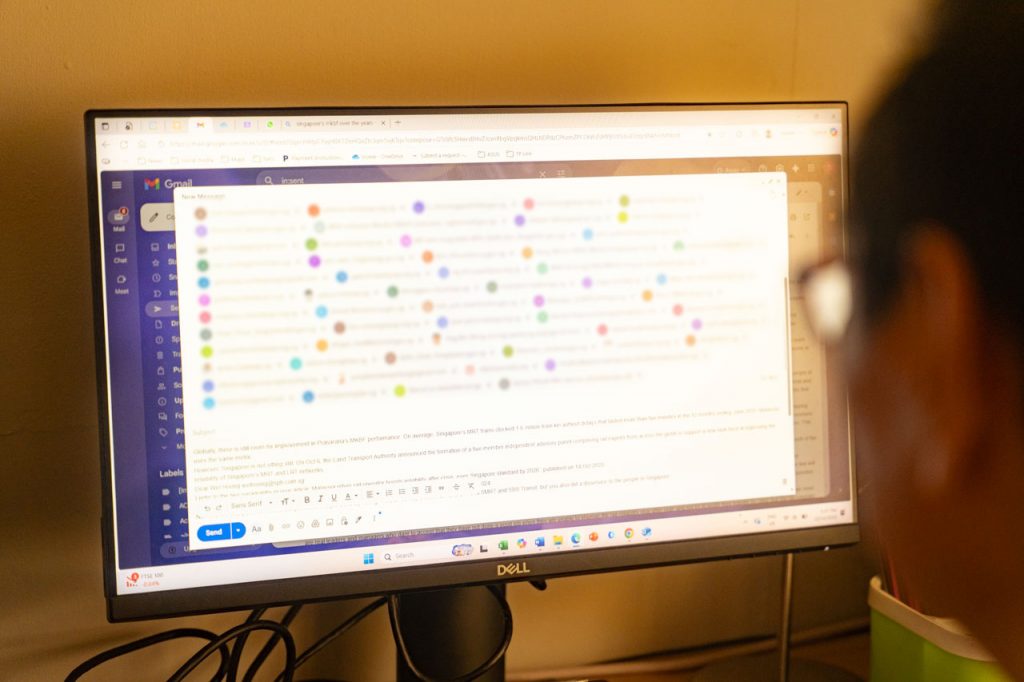
Whatever it was, Steven became a small but memorable part of life in the Singaporean newsroom.
“Steven’s been quiet lately,” we’d remark whenever we went a week without a new email from him. “Hope he’s doing okay.”
Misplaced apostrophes and commas in our drafts were often met with a cheeky quip like, “Don’t let Steven see that.”
When he invariably graced our inboxes with a new missive, we’d notify each other on Slack with the urgency of breaking a news story: “Steven’s back!”


Sadly, ever since I started working at RICE, Steven’s emails no longer pop up in my inbox. Every now and then, I’ll hear about his emails from former colleagues in other publications, but I’ve accepted that he isn’t much of a RICE reader.
I should probably be relieved that my pieces are safe from his eagle eyes and blunt critique (though I’m sure he’ll have plenty to say about this one). Still, I find myself wondering: Why does he care so much about whether we write ‘elections’ or ‘election’? Why does PM Lawrence Wong need to be CC-ed in an email about a stray plural?
Above all, who is the man behind all these emails?
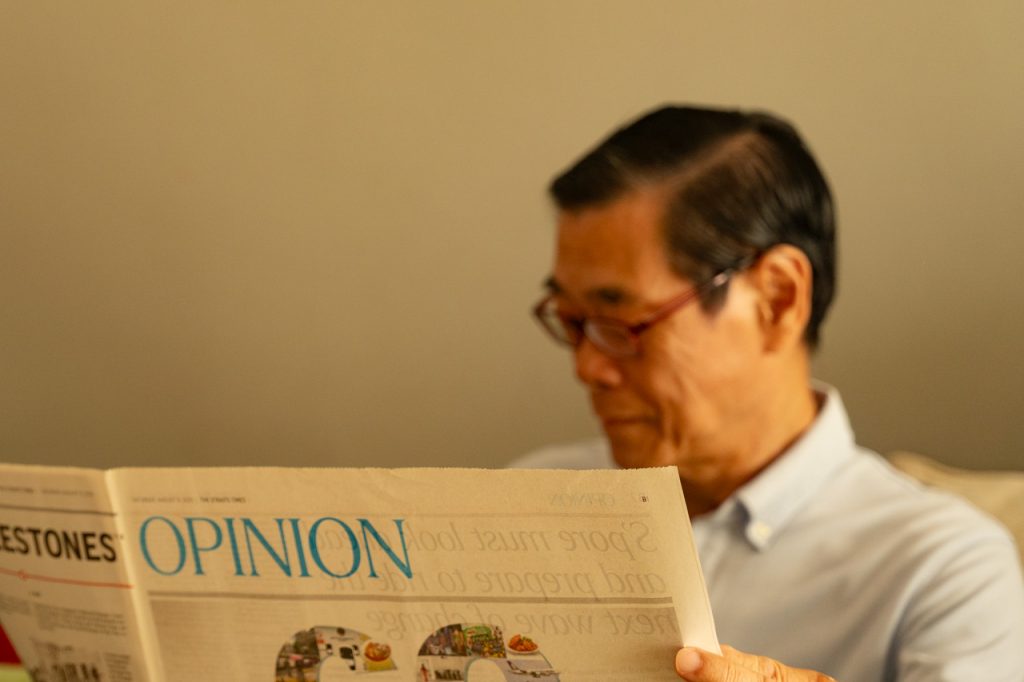
The Real Steven Lee
Fortunately, my editor was game to allow me to indulge my curiosity. Steven was surprisingly keen to speak to me as well. He’d drop by the RICE office with his “dear” (his wife, Margaret), he said in our email exchange.
I had nervously triple-checked my grammar before hitting ‘send’. But his genial reply caught me off guard. Was Steven secretly a softie?
Over the years, I’d already formed a profile of Steven in my head. Probably a lawyer or teacher by training, likely retired. To an extent, the personification of the ‘old man yells at cloud’ meme. The Steven in my imagination nurses a cup of coffee—black with no sugar, obviously—while he reads the papers each morning, circling all the errors he finds with a red marker.
But the man who showed up at our office couldn’t be more different.
Steven is clean-cut but dressed for comfort in a dri-fit sleeveless top and shorts, a walking cane in hand. It doesn’t take long for him to open up. Within minutes, he’s talking about his life and cracking jokes.
I learn that he’s 70 this year, a father of three, and a grandfather to six kids. Surprisingly, no background in English or writing to justify his editorial zeal. Instead, he worked in quality control roles in tech companies such as Texas Instruments, IBM, and Hewlett-Packard (HP) for his entire career.
He tells me he got into penning feedback letters 12 years ago. This was after he was retrenched from HP and decided to embrace retirement.

What started as occasional letters to The Straits Times forum section gradually evolved into regular email blasts to media outlets, government bodies, and even corporations like ComfortDelGro.
“The main purpose is that I want to help the future generation. The other good thing is that by writing, I actually improve my own English and also keep myself occupied,” he explains.
Steven is especially persistent about English language standards and clear communication. Once, I received several emails from him about the redundancy of the term ‘free gift’. After all, he argued, a gift should be free by definition. Another time, he called out a Straits Times reporter for using both ‘celebrations’ and ‘celebration’ to describe the same event.
He can also be brutally honest to the point of having a blunt disregard for how his words might land.
“I can be quite direct… I told [a reporter], if you don’t bother to change your grammar, please quit, because grammar is so important for your type of job.”
His concerns, however, extend beyond grammar; he’s written about everything from MediShield Life contributions to littering, as well as the importance of self-reliance.
Steven, in short, seems to be someone who can’t resist pointing out what he sees as mistakes, whether in language, logic, or life. From his extended bluster against former bosses and governmental policies, he strikes me as the kind of person who sees the world as one long typo waiting to be corrected.
Apparently, however, his family doesn’t understand his penchant for writing feedback emails.
“They think I’m wasting my time!” he chortles. Margaret, who’s been listening quietly to our conversation, offers a patient smile and silent confirmation. She’s given up on trying to stop him—after all, this is how he keeps himself busy.

Between Order and Chaos
The more we chat, the clearer it becomes that Steven means well. The nitpicking, I realise, is less about proving a point than holding on to a sense of order in a messy world.
His relentless drive to improve the systems and people around him seems like an occupational habit spilling over from decades of identifying inefficiencies in the workplace. His critique also feels rooted in a desire for progress, rather than condescension; he admits easily that his English is “actually not very good”.
In fact, as I watch him draft an email in Microsoft Word before painstakingly copying it over to Gmail, I’m struck by how long it takes him. His fingers move slowly and stiffly over the keyboard—perhaps due to age, or perhaps due to the stroke he suffered more than a decade ago.

“I used to take very long, but I’m faster nowadays,” he says spryly. It speaks volumes about his persistence. Here is someone who could have stopped trying long ago, but refuses to let a slower body silence a restless mind.
Not every reporter takes Steven’s relentless feedback well. I still remember the time when a sub-editor of a local tabloid hit ‘reply all’ to one of Steven’s messages.
Her response—sent to the entire mailing list—accused him of spamming journalists. It came with a list of links to knitting tutorials and gardening clubs, as if to suggest he should find a different hobby.
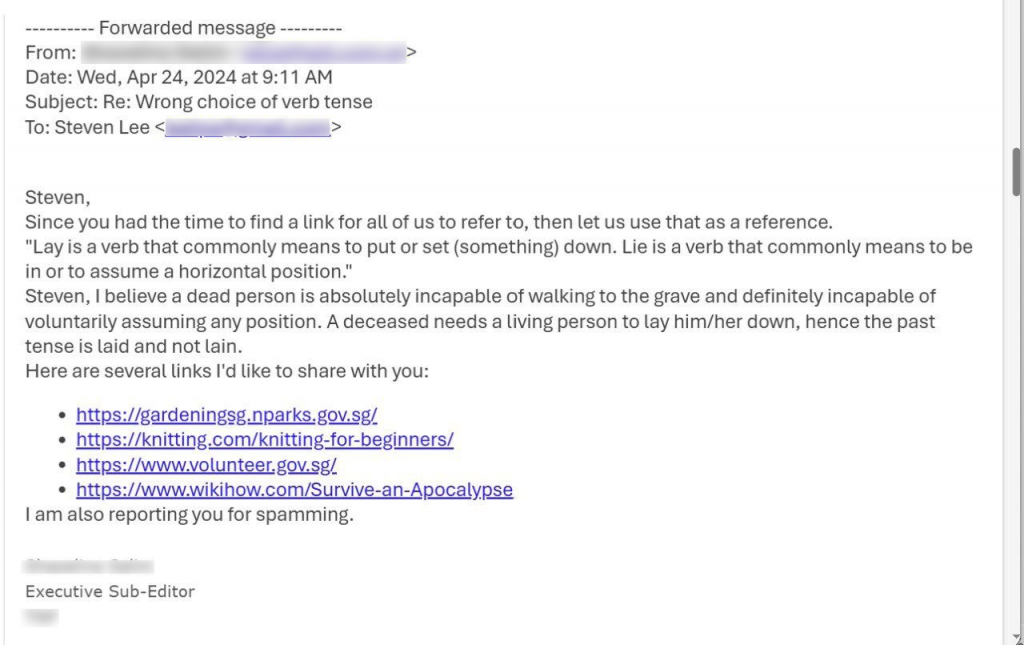
For someone who can dish it out, Steven definitely can take it. He flashes a nonchalant smile when I ask about the incident.
“Please understand that I’m writing to a lot of people because a lot of them are making the same mistakes. It’s not just you; I want everybody to improve. And I always say, if people think I am spamming, they can always come to me and I will drop them out of my list,” he says with a shrug.
“When I see a problem, I want to solve it. I want to prevent the problem from happening—it’s just within me.”
I’ll admit that I’ve rolled my eyes at a couple of his emails. I might even have found some of them to be more than a little pedantic. But there’s something inspiring about refusing to take a passive role when you know something can be better. Even if that means opening yourself up to critique and judgment in return.

Remember the Name
It’s annoying having a total stranger without any appropriate qualifications tell you how to do your job, again and again. And by the end of our conversation, I’m still not sure if Steven actually wants anything tangible out of it—if he even notices when journalists get things right, or when the grammar aligns with his personal editorial bible.
Meeting Steven puts a face to the sort of feedback received by anyone who dares to put their work out there. Behind the stern tone and unsolicited advice is just an elderly man trying to connect, stay relevant, and leave behind something that might make Singapore a little better.
There are healthier ways to do it, sure. Still, I can’t help but feel some sympathy. For all his fussiness, Steven is a reminder that the instinct to care (even when it borders on meddling) doesn’t disappear with age. It just finds new, sometimes maddening, forms.
For many of our retirees, finding a sense of purpose can be unexpectedly difficult. It’s not just about preparing financially after all; it’s also about answering the question of what’s next after stepping away from the daily hustle.
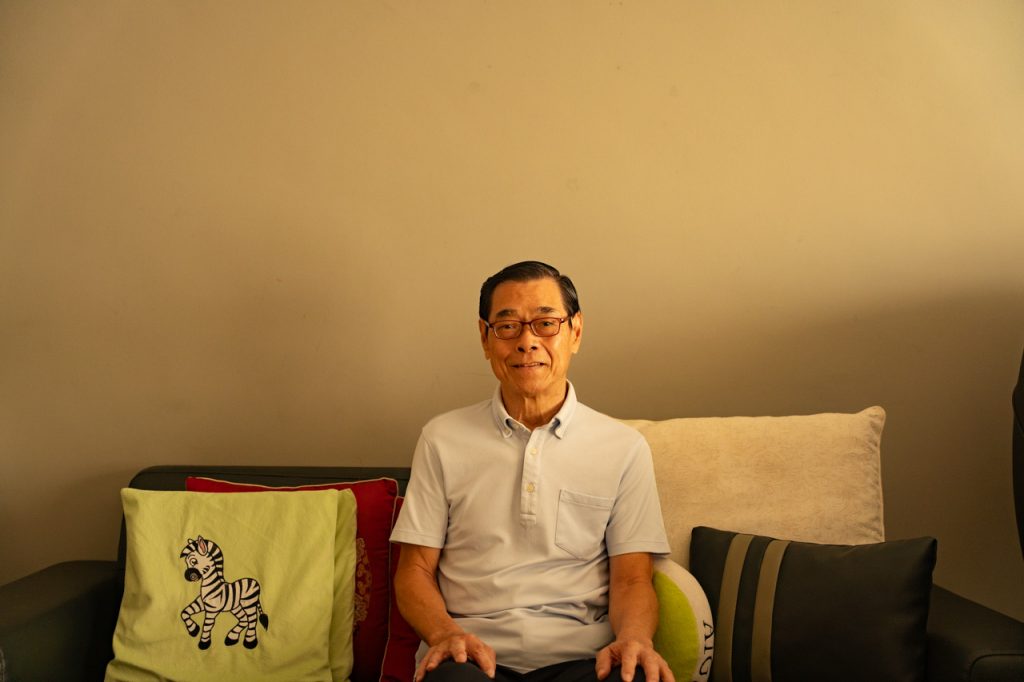
Steven himself admits that he doesn’t get up to much besides penning feedback and spending time with his grandkids. By all accounts, his life is comfortable—perhaps even predictable. But leaving the corporate world behind came with an unexpected perk, he says: he now feels free to say exactly what’s on his mind. And bless his heart, he really does.
“I don’t need people to remember me when I’m gone,” he says.
“The satisfaction I get is that I hope the future generation really benefits from what I’m bringing up. That’s all I hope for.”
At home, his lessons extend to family. “I’m very tough on my children,” he admits.
“Then they say, ‘Daddy, you’re very unfair.’ Of course I’m unfair—they’re my children! If I don’t care about them, who will?”
Care, for Steven, doesn’t always look gentle. It can come wrapped in critique, and it’s made me rethink how I receive feedback. Not every critical note comes from a place of hostility; sometimes, on the other end, it’s someone like him. Someone trying, in their own determined way, to make the world just a little better in their eyes.
Everyone’s got an opinion, a correction, a better way about how things should be done. It’s tiring to be on the receiving end—but in a strange way, it sparks a bit of hope. Because, for all the nitpicking and noise, it means people still care. Even if, sometimes, it’s just about a missing full stop