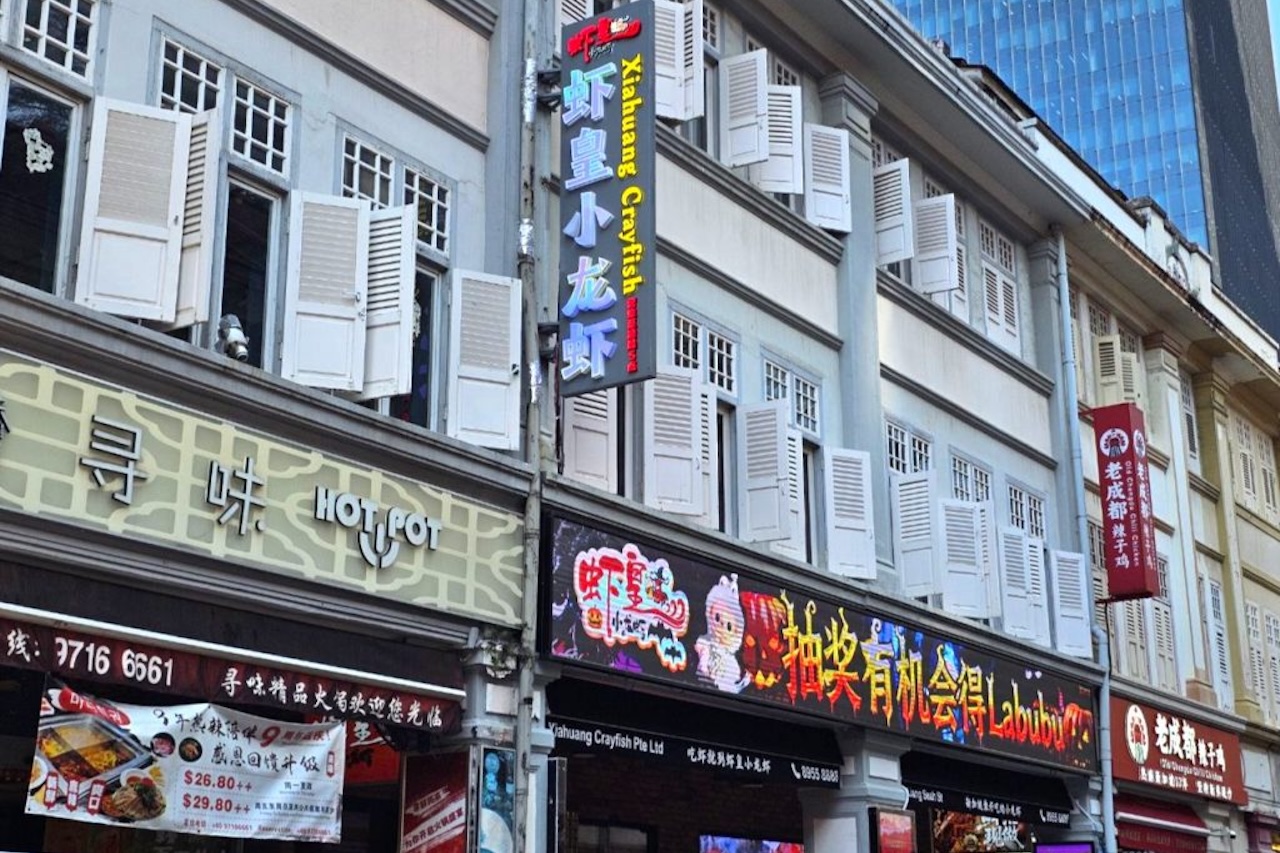
Top image: Andre Frois / RICE file photo
“Dinner at Haidilao?” I suggested in the group chat.
Replies came in quickly, a chorus of okays filling my screen.
Then came a half-joking, half-resigned message from a Muslim friend: “Guys, then what, I become the Haidilao dancer ah?”
Is Haidilao halal? Barring some stores in Indonesia, it’s not. And it’s only one of many dominant Chinese franchises—Tanyu, Tai Er, Yang Guo Fu Malatang, Zhangliang Malatang, etc—which have not achieved halal certification. It seems like a deliberate business decision, considering Muslims make up 15.6 percent of Singapore’s resident population. Over half a million people are no small customer base to overlook.
Could it be because pork and lard are too integral to Chinese cuisine to substitute? A quick walk with my non-Chinese friends down Liang Seah Street, packed with neon signboards and menus written in Chinese characters (squint to find the English translation!) and perfumed with the spicy pungent aromas of Sichuan, Hunan, and Chongqing classics, instead led me to realise it’s not just about what’s on the menu.
Rather, it’s about who’s welcome to sit at the table of Singapore’s latest culinary wave.
To be clear, I am not demanding every restaurant or chain from China contort itself to cater to everyone. Not every homegrown business in Singapore is halal either, and that has never been the expectation.
But when restricted dietary options are combined with impenetrable language barriers and whirlwind dominance, it starts to feel targeted. That is what sits uncomfortably with me.
Why This Food Wave Hits a Nerve
Walk into any neighbourhood mall today, and you might be transported into a mini Chinatown offering sauerkraut grilled fish, mala hotpot, and soup dumplings from all across China. To some, it risks eking out local businesses in favour of an overwhelmingly Chinese food landscape.
That’s not in reference to the ethnic makeup of the service staff, by the way. No, streets and menus are literally filled to the brim with Chinese characters, with little to no translation for our non-Chinese-speaking friends.
It creates a problem where the simple act of ordering food is complicated by a language barrier. And that language barrier has even hindered food delivery riders from doing their jobs, as they can’t read restaurant and food stall names. For non-Chinese Singaporeans (or even Chinese Singaporeans less comfortable in the language), the experience can feel alienating.
Singapore is no stranger to ethnic food explosions—Japanese and Korean restaurants have similarly swept across the nation in past decades. Yet there was never public fear that Yoshinoya or Watami would take over Singapore’s culinary scene. Neither have there been news articles complaining about the spate of Bonchon or Pocha! restaurant openings in the past few years. Mainland Chinese F&B brands alone experience the brunt of Singaporeans’ dissatisfaction.
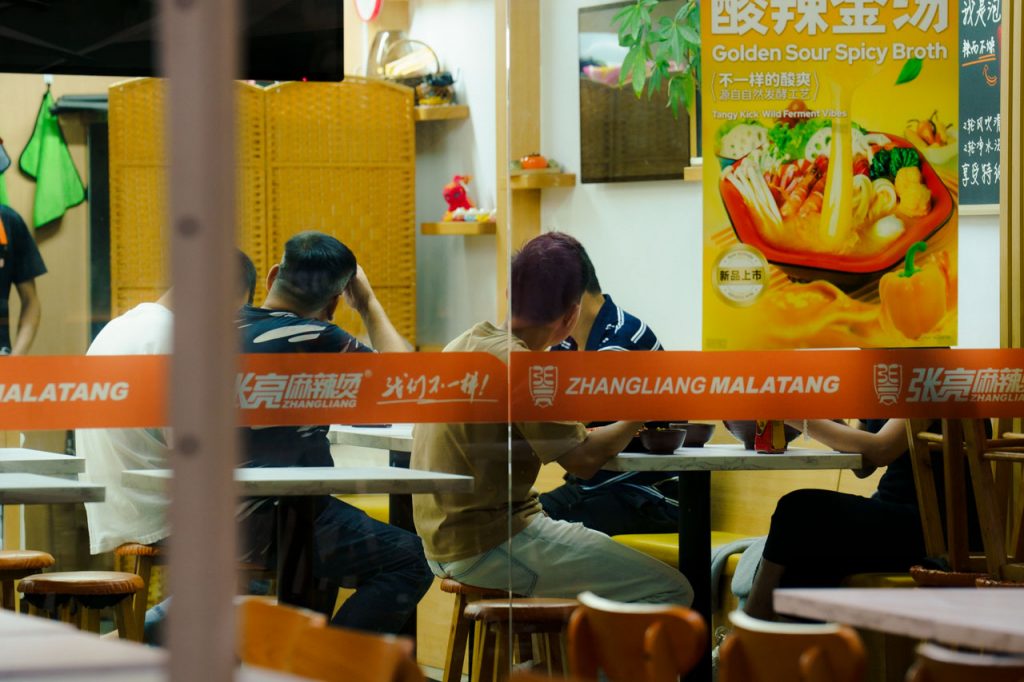
These criticisms are often dismissed as sinophobia. Sometimes, it is. But to stop there is to flatten a far more uncomfortable conversation.
The issue isn’t with the food itself, but the sheer scale and speed of its expansion, and the absence of integration. Japanese and Korean food trends never triggered this level of unease because they didn’t arrive with the same cultural density or the same indifference to local norms.
Another reason is the sheer size of Singapore’s mainland Chinese population. With only 33,000 Japanese and 21,000 Koreans in Singapore, these groups easily fade into the background outside of informal community enclaves like Yishun or Bukit Timah.
But it is much more difficult for the 514,000 Chinese nationals living among us to go unnoticed. In a nation of six million residents, that makes up 8 percent of the population. Yet, mainland Chinese F&B brands have been reshaping the landscape of Singapore’s malls and neighbourhoods. It feels aggressive because it is.
Kyra*, a 19-year-old Singaporean Chinese, observes: “Mainland Chinese brands have become so much more entrenched in Singapore’s F&B market. It doesn’t feel like previous trends for food items like bubble tea.”
Yet, Japanese and Korean foods have assimilated well into Singapore. Most of the popular brands we know—Ichikokudo Hokkaido Ramen, Tokyo Shokudo, Captain Kim BBQ, Jinjja Chicken—are run by Singaporeans and teams of market researchers who cater to Singaporean tastes.
In fact, all of the aforementioned brands are halal-certified. Pork features heavily in Japanese and Korean cuisine in dishes like tonkotsu and samgyeopsal. Yet, there is a way to make a culinary trend inclusive for all dietary restrictions.
For the Chinese food chains without halal certification, these decisions communicate, whether intentionally or not, a hierarchy of diners—those worth accommodating, and those expected to adapt or look elsewhere.
Granted, it’s not a ‘die-die must eat’ scenario. Huzaifah Baharudin, a 22-year-old Malay-Muslim, says, “I understand these businesses cater to the Chinese demographic. I’m not missing out on much because Singapore has so many more halal options at almost half the price.”
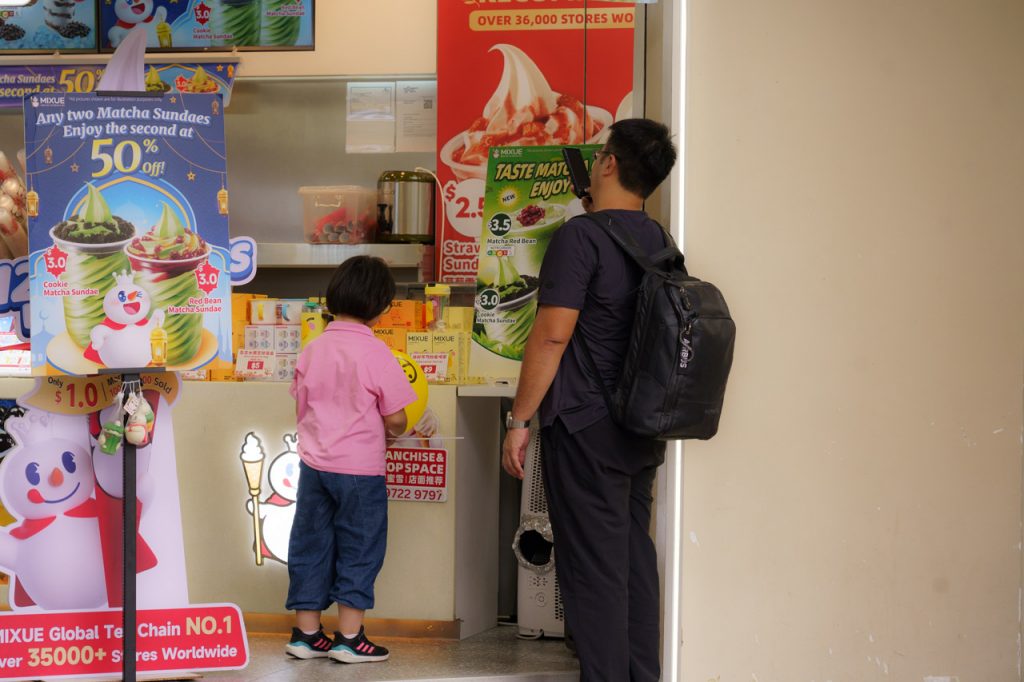
Unexpected Language Barriers
Religious accommodations aside, exclusion also happens in the language these food chains operate in. Some of these establishments remain stubbornly in service to Chinese speakers. They sometimes even forgo English translations for short-term special promotional materials or signature dish recommendations. It’s a disservice to both the non-Chinese and Singaporean Chinese who are weaker in the language.
Kyra acknowledges that her halting Mandarin has never been a debilitating issue for her, since she speaks and understands some of the language, but there have been times when a lack of vocabulary has made it hard to correct miscommunication when ordering food.
Another Singaporean Chinese who does not speak Mandarin well, Pang Jian Zhang, 25, tells me he tends to patronise higher-end restaurants like Din Tai Fung for his Chinese culinary fix.
“They have to cater to foreigners so they can always communicate well enough in English.”
So we’ve established that the language barrier at these places is daunting enough for some Singaporean Chinese folks. Where does that leave Singaporeans of other ethnic backgrounds?
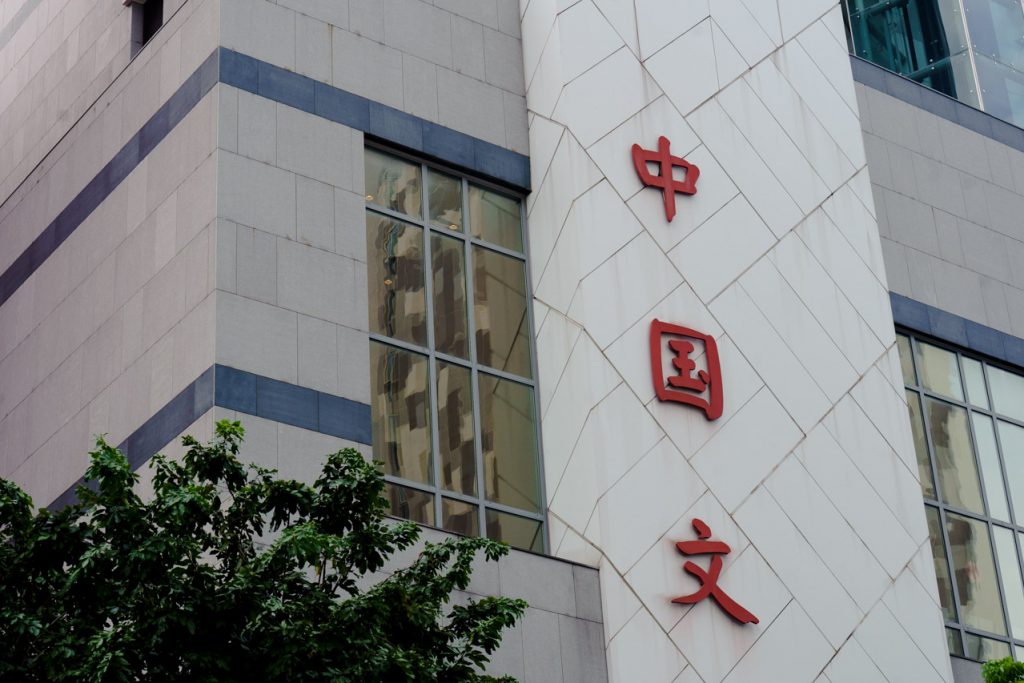
Tanishqa Verma, a 22-year-old Singaporean Indian, confesses that the language barrier has been enough to turn her off certain restaurants for years. “I’ve never been to a Chinese high tea restaurant because I’m scared. I was even scared to go to Haidilao, like, as a customer.”
Her worst fears came true when she finally dined at one of these high-tea establishments. She was trying to take advantage of an offer to shave $20 off her bill—but the servers did not understand her, she says.
“They had to call over another waiter who only understood English slightly. The lady serving me at first did not speak English at all.”
It’s not a world-ending problem, but this hassle that minorities face in Singapore is entirely avoidable. Just because Singapore’s population is made up of 75.5 percent Chinese doesn’t make us a Chinese nation. English is our lingua franca, so shouldn’t servers at these massively dominant chains be fluent enough to carry out their jobs?
Akshita Jain, a 20-year-old Singaporean Indian, disagrees.
“It’s good for the staff to know English because English is the lingua franca, and it makes it more accessible to more people. But it’s not a problem if they don’t because at the end of the day, I’m going to get my food and they’re going to get their money. It might take 20 more minutes, but I’ll still get my food!”
However, the fact that some diners are willing to tolerate inconvenience shouldn’t absolve these businesses from making an effort. Inclusion should not depend on how patient minorities are willing to be.
The dominance of Chinese nationals and the Chinese language in the F&B industry has created new difficulties for those who work in it as well. When Tanishqa first got her job as a waiter at a sushi chain restaurant, she expected the work environment to be mainly English-speaking. It was not.
Each time she had to pass an order to the kitchen staff, she had to call over another Chinese-speaking waiter to translate it for the chefs, all but one of whom were non-English speakers. On days when this friendly server was unavailable, no other waitstaff would volunteer to help, even though they could speak the language.
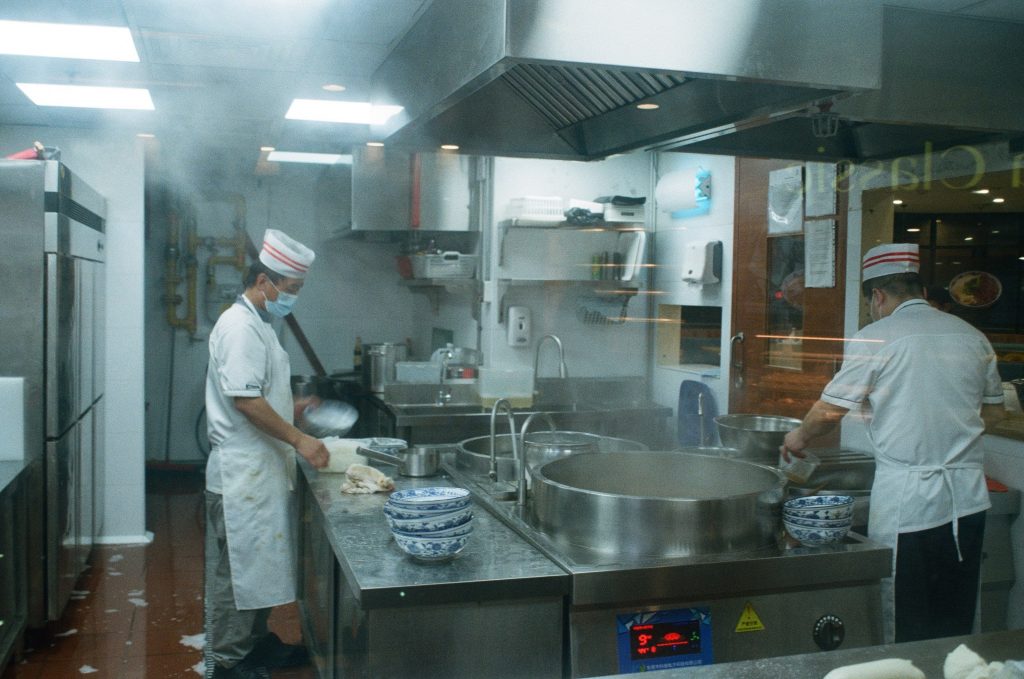
“I would have no choice but to pass the orders to the waitress so that they would pass them to the chefs instead. It probably increased their workload, but the only other option would be to learn Mandarin,” she remarks.
“The other old Chinese aunties looked down on me as if I was going to take their job, but I don’t think I could take over their role even if I tried.”
This language barrier made her job alienating, and Tanishqa was happy to quit just two months after taking on the role.
On the one hand, speaking Chinese enables efficient, convenient communication in the kitchen, especially when kitchen staff are not well-versed in English. But would that mean non-Chinese speakers being overlooked for front-facing roles because of potential workplace miscommunication?
Chinese Food Isn’t the Problem
Looking at the speed and extent of Chinese F&B expansion in Singapore today, it’s far too easy to blame immigration for ‘diluting’ our food culture. But Singapore has always been a place where different cultures collide and realign, where different people come together to create something new.
So when these brands aggressively roll out nationwide without any similarly aggressive effort to be inclusive, what does it do? It leads to a feeling of ‘cultural imperialism’ that suggests these brands do not wish to assimilate into Singapore’s multicultural fabric, but rather to create linguistic and cultural enclaves that expect Singaporeans to adapt to them.
Preserving Singapore’s existing food culture doesn’t mean we need to denounce these new Chinese imports or demand that they rework their menus entirely. Small tweaks to business operations should be enough for these brands to become better received by Singaporeans.
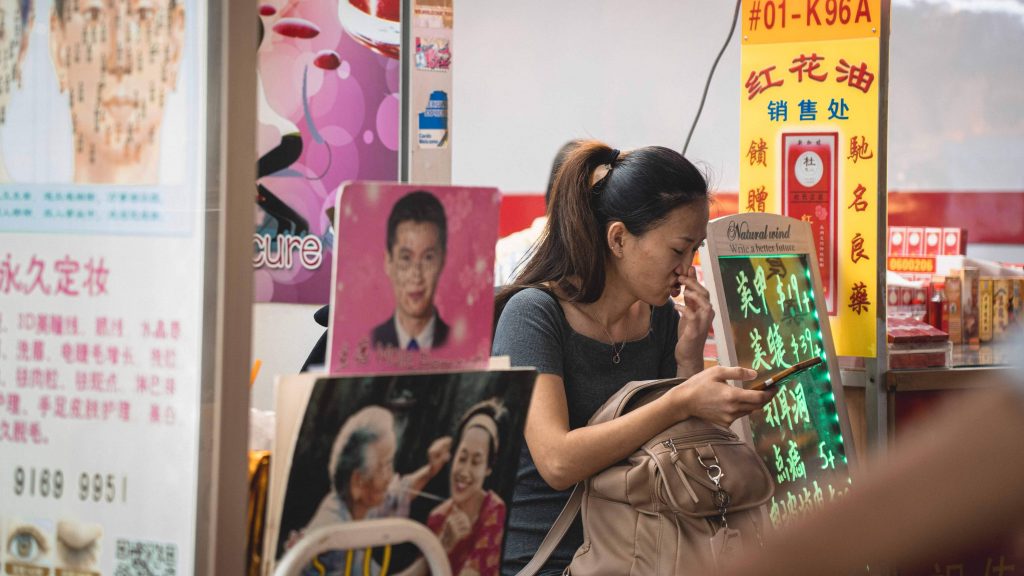
The first step? Use English—properly translated English—in store names and in menu descriptions. Not just for non-Chinese speakers, but also for Chinese Singaporeans who aren’t very fluent.
Of course, I don’t expect every F&B brand to do this. It’s hard enough for new immigrants—especially those in low-wage blue-collar roles—to settle into a country with a new working language altogether. Smaller establishments may simply not have the manpower or capital for language training or go beyond basic translations.
These expenses, however, are but peanuts for the billion-dollar companies spreading across Singapore.
It’s no secret these brands find Singapore, with its majority-Chinese yet globalised population, a good testbed before going international.
But if these brands are serious about mass acceptance, adapting to local tastes isn’t optional. In multiracial Singapore, overlooking minority communities doesn’t go unnoticed—and it leaves a sour aftertaste. Even small, visible efforts to acknowledge non-Chinese audiences signal whether a brand actually understands the society it wants to profit from.
I don’t think food brands from China are unwelcome here. What is unwelcome is the idea that Singapore should bend linguistically, culturally, and socially to accommodate them rather than the other way around. If food brands want to claim space in Singapore’s everyday life, they should learn to speak to all Singaporeans—literally and culturally.
Food has always been a gateway to forging new bonds in Singapore. And given enough time, I have no doubt that new blends will emerge from modern Chinese and Singaporean cuisines. Until then, I look forward to the day when everyone gets a seat at the table.