

Words and images by Zachary Tang for RICE Media.
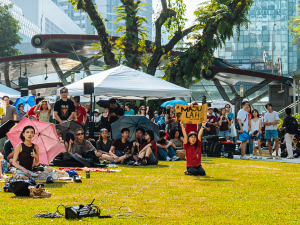
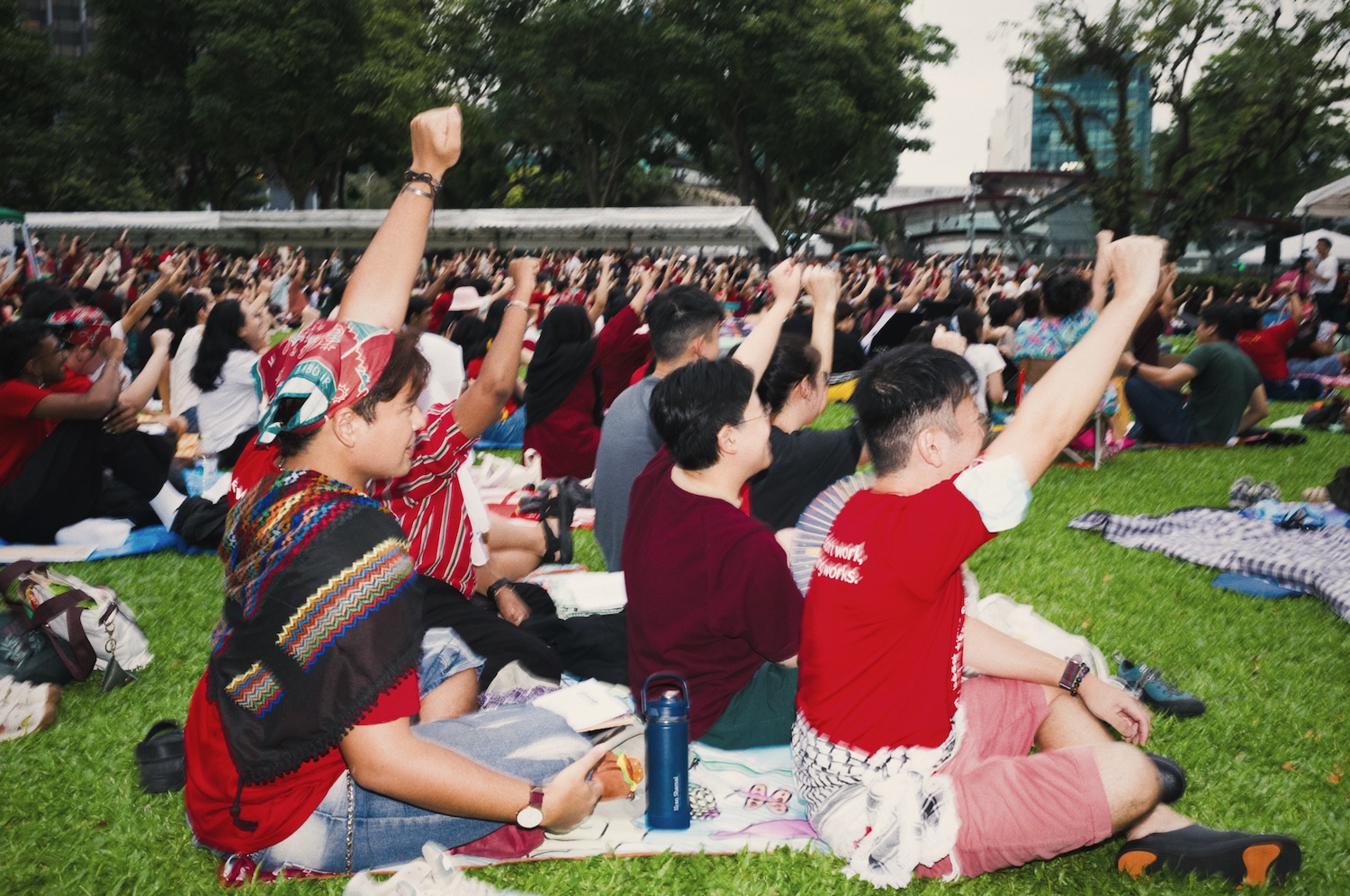
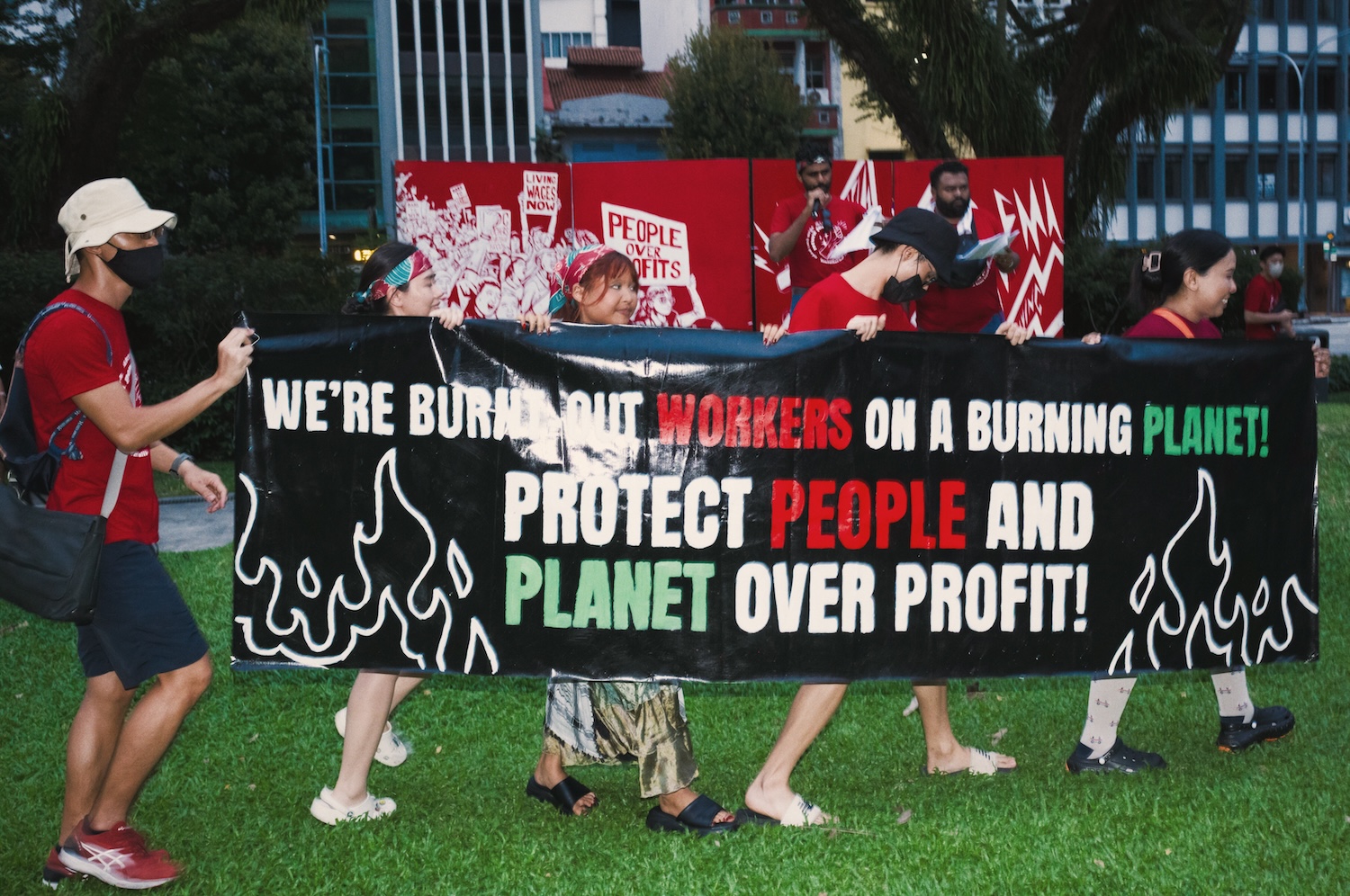
On May 1 2026, activist groups SG Climate Rally and Workers Make Possible held their first joint Labour Day Rally at Hong Lim Park. Climate and labour advocates shared the stage, calling for “burnt-out workers on a burning planet” to take action before time runs out.
But ultimately, this is a story about asymmetry—about who gets the stage, and who needs to build one just to be heard.
Labour Day is a public holiday to commemorate workers’ rights. But not everyone gets the day off.
That dichotomy runs through the day itself. Every year, the government and the National Trades Union Congress (NTUC) hold a May Day Rally filled with public declarations of commitment to Singapore’s workers, this year featuring footage of a crying Prime Minister Lawrence Wong that’s been making the rounds.
Across the island, at Hong Lim Park, a separate May Day Rally has been coalescing since 2023: activists, advocates, and the kind of people Singapore’s establishments tend not to invite.
This year, both drew roughly 1,500 to 1,600 attendees—but that’s where the similarity ends. One was attended by union leaders, tripartite partners, and sanctioned guests, carried live by The Straits Times, CNA, and Mothership—real top-of-funnel stuff. The other was covered by the likes of Jom, Our Grandfather Story, and, hey, us.
By order of magnitude, NTUC’s May Day Rally wins on reach, of course. But 1,500 people showed up voluntarily at the other one on a public holiday, with far fewer resources and little mainstream visibility.
That’s not nothing. People are hungry for conversations about work, the environment, and everything tangled up in both—the kind official channels don’t always make space for.
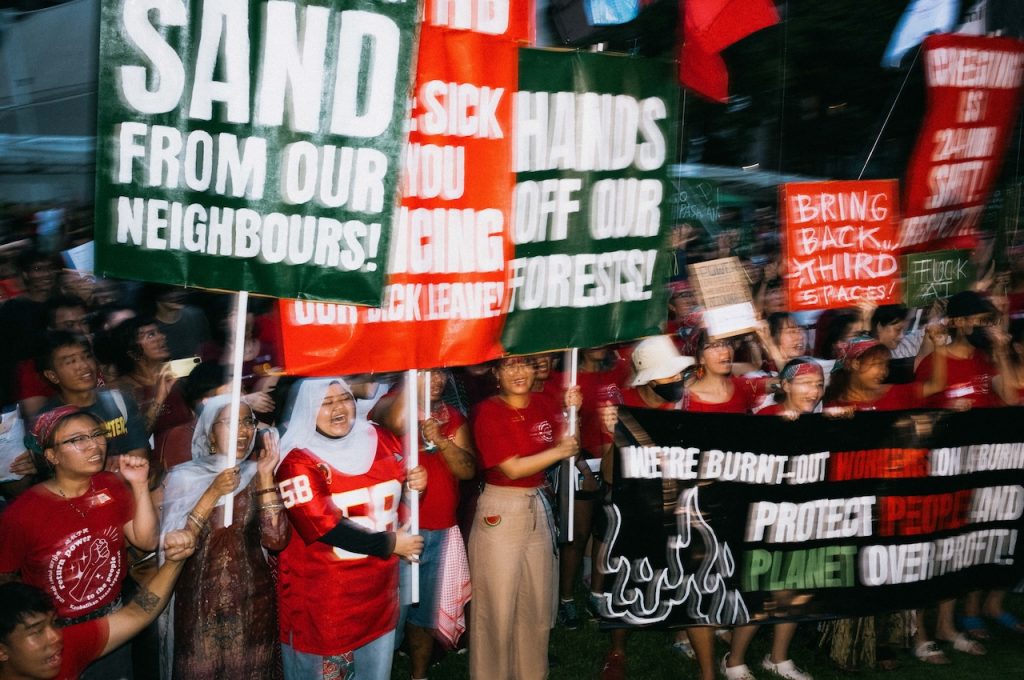
Every conversation I had at the rally was about something different.
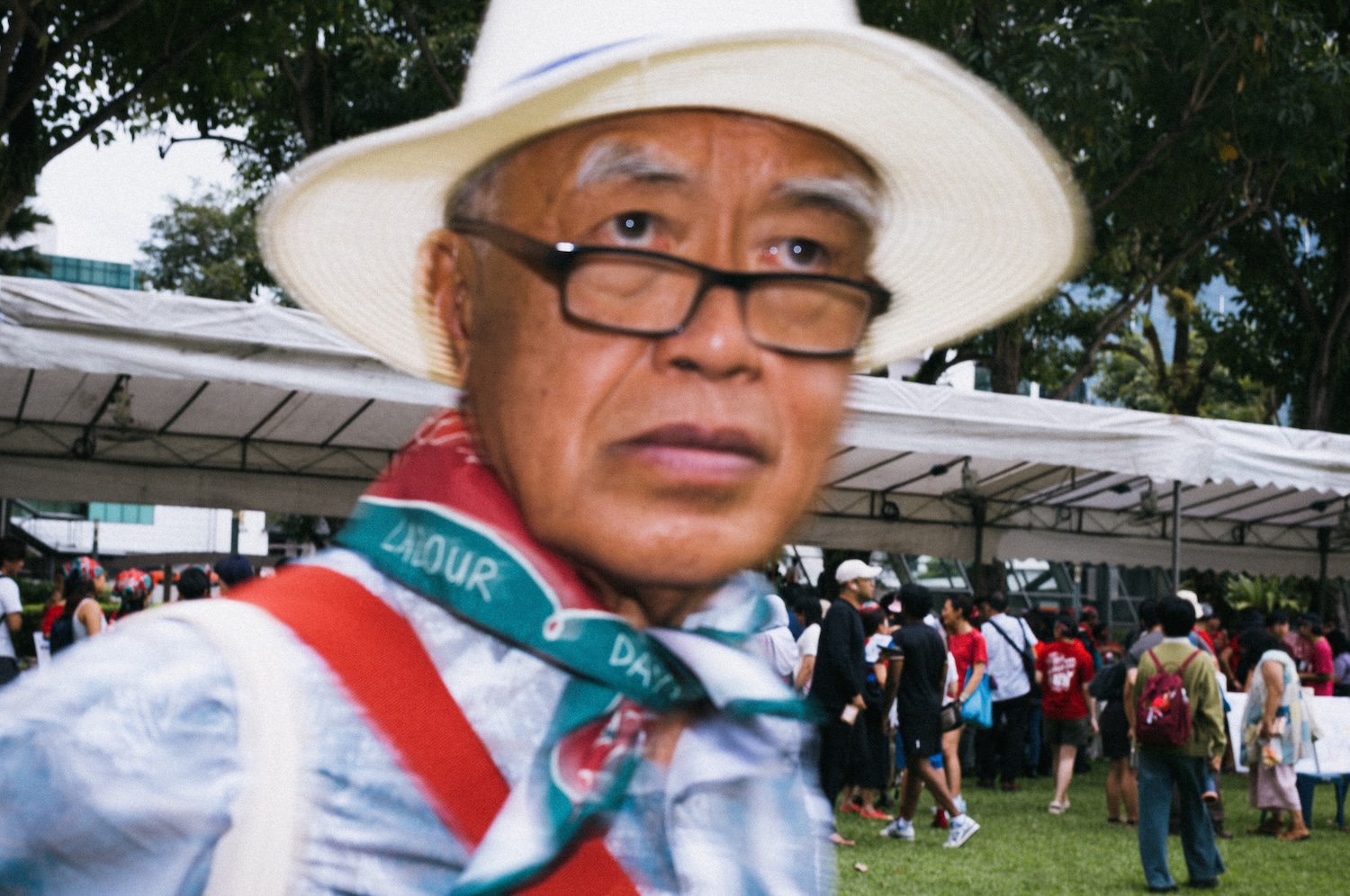
With Paul*—pictured below—it was about the integration of AI into how we work. He’s a counsellor in training, works in research, and does side gigs that “still count as work but don’t pay”.
Paul came alone, wanting to better understand the workplace pressures created by AI. And he doesn’t think he’s the only one here to find out.
Workers Make Possible, the grassroots labour rights group behind these independent Labour Day rallies since 2023, has been posing the same question on their socials: “AI saves time, but for whom? For you, the worker, or your boss?”
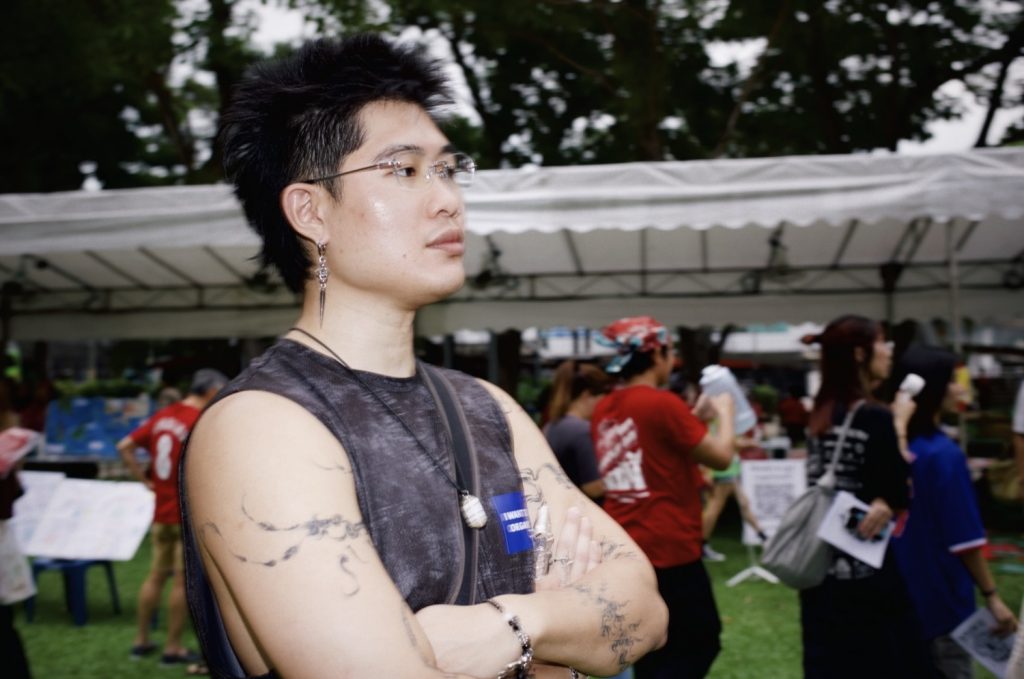
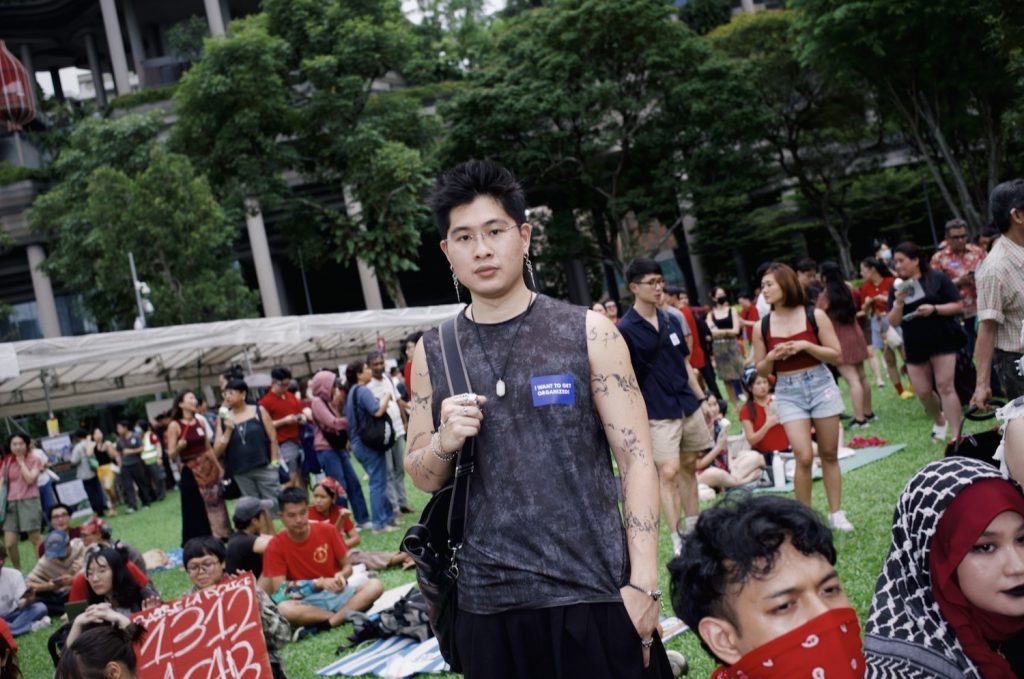
I ask Paul what he’d given up to keep up with the rapid shifts in jobscape.
“Time. Ambition, to a certain extent. Some part of my emotions. In trying to keep up, I’ve lost quite a little bit of meaning and fulfilment.”
I didn’t have much to add to that. I made my way through the booths, meeting all manner of activists. Many with splashes of red in their clothing, and like Paul, each making a case for something they’re deeply anxious about.
Some of these concerns have been raised for years without much movement. HOME is still pushing for a complete ban on transporting workers on the back of lorries—going further than the recently announced ban on caged lorries, which doesn’t even take effect until 2027.
Others run deeper than any single policy. Project X calls for sex work to be recognised as a profession so the needs of sex workers can be properly addressed. People’s Artists Initiative wants artists and cultural workers to challenge prevailing social narratives—to reflect reality as it is, not as the state prefers it.
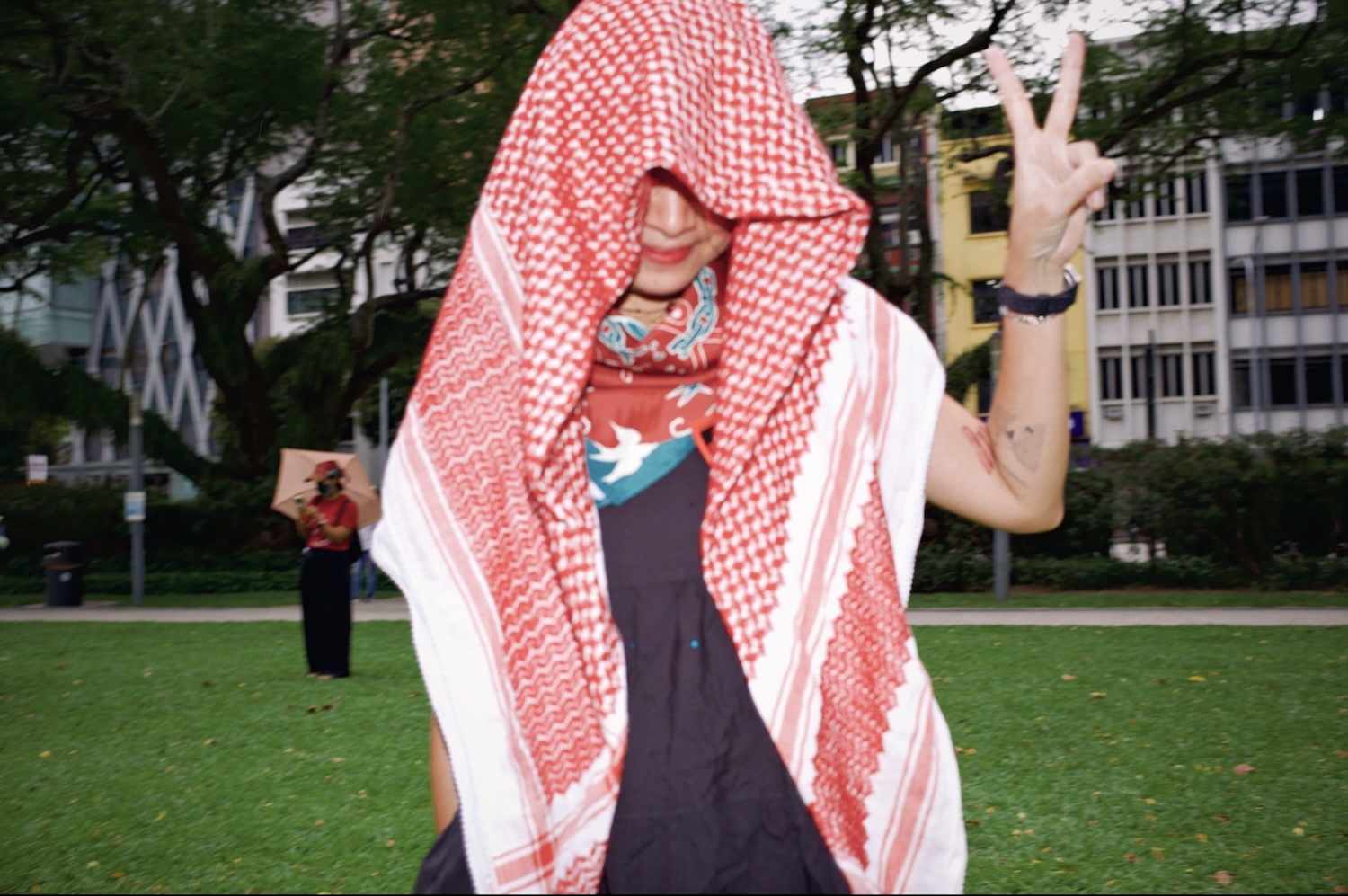
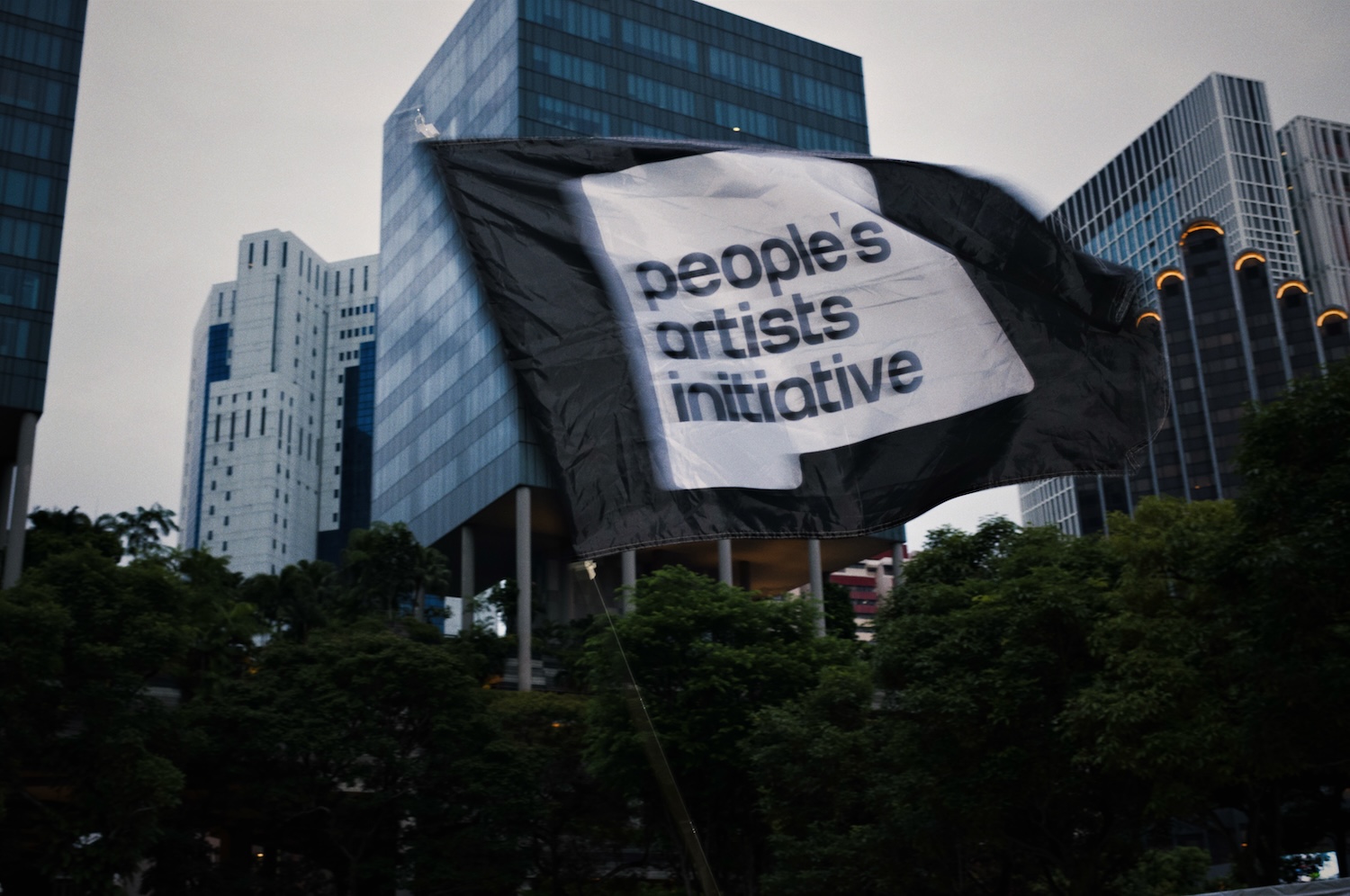
NIMBUS, a collective of independent media organisations, is calling for greater press freedom. Given who was and wasn’t there to cover the day… that one needed no explanation.
End FGC Singapore felt the furthest from the day’s stated themes with their call to end female genital cutting, but maybe that’s the point. A practice that, according to their 2020 pilot study, an estimated 75 percent of Muslim women in Singapore have undergone, doesn’t get discussed much anywhere. This was somewhere to put it.
There were many more that I didn’t get a chance to speak to: Makan Minum Workers, Sick and Tired, Singapore Riders. Their names speak for themselves.
Something worth noting. Climate was structurally central: half the headline, it’s literally in the rally’s name. But the demands that travelled hardest that day, in conversations and on the signs, were about labour.
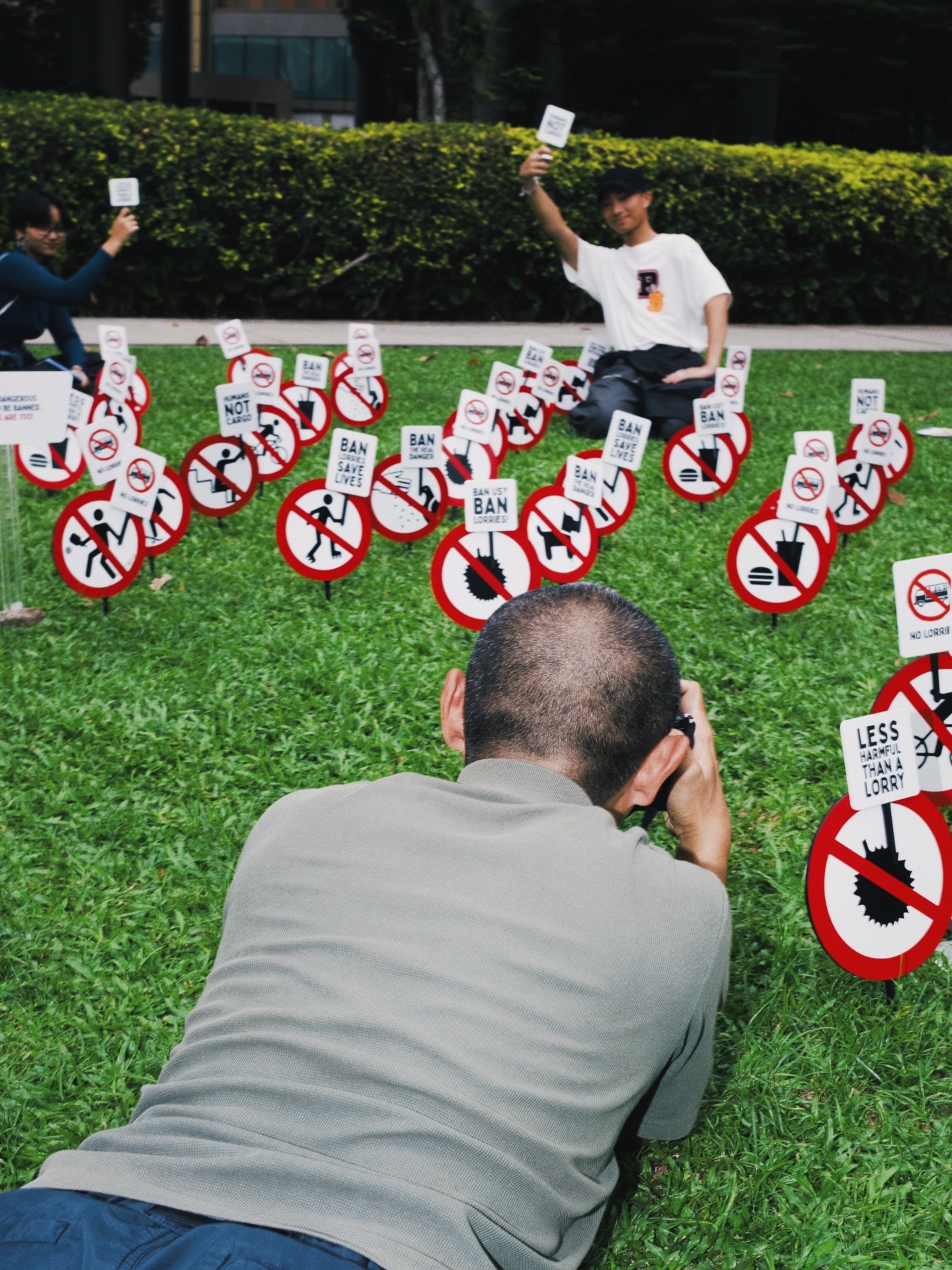
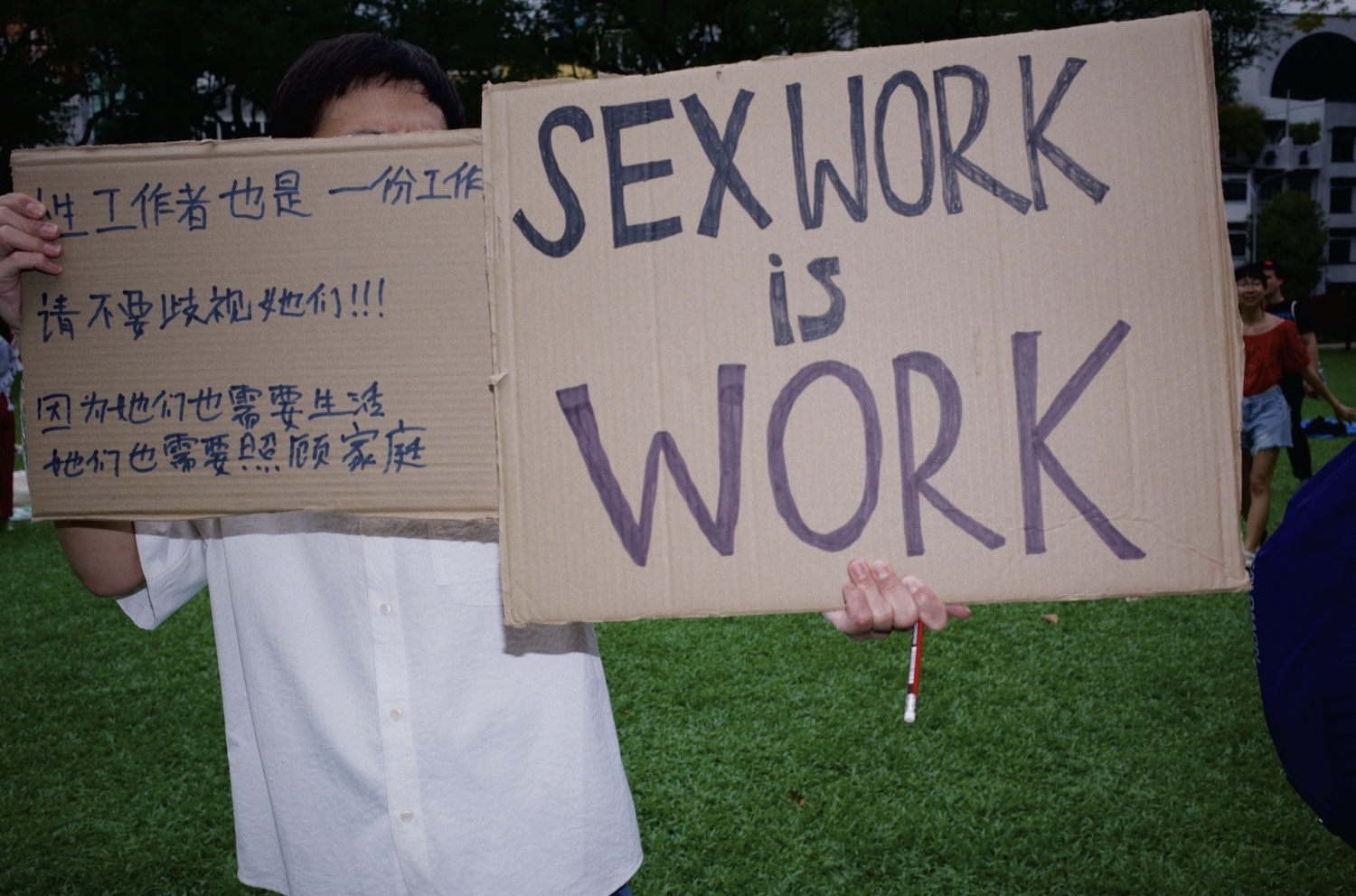
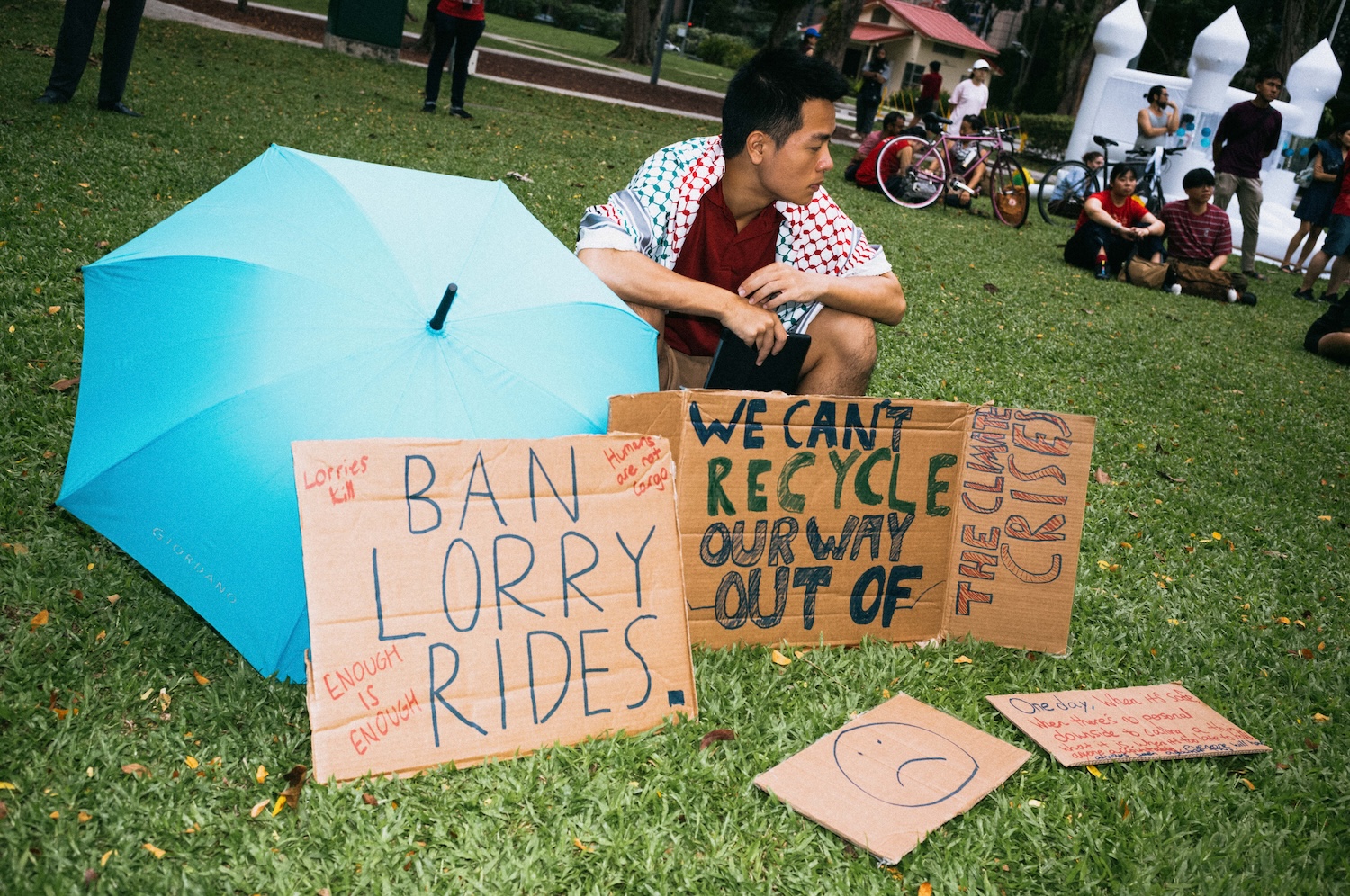
Donning a weathered denim vest covered in spray-painted pro-worker messages, Brixy Liz was hard to miss as he moved through the crowd, rousing their energy. He was the first person I pointed my camera at.
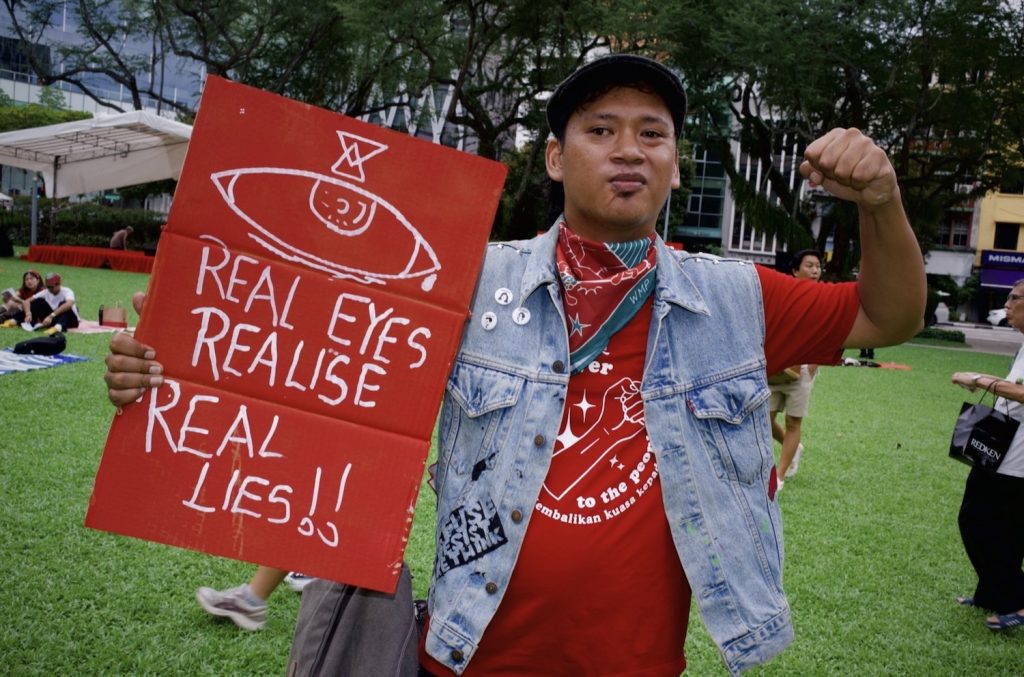
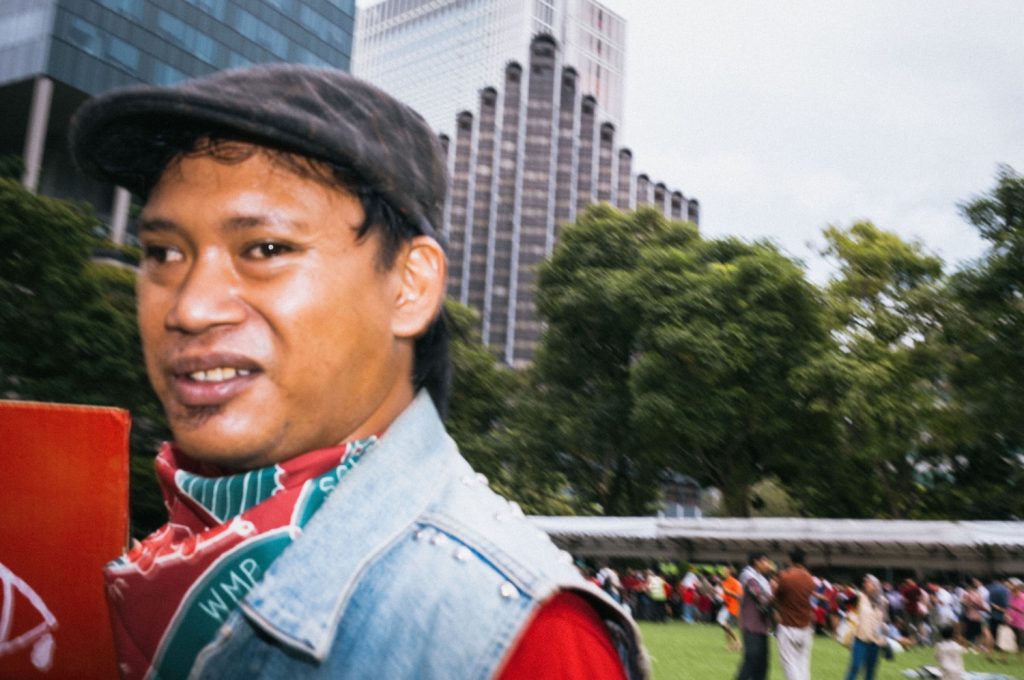
Brixy is 36 and works in the maritime industry. He also tells me, with great enthusiasm, that he is a furry.
“We do the same job, but I get paid more because I’m a local, and they get paid way less because they’re migrant workers. These people are my friends. My family, even.”
The friends and family he’s talking about, who make up a huge chunk of Singapore’s workforce, are legally barred from attending a rally held partly in their name.
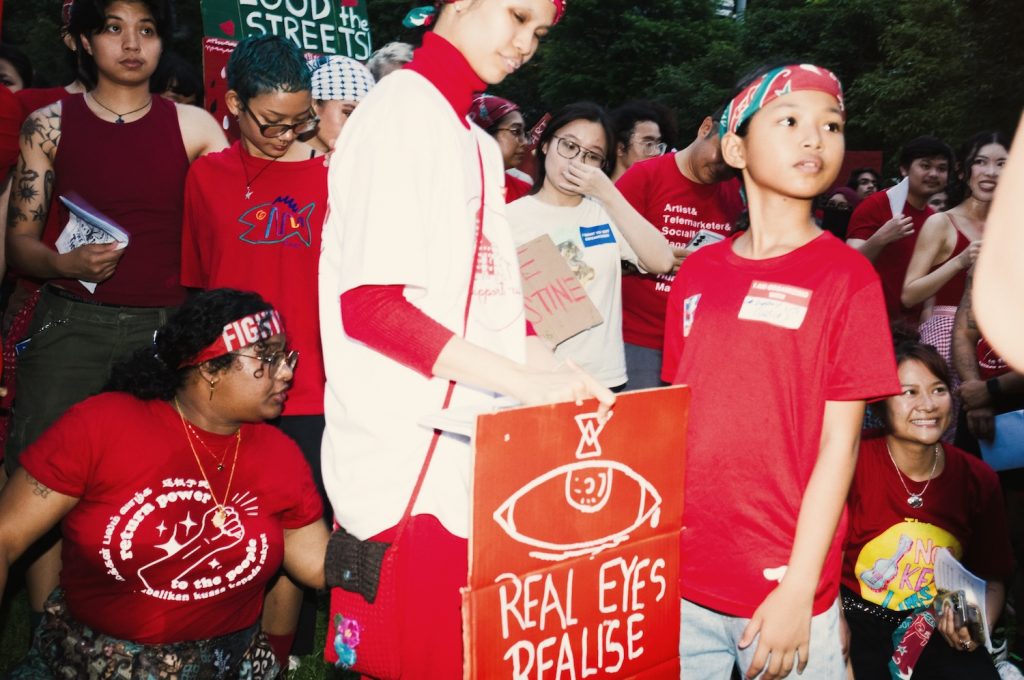
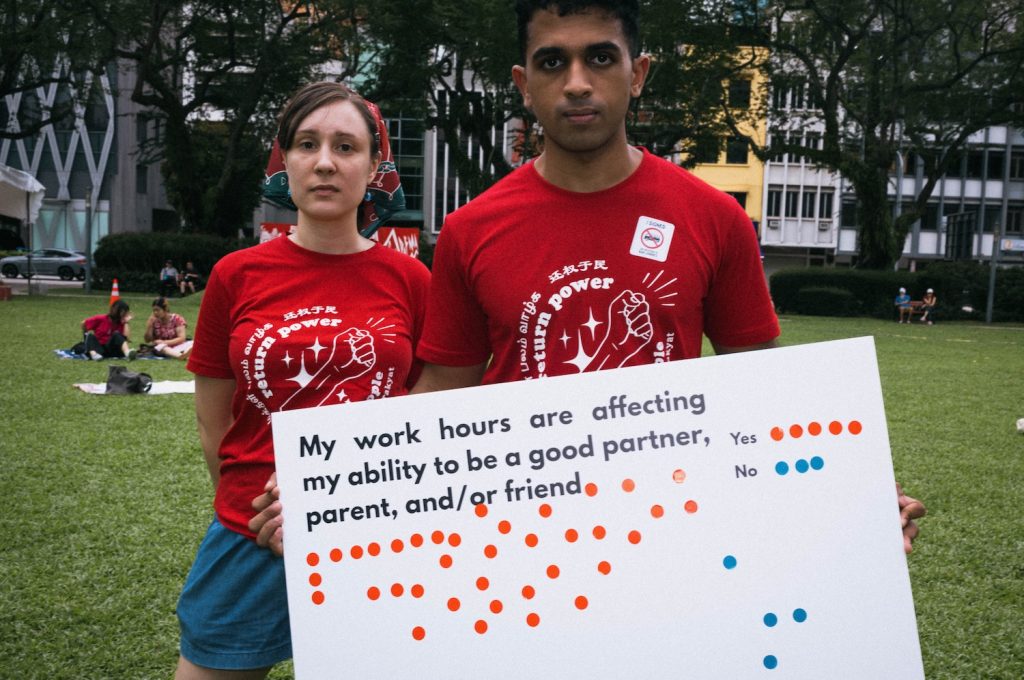
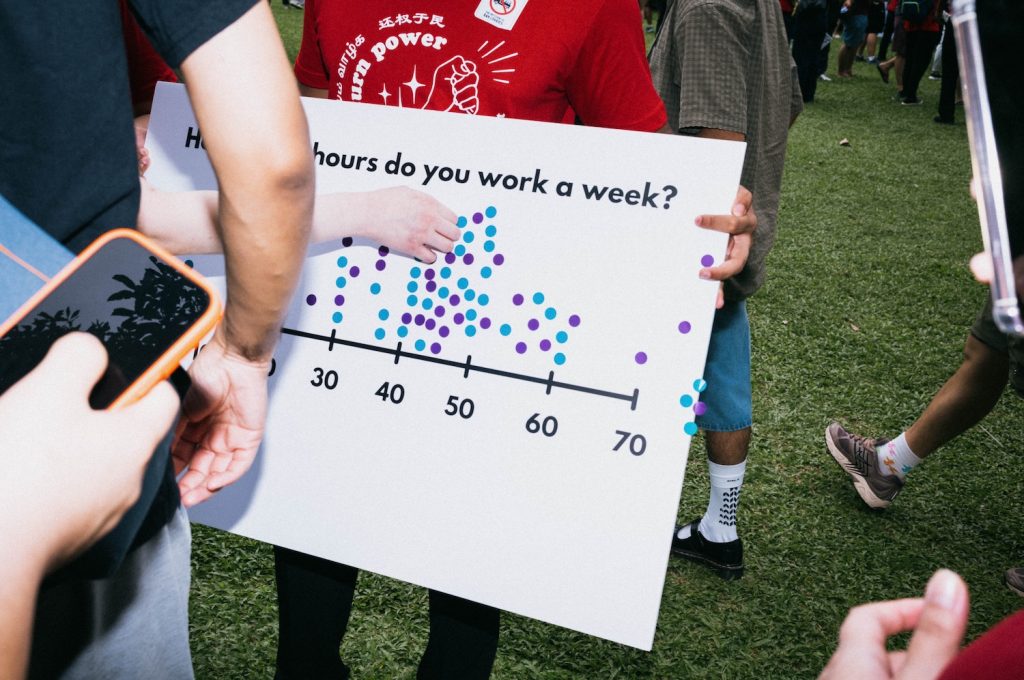
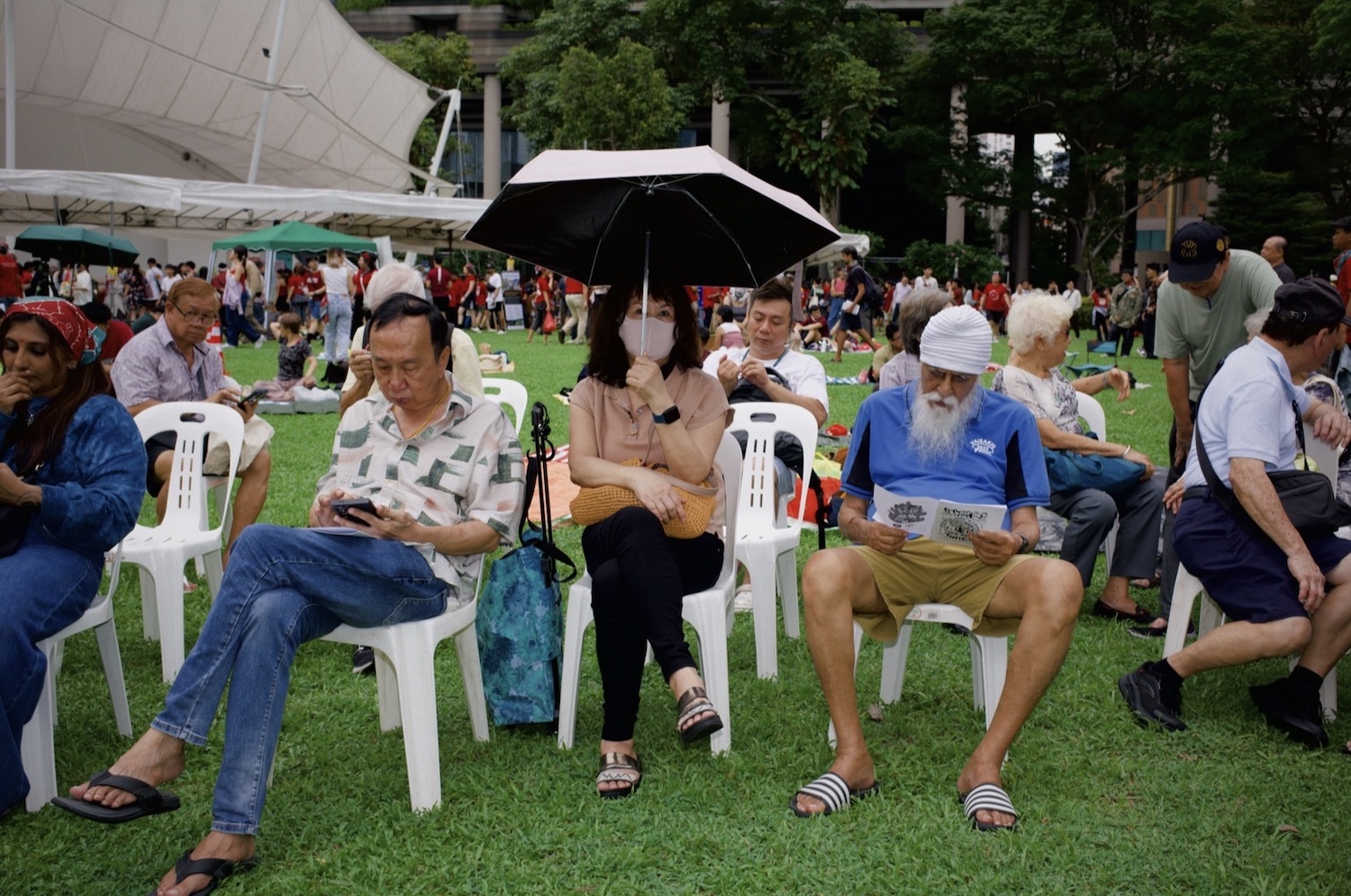
It wasn’t only the young; seniors were scattered through the crowd, too. Some parked near the front waiting for the performances and speeches, while others moved through the field with as much energy as Brixy.
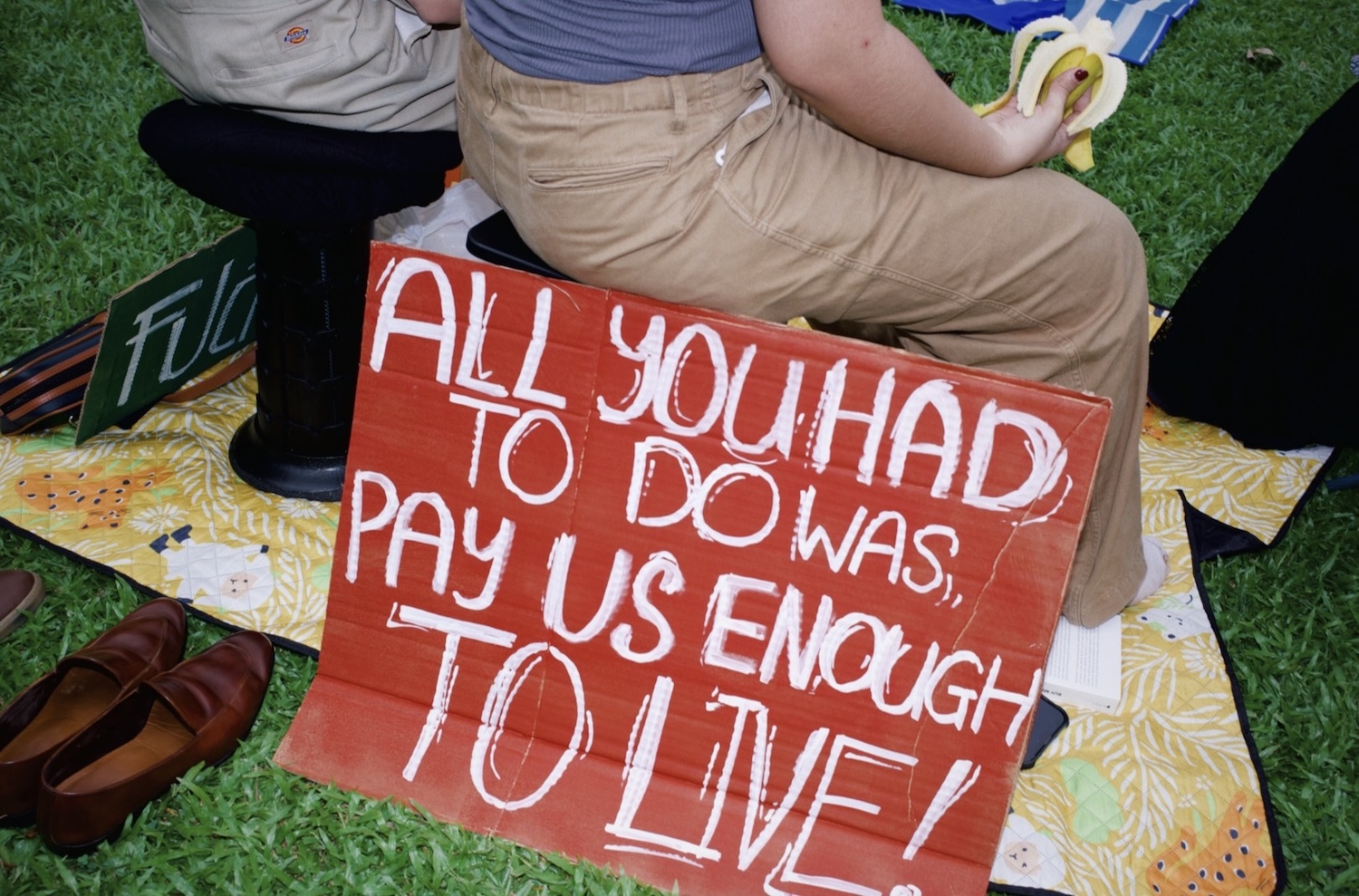
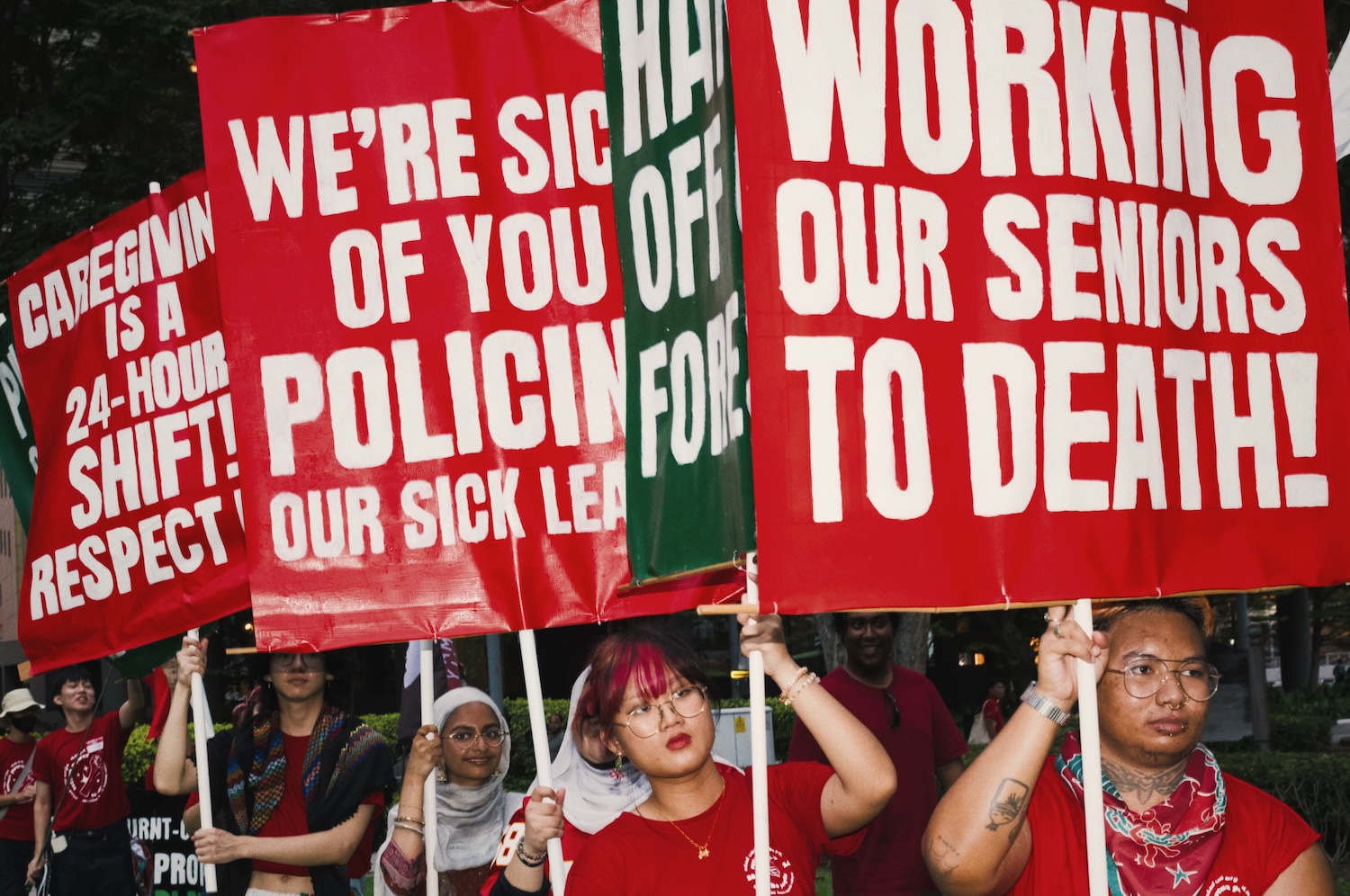
The signs and banners had as much vibrancy as the people holding them aloft. The colourful signs spoke (or rather, yelled) about caregiving duties, unfair wages, and the exhaustion of working to the point of collapse.
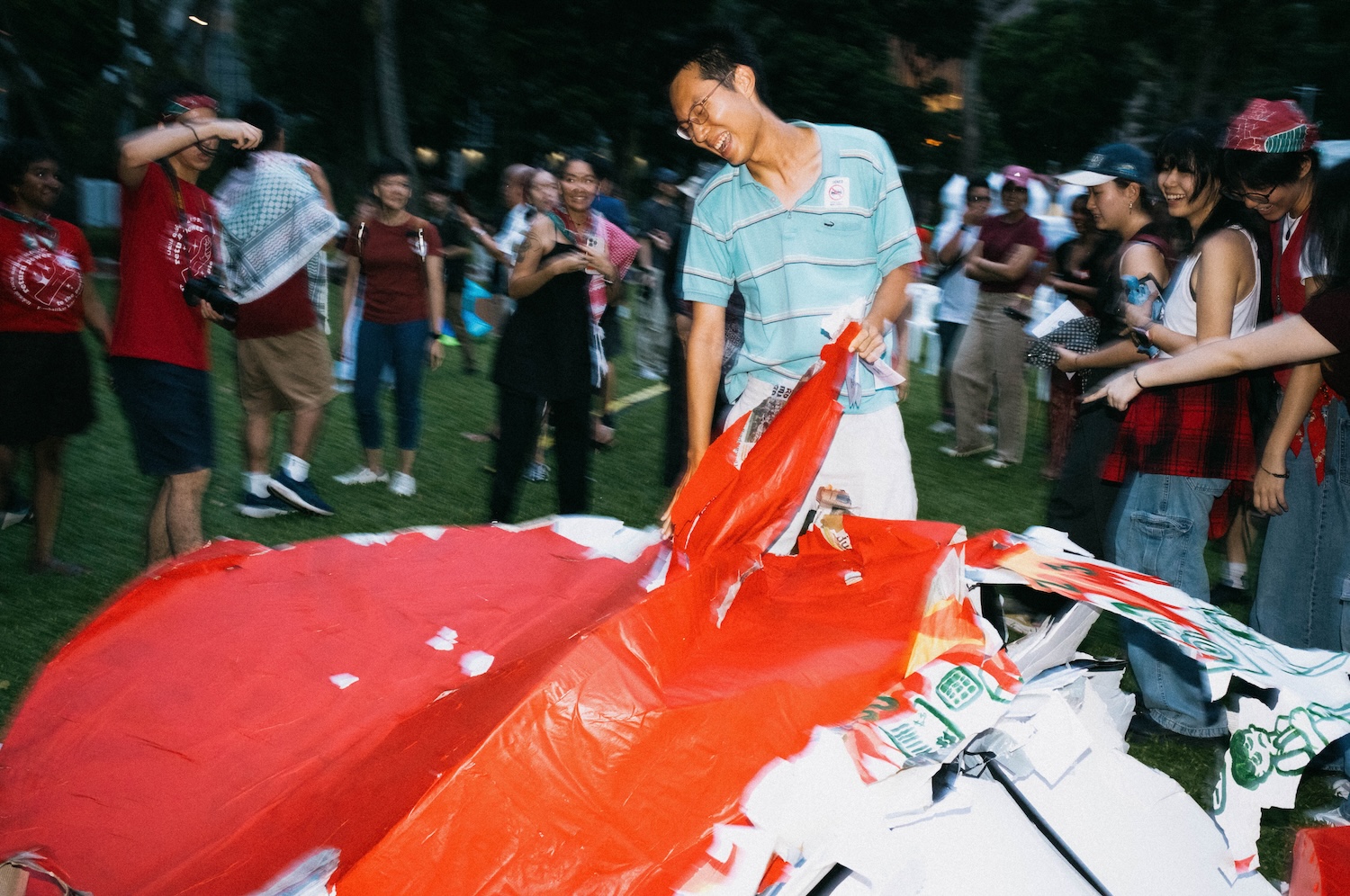
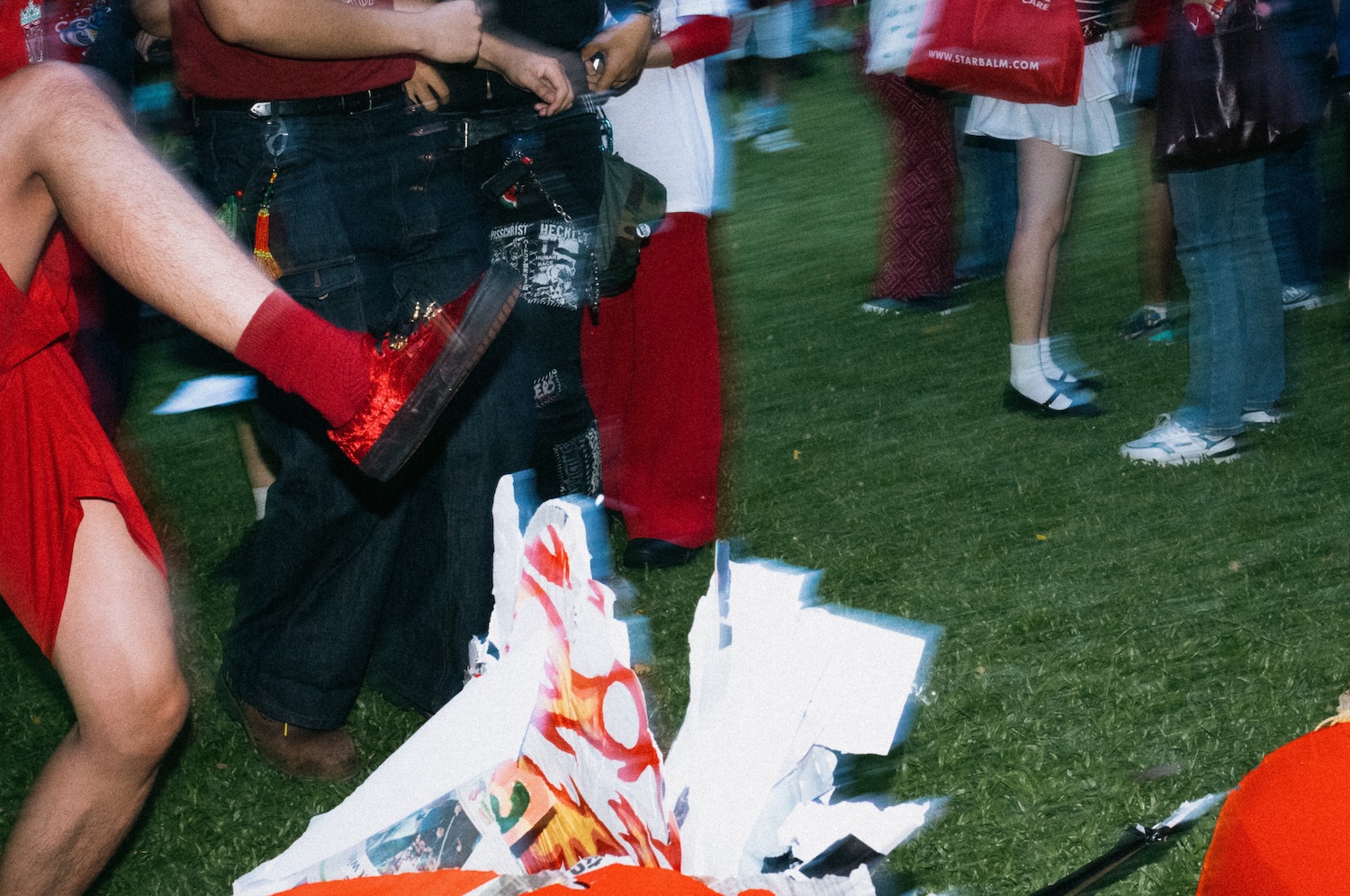
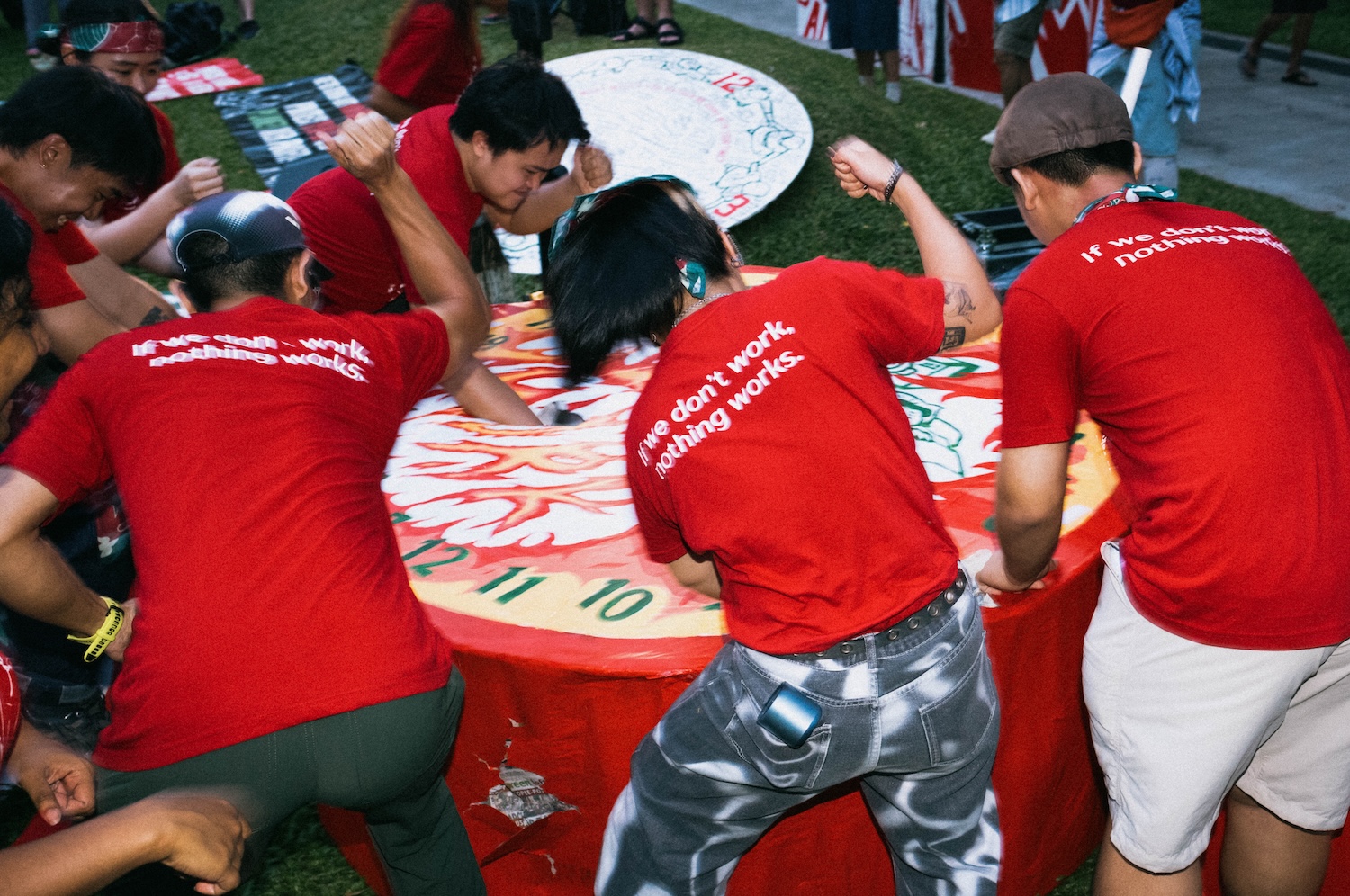
And then there was the giant cardboard clock, smashed apart as the grand finale. The clock was a prop, but the people swinging at it weren’t performing.
They were redirecting all that accumulated frustration—of being unheard, of working yourself hollow, of shouting into channels that don’t carry your voice—into cardboard.
Meghan Poh, an animator, designer, and illustrator, was making her impassioned final speech for Workers Make Possible (“Global CEO pay rose 50 percent between 2019 and 2024. Average worker wages? Less than 1 percent!”) when I saw a man looking curiously out of place.
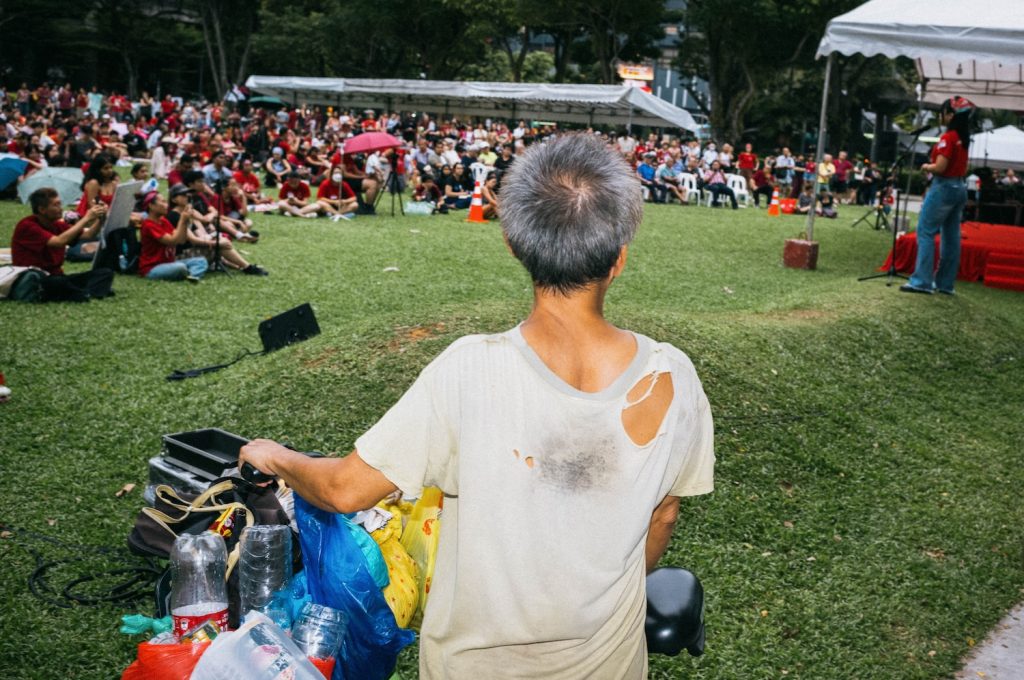
He wandered into the rally grounds in a torn army admin tee and towing an Anywheel bike with bags of empty plastic bottles dangling from its handlebars.
He looked around, amused by the crowd and spectacle, then moved on back to whatever the public holiday actually held for him. Across the island, the Downtown East event space was emptying out. Here, people were still in the field, signs in hand, not quite ready to go home. Two assemblies for Singapore’s workforce happening at once—one backed by the state, and one that had to build its own.
And somewhere between them, a man who didn’t know he was the argument.