All images by Yee Jia Ying for RICE Media.
When actor-host Munah Bagharib talks about her mother, it’s not with the wry wit most Singaporeans know her for—the 37-year-old speaks with the resolute wisdom of someone who’s been a caregiver for years.
Her mother, once a sharp teacher who prided herself on catching every grammar slip, was diagnosed with dementia eight years ago.
“When my mother was first diagnosed, I found it hard to accept that this is her reality—that this is all our realities,” she tells RICE.
“I will admit, it is not an easy journey. I find myself constantly learning and relearning, accepting the changes in my mother as the days go by—and at the same time, making sure my father, brother, and I are in the best state to take care of her.”
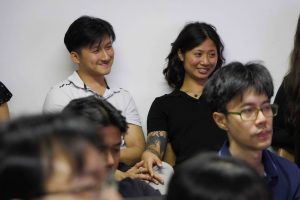
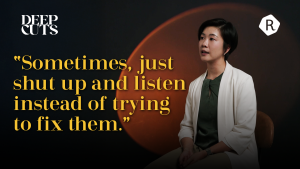
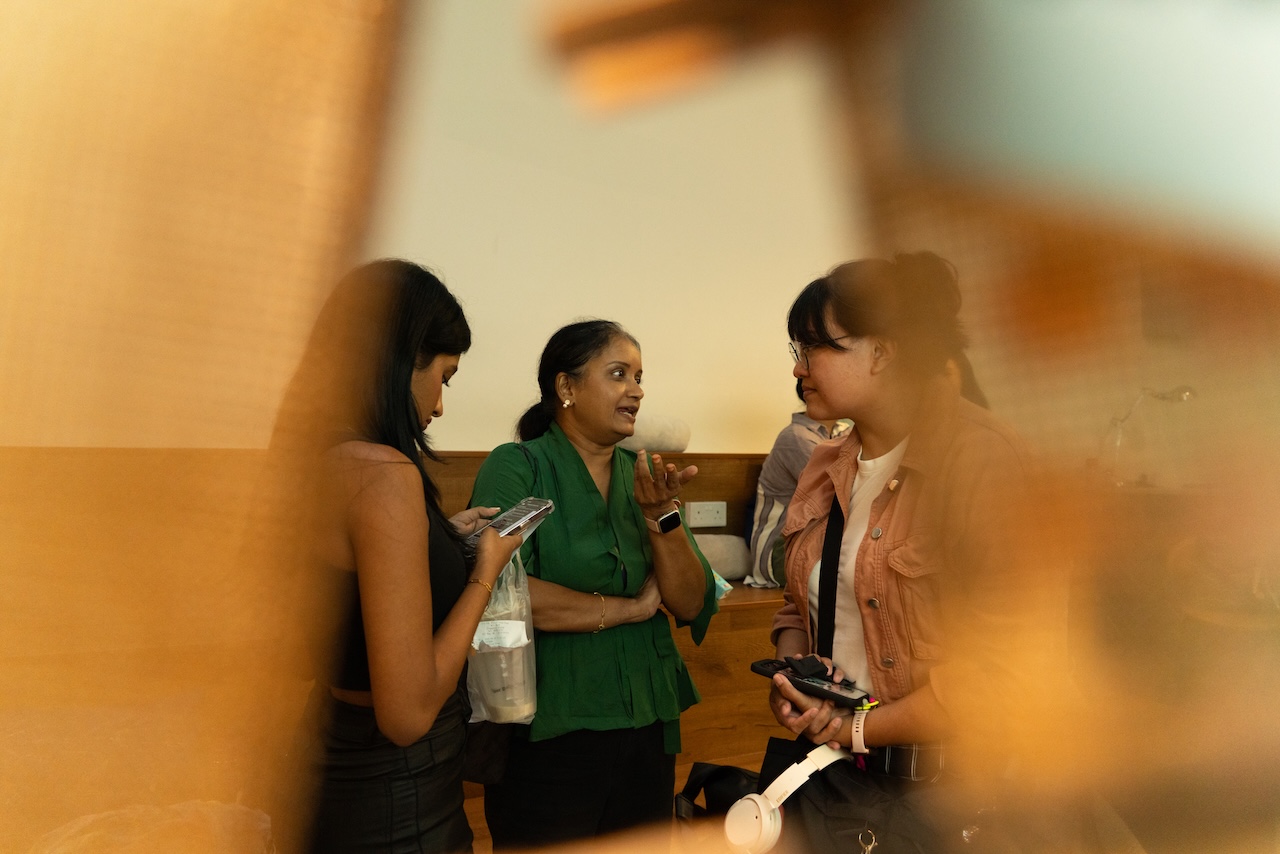
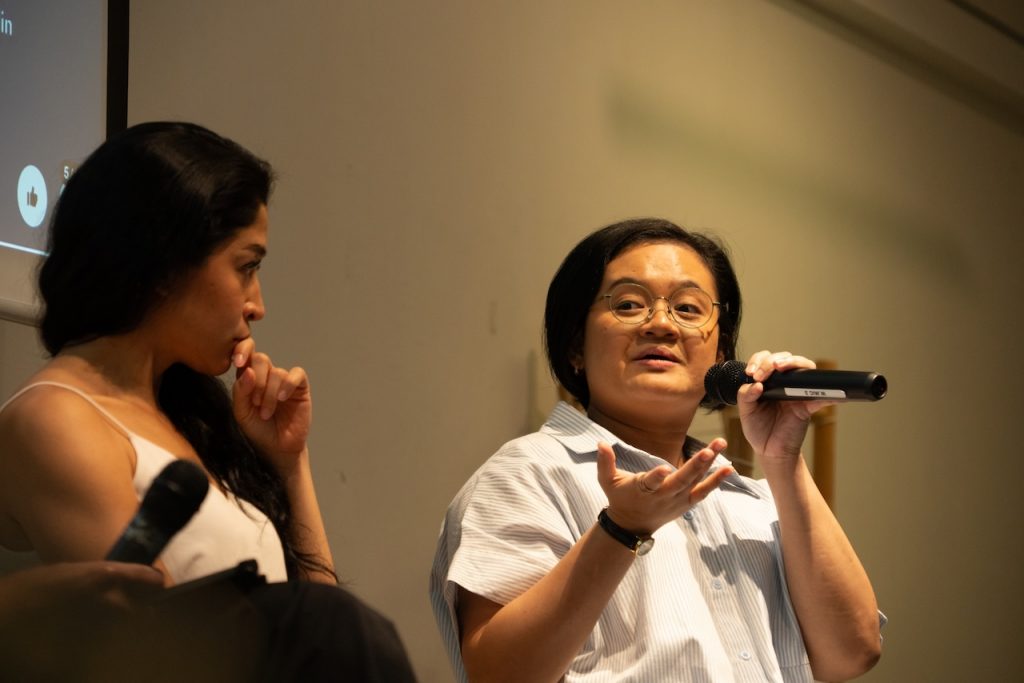
At 27 Ann Siang, during a sharing session on caregiving organised by RICE Media and the Lien Foundation on September 15th, Munah sat alongside Mindfull Community programme manager Hidayah Abidin, Tan Tock Seng Hospital’s Senior Principal Psychologist Dr Huang Wanping, with a room full of fellow caregivers.
The stories exchanged painted a picture that was less about noble sacrifice than about constant negotiation: the push and pull between work and family, tradition and necessity, guilt and survival.
And if caregiving is such a universal reality in Singapore’s ageing society, why do those living it still feel like they’re never doing enough?

A Shift in Perspective
Munah remembers how it started.
“[My mother] used to be super sharp. She’d brag about being from Raffles Institution—she’s always correcting our grammar,” she laughs. Munah recalls that in the early years of her mother’s diagnosis, her confidence faltered as she began to lose her grip on everyday tasks.
The mother would apologise constantly for small mistakes, and repeated corrections at home only seemed to wear her down further. It reached a point where Munah asked the doctor directly how she and her brother could best navigate the challenges their mother was facing.

“The doctor told us: ‘You both are [professional] actors, just play along! As long as she’s not harming herself, there’s no need to keep saying she’s wrong.’ That shift really helped.”
From then, care became less about milestones and more about small pockets of joy: evening walks, music, conversations where the sentences may be jumbled but the intent is clear. This shift—from fighting the disease to supporting the person—is at the heart of what many caregivers in Singapore are learning, often the hard way.
The Measure of Strain
Alongside these moments of connection, however, comes a weight that is harder to see, and harder to carry.
Hidayah, a volunteer-turned-staff member at Mindfull Community, cares for her older brother, who has schizoaffective disorder and an intellectual disability, and her mother, who has depression. She notes that the strain of caregiving is intensely personal, shaped by awareness, access to support, and understanding of mental health. And, of course, finances.
“Personally, I took two career breaks to care for my family. Even now, I sometimes support my brother financially, while also supporting my husband for his part-time degree,” she says.
“This dual financial responsibility is common among caregivers.”
When a caregiver is fortunate enough, they can employ domestic helpers for support. Hidayah has seen many helpers join Mindfull Community programs, learning alongside caregivers to better assist family members with dementia, Alzheimer’s, or mental health challenges.
Even so, there are times when practical needs clash with regulations. Hidayah recalls the case of Richard Ashworth, an elderly caregiver for his father with dementia, who required male helpers for physical tasks.
Hiring a male helper was virtually unheard of in Singapore, and it took both a nonprofit’s intervention and an appeal to an MP before the caregiver finally received the support he needed.
The Normalisation of Care
Heavy is the load for any caregiver, but it grows even heavier when families have to navigate an indifferent system as well. In her experience with elderly patients and their caregivers, Dr Huang personally affirms that workplaces have a part to play in normalising these familial responsibilities.
“The reality on the ground seems to be that support depends heavily on our workplace culture and the understanding of our supervisors. If our supervisors have experienced caregiving themselves, they’re more likely to be empathetic towards the challenges caregivers face,” she opines.
“But in more demanding, cutthroat work environments, especially where manpower is lean, any absence can disrupt operations. Employees may experience difficulty balancing work demands and caregiving duties, and some may even feel penalised for prioritising caregiving. Flexibility and autonomy are key… but they’re not always present.”

Her words landed heavily in the room because every caregiver knows that dread—the tension between needing to be at home and needing to look like a reliable employee.
An audience member puts it bluntly to the rest of the room:
“Mothers get maternity leave, childcare grants, and legal protections. But employees caring for elderly parents rarely get comparable support, even though their responsibilities are equally significant. Workplaces and policies need to recognise caregiving for the elderly, not just childcare.”
Hidayah agrees wholeheartedly.
“There’s a saying I like: When the person you’re taking care of is being difficult, they’re not giving you a hard time—they’re having a hard time. The same thing applies to caregivers. They don’t just take leave to shirk responsibilities; they’re responding to urgent needs.”

‘Self Care Isn’t Selfish’
Taken together, these perspectives show how caregiving is less a single story than a spectrum of private battles.
Behind each of these stories sits the broader issue of mental health. Dementia is not just a medical condition; it is an emotional one. Munah’s mother apologising for mistakes beyond her bodily control. A father stripped of dignity when he’s incapable of showering himself. Caregivers shouldering guilt because every misstep feels like a personal failure.
Singapore has made strides in youth mental health—campaigns, awareness, therapy-speak seeping into everyday conversation. But the mental health of seniors and the emotional burden carried by their caregivers is less visible.

None of the panellists pretended to have neat solutions. What they did offer, however, was a reframing of what self-care can look like.
Munah reflects on her eight-year caregiving journey with a hard-earned clarity. “If this is what’s been written in my journey, then I’ll embrace it and find gratitude through it,” she says. Connecting with other caregivers proved transformative—she now treasures opportunities to both share her experiences and learn from others facing the same struggles.
“Sharing about this with my community made a big difference. I met so many amazing people, organisations, and caregivers who are so generous with resources and knowledge.”
Hidayah adds that self-care goes beyond surface-level mindfulness. “It’s about going for therapy when you know you’re unwell; it’s about setting boundaries for yourself,” she says.
For her, it also meant confronting difficult truths. “There came a point where I realised what wasn’t working, and I had to accept that I will always be a caregiver. It’s about sitting down and having that hard conversation with yourself.”

The teary discussions at 27 Ann Siang were a reminder that mental health isn’t just a concern for Singapore’s seniors—it’s for the caregivers too. Caregiving can’t remain a silent, individual burden. To build an inclusive society, employers, policymakers, and neighbours all need to shoulder it, even in small ways.
And yet, for those living it every day, the most immediate responsibility is to themselves. Dr Huang puts it plainly: “Self-care isn’t selfish. If we listen to our body when it whispers, we won’t have to hear it scream. Don’t ignore the warning signs our body gives us, whether it’s fatigue, aches and pains, sleepiness, or feelings of frustration that affect our mood and behaviour. These are our body’s way of reminding us to pause”.
“So rest. Take care of yourself.”