This story is part of RICE Media’s Storytellers initiative, a mentorship programme for budding content creators to learn about the art of creative non-fiction. This piece is a product of a partnership between RICE Media and Singapore Management University (SMU) for its Professional Writing module.
Top image: Darren Satria / RICE file photo
It was in 2022 that Cady* stumbled upon a leaked Google Form response from her favourite teacher that contained a backhanded comment about her. It read, “Cady is a bright student in class, but has a tendency to pick and choose her commitments.”
The teacher had been referring to Cady’s Co-Curricular Activities (CCAs). Feeling overwhelmed by her academic load, she opted out of representing the school’s dance troupe in the National Day Parade.
A Secondary 4 student at the time, Cady felt she had overcommitted rather than being picky about her responsibilities. Running a tutoring programme, launching a social impact project, and attending seven hours of dance training every week already resulted in her being sleep-deprived, on top of struggling academically.
She had been doing exactly what extracurriculars are supposed to help students with—figuring out what she cared about and protecting it. The school saw it differently.
“I loved all the activities I was doing. Genuinely, I felt so excited working on each project, because those were all things I was passionate about and could see its impact on the people around me, and it was where I was growing the most as a person,” Cady reminisces.
“But I couldn’t handle any more (work)—it (had) reached a point where I was walking a thin line between loving what I was doing and burning out.”
So when the teachers in charge announced the “incredible honour” to perform in NDP, Cady was already running on fumes. Training took up full Saturdays, which she had already spent studying and working on her social impact project—activities she had prior commitments to and that fuelled her even more—all the way until 9th August.
Cady sent in her opt-out letter, along with several of her peers. It was then that she found leaked form responses containing testimonials for a position she had applied for via a link one of the teachers had mistakenly sent.
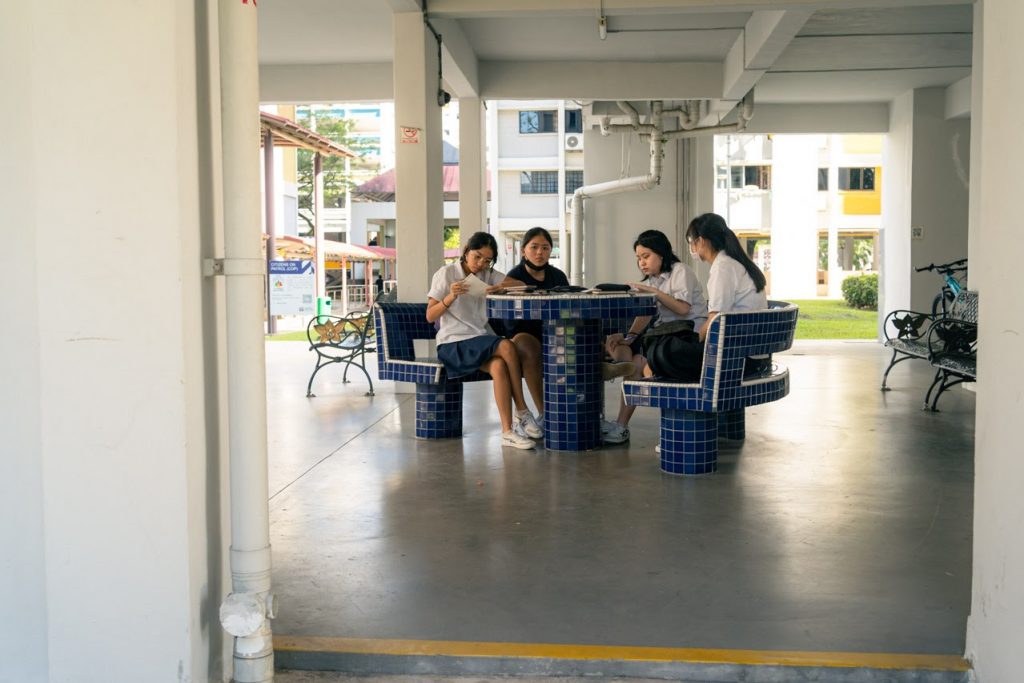
“I was being penalised for opting out of an optional activity. I spoke with the teacher afterwards, and she said it was a bad look for the Dance CCA when I dropped out of performing. I was selfish, apparently,” she recounts.
“I remember going to my friend and just bawling my eyes out. I felt so wronged.”
Cady had built something of her own, and she was proud of the effort she had put in. Being told she was selfish for protecting that felt like a mistranslation, as if something that mattered so much to her was the wrong thing. What the system needed from Cady was not the same as what Cady needed to develop and grow beyond academia.
Then what purpose do CCAs have today?
The Space to Self-Realise
MOE describes the primary purpose of CCAs as letting “students discover their interests and talents”.
CCAs in Singapore are mandatory at the secondary school level. Every student has to pick a CCA of choice from four categories: clubs and societies, physical sports, uniformed groups, and visual and performing arts.
These students—typically aged between 12 and 16—are encouraged to discover, participate, and do their school proud; they’re also told to prioritise their grades. Nobody explains what to do when those two things overlap and clash.
At some point, the CCA stopped serving just the student. Schools need results in the form of competition placements or awards—tangible performance indicators they can report.
On the other hand, students need space to figure out who they are. Both are necessary, but they conflict when resources are limited.
The four-year CCA commitment in secondary schools exists because continuity produces better results for the school. Auditions exist because only a limited number of spots go to students who can deliver the goods to win. The competition requirement exists because schools are evaluated and ranked based on their awards.
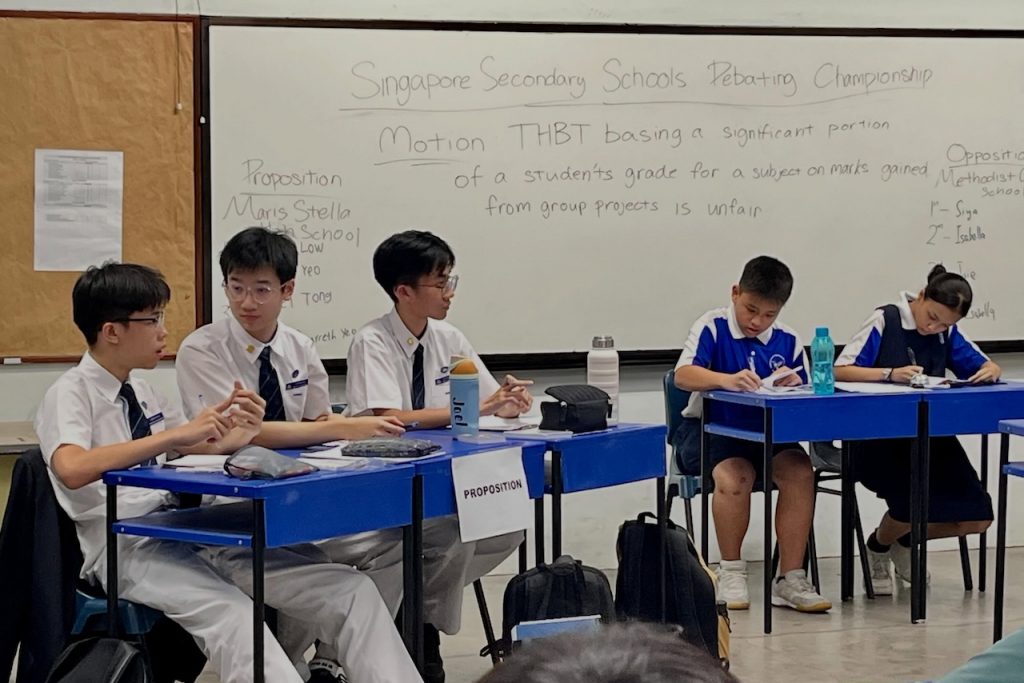
By the time a student like Cady reaches Secondary Four, the gap between what CCAs were designed to do and what they actually ask of her widens.
Not every CCA operates this way. Some teachers find workarounds: if a student isn’t interested in performing, they contribute backstage, with costumes, or in logistics. But flexibility depends entirely on who sets the agenda. Whether a student gets to be part of the decision depends entirely on who their teacher-in-charge is.
The CCA system is not the only place this logic plays out. In August 2025, sixteen-year-old Mika Baihakki was dropped from Singapore’s national under-17 football squad after choosing to stay home for his N-Level English paper rather than fly to Bahrain for a training camp. The Football Association of Singapore said total commitment was expected.
What these institutions should be asking more: What are we asking these students to give up, and what do they actually get in return?
Who Does CCA Really Benefit?
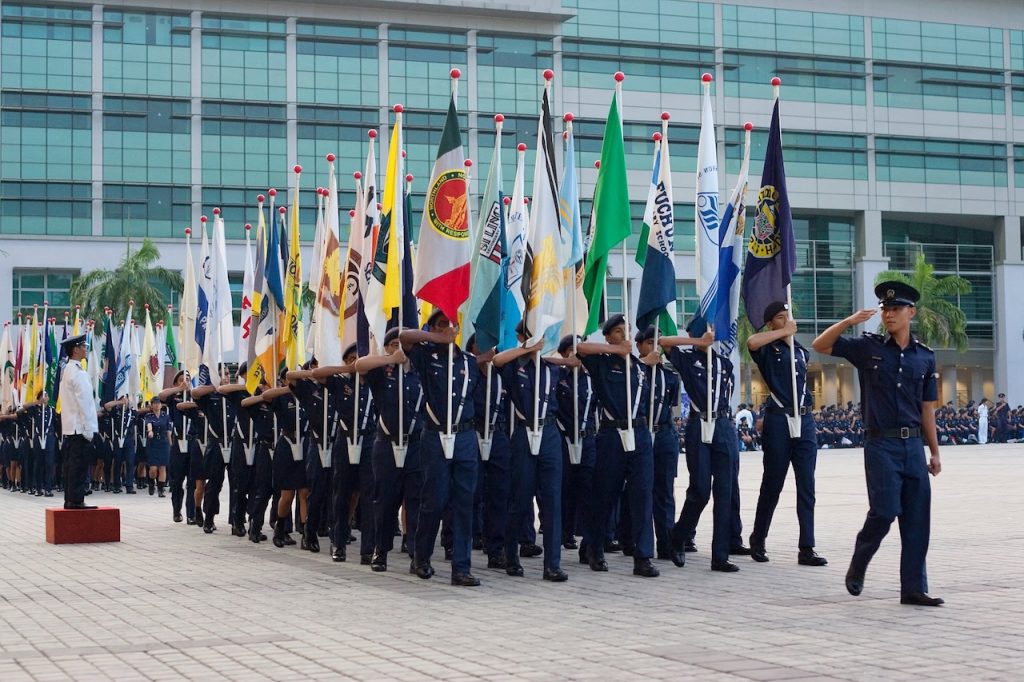
In secondary school, John* was a member of the National Police Cadet Corps (NPCC). He had joined at 13 because he wanted to be a policeman. By the time he realised that it was more about regimentation—physical punishments, ironing uniforms, tying knots—than experiencing the actual police vocation, he couldn’t opt out.
John stayed for four years. Though he was aware that the physical toil of push-ups and standing completely still under the sun for hours was meant to build character, he felt that it did little to inculcate one’s interests and talents, as CCAs were intended to.
“[Those] hard moments didn’t really change me as a person.” Everyone was expected to compete at the Campcraft Competition, a knot-tying competition. John didn’t want to, but he couldn’t say no. The school, he felt, thought it knew him better than he knew himself.
The school, however, knew exactly where to invest its resources. The basketball team had renovated courts, the Lion Dance Team had a professional trainer and an opportunity to perform in front of VIPs every year.
“In their eyes, it’s a win-win situation,” John says. “Students excel in a structured way. When students excel, they bring back a trophy for the school. We all win.”
He paused. “But the truth is, we didn’t all win. Some lost.”
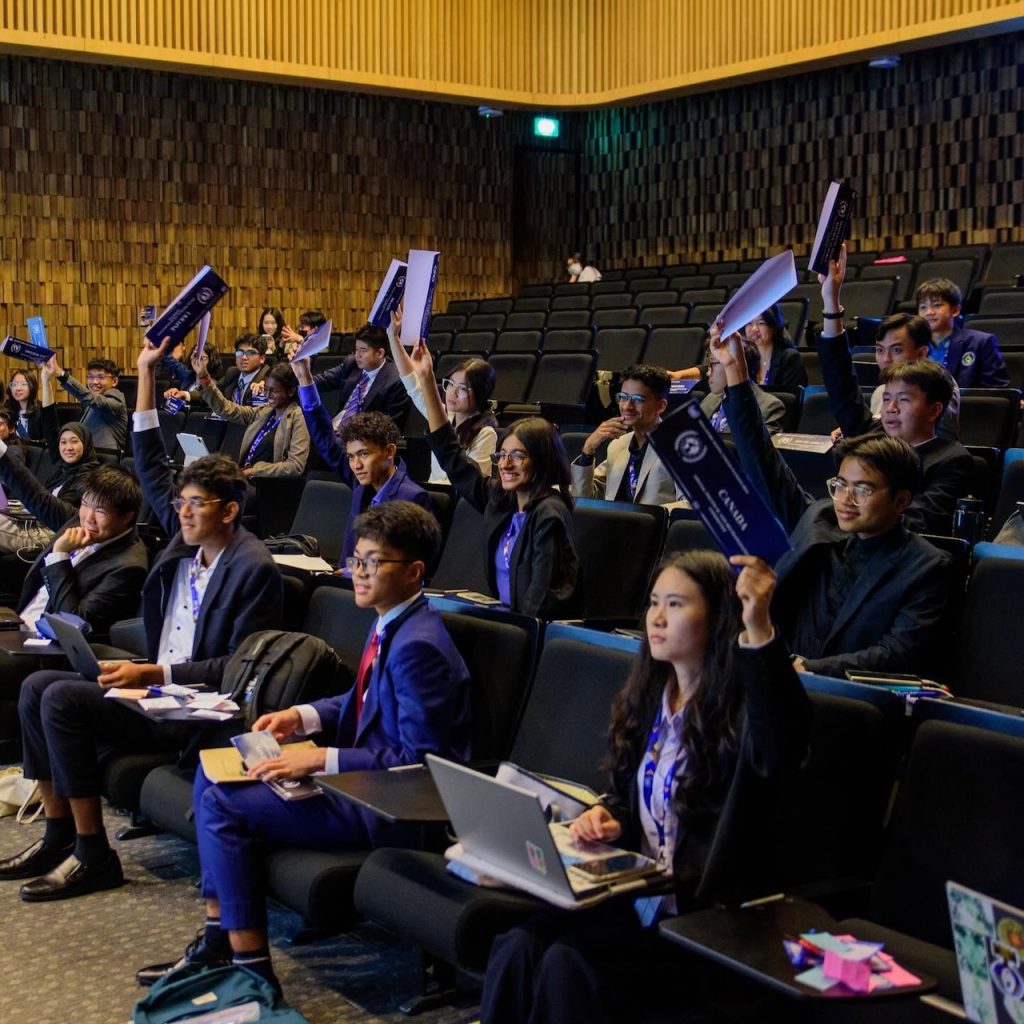
The ones that lost were the ones the school had decided not to invest in. Once, in passing, his form teacher mentioned a Model United Nations (MUN) conference in class. Interested, John and a friend followed up after class. The teacher said he’d sign them up.
At the next lesson, the teacher came back. “Sorry,” the teacher said. “The school couldn’t accommodate.”
“I took the initiative,” John says. “I didn’t get anything out of it. Never mind then.”
Years later, at his first MUN conference, he sat beside someone who had started at 14. That person had three extra years of practice, three extra years of knowing what exactly they were passionate about, and what they were building toward.
“That could have changed my life, actually,” he says. If someone had explained at 14 what MUN trained for and why it might suit him, he would have pursued it. Later on, while studying in a junior college, he did 11 conferences in one and a half years.
CCAs provide students with “space to discover their passion” according to a minister in a Parliamentary response. But if that space exists, why are students expected to spend four years in a CCA after one decision made at 13?
For many students, CCAs stopped being about discovery a long time ago. After years of being defined by their commitments, the activities simply stopped being things they did and started being part of their identity, whether they liked it or not.
What started as a genuine passion became a signal to school admission officers. The list that once answered “who are you?” started morphing into “what are you worth?”
“A lot of my peers focus on building a portfolio that people want. They’re not building a personality and a story. They’re building checkboxes to tick on a resume,” John says.
The Two-Way Street
The students aren’t the only ones navigating this.
Mrs Tan* has been teaching for over a decade. Beyond four classes a week, she procures costumes, manages consent forms, stays on call during CCA sessions, and becomes a primary caregiver on overseas trips.
“We are like the mothers of all of them during the trip,” she says. None of this is formally written down. “It is not explicitly mentioned, but we take it as a given when we apply for the job.”
It is the same logic applied to students. Give what is expected, even when nothing was formally promised in return.
“Last time when I was younger, I had more energy, so I could spend time with my students outside of school hours,” she says, referring to the school’s evening activities, orientation games, and every programme she could join.
“These days, I get tired after going through all the essays and marking. So I go home after school now.”

Recently, she has started approaching students she didn’t know. “When I hear there are people who run well or do powerlifting, I approach them,” she says. She went to wait for a student at her CCA—someone she didn’t even teach—just to learn from her.
“I feel that I don’t just help the students; the students are helping me also,” she says. “Last time, it was just coming to teach knowledge, but these days it’s a two-way street.”
Perhaps John needed a teacher like that at 14, and Cady needed the same when she was only trying to protect the things she had built. Instead, the system forces teachers to make calculated investments of school resources. And sometimes, those teachers take it personally when students make choices that complicate those investments.
Still Waiting For That Conversation
Cady and John are fine—they figured it out on their own as they started stepping away from the system.
But figuring it out alone is not the same as being developed. None of them was asked what they needed back then. They just eventually found it themselves.
At some point, most of us do. We figure out what we actually care about and what we’ve always been good at. We learn to discern what we were doing for ourselves versus what we were doing based on others’ expectations. It just usually takes longer than it should.
Think about the last time someone handed you a commitment—a CCA, a role, a responsibility —and asked what it would actually cost you. Or explained what you would actually get out of it. Or checked in, halfway through, to see if it was still the right thing.
Most of us are still waiting for that conversation.

In 2022, Cady’s favourite teacher looked at everything the student had built and dismissed it as fickleness. What she missed was a student who was already doing exactly what CCAs are supposed to help students with: develop character, learn values, and prepare for future challenges.
The gap between those two readings is small. It’s the gap between asking “Are you showing up?” and asking “Is this working for you?”
It’s the gap between producing and developing. Some teachers find it eventually. Most students can’t wait that long.