In Singaporeans Abroad, we share the stories of locals who—thanks to living in a globalised world—have found success in different corners of the globe, whether financially, romantically, or for the pure joy of adventure.
We recently heard from Eleazar Ng, who left the RSAF and moved to Japan to play professional baseball. Then, there’s Joelle Yeo, a Singaporean who embraced a new chapter by trading Singapore’s fast-paced work culture for the Danish art of cosy living in Copenhagen.
Now, we bring you Azah Rahman, who’s raising her 10-year-old in Dubai, even amid tensions in the Middle East.
When we first moved to Dubai in January 2013, it was supposed to be a two‑year adventure.
My husband Fahmi Latiff got a job here with a French maritime company, and I was already working in early childhood education in Singapore. The plan was simple: use those two years to get some overseas experience, then go home. In fact, if you talk to many people here, you’ll hear the same thing. Everyone comes thinking they’ll stay for just the length of their first two‑year visa.
Somewhere along the way, that short stint slowly turned into a long‑term life. Now, we’re in Dubai for the long haul. We aren’t planning to move back to Singapore, even with the tensions in the Middle East.
What Life in Dubai is Really Like
A lot of Singaporeans still imagine Dubai as a desert with camels, or think the Middle East is inherently unsafe. We still get questions like, “Do you ride camels to work?” or “Do you wear black all the time?”
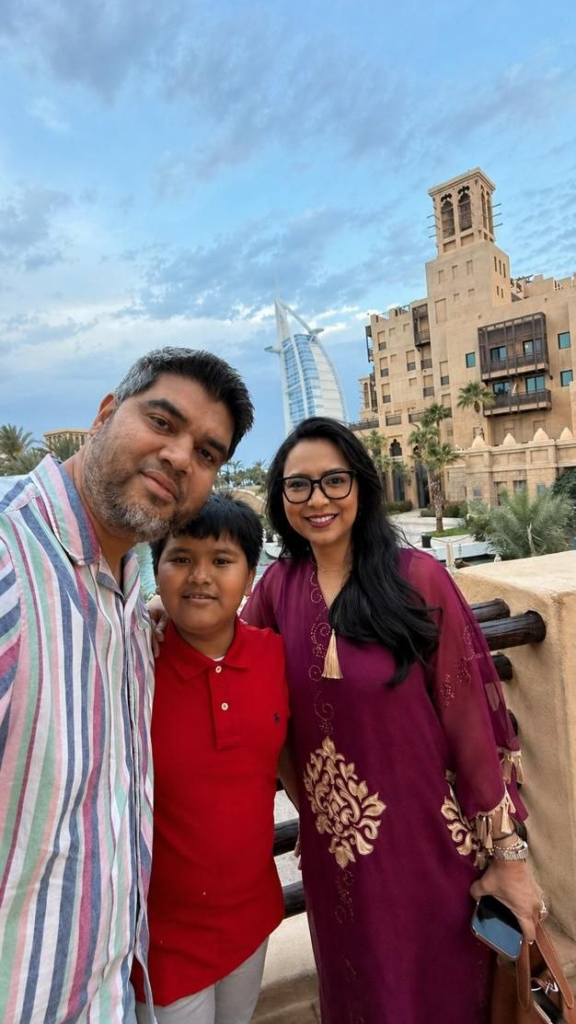
That couldn’t be further from the reality here. Back then, my husband flew over first to get settled in. His office looked out onto Dubai’s famous seven‑star hotel, the Jumeirah Burj Al Arab, and it was easy to think, “Wow, this is the life we want.”
Like Singapore, everything here is clean and organised. The metro system here is very similar to the MRT system. Perhaps a small unexpected thing that we miss is the Singapore weather. We don’t really see rain here. When we go back to Singapore and see the raindrops falling, there’s a sense of “Okay, this is something I have missed”.
There are some other significant differences about life in Dubai. For one, multiculturalism is on another scale. In one school, you might have students with around 130 nationalities. You learn very quickly that not everyone moves at “Singaporean speed”, and that every culture has its own way of working and its own priorities. If you impose the Singapore style of efficiency on everyone, you’ll constantly be frustrated.
If you send emails at 11 PM, colleagues will tell you: “This is not the way to work. That time is your family time.”
Sometimes I’ll finish work at 4 PM. Fahmi will finish work at 1 PM. Here, we have time to take walks on the beach and meet our friends. And the malls here close at midnight. So people often have dinner, go for coffee or tea after dessert, and stay out till midnight.
I think, over the years, we got used to this way of life. You don’t have to come back home from the office late every day, mentally, physically, emotionally exhausted. And so you begin to appreciate that.
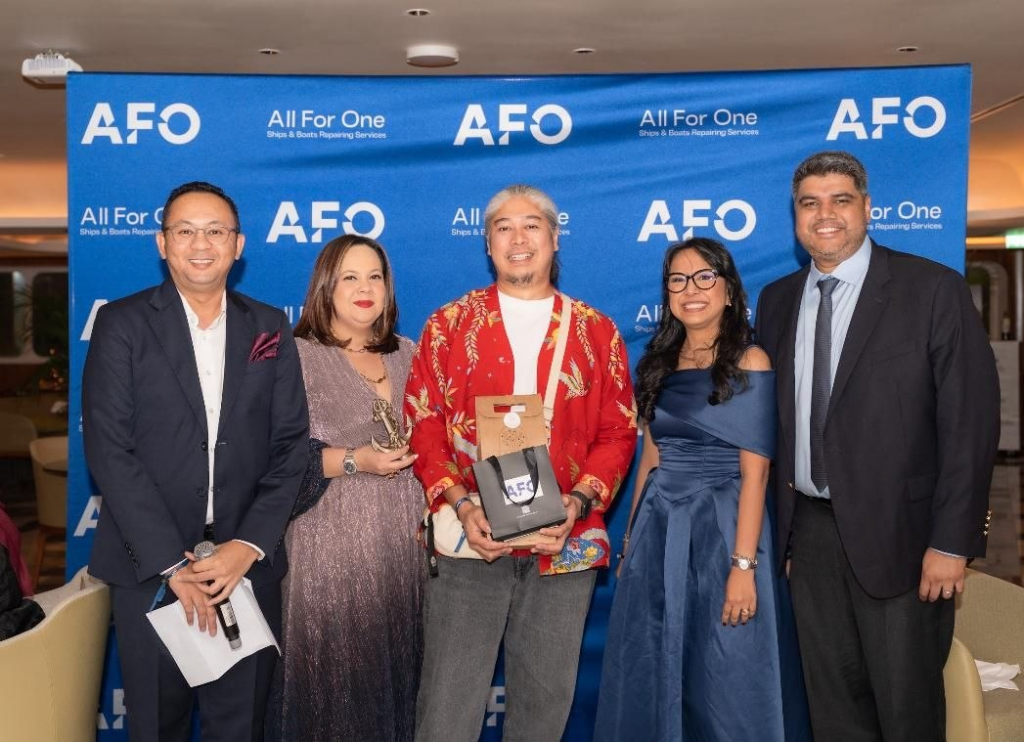
About 10 years ago, when Fahmi’s company decided to close their branch in Dubai, they actually asked him to move to their French headquarters. He decided to stay in Dubai and start his own company. The company’s core business is ship repair, but we also do trading and ship management, and we’ve expanded from the Middle East into West Africa, with a new presence now being built up in Singapore as well.
Today, we run that company together. He handles marketing, finance and operations (with another partner), while I support them on HR.
I’ve also continued on in my field. I’m now the Head of Academics at MapleBear here, overseeing lesson plans and the entire academic framework for our schools in Abu Dhabi, Ras Al Khaimah, Sharjah, and Dubai. I decide what the children learn and how the curriculum is structured. Over the years, we’ve essentially built our life and our careers here.
Raising a Child Away from Home
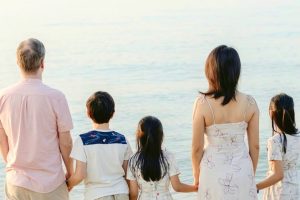
We’ve also built our family here. Our son Omar just turned 10. Compared to Singapore, the academic pressure in Dubai is lower, which is a relief. But we are worried about him getting too spoiled here.
He goes to an international school. Children here are used to things like drivers, multiple nannies, branded bags, lavish birthday celebrations like yacht parties or renting entire cinemas. It’s not uncommon to see kids bring Louis Vuitton bags to school.
We’re very conscious about not letting him grow up thinking that’s normal. We constantly compare back to our own childhoods, reminding him that when we were young, overseas holidays were rare, not expected. Sometimes I even show him videos of people who are less fortunate, to remind him how privileged he is.
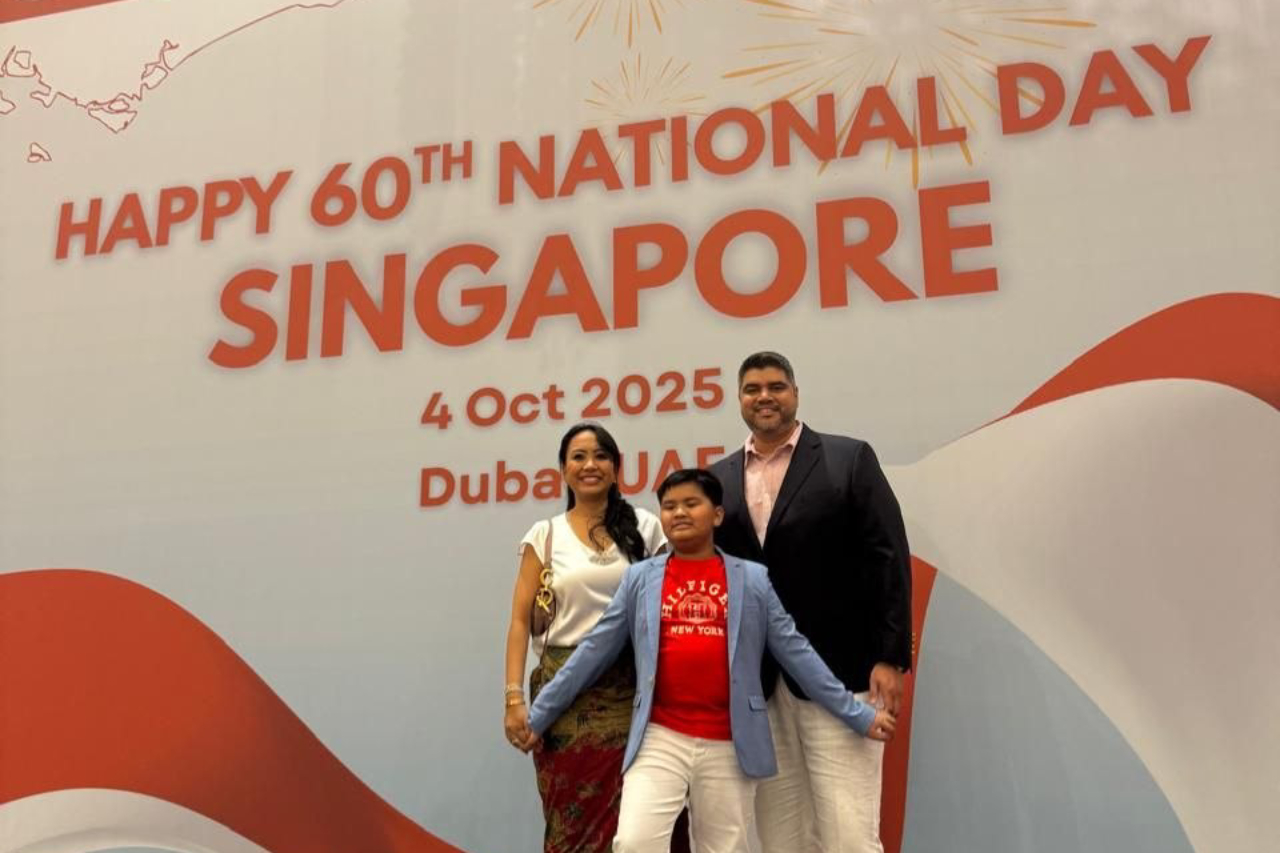
We also try to keep him connected to Singapore. We speak to our families as much as we can, expose him to Malay and Singaporean culture, and get him involved in community events—National Day celebrations, Hari Raya gatherings, performances organised by the consulate or embassy. When we go back to Singapore, we make him take public transport—MRT, buses—so he understands everyday life there, not just the “holiday version”.
Even when we go back to Singapore during the school holidays, we’ll still meet up with our friends from Dubai. Our families will even joke: “Don’t you all see each other every day in Dubai? Why are you still meeting each other here?”
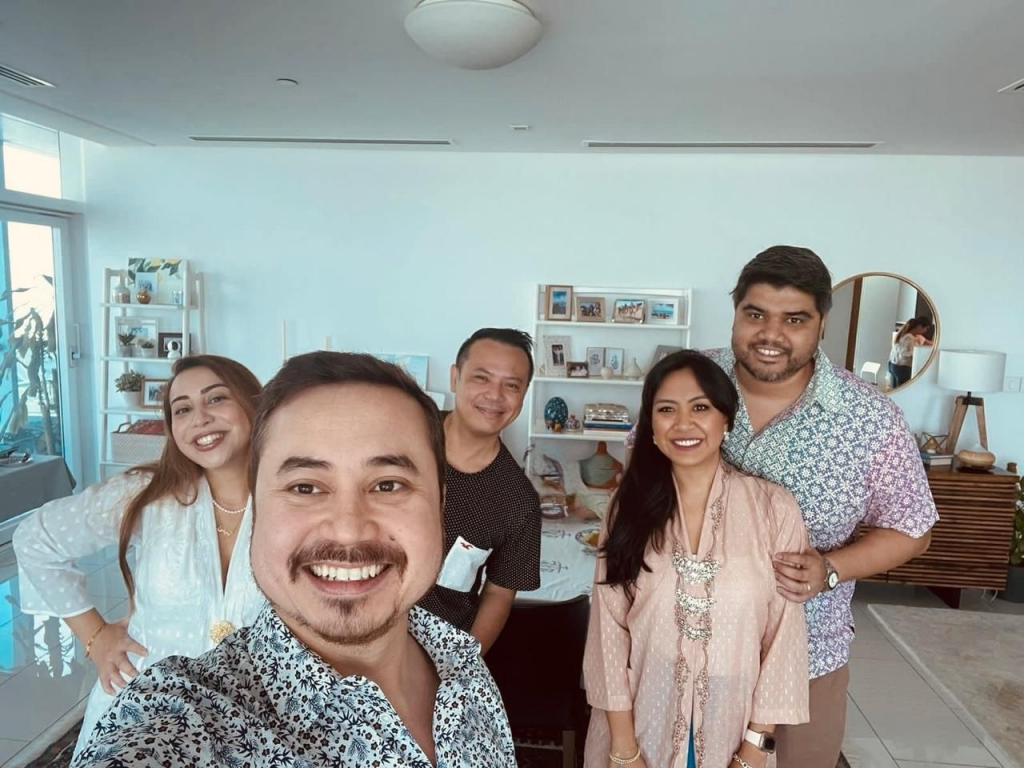
To me, it feels like a tight-knit support system. We update each other about what’s happening both in Singapore and here and we’ve grown used to functioning like a big extended family.
Rethinking ‘Home’ and ‘Safety’
We have always felt safe in Dubai. It’s arguably even safer than Singapore in some ways. Strict alcohol rules mean you don’t often see drunk people on the streets. As a woman, I can come home at 3 AM and feel relatively secure because everyone knows that if they try something, the consequences are serious. Many people here are expats; they don’t want to jeopardise their life here.
Recently, we’ve had to rethink what safety really means. From far away in Singapore, the situation in the Middle East can feel theoretical or distant. For us, it was right above our heads.
When Iran began bombing Dubai, we started hearing the booms at night. Twice, the debris from intercepted missiles fell just behind our house. Friends’ houses shook, things broke. Fahmi has literally seen a missile intercepted in front of him and crash just metres from a main highway near the airport.
The psychological impact was real. As Singaporeans, we’ve never lived through war. The first few days, we were really shaken. On the other hand, some of our friends here come from countries where conflict is a part of life; to them, this was “not that bad”.
Still, we’ve made sure to stockpile some canned food and water in our house. We also have all our important documents ready if we ever have to evacuate.
At the same time, we were constantly weighing: Do we stay, or do we leave?
Many companies forced their Singaporean staff to go home. Some people left the moment flights became available. Not everyone feels rooted enough here to stay; if you’ve only been around a year, it’s easier to pack up and go.
For us, after the initial shock, we found our confidence slowly shifting. We watched, in real time, how the UAE government and defence systems responded—the speed of interception, the very high success rates, the way alerts and restrictions were adjusted to maintain safety without paralysing daily life. That built a sense of trust.
To put things into perspective, this could happen to any other country. Before things like this happen, it’s always a question mark as to how strong a country’s defence really is. But after these recent incidents, and looking at the sheer number of missiles they have managed to intercept, I think we are feeling more confident with the government and defence system over here.
Staying Put
As for our son Omar, he’s aware of things because he and his friends are on TikTok. Sometimes he even comes to us with updates like, “Did you know Trump did this?”
And I’m like, “Oh, wow, how did you know this?”
He asks why people are fighting. We try to give him a realistic, balanced explanation of what’s happening, but in a more positive light. At the end of the day, he has to go to school, and we don’t want to instil too much fear in him. We still remind him to have confidence in the system and to have faith.
I remember when we came back to Singapore recently to celebrate Hari Raya. Our friends and relatives were asking Omar, “So you saw bombs?”
He responded, “Yeah, we see them every night, over our heads.”
That’s when some of them realised that all this isn’t fake news. We’re really living through this.
Singapore will always be home—our parents are there, our extended families, our childhood memories. It’s not a “Plan B”; it’s part of our identity. At the same time, Dubai is where we built our marriage, our business, and where our son was born and raised.
We’ve heard many Singaporeans say, “Singapore is safe; the Middle East is not.” But Dubai has shown us that safety is also about how quickly and effectively a country can respond when something goes wrong.
So for now, we’ve chosen to stay. We’re restructuring parts of the business, expanding more in Singapore so that if logistics here freeze again, we have another operational base. We’re thinking more carefully about contingency plans. But we’re also continuing to live, work, and raise our child here, with a renewed appreciation for how fragile and precious stability can be.