Someone posed this question mid-session, almost casually: if the cost of raising children was no longer a factor, removed entirely from the equation, would Singapore’s chronically low birth rate reverse itself?
The room went quiet for a beat. Then the answers came.
“No.”
“Nah.”
“Probably not.”
The sentiments were clear, yet these weren’t the answers anyone expected. Not from a group of parents who had just spent the better part of an hour cataloguing every financial indignity of raising a child in Singapore. The infant care slots that disappear before your child is even born. The Child Development Accounts (CDA) that drain before your kid hits K1. The Certificates of Entitlement (COE) that turn a logistical necessity into a small financial catastrophe. These were not people indifferent to cost. And yet, when asked if cost was the thing standing between them and more children, most said: not really.
So what gives?
What they described was a city-state that had made the ordinary architecture of a life—a job, a marriage, children, some semblance of stability—feel structurally precarious. Not unaffordable in any single line item, but precarious in the way that every decision cascades into three more, and none of them are cheap. Adulting in Singapore is not a scam, exactly. It is more like a group project where the instructions keep changing, and nobody has agreed on a deadline.
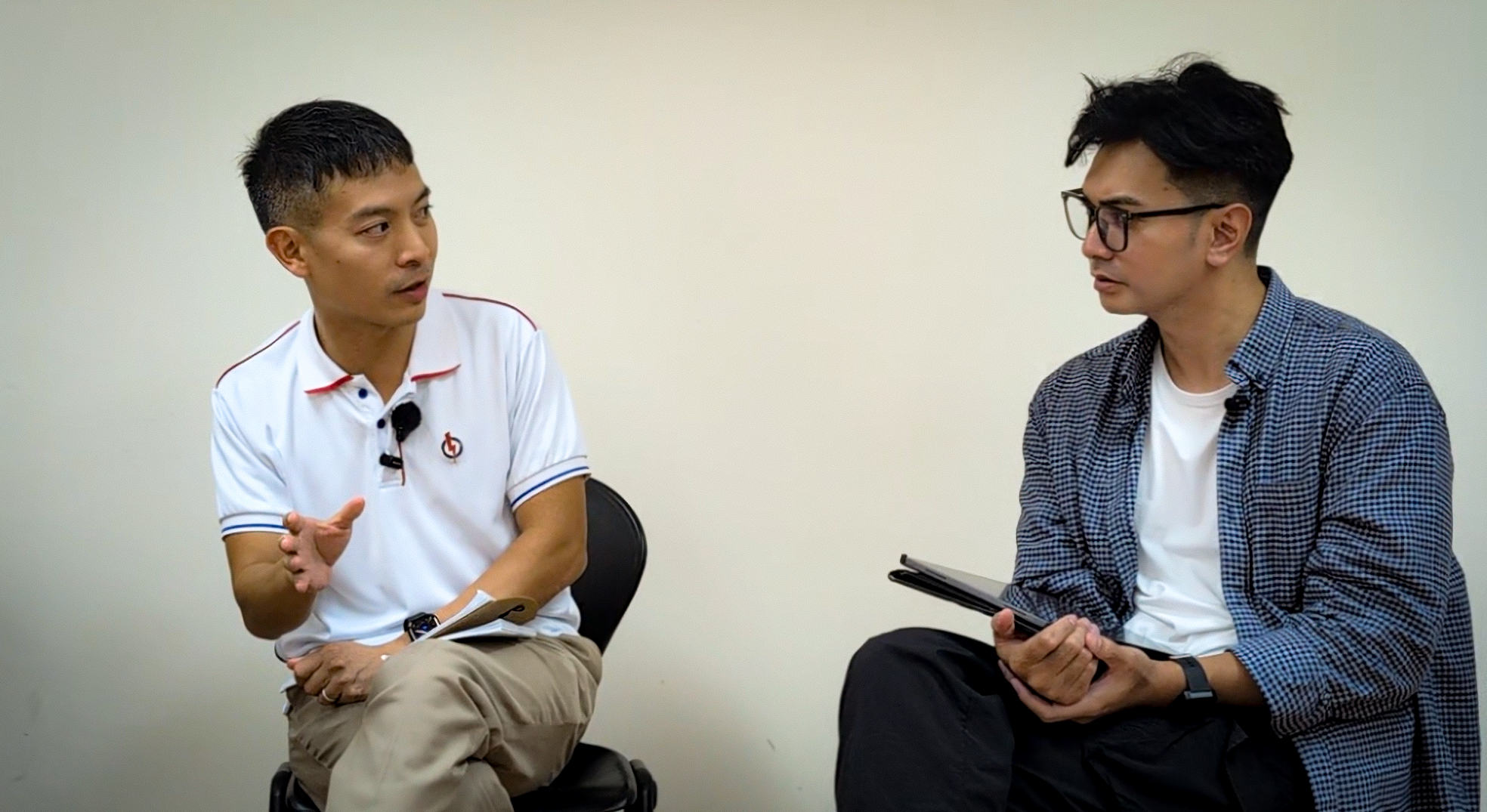
The session was part of a post-Budget resident engagement, organised for Whampoa residents by MP Shawn Loh to collectively surface what Parliament hadn’t quite captured: the texture of daily financial pressure, and the decisions that don’t show up in policy papers.
As a Whampoa resident, I was there facilitating the session. I was also there to hold space for an honest conversation that Shawn believed his residents needed to have. He has been publicly vocal on childcare policy in recent weeks. That afternoon, he came to listen rather than speak.
The participants were a cross-section that felt almost too on-the-nose for the moment Singapore finds itself in: parents of young children, fresh graduates on the edge of the workforce, and a pre-enlistee who came simply to understand what was coming for him. Nobody was asked to represent a position. That informality was the point. And this is what emerged from that conversation.
The session was held as a trusted space for Whampoa residents engaging with their MP, Shawn Loh. Individual views are not publicly attributed. What is reported here reflects the themes and texture of the conversation, not any single person’s testimony.
Anxiety and Sleep Deprivation
One of the parents had a three-month-old at home. He carried the particular look of someone running on the wrong kind of adrenaline—present, engaged, but operating slightly outside his own body. He came anyway.
I know that look all too well. Having a baby and a toddler at home will do that to you. It’s called sleep deprivation—but that’s not really the point.
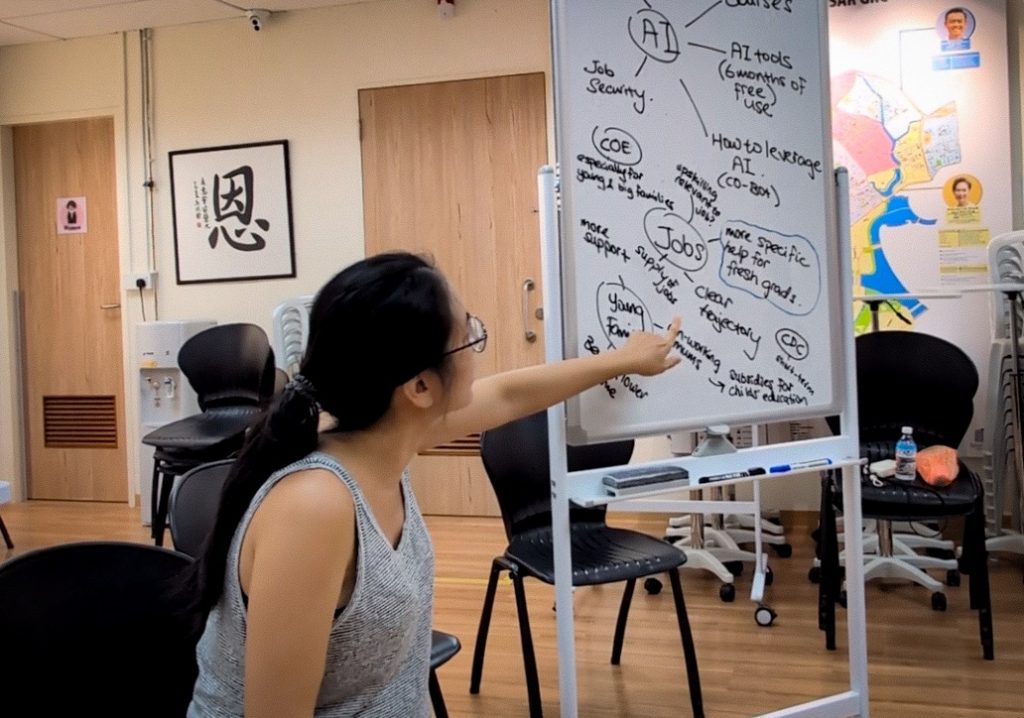
What the group described was not a single complaint but a decision tree. You only see it clearly once you are already inside it, and it is too late.
A couple secures an infant care slot, but it sits nowhere near home. So they need a car. A car means a COE, and a COE now costs more than some people’s annual salaries. So they weigh the options: helper or infant care? The helper turns out to be untrained with infants. After going in a circle, they find themselves back at the infant care centre.
Meanwhile, the CDA, the government’s child development account, topped up at birth, hits near zero before the child even enters kindergarten. Parents top it up themselves, at the exact moment when they are most financially stretched.
One parent says they tried the cheaper childcare option. The quality faltered fast. The parents got anxious. They switched to a better, more expensive centre. “Bending the budget” was how they put it. Not breaking. Bending. These are not families in crisis. These are families in a permanent state of barely managed compromise.
Shawn put two broad policy directions on the table.
First: make national childcare, which currently costs around $300 to $400 a month, free or close to it. It would be funded on the back end, the way primary school funding works. The government spends roughly $14,541 per primary school student annually. Parents never see that bill. Apply the same logic earlier in a child’s life, and the financial calculus for young families shifts significantly. Second option: put money directly in parents’ hands and let them decide how to use it, whether that’s for childcare, transport, or whatever their situation demands.
His instinct leaned toward the first. Subsidise providers directly and you control quality. You do not have to trust that every parent allocates the money optimally. It was a paternalistic argument, and Shawn seemed aware of that. He raised it anyway, which was notable.


The room kept pulling away from policy mechanics and back toward something more fundamental. One parent said it plainly: they adapted their life around their children, not the other way around.
A bigger flat when more kids arrived. Moved near parents to access free infant care. Hired help only after the second child. Cost was something you managed. Time was not. Time was the thing no subsidy could replace, no credit could offset, and no policy could return.
Shawn observed that cost was probably most decisive at the margins, for the family weighing a second child against a first, or a third against a second. Not for those who had already decided this life was not for them. It was a careful, calibrated point. And it quietly acknowledged what the room had already said: that for many Singaporeans, the decision about children is less a financial calculation than a question about what kind of life is even possible here.
Permission to Pause
At the end of the session, everyone got a magic wand. One wish each. What would they change?
Nobody asked for a lower COE or a bigger SkillsFuture credit. They asked for pace, for breathing room, for a city-state that moved a little slower and measured a little less.
More time with family. Less pressure tied to academic results. An infrastructure that does not require a car just to raise children. Respect for work that does not come with a degree attached. Empathy between people walking very different paths. Honestly, not a lot to ask. And yet, there’s still a sense that these wishes are just slightly out of reach.
One wish stood out: pause. Just pause. Take a breath. Enjoy the moment.


It came from someone who had just sat through an hour of systemic analysis, costs, policies and cascading decisions, and arrived at something almost embarrassingly simple. Not a policy ask. A silent protest against the relentlessness of the city. We’re all trying to slow down (keyword: trying).
The pre-enlistee, who had come just to listen, contributed towards the end of the session. He was there to understand what awaited him. By the time the room dispersed, he had a clearer picture.
Not exactly a reassuring one, but at least he wasn’t alone in the uncertainty.