This story was produced in partnership with the Ministry of Manpower.
Top image: Zachary Tang for RICE Media
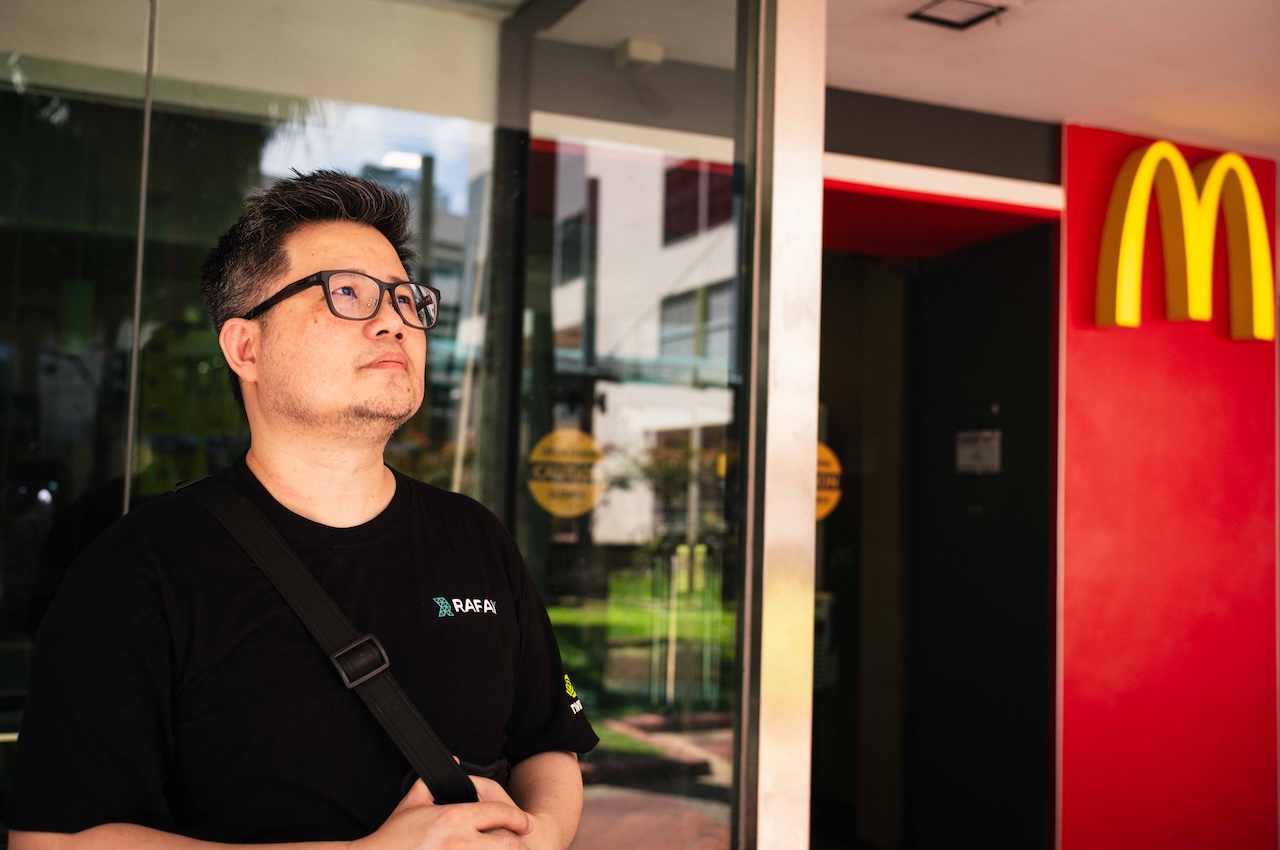
James Lai was walking past a McDonald’s near his family home in Bukit Merah when he asked himself: “Am I okay working here?”
Behind him were years of failed marketing ventures, entrepreneurial attempts, and poor investment decisions that left him financially strained. His marriage fell apart, and James moved back into the home he grew up in. He was in his 40s.
He went into the McDonald’s outlet and applied for a job.
In his teens, James scored well enough for his A-levels to get into the National University of Singapore. Then he turned it down because Toy Story had just come out, and he wanted to make cartoons instead. He worked a couple of odd jobs before he took an animation course in Kuala Lumpur in the 2000s.
Then he got his wish, working as a layout artist and animator on some Ben 10 direct-to-video films and a local animated CGI series called Dream Defenders, before leaving the industry for good in 2014. He had just gotten married, and the relatively modest income available in the animation industry made him question whether it could provide the stability he wanted for the future.
What followed was several years of drifting through multi-level marketing schemes, entrepreneurial ventures, trading, and investments. Some of his financial decisions left him increasingly in debt—at times, he borrowed money from relatives and in-laws to keep going.
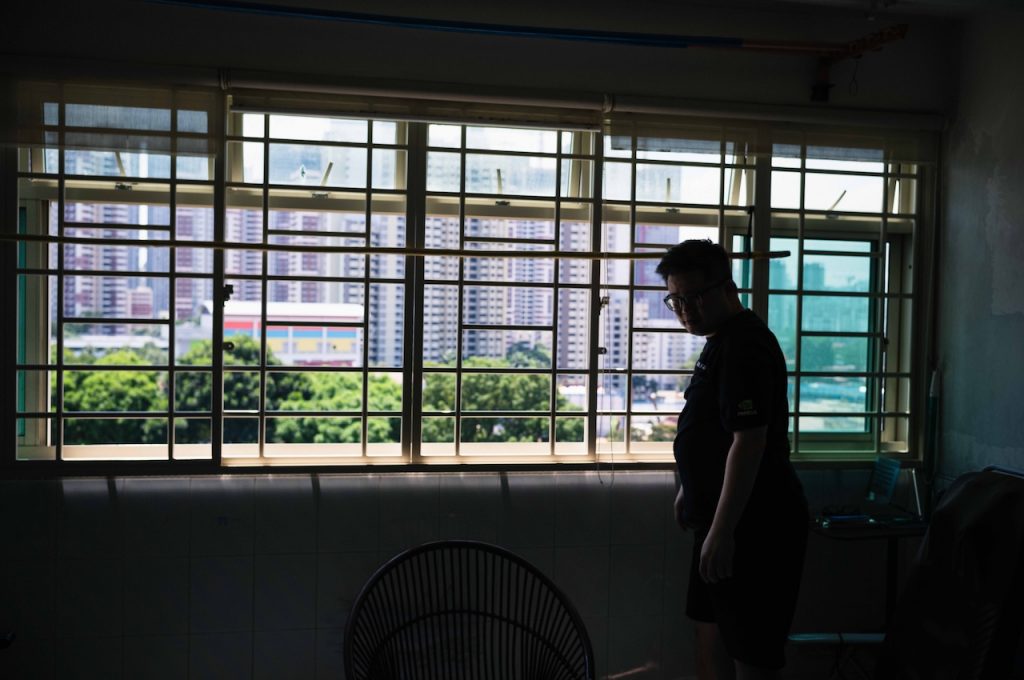
Eventually, he reached a point where he realised that continuing down the same path wasn’t going to solve the problem. The financial strain weighed heavily on him, and his marriage eventually broke down.
“I still feel guilty about it,” says James, now 48.
In the aftermath, he moved back into his parents’ flat during the COVID years. That period eventually led him to McDonald’s, where he spent about two years working alongside what he affectionately calls the “down-to-earth, very nice aunties”.
As a batch cook, the work was physical. He hauled frozen stock, cleared bags of rubbish, and spent long shifts operating grills and fryers. Yet James found something there that had been missing from his life for years: mental space.
After years of uncertainty, the pause gave him room to reset. It also gave him time to think seriously about what he wanted to do next.
‘We Are Not Coming In From Zero’
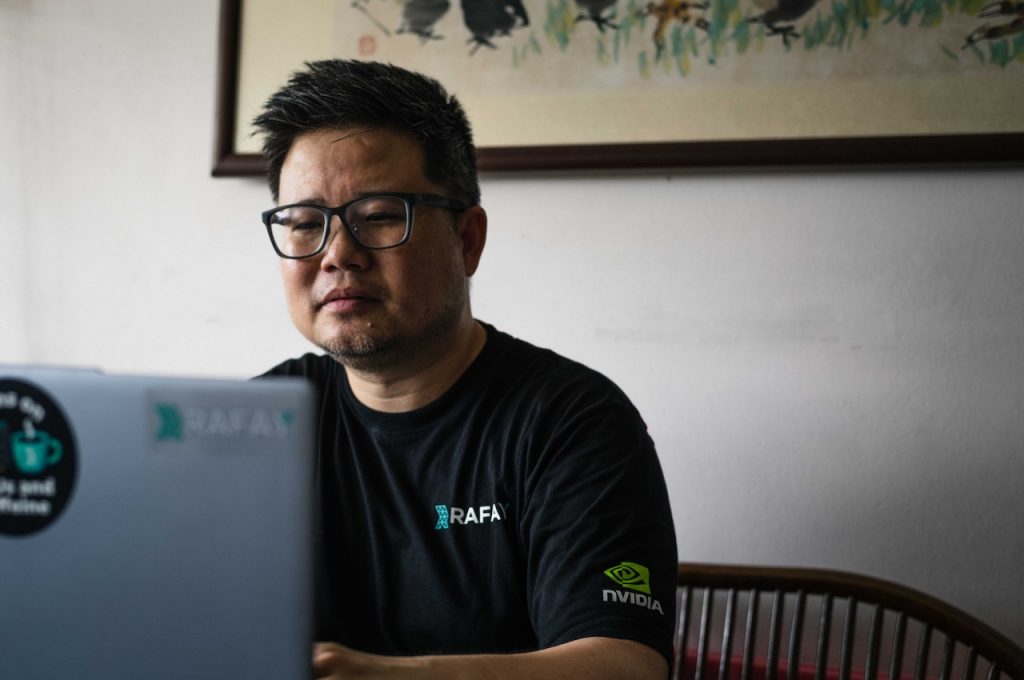
James had always been interested in technology. He was not entirely new to computers or IT, having had some earlier exposure to technical support and years of tinkering with computers and web technologies.
While working at McDonald’s, he began taking his interest more seriously by taking night classes in cybersecurity—an experience that convinced him that pivoting into the IT industry was not as far-fetched as he thought.
But cybersecurity was only the beginning; he knew he needed deeper and more practical skills.
Next came a subsidised three-month course in Cloud Support and DevOps Engineering, part of the SkillsFuture Career Transition Programme that Temasek Polytechnic runs with the non-profit organisation Generation Singapore.
The programme equips learners from varied backgrounds with practical skills for related tech roles. With up to 95 percent of the course fee funded by SkillsFuture and a monthly training allowance for Singaporean citizens above 40, it gave James the financial freedom to start anew.
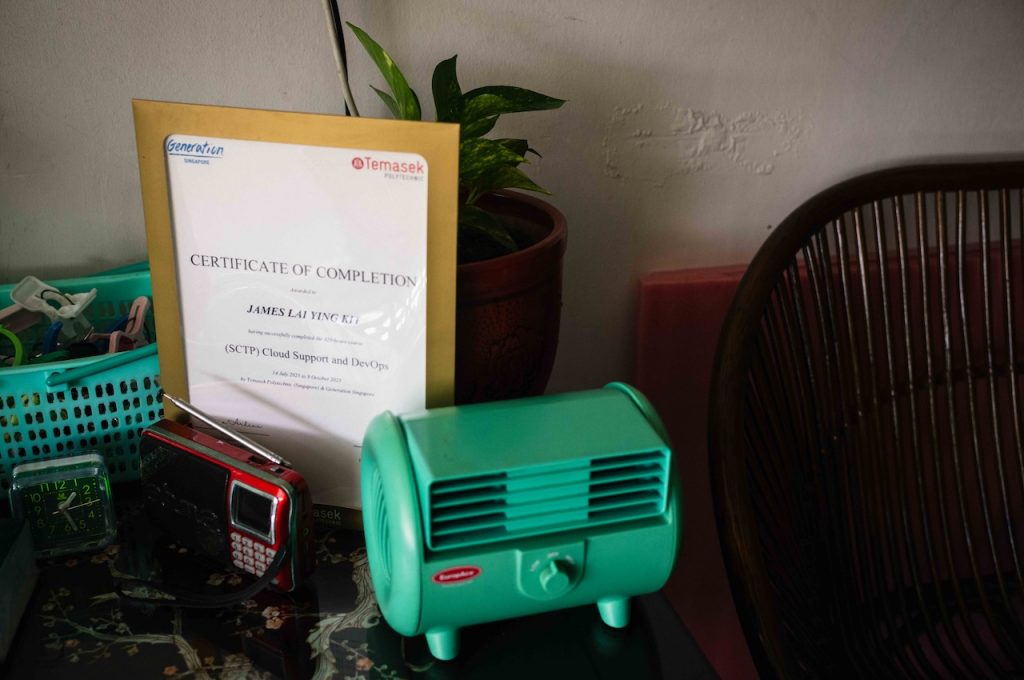
Trainers were cognisant of their students’ anxieties, James says, but they kept returning to an idea.
“They always want to stress that we are mid-career switchers; we are not coming in from zero. We can tap into our past experience and use it to differentiate ourselves.”
For James, that idea became important—everything he’d done before wasn’t irrelevant. Years of working with customers, technology, creative production, setbacks, and different environments gave him experience younger entrants might not have.
To combine that experience with demonstrable technical skills, he built a home lab in his old bedroom. Using his own equipment, James created an environment where he could practice working with servers, networking, and other infrastructure technologies outside the classroom.
At a job fair, James noticed a change in himself. He found himself speaking confidently about what he had built and the technical problems he had worked through. The interviewers were assured that he was a safe bet, even though he was a forty-something with no real resumé in tech.
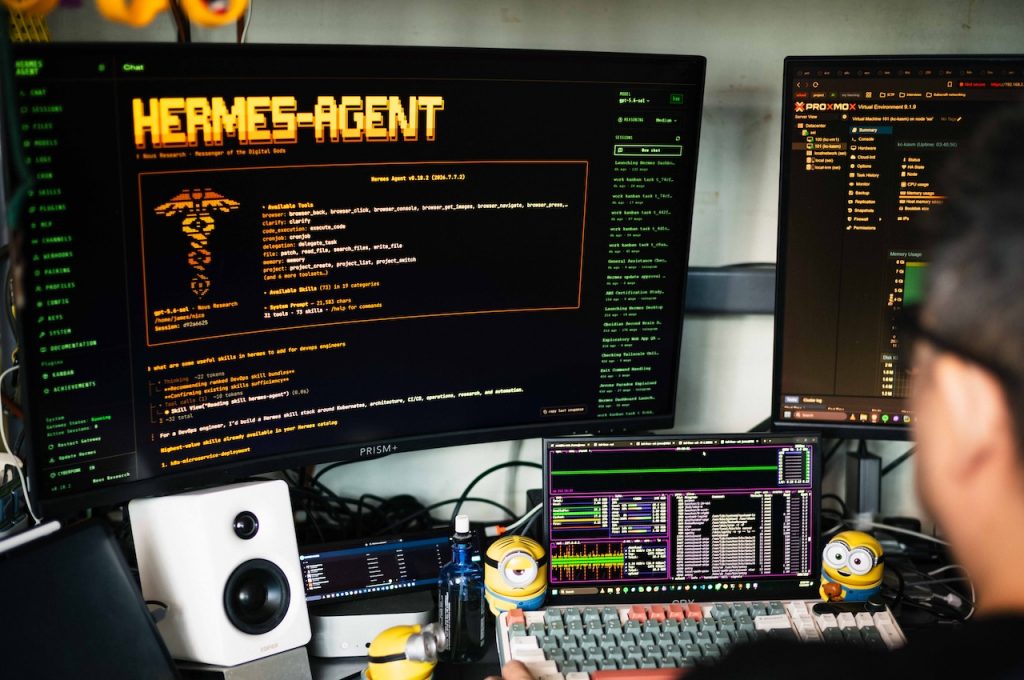
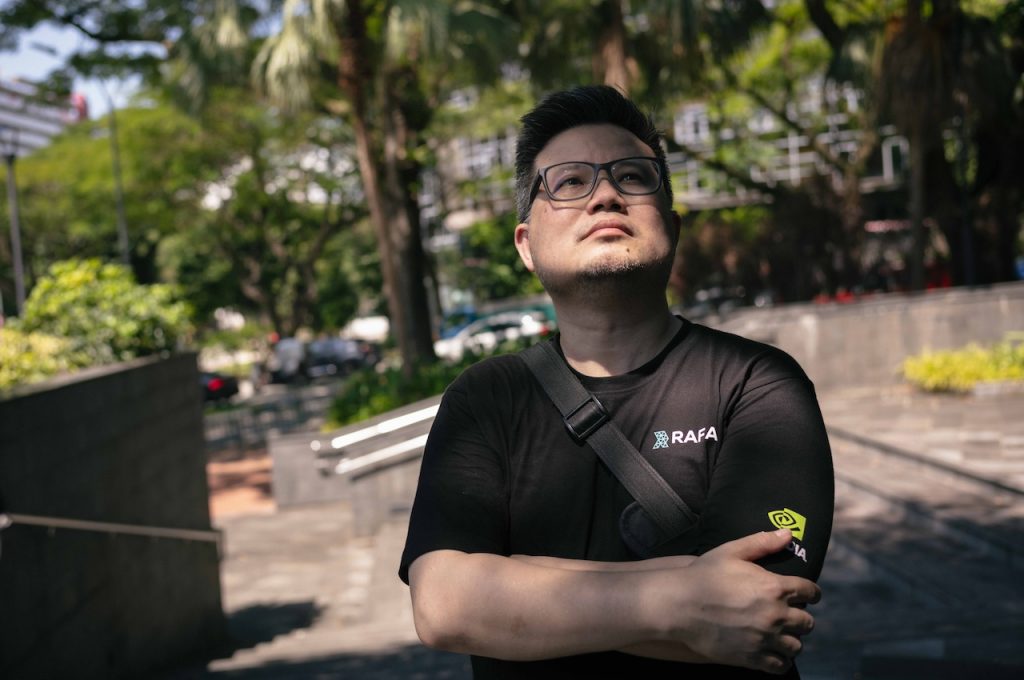
The career switch paid off. Today, James works as an Implementation/DevOps Engineer at Rafay (Asia) Pte. Ltd., supporting infrastructure for modern cloud and AI environments. He may be entrenched at the forefront of a new technology, but he knows it’s his responsibility to keep learning.
“I also cannot help wondering, because of AI, how long this will last,” he contemplates. The skills that helped him enter the industry will not necessarily be enough for the rest of his career.
But it no longer frightens him quite as much—after years of trying to find a direction, he now has one. After once reaching a point where he felt he had little left to lose, James has something worth building on again.
‘This Could Happen to Me’
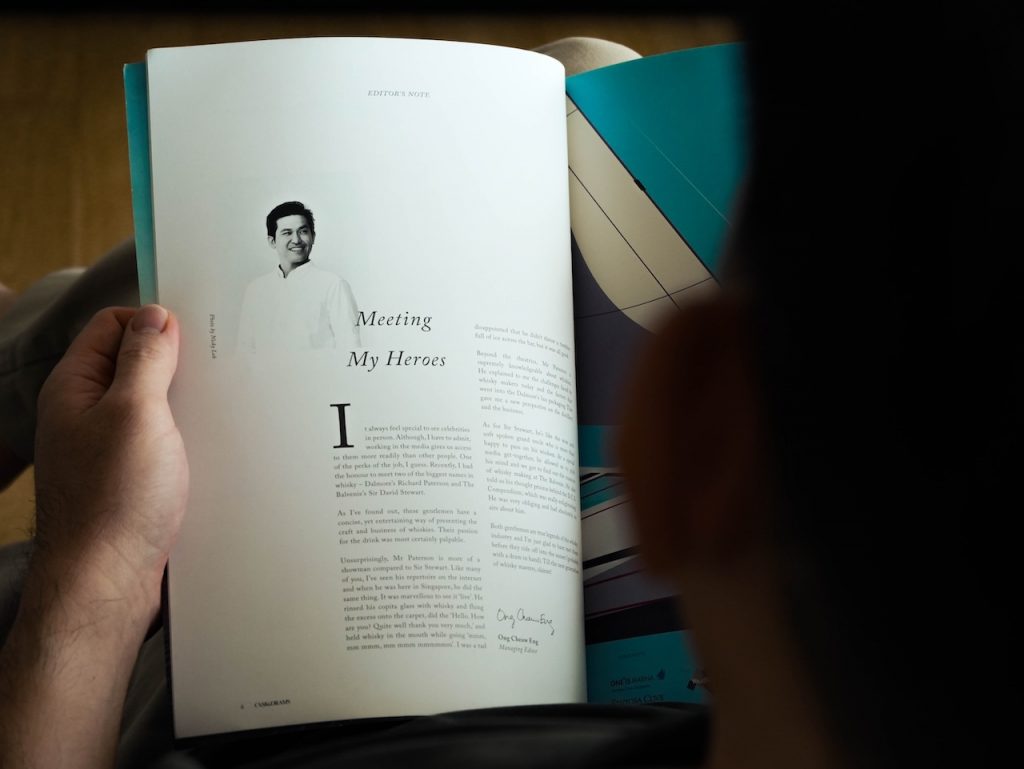
Cheow Eng Ong, however, felt that he had plenty to lose. He was a high-flying managing editor at several luxury lifestyle magazines and earned a comfortable living to support his wife and son. But as the industry evolved and stability became less assured after two decades in, he made the hard switch from journalism to healthcare.
Now, at 47, Cheow Eng works as a physiotherapist at a rehabilitation centre, helping mostly elderly patients relearn to walk after surgery or a stroke.
“No way,” he says when asked if he ever predicted the move. “I started as a writer and then ended up being a managing editor. I was travelling, I was writing, I was meeting lots of people. Money wasn’t too bad either.”
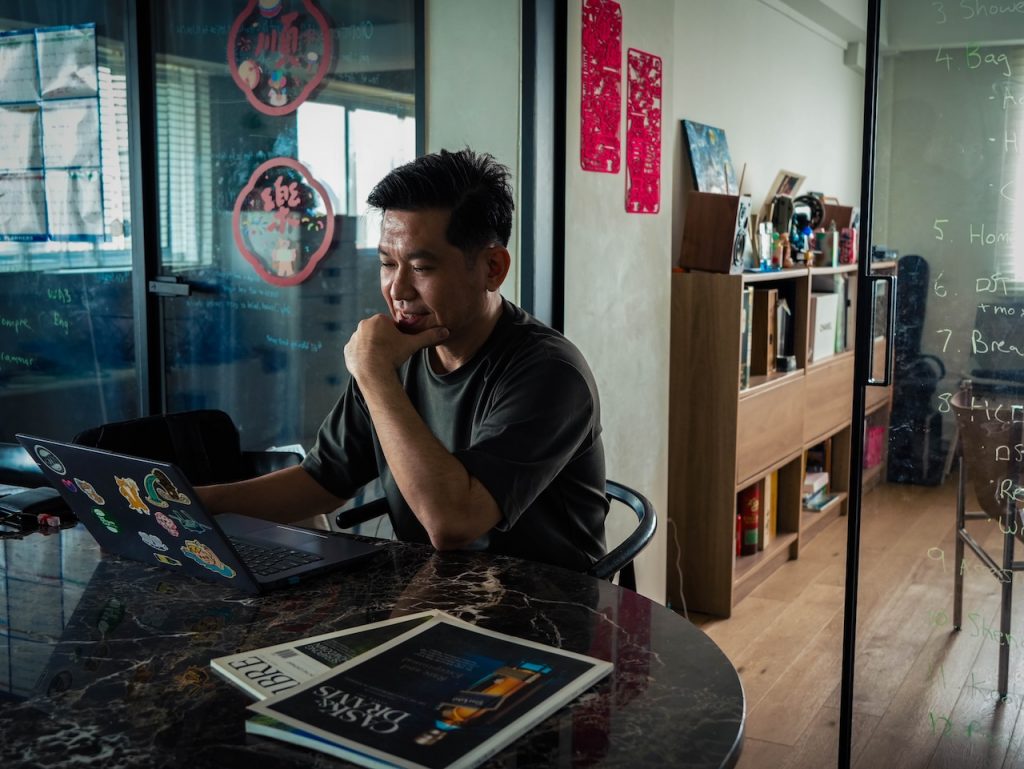
By then, he’d already met former industry companions who retired or moved on to other roles in marketing and communications. He felt the need to take a step forward and make sure he could keep supporting his family for years to come.
A stretch at a scholarship-linked magazine put him in front of young scholars headed into healthcare: physiotherapists, occupational therapists, nurses, pharmacists, all training under government-sponsored schemes. By the time he felt the impetus to leave the publishing industry, he already had years of interviews telling him that a new career path was possible.
In 2022, he applied to the Allied Health Career Conversion Programme—administered by the Skills and Workforce Development Agency to support mid-career individuals pursuing the qualifications needed to enter allied health professions. He got in and was ready to be a student again in 2022. At the same time, he had to consider the logistics of being a parent to a young son who had just started primary school.
“On one hand, [my wife] was excited,” he recalls. “But on the other hand, she was also a bit concerned… from a proper paying executive job, and then suddenly I’m taking on an allowance and becoming a full-time student for four years.”
The allowance, based on his years of prior work experience, came to around $3,000 a month. While it was a drop from what Cheow Eng earned previously, it covered the bills.

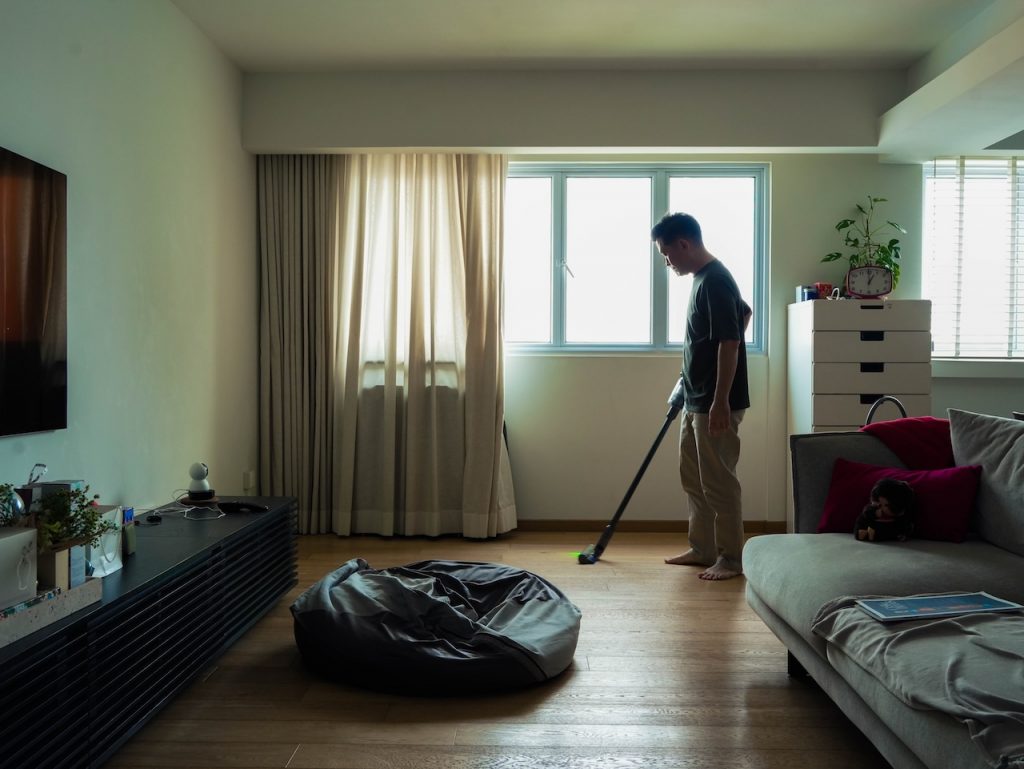
Beyond finances, though, time quickly became the harder thing to budget as a student, father, and husband. Keeping up with exams and assignments took real effort for an older student in a classroom run on shared notes and online resources, and most of those hours came at the expense of time with his family.
It showed in his first year, when his wedding anniversary fell in the same week as a practical exam he couldn’t afford to fail, and things got a little tense with his wife. At times, Cheow Eng wondered whether he’d made the right call to switch careers at that stage in life.
“Have I made the right decision?”
He kept going because, as he puts it, there was really no other option on the table. “There’s really no turning back. No matter how hard, I just have to get through it.”
Four years after his first day back at school, Cheow Eng graduated in April 2026 with a Bachelor of Science with Honours in Physiotherapy. He’s on conditional registration for now, working towards his full licence.
It’s been a few months since he started his new job, and he’s surprised by how often the skills from his old life keep coming up. Physiotherapists, he explains, open every case with what’s called a subjective assessment, a structured conversation to understand the patient’s history and inform a diagnosis.
“It’s almost like an interview!” Cheow Eng exclaims. “You prepare your questions, and then you talk, and then you try to formulate what’s going on.”
Years of getting strangers to open up and share their stories turned out to be exactly the skill his new profession needed.
‘What am I gonna lose?’
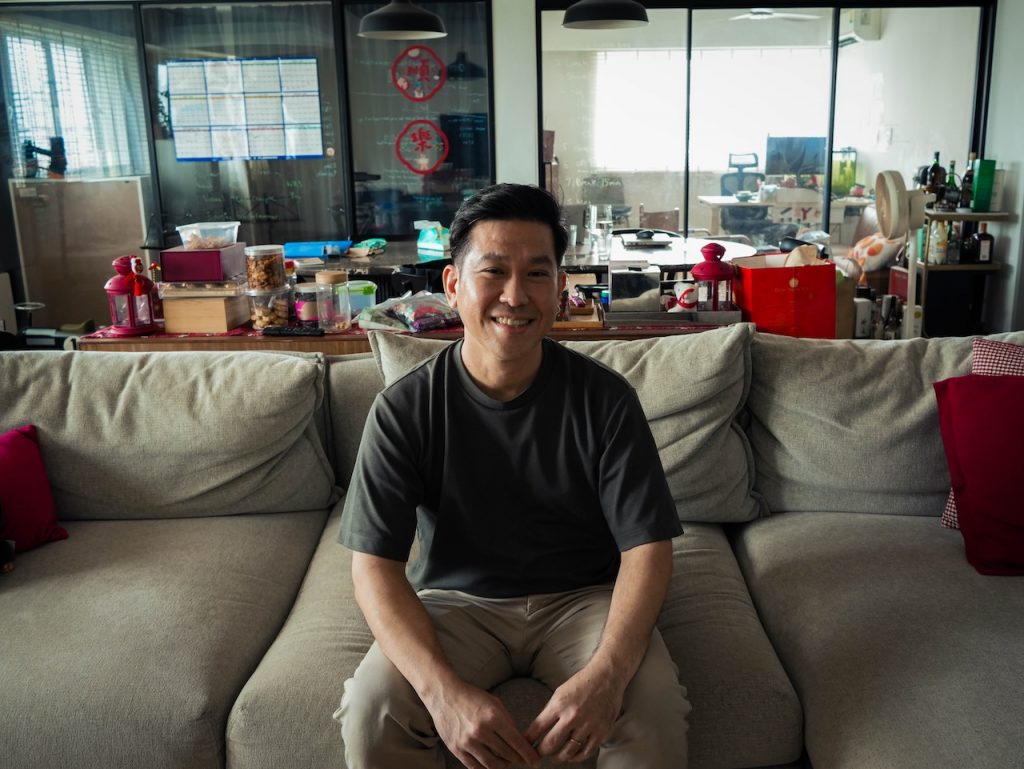
Nirodha Ariyaratne spent close to a decade as a founding employee at a local medtech company that specialises in 3D printing. His career highlight came during the COVID era, when the 38-year-old helped set up 60 printers in a clean room to mass-produce testing swabs for the national supply chain.
But over time, the cracks of administrative work slowly eroded the sense of purpose that once drove him. In June 2026, he resigned.
“It was probably wanting to do something different that would give me a renewed sense of purpose,” he reflects.
“I felt a bit lost—because I was also confused as to why this was happening. It was a bit of a soul-searching time for me.”
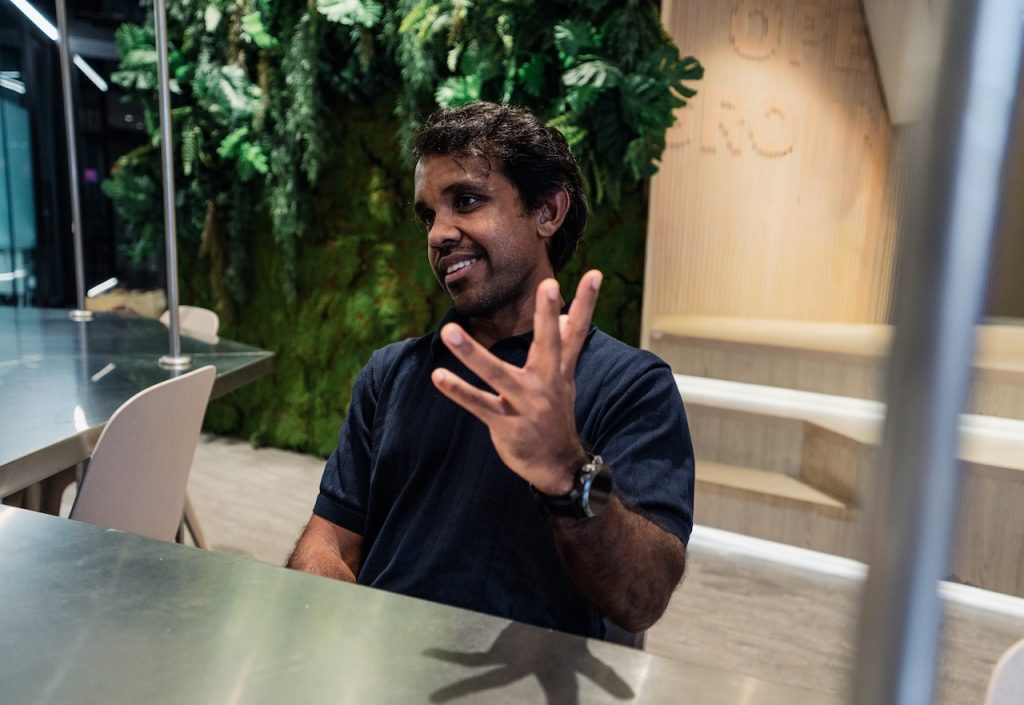
His way out of the rut began with three sessions of career coaching through the Polaris programme under Ingeus Singapore, a personalised career-coaching service that helped him take stock of his strengths, motivations, and career options.
The sessions surfaced what the coaches called hidden motivators. The admin work that had been burning him out for years was measured against the parts of the job that energised him without his noticing.
That energy, he discovered, came from mentoring. He recalls the enthusiasm he felt training young interns and sharing his knowledge with people who valued his input. “Being able to advise people, train people, teach people,” as he puts it.
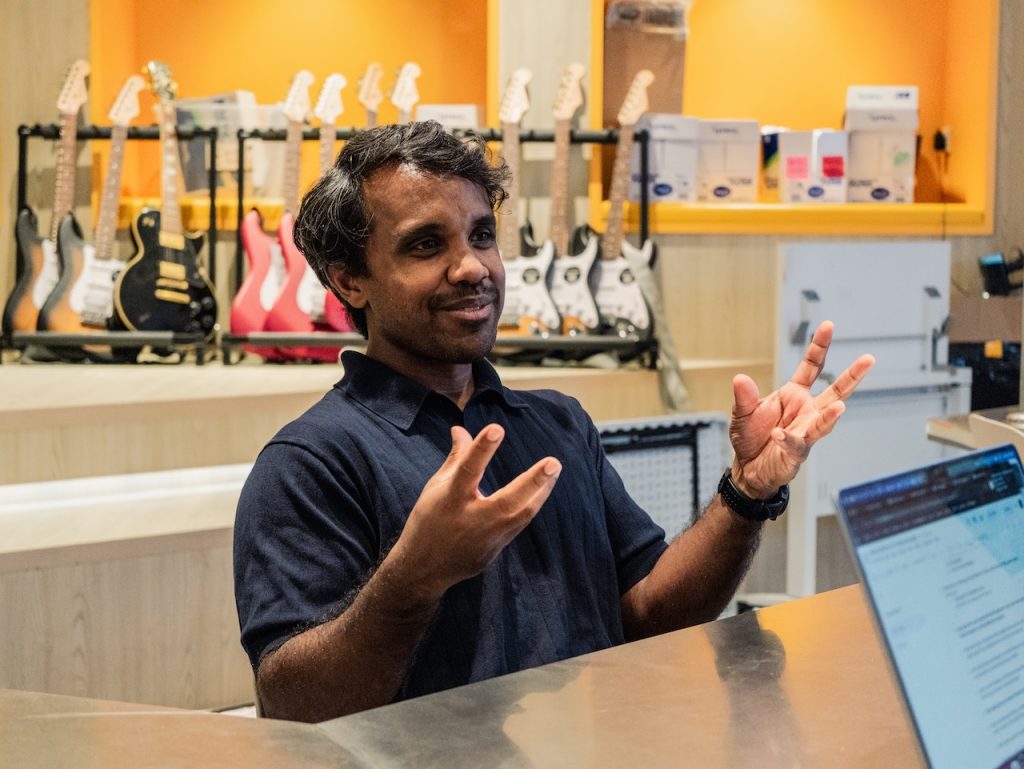
That realisation turned into a lecturing job in biomedical engineering at Ngee Ann Polytechnic. As excited as he is about the new role, he finds it harder to shake off the identity attached to his old job.
“I need to start thinking of myself as an educator rather than an engineer,” he remarks. Asked whether being known as an engineer had mattered to him, he doesn’t hesitate: “That’s what I’ve been known for since university and graduation, so it’s quite a new thing to relate to.”
Nirodha takes pride in knowing how he left a lasting mark at his previous company—the 3D-printed surgical models and guides he helped pioneer have since become standard practice across Singapore’s hospitals.
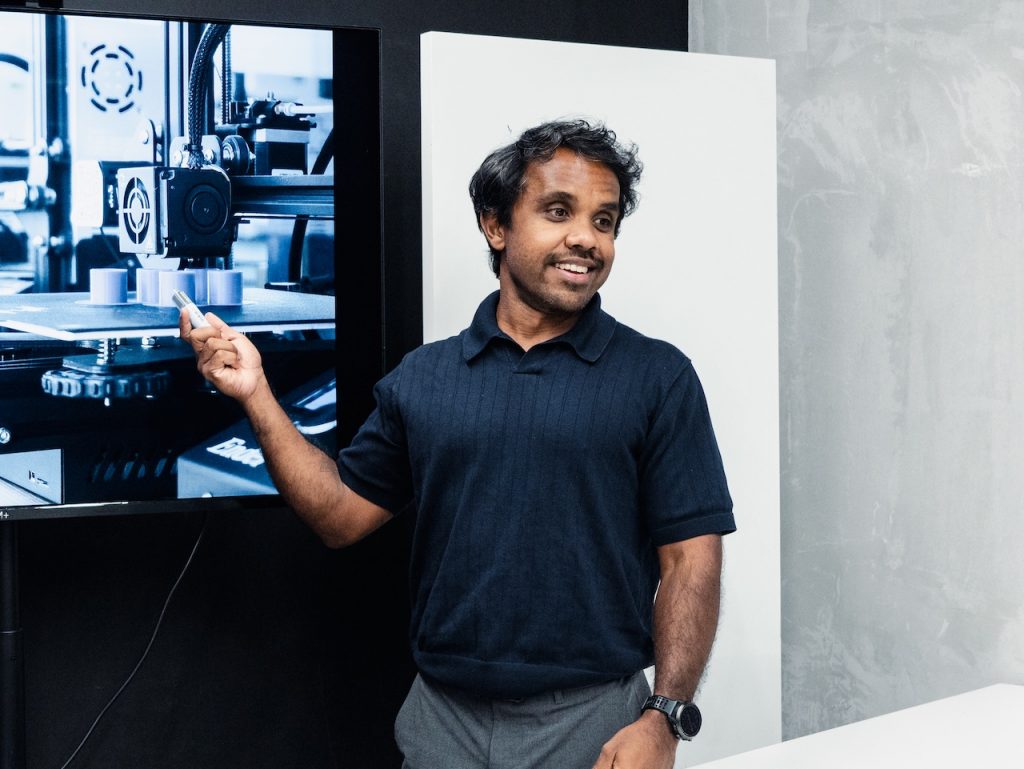
“That’s a positive change I’ve seen from ten years ago, and I’m really happy that it has happened,” he says.
Now, as a lecturer, he’s entering a new chapter where he can cultivate that same sense of purpose and innovation for the next generation.
A Life in Transition
Each transition began with hesitation and uncertainty, but none waited for circumstances to change. Even thinking about starting a whole new career can be daunting, but each of them found their own version of happiness after taking a bold leap. And yet, the road is only beginning.
James still doesn’t know how AI will reshape his industry. Cheow Eng has a year left on the job to get his license. Nirodha has yet to teach a full semester on his own.
But ask any of them if they’d go back, and the answer is obvious. The uncertainty ahead is easier to live with than the stagnation they left behind.