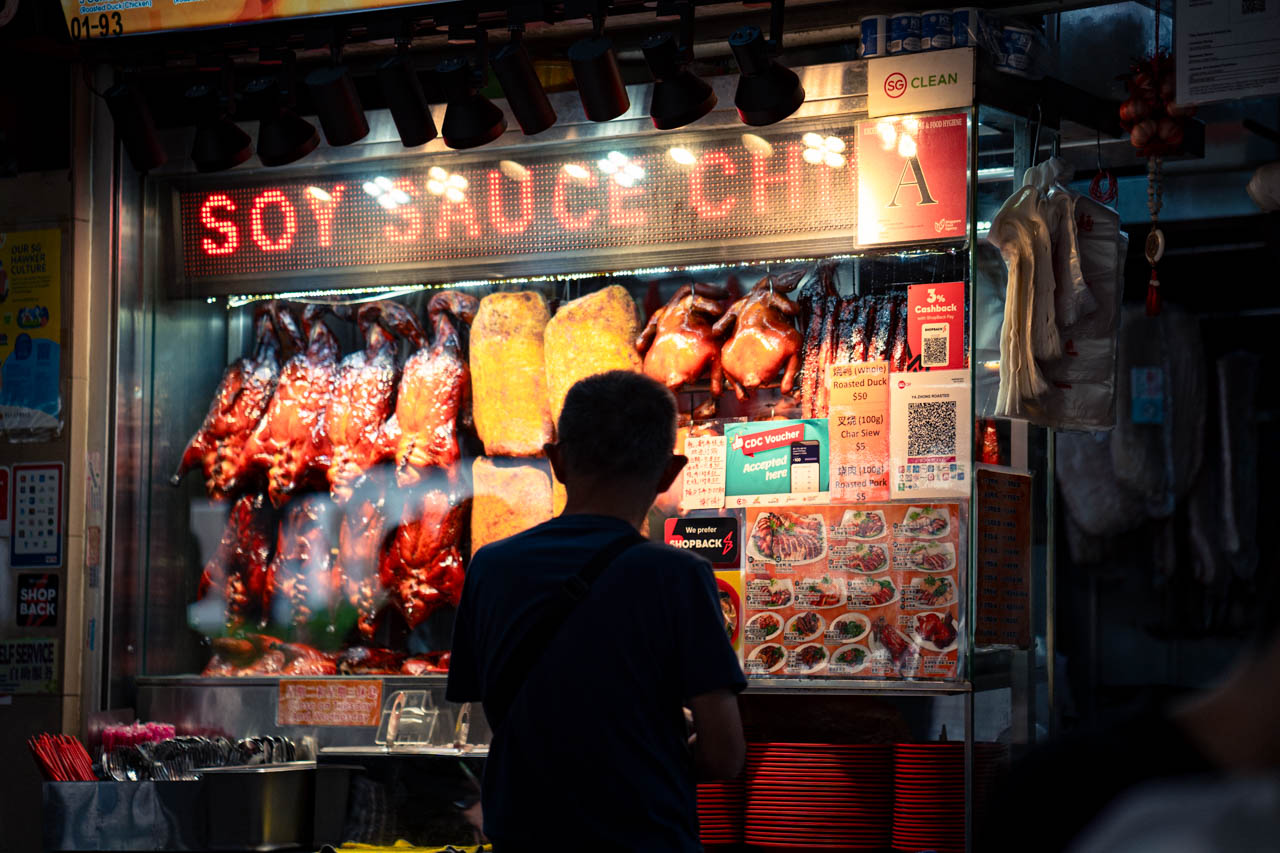
Top image: Stephanie Lee / RICE File Photo
Growing up, we’re often told, “If you don’t have anything nice to say, don’t say anything at all.” But does this old adage have a place in our local food scene?
In the last few weeks, one TikTok series has gotten local foodies in a tizzy. At the centre of the debate is content creator Lucas Neo, better known online as Lucas The Boss. His TikTok series, Exposing Michelin Hawkers, sees him visiting hawker stalls on the Michelin Bib Gourmand list and dishing out his unfiltered—and often scathing—reviews.
Lucas’s series seems to have split my TikTok For You Page into two factions. On one side were food reviewers like Zen Tay and Keat Food Truths, who argued that harsh takedowns could devastate hawkers already surviving on razor-thin margins.
“If it’s not nice, don’t feature it,” Zen said, while Keat accused Lucas of “public shaming”, adding, “These hawkers earn small money, and you’re affecting their morale.”
Others, like Lim Hwee Yi of Botak Porridge, defended Lucas’s right to critique food. “A seven for him could be an eight for us,” she said, urging viewers to head down and taste the food for themselves.
But beyond the online drama, there lies a bigger question: Should our hawkers really be protected from bad reviews? What sort of food scene are we creating when we villify food reviewers?
Hot Takes
Many creators shy away from negative reviews, especially for small businesses. Their empathy is understandable. Hawkers often run their stalls alone and have little cushion against bad publicity.
In an impassioned Facebook post, Ah Hua Teochew Fishball Noodle weighed in on the food review drama, saying, “We hawkers already face enough pressure every day waking up before sunrise, standing over the heat for hours, doing our best to serve decent food at a fair price. Then one careless post, one ‘honest review’ with our signboard shown, can easily crush the heart and effort we pour into this business.”
The post ended with a plea: “We hawkers don’t need pity. We just ask for fairness, respect, and a little empathy.”
I’m not disputing that. Of course, small, family-run businesses deserve empathy and support, especially in such a cutthroat and punishing industry.
But let’s give viewers a little more credit. Are we really such mindless sheep that one bad review from a self-proclaimed foodie could take down a hawker stall?
In one viral video, Lucas dismissed a Michelin-awarded chendol stall, claiming the dessert was “easy to make” and quipping, “You put any unskilled worker there also can, you put my daughter there also can.”
Besides being flatly wrong—making chendol undoubtedly requires skill—the man clearly isn’t a seasoned food critic. If you decide to write off any chendol stall simply because Lucas said so, I’d say you deserve to eat subpar, watery chendol for the rest of your life.
What Our Reactions Reveal
I’m not here to debate over whether Lucas is right or wrong. Rather, there’s something more interesting to unpack here. The outrage toward Lucas reveals an instinct to coddle hawkers, as if their size alone should shield them from criticism.
Behind every hawker dish lies long hours of work, family recipes, and pride. The urge to protect them is rooted in empathy, but can come across as patronising. Denying hawkers honest feedback also denies them the chance to grow.
Some hawkers, like Ann Chin Popiah, are clearly able to take criticism in stride. After Lucas commented that their popiah skin was too thick, they responded with grace, explaining that their popiah skin was handmade. This shows that hawkers are not fragile; they’re professionals who can engage with critique.
A culture that tolerates only positive feedback breeds dishonesty. Without bad reviews, good ones lose meaning.
Just think of the sea of TikToks calling every single food joint a hidden gem. At this point, I’ve seen so many ‘hidden gem’ videos that the term has lost its meaning.
I have to admit that Lucas’s bluntness does indeed cut through the sea of ‘hidden gem’ content. But in his case, maybe the missing ingredient is depth.
Reviews, when done thoughtfully and constructively, serve both diners and hawkers. For one, they serve as a guide for customers. For another, they actually help stalls by offering insights for them to refine their craft. When we tell creators, “If it’s not nice, don’t feature it”, we assume businesses are owed only praise. But at the end of the day, this forced positivity does nothing to help our local food scene.
Building an Appetite for Criticism
In a way, this kerfuffle has been quite revealing. Too often, we Singaporeans conflate critique with hostility. But when we silence criticism and dissent, we risk stagnation.
Instead of silencing negative opinions, it would probably serve us better to ask how to express them better, and to develop food discourse that’s candid yet compassionate.
Telling creators not to post bad reviews implies that hawkers can’t handle critique, undermining the very professionalism we claim to respect.
Perhaps the fact that Lucas has now renamed his series from Exposing Michelin Hawkers to Exploring Michelin Hawkers is proof that critics, too, can learn from a bit of constructive criticism.