Top image: RICE file photo
What started as a debate over nicotine has escalated into a full-on drug panic.
Singapore’s war on vapes has always been a messy, whack-a-mole affair: ban, enforce, and then watch the black market get creative. Since outlawing e-cigarettes in 2018, authorities have been chasing shadowy Telegram sellers and fining those caught puffing away the scented smog at void decks, clubs, and KTV lounges.
Seven years later, the gloves are off.
Prime Minister Lawrence Wong’s first National Day Rally since GE2025 had its fair share of warm, fuzzy nation-building moments. But among the pledges was a direct signal that vaping has become a national issue.
“So far, we have treated vaping like tobacco—at most, we impose a fine. But that is no longer enough. We will treat this as a drug issue and impose much stiffer penalties.”
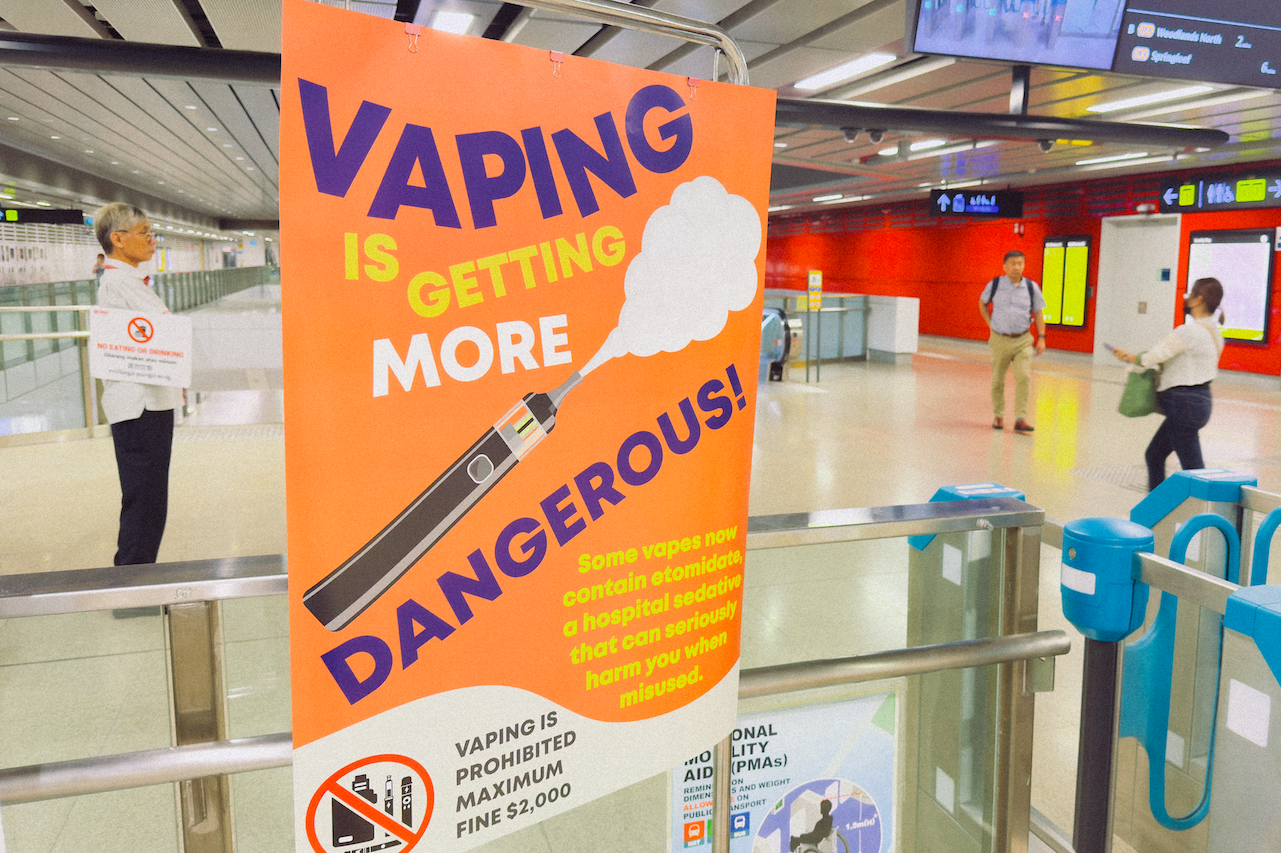
That escalation didn’t happen overnight, of course. The alarm bells started ringing when etomidate, a hospital-grade anaesthetic, started showing up a few years ago in black-market vape cartridges called K-Pods.
What was once a nicotine delivery system turned into an electronic drug pipe. Kids aren’t just sneaking a puff in school toilets—they were collapsing, stumbling on the streets and on trains, and ending up in A&E. TikTok filled up with clips of teens glassy-eyed and twitching.
That level of risk leaves little room for nuance. The stance today is undoubtedly blunt; gone are the days of trying to differentiate regular nicotine vapes (the ones people have been consuming illegally for over a decade) and the new vapes laced with etomidate (the ones that have been killing teens).
What makes the government’s messaging feel blunt is also what makes it necessary. Vape pods laced with drugs aren’t a distant threat any longer; they’re a current danger. Ambiguity is a luxury.
Blunt Messages for Blunt Realities
Earlier this week, Etomidate became a Class C controlled drug. This means actual prison time, mandatory caning for traffickers, and five-digit fines. Non-etomidate vapers aren’t spared from higher penalties, too.
It’s a dramatic escalation that effectively casts a wider net for both liquid nicotine users and etomidate abusers alike. But then again, Singapore isn’t exactly known for subtlety when it comes to drug abuse.
“The vapes themselves are just the delivery device,” PM Wong acknowledged in his speech. “The real danger is what is inside. Right now, it is etomidate. In future, it could be something worse—stronger or far more dangerous drugs.”
Essentially, they’re banning an entire methodology. Vapes are no longer a harm-reduction tool; they’re a Trojan horse.
Harsh? Probably. Bluntness is part of Singapore’s cultural DNA anyway—anything perceived as a national threat, we don’t negotiate. And it doesn’t serve urgent public health interests right now to draw distinctions between regular vapes and K-Pods.
This binary approach has invariably drawn opposition, especially from Singapore’s smokers hoping for expanded considerations on potential cigarette alternatives and conversations around harm reduction.
But even so, the blunt messaging isn’t aimed at the rational adult smoker. It’s a direct warning for a generation too young to know (or care about) what they’re inhaling.
In that context, a direct, urgent missive might be the only thing that cuts through the noise. If it feels like overkill, it’s because the problem has already outpaced public understanding.
That doesn’t mean nuance should be entirely absent from the conversation; it should be incorporated into policymaking and the rehabilitation of offenders. And fortunately enough, underaged users who turn themselves in to seek help are given a chance to turn over a new leaf without a criminal record.
In any case, the public health campaign we’re seeing now isn’t designed to spark dialogue. But was there a time when we could have?
The ‘What If We’d Regulated’ Debate
Every time vaping comes up, there’s a chorus of comments saying, “We should’ve regulated instead of banning”.
Perhaps it’s a conversation worth having, but not right now. Etomidate has already changed the roadmap. When drug-laced vapes are wrecking young lives, that urgency outweighs harm-reduction debates.
Parents aren’t asking for a measured debate; they’re demanding action and answers before their kids are carted off to hospitals. Teachers have to double up as quasi-drug enforcement officers. We’re at the point where schools are using metal detectors, nicotine test kits, and air quality sensors to weed out vaping.
It’s too late for nuance, not when it’s already a public safety emergency.
Regulation is a long game that should be considered, but the crisis unfolding is not. To regulate something effectively, you need time to appreciate the pros and cons—and time is something Singapore doesn’t have at this moment. Etomidate shows how quickly a shadow economy can evolve, with or without regulation.
In this context, a hardline stance buys breathing room. Hopefully, it doesn’t preclude future conversations on why people got addicted to vapes in the first place.

When the Fog Clears
For now, any conversations about vaping being okay in Singapore are over. K-Pods are about to be woven into our cultural memory as a cautionary tale, and rightfully so.
After this crisis, there’s room for Singapore to discuss why people started vaping in the first place. For teenagers, it’s often peer influence, curiosity, and accessibility. For adults, it’s stress relief or a substitute for smoking. These motivations don’t disappear just because vaping becomes even more illegal.
K-Pods are just the current villain. In a matter of time, it’ll be another chemical with an equally ridiculous name. That’s why this crackdown matters beyond etomidate or vaping. It’s a test of how fast or how effectively Singapore can respond to future synthetic threats.
A blunt approach has kept hard drugs at bay for decades, but the current vaping saga shows that new substances will always slip through cracks. Allowing experts, educators, and even youths themselves to shape dialogues around regulation and prohibition could lead to policies that are more anticipatory than reactionary.
Ultimately, an evolved public discourse is about acknowledging how addiction is a social issue with genetic and environmental factors. Most people are aware that these habits are harmful, yet they persist, which suggests deeper underlying issues. Stress? Alienation? The lack of healthier outlets? Tackling those roots is the only way to stop treating each new crisis like a surprise fire to put out.
When Singapore’s messaging reflects this complexity—combining trademark firmness with compassion and openness—the country won’t just be reacting to the next K-Pod crisis. It’ll be building a culture where these crises don’t get the chance to spiral.