Top image: Tan Jun Sen
For years, The Projector was the pulse of Singapore’s alternative film scene. So when it shut down suddenly in August, the people behind indie sci-fi comedy flick We Can Save the World!!! had to scramble to find another premiere location. It also didn’t help that Cathay Cineplexes bit the dust soon after, leaving the film with one less potential screening location.
Eventually, the film landed screening slots at Golden Village, Shaw Theatres, and EagleWings Cinematics. Still, with all the talk of Singapore’s ailing cinema scene and dip in movie attendance, it’s not exactly the most encouraging time to debut a new indie film.
But Judith Tong, the founder of indie film collective fff.forever (fff)—the three Fs supposedly stand for food, film, and friends—wants to do something about that.
Judith and her fellow fff members—a grassroots group with about 600 members in its Telegram channel—are determined to get people out of their houses and into cinema seats. The grassroots community has also been hosting in-person events such as screenings and community hangouts for everyone from filmmakers to cinephiles.
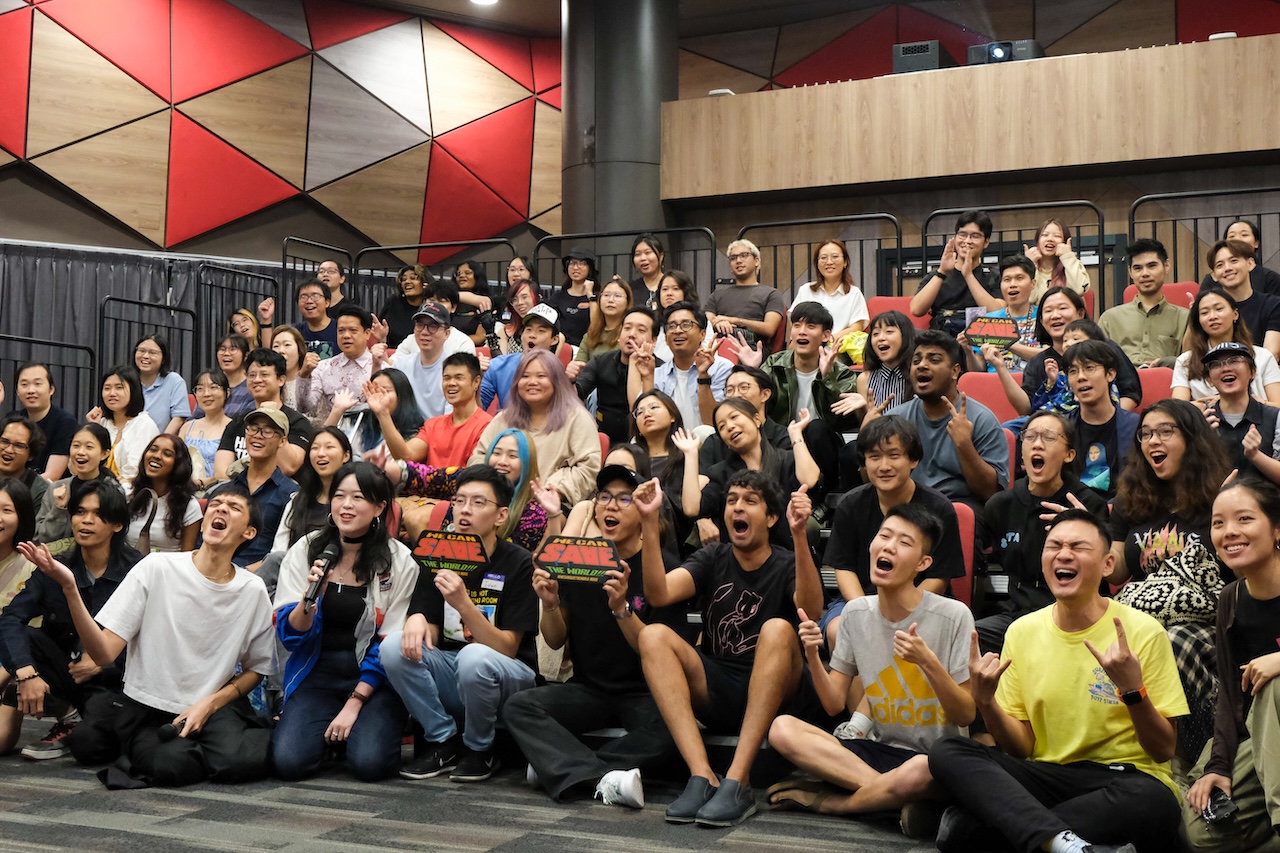
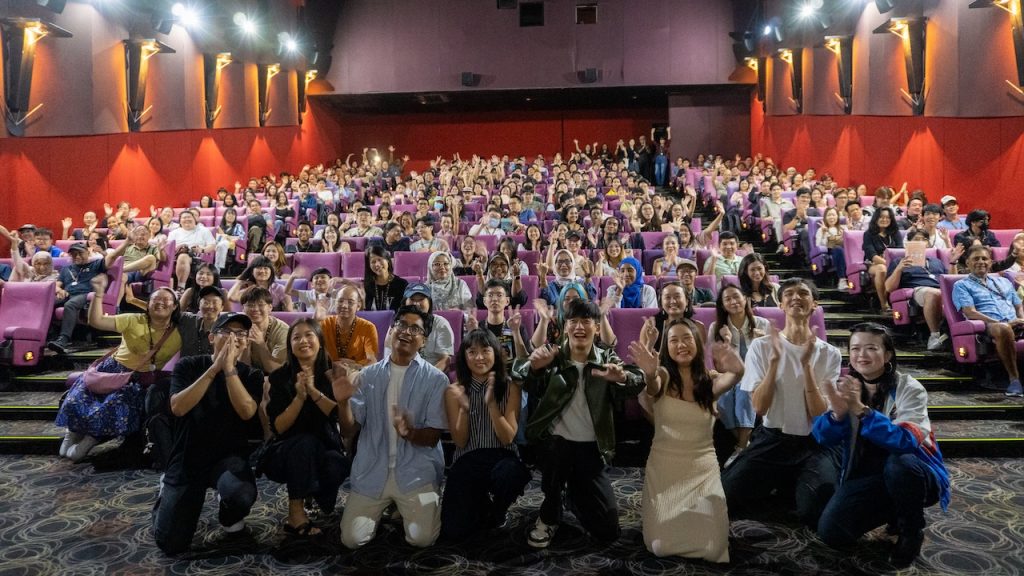
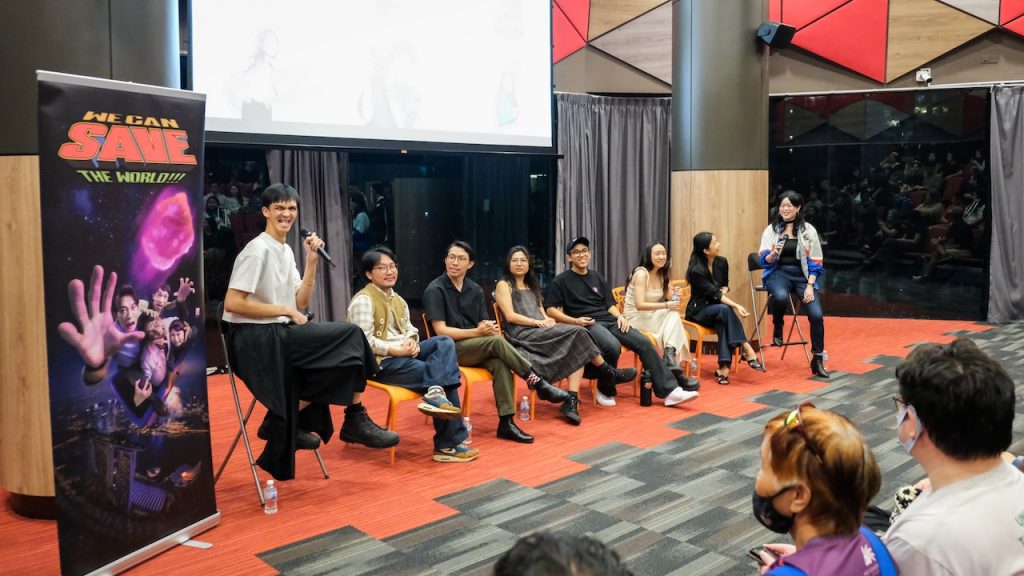
Judith tells RICE that several fff volunteers, including Benjamin Yap and Foo Meijuan, came together to launch a pay-it-forward initiative. Against all odds, fff managed to raise enough money to buy out a 278-seat theatre for a community screening of We Can Save the World!!! at Orchard Cineleisure on October 4th.
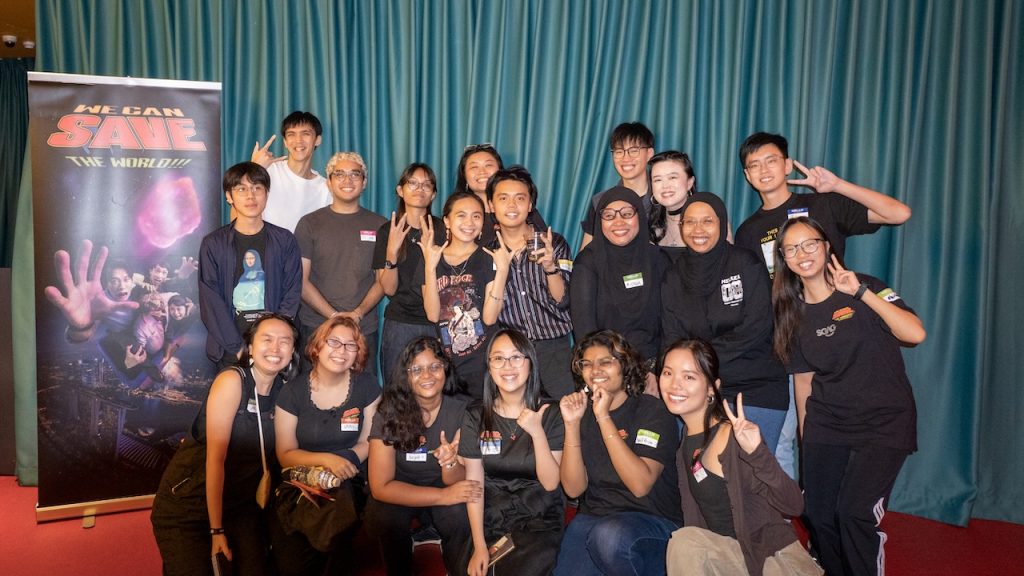
While Judith started the collective, she is quick to clarify that she doesn’t see herself as the leader. Rather, she emphasises that collective effort is what keeps fff running.
Is this swell of grassroots action enough to make a change in the local film scene? We pick the brains of fff members Judith Tong, Benjamin, and Meijuan to find out what drives them to organise film events, even when it sometimes feels like an uphill battle.
How did fff start?
Judith: I started it in April 2023, eight months before I left Singapore for a working holiday. Back then, I felt a strong compulsion to do something within my means to facilitate connections.
I started fff for certain people in my life. I just felt like these people should meet.
Within my circles, there were people struggling in their own film careers. I think a lot of filmmakers feel stuck in their own ways, be it young aspiring filmmakers, seasoned filmmakers, or even film-adjacent people who’ve just returned from abroad and feel out of touch with the local community.
I felt that there is a real lack of such spaces. And we hope that these gatherings can be a safe and intimate space where people can talk about their struggles. It’s about creating a safe space that removes the noise from what people perceive the film community to be. You don’t need to be a hipster or a cinephile to participate. FFF is about holding space for people so that they can grow in their little journeys.
Ben: At the end of the day, this club is just an excuse to gather in a physical space.
How did Ben and Meijuan get involved?
Meijuan: It has been less than three weeks since I joined fff.
I moved back to Singapore about a year ago, but a lot of my film community is still in New York. I came to the realisation that I am so out of the local scene here. I don’t know what’s going on here.
I discovered fff through the Instagram account @theprojectorforever. I was excited to learn about an existing film community I hadn’t known about. I then messaged Judith, expressing my admiration for her work and how disconnected I’d been feeling from the film community. And that’s it.
Judith: I’ve known Ben for about six years now. We met on set and trauma-bonded through the long and demanding nature of production sets. He’s been coming to fff gatherings from the start!
It sounds like you guys have a lot going on, from film screenings to communal cookouts to game nights. How many people does it take to keep everything running?
Judith: Aside from us, there are also a few regular faces who pop by often. There’s Ivan, who comes to almost all fff gatherings. He has been a strong supporter in so many ways and always helps in the background. There is also Priyanka, Mark, Daryl, Elliot, Wanxin and Russell, who were all part of the October 4th task force as well.
It’s become an unspoken understanding that whoever does have time and energy comes back to the community whenever they have the bandwidth. The group functions not just as a meet-up platform, but also as an outlet amidst the busyness of life, to remind us why we all love the medium of film.
Why do you think gathering together is so important?
Ben: When people think about community, I think there’s often this assumption that it has to be a big group doing something together. But I’ve come to realise that small communities can actually be more powerful.
Instead of one big group, imagine 1,000 groups of two people—tiny, tight-knit units doing something meaningful in their own way, in their own space, each one making a small impact.
All the aggregation of all those energies will be in one direction, but you don’t have to move the whole ship. It’s actually a bunch of very, very small sampans.
Film is a very useful medium for generating conversation, and sometimes I feel like people don’t engage in group discussions. They engage with their partners or family. But those conversations have to emerge from their private settings for us to realise that we are all having the same fundamental problems.
It’s only then that you realise there is a collective energy already pointing in a direction; you just need to organise it.
Meijuan: Issues like climate change, Artificial Intelligence, and gentrification can make us feel paralysed by their scale. However, the simple act of connecting with just one other person can break through that paralysis. When you realise you’re not alone, the power of these big problems diminishes.
It can be daunting to try to effect change from the ground up. What is it that keeps all of you going?
Ben: Even within Singapore, trying to ‘solve’ the problem of cinema culture is an insane thing to do. What is more productive is cultivating small communities. If each of us engages with art within our own circles, it will create something bigger over time.
Judith: I like to think about things in regard to my circle of control. I think people often tackle things that are bigger than them, and end up feeling paralysed. There are things we can control, but they’re the small, everyday ones.
Everyone has to realise that they have a part to play, whether it’s starting something or simply showing up.
So how was the response for the October 4th community screening of We Can Save The World!!!?
Judith: Throughout the course of running this pay-it-forward initiative, I had moments of worry where I thought not enough people would show up for the community screening.
I was worried no one would donate, no one would sign up to watch the film at the community screening, or no one would volunteer to help run it. But despite all these instances of worry, people from different walks of life showed up for it.
In total, we raised $6,858. We spent the majority of the donations on booking the cinema. Some money went to reimbursements. Some of the funds also went towards a walkabout at NEX, where I gave away some movie tickets to strangers.
The leftover funds of $998 will be given to the We Can Save The World!!! crew to organise more community screenings.
How did it feel to have so many people signing up as volunteers?
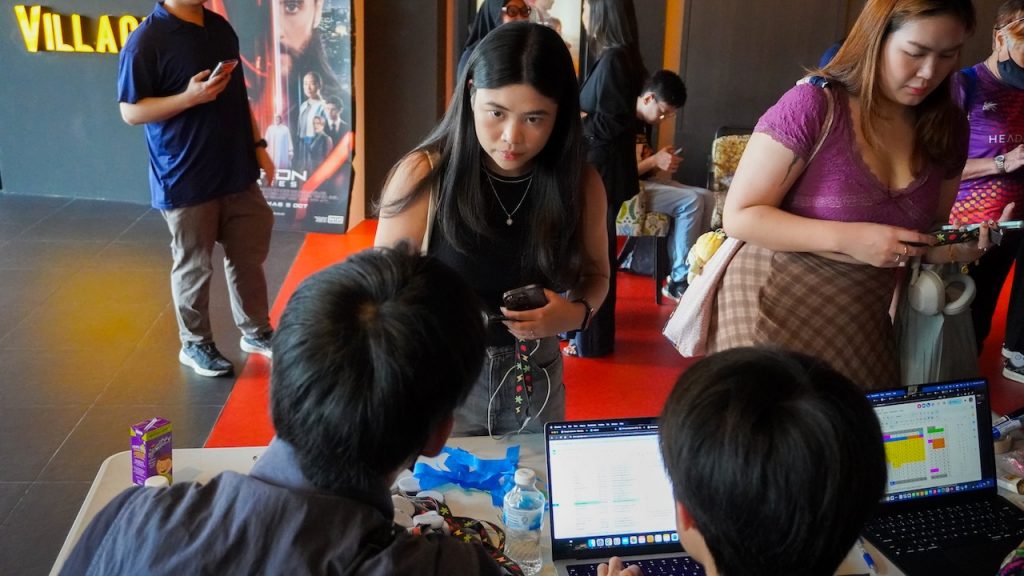
Meijuan: I was surprised that there were more volunteer sign-ups than spots. We managed to rally 33 volunteers within a couple of days [to help run the event].
Ben: To me, the volunteer signup was more interesting than the audience turnout. It goes to show that people have energy and desire to be part of something, but they just don’t know where to put it. The volunteers were not even our friends; they were just random everyday people like you and me.
Judith: October 4th was truly a ground-up initiative that was thrown together in one and a half weeks. I was really touched by the kindness of the public. They carved out time from their busy schedules to be there, and that is so heartwarming. I truly appreciate the volunteers for setting aside their time, effort and energy to show up.
Even though we got 33 strangers who signed up as volunteers, we didn’t mobilise all of them because we had more help than we needed.
I certainly hope it won’t be our first and last time crossing paths. Many have expressed their interest in volunteering and helping out for future fff initiatives, which is super amazing!
You mentioned you offered free tickets for A Land Imagined and Pierce too. Where did you get the idea to organise these free screenings?
Judith: This free ticket initiative was actually started by a person called Dan Koh many years ago. He ran his version of the pay-it-forward initiative for another local film called Ilo Ilo. Since Ilo Ilo is a film about the relationship between a domestic helper and a little boy, he gave out the tickets to migrant communities.
It made sense to me to do something similar. I think We Can Save The World!!! is kind of like a young Singaporean’s love letter to Singapore, and it has that ability to reach everyday Singaporeans—even people who are not avid film watchers.
I’ve been following the film’s journey because it was made by my friends. When the film was about to premiere, I asked them how I could help because I know the reality of the box office. If the film does not take off in the first two days, you don’t get screenings for the weekends, and it really impacts the film’s life in the cinema.
My husband was surprised and asked me why this film, because We Can Save The World!!! is not the kind of film I typically gravitate towards—I usually gravitate towards coming-of-age and dark comedy films. But I see the spirit of the film and the people behind this film.
They were just a bunch of friends who believed enough to put in so much time, money, and energy—everything. So to me, it made a lot of sense to organise the screening. It just clicked.
How important are these free ticket initiatives to you?
Judith: Pay-it-forward ticket initiatives are important because they lower the bar of entry for people to support local productions. Sadly, most people won’t put money on supporting something local.
Not many people know this, but the opening weekend of any film is the most important! The reception at the box office on the opening weekend determines how long the film will stay in the cinema during its theatrical run.
Our hope is that one day, through our efforts of laying the groundwork, we will build towards a future where Singaporeans are more open to giving local productions a chance.
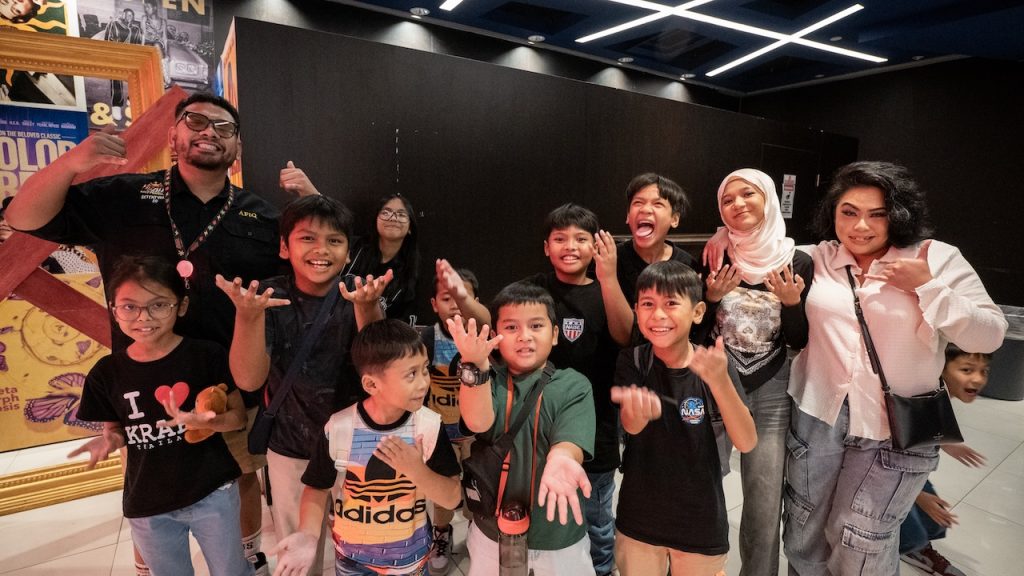
It’s a tricky balance when we give these tickets out for free. People are less likely to value them, so in exchange for a free ticket, we try to get their reviews—be it good or bad—about the film to encourage conversations about what they just watched.
It’s interesting to hear what people look for when they experience a local production—things like what they resonate with, what they like, what they feel is missing and so on.
How do you think the success of We Can Save The World!!! can impact its creators and the local film scene?
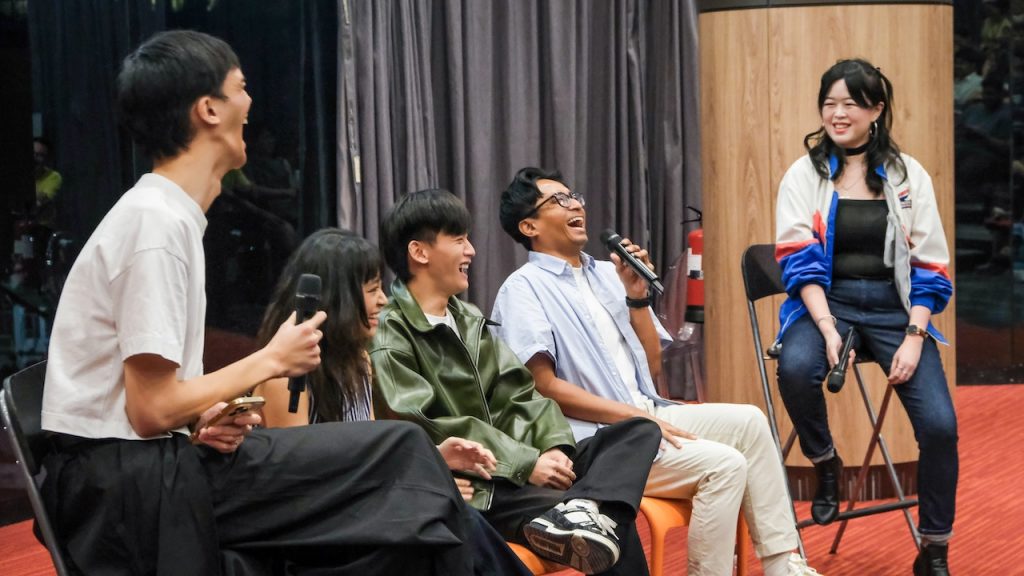
Judith: I championed the film because the filmmakers and I share this belief: If you believe in something strongly enough, you get up and make it happen, no matter the odds stacked against you.
My hope is that when Singaporeans are exposed to more locally-made films, it will spark their curiosity and eventually turn them into supporters.
We believe cinema is a language, and we need to help people learn to understand it, just like any other art form out there. Just like books and music, film also has the power to move and impact people. The right film at the right moment of your life can be life-changing. It has the ability to speak to you on a personal and intimate level.
What do you think can be better with Singapore’s film scene?
Benjamin: For me, it’s about engagement. If I go to an event and see people really talking about the film and thinking about what it means, it shows that people are aware of their place in this culture. They’re connecting with each other.
People often go and watch a film, and then leave after it’s done. There’s no engagement—not just with the film, but also the community around it.
Judith: I do feel like we need spaces to make mistakes, to trial and error, to be experimental and not feel like you have to succeed. To me, that’s very important for an industry that is so young.
Meijuan: For me, I feel like engagement with film in Singapore is very institutionalised and ‘faceless’. You watch a film at a movie theatre and that’s it.
Interesting—can you elaborate on what you mean by “faceless”?
Meijuan: While existing institutions are doing good work, they are faceless entities that people cannot interact with. I can just go watch a movie at the theatre, but it’s kind of a parasocial relationship in which I can only engage with the film in a one-way exchange.
But with grassroots and community events, I can see the other person across the room. I can show up, and there will be 10 other people there. In that setting, I can know their names and they can know me. I think that kind of dynamic is more interesting to me.
On that note, how do you feel about all the recent cinema closures in Singapore?
Judith: Even if The Projector and Cathay were here today, we wouldn’t have changed anything about what fff does and this pay-it-forward initiative.
I am definitely sad about their sudden departure, but I hold onto the hope that when things die, new things will emerge. It’s just the cycle of life.
Does it feel disheartening nonetheless? Why do you think both indie and big cinemas are failing?
Judith: Cinemas around the world are dying. Consumer patterns are changing due to the fast-paced lifestyles most people have these days. Even streaming platforms are struggling because while everyone is glued to their phones, they aren’t actually watching new Netflix content.
There is a trend of increasing interest in analogue media amongst Gen Zs. Gen Zs are now collecting vinyl records, dabbling in film photography, and even returning to cinemas to escape daily distractions.
But that alone isn’t enough to keep the lights on. The issue lies in the fact that operational costs for cinemas are high. Cinemas simply don’t make enough, even when they diversify their streams of revenue. Beyond film screenings, The Projector also rented out space for various events—even that wasn’t enough to keep it afloat.
What’s a small change that would make a big difference for local creatives?
Meijuan: We need spaces where organic interaction and discussion can happen. The most boundary-pushing ideas usually come from unplanned discussions and places that can facilitate discourse.
Judith: People sharing resources. I think a lot of my work stems from the hope that if I start with all these ground-up initiatives, people will follow suit. I think it’s important for a healthy film ecosystem because when we are competitive, we all exist in our little silos, and everyone becomes very divisive.
We need to take ourselves less seriously; we need to be more open to sharing because that’s the way to go.
Running a ground-up initiative like fff sounds stressful; how are you keeping it sustainable?
Judith: I have a day job outside of fff. It’s simply an outlet for me to do my part in facilitating film awareness, connections with like-minded people, and providing a safe space for conversations to happen.
However, I have realised that to grow a community, you need momentum and consistency. Right now, I’m relying on my social circles and the larger community to support this initiative so it can be sustainable for me in the long run.
I do think there will be an expiry date to my efforts. But for what it’s worth, I will keep doing it until I decide that it’s time to take a break.
Till then, I’m only accountable to myself and the people I bring on board. I want to keep it grounded and grassroots. We have no KPI to fulfil, we are nimble, and we don’t have to answer to anyone.
This has never been about the numbers, even if I directly or indirectly help one person in their journey with film, I have done my part!
How do you hope fff evolves in the next year?
Everyone: We don’t know!
Ben: Who is running this? Is it Judith? I don’t know.
Judith: Honestly, when I started it, I didn’t know where I was going, and I still don’t know, to be honest.
But what I do know is the few steps in front of me, and I just need to take those steps and see where we end up. But I’d like to think that it’ll be somewhere good.