This story was brought to you by Community Chest, the philanthropic arm of the National Council of Social Service.
We tell ourselves we’re fine until we genuinely aren’t. And even then, we’re not always sure. That’s because the hardest moments of our lives rarely arrive suddenly—they’re the product of what has been accumulating slowly in between the gaps.
Most of us learn early to manage quietly and not make it someone else’s problem. While it can feel like self-sufficiency, it mostly just means going through it alone. What actually helps is another person willing to carry the weight and walk the path with you through the long stretch after.
These five videos cover different lives and different breaking points. But in the end, they keep arriving at the same place: the moment someone realises they don’t have to get through it alone.
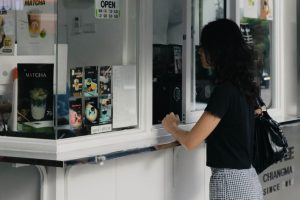
Finding work is hard enough, but very few can imagine what it’s like to job-hunt while being differently abled. As a deaf woman, Suhaida walks into every job interview carrying a weight that most candidates never have to reckon with: a fear that potential employers will fixate on her condition before she even gets a chance to prove herself.
Employment rates among persons with disabilities in Singapore have been improving, but the gap remains wide. SPD’s Employment Support Programme works to close it through job matching, coaching, workplace modifications, and on-site support so that both the hire and the employer actually make it work.
Even so, challenges persist after successful placement, SPD’s Carmen Leong affirms. Her role as an Employment Support Specialist gives her a close-up look at some hurdles.
“We do have situations where my clients were not able to finish their task, and you can see that the coworkers were not really happy about that,” she says.
But it’s not a dead end. When friction surfaces, SPD works with both the client and the employer to figure out what’s actually needed, whether that’s assistive technology, a restructured workflow, or simply a different way of communicating across the team. Above all, however, it’s empathy that has to be built into the workplace.
“I hope that the public will realise that persons with disabilities face a lot of challenges when they look for jobs.”
Your support is critical in sustaining the employment support services offered by SPD. Donate today and help persons with disabilities thrive.
“Why did this happen to Papa?”
When Jazz’s husband passed away, the questions from her children came quickly—questions she didn’t have answers to, even as she fell apart herself. She would cry until the early hours of the morning, then get up at 6:30 AM to send her children to school. As a single parent with young kids, there was no time or space to simply grieve.
Widowhood touches thousands of women in Singapore each year, and such a sudden loss typically cascades into financial insecurity, social withdrawal, and the crushing weight of becoming both parents overnight. Wicare’s WiShine programme was built for this gap—offering one-to-one counselling, group support, and dedicated programming for the children of widows.
June Teh, a Wicare Support Group Counsellor, knows how it felt like to be alone. Years ago, she was the one in crisis. Now she counsels newly bereaved women like Jazz, helping them through the first months when absence is felt most sharply. She’s there when friends and family often fall short of knowing what to say.
Today, Jazz has made peace with what cannot be undone.
“I already accepted that this grief will stay with me the rest of my life,” she says. “My husband’s love—his deep love—deserves to be honoured by us living well for him.”
Your support is critical to sustain family support programmes like WiShine. Donate today to help families move forward with confidence.
Joel’s problems started early. Primary school brought bullying. Secondary school brought the wrong crowd. He got into fights, hurt other people—choices he’s still reckoning with today.
He’s not alone in that trajectory. Many youths-at-risk carry similar burdens: they feel the weight of societal expectation while struggling with family challenges and financial strain, among other unseen internal struggles. 4PM’s FRENZ Mentoring Programme exists to catch these students before the cracks deepen by matching them with mentors and offering workshops, group sessions, and youth camps.
Muhammad Nazmi, the programme-in-charge of the mentoring initiative, knows that the path to normalcy can’t be fixed by curriculum alone. “You really need to talk to the person, understand the person before you really know what the person is really going through,” he says.
That philosophy shaped his relationship with Joel into something closer to friendship than casework, giving Joel the confidence to believe in himself. Once too anxious to address a crowd, Joel now volunteers at 4PM as a mentor. He’s becoming, for someone else in need, exactly what Nazmi was for him.
Your support is critical to sustain youth development programmes at 4PM. Donate today to give youths-at-risk a chance to shine.
Addiction is often treated as a failure of character, but that framing is precisely what makes recovery so hard. WE CARE’s addiction recovery programme takes a different position: addiction is a chronic disease, not a moral failing. Recovery requires the kind of long-term, community-based support that most people never get access to.
“Addiction is a mental health disorder, and it is an isolating disease,” says Jat Tan, a former WE Care Community Services client who’s now their Senior Communications and Events Executive. “It’s important to establish that help for addiction is available because I speak from my own lived experience.”
The clinical work matters, but so does what happens between sessions. WE CARE’s drop-in centre gives those struggling with addiction a chance to connect with others through activities like yoga, gardening, and pickleball—things designed to rebuild the belief that there is a life to be lived after addiction.
WE CARE counsellor Laika Jumaboy has watched enough of these turnarounds to know what hope looks like up close. Clients arrive unable to imagine a week clean, but as they put in the work, they’re amazed by their own transformation. To witness that, she says, “is really very awe-inspiring”.
Your support is critical in sustaining addiction recovery programmes at WE CARE. Donate today to help persons with mental health needs reclaim their lives.
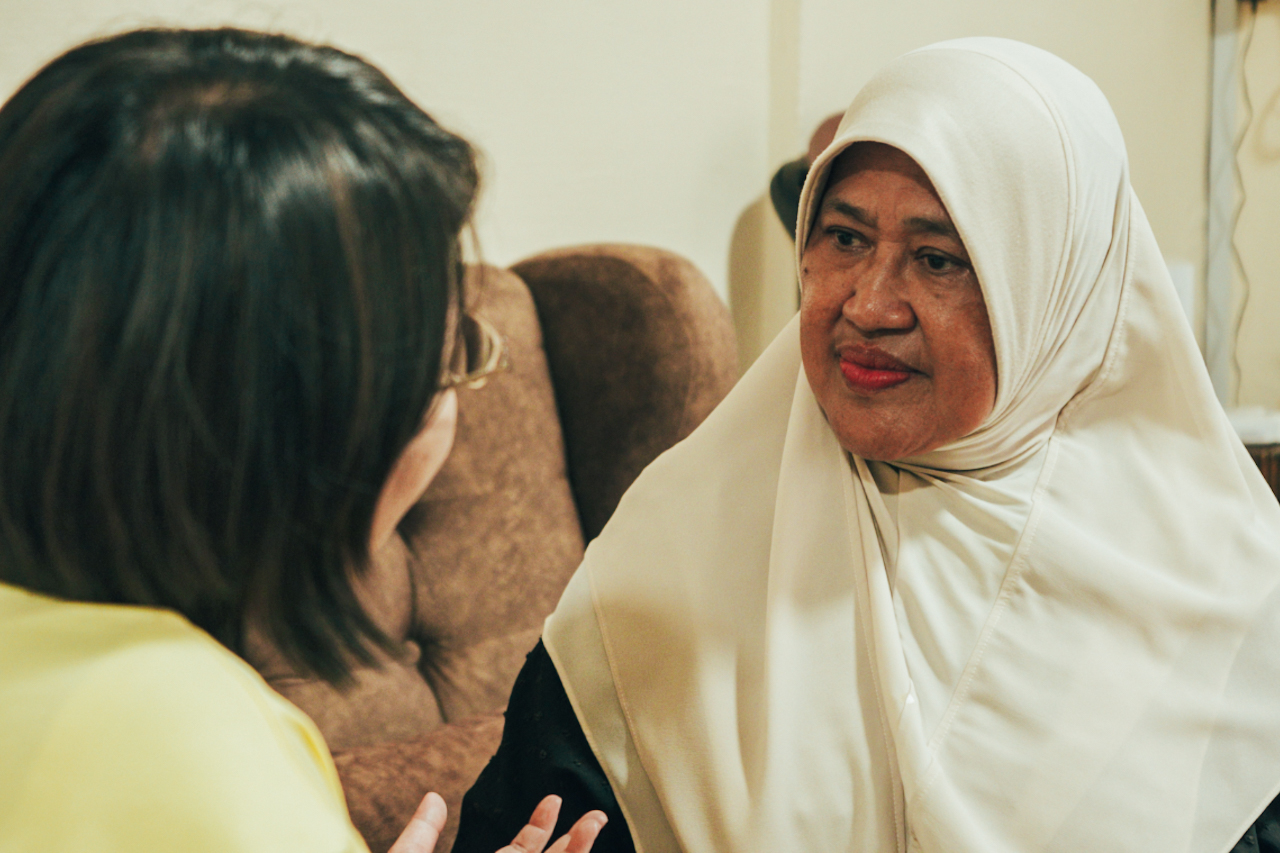
For years, Mdm Jumiati was her husband’s caregiver. She made the visit to the nursing home every single day, even as her own health deteriorated. When the hospital told her she could no longer be his primary caregiver, she found it hard to accept. And when her husband eventually passed, she found it harder to feel what she thought she should feel.
“I tried to be sad, but I cannot,” she says. “The word is numb.”
Lina Koh, a senior counsellor at the Tsao Foundation’s Hua Mei Centre for Successful Ageing, has seen this before. For many seniors, the losses compound in ways that are rarely named as mental health crises, especially when one is expected to simply carry on after retirement strips away identity, children move on, and spouses pass away.
Mdm Jumiati’s story added another weight: a lymphoma diagnosis that saw her undergoing six rounds of chemotherapy. Lina worked with her across two separate periods: caregiving stress in 2023 and bereavement in 2025. The goal was to help Mdm Jumiati reconnect with herself—and with a reason to keep going.
As a caregiver for so long, Mdm Jumiati still wants to care for people. Now she’s finding a different way to do it.
“The seniors, with support and space,” Lina says, “can continue to live with dignity and purpose in life again”.
Your support helps to sustain critical programmes by Tsao Foundation. Donate today and help create space for seniors’ wellbeing.