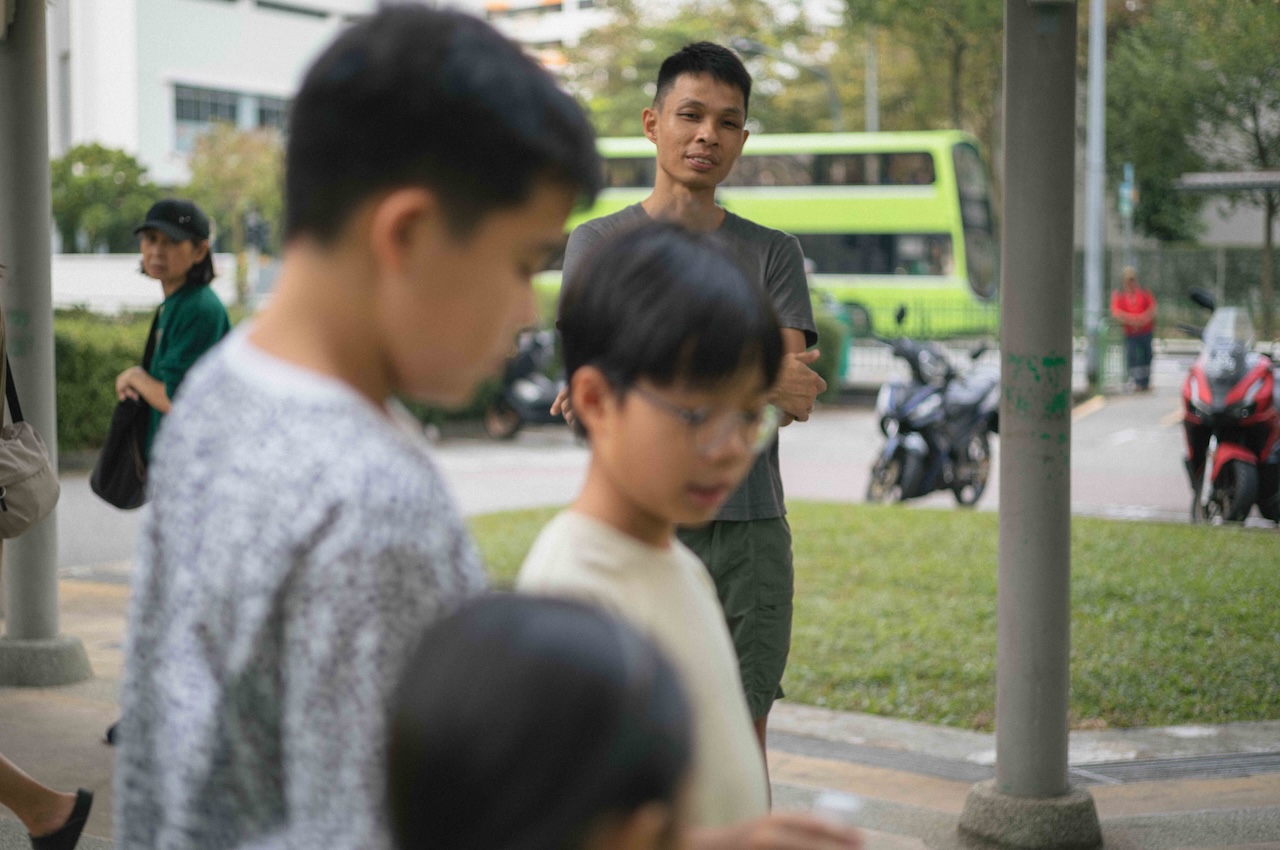
All images by Zachary Tang for RICE Media
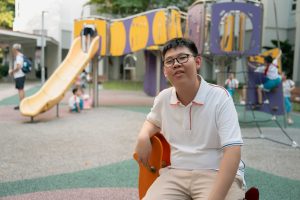
Growing up, Chester Ong’s family shared a two-room rental flat, a space that managed to fit seven people. Utilities got cut at times; phone lines, too, when bills went unpaid. Things started looking up when a private company, with his school’s help, began sending his household $100 every month. Completely unconditional with no strings attached.
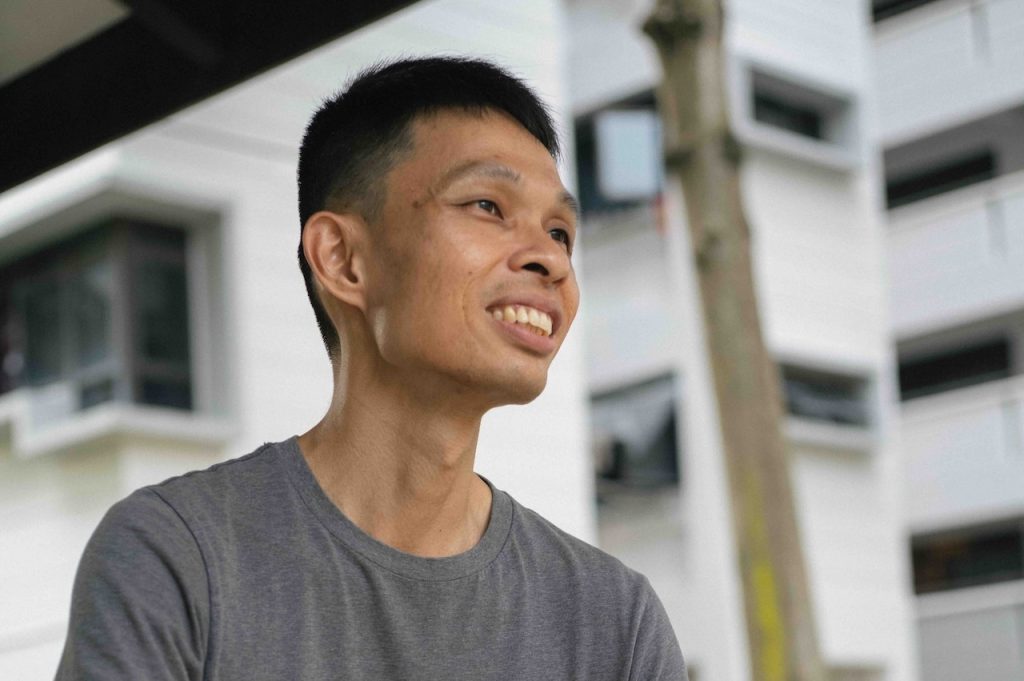
Chester, now a 41-year-old father of two, still thinks about that.
“I [wouldn’t] need to stress about how I’m going to document the amount of money that’s being spent,” he says.
“So now that I’m in a position to give back, I want to make sure that I respect whoever is the receiving party.”
Most help in Singapore comes with conditions, and understandably so. Thresholds and criteria exist to make sure resources go where they’re most needed. But they also draw lines—and some families land on the wrong side of them.
Chester has a phrase for it: “Poor, but not poor enough”.
So when he came across the Giving Circles initiative by the National Volunteer and Philanthropy Centre (NVPC), something clicked.
The idea is simple: small groups of five to eight people—friends, colleagues, or complete strangers—come together to support a specific family in need for at least six months. They pool money, yes, but that’s only part of it.
The other part is harder to quantify. They show up when needed; they spend enough time with a family that it eventually stops feeling like a programme and starts feeling like just knowing someone.
“Our relationship with the family has evolved in such a way that you are friends. And what do you do when friends need help? You help them.”
There are onboarding sessions where the Giving Circle meets to figure things out among themselves and with the family. But beyond that, there’s no fixed script, no forms to prove you’re giving enough, no household criteria to maintain.
By design, aid from Giving Circles is meant to be informal and unconditional. Chester, whose childhood benefited from such a support system, knows firsthand how valuable it can be for families striving to make ends meet.
Widening the Circle
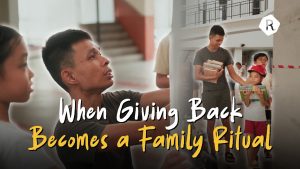
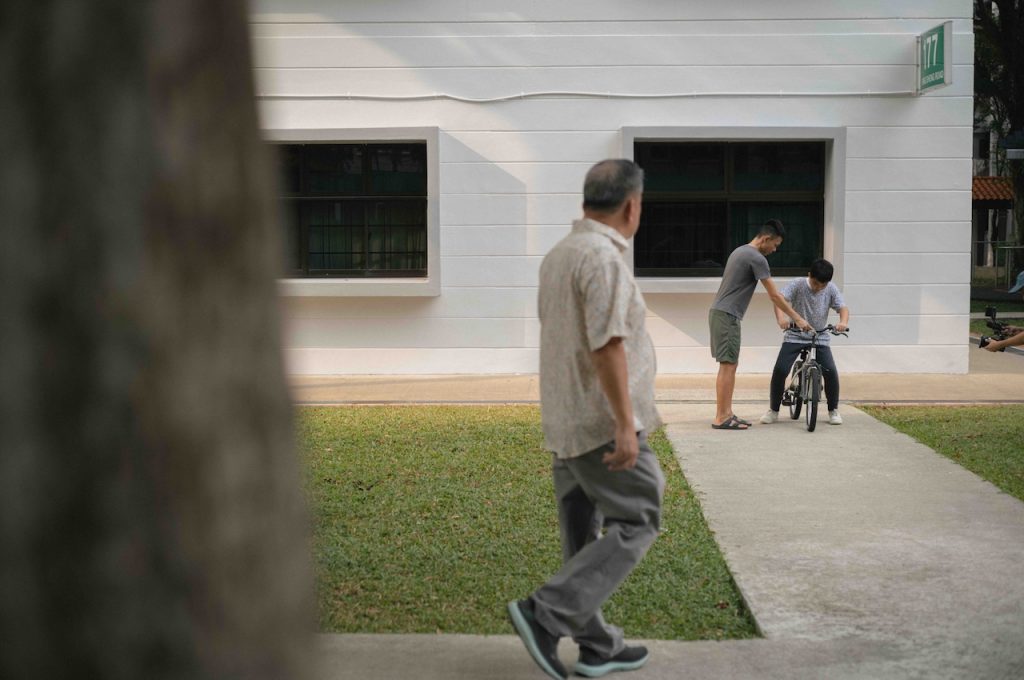
Giving back was never meant to come at the expense of family time, Chester says. The point was always to do it together.
He was 16 when he first gave blood. What started as a dare among friends at a mobile donation drive along Orchard Road has since become a lifelong commitment. It speaks to his persistence that he was awarded the highest accolade for blood donation in 2021 after making over 200 blood donations (and counting).
But blood donation is something you often do solo. As Chester got older, married, and had kids, he started thinking about how to bring that same instinct and desire to give back into family life without it feeling like a sacrifice. The answer came from his kids, without them realising it.
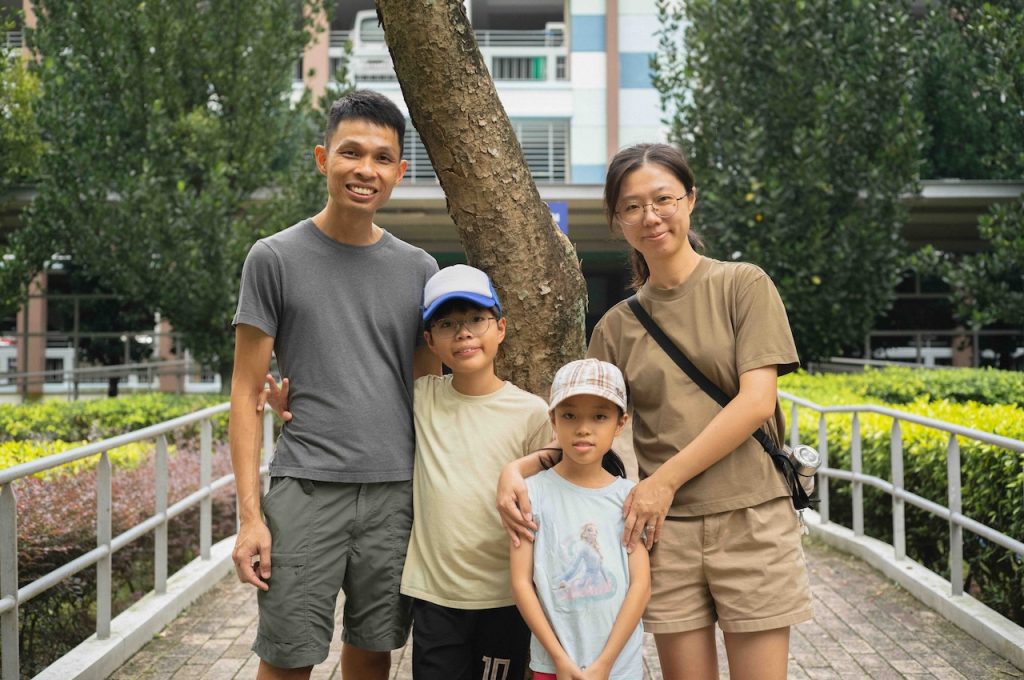
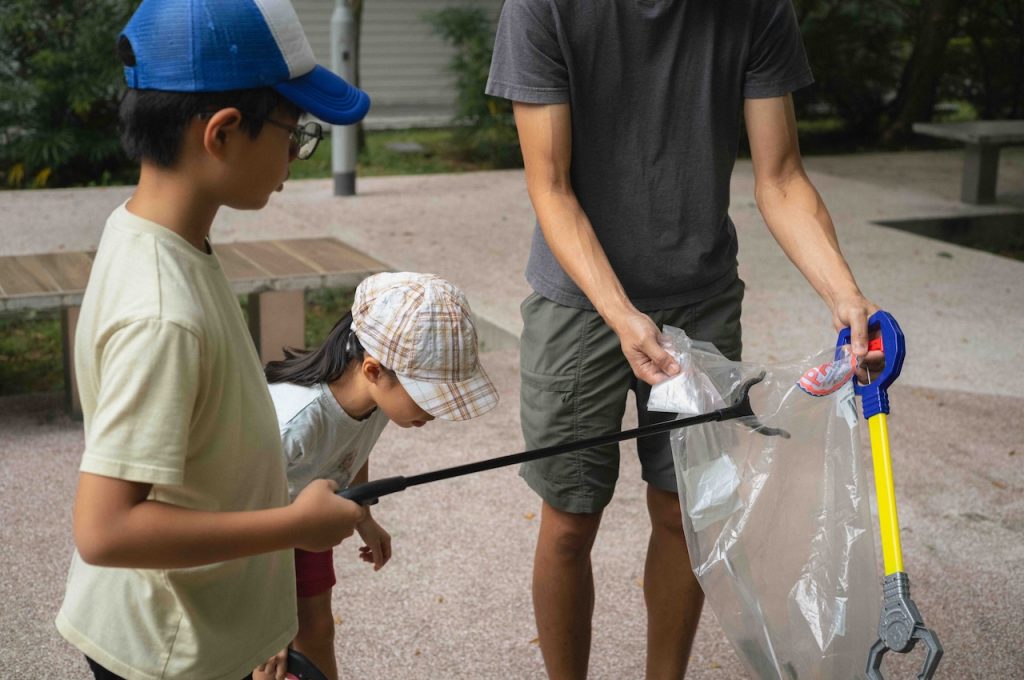
When they were in preschool, Chester walked them to school along a park connector every morning. One day, the kids stopped and pointed at the litter strewn across the park. “Papa, why is there so much rubbish?”
Instead of dismissing the thought or giving a fatherly lecture about civic responsibility, Chester simply invited them to do something about it. And they did, as a family activity, picking up litter on the streets after school.
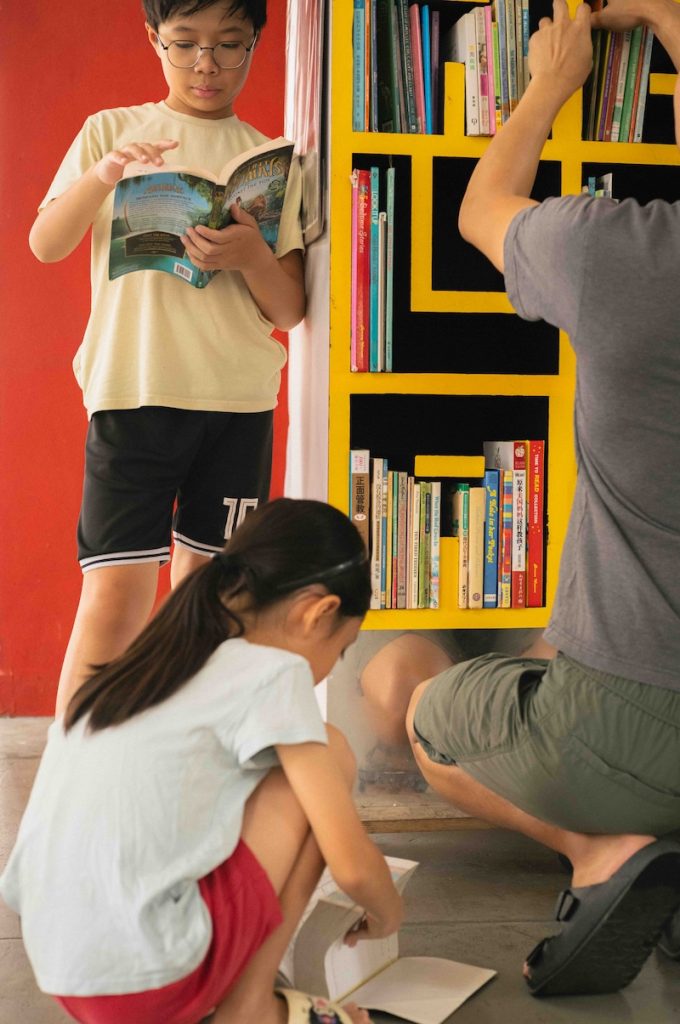
It became a habit that expanded to other things. Together, they set up a community library at Taman Jurong Community Club called The Caterpillar Library to share their love of stories with the neighbourhood.
Roping his kids into Giving Circles was an extension of something already in motion. The family his circle supports is a single mother who’s caring for both her son and her aged parents.
When Chester’s family and hers first met, the boy was at the playground, as shy as one would expect from a kid meeting strangers for the first time.
The ice broke when the boy joined an impromptu football kickabout that turned into a casual match against the adults. The boy and the two kids won, obviously, Chester laughs.
The dynamic that emerged wasn’t really volunteers and beneficiary—it was akin to being family friends. When the boy’s mother had to be away at work or handle caregiving duties, Chester brought him out on trips with his kids. When the circle found out the boy was interested in football, they helped him enrol in the Singapore Youth League. In essence, they made him feel seen.

His kids, he says, were instrumental in getting the boy to open up. But the kids still don’t think of any of it as volunteering. And as Chester sits with that, neither does he. If anything, it’s closer to something he’s been paying back since he was a kid himself in that rental flat, happy to have the lights switched on again.
Most people who’ve struggled like him know that the help that stays with you isn’t the kind that comes with conditions—it’s the kind that didn’t make you feel small. Chester got that once from people who probably never knew his name. He’s simply trying to pass that feeling on ever since.