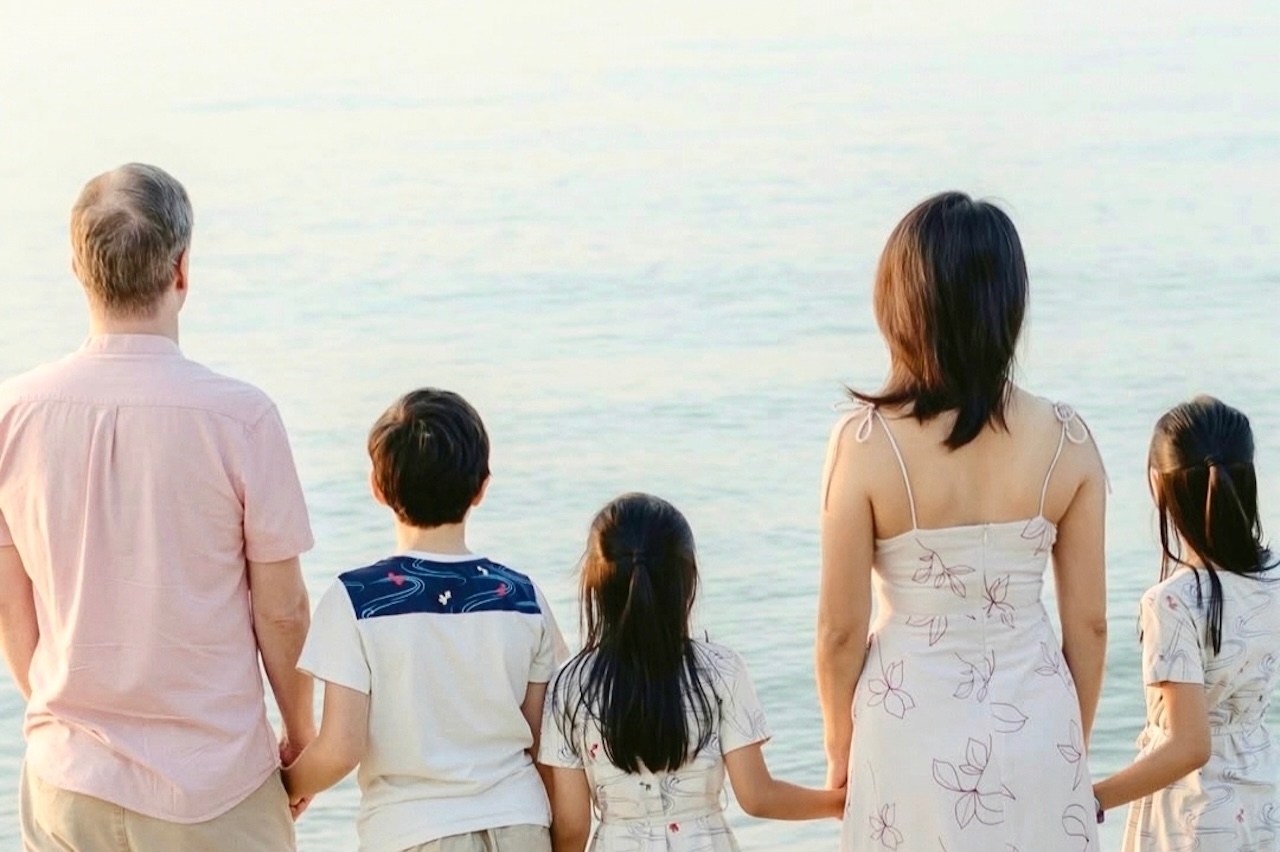
In 2021, Michelle Lim was a single mother of two, working out what life looked like after divorce. RICE told her story for International Women’s Day.
Five years on, Michelle found love, remarried and now runs a blended household of five. In this op-ed, the reparenting coach and founder of The MindFull Parent asks whether the post-divorce happy ending society likes to tell leaves room for families that get more complicated when two parents remarry.
Top image courtesy of Michelle Lim.
It was around nine on a Saturday morning when the whole family headed downstairs together. My two daughters, aged 5 and 7, were leaving to spend the day with their biological father, while my husband had planned some father-son time with my 7-year-old stepson.
I wave goodbye to the girls, and then to my husband and stepson. I wave goodbye again, then head back upstairs.
When I open the door to our home, the silence hits me like a brick wall. Just like that, everyone had returned to their original family units. I wondered where mine was.
I knew the arrangements beforehand. Nothing unreasonable about the girls spending time with their father, or my husband wanting some quality time with his son.
I could almost hear other parents telling me to enjoy all that free time. A whole Saturday sans children? Like damn, girl! Go have a slow breakfast, get a massage, do something for yourself! Enjoy it! Duh!
Except I couldn’t.

In my head, the girls were enjoying themselves at an indoor playground while my husband and stepson were having breakfast or taking one of their favourite bus rides. Everyone was spending the day with family, and I wasn’t in the picture.
I went into our bedroom, curled up on the bed and cried. I remember the heavy pit in my stomach and hot tears streaming down my face. I stayed there for hours, feeling an emptiness I hadn’t expected.
Where was the happy ending after getting married again?
Life After (Re)Marriage
Five years ago, RICE Media featured my journey as a single mother raising two daughters after divorce. By then, I’d spent several years rebuilding my life and managing everything independently, from the children’s schedules to household finances.
Being a single mother in Singapore wasn’t just about making ends meet on one income. It also meant navigating systems that didn’t always seem to account for parents doing everything alone. I remember struggling with childcare subsidy applications and being grateful to the staff at a childcare centre who patiently guided me through the process.
Back then, I had only six days of childcare leave each year. Six days, two young children, and no other parent to share the responsibility. Anyone with young children knows that when they fall sick, it isn’t always a one-day affair. Sometimes, it takes an entire week before they’re well enough to return to childcare.
Pursuing child maintenance wasn’t any easier. I had to physically pay a visit to the Family Justice Courts to file my case and subsequently attend mediation with my ex-husband. Even after all that, I didn’t receive the financial support I had hoped for. Eventually, I stopped pursuing it because the process demanded more time and energy than I could spare. Years later, meaningful financial contributions from him remain absent.
I was very fortunate to have a handful of friends who supported me, and I eventually found an employer who understood my circumstances. I also made my various hustles work around the girls, and I could bring them along.
But emotionally, support was a whole other matter. For me, the more painful remarks came from within my own family. My mother’s response to my divorce was essentially an “I told you so” at a time when I needed compassion more than anything else.
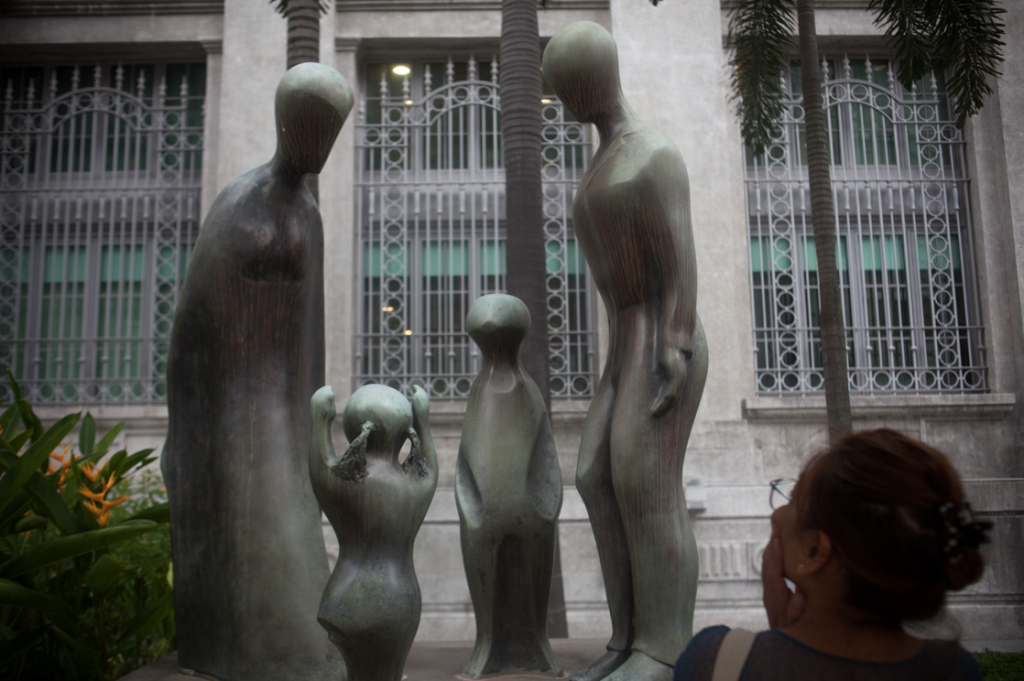
That’s why I began sharing my experiences publicly on Instagram. Other single parents reached out, telling me they finally felt seen. What began as an attempt to make sense of my own circumstances became a way to connect with people navigating similar struggles.
Then, at 32, I met Mark, my now-husband. He was 42 and also divorced, with a son from his previous marriage.
We matched on Coffee Meets Bagel, of all places! We were both exhausted by dating. I mean, I would literally fall asleep while swiping through the app! We’d both decided this would be our last attempt before calling it quits.
Our first date was a simple lunch where stuff right out of Disney’s Frozen seemed to happen. Without discussing it, we both ordered cheesy beef baked rice and sometimes even finished each other’s sentences. Then COVID-19 hit, and I wondered whether our budding relationship would survive. Instead, we spent every night of lockdown video-calling each other like teenagers until we could finally meet again.
Somehow, that last attempt at dating became the beginning of our blended family.

We married in 2022, bringing my two daughters and his son together in one big blended family. My engagement ring has three diamonds instead of one, reflecting his commitment to me and my daughters. It was a beautiful gesture, and it still means a lot to me.
My husband has since admitted that he thought blending our families would be straightforward. We loved each other, we were committed, and our children came with us. Surely, we could bring everyone together and make it work. Right?
Neither of us anticipated the emotional complexity that comes with our new family roles.
For months, those lonely Saturdays left me feeling lost. I’d compose myself before my husband and stepson returned because I didn’t want to spoil their time together.
When my husband noticed I’d been crying, he’d ask what was wrong.
“The girls go off with their father, you go off with your son, and here I sit in an empty home. I feel so lost,” I eventually told him.
His first instinct was to suggest finding something enjoyable to do on Saturdays. It was logical, but it stung. I wasn’t looking for something to occupy my time—I wanted to belong to the family I’d remarried to build.
After several conversations, he apologised and invited me along on their Saturday outings. I couldn’t have been happier, but things didn’t fall into place right away.
For months, I found myself walking a few steps behind them during our Saturday outings, whether we were having a traditional kaya toast breakfast or cycling along park connector networks. My husband was so accustomed to spending time alone with his son that he didn’t realise I still felt like a third wheel. My stepson barely acknowledged me back then either, and I hesitated to get too close because I didn’t want to intrude on their limited quality time together.
Looking back, my husband describes those early years as almost like being flatmates. He and his son functioned as one family unit, while the girls and I functioned as another. Each of us parented only our own children, by the rules we’d each brought along—neither was sure how much say we had over the other’s kids.
He admitted his thinking had been, “You guys are fitting in with us. That’s it.”
We lived under the same roof, but hadn’t quite learnt how to live as one family.

Here’s what I’ve learned since: a second marriage might give two people another chance at starting anew, but it doesn’t magically make it a truly fresh start.
Among resident couples who married in 2014, 12.3 percent of marriages where both spouses were marrying for the first time had dissolved before their tenth wedding anniversary. That rose to 16.8 percent where one spouse had previously been married, and 18.7 percent where both had. At the same time, marriages overall have become more stable compared with earlier cohorts.
My husband and I are both in that last category—we were both coming from previous marriages. And I’d be lying if I said seeing the number didn’t make me slightly nervous.
Cards on the Table

A few months after we moved in together, when the girls were in bed, my husband sat across from me at the dining table with a blank sheet of paper. He wrote down every bank account he had, the balance in each, and every financial commitment. Then he asked me to share mine.
To him, this was normal. To me, it was terrifying.
As a single mother, money was often tight. But I’d built something I was immensely proud of: financial autonomy, including five figures in savings. My previous marriage lacked financial transparency. I wasn’t accustomed to someone openly sharing their finances, let alone inviting me to do the same.
I broke into a cold sweat; I felt faint. Before long, I was crying. My husband came around the table and held me. I was frightened by the vulnerability, but also relieved. For once, nothing was being hidden from me.

Eventually, we set up a joint account for household expenses. Yet about a year later, I began feeling that my hard-earned savings were no longer entirely mine. My husband never demanded explanations, but I still found myself justifying purchases.
I could still hear my mother’s warnings about protecting myself financially. It didn’t help that before we got hitched, my husband told me: “I am not here to support you financially”.
What he meant was that I should retain my financial independence. But after years of carrying everything myself, I’d hoped marriage might also mean having someone dependable when I needed support.
There was an added irony. Because my husband is Caucasian, some assumed I’d married a wealthy foreigner.
“Aiya, now you can shake leg! Don’t have to worry already, right?”
In reality, my husband had lived in Singapore for decades as a permanent resident, without the expatriate benefits people seemed to imagine. We were raising three children, managing our household expenses and navigating the financial responsibilities that came with our previous marriages.

Over time, we also worked through our financial differences. My husband began recognising that while he brought home the larger pay cheque, I managed much of our household, the children’s needs and my growing business alongside other work.
Our family of five grew closer. We joined in each other’s favourite activities—the girls loved animated pretend play, while my stepson enjoyed board games and bus rides. We made it a point to eat together whenever all five of us were home.
But some occasions require a lot more planning.
One Blended Family, Three Households
With so little time together as a family of five, my husband and I agreed we’d have to consciously protect it.
Part of the problem is very Singaporean and very practical. The Family Justice Courts’ own sample orders split a child’s time right down to the holidays. Public holidays alternate between parents, and the June and year-end school holidays are split between two homes. When a birthday or a cousin’s wedding lands on the other parent’s turn, someone has to negotiate.
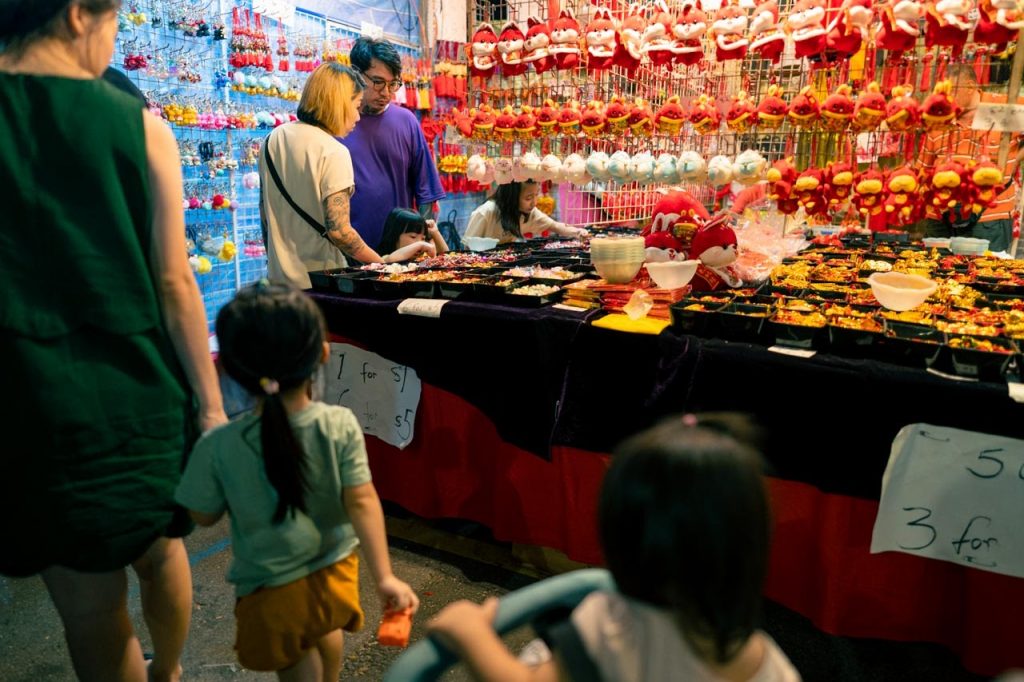
Divorce turns family time into a booking system. Take Chinese New Year, for instance.
For many Singaporean families, the challenge might be deciding whose relatives to visit first. For us, it could mean negotiating whether we’d even have all three children together for reunion lunch.
One year, after difficult discussions over my stepson’s schedule, we managed to arrange an early reunion lunch. We were overjoyed!
The children had school until 10:30 AM, while we had work commitments and food preparations to manage. We finally sat down together, knowing we had to finish before 3 PM.
Afterwards, all four of us accompanied my stepson back to his mother’s home, savouring that little extra time together. Then we returned to prepare for reunion dinner with my mother. The girls would spend the second day of Chinese New Year with their biological father.
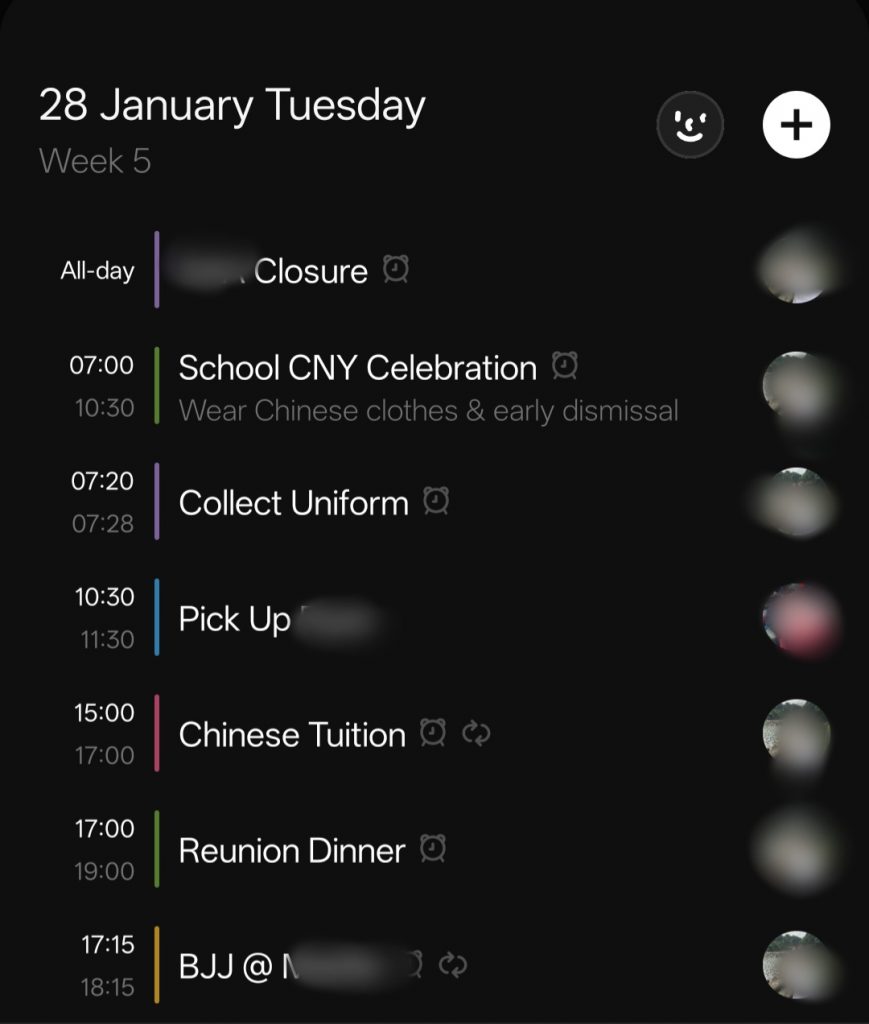
We understood that remarriage didn’t erase existing parenting arrangements. What we hadn’t appreciated was how hard it could be to establish our own traditions while coordinating three separate households.
My husband has since acknowledged that, in the early years, his fear of conflict with his former wife sometimes led him to agree to arrangements without fully considering their implications for our household.
We gradually learnt that committing to our children didn’t mean meeting every expectation placed on us. And that means we also had to rethink fairness.
A couple of years into our marriage, we received four tickets to Wild Wild Wet. They were valid for a limited time, and only one weekend worked.
The drawback? My stepson would be with his mother.
I hesitated. Would it be unfair to take the girls without him? Should we let the tickets go to waste?
My husband thought otherwise.
“He also enjoys activities at his mother’s side that the girls aren’t a part of. We can’t always hold fun stuff back until all three children can enjoy them—that wouldn’t be fair to the girls either.”
I nodded. “You’re right.”
We took the girls and had an amazing day! They had no idea we’d agonised over four water park tickets.
It seems ridiculous now, but we were learning that loving three children equally didn’t mean they always had to have identical experiences.
The Child We’d Never Have

One of the hardest decisions since remarriage, however, concerned a child we would never have.
After we’d moved into our current home, my husband and I began discussing whether we should have a child together.
We both wanted one.
We wondered what our child might look like, whose features they’d inherit and what their personality might be. But we already had three children and were still navigating the demands of our blended family.
Another baby meant starting the newborn years again while meeting the needs of three growing children. Our time, energy, and emotional capacity weren’t unlimited.
We ultimately decided not to have another child. It wasn’t easy, especially when people kept asking when we’d have our “own” baby.
Some suggested we should experience parenthood together. Others thought one more child would complete our family. I knew most meant well, and I kept returning to that word: own.
What did it mean to have our own baby when we were already raising three children together?
Singapore has spent years encouraging marriage and parenthood in response to our low birth rate. I understand why. But these conversations often assume married couples are starting from zero.
If I were starting from zero in Singapore today, I’m not sure I would make the same decision to have children. With the rising cost of living, academic pressure, and an increasingly uncertain job market, my husband and I would have to seriously reconsider whether parenthood was right for us. I might even consider adoption instead.
What concerns me most isn’t money. It’s time. When both parents work until six in the evening, children may spend most of their waking hours in childcare or with a helper. By the time everyone gets home, they have dinner, homework, showers, and bedtime. Some children are up again at five or six the next morning.
Where does meaningful family time fit into all of that? We encourage people to have children, but are we creating the conditions for parents to actually spend time raising them?
But we weren’t deciding whether to become new parents. We already were, with three children whose needs spanned different homes, schedules, and relationships.
We still wonder occasionally about the child we didn’t have, but neither of us regrets taking our existing responsibilities seriously.
Homecoming
These days, we look forward to Fridays because that’s when our son comes home.
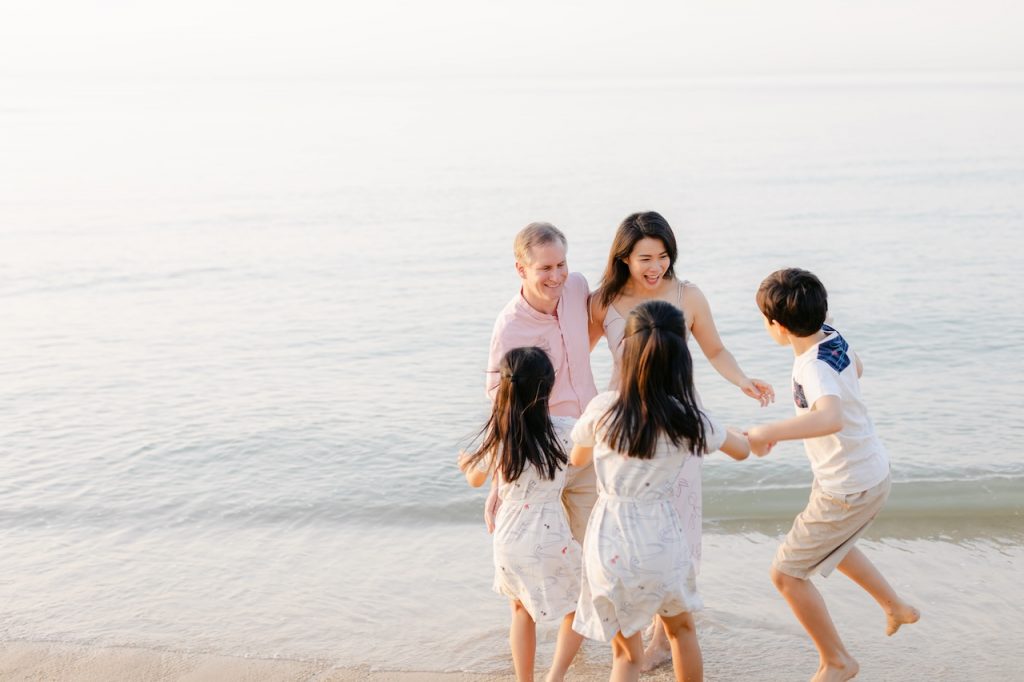
My younger daughter will excitedly announce that her brother—not stepbrother—is coming home, sometimes days beforehand.
When he walks through the front door with his father, the girls rush towards him, calling out and throwing their arms around him. I’m often working in my home office. Hearing the commotion, I come out to greet him. He calls out to me, and I hug him, kiss his head and tell him how much we’ve missed him.
He hugs me back, usually with a good squeeze. About three years into our marriage, roughly a year after the girls started calling my husband Daddy, he began calling me Mummy.
Neither of us intended to replace the children’s biological parents. We simply let our relationship develop at its own pace.
In the early years, my stepson needed time to settle back into our household after moving between homes. That adjustment has mostly disappeared. Now, he walks through the door and gets on with simply being home.
Before long, all three children are chattering, playing and getting up to whatever noisy nonsense they’ve decided on. Our home fills with beautiful laughter.
I sometimes think about those lonely Saturdays, and how much my husband and I underestimated what bringing our families together would require.
We still navigate arrangements we cannot control and relationships beyond our household. Those complications haven’t disappeared simply because we’ve become happier and more secure.
So, is remarriage the fairytale ending I once imagined? I don’t think we’re there. I’m not even sure it exists.
But when I hear all three children laughing together on a Friday evening, I know that what we’ve built is real, even if it isn’t always easy.