Top image: Stephanie Lee / RICE File Photo
While Singapore remains insulated from the true horrors of war (like bombs and death), the repercussions of the Iran war are slowly but surely trickling down to us.
Singaporeans are trying to make sense of the war in very different ways. For some, the war registers mainly as a looming economic concern. For others, it has quickly become an overwhelming struggle to keep up with the headlines and parse conflicting narratives as they try to make sense of the situation from afar.
Either way, the fact that the Middle East conflict was allotted all that air time—three ministerial statements, to be exact—in Parliament on April 7th is a sign that this is no longer a situation any Singaporean can afford to ignore.
Since Israel and the US attacked Iran on February 28th, Tehran has effectively closed the Strait of Hormuz, a crucial channel for global oil and liquefied natural gas (LNG) trade. Meanwhile, bombs have continued to fall over Lebanon despite a regionwide ceasefire. US President Donald Trump is warning that “a whole civilisation will die” if Tehran fails to reopen the Strait of Hormuz shipping lane.
While the Singapore government doesn’t foresee energy disruptions just yet, petrol and diesel prices have soared. And we may be facing price hikes on electricity and imported food.
The government’s response—garnishing the Cost-of-Living Special Payments, bringing forward CDC voucher disbursements, and support for sectors like transport—has been swift.
But this is a crisis defined by uncertainty, where ceasefires unravel quickly, and escalation remains a real possibility. How far can an extra $200 go? Who gets supported, and who falls through the cracks? What else is at stake?
To unpack these questions, we speak to Dr Nawab Osman, whose academic research includes the domestic and international politics of Southeast and South Asian countries, and Manu Bhaskaran, the Vice President of the Economics Society of Singapore (ESS) and CEO of research and advisory firm Centennial Asia Advisors.
Everyone keeps saying this conflict is unpredictable, but what are the most likely ways this could play out?
Dr Nawab: The trajectory of the conflict remains highly uncertain; the recent announcement of a precarious, Pakistan-brokered two-week ceasefire between the US and Iran provides only temporary relief. There are two scenarios that Singapore as a whole should prepare for.
The first and more likely one is a long, drawn-out disruption. Even if the fighting slows down, damage to energy infrastructure will take time to fix. Shipping routes like the Strait of Hormuz may reopen, but costs will stay high because of risk, insurance, and uncertainty.
The second, worst-case scenario is a wider regional escalation. In this scenario, the conflict widens, drawing in additional proxy groups and leading to a prolonged, enforced blockade of both the Strait of Hormuz and the Red Sea by the Houthis in Yemen. In such a scenario, global energy markets experience a severe crunch, forcing widespread fuel rationing.
For Singapore, this would mean activating emergency fuel reserves and potentially implementing demand-side rationing measures that would severely curtail industrial output and daily life.
Manu: In other words, we should be ready for a long period of elevated energy costs even if the intense phase of military combat is over and assume that the risk premium in financial asset prices will be high. Businesses may also become more cautious.
Beyond oil and food prices, what’s really at stake for Singapore and the region here?
Dr Nawab: First, the conflict is reordering the strategic hierarchy in East Asia. The crisis is beginning to reveal which powers matter most when sea lanes are disrupted and supply chains tighten. Russia is becoming increasingly valuable to Asian nations as an emergency energy supplier, while China’s massive industrial scale also makes it crucial.
The closure of the Strait of Hormuz also represents a direct assault on the United Nations Convention on the Law of the Sea (UNCLOS). While regional neighbours such as Malaysia, the Philippines, and Vietnam have pragmatically struck separate deals with Iran to secure safe passage for their vessels, Singapore has refused to do so. Foreign Minister Vivian Balakrishnan emphasised that negotiating for passage would implicitly erode the legal principle of transit passage, treating a fundamental right as a privilege to be granted or a toll to be paid.
This principled stance is vital for Singapore’s long-term survival as a trading nation, but it carries significant short-term economic risks if its vessels remain targeted.
Finally, the disruption extends far beyond energy. The Middle East is a key global producer of fertilisers, and the supply shock threatens global food security. Furthermore, critical industrial inputs like aluminium and helium, which are essential for semiconductor manufacturing and medical equipment, are severely constrained.
When supply chains are weaponised, Singapore’s status as a global logistics and manufacturing hub is directly threatened.
What does the conflict mean for US-Asia relations?
Dr Nawab: The Middle East conflict is severely testing the credibility and posture of the United States in the Indo-Pacific region.
There is a growing perception that Washington is distracted by abstract geopolitical chess games while Asian nations grapple with existential economic realities. As American policymakers debate how the Iran war might back-foot China, Asian leaders are forced to make
choices about cutting social welfare programs, rationing fuel, and managing skyrocketing inflation. This disconnect risks alienating the very regional partners the US seeks to court.
As a result, Asian nations are increasingly engaging in strategic compartmentalisation. The Philippines, despite its intense maritime disputes with China in the South China Sea, has resumed high-level talks with Beijing on energy security, fertilisers, and trade stabilisation. This demonstrates that in times of acute crisis, functional necessity often supersedes bloc politics.
What has the Singapore government done well in its response to the Middle East conflict so far?
The government has moved early and decisively.
The immediate activation of the Homefront Crisis Ministerial Committee (HCMC), a structure formalised after the 2003 SARS outbreak, demonstrates high institutional readiness. Furthermore, decades of strategic planning have put Singapore in a better position than many peers. As the world’s third-largest oil trading hub and sixth-largest refinery export hub, Singapore’s mutual interdependence with supplier nations helps secure continued access to crude oil.
Rather than waiting for the full impact of inflation to manifest, the government swiftly announced a close to S$1 billion support package. By moving early with targeted assistance for vulnerable groups (such as platform workers) and bringing forward Community Development Council (CDC)
vouchers, policymakers are attempting to anchor inflation expectations.
The establishment of Singapore GasCo in 2025 to centralise gas procurement has proven prescient, allowing for coordinated responses to supply shocks. The government has also aggressively pursued alternative supply lines, heavily leaning on Australia (which provides
over one-third of Singapore’s LNG) and formalising an Agreement on Trade in Essential Supplies with New Zealand.
Speaking of CDC vouchers and the Cost-of-Living Special Payment, should we be rethinking the way we approach cost-of-living challenges rather than falling back on vouchers and one-time payments? If so, what would be a better approach?
Manu: We should have a comprehensive social safety net, including pre-set processes and tools to help specific segments of the population affected by shocks like this. This is preferable to ad hoc vouchers.
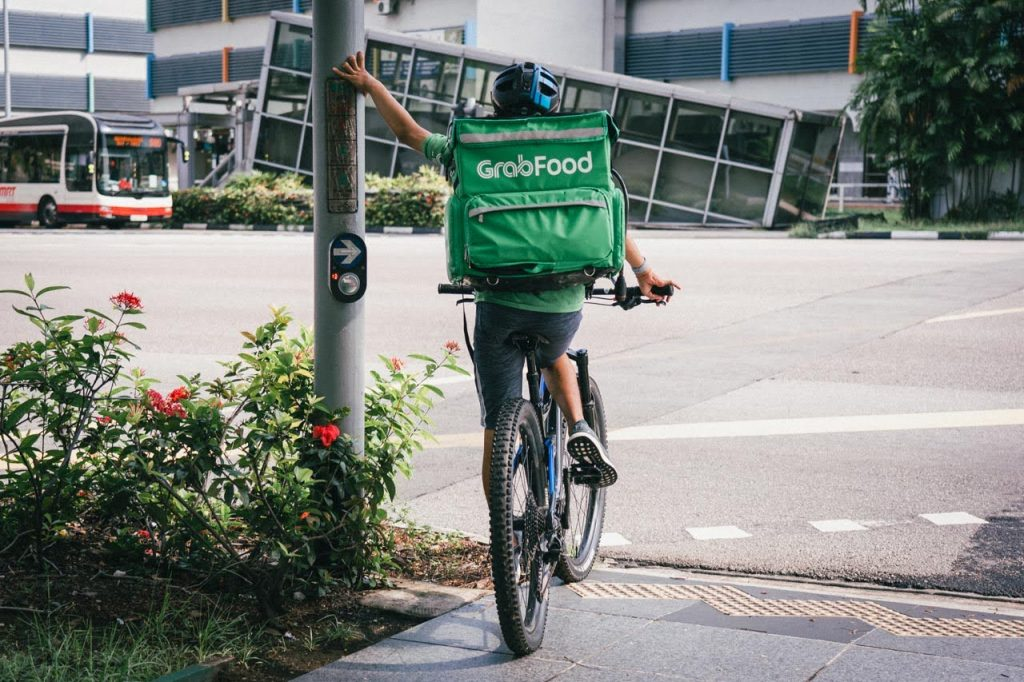
Governments should step in to help segments of the population affected by shocks, as explained above. That is their responsibility. Companies’ responsibility is to treat their workers and stakeholders like gig workers fairly according to the law. They should take part of the burden but not the bulk of it.
Are there any other blind spots in the government’s current approach?
Dr Nawab: Singapore is currently over-reliant on natural gas. Approximately 95 percent of Singapore’s electricity is generated from imported natural gas. While supply sources have been diversified, the fuel type remains highly concentrated. The transition to renewable energy and the exploration of nuclear power, while actively being studied, may not be progressing rapidly enough to mitigate medium-term vulnerabilities.
While the government has urged households and businesses to conserve energy voluntarily, it has not implemented mandatory demand-side reduction measures. In contrast, neighbouring countries have instituted work-from-home directives and fuel rationing. Relying solely on price signals and voluntary conservation may prove insufficient if the crisis deepens.
Lastly, conflicts involving the Middle East invariably carry deep religious and emotional resonance, making sustained vigilance essential. To be fair, this is not necessarily a blind spot as the Singapore government has long invested heavily in maintaining social cohesion. Still, the government must continue to ensure that domestic narratives remain unified and that external geopolitical tensions do not fracture internal social harmony. This means, above all, that any acts of violence arising from the conflict are framed strictly as terrorism or hate and not as expressions of religious identity.
If the conflict escalates or persists, what are the hardest trade-offs Singapore might face?
Dr Nawab: We might need to revisit our approach of upholding the UNCLOS principle of free transit passage in the Strait of Hormuz as we are risking economic damage if Singapore-flagged vessels are targeted. The S$1 billion support package is substantial, but repeated interventions will strain the national budget. Policymakers must balance the need to protect citizens from cost-of-living spikes against the imperative of maintaining fiscal discipline.
What is the one thing Singaporeans should care about most right now?
Dr Nawab: Amid the noise of fluctuating oil prices and geopolitical manoeuvring, the single most important thing Singaporeans should care about right now is psychological resilience and adapting to a new reality.
The government cannot infinitely subsidise the rising costs of a structurally altered global energy market. As Deputy Prime Minister Gan Kim Yong noted, the regulated electricity tariff will inevitably experience a much sharper increase in the coming months as the full cost of fuel is priced in.
Singaporeans must internalise this: The era of cheap, uninterrupted global supply chains is over. We need to actively change consumption behaviours and adopt energy-efficient practices.