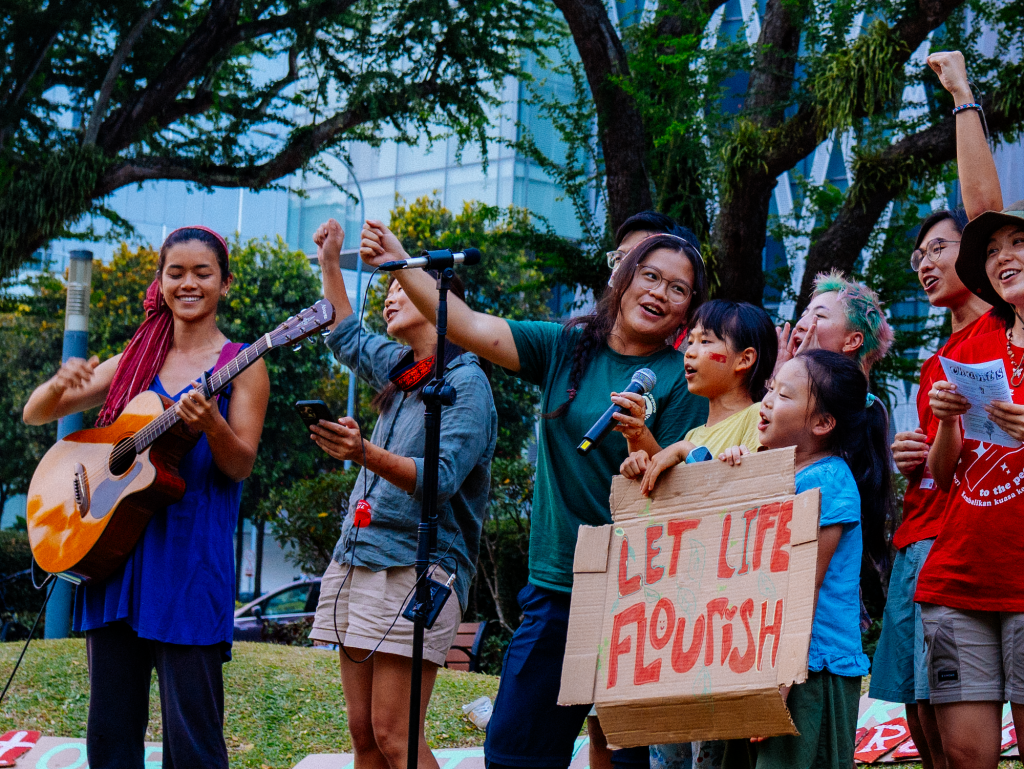


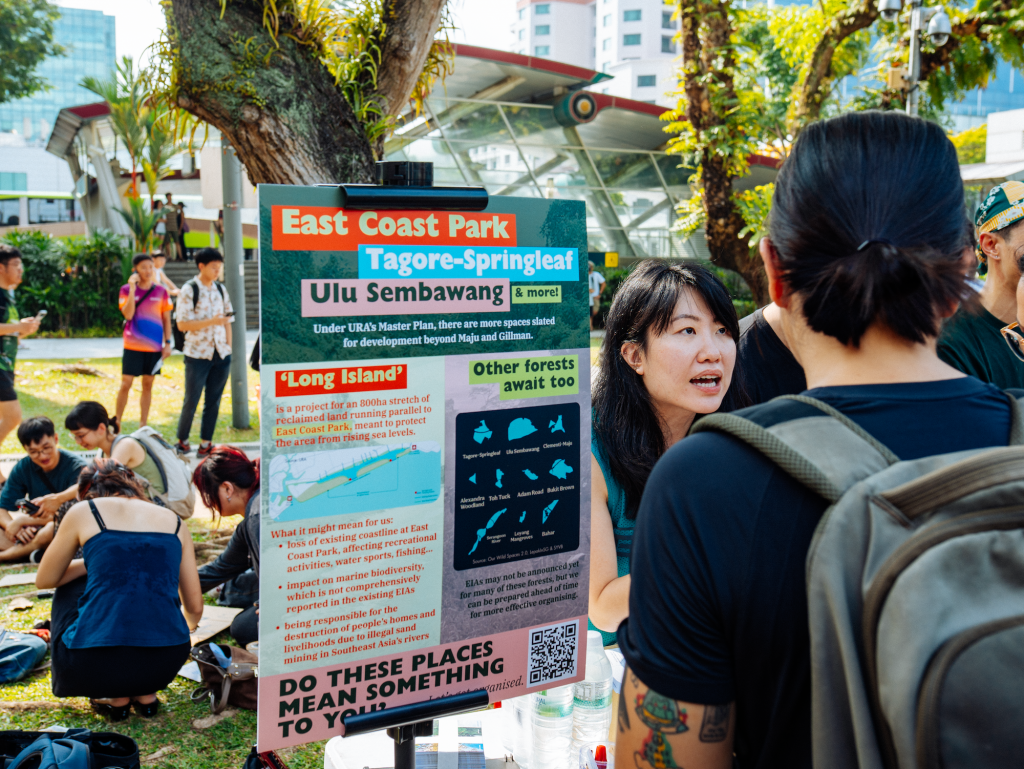
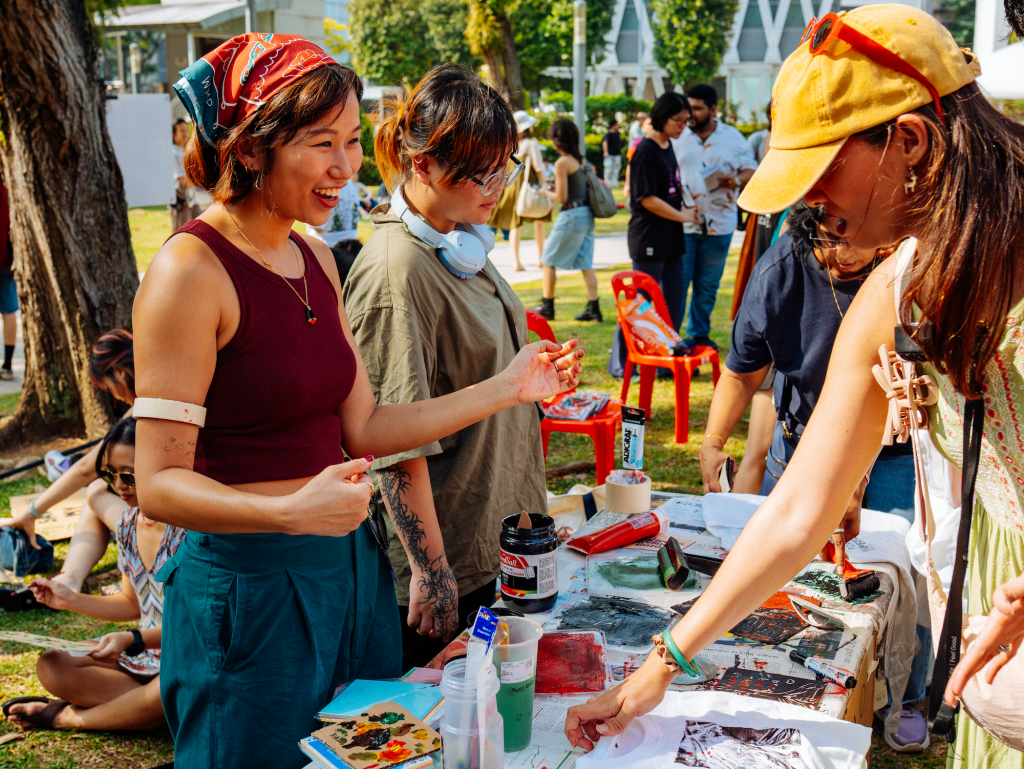
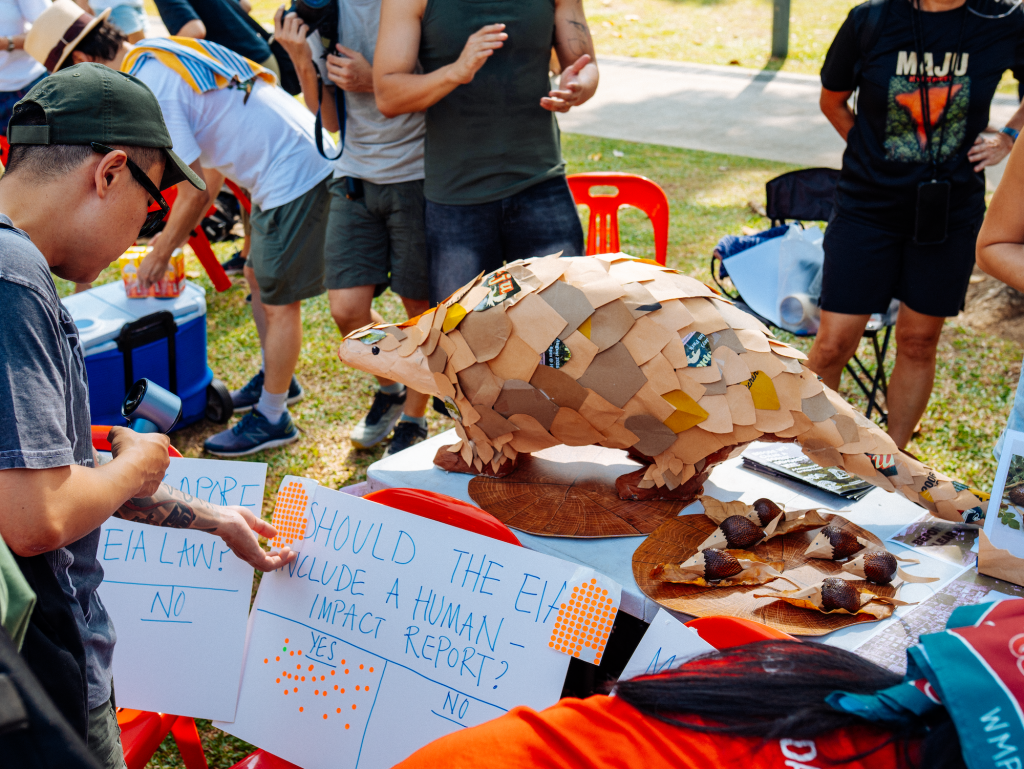
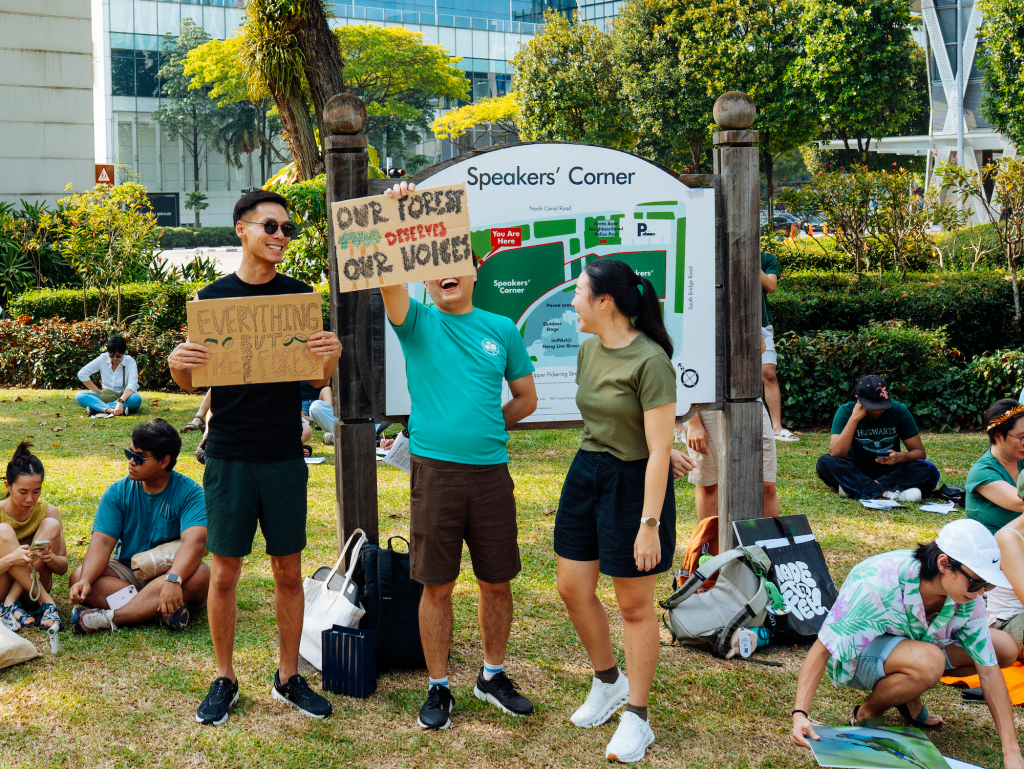
On August 16 2026, activist group SG Climate Rally held Maju For The People at Hong Lim Park, calling on Singaporeans to show up for the natural spaces facing redevelopment—Maju Forest, Gillman Barracks, East Coast Park and other green spaces—before decisions are locked in for good.
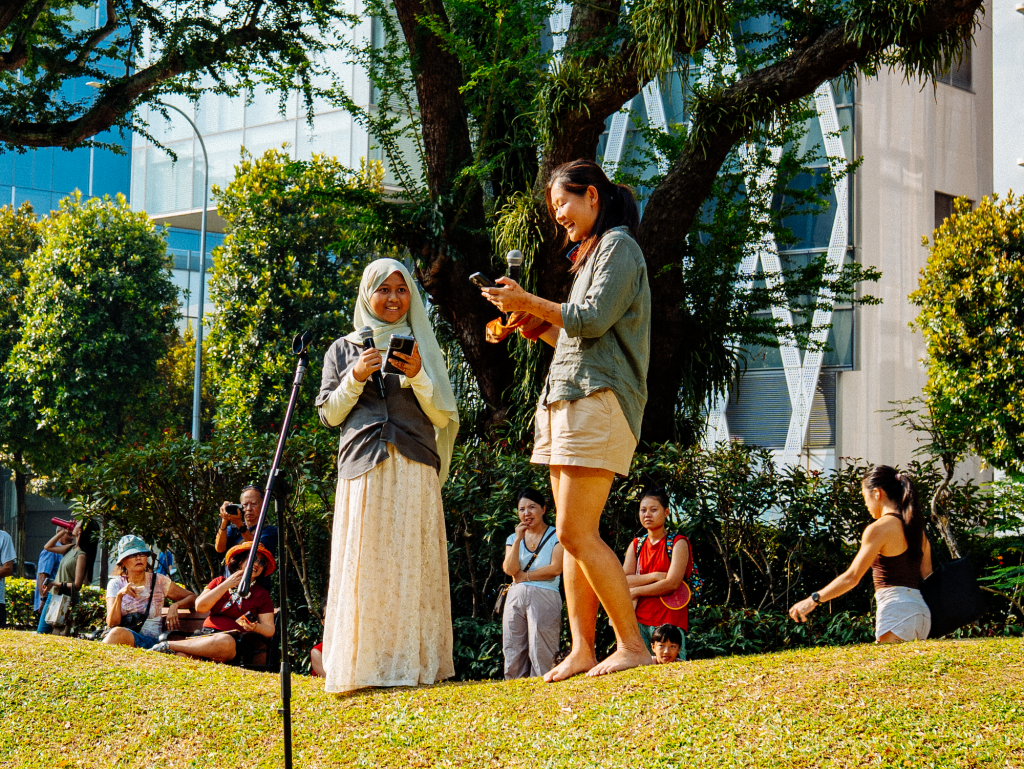
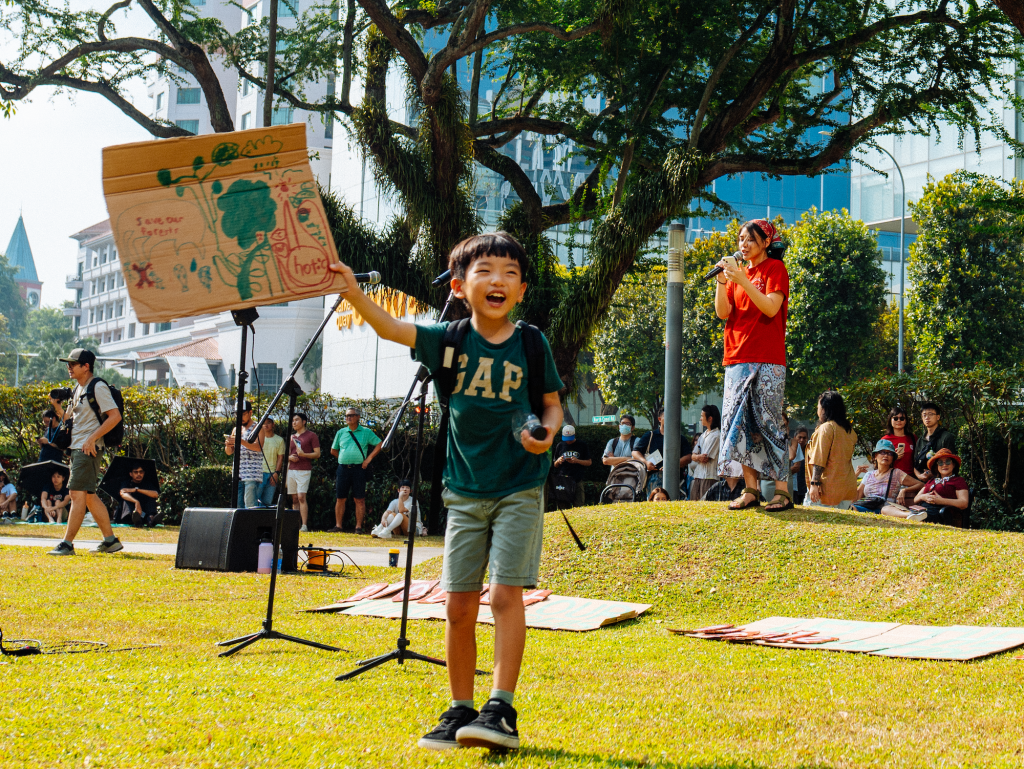
“I hear that the beaches and forests I love so much are about to face destruction! The adults tell us not to care, but how can I not when our future is in despair?”
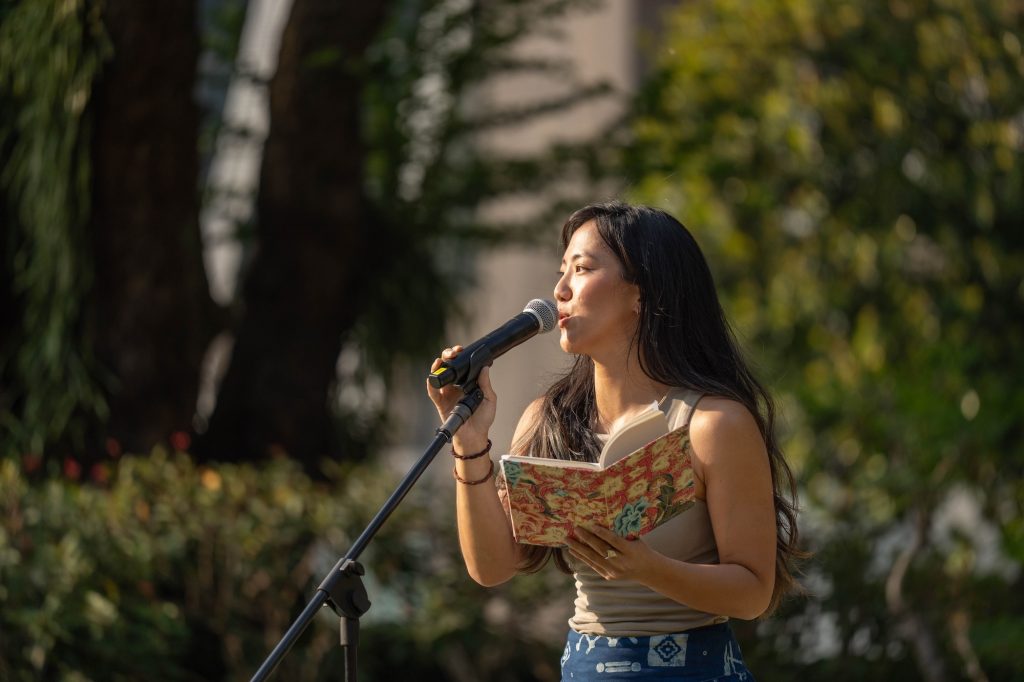
The singsongy voice of 14-year-old Sofwah blasts through the speakers, echoing into the sweltering air above Hong Lim Park.
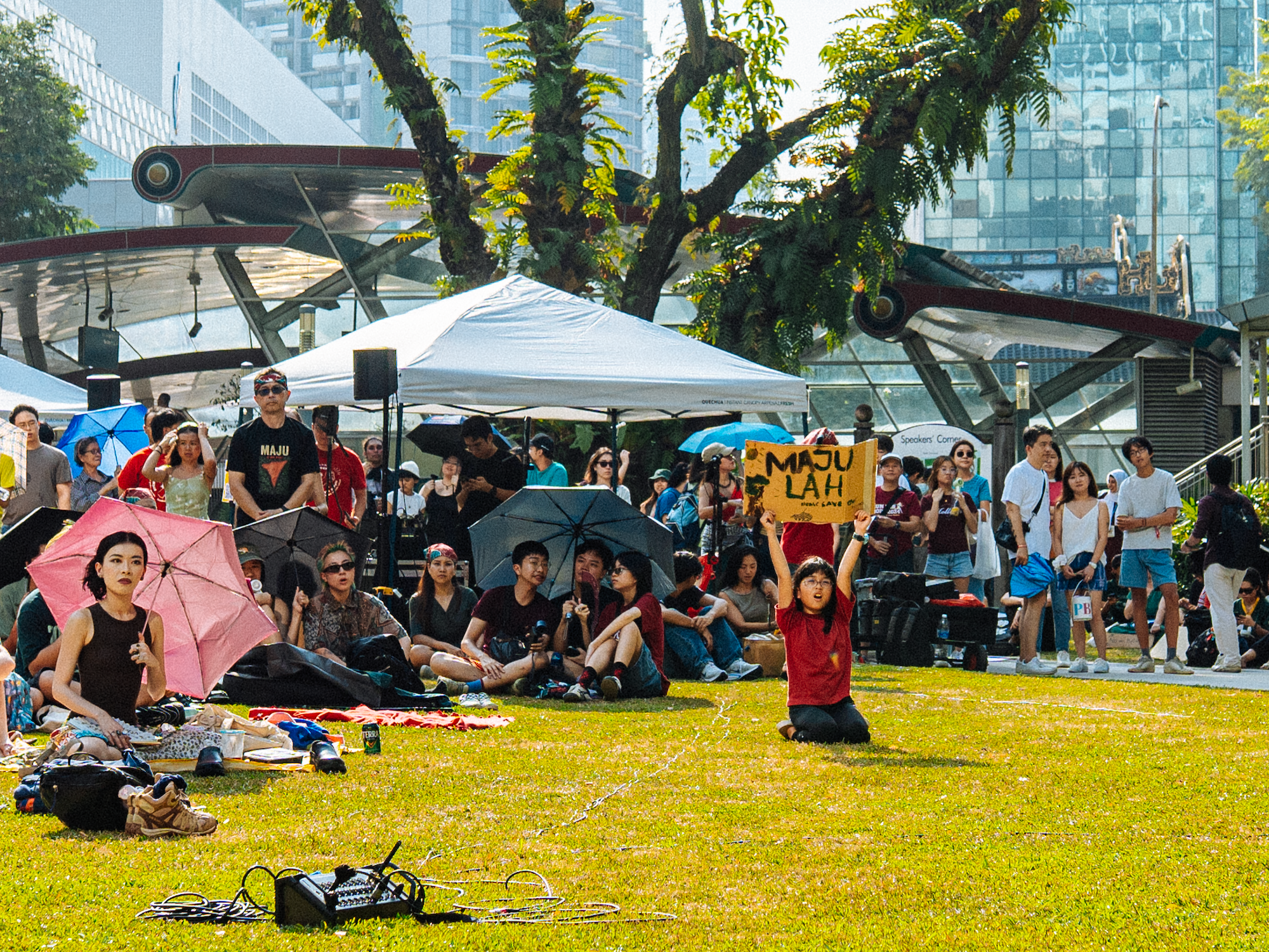
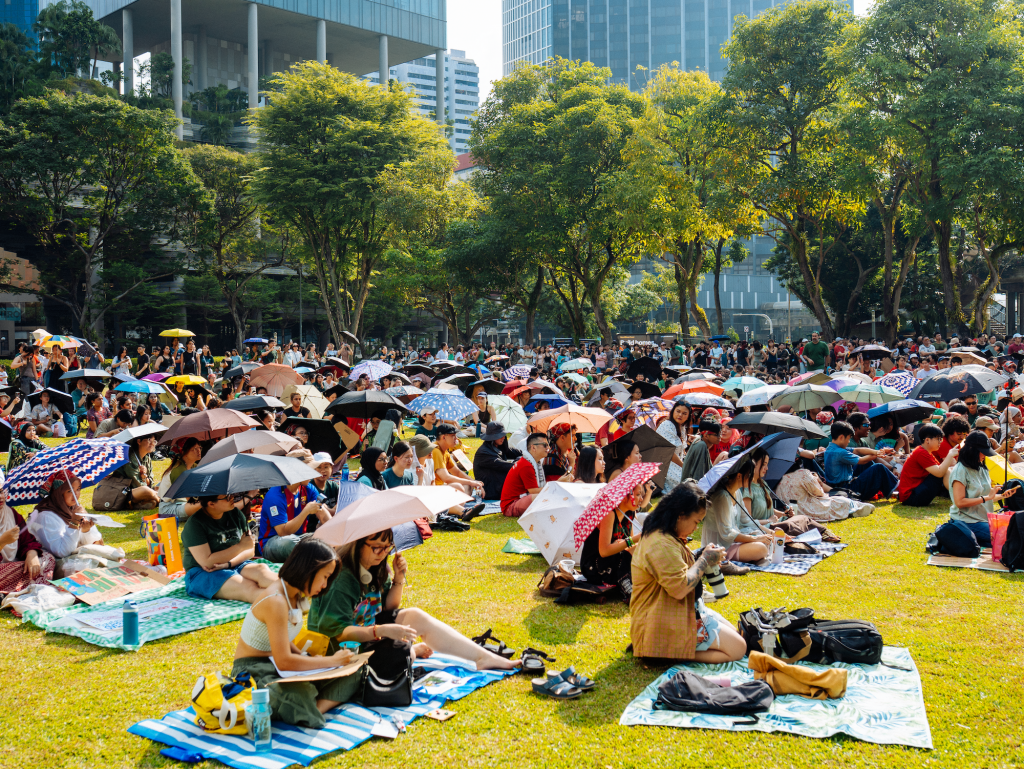
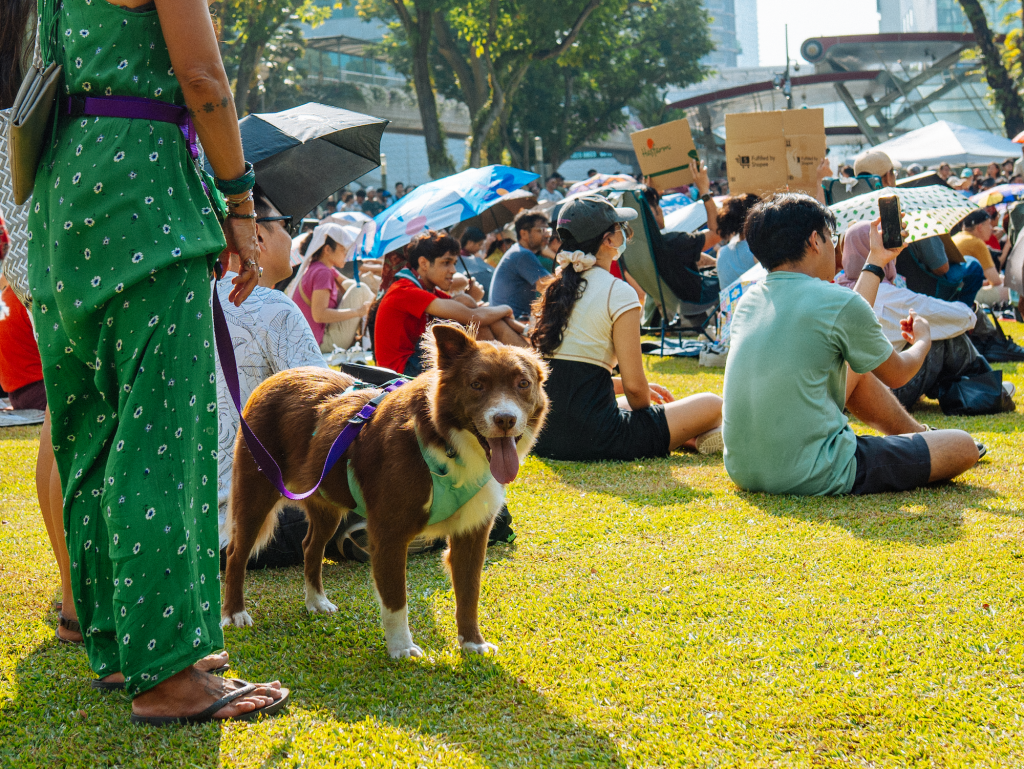
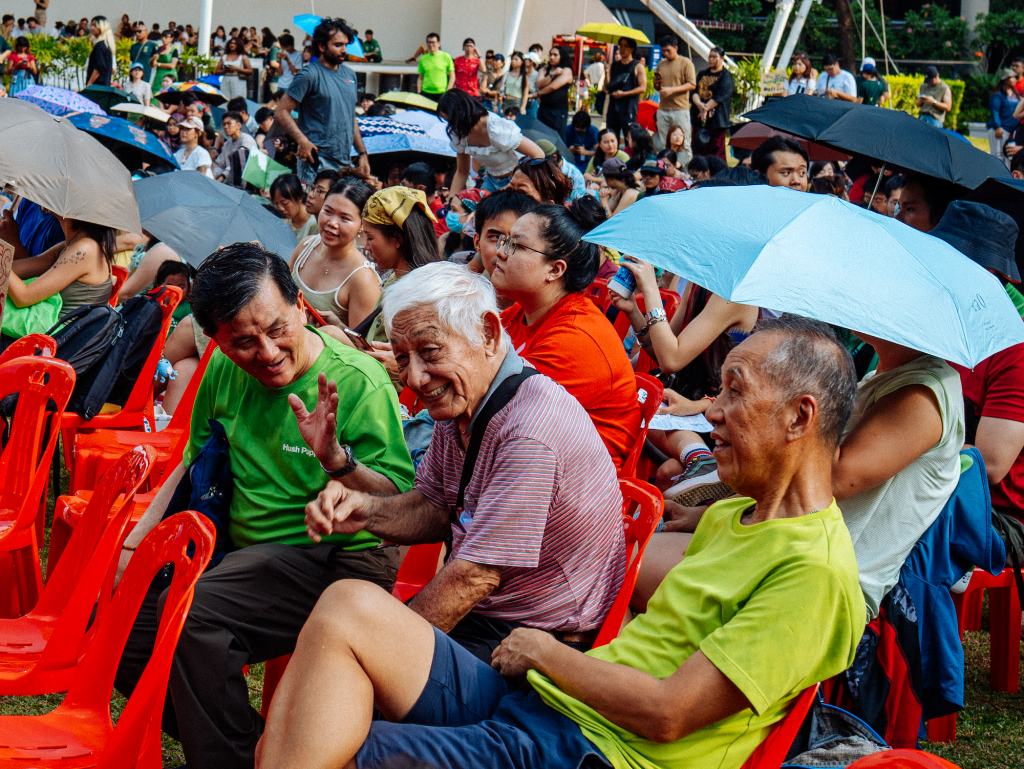
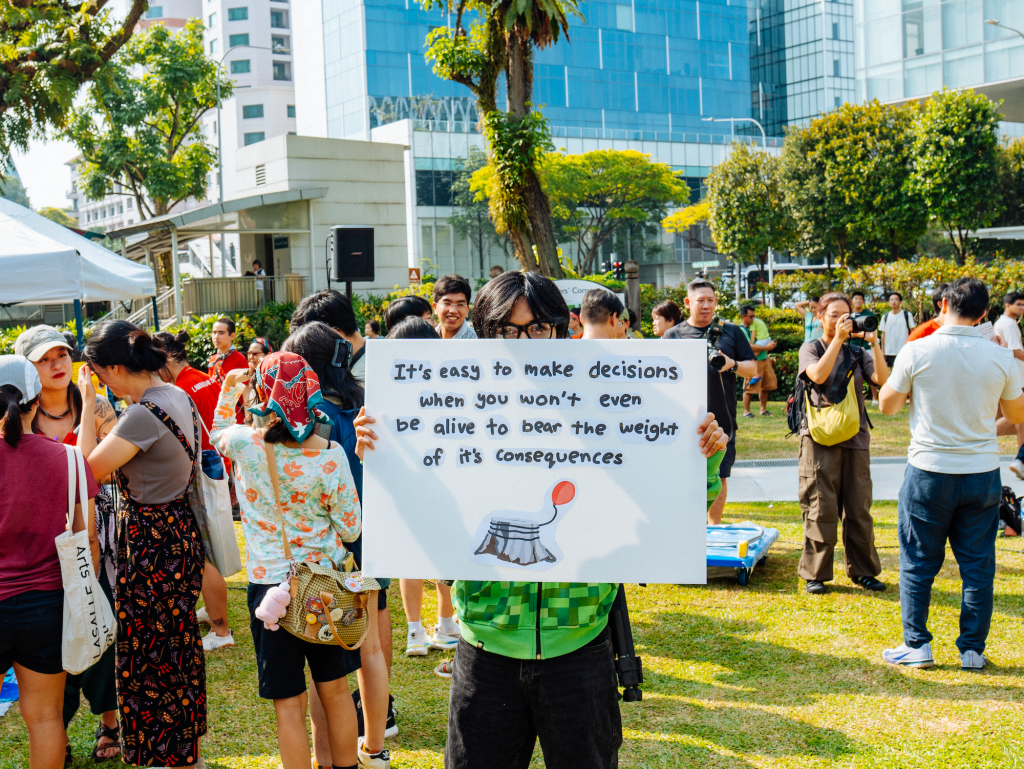
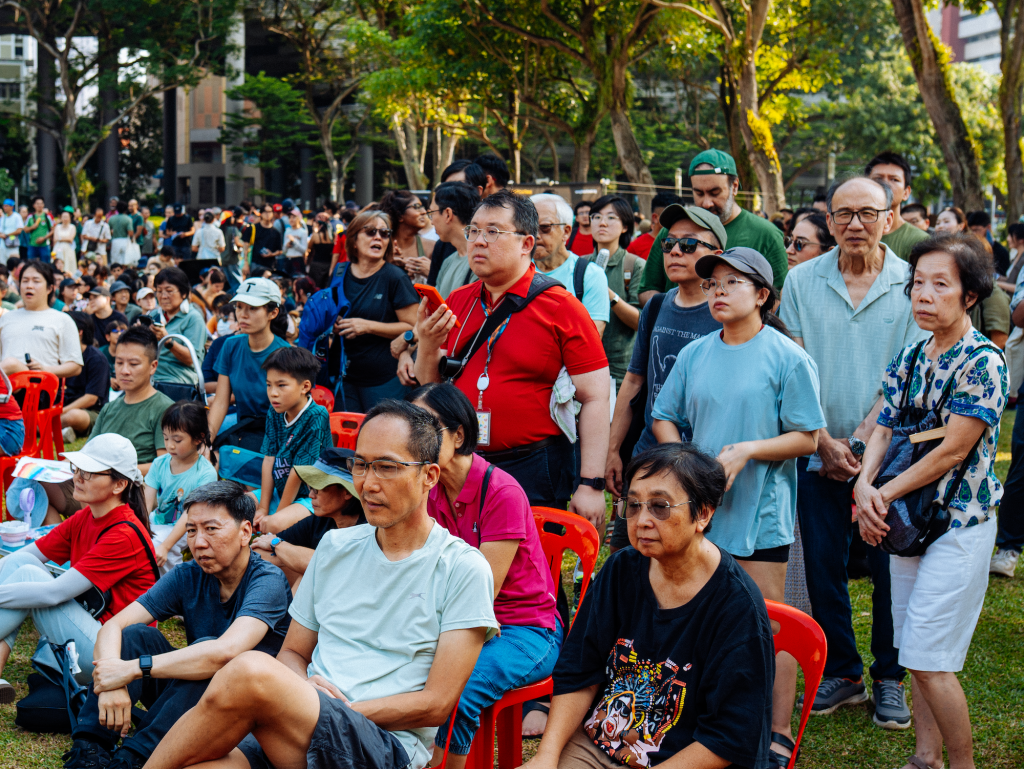
It takes guts to speak in front of a crowd—more so at a massive Sunday rally at Speakers’ Corner. The young girl is not alone in her solidarity with the environment: over 2,000 Singaporeans (according to rally organisers) have shown up on a scorching Sunday afternoon, baking under a sun that refuses to let up.
It’s tempting to seek shade under the few trees that encircle the park, as some attendees have—the air there is also cooler. No doubt, fewer trees will mean more days like this one. Still, most attendees have brought their umbrellas and Jisulife handheld fans, ready to brave the elements for a protest.
Rain or shine, the thousands of people here would have turned up anyway for a collective pressure relief valve after weeks of public outcry over redevelopment plans affecting Maju Forest and the greenery around Gillman Barracks.
Many have been involved in the climate fight for years; others like the residents of Clementi and Telok Blangah are directly impacted.
But a few themes keep surfacing: Singapore’s natural spaces are worth protecting, the public wants a real say in development plans, and our current definition of maju—progress—needs rethinking.
Concrete, Of All Things
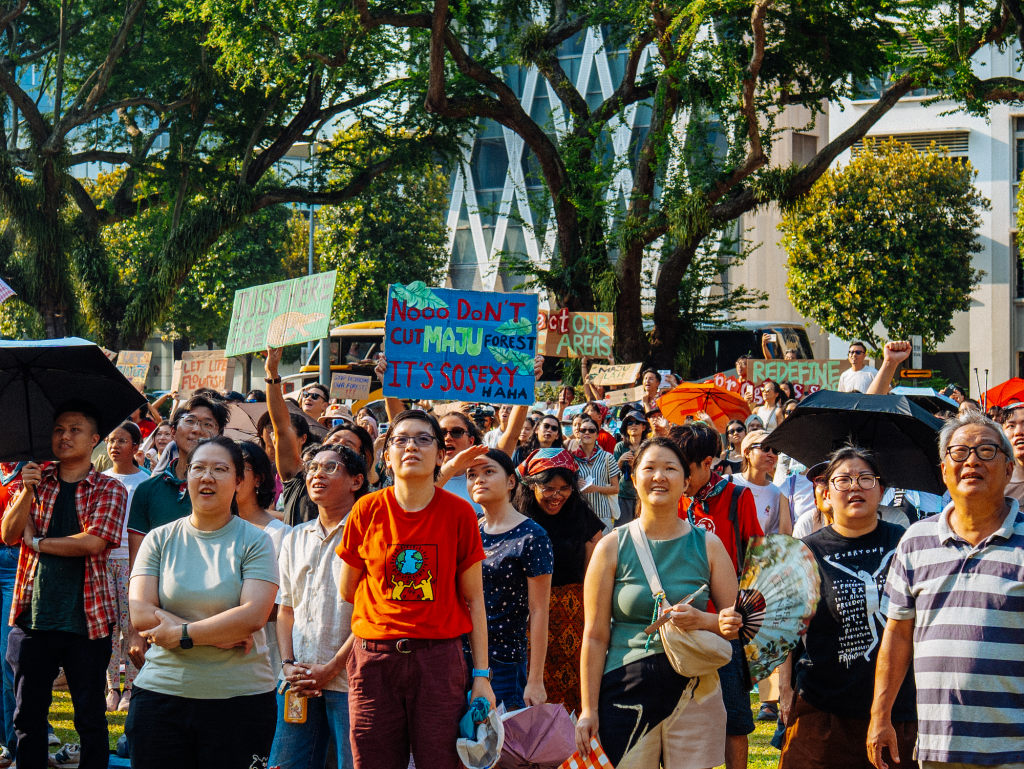
In the months leading up to Maju For The People, the government’s redevelopment plans fell on nature spaces like dominoes.
First came the Long Island Plan, which puts East Coast Beach in line for redevelopment over the next decade. Then it was announced that Gillman Barracks would be proposed for mixed-use housing and two-thirds of Maju Forest would be proposed for public housing. Then came the public outcry—bigger and louder than what it was for Dover Forest or the “erroneous” clearance of the Kranji woodland.
Two days before the rally, Minister of State for National Development Alvin Tan said the government would adjust how much greenery it clears. Even so, he was blunt in his framing about what that meant: “fewer homes” for “fellow Singaporeans”.
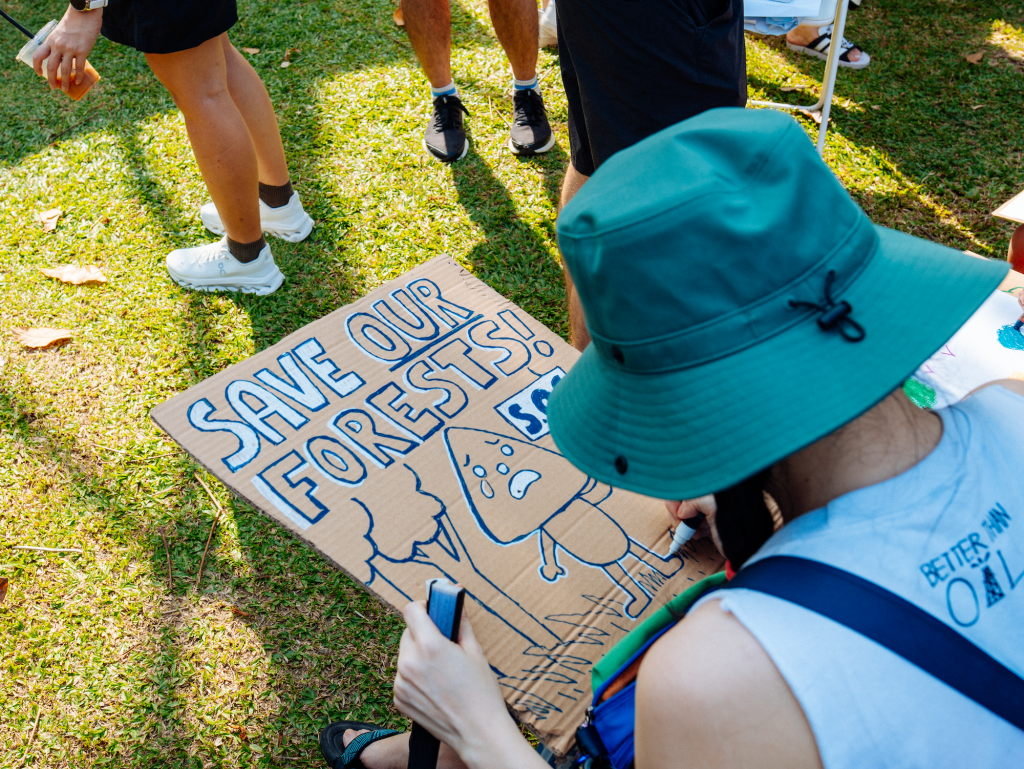
RICE covered the inaugural SG Climate Rally back in 2019. Back then, Grace Yeoh observed an obvious cross-generational divide between the fiery young and indifferent old.
While the scale of the inaugural turnout remains strong, seeing more people from the older generation makes one thing glaringly different from seven years ago: we all want a say in the present lives we live and the future Singapore wants to build.
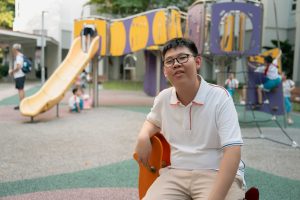
This is Andre’s first rally. The 30-year-old tells me his sensitive skin makes most outdoor activities less than ideal, but he was determined to add to the numbers today.
“I am far from the last person to be affected by weather, by changing tides—and I live along the coast. I am directly impacted by the Long Island Plan, and I can’t imagine what it’s like to watch your entire landscape completely change within your lifespan to make way for concrete, of all things.”
I ask Andre what stops some people from showing up like he does, even if they’re equally affected.
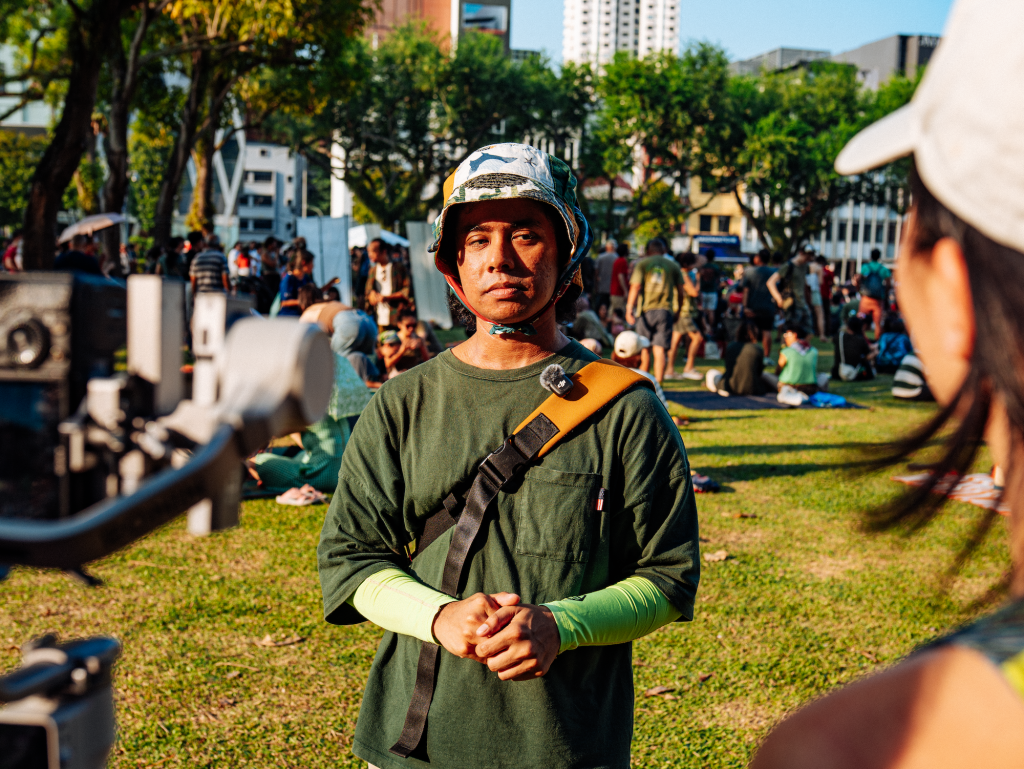
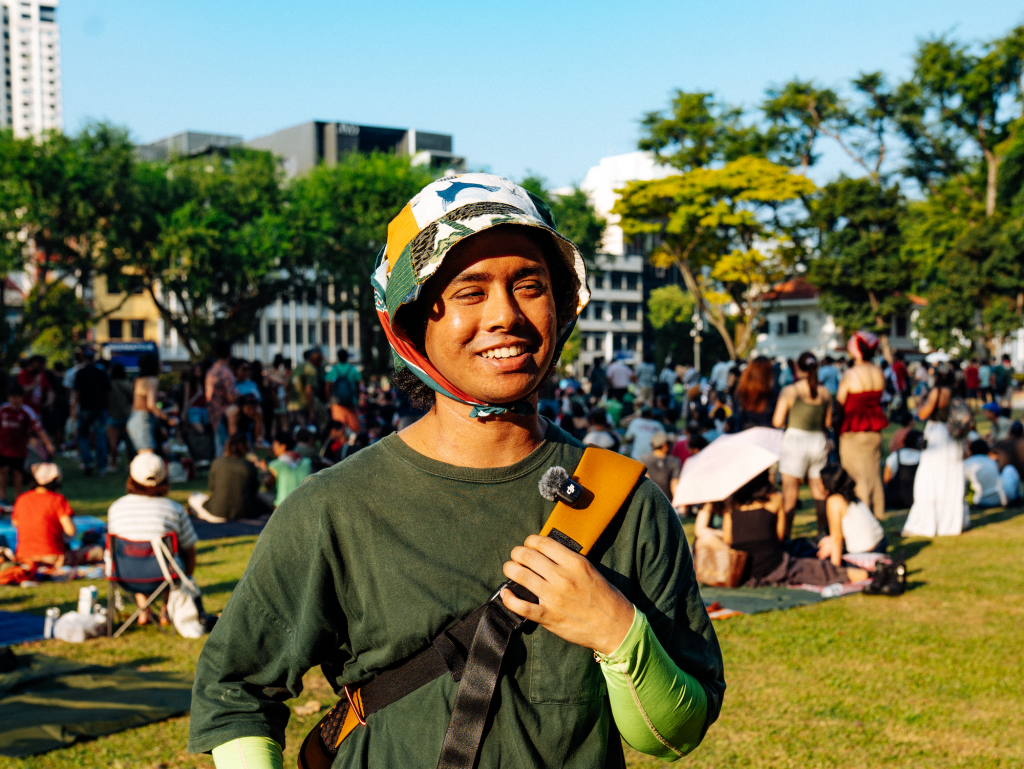
“Being here in Singapore can be very tiring, and it can be very comfortable as well. The moment you start caring about something and expend extra energy, you feel powerless.”
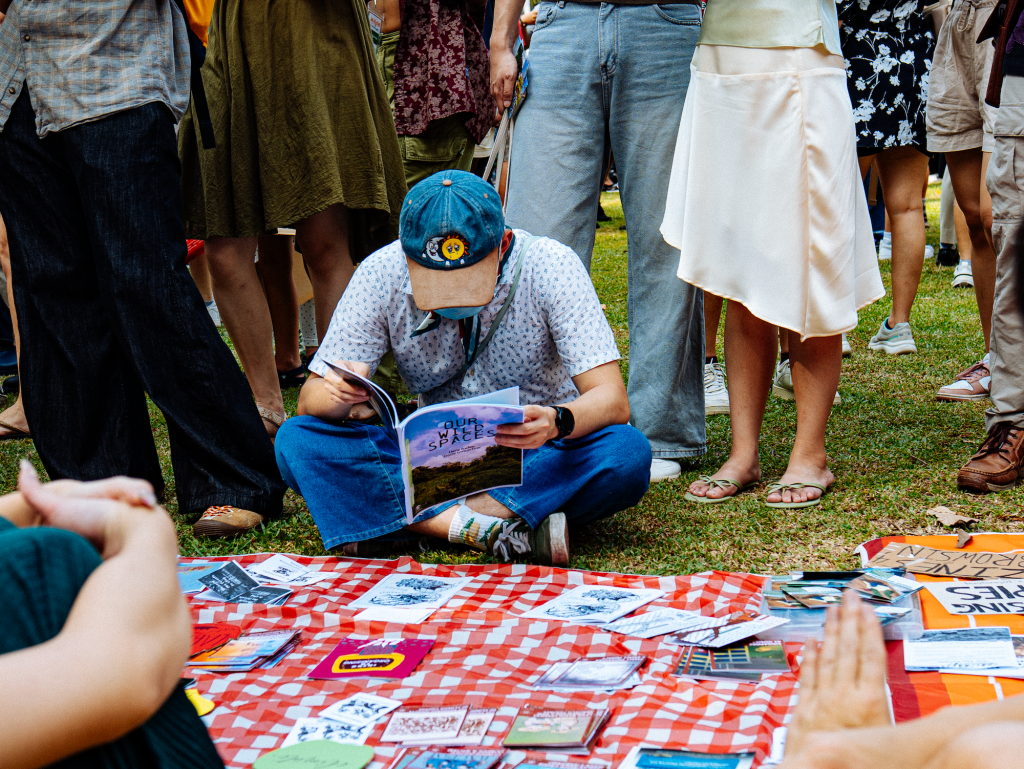
“It took me a lot of energy to overcome that initial hump—to feel like I could even attend a rally beyond just signing online petitions or talking about it with friends,” he admits.
“Because if I care about it, most of my friends care about it as well.”
‘Singapore is a Giant Heat Sink’
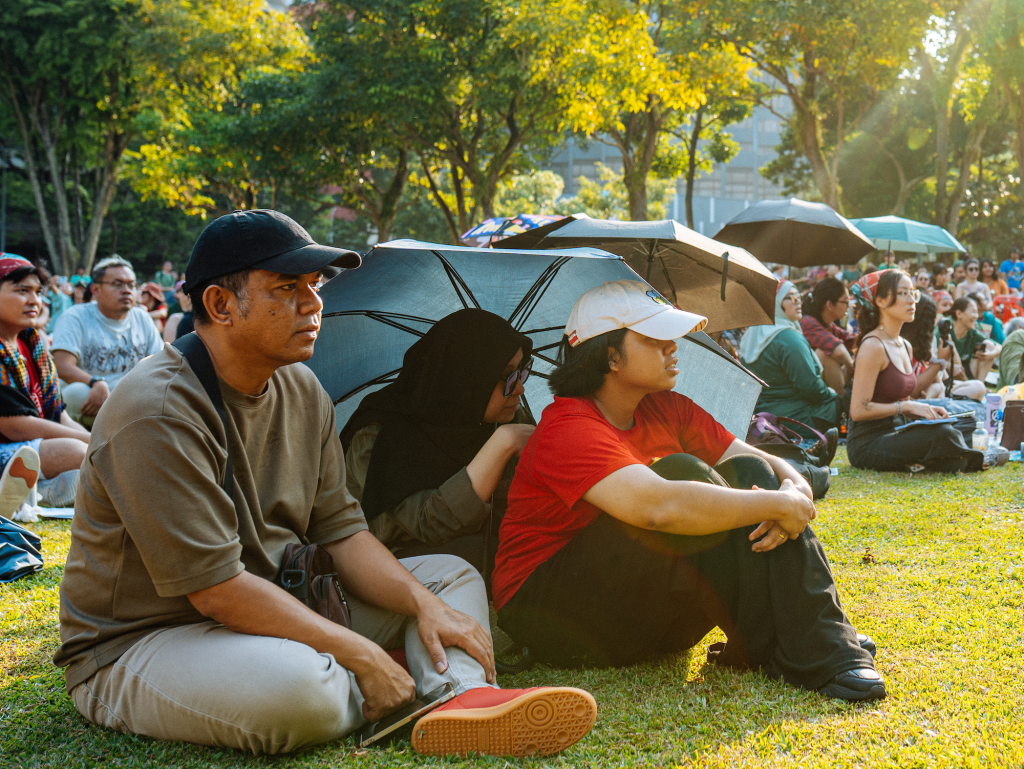
I find OM hanging out on the outskirts of the park. The energetic 60-year-old writer admits that he only came because his wife wanted to attend the rally.
“The first home we bought was next to Telok Blangah. It was so green that when I came to town, I had an adverse reaction.”
Jadedness hangs heavily on every word he speaks. Even if he made it sound like he was dragged to the protest, he had plenty to critique about Singaporean capitalism—I can’t say I was ready when he brought up the evils of wealth inequality, immigration, or Singapore’s surveillance culture. But go off, king.
I couldn’t help but ask how he feels right now in the midst of it all at Hong Lim Park. Surely, with the massive turnout today, there is hope in maju for all?
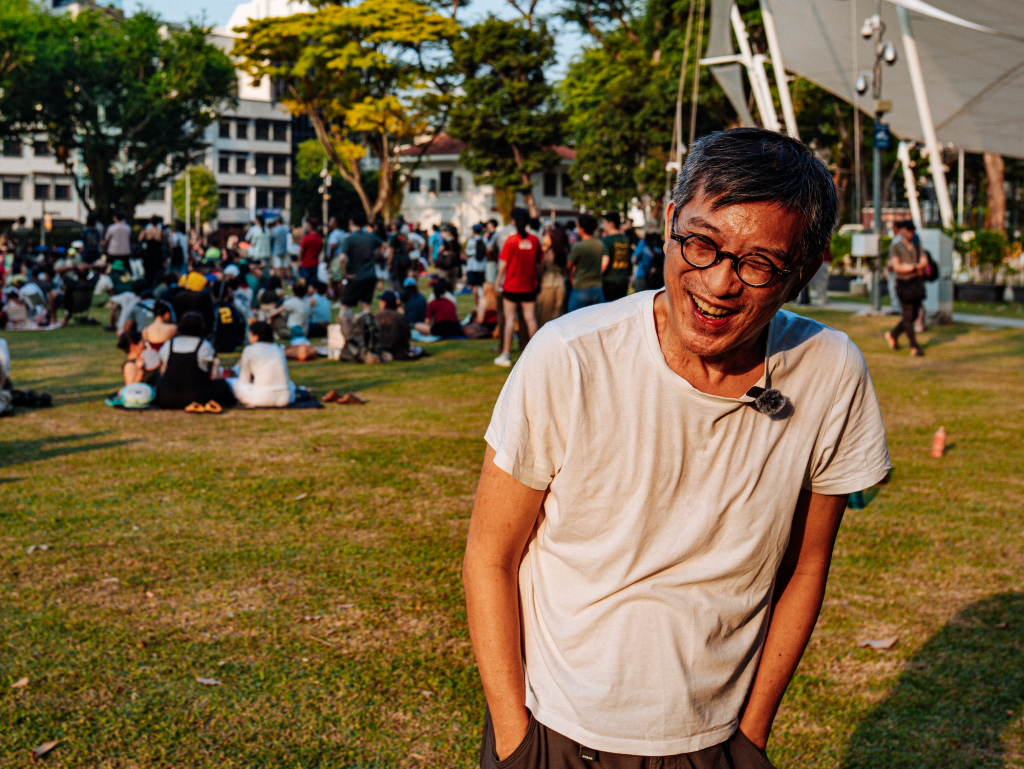
“I’ve learned not to feel anything—if I really were to feel something, I would go crazy in this country. No matter what happens, [Singapore’s] business machine must go on.”
“Singapore is one of the worst offenders of waste, heat, light pollution—all the bad stuff,” he continues. “Can we really hold our ground and keep whatever green spaces we have left?”
I feel dazed after talking with OM. Is he right? Is Singapore doomed? If he’s that jaded about our country, why did he still pick up an empty Luckin Coffee cup that was littered on the grass? As cynical as Singaporeans can be, we can be equally endearing.
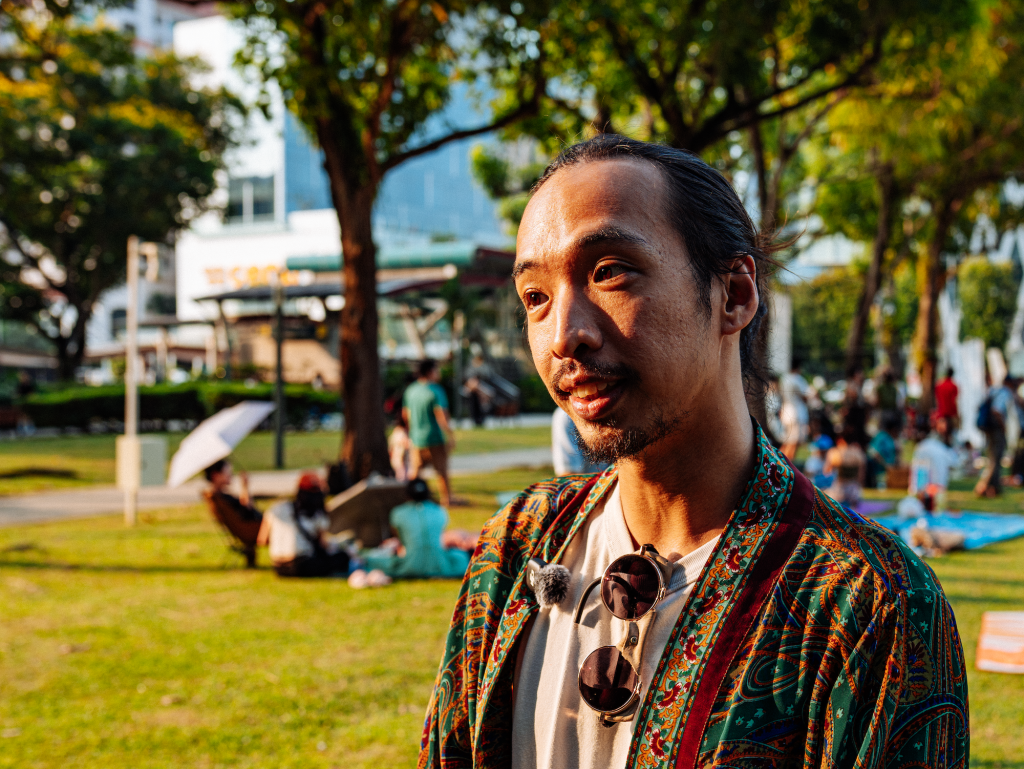
But what’s more surprising is my encounter with Mark, a 34-year-old nature guide. I expect sentimentality from him, but he aptly points out that beyond emotions, the rally needs to offer something constructive, not just noise.
“Maybe everybody was feeling a little bit frustrated at the start, but it’s not useful to harp on that negative feeling,” he offers, smiling. “Like, what are the solutions that we have, and how can we be creative about it, and how can we channel all this frustration that we feel towards creating a more green society?”
“We have the responsibility to be good stewards of the land and the spaces that we live in. That looks like considering what its best interests are as our own best interests.”
Environmental Capitulation
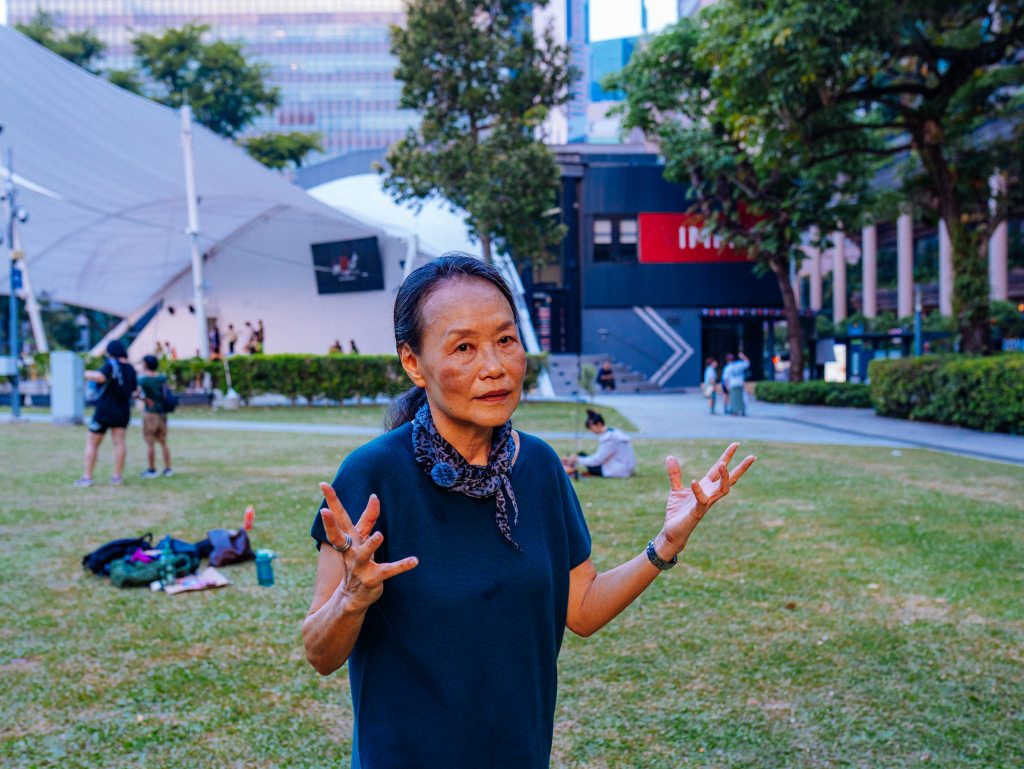
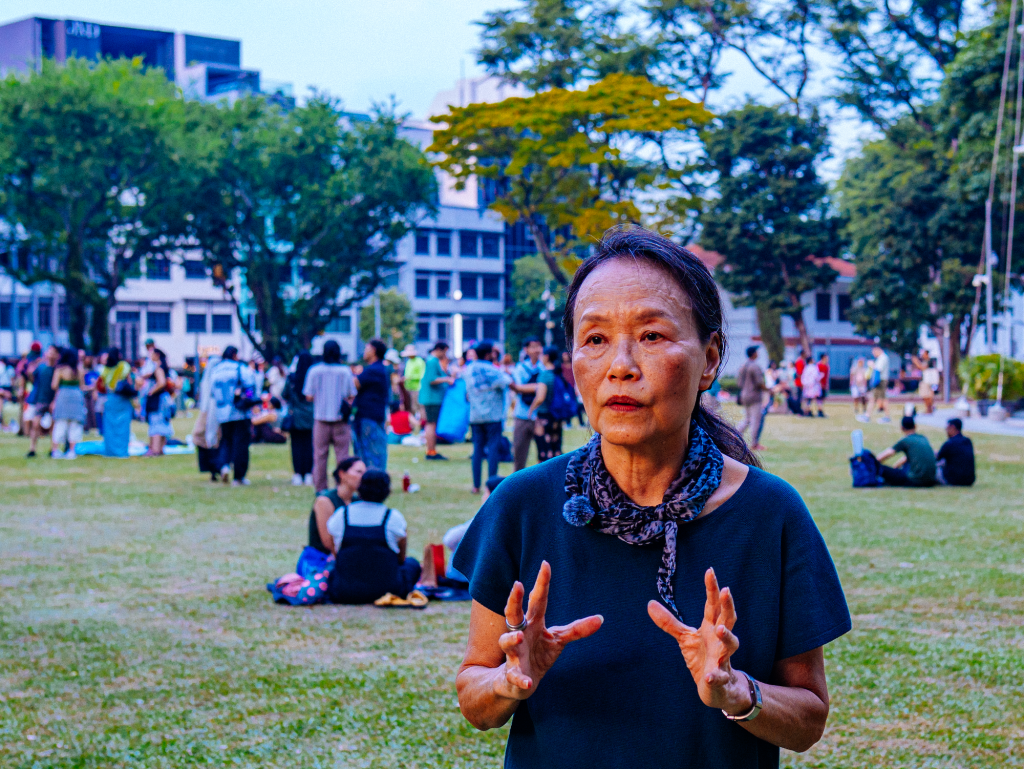
If one group’s connection to these nature spaces cuts deepest today, it’s the residents who live near Maju Forest.
“Outrage is something we cannot articulate among our residents,” says Joanne.
A Sunset Way resident in her 60s, Joanne shares how the news of Maju Forest was broken to her fellow residents: an A4 notice that was stuck in the clutter of notices at the lift lobby. She recalls having to tell some of her neighbours—older Chinese aunties—that Maju Forest was going to be cut down.
“They said ‘Huh? I don’t know, leh.’ They couldn’t make out the English print.”
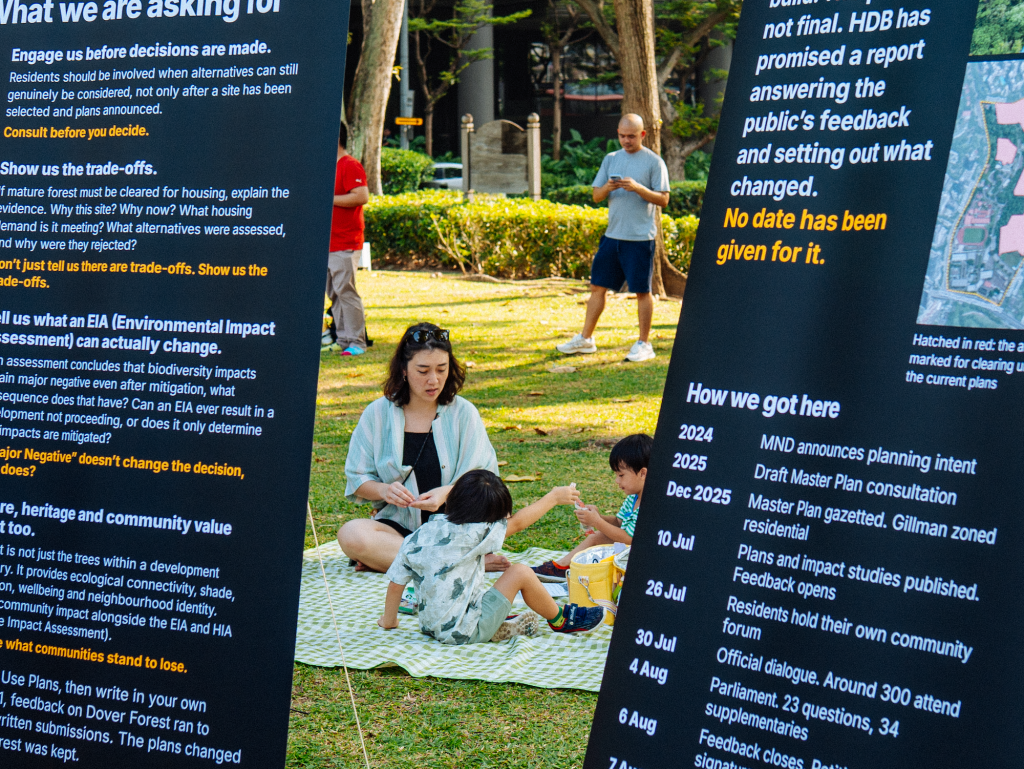
The more I listen to Joanne, the more I’m convinced that public participation wasn’t a priority when the proposal first emerged. Is it really surprising that citizens refuse to yield to pre-determined decisions that don’t seem to factor in alternative viewpoints?
The protesting, the chanting, the frustration—all of it is just a yearning for genuine involvement in response to feeling locked out of the decision-making room. The people are tired of not being heard. Or rather, they’re tired that even if they are, the outcome lands exactly where it would have been anyway.
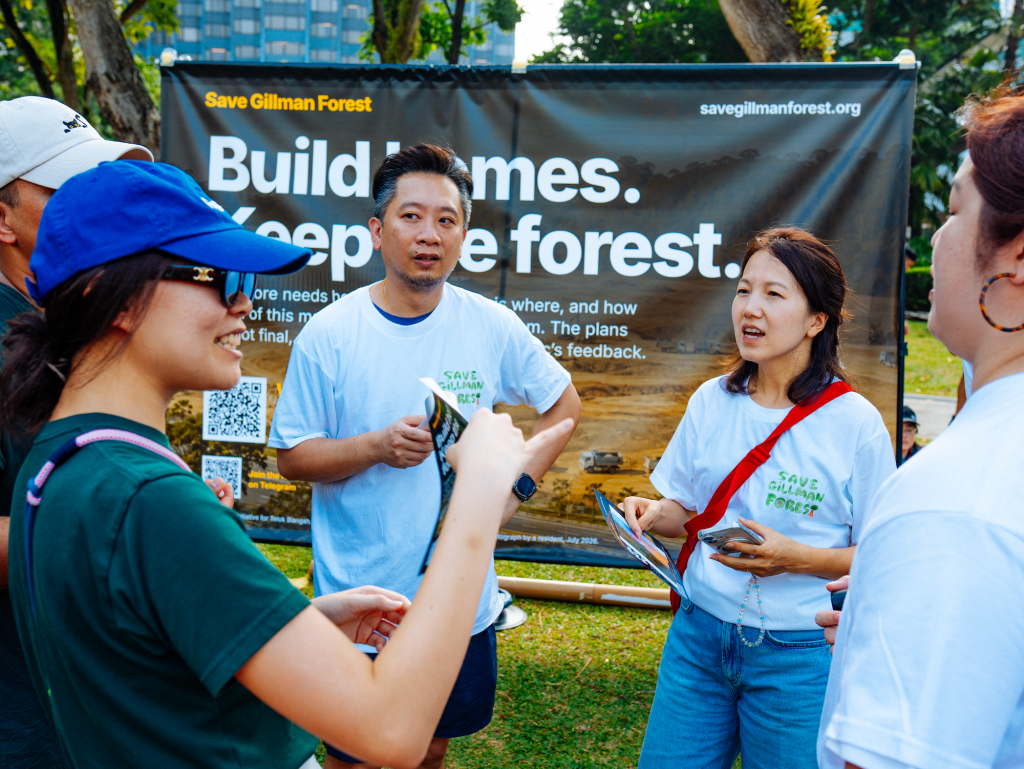
“I think it’s too easy to default to clearing a forest for homes. I call it ‘environmental capitulation’ because here we are talking about innovation and progress,” Joanne affirms.
“It’s time we become more imaginative about our urban infrastructure and how we can reimagine building around nature rather than cutting it down in place.”
After the Heat
There’s barely any wind passing through Hong Lim Park. If Singapore is a giant heat sink, we’re certainly feeling it now. Close to 7 PM, as attendees start to trickle out of the park, looming rain clouds give in. Mother Nature held out long enough for rallygoers to fight for her.
I always thought maju—or progress— meant one thing: keep doing, innovating, building. After talking to all those rallygoers, I’m confident that’s not entirely true. Maybe, ironically, the truest symbol of progress for our country is doing nothing to our nature spaces at all.