Andriel Cheong, 24, is a recreational angler trying to capture and help document the native fish species of Singapore—as much as possible—before future developments take what’s left of our marine biodiversity.
In this RICE Community Voices piece, he argues that if we can’t stop what’s coming, we can at least understand and confront what we’re losing.
All images courtesy of Andriel Cheong unless otherwise stated.
Back in April, I was shuffling through a grass patch beside the Marina Coastal Expressway, heading towards a fishing spot where mackerel had been caught recently.
I was working my jig—a lure mimicking baitfish—for hours in the sweltering heat with nothing to show for my efforts. I was losing focus, half-conceding that I might leave empty-handed.
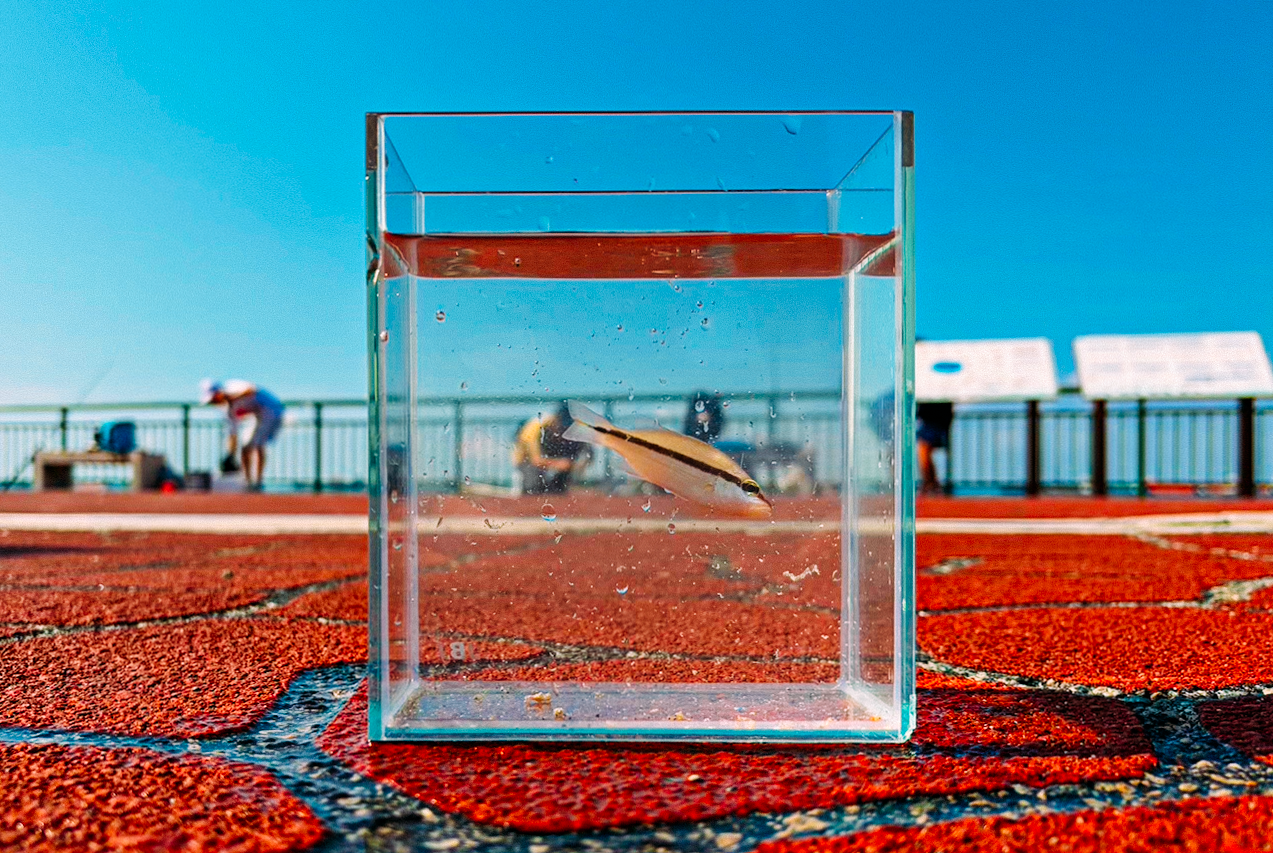
On one mindless cast, however, something bumped my jig. I yanked my rod upwards instinctively but felt nothing. So imagine my surprise when I saw a brownish, finger-length critter latched onto the jig when it surfaced.
Tomiyamichthys russus. The ocellated shrimpgoby.
When I sent a picture of it to my fishing buddies, the group chat exploded.
Now you’re probably wondering—why are these idiots losing their minds over two grams of protein?
Turns out, this particular shrimp goby is a rare species in Singapore, and I’d inadvertently caught it from a spot just minutes from the CBD. Tomiyamichthys russus has been sighted several times in Singapore waters, but this is one of the few local hook-and-line catch reports for the species.
The next day, a Straits Times article detailed the advancement of plans for the upcoming Greater Southern Waterfront, which was to be built squarely on this fishing spot.
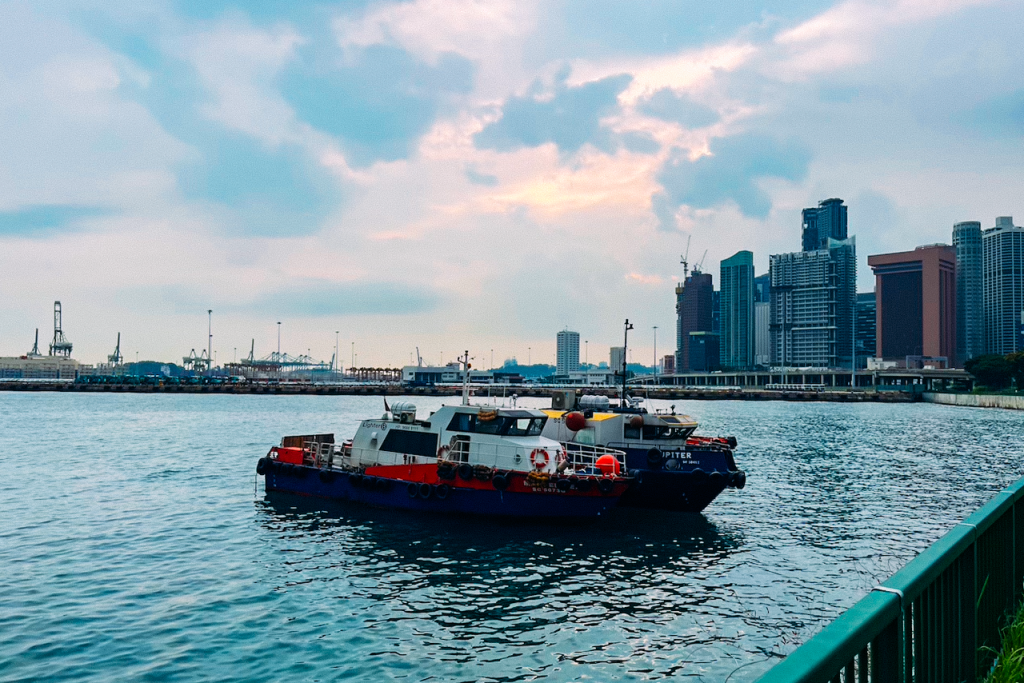
Another day, another reclamation, another deadline.
I wondered how long before the barriers go up. I thought about everything underneath—the marine life I’d spent years trying to document—eventually buried under metric tons of sand and concrete.
And I wondered how many of us would even know what we’d lost.
Gotta Catch ‘Em All
I wouldn’t have cared about Singapore’s marine biodiversity so much if it weren’t for fishing.
I still can’t articulate why fish captured my childhood imagination, but one of my earliest memories growing up in the mid-2000s was catching tiger barbs at Bishan Park with my mum using modified milk cartons.
Like the Little Mermaid, perhaps I was intrigued by life in a world I couldn’t inhabit, except I’d rather keep my existing appendages.
Later on, I discovered Pokémon and the gamified joys of cataloguing creature encounters. And with my mealtimes spent watching fishing documentaries on TV, the stage was set for my teenage foray into fishing.
I’d been fishing casually for years when I connected with Jiayuan and Aidan—members of Singapore’s small species-hunting fishing community—through school and over Instagram.
As someone who grew up catching fish and Pokémon, it was quite natural for me to join them in their adventures.
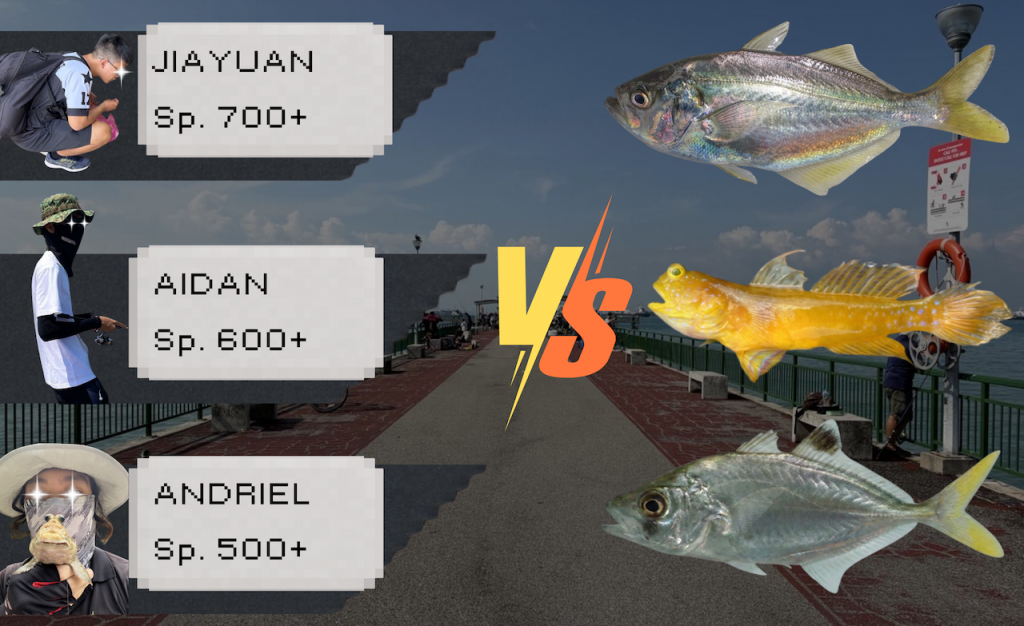
But what exactly differentiates species hunters from the mainstream fishing community?
While many anglers appreciate various species of fish, species hunters actually attempt to catch ‘em all.
And I really do mean all.
Species hunters share the same incurable brain damage that pushes them to capture any and every fish species by hook and line. The size of the fish doesn’t matter, and neither do their habitats.
In the hunt for toothy sharks and tiny gobies, we’ll arm ourselves with appropriate equipment and get into the unlikeliest of places (and positions) for the sake of adding yet another species to our ‘lifelist’—a curated, personal photo collection of these fishes.
Perhaps the most amusing aspect about this community is how often you’d meet anglers driven to their wits’ end by the smallest of fish.
Just picture a full-grown adult being brought to their knees in a muddy longkang because a peanut-sized fish they’d been searching for years is sulking in a puddle, refusing to bite. Gotta catch em’ all, right?
Jiayuan and Aidan go above and beyond because they’re interested in taxonomy. They pore over academic papers and donate their catches to the Lee Kong Chian Natural History Museum as reference specimens to aid researchers.
Me, I’m just here to touch (sea)grass. There’s also that odd thrill in finding life I didn’t know could exist in this city.
But we’re all here for the same thing: the fish.
“Being part of tropical Southeast Asia, a known biodiverse region, (Singapore) holds a surprisingly large variety of fish species,” Jiayuan quips.
“Our fish biodiversity is actually rather disproportionate to our tiny landmass.”
More for us to catch, document, and release safely back into the waters?
“Yeah, too many even. There’s no way any of us are going to come close to catching every species. Too many rares, too many unrecorded ones.”
So much for my National Pokédex.
‘We Have Cool Fish at Home.’ The Cool Fish at Home:
Thanks to decades of extensive land reclamation, countless marine habitats along Singapore’s coasts have already been desecrated.
To date, we’ve obliterated around 60 percent of our coral reefs and 90 percent of our mangroves to scratch that development itch. Though with every announcement of yet another development project, this itch is sounding more like a chronic skin rash.
That said, our marine fauna have remained remarkably resilient in the face of continued dispossession, rebuilding their communities across swathes of reclaimed land and urban development.
Even the renowned Bedok Jetty, touted by us species hunters as a legitimately world-class fishing spot, was actually built on reclaimed coastline.
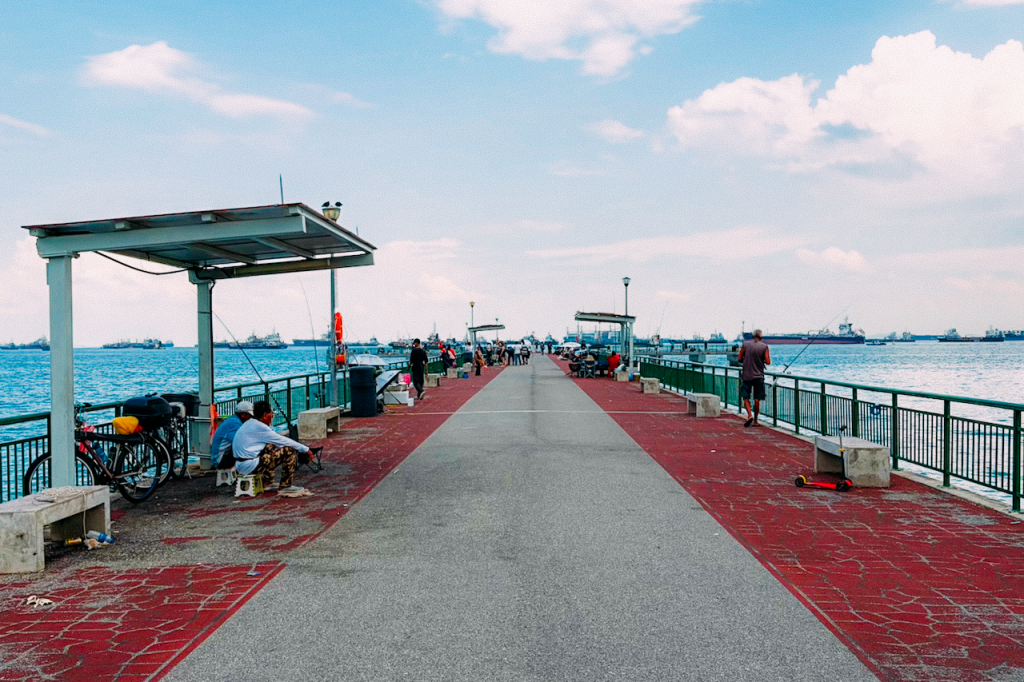
It’s hard to appreciate these habitats without knowing their inhabitants, though. Let’s meet some of them.
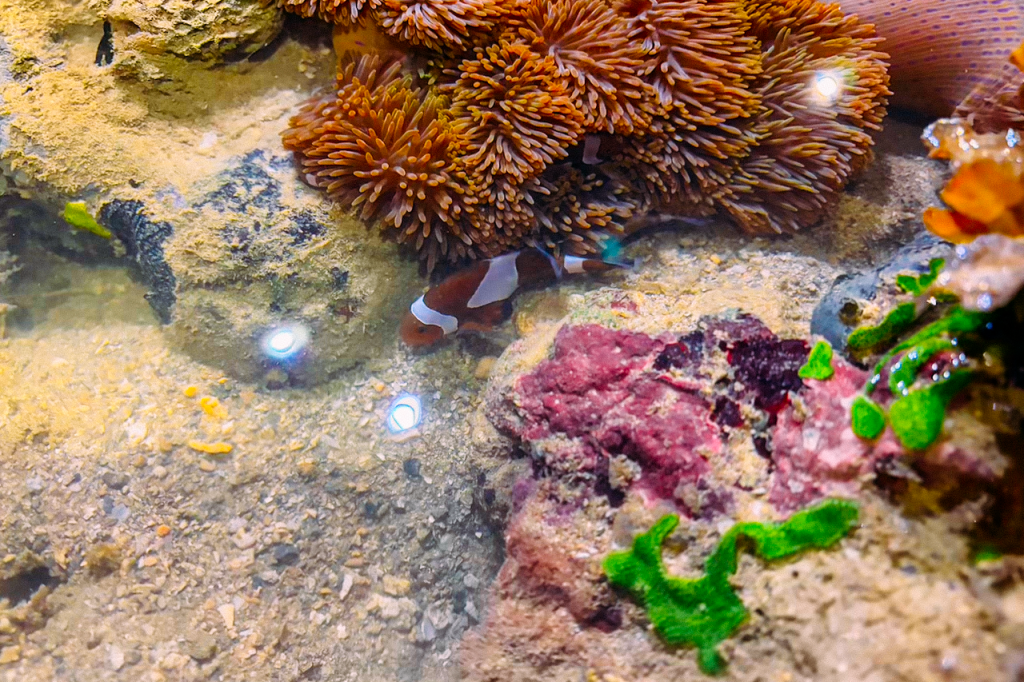
Did you know that Singapore is home to ocellaris clownfish (Amphiprion ocellaris)? Many would recognise it as the iconic Nemo.
On my recent Pulau Hantu trip, I was lucky enough to see a dominant clownfish matriarch emerge from the tentacles of an anemone, flanked by her entourage of smaller subordinate males. If she dies, her biggest, goodest boy transitions and takes over as the resident queen.
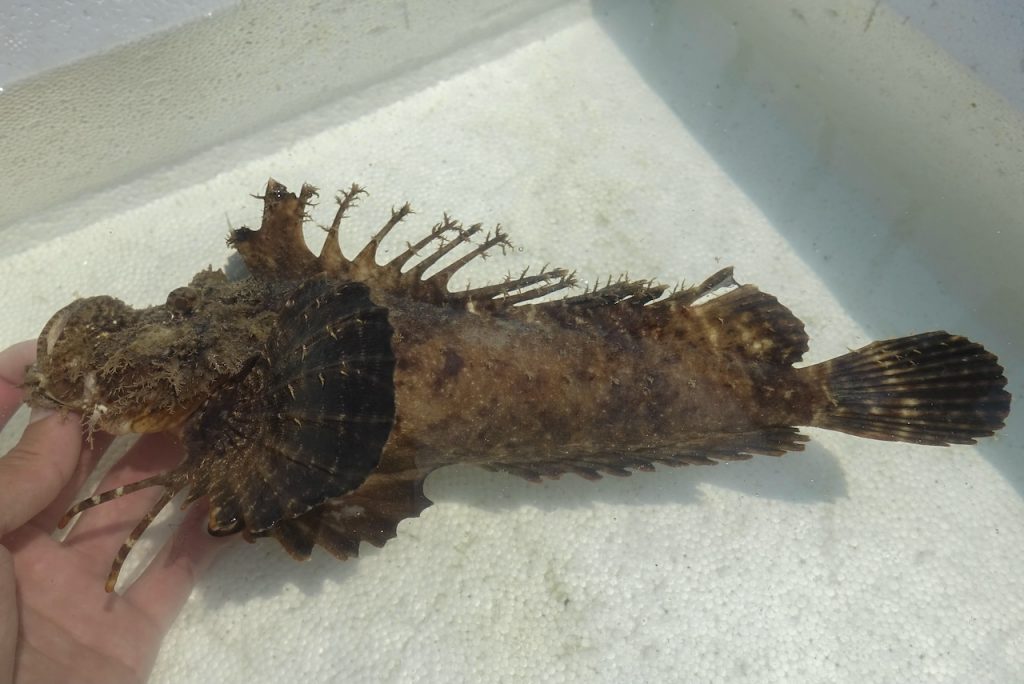
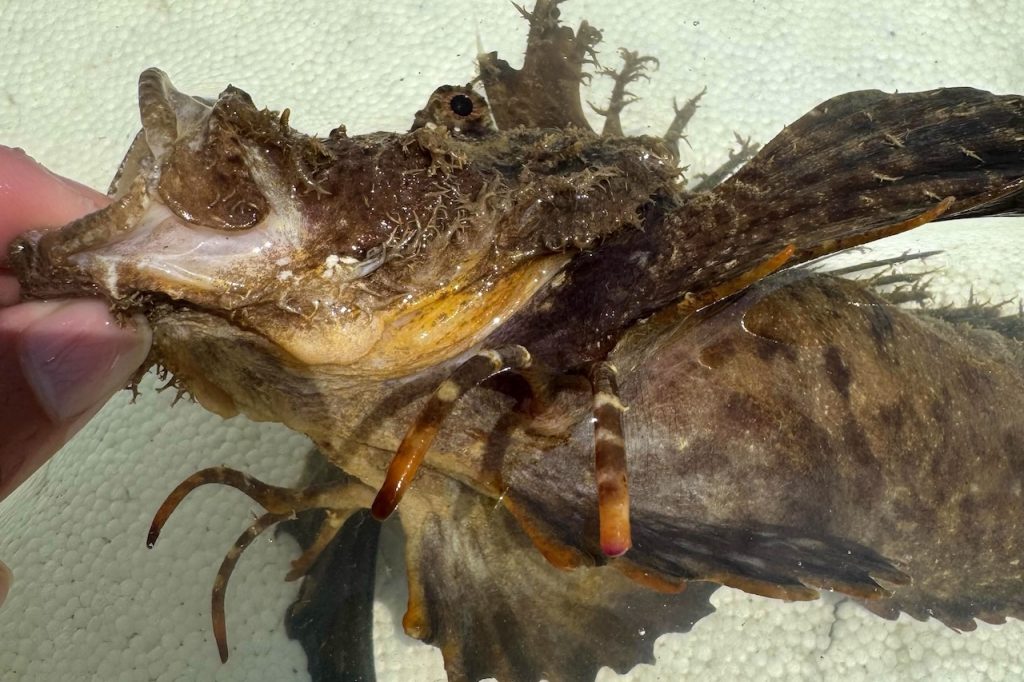
More bizarre-looking species are also found locally. Among these, Aidan points out, the longsnout stinger (Inimicus cuvieri) stands out.
“Most people know about stonefish and their venom, but (the longsnout stinger) also packs a punch.”
Closely related to stonefish, this fish possesses fascinating defensive and offensive capabilities, angling its venomous spines towards enemies while engulfing unsuspecting prey with its cavernous mouth as they pass its often stationary position on the seabed.
“I think its most interesting feature is its modified pectoral fin, though. The lower rays (of the fin) are detached and act almost like limbs that allow it to walk short distances on the seabed, probably to stalk prey.”
Jiayuan adds that the uniqueness of Singapore’s marine fauna lies not in its reefs and its colourful inhabitants. Instead, Singapore’s sediment-filled waters with poor visibility host some peculiar species that have adapted to the environment—the four-pored slender giant moray (Strophidon tetraporus) being one such species.
Potentially the second-longest moray eel in the world, it can reach almost 3 metres in length. Unlike reef-based morays, these serpentine creatures burrow in clayey, silty seabeds in turbid waters—conditions most divers shun.
But as much as we species hunters appreciate these weird and wonderful fish, we sometimes wonder whether people are aware of their presence locally. Or if they even care.
The water seems bluer on the other side. Singaporeans spend thousands travelling overseas and gush over exotic marine life, but many fail to recognise the sheer variety of fauna that persists along our disturbed coasts.
Is visible, charismatic biodiversity—the kind that presents itself readily and conforms to cultural notions of beauty—the only biodiversity worth recognising?
The East Coast Plan
Most Singaporeans are probably aware of both the Greater Southern Waterfront and Long Island projects that would dramatically alter Singapore’s coastlines in the decades to come.
While both projects aim to reconfigure Singapore’s southern and southeastern coastlines for future development and recreation, they also serve coastal protection purposes, especially against climate-induced sea-level rise.
But they’re also expected to negatively impact marine biodiversity, ranging from direct habitat destruction to increased sedimentation.
As much as we species hunters hate to see further deterioration of our marine biodiversity by such developments, we also accept their rationales. Not that we’re given much of a choice anyway.
That’s not to say that the public has not been influential regarding environmental issues. In 2001, Chek Jawa was saved from reclamation because enough Singaporeans were galvanised to call for its preservation.
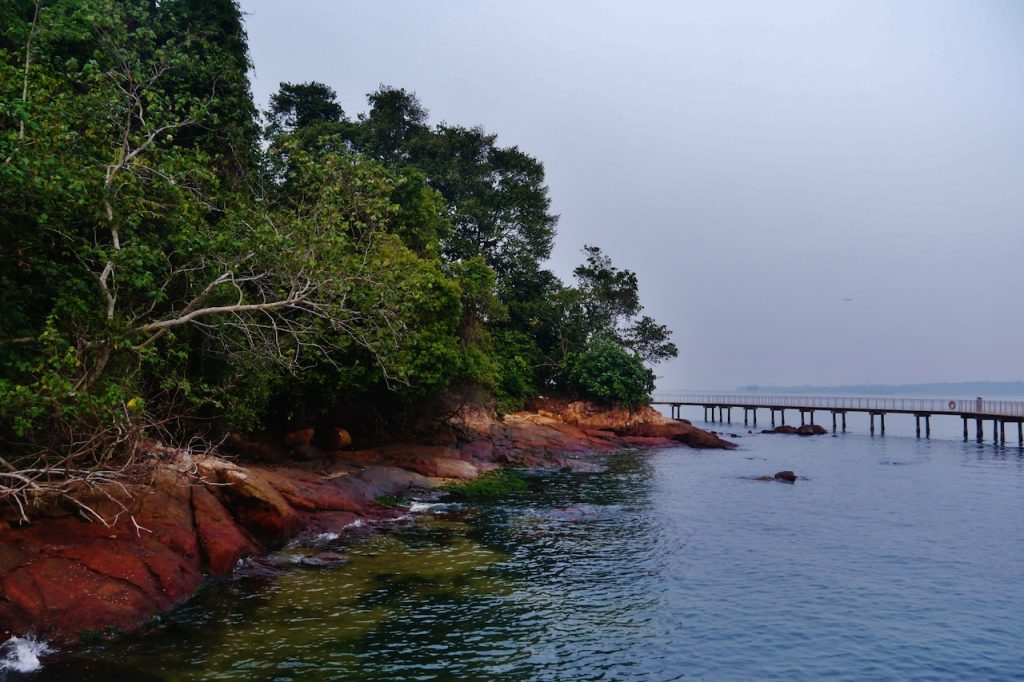
But a reversal like Chek Jawa is unlikely to happen with Long Island and the Greater Southern Waterfront.
Credit where it’s due—the authorities have been open to engagement from the public and civil society. Various nature groups have highlighted the need to take extra precautions and integrate nature-based solutions for both projects, while an online form is available for public feedback on the Long Island project.
Even so, I can’t help but feel that such discourse of co-creation regarding the eventual shape and form of these projects distracts from their destructive character.
In the face of an existential threat, choosing between animals you don’t encounter and the lives of our loved ones—the answer’s all too simple. Marine biodiversity issues are, quite literally and figuratively, ikan bilis relative to the fate of Singapore itself.
Still, a cruel irony emerges. While Singaporeans collectively witness climate-induced biodiversity loss overseas, we seek climate salvation atop the smothered remains of our own ecosystems.
Should Auld Acquaintance Be Forgot and Never Brought to Mind?
Aidan, Jiayuan, and I know that Long Island and the Greater Southern Waterfront will come for these species, as certainly as any terminal diagnosis.
What do you do when there’s no cure? Document everything, and make sure someone remembers.
This usually takes the form of personal photos—AKA our lifelists—and occasional biodiversity records for significant finds.
“It’s a way for us to remember what (biodiversity) we once had, that we lost as developments progressed,” said Jiayuan.
There’s no way every species will be documented. We’re essentially idiots on an impossible mission. But we’ll be damned if we don’t try.
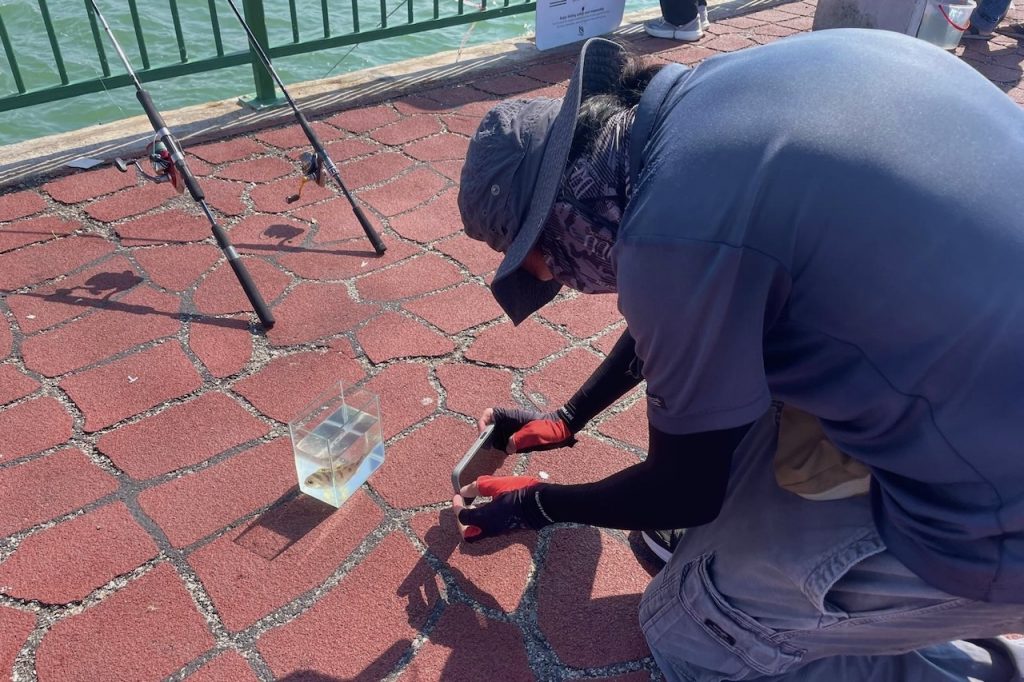
Beyond our personal crusade, though, I don’t think any of us had seriously considered why Singaporeans should even care. Until now, at least.
I ask Aidan why biodiversity should mean anything to Singaporeans.
A brief silence ensues. “Man, my mum has been asking this for years,” he says.
Jiayuan offers his thoughts.
“(Singaporeans) travel far and wide to admire marine life, but is it not bolstering for national pride to know that Singapore has iconic species that you would’ve thought you needed to travel to see?”
Sightings of whale sharks in local waters say it all.
I have a slightly different take.
To commemorate our biodiversity is to celebrate our environmental heritage—to recognise that even after all the irreversible ruin we’ve done to our shores over the years, many creatures still call Singapore home.
In spite of us, they survive in the longkangs, the brackish estuaries, and the habitats we came close to destroying. To document their existence is to recognise them as true natives of this land: the ones who were here before any of us, the ones who’ll still be here long after we’re gone.
Perhaps my greatest fear of Long Island and the Greater Southern Waterfront isn’t simply the slow, impending death of our biodiverse heritage.
It’s that Singaporeans have decided that such a loss is not worth mourning.
For Auld Lang Syne
Weeks ago, I arrived at Bedok Jetty and saw another omen of what was to come.
A barge of solid steel had metastasised at the middle of the jetty, its presence likely related to the Long Island site investigations.
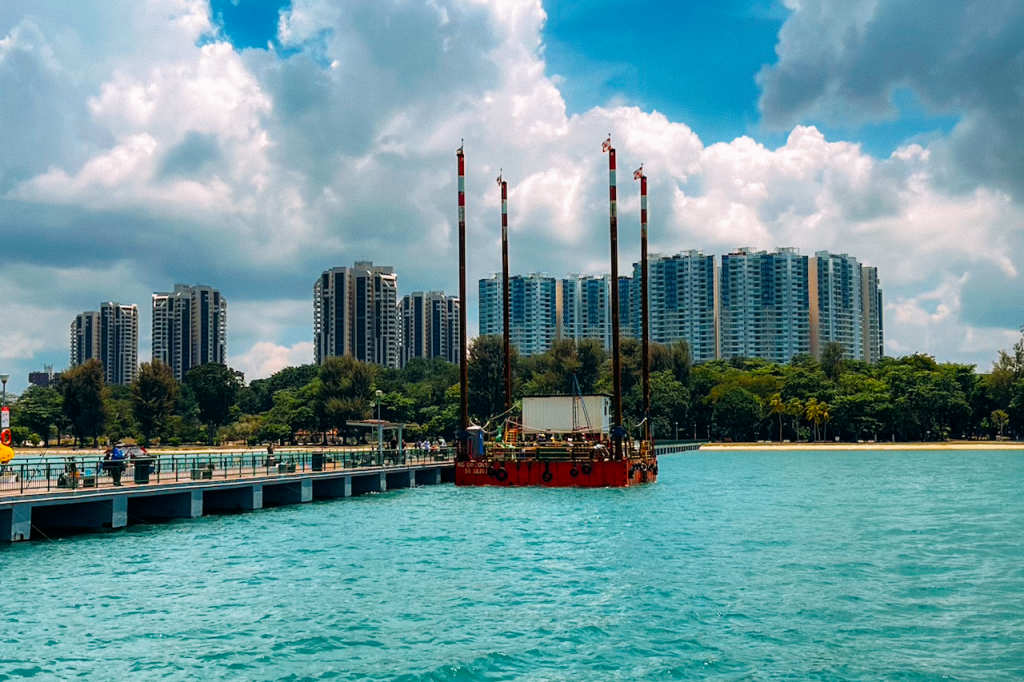
I returned to Bedok Jetty a week or two later, but like an apparition in the night, the barge had disappeared.
Death will arrive soon enough, but not today. The sun still shines on Bedok Jetty for now.
I took one final look at where the barge had parked itself, then made my way to the end of the jetty, wondering what new species I might add to my photo collection.
But how long before it starts looking like an obituary page?