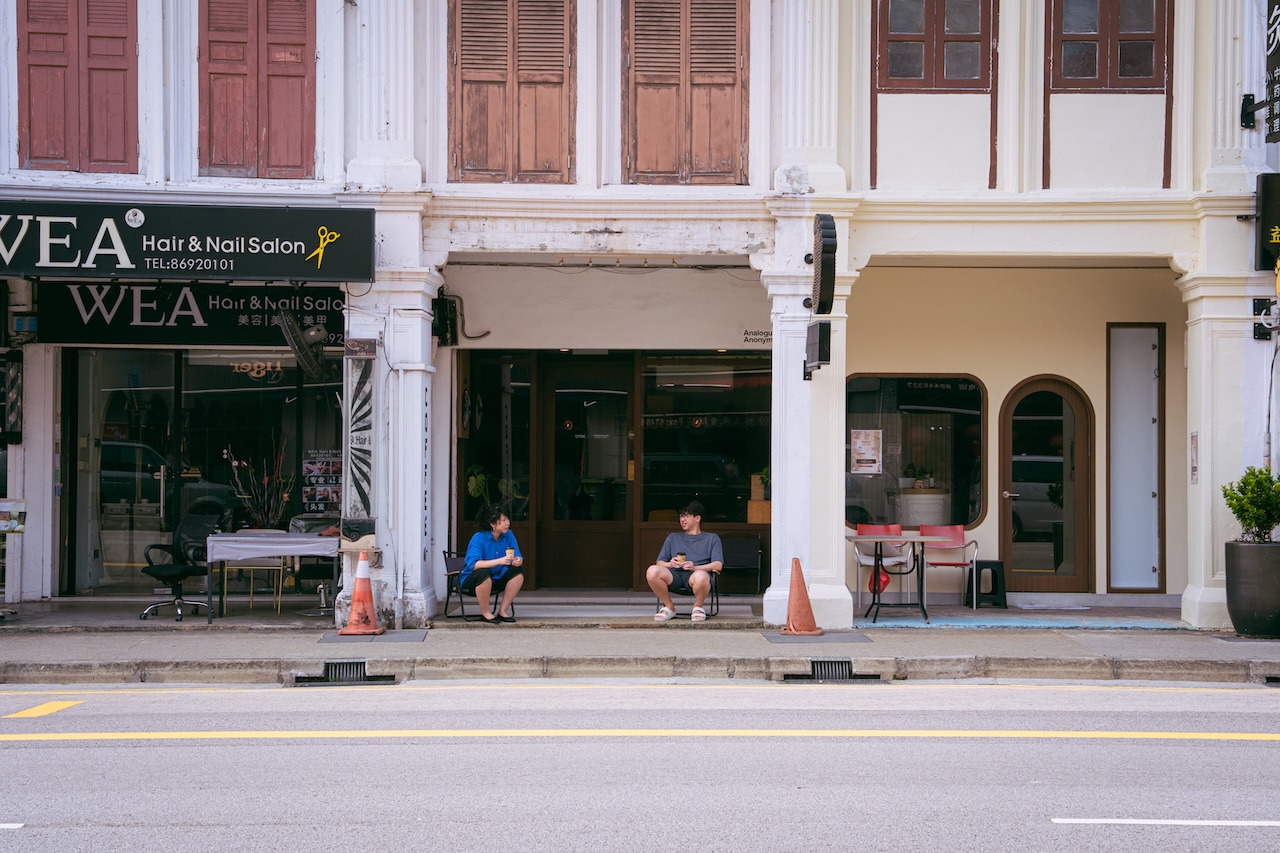
All images by Jein Eriza and Lynn Wen Wen for RICE Media
At 2 AM, through the back door of Eng Tiang Huat Chinese Cultural Shop, Geylang reveals its true geometry.
Outside, along the slick concrete pavement of Lorong 24, Pentecostal Christians prepare garlands, incense, and buckets of holy water dutifully, their serenity contrasting with the din of gambling tables, glares from brothel lookouts, and the exchange of illicit pills in open secret.
For decades, the shopfront has anchored this friction—a place where old-world Singaporean craftsmanship sits mere inches from the district’s neon-lit underbelly.
This contrasting snapshot of Geylang has grown even more visible today. Hip, Instagram-worthy businesses have moved in between the KTV lounges and massage parlours, where women stationed outside call out to passersby at night. The old trades have simply folded the newcomers into their routines, or at the very least, found a comfortable coexistence.
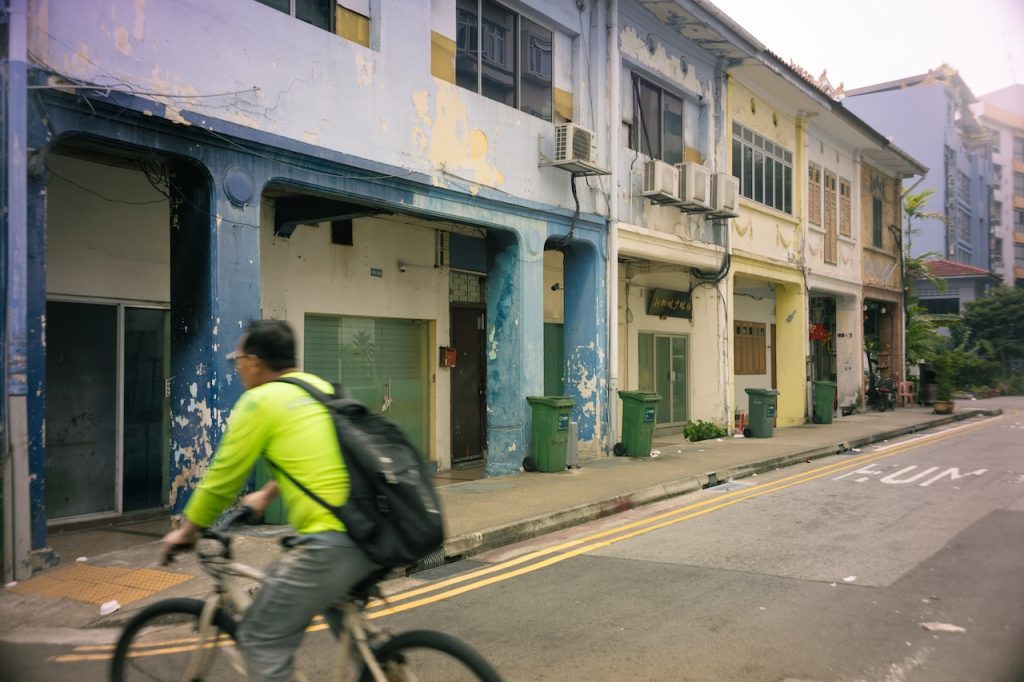
Still, Geylang in 2026 remains the gloriously unkempt district that refuses to be filtered for tourist-friendly aesthetics. Unlike the rejuvenated likes of Joo Chiat or Chinatown, it feels like a rare part of Singapore that still has character.
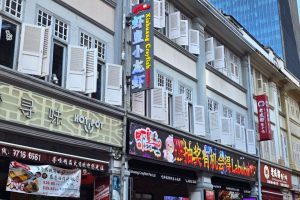
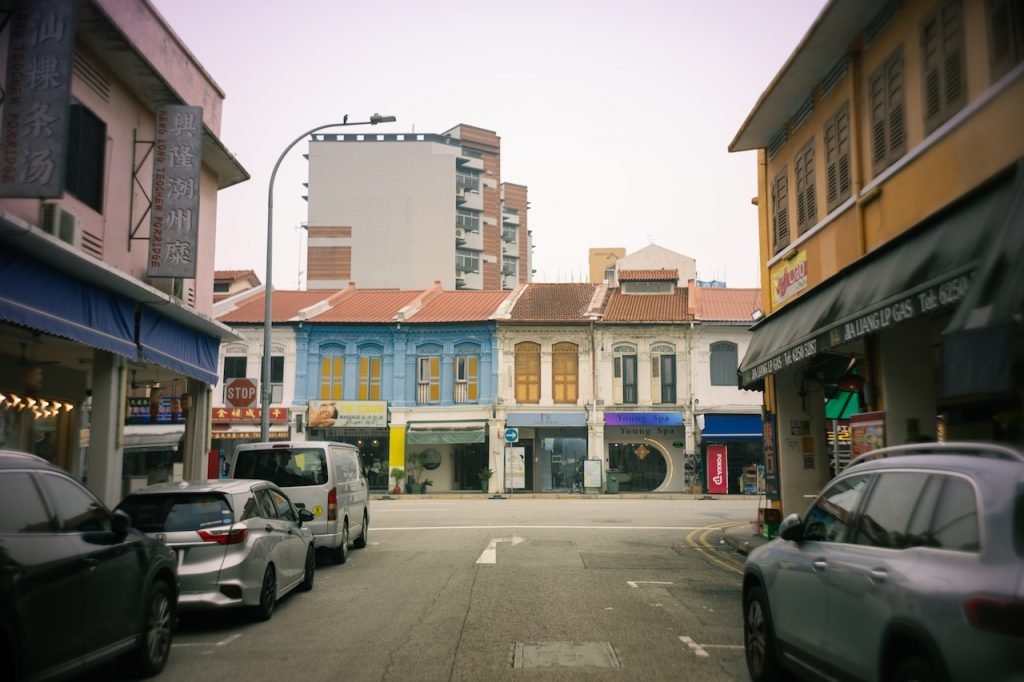
The mess of hardware stores, late-night food joints, religious institutions, creative spaces, and fitness studios—alongside shady establishments—is packed into the same few lorongs, sometimes even the same row of shophouses. A yoga studio shares a stairwell with a pub whose windows are blacked out. Across the road, a Magic: The Gathering store sits on the same stretch as a private college and a few lighting galleries.
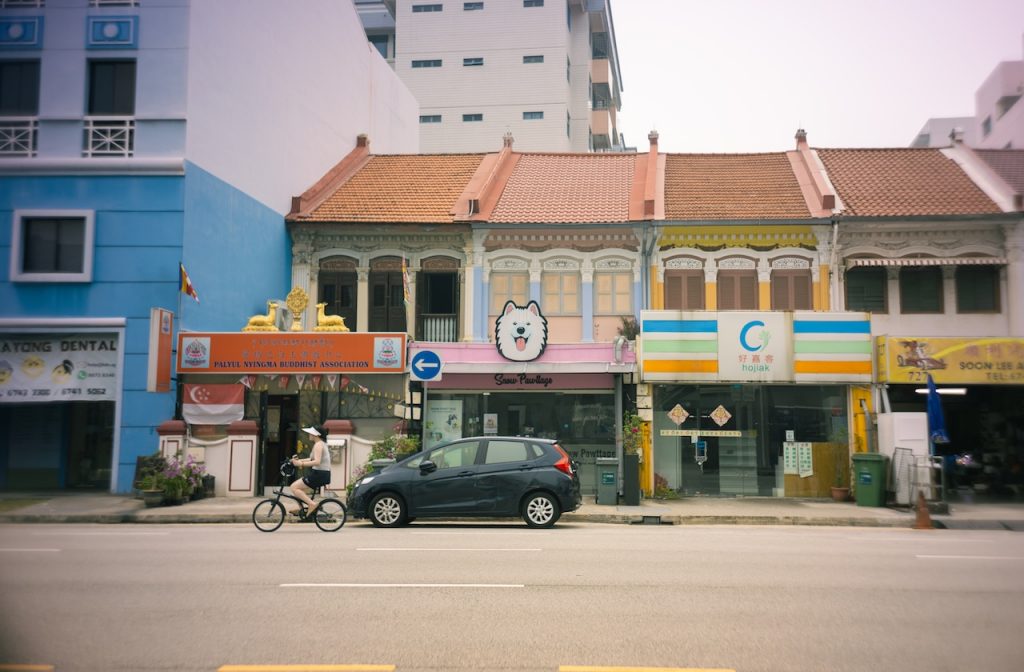
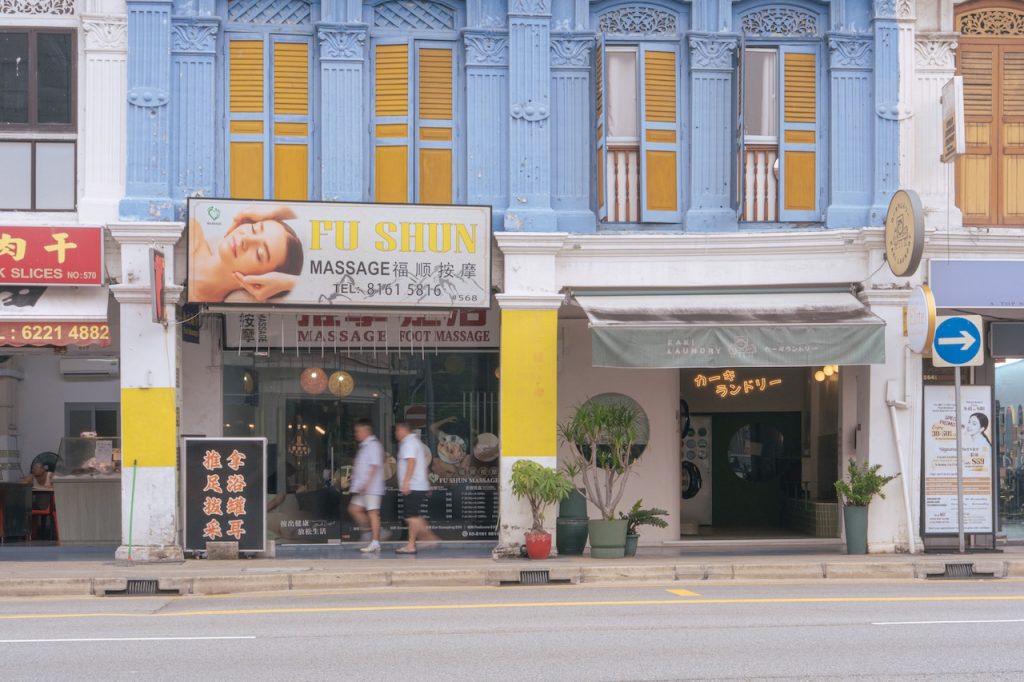
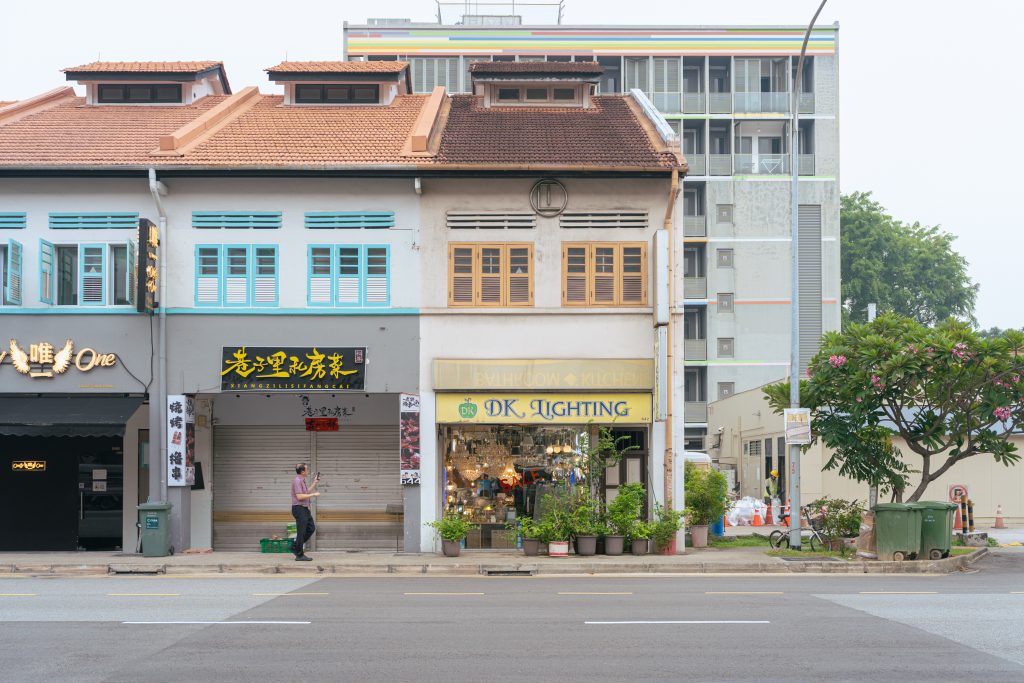
Plenty of these shops have been here for decades. The newer ones are easy to spot by the fresh paint and a younger demographic that looks out of place in an old neighbourhood.
Ask these business owners “Why Geylang?” and some will say the rent. Others—though they don’t say it out loud—like the grit that comes with the address, even if the most menacing thing on the street these days is the price durian sellers quote foreign tourists.
Which leaves the obvious question: Are these newer, hipper enterprises part of the rising wave of gentrification Geylang has dodged for decades?
The Shift in Geylang’s Repute
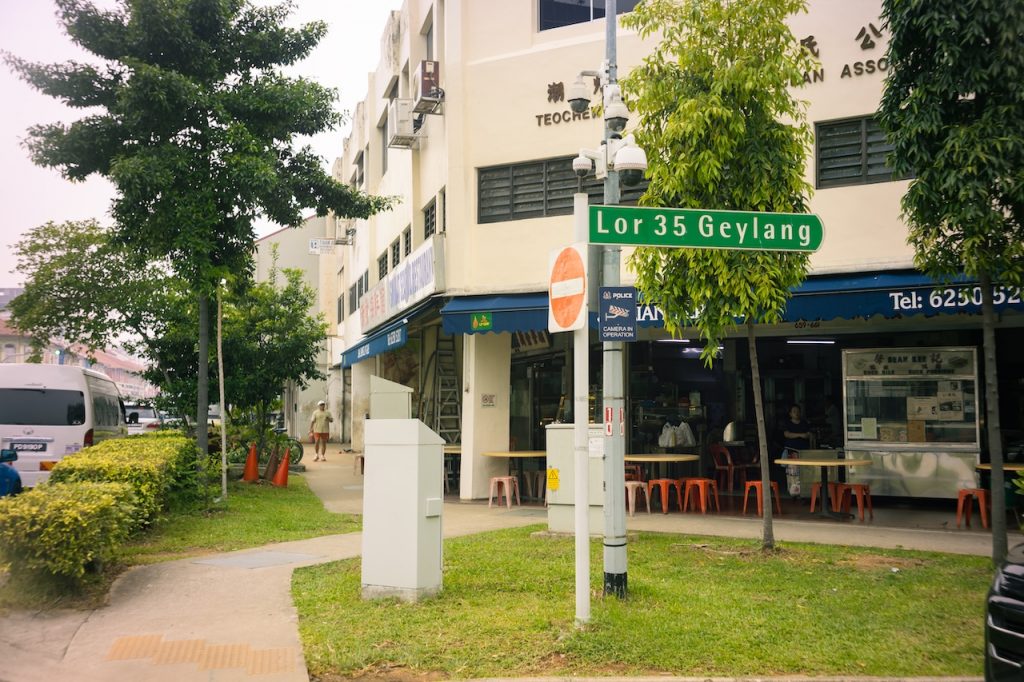
To understand why new businesses are moving in today, you have to look at how much the ground has shifted over the past decade.
Geylang was never an unpoliced free-for-all, but it was strictly managed. Heightened CCTV surveillance, liquor restrictions, URA rezoning limits on new night spots, and frequent police operations systematically dialled down the chaos. Between 2013 and 2016 alone, robberies and snatch thefts dropped by 42 percent.
Add to that a post-COVID digital pivot—where parts of the street-level sex trade shifted to messaging apps—and Geylang’s once-notorious edge has visibly softened into something far more mellow.
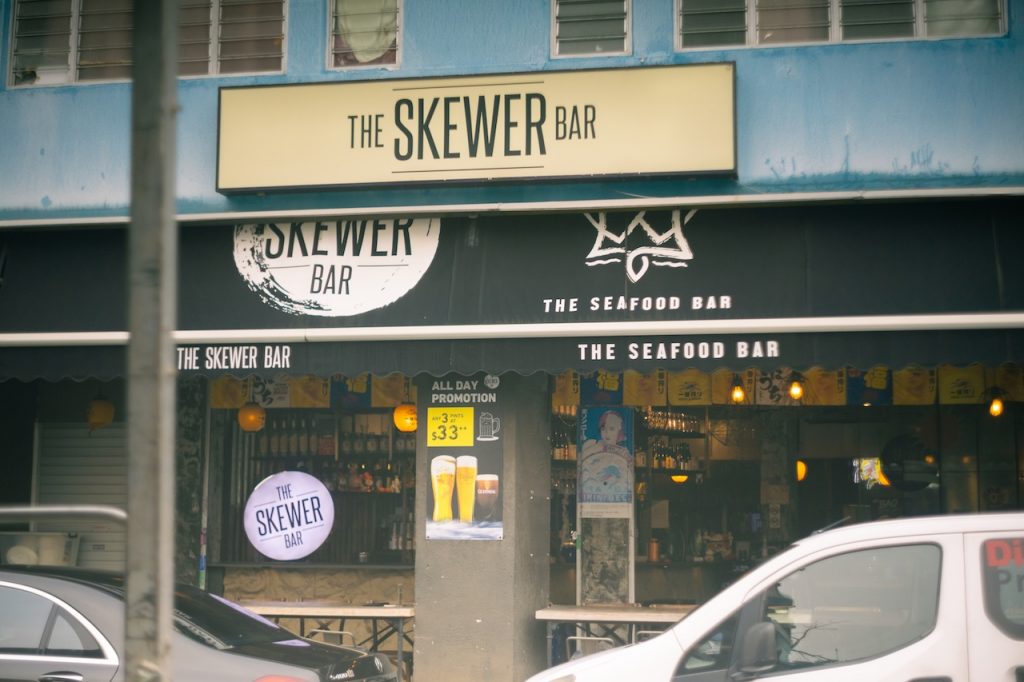
For entrepreneurs, the shrinking vice trade lowered the barrier to entry. Take The Skewer Bar’s Vincent Low, for example. In 2016, the Shatec-trained chef, who had cooked in hotel kitchens and at Kuriya, went in with four friends on a kushiyaki concept at a stall in a coffee shop on Lorong 27.
“I always had the mindset that Geylang is a very rowdy area,” he tells me.
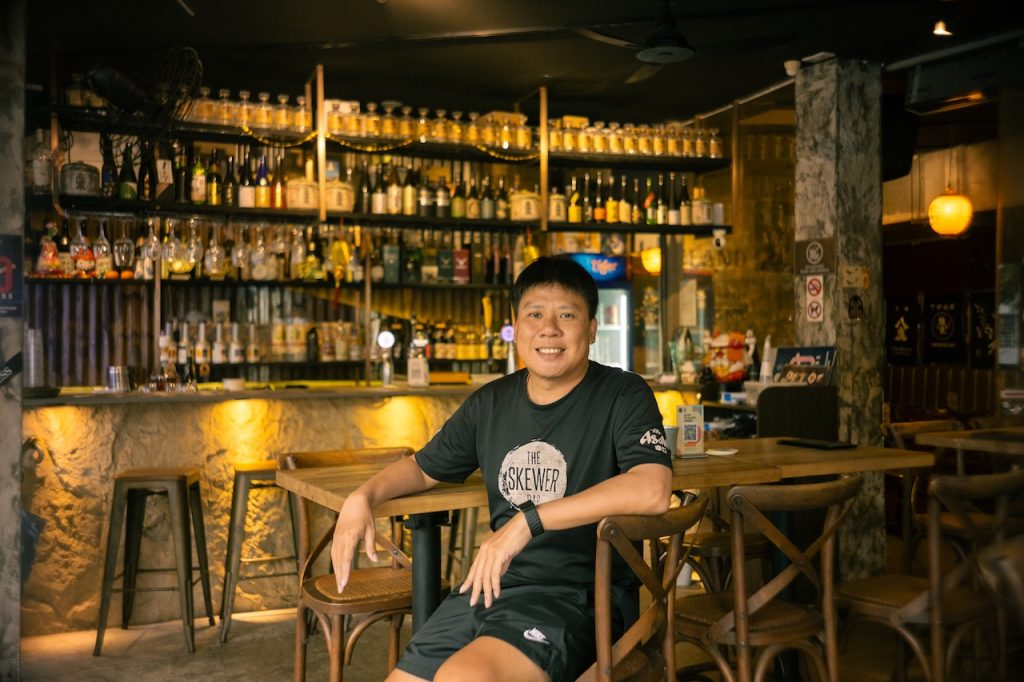
So he sat in that coffee shop for a week and watched who walked past. He noticed something unexpected: a steady stream of locals and expats living in the surrounding residential pockets of condos and new BTO flats.
The Skewer Bar has since outgrown the stall. It spent years at the coffee shop before moving to its own premises at Lorong 25 in 2019, right next to Coronation Baptist Church.
The reputation hasn’t moved out with the vice trade, though. “Once parents find out that my bar is in Geylang, they will not let their children work here,” Vincent mentioned in a 2024 CNA interview. “This has happened many times.”
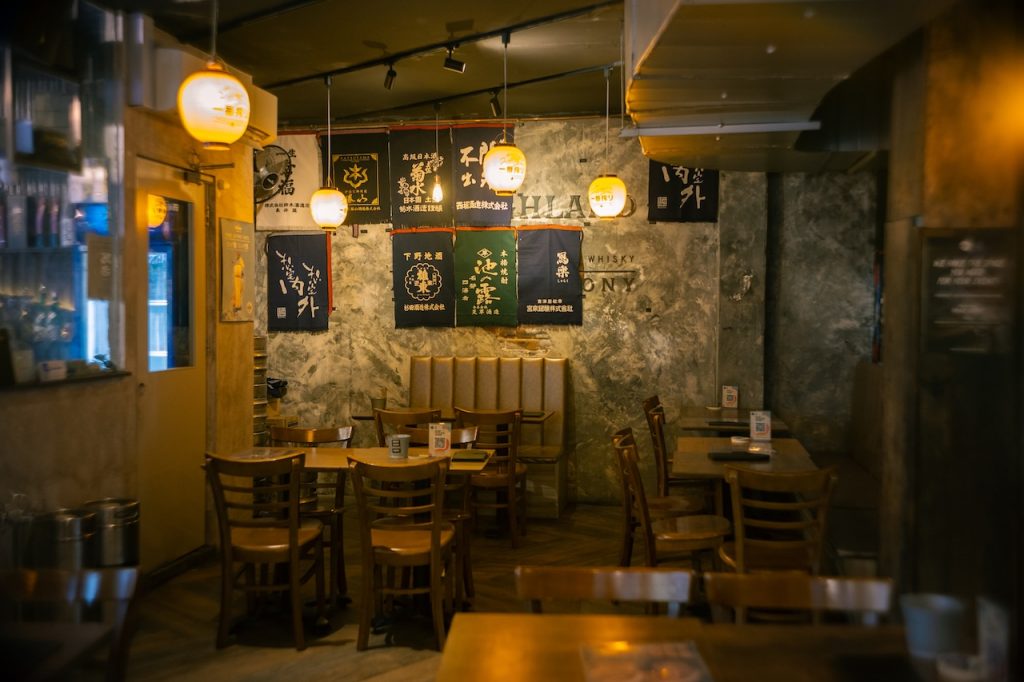
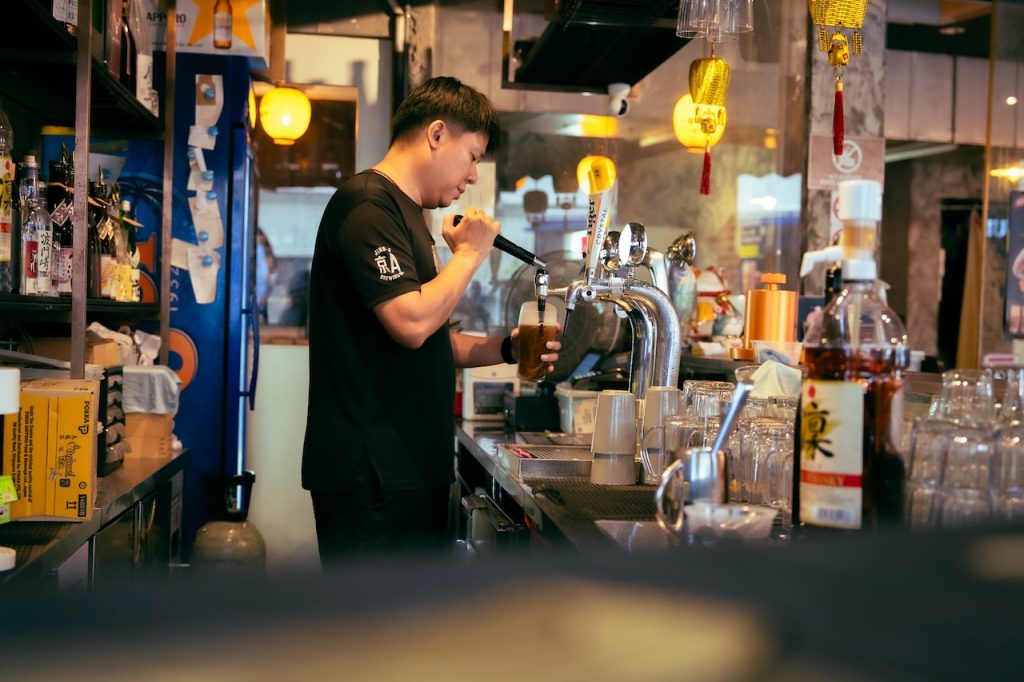
Does Vincent see himself as a gentrifier?
Not really, the 42-year-old food entrepreneur says. While he acknowledges that a new wave of F&B operators helped turn Geylang into a foodie hub worthy of influencer hype, he remains realistic.
“It will take more years to change a person’s perception,” he offers.
For Vincent, the real concern isn’t yuppie cafes taking over—it’s navigating rising rents and keeping the customer pie sustainable as commercial hubs in the vicinity of nearby Paya Lebar redevelop.
Why Geylang?
Rent in Geylang remains relatively accessible compared to Telok Ayer or Joo Chiat, largely because of the district’s lingering stigma. But for many new business owners, cheap square footage is just a fringe benefit—the real draw is the unpolished energy.
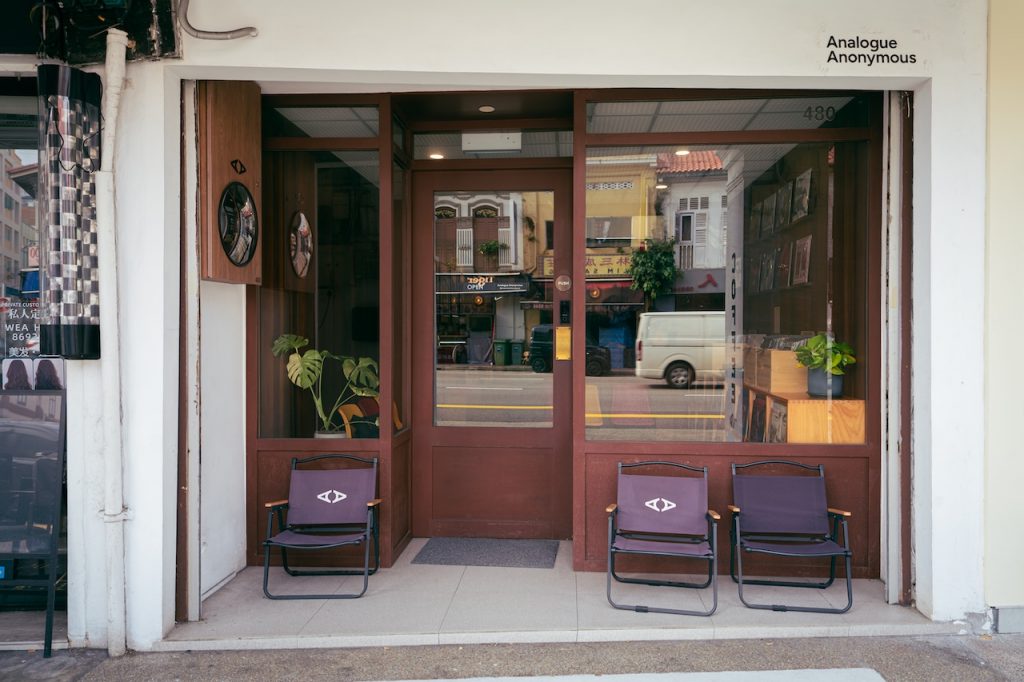
At Hip Xiong Photo Studio on 480 Geylang Road, 45-year-old founder Ryan Lee came for Geylang’s grit on purpose. His studio is the only one in Singapore still making wet-plate tintypes, and a craft built on analogue imperfection seems apt to have found a home there.
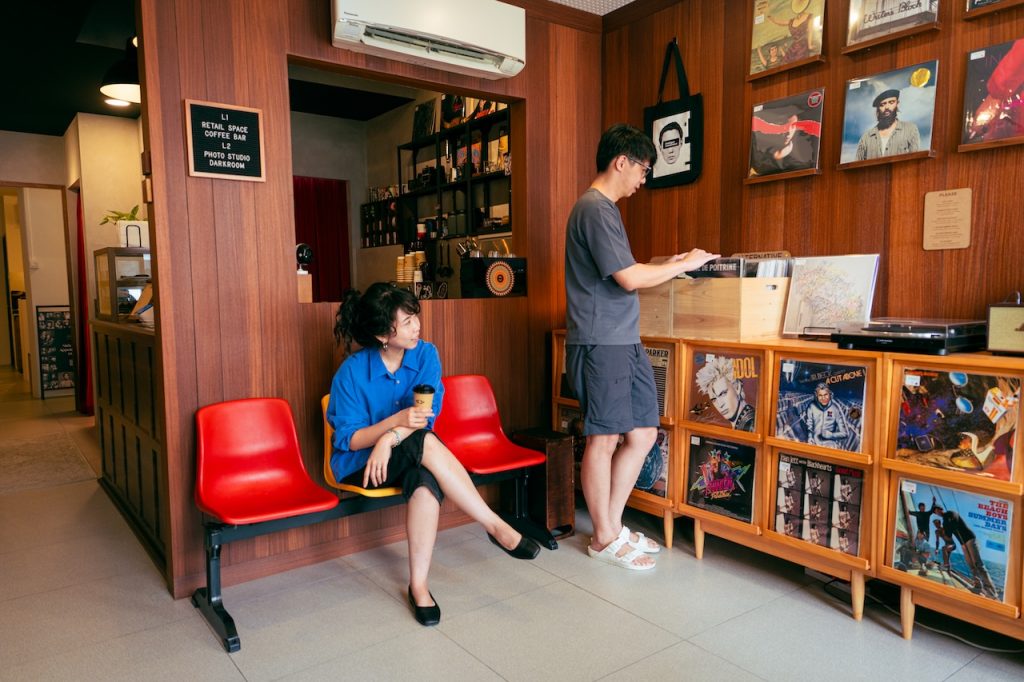
Opening a niche photo studio weeks before the circuit breaker was bad timing, to put it kindly. Hip Xiong survived anyway. In 2025, Ryan turned the building’s underused ground floor into Analogue Anonymous, a cosy café and record store he now runs with his business partner, Kitty Yu, 25.
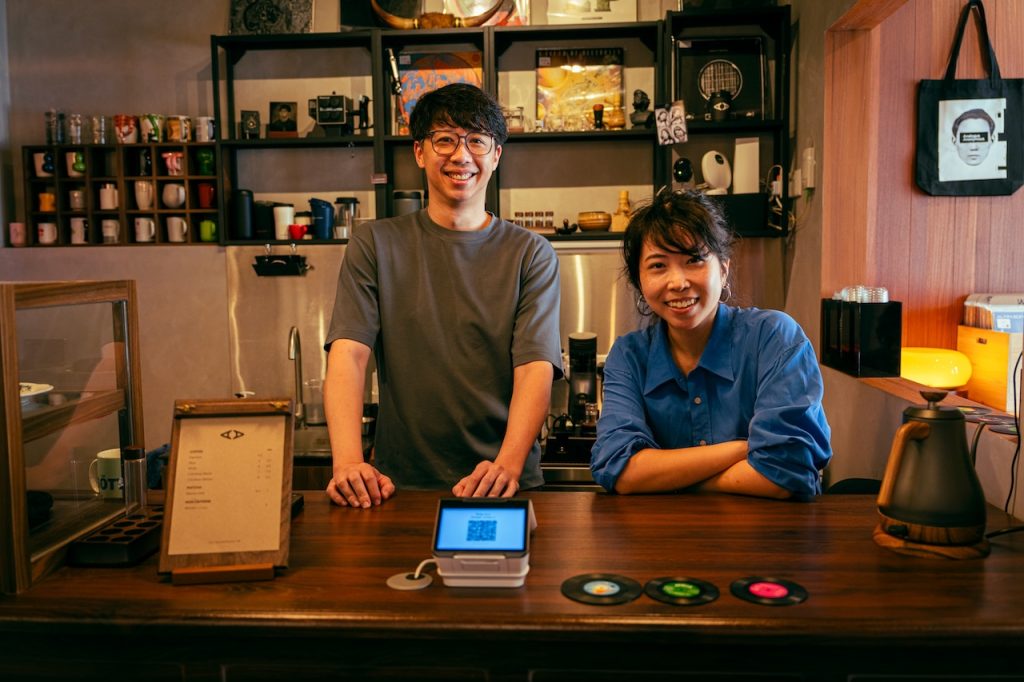
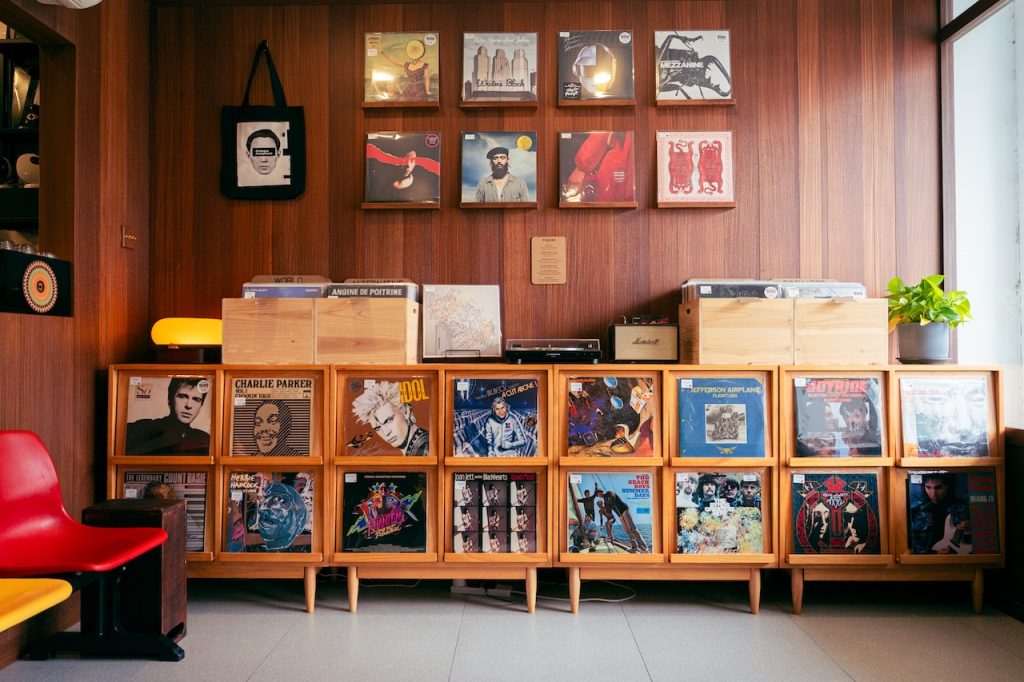
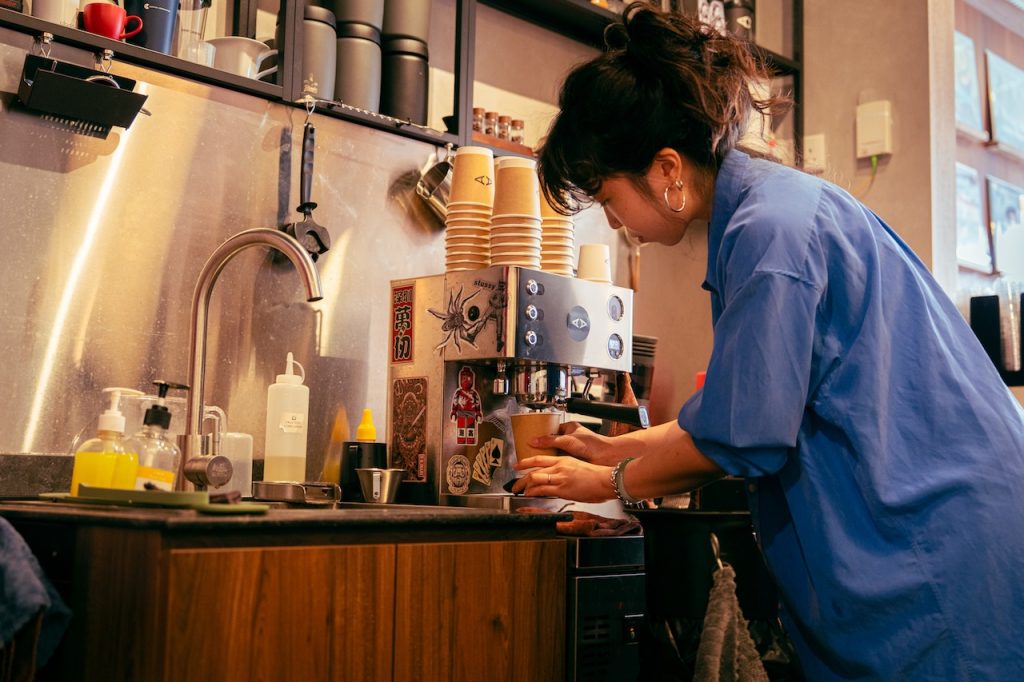
Both come from design backgrounds, and it shows: the wood-panelled walls are lined with art prints and a curated display of vinyl sleeves. On weekdays, it’s a coffee destination for young Geylang residents and expats living around the corner; on weekends, cafe-hoppers arrive.
They know that the location has its practical perks. “Rent is cheaper because of the stigma, but the day trade can be quiet,” Ryan shares candidly.
Are they gentrifying the area?
Ryan and Kitty push back on the term. The threat they worry about: big F&B chains and foreign-owned enterprises that can outbid smaller businesses on rent with little trouble. It’ll come at the expense of local identity—be it new joints like Analogue Anonymous or Geylang Road stalwarts like New Scissor-Cut Curry Rice, which closed last year after operating for over three decades.
Elliot Pek has felt the crunch too. The 26-year-old launched a healthy bubble tea brand, ChanXin, at 340 Geylang Road, right at the fringe of the red-light district. The store has since shuttered due to declining footfall, but not before giving him a front-row seat to the area’s evolution.
“The darker aspects are receding, creating a safer environment,” he notes.
“It changes the dynamics from edgy to mellow. That’s a sacrifice Geylang is making for [people’s] safety.”
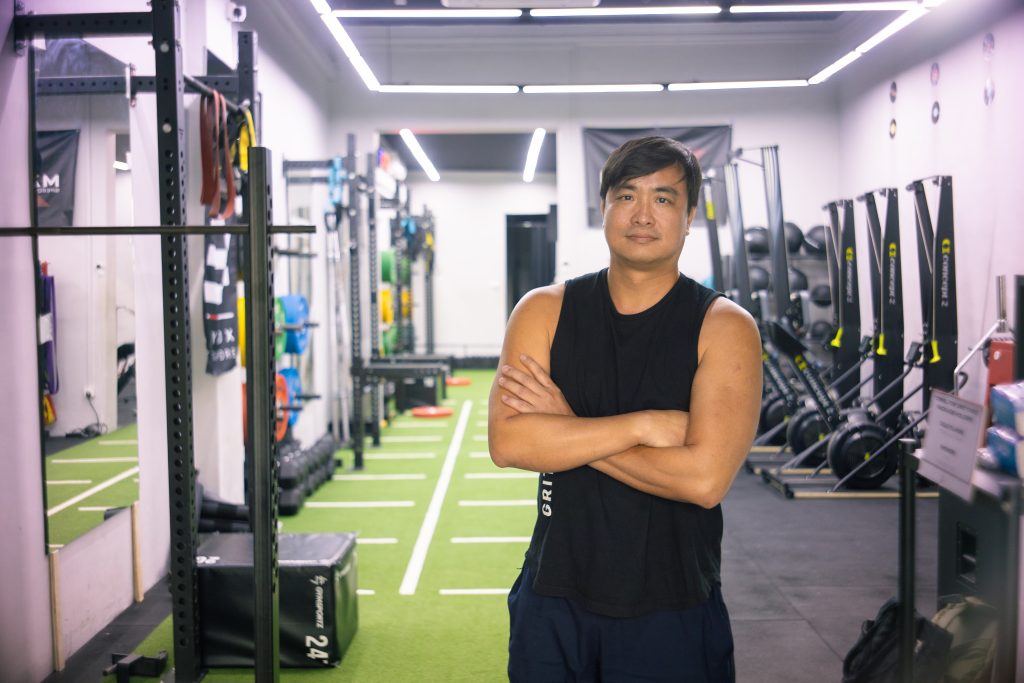
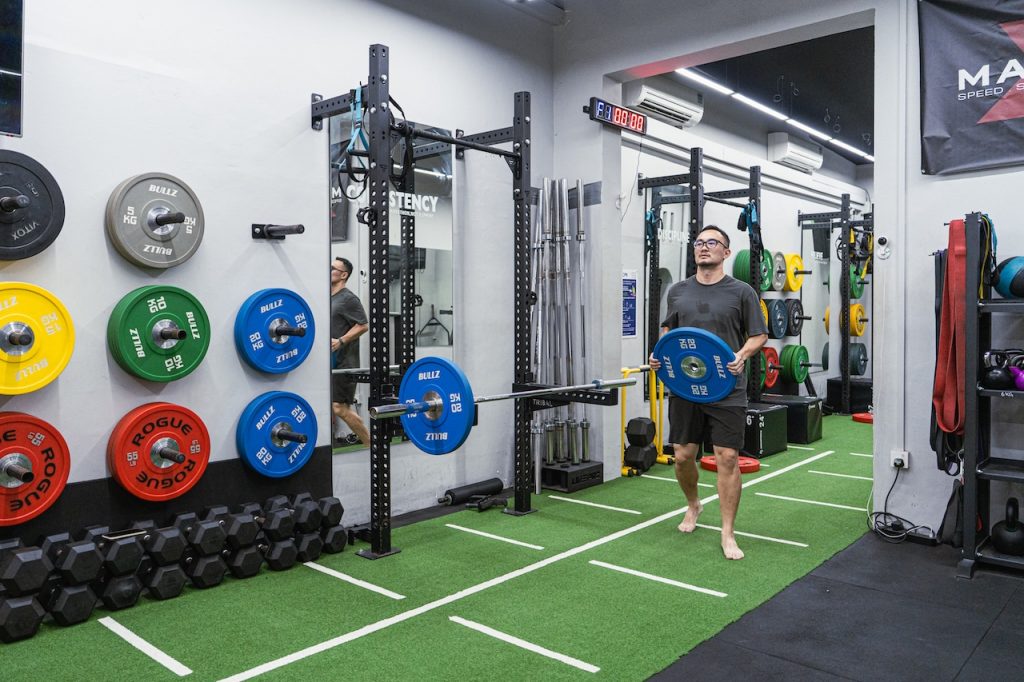
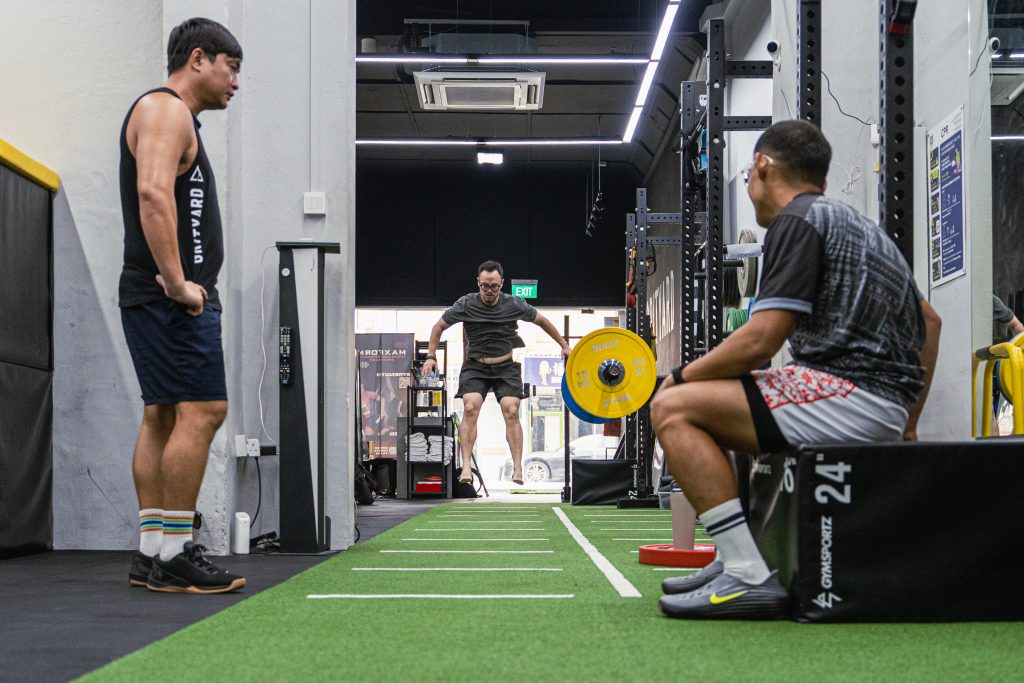

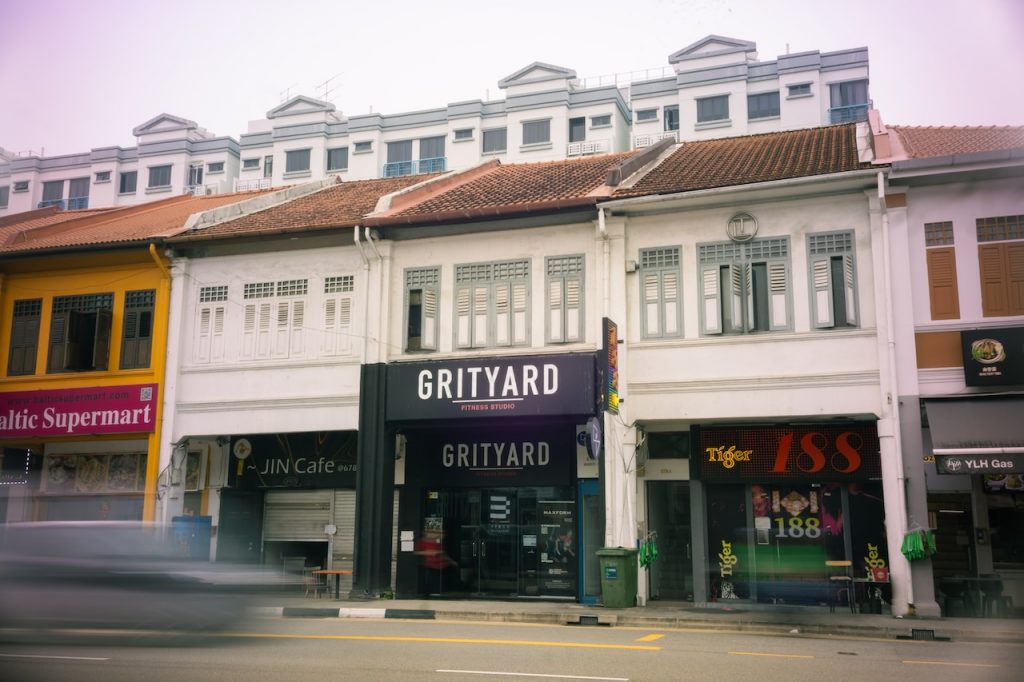
Meanwhile, Teh Chong Nyen, the 41-year-old Managing Director of Grityard, relocated his HYROX training gym from Outram to Geylang in 2025. The rent was cheaper, and he found the location put him close to his market: young, middle-class professionals—many of whom live in the nearby condos.
“We took a calculated gamble, considering there were a few similar concepts nearby.”
To Chong Nyen, Geylang’s gentrification is cautious and slower-paced.
“While there has been an influx of more trendy shops, it still retains its old-school vibe. It will take a while for the vibe to tip completely into a hip and trendy area.”
The ‘Geylang Bleed’
Geylang’s zoning and fragmented private ownership have also made it an unlikely refuge for indie businesses. Most of its shophouses belong to hundreds of individual landlords, many of them families who’ve held the same unit for decades.
The scattered ownership means no one is curating the streets—anyone with enough capital can set up shop. And somehow, it became an unlikely sanctuary for independent art, creative communities, and subcultures.
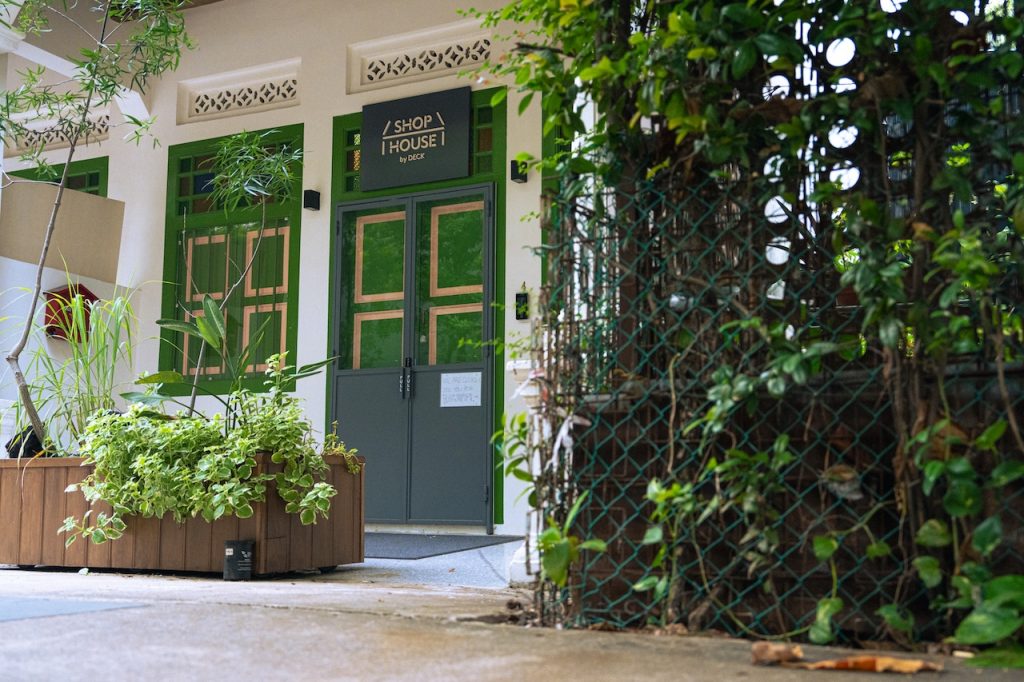
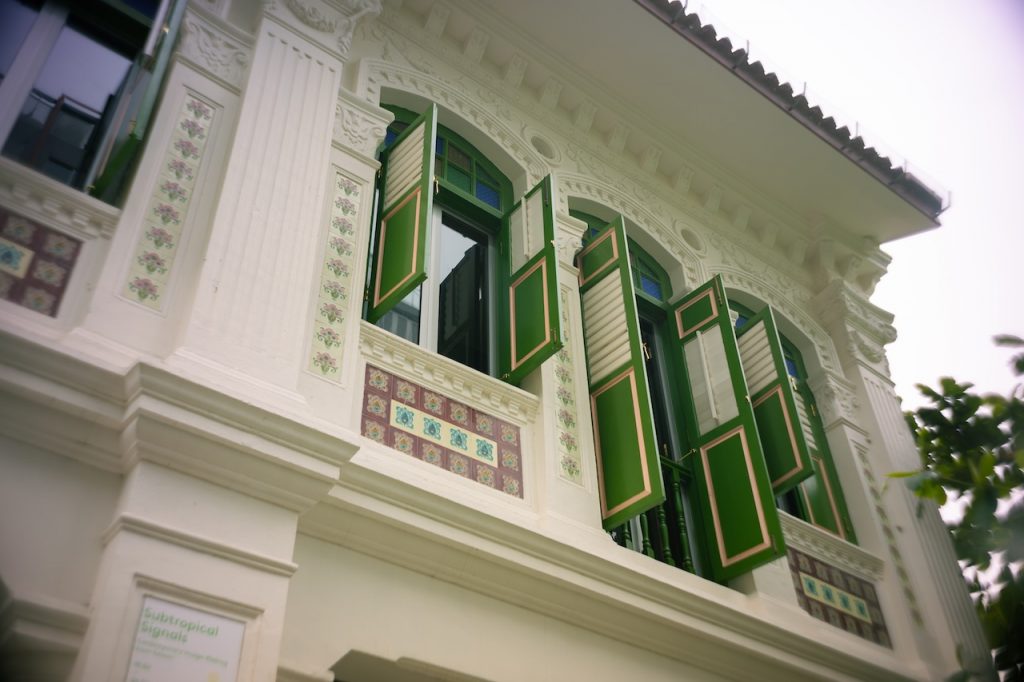
DECK, the non-profit photography art centre, is waiting out the reconstruction of its main venue in two conservation shophouses along Lorong 24. Until then, Shop-House by DECK runs exhibitions, residencies and workshops a few doors down from the brothels.
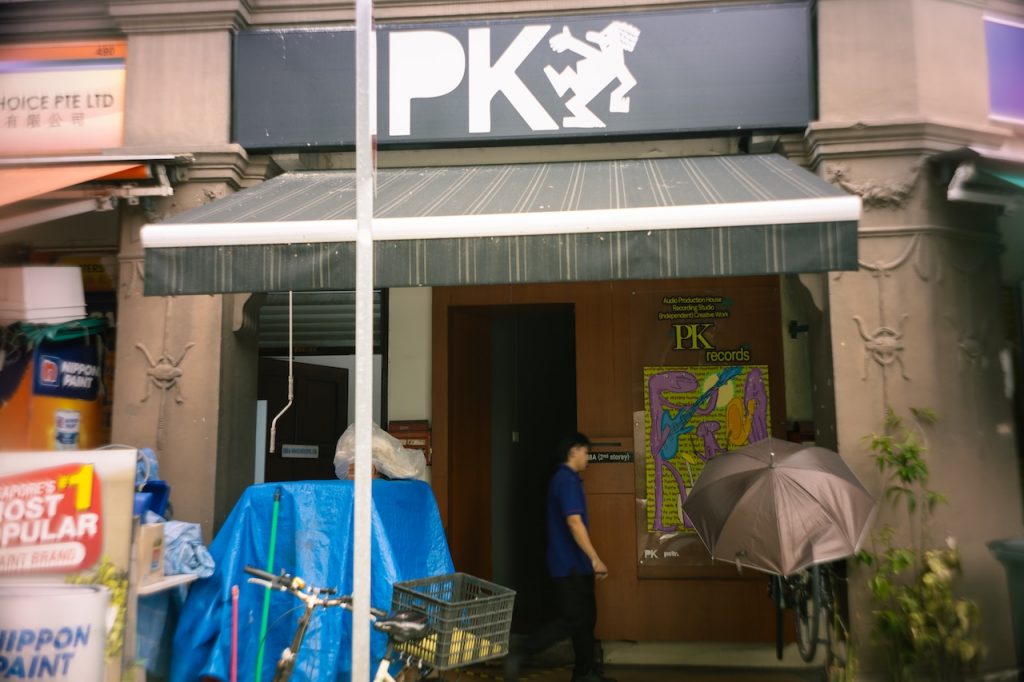
On 65 Sims Avenue, on the second floor of a factory building, illustrator Amanda Ong and photographer Deborah Chua opened In The Boonies, a co-working space for creatives and artists. Further down the road, closer to Paya Lebar Quarter, audio production house and music studio PK Records has hosted Singapore’s biggest indie musicians for live performances and recording sessions.
The shophouse was run-down, but Ian Lee, the 27-year-old co-founder of PK Records, says the building and its surrounding environment ended up shaping the studio’s “raw, unpretentious signature sound”.
The founders, he says, joke about this rawness as the “Geylang bleed”.
Cheaper rent explains part of the appeal—local independent artists and creative collectives run on thin margins and stubborn passion. But Geylang is where Singapore has always let its fringes exist, and the people who feel like outsiders elsewhere tend to find it easy to settle in.
The difference is that the creatives chose Geylang. The women working the lorongs and the migrant workers in cramped rented rooms nearby live with stigma, whether they like it or not.
The Geylang OG
If the new arrivals view themselves as sympathetic custodians rather than corporate gentrifiers, how do the district’s long-time guardians view them?
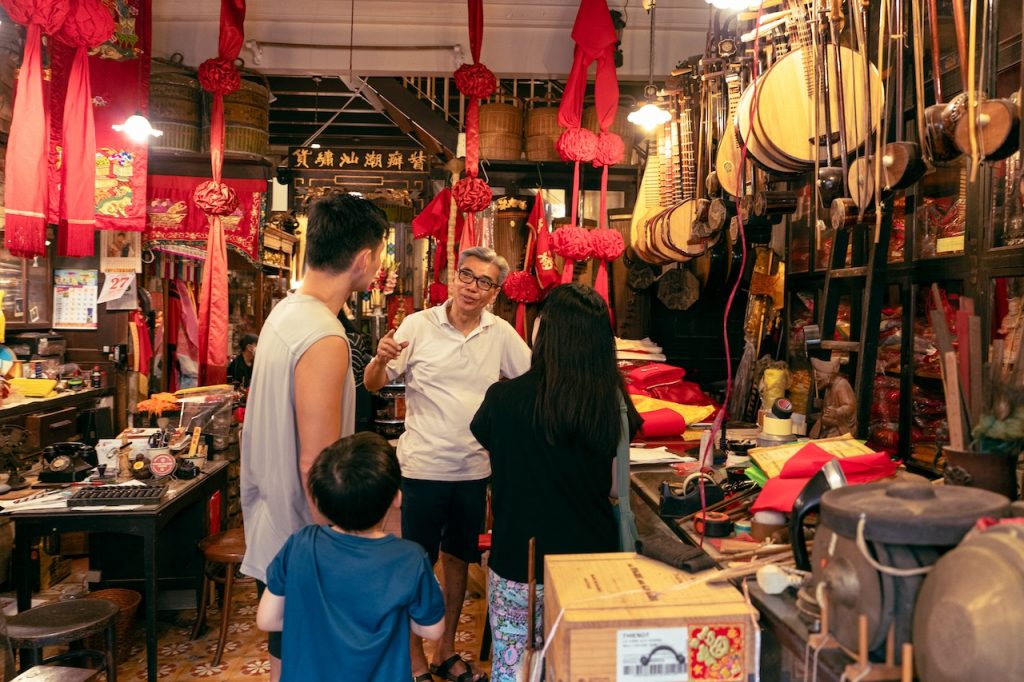
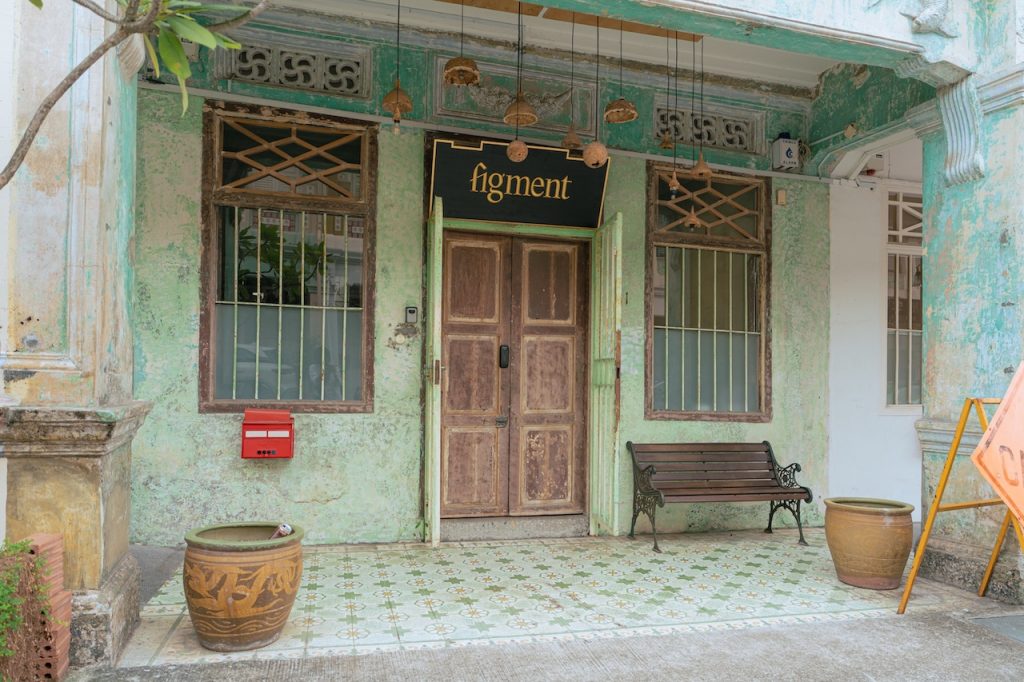
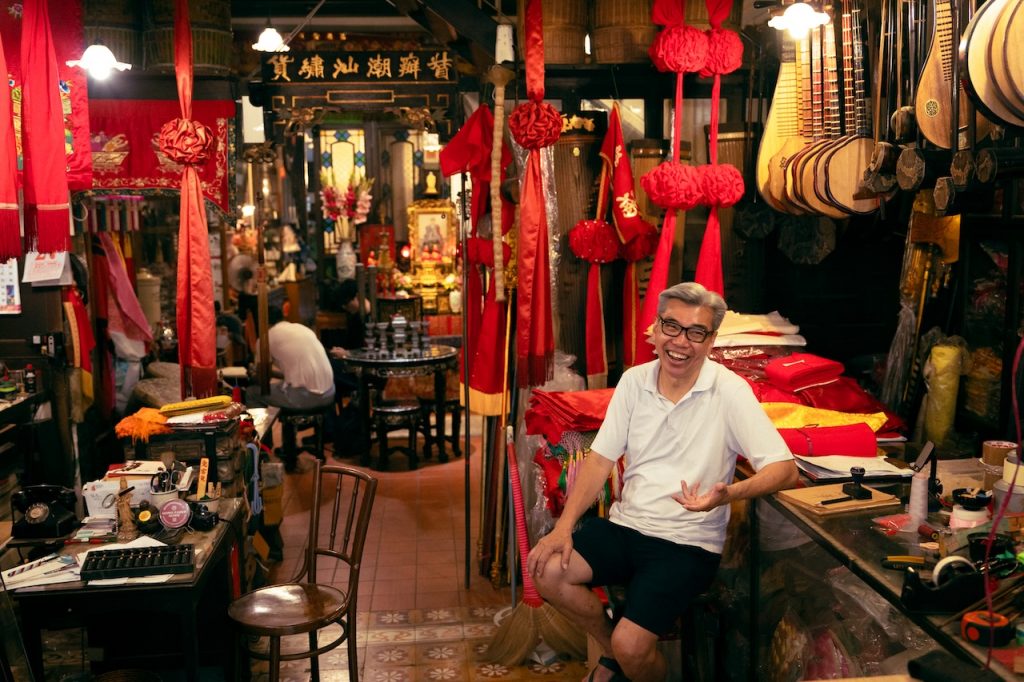
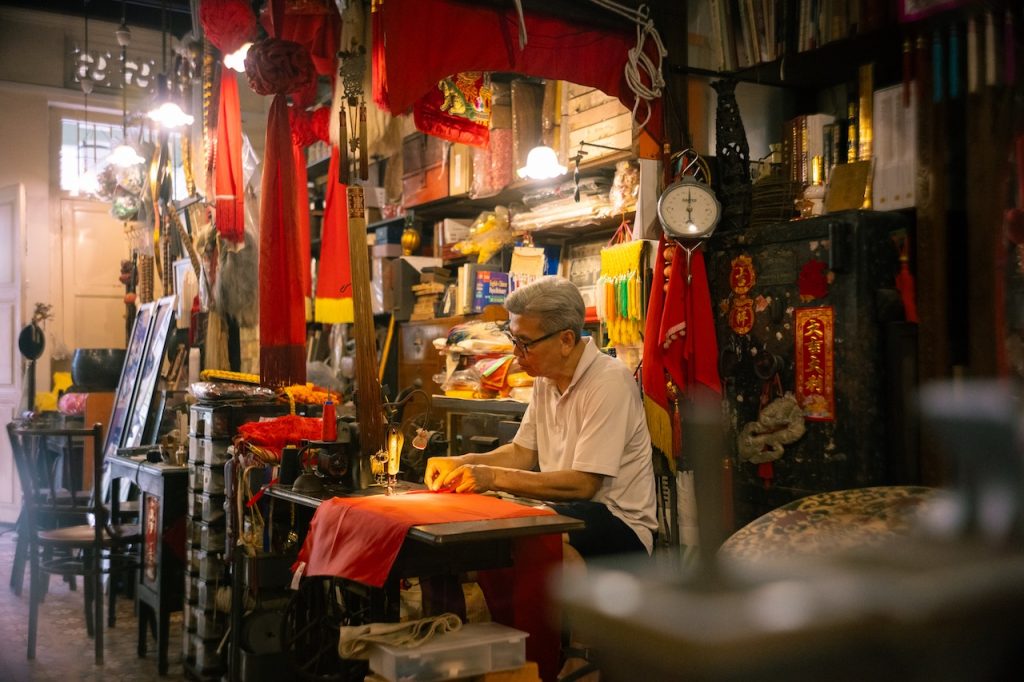
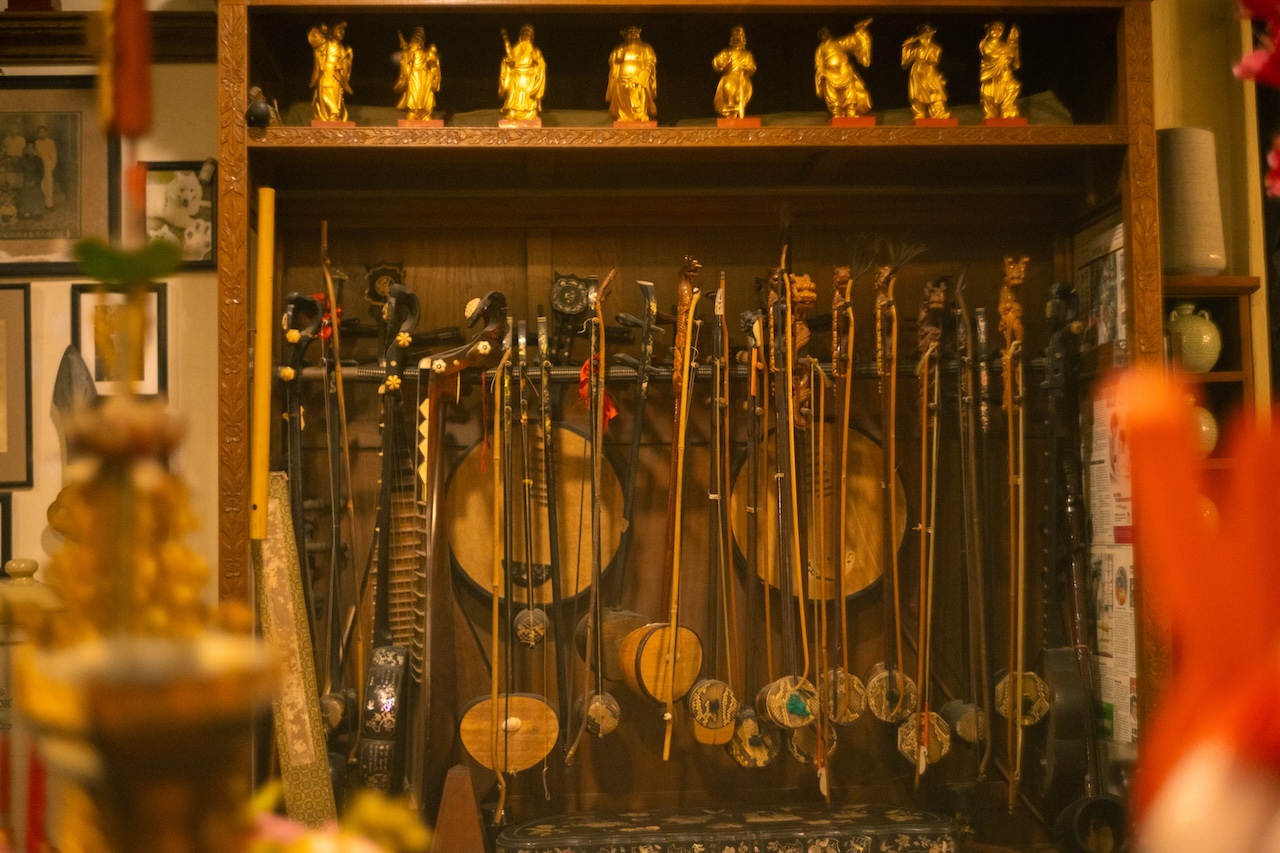
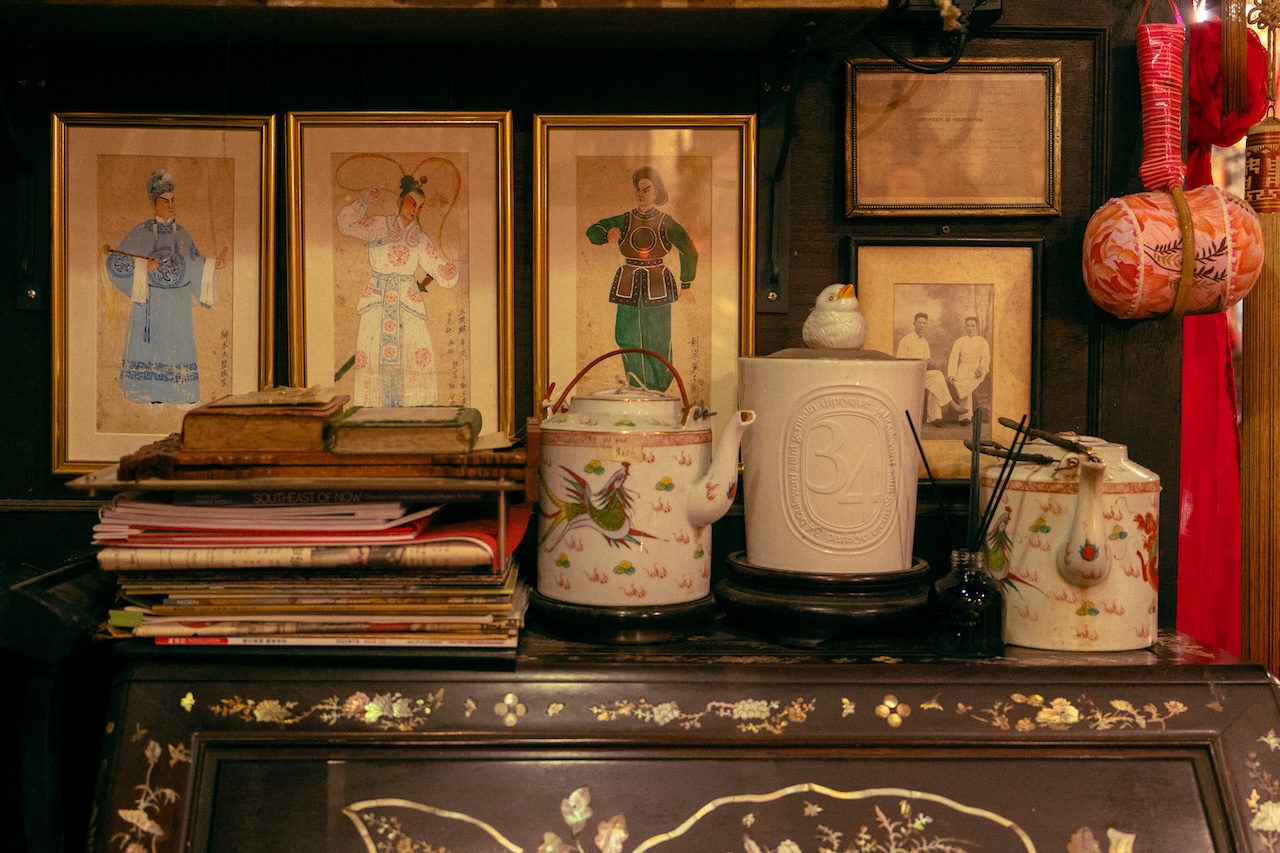
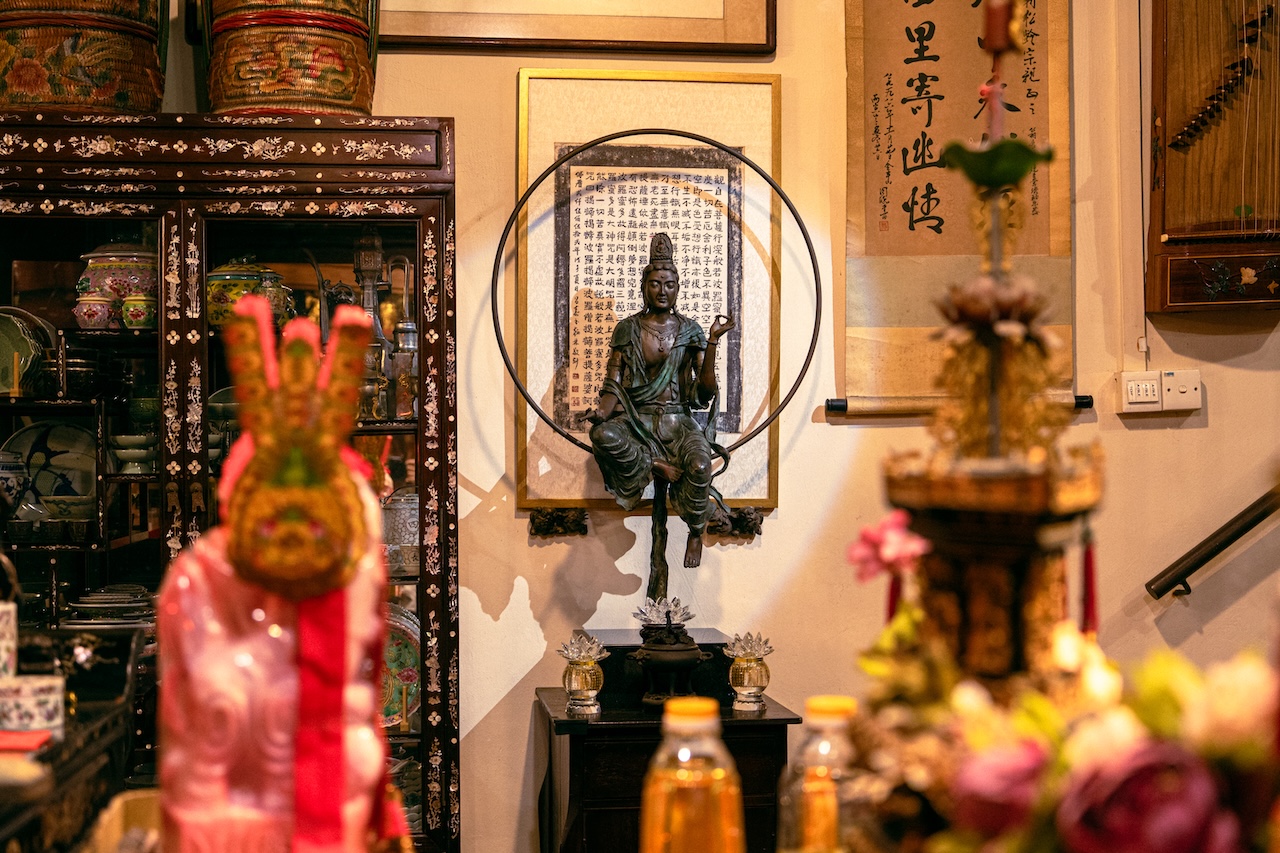
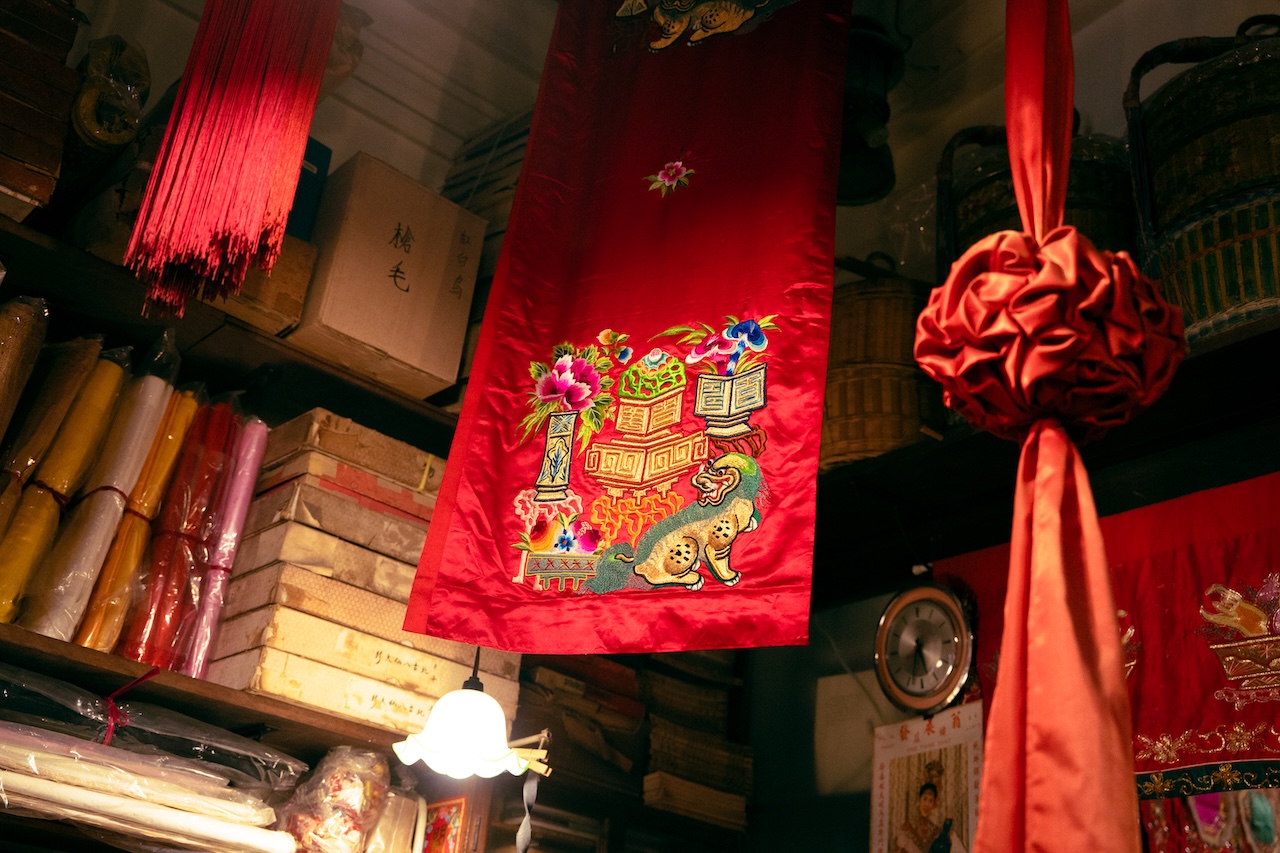
Eng Tiang Huat has sold embroidery and Chinese cultural goods on Lorong 24A for over 42 years. Its third-generation owner, Jeffrey Eng, has watched the street go from secret society turf to a place polished enough for co-living brand Figment to move in, bringing a rotating cast of international expats working in the arts industry.
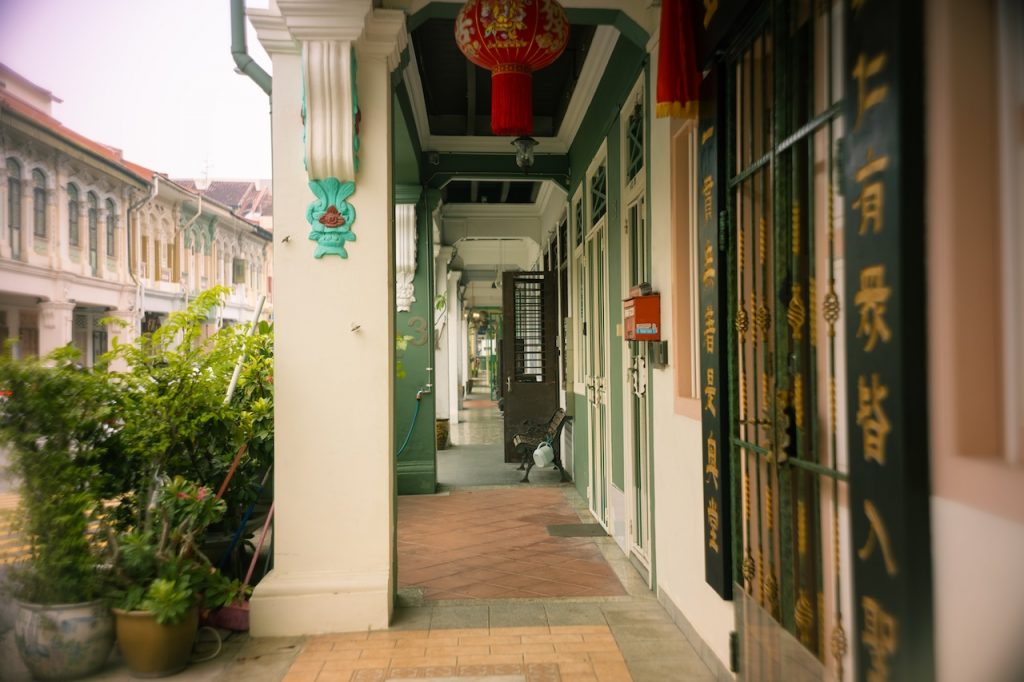
The 66-year-old has spent his whole life on this borderland, where sex workers wait on stools a few doors down from temples and mosques. He likes the newcomers. Young photographers from DECK drop by to shoot his antique crafts. Expats commission his embroidery and red cloth banners, seeing them as art pieces.
He counts himself lucky that his family owns the conservation shophouse outright, so he can keep residing upstairs and running the shop downstairs, no matter what the rest of the lorong starts charging.
“I know the horizon is fading, but I’m not leaving the shop floor just yet. My doors are open to every new hand, every fresh idea, and every bond waiting to be made.”
Cultural tour guide Chee Peng Lim, who leads walking tours through the district, points out that Geylang possesses a built-in defence mechanism against total gentrification: fragmented ownership.
“Because everybody owns Geylang, there are multiple parts,” the 51-year-old explains. “There is no overarching body or coordinated merchant alliance.”
Dempsey answers to the Singapore Land Authority, and Kampong Glam has a URA-backed precinct plan steering its future. Geylang has neither. It’s a patchwork of private owners, each with their own price and their own ideas about who gets the keys, which makes the district hard to package into anything slick.
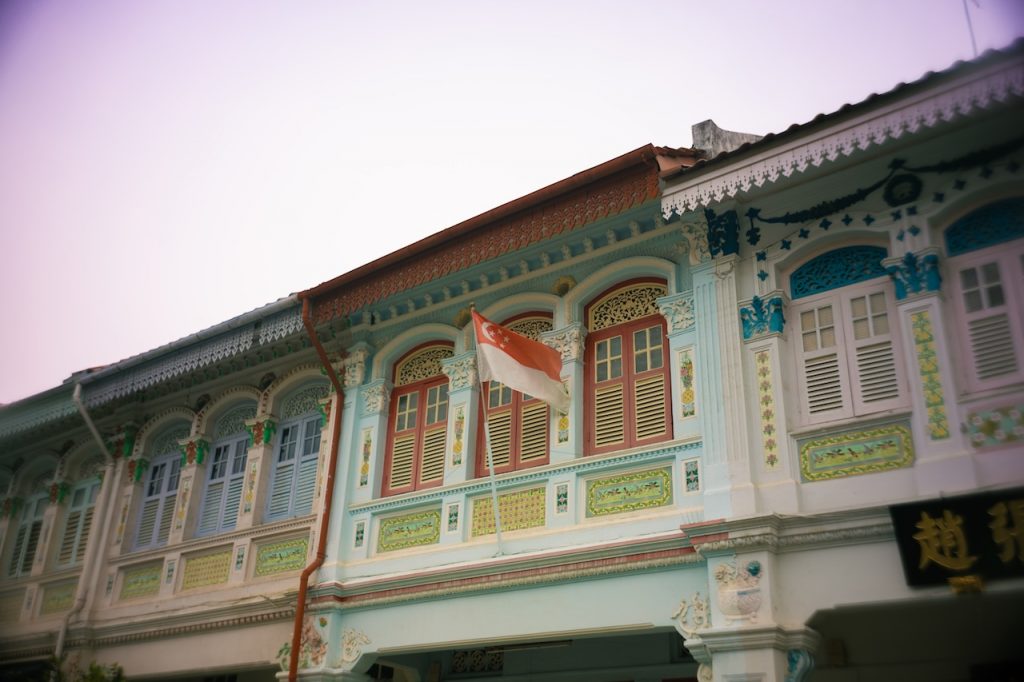
But total gentrification isn’t impossible—developers just have to buy up a few units at a time. Co-living operators Figment and Cove have already moved into converted shophouses. Down Geylang Road, investment firm Abiel Property Investment Fund paid about $18 million for three conservation shophouses in 2024 to turn them into House 223: a stretch of ‘micro-residences’ renting at up to S$2,700 a month.
‘God Bless Geylang’
The rules have already decided how this ends. New bars, KTVs, and massage parlours are barred from opening in Geylang, so the district’s nightlife can only get smaller. What’s left is a waiting game over which lease runs out first.
There’s a different version of gentrification going on here—not in the usual, sterile sense, but a bizarrely functional ecosystem of coexistence. Nothing is being scrubbed clean; the edges are simply getting more layered.
And for a generation of young Singaporeans exhausted by sanitised urban planning, Geylang offers an antidote: a living, breathing third space that still feels that it has a soul.
Jeffrey Eng captured the delicate tension best, offering a take that sits somewhere between pragmatism and affection.
“If we depend solely on the past, our place can never sustain or grow. So God bless Geylang. When Singapore no longer has authentic places, it’ll be because it’s all the same.”